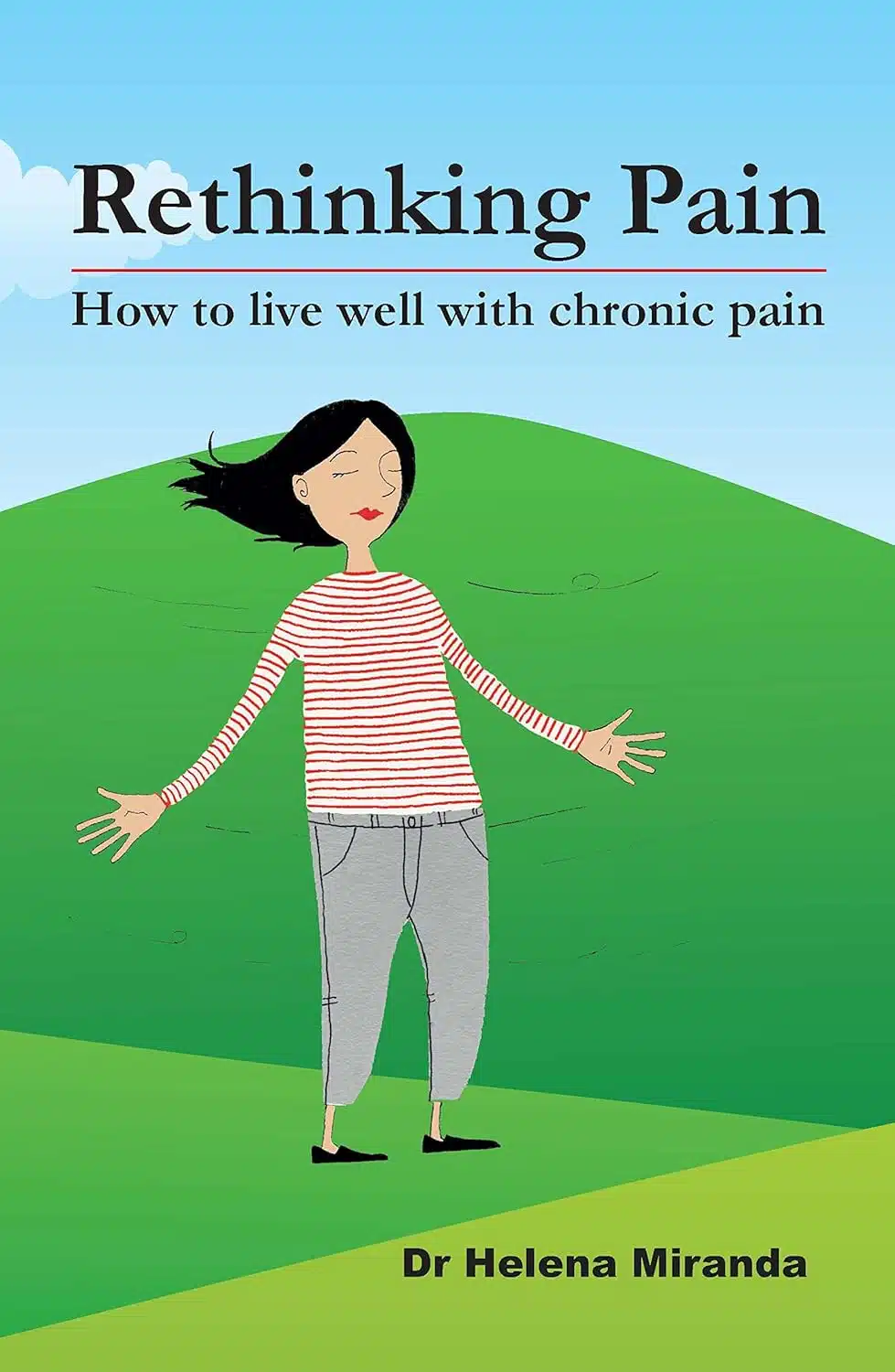
Rethinking Pain – by Dr. Helena Miranda

10almonds is reader-supported. We may, at no cost to you, receive a portion of sales if you purchase a product through a link in this article.

This is about about managing pain, not merely reducing it. Of course, reducing it is good and the book does cover that too, but oftentimes it cannot be banished entirely, or at least not in any useful fashion (for example, anesthetic may remove all pain, but it is not a way to go through life). So instead: first how to cope, and then how to do better than just coping.

Dr. Miranda (a medical doctor, pain specialist, and chronic pain sufferer) gives us 18 tools for pain management, advising on how to make them work as well as possible given the situation—without which, the more superficial versions of the advice are often useless.

For example, if you are chronically suffering pain, then the superficial advice “value your sleep” is not, in and of itself, helpful—because you already know that you sure do value the little sleep you get, wish you got more, and wish it didn’t (in the case of many kinds of chronic pain) result in things being worse, rather than better, when you wake up (because of the immobility). But instead, here we get advice on how to indeed make the most of things, make them better, and minimize the downsides.

In a similar vein, some of the tools recommended like “manage your weight” and “try yoga” may, based on the headings alone, make a reader want to throw the book out of the nearest window, on account of having heard a bajillion times already that something (often something that’s not even accessible) will be a magical panacea and that not doing the thing being recommended means that you are making no effort and therefore deserve any suffering that comes as a result. And yet! Dr. Miranda does go on to give actually useful advice in each of these and many more.

The style is easy-reading pop-science, without any hard science along the way, nor psychological jargon either. There is a bibliography at the back, but the main part of the book just assume that we can take all statements at face value, and will not need reassuring with citation markers.

Bottom line: there’s a lot of good advice in here, from someone who knows the terrain well as both a doctor and a patient, and as a result, this book goes quite a bit deeper than a quick glance at it might make you think.

Click here to check out Rethinking Pain, and live well despite chronic pain!

Don’t Forget…

Did you arrive here from our newsletter? Don’t forget to return to the email to continue learning!

Learn to Age Gracefully

Join the 98k+ American women taking control of their health & aging with our 100% free (and fun!) daily emails:

  • Sweet Potato vs Pumpkin – Which is Healthier?

    10almonds is reader-supported. We may, at no cost to you, receive a portion of sales if you purchase a product through a link in this article.

    Our Verdict

    When comparing sweet potato to pumpkin, we picked the sweet potato.

    Why?

    In terms of macros, sweet potato has a lot more fiber, carbs, and protein, winning easily in this category.

    In the category of vitamins, sweet potato has more of vitamins A, B1, B2, B3, B5, B6, B7, C, and K, while pumpkin has (slightly) more of vitamins B9 and E, yielding to sweet potato an 8:2 victory here.

    Looking at minerals next, sweet potato has more calcium, copper, iron, magnesium, manganese, phosphorus, potassium, and zinc, while pumpkin is not higher in any minerals—an open-and-shut case in favor of sweet potato.

    Adding up the sections makes for an overall win for sweet potato, but by all means enjoy either or both, as diversity is good!

    Want to learn more?

    You might like:

    Carb-Strong or Carb-Wrong? Should You Go Light Or Heavy On Carbs?

    Enjoy!

    Share This Post

  • I’m feeling run down. Why am I more likely to get sick? And how can I boost my immune system?

    10almonds is reader-supported. We may, at no cost to you, receive a portion of sales if you purchase a product through a link in this article.

    It has been a long winter, filled with many viruses and cost-of-living pressures, on top of the usual mix of work, study, life admin and caring responsibilities.

    Stress is an inevitable part of life. In short bursts, our stress response has evolved as a survival mechanism to help us be more alert in fight or flight situations.

    But when stress is chronic, it weakens the immune system and makes us more vulnerable to illnesses such as the common cold, flu and COVID.

    Pexels/Ketut Subiyanto

    Stress makes it harder to fight off viruses

    When the immune system starts to break down, a virus that would normally have been under control starts to flourish.

    Once you begin to feel sick, the stress response rises, making it harder for the immune system to fight off the disease. You may be sick more often and for longer periods of time, without enough immune cells primed and ready to fight.

    In the 1990s, American psychology professor Sheldon Cohen and his colleagues conducted a number of studies where healthy people were exposed to an upper respiratory infection, through drops of virus placed directly into their nose.

    These participants were then quarantined in a hotel and monitored closely to determine who became ill.

    One of the most important factors predicting who got sick was prolonged psychological stress.

    Cortisol suppresses immunity

    “Short-term stress” is stress that lasts for a period of minutes to hours, while “chronic stress” persists for several hours per day for weeks or months.

    When faced with a perceived threat, psychological or physical, the hypothalamus region of the brain sets off an alarm system. This signals the release of a surge of hormones, including adrenaline and cortisol.

    Human brain illustration
    The hypothalamus sets off an alarm system in response to a real or perceived threat. stefan3andrei/Shutterstock

    In a typical stress response, cortisol levels quickly increase when stress occurs, and then rapidly drop back to normal once the stress has subsided. In the short term, cortisol suppresses inflammation, to ensure the body has enough energy available to respond to an immediate threat.

    But in the longer term, chronic stress can be harmful. A Harvard University study from 2022 showed that people suffering from psychological distress in the lead up to their COVID infection had a greater chance of experiencing long COVID. They classified this distress as depression, probable anxiety, perceived stress, worry about COVID and loneliness.

    Those suffering distress had close to a 50% greater risk of long COVID compared to other participants. Cortisol has been shown to be high in the most severe cases of COVID.

    Stress causes inflammation

    Inflammation is a short-term reaction to an injury or infection. It is responsible for trafficking immune cells in your body so the right cells are present in the right locations at the right times and at the right levels.

    The immune cells also store a memory of that threat to respond faster and more effectively the next time.

    Initially, circulating immune cells detect and flock to the site of infection. Messenger proteins, known as pro-inflammatory cytokines, are released by immune cells, to signal the danger and recruit help, and our immune system responds to neutralise the threat.

    During this response to the infection, if the immune system produces too much of these inflammatory chemicals, it can trigger symptoms such as nasal congestion and runny nose.

    Man blows nose
    Our immune response can trigger symptoms such as a runny nose. Alyona Mandrik/Shutterstock

    What about chronic stress?

    Chronic stress causes persistently high cortisol secretion, which remains high even in the absence of an immediate stressor.

    The immune system becomes desensitised and unresponsive to this cortisol suppression, increasing low-grade “silent” inflammation and the production of pro-inflammatory cytokines (the messenger proteins).

    Immune cells become exhausted and start to malfunction. The body loses the ability to turn down the inflammatory response.

    Over time, the immune system changes the way it responds by reprogramming to a “low surveillance mode”. The immune system misses early opportunities to destroy threats, and the process of recovery can take longer.

    So how can you manage your stress?

    We can actively strengthen our immunity and natural defences by managing our stress levels. Rather than letting stress build up, try to address it early and frequently by:

    1) Getting enough sleep

    Getting enough sleep reduces cortisol levels and inflammation. During sleep, the immune system releases cytokines, which help fight infections and inflammation.

    2) Taking regular exercise

    Exercising helps the lymphatic system (which balances bodily fluids as part of the immune system) circulate and allows immune cells to monitor for threats, while sweating flushes toxins. Physical activity also lowers stress hormone levels through the release of positive brain signals.

    3) Eating a healthy diet

    Ensuring your diet contains enough nutrients – such as the B vitamins, and the full breadth of minerals like magnesium, iron and zinc – during times of stress has a positive impact on overall stress levels. Staying hydrated helps the body to flush out toxins.

    4) Socialising and practising meditation or mindfulness

    These activities increase endorphins and serotonin, which improve mood and have anti-inflammatory effects. Breathing exercises and meditation stimulate the parasympathetic nervous system, which calms down our stress responses so we can “reset” and reduce cortisol levels.

    Sathana Dushyanthen, Academic Specialist & Lecturer in Cancer Sciences & Digital Health| Superstar of STEM| Science Communicator, The University of Melbourne

    This article is republished from The Conversation under a Creative Commons license. Read the original article.

    Share This Post

  • Skincare – by Caroline Hirons

    10almonds is reader-supported. We may, at no cost to you, receive a portion of sales if you purchase a product through a link in this article.

    Our skin is our largest organ, and it affects (and is affected by) most of what it contains. In other words, us.

    So how do we look after this organ? Caroline Hirons lays it bare for us, in this very clear (and well-illustrated with many photos) book that gives a ground-upwards explanation of:

    • Our skin’s layers and features and what they do
    • The many ways our skin can be different from others
    • What lifestyle factors to worry about (or not)
    • What exactly the many kinds of skincare products do
    • How to understand which ones are actually for our skin
    • How to craft the ideal skincare routine for any individual
    • What should go into a personalized skincare kit

    Because, as it turns out, shockingly we can’t trust advertising. Not only is it advertising, but also, they don’t know us. What will be perfect for one person’s skin may ruin another’s, and labels can be very misleading.

    A strength of this book is how Hirons demystifies all that, so we can ignore the claims and just know what a product will actually do, from its ingredients.

    She also covers the changes that occur in various life processes, including puberty, pregnancy, menopause, and just plain aging. In other words, what to do when what’s been working suddenly doesn’t anymore.

    Bottom line: this is a great book for anyone (though: especially those of us with female hormones) who wants to understand the skin you’re in and how to keep it well-nourished and glowingly healthy.

    Click here to check out “Skincare” and take good care of yourself!

    Share This Post

  • The Surprising Place Fat Can Accumulate To Shrink Your Brain

    10almonds is reader-supported. We may, at no cost to you, receive a portion of sales if you purchase a product through a link in this article.

    Popular belief: body fat is bad for the health

    Counterpoint: body fat is necessary for health

    Nuance: not all fat is created equal, and nor does it stay that way depending on where it goes

    Let’s get metabolical

    Fat (in the human body) has several purposes, including:

    • Store energy for use later
    • Provide thermal insulation
    • Provide physical padding against injury

    That latter may seem trivial, by the way, but it’s really not. Aside from subcutaneous fat cushioning certain parts of us in visible ways, the much-maligned fat of our viscera is important too, for it helps prevent damage to our organs—until we get too much of it, and then it can cause its own problems, which we wrote about here:

    Visceral Belly Fat & How To Lose It

    Another place fat can get stored that’s not ideal is the liver. This tends to happen when our glucose metabolism gets overloaded, and the body has to start stuffing glycogen wherever it can, and the result is overtaxing the liver, and that’s what happens in the case of what what used to be called non-alcoholic fatty liver disease (NAFLD) and is now called metabolic dysfunction-associated steatotic liver disease (MASLD).

    Attentive readers may have noticed that there appears to be a D missing from the acronym. We noticed that too, and were not able to find any explanation of why it’s not MDASLD.

    However, you can read about why the change was made, and how the decision was agreed upon, here: A multisociety Delphi consensus statement on new fatty liver disease nomenclature

    Anyway, whatever we want to call it, it’s a problem, and we wrote a practical guide to fixing it, here: How To Unfatty A Fatty Liver

    Further, when it comes to even just subcutaneous fat (i.e. the kind that lives just under your skin, that you can squish, unlike visceral fat or hepatic fat, which you can’t. Or if you can, then you have bigger problems, such your abdomen being open), there are some places it can go that are healthier than others.

    For what’s best and worst in that regard, see: How To Make Your Body Fat Heart-Healthier

    And, for that matter: Can We Do Fat Redistribution?

    Sometimes, it’s the type of fat that makes a difference!

    See: The BAT-pause! ← the title here refers to the production of highly beneficial brown adipose tissue (BAT) slowing down during the menopause, if we’re not careful—but there are things we can do to convert white adipose tissue to yellow and brown.

    Sometimes, it isn’t!

    See: The Fat That Fuels Alzheimer’s Disease

    And today, it’s…

    Pancreatic fat

    No surprises that this should be an issue (the pancreas is where insulin is made, after all, unless you have Type 1 Diabetes, anyway), but it’s not much talked-about, and not well-known.

    Recently, researchers (Dr. Miao Yu et al.) examined whether where fat is stored in your body matters for brain health more than overall weight or BMI, and their analysis used MRI and health data from 25,997 participants in the UK Biobank.

    What they found, in few words, is that two previously unrecognized fat distribution patterns were most strongly linked to brain shrinkage, faster brain aging, cognitive decline, and higher neurological disease risk.

    One of them was the well-known “skinny fat” pattern: this profile affects people who don’t appear fat, but carry a high proportion of fat relative to muscle, with fat tending to accumulate in the abdomen. There’s a lot of cross-over with what we talked about above, in terms of visceral fat, and also waist-centric subcutaneous fat distribution.

    The other was pancreatic-predominant fat: this pattern involves unusually high fat in the pancreas, often without high liver fat, and showed particularly strong associations with negative brain outcomes. For example, people in this group had about 30% fat in the pancreas, which is two to three times higher than most other fat patterns, and up to six times higher than in lean people.

    Which is a problem, because pancreatic fat appears to pose a greater neurological risk than fatty liver, but it’s often overlooked in routine imaging.

    In the words of one of the researchers, Dr. Kai Liu,

    ❝From the perspectives of brain structure, cognitive impairment and neurological disease risk, increased pancreatic fat should be recognized as a potentially higher-risk imaging phenotype than fatty liver.❞

    You can read the paper in full, here: Association of Body Fat Distribution Patterns at MRI with Brain Structure, Cognition, and Neurologic Diseases

    Want to learn more?

    Check out:

    Why We Get Sick – by Dr. Benjamin Bikman ← this is about insulin resistance as the driver of much disease, long before blood sugar management becomes an issue, and this has pancreatic health at its core.

    Take care!

    Don’t Forget…

    Did you arrive here from our newsletter? Don’t forget to return to the email to continue learning!

    Learn to Age Gracefully

    Join the 98k+ American women taking control of their health & aging with our 100% free (and fun!) daily emails:

  • The Household Cleaner That Triples Liver Disease Risk

    10almonds is reader-supported. We may, at no cost to you, receive a portion of sales if you purchase a product through a link in this article.

    Our liver is a remarkable organ that can regenerate itself better than any other—even better than our skin!

    Unlike our skin, our liver can regrow itself if 49% of it is removed (if you tried that with your skin, not only would it not regrow itself, but also you’d be dead very quickly unless in exceptional circumstances).

    The liver’s regenerative ability helps defend against MASLD (metabolic dysfunction–associated steatotic liver disease*), formerly known as NAFLD (non-alcoholic fatty liver disease).

    *If you noticed that the new initialism doesn’t add up to the letters in name, yes, we noticed that too, and no, we can’t explain it either

    You can read about how the liver performs this trick and others, here: How To Unfatty A Fatty Liver

    But, what’s to blame when someone gets liver disease despite not drinking alcohol or being subject to the other common risk factors for such?

    Scientists have found a newly-identified culprit for previously unexplained instances of liver disease:

    All about tetrachloroethylene (PCE)

    Researchers (Dr. Jennifer Dodge et al.), have found that people exposed to PCE were three times more likely to develop significant liver fibrosis, even without alcohol use, excess fat, or viral infection.

    In other words: in situations where none of the usual culprits are to blame.

    It gets worse: this risk rose fivefold for every one-nanogram-per-millilitre increase of PCE in the bloodstream, showing a clear dose–response relationship.

    Quick mathematical note: to be clear, one nanogram is one billionth of a gram. This is very very little.

    You may be wondering: how serious is this fibrosis, compared to MASLD?

    And the answer is: the PCE-induced hepatic fibrosis (scar tissue buildup in the liver) can progress to cancer and/or failure and death if undetected.

    About that cancer risk: PCE is believed to be a carcinogen, and is already tied to bladder cancer, multiple myeloma, non-Hodgkin lymphoma, and liver cancer. We say “believed to be”, because the causality isn’t technically proven, but it has to be said that the numbers look rather damning.

    Per the research conducted by Dr. Dodge and her team, about 7.4% of US adults have detectable PCE; and whereas poverty is a risk factor for most diseases, in this case, higher-income groups and dry-cleaning workers had greater exposure. This is in part because the chemical evaporates from recently dry-cleaned clothes.

    It’s also present in many spot-removers and metal polishes.

    You can find the paper itself, here: Tetrachloroethylene Is Associated With Presence of Significant Liver Fibrosis: A National Cross-Sectional Study in US Adults

    Want to look after your liver instead?

    Consider: N-Acetyl Cysteine For The Liver & More

    Want to learn more?

    For a much deeper dive into this broader topic, you might like this book that we reviewed a little while back:

    Healthy Living in a Contaminated World – by Dr. Donald Hoernschemeyer

    Take care!

    Don’t Forget…

    Did you arrive here from our newsletter? Don’t forget to return to the email to continue learning!

    Learn to Age Gracefully

    Join the 98k+ American women taking control of their health & aging with our 100% free (and fun!) daily emails:

  • ‘Sometimes you need to eat an entire cucumber’: nutrition experts on the viral TikTok trend

    10almonds is reader-supported. We may, at no cost to you, receive a portion of sales if you purchase a product through a link in this article.

    “Sometimes you need to eat an entire cucumber.”

    So begins a series of viral videos by TikTok “cucumber guy” Logan Moffitt, who has raked in millions of views for his cucumber salad videos. He’s also inspired thousands of copycat videos showcasing cucumbers as a hero ingredient in salads and other dishes.

    This trend has reportedly caused a surge in cucumber demand, leading to cucumbers being sold out in several stores in Australia and internationally.

    But what’s actually happening in your body when you eat an entire cucumber? Let’s review the science of cucumbers.

    @logansfewd via Instagram

    Cucumbers 101

    Cucumbers (Cucumis sativus) are technically fruit that belong to the gourd family Cucurbitaceae. This family includes pumpkins, melons and zucchinis.

    Cucumbers originated from India over 3,000 years ago. They grow on vining plants and are typically harvested while still firm and unripe.

    Cucumbers are mostly water (96%), which is why Logan Moffitt has been described as the most hydrated person on the internet.

    Based on our calculations using the Australian Nutrient Reference Values, if you “ate an entire cucumber” (300g), you would consume:

    • about 11% of your daily carbohydrate needs (an important energy source)
    • about 5% of your daily fibre needs (fibre aids in digestion and gut health)
    • more than 50% of your daily vitamin K needs (important for bone health and blood clotting)
    • about 10% of your daily vitamin C needs (important for immune health, skin health and wound healing)
    • about 10% of your daily potassium needs (potassium regulates blood pressure and helps with muscle function).

    Unsurprisingly, there are no modern scientific studies that have specifically examined the health impacts of consuming an entire cucumber daily.

    However, cucumbers also contain cucurbitacins (especially in the skin) which researchers think may help with inflammation and could be a potential anti-cancer agent.

    More broadly, people have used cucumbers to:

    Can cucumbers help with hydration?

    Given they’re about 96% water, cucumbers could meaningfully increase daily fluid intake when eaten in moderate amounts.

    For example, an entire cucumber (about 300g) would contribute roughly 288 millilitres of water, which is just over one cup. We need plenty of water each day, so this additional intake could be helpful for some people.

    Their high water content, combined with essential electrolytes like potassium, makes them a refreshing snack, especially in hot weather or after exercise.

    While cucumbers can contribute to daily hydration, they shouldn’t replace drinking water. Adding cucumbers to meals or snacks could be a tasty way to stay hydrated, but you still need to drink water.

    Can someone eat too many cucumbers?

    Cucumbers can be a great addition to a healthy diet. Yet, relying on them too heavily might have unexpected downsides.

    Cucumbers are generally easy to digest and low in fermentable carbohydrates (FODMAPs), which means they are unlikely to cause bloating for most people in moderate amounts.

    However, when eaten in large amounts, some people may experience digestive discomfort, especially if they’re sensitive to fibre or have a history of irritable bowel issues.

    Being low in carbohydrates, fats and protein, cucumbers are unsuitable as a primary food source. In other words, you can’t just live on cucumbers. They don’t provide the essential nutrients needed for energy, muscle maintenance and overall health.

    If someone were to primarily eat cucumbers over an extended period, they could be at risk of undernutrition. https://www.youtube.com/embed/ZmXMLh006yU?wmode=transparent&start=0

    What about adding MSG ‘(obviously)’?

    Many of the cucumber-based dishes on TikTok also include ingredients such as garlic, soy sauce, fish sauce, sesame oil and sugar – all well known to home cooks who like to boost flavour in their own dishes.

    Moffitt is also fond of saying “MSG, obviously”, when listing his favourite cucumber salad ingredients.

    MSG is monosodium glutamate, also known as food additive 621, an umami substance added to enhance the flavour of many Asian dishes.

    Despite past scare campaigns about MSG, it is safe and authorised for consumption in Australia and other countries.

    Typically, MSG is consumed at about 0.5g per serving, but some people report sensitivities at higher doses, such as over 3g.

    It’s also worth noting that many foods – including tomatoes, mushrooms, and parmesan cheese – naturally contain glutamate, the main component of MSG.

    So, should I eat an entire cucumber?

    Well, like any food, moderation and variety are key.

    Cucumbers are a refreshing and hydrating addition to a balanced diet, and work best nutritionally when paired with ingredients from other food groups.

    For example, to create a balanced meal, try combining cucumbers with protein-rich foods like tuna, chicken, eggs, or marinated tofu, along with whole grains such as wholemeal bread, pasta, or rice. This combination will help you to consume essential nutrients for sustained energy and overall health.

    And if you are looking for tailored dietary advice or a tailored meal plan, it’s always best to speak with an accredited practising dietitian.

    Lauren Ball, Professor of Community Health and Wellbeing, The University of Queensland and Pui Ting Wong (Pearl), PhD Candidate, Culinary Education and Adolescents’ Wellbeing, The University of Queensland

    This article is republished from The Conversation under a Creative Commons license. Read the original article.

    Don’t Forget…

    Did you arrive here from our newsletter? Don’t forget to return to the email to continue learning!

    Learn to Age Gracefully

    Join the 98k+ American women taking control of their health & aging with our 100% free (and fun!) daily emails: