
I’m feeling run down. Why am I more likely to get sick? And how can I boost my immune system?

10almonds is reader-supported. We may, at no cost to you, receive a portion of sales if you purchase a product through a link in this article.

It has been a long winter, filled with many viruses and cost-of-living pressures, on top of the usual mix of work, study, life admin and caring responsibilities.

Stress is an inevitable part of life. In short bursts, our stress response has evolved as a survival mechanism to help us be more alert in fight or flight situations.

But when stress is chronic, it weakens the immune system and makes us more vulnerable to illnesses such as the common cold, flu and COVID.

Pexels/Ketut Subiyanto

Stress makes it harder to fight off viruses

When the immune system starts to break down, a virus that would normally have been under control starts to flourish.

Once you begin to feel sick, the stress response rises, making it harder for the immune system to fight off the disease. You may be sick more often and for longer periods of time, without enough immune cells primed and ready to fight.

In the 1990s, American psychology professor Sheldon Cohen and his colleagues conducted a number of studies where healthy people were exposed to an upper respiratory infection, through drops of virus placed directly into their nose.

These participants were then quarantined in a hotel and monitored closely to determine who became ill.

One of the most important factors predicting who got sick was prolonged psychological stress.

Cortisol suppresses immunity

“Short-term stress” is stress that lasts for a period of minutes to hours, while “chronic stress” persists for several hours per day for weeks or months.

When faced with a perceived threat, psychological or physical, the hypothalamus region of the brain sets off an alarm system. This signals the release of a surge of hormones, including adrenaline and cortisol.
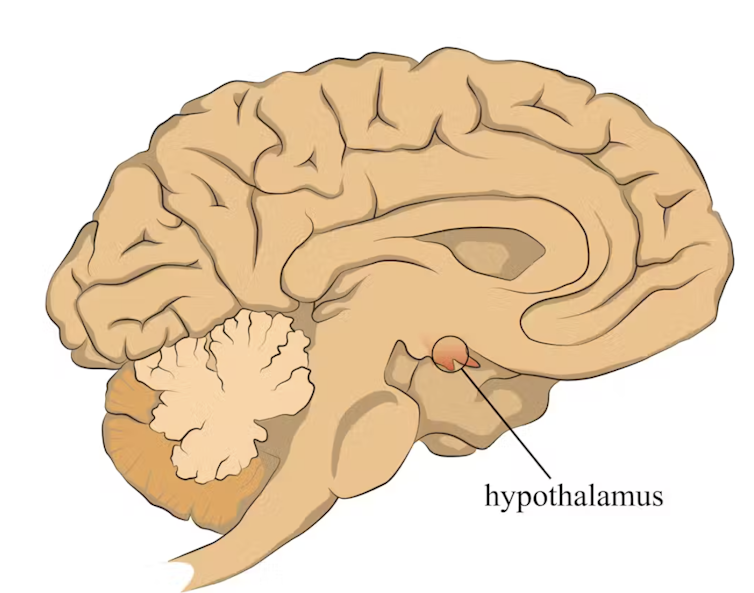
Human brain illustration
The hypothalamus sets off an alarm system in response to a real or perceived threat. stefan3andrei/Shutterstock

In a typical stress response, cortisol levels quickly increase when stress occurs, and then rapidly drop back to normal once the stress has subsided. In the short term, cortisol suppresses inflammation, to ensure the body has enough energy available to respond to an immediate threat.

But in the longer term, chronic stress can be harmful. A Harvard University study from 2022 showed that people suffering from psychological distress in the lead up to their COVID infection had a greater chance of experiencing long COVID. They classified this distress as depression, probable anxiety, perceived stress, worry about COVID and loneliness.

Those suffering distress had close to a 50% greater risk of long COVID compared to other participants. Cortisol has been shown to be high in the most severe cases of COVID.

Stress causes inflammation

Inflammation is a short-term reaction to an injury or infection. It is responsible for trafficking immune cells in your body so the right cells are present in the right locations at the right times and at the right levels.

The immune cells also store a memory of that threat to respond faster and more effectively the next time.

Initially, circulating immune cells detect and flock to the site of infection. Messenger proteins, known as pro-inflammatory cytokines, are released by immune cells, to signal the danger and recruit help, and our immune system responds to neutralise the threat.

During this response to the infection, if the immune system produces too much of these inflammatory chemicals, it can trigger symptoms such as nasal congestion and runny nose.
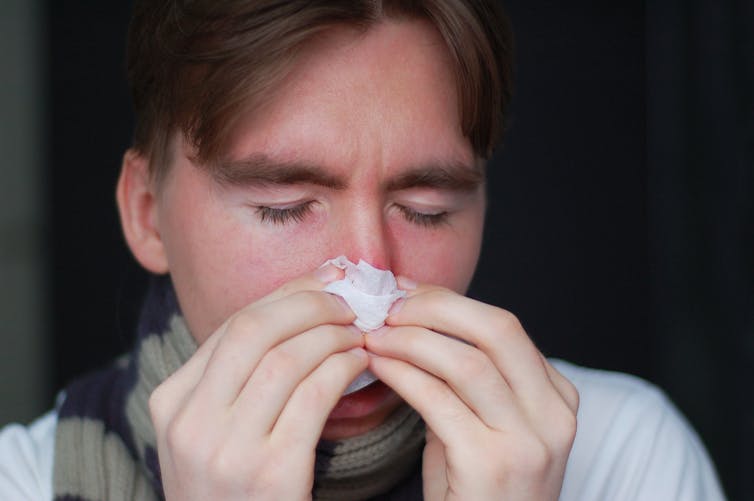
Man blows nose
Our immune response can trigger symptoms such as a runny nose. Alyona Mandrik/Shutterstock

What about chronic stress?

Chronic stress causes persistently high cortisol secretion, which remains high even in the absence of an immediate stressor.

The immune system becomes desensitised and unresponsive to this cortisol suppression, increasing low-grade “silent” inflammation and the production of pro-inflammatory cytokines (the messenger proteins).

Immune cells become exhausted and start to malfunction. The body loses the ability to turn down the inflammatory response.

Over time, the immune system changes the way it responds by reprogramming to a “low surveillance mode”. The immune system misses early opportunities to destroy threats, and the process of recovery can take longer.

So how can you manage your stress?

We can actively strengthen our immunity and natural defences by managing our stress levels. Rather than letting stress build up, try to address it early and frequently by:

1) Getting enough sleep

Getting enough sleep reduces cortisol levels and inflammation. During sleep, the immune system releases cytokines, which help fight infections and inflammation.

2) Taking regular exercise

Exercising helps the lymphatic system (which balances bodily fluids as part of the immune system) circulate and allows immune cells to monitor for threats, while sweating flushes toxins. Physical activity also lowers stress hormone levels through the release of positive brain signals.

3) Eating a healthy diet

Ensuring your diet contains enough nutrients – such as the B vitamins, and the full breadth of minerals like magnesium, iron and zinc – during times of stress has a positive impact on overall stress levels. Staying hydrated helps the body to flush out toxins.

4) Socialising and practising meditation or mindfulness

These activities increase endorphins and serotonin, which improve mood and have anti-inflammatory effects. Breathing exercises and meditation stimulate the parasympathetic nervous system, which calms down our stress responses so we can “reset” and reduce cortisol levels.

Sathana Dushyanthen, Academic Specialist & Lecturer in Cancer Sciences & Digital Health| Superstar of STEM| Science Communicator, The University of Melbourne

This article is republished from The Conversation under a Creative Commons license. Read the original article.

Don’t Forget…

Did you arrive here from our newsletter? Don’t forget to return to the email to continue learning!

Learn to Age Gracefully

Join the 98k+ American women taking control of their health & aging with our 100% free (and fun!) daily emails:

  • How To Lower Your Cholesterol By 50+ Points Without Drugs

    10almonds is reader-supported. We may, at no cost to you, receive a portion of sales if you purchase a product through a link in this article.

    Dr. Siobhan Deshauer explains:

    The Plan

    She recommends:

    • Dietary patterns: rather than tracking individual nutrients, follow Mediterranean, DASH, or plant-based diets; these reduce LDL and heart risk by emphasizing whole foods and minimizing processed foods and animal fats
    • Plant proteins: replacing animal proteins with legumes, seeds, and nuts lowers LDL by 6 points; benefits come from lower saturated fat and added fiber and sterols
    • Soluble fiber: traps cholesterol in the gut and removes it through stool; 1g of soluble fiber may reduce LDL by 2 points; psyllium can lower LDL by 13 points with 2 tbsp/day
    • Phytosterols/stanols: plant-based cholesterol analogs can lower LDL by 5–10 points at 2g/day, but hard to get from diet alone; supplements may help, but carry risks for hyperabsorbers
    • Unfiltered coffee: brewing methods like espresso, French press, and Turkish coffee retain cafestol, which raises LDL; using a paper filter can lower LDL by 15 points
    • Probiotics: early studies show they may lower LDL by 8 points, but individual products vary too much to recommend supplements; fermented foods like kimchi, yogurt, and kefir can reliably help though
    • Exercise: moderate cardio (4×/week) can reduce LDL by 5–6 points; adding weight training may drop it by 11 points; exercise improves overall cardiovascular health even if LDL impact is modest
    • Weight loss: long-term loss of 1kg can reduce LDL by 1.3 points; effect strongest for those starting at higher BMI

    You might notice, therefore, that the results of some things might not be what you’d expect. For example, using a paper filter when making coffee can lower LDL more than 10x more than losing 1kg of weight. Yet for some reason, that’s rarely what’s first to get recommended to a patient.

    So, you don’t have to do everything on the list, but choose wisely! For more on each of these, enjoy:

    Click Here If The Embedded Video Doesn’t Load Automatically!

    Want to learn more?

    You might also like:

    Lower Cholesterol Naturally ← our own main feature on such

    Take care!

    Share This Post

  • Overdone It? How To Speed Up Recovery After Exercise

    10almonds is reader-supported. We may, at no cost to you, receive a portion of sales if you purchase a product through a link in this article.

    How To Speed Up Recovery After A Workout (According To Actual Science)

    Has your enthusiasm ever been greater than your ability, when it comes to exercise?

    Perhaps you leapt excitedly into a new kind of exercise, or maybe you made a reprise of something you used to do, and found out the hard way you’re not in the same condition you used to be?

    If you’ve ever done an exercise session and then spent the next three days recovering, this one’s for you. And if you’ve never done that? Well, prevention is better than cure!

    Post-exercise stretching probably won’t do much to help

    If you like to stretch after a workout, great, don’t let us stop you. Stretching is, generally speaking, good.

    But: don’t rely on it to hasten recovery. Here’s what scientists Afonso et al. had to say recently, after doing a big review of a lot of available data:

    ❝There wasn’t sufficient statistical evidence to reject the null hypothesis that stretching and passive recovery have equivalent influence on recovery.

    Data is scarce, heterogeneous, and confidence in cumulative evidence is very low. Future research should address the limitations highlighted in our review, to allow for more informed recommendations.

    For now, evidence-based recommendations on whether post-exercise stretching should be applied for the purposes of recovery should be avoided, as the (insufficient) data that is available does not support related claims.❞

    Source: The Effectiveness of Post-exercise Stretching in Short-Term and Delayed Recovery of Strength, Range of Motion and Delayed Onset Muscle Soreness: A Systematic Review and Meta-Analysis of Randomized Controlled Trials

    …and breath! What a title.

    Hot and Cold

    Contrast bath therapy (alternating hot and cold, which notwithstanding the name, can also be done in a shower) can help reduce muscle soreness after workout, because of how the change in temperature stimulates vasodilation and vasoconstriction, reducing inflammation while speeding up healing:

    Contrast Water Therapy and Exercise Induced Muscle Damage: A Systematic Review and Meta-Analysis

    If doing this in the shower isn’t practical for you, and you (like most people) have only one bathtub, then cold is the way to go for the most evidence-based benefits:

    Whole-Body Cryotherapy in Athletes: From Therapy to Stimulation. An Updated Review of the Literature

    Eat protein whenever, carbs after

    Eating protein before a workout can boost muscle protein synthesis. Be aware that even if you’re not bodybuilding, your body will still need to do cell replacement and repair, including in any muscle tissue that got damaged* during the workout

    If you don’t like eating before a workout, eating protein after is fine too:

    Pre- versus post-exercise protein intake has similar effects on muscular adaptations

    *Note: muscle tissue is supposed to get damaged (slightly!) during many kinds of workout.

    From lactic acid (that “burn” you feel when exercising) to microtears, the body’s post-workout job is to make the muscle stronger than before, and to do that, it needs you to have found the weak spots for it.

    That’s what exercise-to-exhaustion does.

    Eating carbs after a workout helps replace lost muscle glycogen.

    For a lot more details on optimal nutrition timing in the context of exercise (carbs, proteins, micronutrients, different kinds of exercise, etc), check out this very clear guide:

    International society of sports nutrition position stand: nutrient timing

    Alcohol is not the post-workout carb you want

    Shocking, right? But of course, it’s very common for casual sportspeople to hit the bar for a social drink after their activity of choice.

    However, consuming alcohol after exercise doesn’t merely fail to help, it actively inhibits glycogen replacement and protein synthesis:

    Alcohol Ingestion Impairs Maximal Post-Exercise Rates of Myofibrillar Protein Synthesis following a Single Bout of Concurrent Training

    Also, if you’re tempted to take alcohol “to relax”, please be aware that alcohol only feels relaxing because of what it does to the brain; to the rest of the body, it is anything but, and also raises blood pressure and cortisol levels.

    As to what to drink instead…

    Hydrate, and consider creatine and tart cherry supplementation

    Hydration is a no-brainer, but when you’re dehydrated, it’s easy to forget!

    Creatine is a very well-studied supplement, that helps recovery from intense exercise:

    International Society of Sports Nutrition position stand: safety and efficacy of creatine supplementation in exercise, sport, and medicine

    Tart cherry juice has been found to reduce muscle damage, soreness, and inflammation after exercise:

    Powdered tart cherry supplementation demonstrates benefit on markers of catabolism and muscle soreness following an acute bout of intense lower body resistance exercise

    Wondering where you can get tart cherry powder? We don’t sell it (or anything else), but here’s an example product on Amazon.

    And of course, actually rest

    That includes good sleep, please. Otherwise…

    Effects of Sleep Deprivation on Acute Skeletal Muscle Recovery after Exercise

    Rest well!

    Share This Post

  • Nine Pints – by Rose George

    10almonds is reader-supported. We may, at no cost to you, receive a portion of sales if you purchase a product through a link in this article.

    Rose George is not a scientist, but an investigative journalist. As such, she’s a leave-no-stone-unturned researcher, and that shows here.

    The style throughout is, as one might expect, journalistic. But, she’s unafraid of diving into the science of it, interviewing many medical professionals as part of her work. She also looks to people living with various blood-related conditions, ranging from hemophilia to HIV.

    Speakling of highly-stigmatized yet very manageable conditions, there’s also a fair section devoted to menstruation, menstrual blood, and societies’ responses to such, from shunning to active support.

    We also learn about the industrialization of blood—from blood banks to plasma labs to leech farms. You probably knew leeches are still used as a medical tool in even the most high-tech of hospitals, but you’ll doubtlessly learn a fascinating thing or two from the “insider views” along the way.

    Bottom line: if you’d like to know more about the red stuff in all its marvelous aspects, with neither sensationalization nor sanitization (the topic needs neither!), this is the book for you.

    Click here to check out Nine Pints, and learn more about yours!

    Share This Post

  • Vagus Nerve Reset To Release Stress/Trauma Stored In The Body

    10almonds is reader-supported. We may, at no cost to you, receive a portion of sales if you purchase a product through a link in this article.

    Trauma is often more about how your nervous system processed the experience than the event itself (for this reason, sometimes the same kind of event can affect different people very differently). The resultant rewiring can then perpetuate or even strengthen itself over time, the effects of which are often not fabulous.

    However, it is possible to do a sort of neurological reset, which won’t completely overwrite what was there before, but will soften it and allow cumulative progress the more the practice is undertaken:

    What happens in vagus…

    …doesn’t have to stay there. The vagus nerve, as regular 10almonds readers may remember, is one of the main links between your brain and gut, and, being the “wandering” nerve (“vagus” literally means “wandering”), it’s accessible at quite a few places, in quite a few ways. This means that while a lot of information is travelling up the vagus nerve into the brain, it’s possible to modify its signal slightly and engage the parasympathetic nervous system, triggering a neurological “letting go” response.

    Here’s a good one:

    1. Check your neck mobility before you start (notice how stiff or supple it is).
    2. Lie on your back (knees bent or legs straight, per your comfort and preference).
    3. Interlace your fingers and cradle the back of your head.
    4. Keep your head centered and move your eyes to the right for about 30 seconds (if you are in a room with a ticking clock, this is idea, to save you needing a visual cue).
    5. Return your eyes to rest at the center, then repeat on the left side.
    6. Notice any signs like sighs, deeper breaths, yawns, or swallowing—these indicate vagus nerve activation.
    7. Afterward, check neck mobility again to notice any changes.
    8. If no nervous system response occurs in 30 seconds, hold the eye position longer (60+ seconds).

    For more on all of this plus a visual demonstration, enjoy:

    Click Here If The Embedded Video Doesn’t Load Automatically!

    Want to learn more?

    You might also like:

    The Vagus Nerve (And How You Can Make Use Of It)

    Take care!

    Don’t Forget…

    Did you arrive here from our newsletter? Don’t forget to return to the email to continue learning!

    Learn to Age Gracefully

    Join the 98k+ American women taking control of their health & aging with our 100% free (and fun!) daily emails:

  • Complete Guide To Fasting – By Dr. Jason Fung

    10almonds is reader-supported. We may, at no cost to you, receive a portion of sales if you purchase a product through a link in this article.

    When it comes to intermittent fasting, the plethora of options can be daunting at first, as can such questions as what fluids are ok to take vs what will break the fast, what to expect in terms of your first fasting experience, and how not to accidentally self-sabotage.

    Practised well, intermittent fasting can be a very freeing experience, and not at all uncomfortable. Practised badly, it can be absolutely miserable, and this is one of those things where knowledge makes the difference.

    Dr. Fung (yes, the same Dr. Fung we’ve featured before as an expert on metabolic health) shares this knowledge over the course of 304 pages, with lots of scientific information and insider tips. He covers the different kinds of fasting, how each of them work and what they do for the body and brain, hunger/satiety hacks, lots of “frequently asked questions”, and even a range of recipes to help smooth your journey along its way.

    The style is very well-written pop-science; it’s engaging and straightforward without skimping on science at all.

    Bottom line: if you’re thinking of trying intermittent fasting but aren’t sure where/how to best get started, this book can set you off on the right foot and keep you on the right track thereafter.

    Click here to check out The Complete Guide to Fasting, and enjoy the process as well as the results!

    Don’t Forget…

    Did you arrive here from our newsletter? Don’t forget to return to the email to continue learning!

    Learn to Age Gracefully

    Join the 98k+ American women taking control of their health & aging with our 100% free (and fun!) daily emails:

  • Fix “Buzzard Neck” The Easy Way

    10almonds is reader-supported. We may, at no cost to you, receive a portion of sales if you purchase a product through a link in this article.

    Dr. Amy Konvalin shows us how:

    It’s about posture:

    Sitting or standing for long periods leads to “buzzard neck”, where your head moves forwards from your shoulders and increases neck and shoulder tension.

    This is more than just an aesthetic concern—it can cause huge problems for your spinal health as a whole, and by extension, your breathing, circulation, and brain. Further slouching limits diaphragm movement too and causes shallower breathing, tight shoulders, and neck stiffness, as well as gradually compressing your organs. It’s not good.

    If you’re going to sit, then:

    1. Sit on a firm chair, and rock on your “sitbones” until your shoulders stack over your hips and your head balances over your shoulders
    2. Set your hips slightly higher than your knees to encourage a light anterior pelvic tilt and easier upright posture

    You can then also do some other posture-improving exercises while you’re there:

    • Chin tuck: glide your chin straight back to lengthen your neck
    • Scapular retraction: gently squeeze your shoulder blades together and release
    • Shoulder shrug: lift your shoulders towards your ears, then press them down lightly
    • Diaphragmatic breathing: inhale through your nose and exhale through your mouth like blowing out a candle

    Best, of course, is to sit as little as reasonably possible, and include frequent movement breaks whenever you reasonably can.

    For more on all of this, enjoy:

    Click Here If The Embedded Video Doesn’t Load Automatically!

    Want to learn more?

    You might also like:

    The Pains That Good Posture Now Can Help You Avoid Later

    Take care!

    Don’t Forget…

    Did you arrive here from our newsletter? Don’t forget to return to the email to continue learning!

    Learn to Age Gracefully

    Join the 98k+ American women taking control of their health & aging with our 100% free (and fun!) daily emails: