

‘No compassion… just blame’: how weight stigma in maternity care harms larger-bodied women and their babies
10almonds is reader-supported. We may, at no cost to you, receive a portion of sales if you purchase a product through a link in this article.
According to a study from the United States, women experience weight stigma in maternity care at almost every visit. We expect this experience to be similar in Australia, where more than 50% of women of reproductive age live in larger bodies.
Weight stigma can present as stereotyping, negative attitudes and discriminatory actions towards larger-bodied people.
It occurs in other areas of health care and in society at large. But our research is focused on weight stigma in maternity care, which can cause significant harm for larger-bodied women and their babies.
What does weight stigma look like in maternity care?
Sometimes weight stigma is explicit, or on purpose. Explicit weight stigma includes health-care professionals having negative attitudes towards caring for larger-bodied pregnant women. This might present, for instance, when health professionals make negative comments about weight or accuse women of dishonesty when they discuss their dietary intake.
Sometimes weight stigma is implicit, or unintentional. Implicit weight stigma includes maternity care providers avoiding physical touch or eye contact during consultations with larger-bodied women.
Policies, guidelines and environments also contribute to weight stigma. Women in larger bodies frequently report feeling stigmatised and unable to access the type of maternity care they would prefer. Lack of availability of adequately fitting hospital clothing or delivery beds are other notable examples.
In a review published last year, we looked at weight stigma from preconception to after birth. Our results showed larger-bodied women are sometimes automatically treated as high-risk and undergo extra monitoring of their pregnancy even when they have no other risk factors that require monitoring.
This approach is problematic because it focuses on body size rather than health, placing responsibility on the woman and disregarding other complex determinants of health. https://www.youtube.com/embed/RfGVKqYN6o8?wmode=transparent&start=0 Weight stigma is common in maternity care.
How does this make women feel?
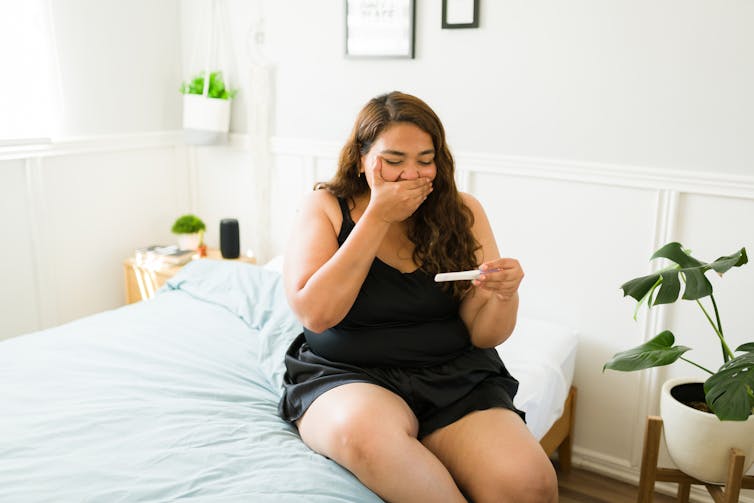
Qualitative evidence shows women who experience weight stigma during their maternity care feel judged, devalued, shamed and less worthy. They may feel guilty about getting pregnant and experience self-doubt.
As one research participant explained:
One doctor told me I was terrible for getting pregnant at my weight, that I was setting up my baby to fail […] I was in tears, and he told me I was being too sensitive.
A 2023 Australian paper written by women who had experienced weight stigma in maternity care recounted their care as hyper-focused on weight and dehumanising, robbing them of the joy of pregnancy.
According to one woman, “there was no compassion or conversation, just blame”.
Beyond making women feel humiliated and disrespected, weight stigma in maternity care can affect mental health. For example, weight stigma is linked to increased risk of depressive symptoms and stress, disordered eating behaviours and emotional eating.
One of the key reasons why weight stigma is so damaging to pregnant women’s health is because it’s closely linked to body image concerns.
Society unfairly holds larger-bodied women up to unrealistic ideals around their body shape and size, their suitability to be a mother, and the control they have over their weight gain.
Self stigma occurs when women apply society’s stigmatising narrative – from people in the community, the media, peers, family members and health-care providers – to themselves.
Impacts on mum and baby
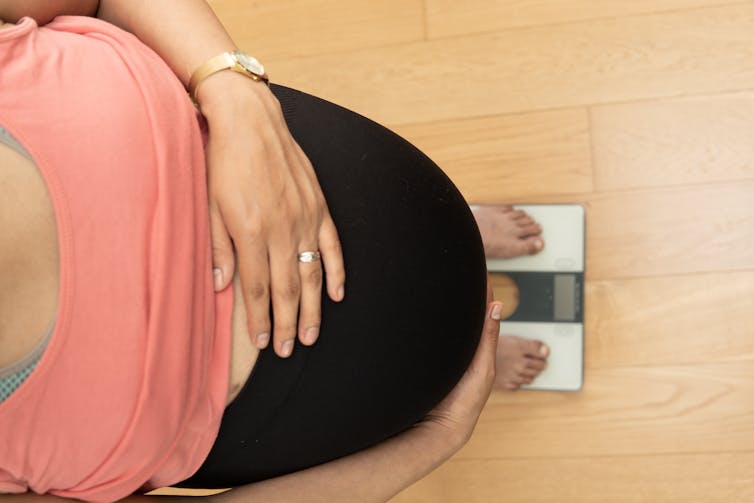
Several adverse pregnancy and birth outcomes have been linked to weight stigma in maternity care. These include gestational diabetes, caesarean birth and lower uptake of breastfeeding.
While we know these things can also be linked to higher body weight, emerging evidence shows weight stigma may have a stronger link with some outcomes than body mass index.
There are a variety of possible reasons for these links. For example, weight stigma may result in delayed access to and engagement with health-care services, and, as shown above, poorer mental health and reduced confidence. This may mean a woman is less likely to initiate and seek help with breastfeeding, for example.
Experiencing weight stigma also leads to a stress response in the body, which could affect a woman’s health during pregnancy.
In turn, the adverse effects of weight stigma can also affect the baby’s health. For example, gestational diabetes has a range of potential negative outcomes including a higher likelihood of premature birth, difficulties during birth, and an increased risk of the child developing type 2 diabetes.
But the burden and blame should not fall on women. Pregnant and postpartum women should not have to accept experiences of weight stigma in health care.
What can we do about it?
While it’s essential to address weight stigma as a societal issue, health services can play a key role in undoing the narrative of blame and shame and making maternity care more equitable for larger-bodied women.
Addressing weight stigma in maternity care can start with teaching midwives and obstetricians about weight stigma – what it is, where it happens, and how it can be minimised in practice.
We worked with women who had experienced weight stigma in maternity care and midwives to co-design resources to meet this need. Both women and midwives wanted resources that could be easily integrated into practice, acted as consistent reminders to be size-friendly, and met midwives’ knowledge gaps.
The resources included a short podcast about weight stigma in maternity care and images of healthy, larger-bodied pregnant women to demonstrate the most likely outcome is a healthy pregnancy. Midwives evaluated the resources positively and they are ready to be implemented into practice.
There is a long road to ending weight stigma in maternity care, but working towards this goal will benefit countless mothers and their babies.
Briony Hill, Deputy Head, Health and Social Care Unit and Senior Research Fellow, Monash University and Haimanot Hailu, PhD Candidate, Health and Social Care Unit, Monash University
This article is republished from The Conversation under a Creative Commons license. Read the original article.
Don’t Forget…
Did you arrive here from our newsletter? Don’t forget to return to the email to continue learning!

Recommended
Learn to Age Gracefully
Join the 98k+ American women taking control of their health & aging with our 100% free (and fun!) daily emails:
-
The Body Fat That Can Help Against Diabetes?
10almonds is reader-supported. We may, at no cost to you, receive a portion of sales if you purchase a product through a link in this article.
When it comes to type 2 diabetes and pre-diabetes, one of the first things doctors will typically advise most people is to lose weight.
There is logic to this—it is known that body fat can reduce insulin sensitivity (spoiler: there’s nuance to this, though—more on this later!).
However, in many cases of advising people to lose weight, the first and foremost reason is a more a matter of Fat’s Real Barriers To Health.
So what’s this fat that can help?
We’ll get to that shortly.
First, let’s talk about the fat that really doesn’t help: visceral fat
We wrote more about visceral fat, here: Visceral Belly Fat & How To Lose It ← “visceral belly fat” is actually a redundant tautology repeated more than once unnecessarily (since the only place we get it is the viscera of the abdominal cavity), but including both terms makes the article easier to find when using our website’s search function 😉
Metabolically, it’s very different from subcutaneous fat. Now, we do need some! Those organs do need cushioning, after all. But it’s all-too-easy to have too much of a good thing, in which case, it becomes a very bad thing.
Researchers (Dr. Elsa Vasquez Arreola et al.) found that prediabetes can go into remission without weight loss, with about one in four people normalizing blood sugar despite no drop in body weight.
And, notably, remission without weight loss provides the same level of protection against future type 2 diabetes as remission achieved through losing weight.
This is a huge help, because focusing only on weight loss hasn’t worked well for many people, who become discouraged by being hounded to lose weight and then not being able to do so, and if they think their health is really going to be dependent on weight loss, they well just give up.
As it turns out, blood sugar improvements depend more on fat distribution than total body weight.
And why?
Let’s go back to those two types of fat we mentioned earlier:
- Visceral fat: fat stored around your internal organs increases inflammation and disrupts insulin function, raising blood sugar levels.
- Subcutaneous fat: fat stored under your skin (i.e. the fat you can reach to squish) can actively support healthy metabolism by releasing hormones that improve insulin sensitivity.
Now, with that in mind, guess what happened in the study? That’s right, people who reversed prediabetes without weight loss shifted fat away from abdominal organs towards subcutaneous stores, which explains why remission was associated with better insulin sensitivity and improved pancreatic beta-cell function.
You can read the paper in full, here: Prevention of type 2 diabetes through prediabetes remission without weight loss
What to do about it
Firstly, do see our previously-mentioned article: Visceral Belly Fat & How To Lose It for the dos and don’ts of getting healthier (which for most people means: lower) visceral fat levels.
Next up, see also: Body Fat & Pelvic Floor Problems: What Matters Most Is Where The Fat Is for the science behind “apple or pear” distributions, and how to switch it up.
You may also be wondering: Can We Do Fat Redistribution? And the answer is yes, and we are doing it all the time whether we want to or not, so we might as well know what things affect our fat distribution in various body parts. The article we just linked there shows how.
While we’re at it, one other place you really don’t want excess fat, for metabolic reasons, is your liver. So: How To Unfatty A Fatty Liver
Want to learn more?
You might like this book that we reviewed a while ago:
Why We Get Sick – by Dr. Benjamin Bikman ← this is about insulin resistance, and, importantly, the invisible insulin resistance that precedes blood sugar imbalances by many years (it goes unnoticed because the pancreas will dutifully keep cranking out more and more insulin to keep the blood sugars stable, until one day it just can’t keep up anymore, and then and only then does prediabetes get diagnosed).
Enjoy!
Share This Post
-
How To Leverage Attachment Theory In Your Relationship
10almonds is reader-supported. We may, at no cost to you, receive a portion of sales if you purchase a product through a link in this article.
How To Leverage Attachment Theory In Your Relationship
Attachment theory has come to be seen in “kids nowadays”’ TikTok circles as almost a sort of astrology, but that’s not what it was intended for, and there’s really nothing esoteric about it.
What it can be, is a (fairly simple, but) powerful tool to understand about our relationships with each other.
To demystify it, let’s start with a little history…
Attachment theory was conceived by developmental psychologist Mary Ainsworth, and popularized as a theory bypsychiatrist John Bowlby. The two would later become research partners.
- Dr. Ainsworth’s initial work focused on children having different attachment styles when it came to their caregivers: secure, avoidant, or anxious.
- Later, she would add a fourth attachment style: disorganized, and then subdivisions, such as anxious-avoidant and dismissive-avoidant.
- Much later, the theory would be extended to attachments in (and between) adults.
What does it all mean?
To understand this, we must first talk about “The Strange Situation”.
“The Strange Situation” was an experiment conducted by Dr. Ainsworth, in which a child would be observed playing, while caregivers and strangers would periodically arrive and leave, recreating a natural environment of most children’s lives. Each child’s different reactions were recorded, especially noting:
- The child’s reaction (if any) to their caregiver’s departure
- The child’s reaction (if any) to the stranger’s presence
- The child’s reaction (if any) to their caregiver’s return
- The child’s behavior on play, specifically, how much or little the child explored and played with new toys
She observed different attachment styles, including:
- Secure: a securely attached child would play freely, using the caregiver as a secure base from which to explore. Will engage with the stranger when the caregiver is also present. May become upset when the caregiver leaves, and happy when they return.
- Avoidant: an avoidantly attached child will not explore much regardless of who is there; will not care much when the caregiver departs or returns.
- Anxious: an anxiously attached child may be clingy before separation, helplessly passive when the caregiver is absent, and difficult to comfort upon the caregiver’s return.
- Disorganized: a disorganizedly attached child may flit between the above types
These attachment styles were generally reflective of the parenting styles of the respective caregivers:
- If a caregiver was reliably present (physically and emotionally), the child would learn to expect that and feel secure about it.
- If a caregiver was absent a lot (physically and/or emotionally), the child would learn to give up on expecting a caregiver to give care.
- If a caregiver was unpredictable a lot in presence (physical and/or emotional), the child would become anxious and/or confused about whether the caregiver would give care.
What does this mean for us as adults?
As we learn when we are children, tends to go for us in life. We can change, but we usually don’t. And while we (usually) no longer rely on caregivers per se as adults, we do rely (or not!) on our partners, friends, and so forth. Let’s look at it in terms of partners:
- A securely attached adult will trust that their partner loves them and will be there for them if necessary. They may miss their partner when absent, but won’t be anxious about it and will look forward to their return.
- An avoidantly attached adult will not assume their partner’s love, and will feel their partner might let them down at any time. To protect themself, they may try to manage their own expectations, and strive always to keep their independence, to make sure that if the worst happens, they’ll still be ok by themself.
- An anxiously attached adult will tend towards clinginess, and try to keep their partner’s attention and commitment by any means necessary.
Which means…
- When both partners have secure attachment styles, most things go swimmingly, and indeed, securely attached partners most often end up with each other.
- A very common pairing, however, is one anxious partner dating one avoidant partner. This happens because the avoidant partner looks like a tower of strength, which the anxious partner needs. The anxious partner’s clinginess can also help the avoidant partner feel better about themself (bearing in mind, the avoidant partner almost certainly grew up feeling deeply unwanted).
- Anxious-anxious pairings happen less because anxiously attached people don’t tend to be attracted to people who are in the same boat.
- Avoidant-avoidant pairings happen least of all, because avoidantly attached people having nothing to bind them together. Iff they even get together in the first place, then later when trouble hits, one will propose breaking up, and the other will say “ok, bye”.
This is fascinating, but is there a practical use for this knowledge?
Yes! Understanding our own attachment styles, and those around us, helps us understand why we/they act a certain way, and realize what relational need is or isn’t being met, and react accordingly.
That sometimes, an anxiously attached person just needs some reassurance:
- “I love you”
- “I miss you”
- “I look forward to seeing you later”
That sometimes, an avoidantly attached person needs exactly the right amount of space:
- Give them too little space, and they will feel their independence slipping, and yearn to break free
- Give them too much space, and oops, they’re gone now
Maybe you’re reading that and thinking “won’t that make their anxious partner anxious?” and yes, yes it will. That’s why the avoidant partner needs to skip back up and remember to do the reassurance.
It helps also when either partner is going to be away (physically or emotionally! This counts the same for if a partner will just be preoccupied for a while), that they parameter that, for example:
- Not: “Don’t worry, I just need some space for now, that’s all” (à la “I am just going outside and may be some time“)
- But: “I need to be undisturbed for a bit, but let’s schedule some me-and-you-time for [specific scheduled time]”.
Want to learn more about addressing attachment issues?
Psychology Today: Ten Ways to Heal Your Attachment Issues
You also might enjoy such articles such as:
- Nurturing secure attachment: building healthy relationships
- Why anxious and avoidant often attracted each other
- How to help an insecurely attached partner feel loved
- How to cope with a dismissive-avoidant partner
Lastly, to end on a light note…
Share This Post
-
What causes the itch in mozzie bites? And why do some people get such a bad reaction?
10almonds is reader-supported. We may, at no cost to you, receive a portion of sales if you purchase a product through a link in this article.
Are you one of these people who loathes spending time outdoors at dusk as the weather warms and mosquitoes start biting?
Female mosquitoes need blood to develop their eggs. Even though they take a tiny amount of our blood, they can leave us with itchy red lumps that can last days. And sometimes something worse.
So why does our body react and itch after being bitten by a mosquito? And why are some people more affected than others?
Arthur Poulin/Unsplash What happens when a mosquito bites?
Mosquitoes are attracted to warm blooded animals, including us. They’re attracted to the carbon dioxide we exhale, our body temperatures and, most importantly, the smell of our skin.
The chemical cocktail of odours from bacteria and sweat on our skin sends out a signal to hungry mosquitoes.
Some people’s skin smells more appealing to mosquitoes, and they’re more likely to be bitten than others.
Once the mosquito has made its way to your skin, things get a little gross.
The mosquito pierces your skin with their “proboscis”, their feeding mouth part. But the proboscis isn’t a single, straight, needle-like tube. There are multiple tubes, some designed for sucking and some for spitting.
Once their mouth parts have been inserted into your skin, the mosquito will inject some saliva. This contains a mix of chemicals that gets the blood flowing better.
There has even been a suggestion that future medicines could be inspired by the anti-blood clotting properties of mosquito saliva.
A common pest mosquito around the world, Culex quinquefasciatus. Cameron Webb (NSW Health Pathology), CC BY It’s not the stabbing of our skin by the mosquito’s mouth parts that hurts, it’s the mozzie spit our bodies don’t like.
Are some people allergic to mosquito spit?
Once a mosquito has injected their saliva into our skin, a variety of reactions can follow. For the lucky few, nothing much happens at all.
For most people, and irrespective of the type of mosquito biting, there is some kind of reaction. Typically there is redness and swelling of the skin that appears within a few hours, but often more quickly, after just a few minutes.
Occasionally, the reaction can cause pain or discomfort. Then comes the itchiness.
Some people do suffer severe reactions to mosquito bites. It’s a condition often referred to as “skeeter syndrome” and is an allergic reaction caused by the protein in the mosquito’s saliva. This can cause large areas of swelling, blistering and fever.
The chemistry of mosquito spit hasn’t really been well studied. But it has been shown that, for those who do suffer allergic reactions to their bites, the reactions may differ depending on the type of mosquito biting.
We all probably get more tolerant of mosquito bites as we get older. Young children are certainly more likely to suffer more following mosquito bites. But as we get older, the reactions are less severe and may pass quickly without too much notice.
How best to treat the bites?
Research into treating bites has yet to provide a single easy solution.
There are many myths and home remedies about what works. But there is little scientific evidence supporting their use.
The best way to treat mosquito bites is by applying a cold pack to reduce swelling and to keep the skin clean to avoid any secondary infections. Antiseptic creams and lotions may also help.
There is some evidence that heat may alleviate some of the discomfort.
It’s particularly tough to keep young children from scratching at the bite and breaking the skin. This can form a nasty scab that may end up being worse than the bite itself.
Applying an anti-itch cream may help. If the reactions are severe, antihistamine medications may be required.
To save the scratching, stop the bites
Of course, it’s better not to be bitten by mosquitoes in the first place. Topical insect repellents are a safe, effective and affordable way to reduce mosquito bites.
Covering up with loose fitted long sleeved shirts, long pants and covered shoes also provides a physical barrier.
Mosquito coils and other devices can also assist, but should not be entirely relied on to stop bites.
There’s another important reason to avoid mosquito bites: millions of people around the world suffer from mosquito-borne diseases. More than half a million people die from malaria each year.
In Australia, Ross River virus infects more than 5,000 people every year. And in recent years, there have been cases of serious illnesses caused by Japanese encephalitis and Murray Valley encephalitis viruses.
Cameron Webb, Clinical Associate Professor and Principal Hospital Scientist, University of Sydney
This article is republished from The Conversation under a Creative Commons license. Read the original article.
Share This Post
Related Posts
-
Girls with painful periods are twice as likely as their peers to have symptoms of anxiety or depression
10almonds is reader-supported. We may, at no cost to you, receive a portion of sales if you purchase a product through a link in this article.
Around half of teenage girls experience moderate to severe period pain. The mechanical force of the uterus contracting and inflammatory chemicals such as prostaglandins contribute to this pain.
Moderate to severe period pain has a significant impact on daily life. Girls with period pain are three to five times more likely than their peers to miss school or university, and two to five times more likely to miss out on social and physical activities.
Our new research found girls with period pain reported higher levels of psychological distress as young adults, even after accounting for earlier mental health issues and socioeconomic factors.
Shutterstock What comes first?
Menstrual pain has been dismissed and under-treated. Women report there is a perception among some health-care providers that stress, anxiety, or depression cause their pain.
However, participants in our lived experience research have told us that period pain leads to psychological distress. As one woman explained:
mental health [is] used frequently by health professionals to diminish my symptoms and make me feel as though I have untreated mental health conditions that are the cause of my issues instead of my physical pain.
Prior research suggests a bi-directional link between pain and mental health. A study of almost 15,00 adolescents with chronic pain found an increased risk of lifetime anxiety and depression. While our prior research on pelvic pain in adults showed psychological distress can worsen functional pain over time.
Research exploring the relationship between mental health and pain in teens with period pain is limited, with the direction of the relationship still unclear.
Take the example of Ruby, who represents a composite of clinical cases:
Ruby was netball captain in Year 6 but painful periods led to her dropping out of the team in Year 8. By Year 10, she was socialising less with her friends. At 17, she felt like her mental health was deteriorating and was locked in a struggle with her own body. Ruby saw her GP and was told to take Nurofen and keep moving because anxiety and depression had caused chronic pain.
While research has linked mental health and pain perception, we set out to determine the direction of this link: do mental health difficulties lead to period pain? Or does period pain contribute to mental health issues?
Our new study
We used data from the Longitudinal Study of Australian Children, also known as Growing Up in Australia, which has tracked the lives of 10,000 children and their families since 2004. We used data that tracked 1,600 girls who reported on their periods from age 14, 16 and 18.
Parents reported symptoms of anxiety and depression when the girls were 14–16 years old. The young women self-reported these symptoms at age 18, and levels of psychological distress at age 20–21.
This multi-stage study allowed us to look at how menstrual pain and mental health show up together and change over time during an important stage in young women’s lives.
While conditions such as endometriosis (which causes tissue similar to that which lines the uterus to grow outside the uterus) can be associated with pelvic pain, including period pain, the survey didn’t ask participants about endometriosis or pain-related diagnoses. So this didn’t form part of our study.
Around half of the participants experienced moderate to severe period pain.
We found girls who had painful periods were much more likely to also have symptoms of anxiety and depression at ages 14, 16 and 18 compared to those who did not have painful periods.
At age 14, adolescents who experienced painful periods were around twice as likely to have symptoms of anxiety and depression, compared to their peers who said their periods were not painful, or only a little painful.
These adolescents also reported higher levels of psychological distress as young adults, even after accounting for earlier mental health issues and socioeconomic factors.
Adolescents who reported period pain throughout their teens were more likely to experience “moderate” psychological distress in early adulthood. In contrast, adolescents who did not have period pain were more likely to experience “mild” psychological distress in early adulthood.
Importantly, we showed that period pain often comes before mental health issues develop – not the other way around. This suggests period pain could be a risk factor for future mental health problems.
The findings underscore the importance of identifying adolescents who are experiencing period pain. Many adolescents believe period pain is something they just have to put up with, and don’t seek help.
What can be done about period pain?
We recommend treating period pain early with a variety of options.
First-line period pain management includes:
- anti-inflammatories such as ibuprofen, which are available over the counter
- seeing your GP to discuss hormonal therapies, such as the oral contraceptive pill.
Additional strategies to manage period pain can include:
- heat (such as heat pads)
- physiotherapy
- regular exercise – even gentle activities such as yoga.
Improved menstrual education is needed to ensure teens can recognise when their menstrual experience is unusual, and know where they can access support.
Some programs provide menstrual education across schools and community groups. This education should be extended to families and school health and wellbeing support staff to facilitate early recognition and intervention.
Finally, further research is needed to confirm whether addressing period pain promptly reduces the risk of longer-term mental health symptoms.
Subhadra Evans, Associate Professor, Psychology, Deakin University; Antonina Mikocka-Walus, Professor in Health Psychology, Deakin University, and Marilla L. Druitt, Affiliate Senior Lecturer, Faculty of Health, Deakin University
This article is republished from The Conversation under a Creative Commons license. Read the original article.
Don’t Forget…
Did you arrive here from our newsletter? Don’t forget to return to the email to continue learning!
Learn to Age Gracefully
Join the 98k+ American women taking control of their health & aging with our 100% free (and fun!) daily emails:
-
Natural Tips for Falling Asleep
10almonds is reader-supported. We may, at no cost to you, receive a portion of sales if you purchase a product through a link in this article.
Questions and Answers at 10almonds
Have a question or a request? You can always hit “reply” to any of our emails, or use the feedback widget at the bottom!
This newsletter has been growing a lot lately, and so have the questions/requests, and we love that! In cases where we’ve already covered something, we might link to what we wrote before, but will always be happy to revisit any of our topics again in the future too—there’s always more to say!
As ever: if the question/request can be answered briefly, we’ll do it here in our Q&A Thursday edition. If not, we’ll make a main feature of it shortly afterwards!
So, no question/request too big or small
How to get to sleep at night as fast and as naturally as possible? Thank you!
We’ll definitely write more on that! You might like these articles we wrote already, meanwhile:
- Beating The Insomnia Blues ← this one is general advice and tips
- Time For Some Pillow Talk ← this one compares and reviews some popular sleep apps
- Insomnia? High Blood Pressure? Try these! ← this one tackles the matter from a dietary angle
Don’t Forget…
Did you arrive here from our newsletter? Don’t forget to return to the email to continue learning!
Learn to Age Gracefully
Join the 98k+ American women taking control of their health & aging with our 100% free (and fun!) daily emails:
-
How To Avoid Age-Related Macular Degeneration
10almonds is reader-supported. We may, at no cost to you, receive a portion of sales if you purchase a product through a link in this article.
Avoiding Age-Related Macular Degeneration
Eye problems can strike at any age, but as we get older, it becomes a lot more likely. In particular, age-related macular degeneration is, as the name suggests, an age-bound disease.
Is there no escaping it, then?
The risk factors for age-related macular degeneration are as follows:
- Being over the age of 55 (can’t do much about this one)
- Being over the age of 65 (risk climbs sharply now)
- Having a genetic predisposition (can’t do much about this one)
- Having high cholesterol (this one we can tackle)
- Having cardiovascular disease (this one we can tackle)
- Smoking (so, just don’t)
Genes predispose; they don’t predetermine. Or to put it another way: genes load the gun, but lifestyle pulls the trigger.
Preventative interventions against age-related macular degeneration
Prevention is better than a cure in general, and this especially goes for things like age-related macular degeneration, because the most common form of it has no known cure.
So first, look after your heart (because your heart feeds your eyes).
See also: The Mediterranean Diet
Next, eat to feed your eyes specifically. There’s a lot of research to show that lutein helps avoid age-related diseases in the eyes and the rest of the brain, too:
See also: Brain Food? The Eyes Have It
Do supplements help?
They can! There was a multiple-part landmark study by the National Eye Institute, a formula was developed that reduced the 5-year risk of intermediate disease progressing to late disease by 25–30%. It also reduced the risk of vision loss by 19%.
You can read about both parts of the study here:
Age-Related Eye Disease Studies (AREDS/AREDS2): major findings
As you can see, an improvement was made between the initial study and the second one, by replacing beta-carotene with lutein and zeaxanthin.
The AREDS2 formula contains:
- 500 mg vitamin C
- 180 mg vitamin E
- 80 mg zinc
- 10 mg lutein
- 2 mg copper
You can learn more about these supplements, and where to get them, here on the NEI’s corner of the official NIH website:
AREDS 2 Supplements for Age-Related Macular Degeneration
Take care of yourself!
Don’t Forget…
Did you arrive here from our newsletter? Don’t forget to return to the email to continue learning!
Learn to Age Gracefully
Join the 98k+ American women taking control of their health & aging with our 100% free (and fun!) daily emails:


