
Korean pear juice, IV drips, vitamin patches: do these trendy hangover cures actually work?

10almonds is reader-supported. We may, at no cost to you, receive a portion of sales if you purchase a product through a link in this article.

We’ve all been there. The pounding headache, relentless nausea, and the kind of tired no amount of coffee can fix. Hangovers are a reminder that last night’s fun comes at a cost.

These days, hangovers aren’t just something to complain about over a greasy breakfast – they’re big business. The global market for hangover cures is now valued at US$2.29 billion (A$3.53 billion) and projected to reach US$6.71 billion (A$10.33 billion) by 2032.

These products – ranging from capsules to drinks to patches – appear to be popular. Nearly 70% of drinkers say they would buy an effective hangover remedy. But any scientific evidence they work is thin.
Isabella Mendes/Pexels

First, what causes hangovers?

Despite years of research, the exact cause of a hangover is still unclear. But we know several biological processes contribute to that hungover feeling.

1. Your immune system is in overdrive

When you drink, your body treats alcohol like a threat. It breaks alcohol down into acetaldehyde, a toxic byproduct that triggers an immune response, releasing inflammatory chemicals called cytokines.

These chemicals are the same ones your body uses to fight infections, which is why a hangover can feel eerily similar to being sick.

2. You’re dehydrated

Alcohol blocks vasopressin, a hormone that helps the body retain water. Without it, you make more frequent trips to the bathroom and lose more fluid than you take in, leading to thirst, dry mouth, and the classic hangover headache.

3. Your sleep takes a hit

Although alcohol might help you fall asleep faster, it disrupts your natural sleep pattern. You get more deep sleep early on, but less rapid eye movement (REM) and light sleep stages.

As the alcohol wears off, your brain rebounds with more REM sleep and frequent wake ups, leaving you groggy and cognitively impaired the next day.

4. Your brain is recalibrating

Alcohol disrupts several brain chemicals. It boosts gamma-aminobutyric acid, a calming neurotransmitter, and suppresses glutamate, which normally keeps you stimulated and alert. That’s part of why drinking feels relaxing. But as your body tries to rebalance, you may be left feeling anxious or irritable.
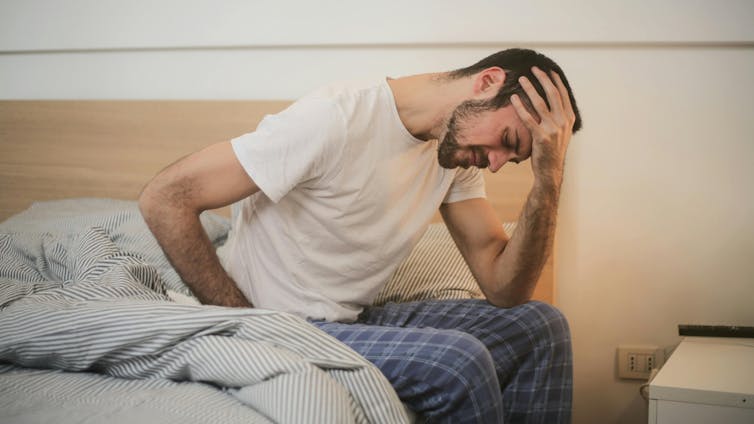
A man sitting on the edge of a bed holding his forehead.
When we feel rough the day after a big night of drinking, several things are happening in our body. Andrea Piacquadio/Pexels

What’s in hangover ‘remedies’?

Modern hangover remedies have evolved well beyond the “hair of the dog”. You’ve got liver-protecting capsules, electrolyte-packed drinks, vitamin patches for while you party, and strips that dissolve on your tongue – all with the goal of accelerating recovery.

A 2025 analysis which looked at hangover products marketed in Australia found B vitamins and sodium were the most common ingredients, appearing in nearly half of all products reviewed.

B vitamins are often included based on the idea alcohol depletes them, while sodium is thought to support rehydration. However, there’s little solid evidence that either significantly improves hangover symptoms in otherwise healthy people.

Natural ingredients such as ginger and dihydromyricetin, a compound extracted from the Japanese raisin tree, were also popular, featuring in more than one-quarter and one-third of products respectively.

Ginger is widely used to treat nausea and vomiting, and there’s some evidence to support its effectiveness for gastrointestinal symptoms. However, this is not specific to hangovers.

Dihydromyricetin has been marketed as a revolutionary hangover fighter, with claims it helps the liver process alcohol more efficiently. Yet, when tested under controlled conditions, it failed to reduce hangover severity more than a placebo.

Other popular ingredients show similarly underwhelming results. The amino acid L-cysteine has shown some benefits in one study, but the sample was too small to draw firm conclusions.

Another product often marketed as a hangover remedy is Korean pear juice. If consumed before drinking, it may help the body break down alcohol more efficiently. A 2013 study found it slightly lowered blood alcohol levels and improved focus. However the effects were small, and it offered little benefit once a hangover had already set in.
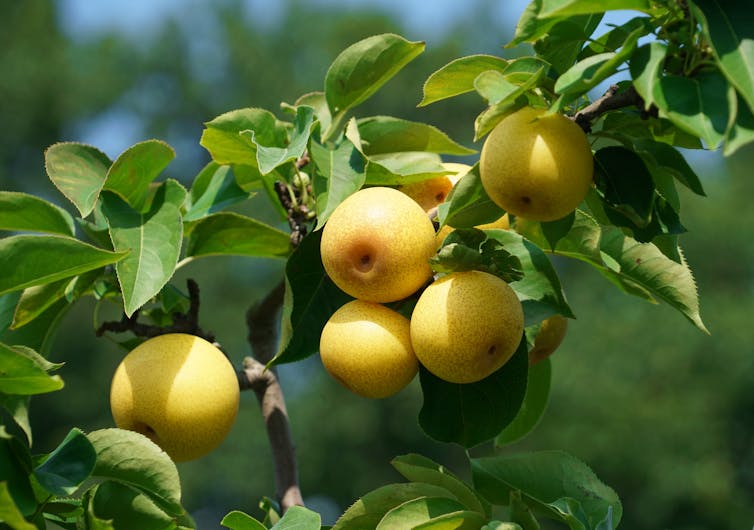
Korean pears on a tree.
The juice from Korean pears is often sold as a hangover remedy. ND700/Shutterstock

Another natural remedy that has shown some promise is red ginseng. One study found participants who drank red ginseng extract after alcohol were less thirsty, fatigued, had fewer stomach aches, and even had improved memory compared to people who drank just plain water.

Mouse trials of ginseng have also shown consistent benefits across symptoms and biological markers of alcohol-related stress.

How about IV drips and vitamin patches?

Not all remedies come in pill or plant form. IV drips, often marketed as wellness boosters for energy, immunity, and even glowing skin, are now offered at clinics and “drip bars” for hangovers too. But unless you’re severely dehydrated, there’s little evidence these pricey infusions work any better than water, food and rest.

Vitamin patches are also trending, claiming to deliver nutrients through the skin while bypassing digestion. But again, studies don’t necessarily support this. Most vitamins are better absorbed through food or oral supplements.

There’s no magic cure for a hangover

As the hangover remedy market continues to grow, science hasn’t kept pace with marketing claims. However, these science-backed strategies may help:

  • pacing yourself and having no more than one standard drink an hour gives your liver time to keep up, so you’re less likely to feel too drunk or hungover the next day
  • stay hydrated by alternating alcoholic drinks with water
  • eating before drinking slows alcohol absorption and can help reduce stomach irritation
  • get plenty of sleep after a big night out, as your body does most of its recovery while you rest. Even a short nap the next day can help you feel better.

Practising moderation can be difficult in the moment. But it’s likely to be your best bet to avoid waking up feeling rough the next day.

Blair Aitken, Postdoctoral Research Fellow in Psychopharmacology, Swinburne University of Technology and Rebecca Rothman, PhD Candidate in Clinical Psychology, School of Health Sciences, Swinburne University of Technology

This article is republished from The Conversation under a Creative Commons license. Read the original article.

Don’t Forget…

Did you arrive here from our newsletter? Don’t forget to return to the email to continue learning!

Learn to Age Gracefully

Join the 98k+ American women taking control of their health & aging with our 100% free (and fun!) daily emails:

  • Girls with painful periods are twice as likely as their peers to have symptoms of anxiety or depression

    10almonds is reader-supported. We may, at no cost to you, receive a portion of sales if you purchase a product through a link in this article.

    Around half of teenage girls experience moderate to severe period pain. The mechanical force of the uterus contracting and inflammatory chemicals such as prostaglandins contribute to this pain.

    Moderate to severe period pain has a significant impact on daily life. Girls with period pain are three to five times more likely than their peers to miss school or university, and two to five times more likely to miss out on social and physical activities.

    Our new research found girls with period pain reported higher levels of psychological distress as young adults, even after accounting for earlier mental health issues and socioeconomic factors.

    Shutterstock

    What comes first?

    Menstrual pain has been dismissed and under-treated. Women report there is a perception among some health-care providers that stress, anxiety, or depression cause their pain.

    However, participants in our lived experience research have told us that period pain leads to psychological distress. As one woman explained:

    mental health [is] used frequently by health professionals to diminish my symptoms and make me feel as though I have untreated mental health conditions that are the cause of my issues instead of my physical pain.

    Prior research suggests a bi-directional link between pain and mental health. A study of almost 15,00 adolescents with chronic pain found an increased risk of lifetime anxiety and depression. While our prior research on pelvic pain in adults showed psychological distress can worsen functional pain over time.

    Research exploring the relationship between mental health and pain in teens with period pain is limited, with the direction of the relationship still unclear.

    Take the example of Ruby, who represents a composite of clinical cases:

    Ruby was netball captain in Year 6 but painful periods led to her dropping out of the team in Year 8. By Year 10, she was socialising less with her friends. At 17, she felt like her mental health was deteriorating and was locked in a struggle with her own body. Ruby saw her GP and was told to take Nurofen and keep moving because anxiety and depression had caused chronic pain.

    While research has linked mental health and pain perception, we set out to determine the direction of this link: do mental health difficulties lead to period pain? Or does period pain contribute to mental health issues?

    Our new study

    We used data from the Longitudinal Study of Australian Children, also known as Growing Up in Australia, which has tracked the lives of 10,000 children and their families since 2004. We used data that tracked 1,600 girls who reported on their periods from age 14, 16 and 18.

    Parents reported symptoms of anxiety and depression when the girls were 14–16 years old. The young women self-reported these symptoms at age 18, and levels of psychological distress at age 20–21.

    This multi-stage study allowed us to look at how menstrual pain and mental health show up together and change over time during an important stage in young women’s lives.

    While conditions such as endometriosis (which causes tissue similar to that which lines the uterus to grow outside the uterus) can be associated with pelvic pain, including period pain, the survey didn’t ask participants about endometriosis or pain-related diagnoses. So this didn’t form part of our study.

    Around half of the participants experienced moderate to severe period pain.

    We found girls who had painful periods were much more likely to also have symptoms of anxiety and depression at ages 14, 16 and 18 compared to those who did not have painful periods.

    At age 14, adolescents who experienced painful periods were around twice as likely to have symptoms of anxiety and depression, compared to their peers who said their periods were not painful, or only a little painful.

    These adolescents also reported higher levels of psychological distress as young adults, even after accounting for earlier mental health issues and socioeconomic factors.

    Adolescents who reported period pain throughout their teens were more likely to experience “moderate” psychological distress in early adulthood. In contrast, adolescents who did not have period pain were more likely to experience “mild” psychological distress in early adulthood.

    Importantly, we showed that period pain often comes before mental health issues develop – not the other way around. This suggests period pain could be a risk factor for future mental health problems.

    The findings underscore the importance of identifying adolescents who are experiencing period pain. Many adolescents believe period pain is something they just have to put up with, and don’t seek help.

    What can be done about period pain?

    We recommend treating period pain early with a variety of options.

    First-line period pain management includes:

    • anti-inflammatories such as ibuprofen, which are available over the counter
    • seeing your GP to discuss hormonal therapies, such as the oral contraceptive pill.

    Additional strategies to manage period pain can include:

    Improved menstrual education is needed to ensure teens can recognise when their menstrual experience is unusual, and know where they can access support.

    Some programs provide menstrual education across schools and community groups. This education should be extended to families and school health and wellbeing support staff to facilitate early recognition and intervention.

    Finally, further research is needed to confirm whether addressing period pain promptly reduces the risk of longer-term mental health symptoms.

    Subhadra Evans, Associate Professor, Psychology, Deakin University; Antonina Mikocka-Walus, Professor in Health Psychology, Deakin University, and Marilla L. Druitt, Affiliate Senior Lecturer, Faculty of Health, Deakin University

    This article is republished from The Conversation under a Creative Commons license. Read the original article.

    Share This Post

  • Rehab Science – by Dr. Tom Walters 

    10almonds is reader-supported. We may, at no cost to you, receive a portion of sales if you purchase a product through a link in this article.

    Many books of this kind deal with the injury but not the pain; some source talk about pain but not the injury; this one does both, and more.

    Dr. Walters discusses in detail the nature of pain, various different kinds of pain, the factors that influence pain, and, of course, how to overcome pain.

    He also takes us on a tour of various different categories of injury, because some require very different treatment than others, and while there are some catch-all “this is good/bad for healing” advices, sometimes what will help with one injury with hinder healing another. So, this information alone would make the book a worthwhile read already.

    After this two-part theory-heavy introduction, the largest part of the book is given over to rehab itself, in a practical fashion.

    We learn about how to make an appropriate rehab plan, get the material things we need for it (if indeed we need material things), and specific protocols to follow for various different body parts and injuries.

    The style is very much that of a textbook, well-formatted and with plenty of illustrations throughout (color is sometimes relevant, so we recommend a print edition over Kindle for this one).

    Bottom line: if you have an injury to heal, or even just believe in being prepared, this book is an excellent guide.

    Click here to check out Rehab Science, to overcome pain and heal from injury!

    Share This Post

  • Oven-Roasted Ratatouille

    10almonds is reader-supported. We may, at no cost to you, receive a portion of sales if you purchase a product through a link in this article.

    This is a supremely low-effort, high-yield dish. It’s a nutritional tour-de-force, and very pleasing to the tastebuds too. We use flageolet beans in this recipe; they are small immature kidney beans. If they’re not available, using kidney beans or really any other legume is fine.

    You will need

    • 2 large zucchini, sliced
    • 2 red peppers, sliced
    • 1 large eggplant, sliced and cut into semicircles
    • 1 red onion, thinly sliced
    • 2 cans chopped tomatoes
    • 2 cans flageolet beans, drained and rinsed (or 2 cups same, cooked, drained, and rinsed)
    • ½ bulb garlic, crushed
    • 2 tbsp extra virgin olive oil
    • 1 tbsp balsamic vinegar
    • 1 tbsp black pepper, coarse ground
    • 1 tbsp nutritional yeast
    • 1 tbsp red chili pepper flakes (omit or adjust per your heat preferences)
    • ½ tsp MSG or 1 tsp low-sodium salt
    • Mixed herbs, per your preference. It’s hard to go wrong with this one, but we suggest leaning towards either basil and oregano or rosemary and thyme. We also suggest having some finely chopped to go into the dish, and some held back to go on the dish as a garnish.

    Method

    (we suggest you read everything at least once before doing anything)

    1) Preheat the oven to 350℉ / 180℃.

    2) Mix all the ingredients (except the tomatoes and herbs) in a big mixing bowl, ensuring even distribution.

    2) Add the tomatoes. The reason we didn’t add these before is because it would interfere with the oil being distributed evenly across the vegetables.

    3) Transfer to a deep-walled oven tray or an ovenproof dish, and roast for 30 minutes.

    4) Stir, add the chopped herbs, stir again, and return to the oven for another 30 minutes.

    5) Serve (hot or cold), adding any herb garnish you wish to use.

    Enjoy!

    Want to learn more?

    For those interested in some of the science of what we have going on today:

    Take care!

    Share This Post

  • Reishi Mushrooms: Which Benefits Do They Really Have?

    10almonds is reader-supported. We may, at no cost to you, receive a portion of sales if you purchase a product through a link in this article.

    Reishi Mushrooms

    Another Monday Research Review, another mushroom! If we keep this up, we’ll have to rename it “Mushroom Monday”.

    But, there’s so much room for things to say, and these are fun guys to write about, as we check the science for any spore’ious claims…

    Why do people take reishi?

    Popular health claims for the reishi mushroom include:

    • Immune health
    • Cardiovascular health
    • Protection against cancer
    • Antioxidant qualities
    • Reduced fatigue and anxiety

    And does the science agree?

    Let’s take a look, claim by claim:

    Immune health

    A lot of research for this has been in vitro (ie, with cell cultures in labs), but promising, for example:

    Immunomodulating Effect of Ganoderma lucidum (Lingzhi) and Possible Mechanism

    (that is the botanical name for reishi, and the Chinese name for it, by the way)

    That’s not to say there are no human studies though; here it was found to boost T-cell production in stressed athletes:

    Effect of Ganoderma lucidum capsules on T lymphocyte subsets in football players on “living high-training low”

    Cardiovascular health

    Here we found a stack of evidence for statistically insignificant improvements in assorted measures of cardiovascular health, and some studies where reishi did not outperform placebo.

    Because the studies were really not that compelling, instead of taking up room (and your time) with them, we’re going to move onto more compelling, exciting science, such as…

    Protection against cancer

    There’s a lot of high quality research for this, and a lot of good results. The body of evidence here is so large that even back as far as 2005, the question was no longer “does it work” or even “how does it work”, but rather “we need more clinical studies to find the best doses”. Researchers even added:

    ❝At present, lingzhi is a health food supplement to support cancer patients, yet the evidence supporting the potential of direct in vivo anticancer effects should not be underestimated.❞

    ~ Yuen et al.

    Check it out:

    Anticancer effects of Ganoderma lucidum: a review of scientific evidence

    Just so you know we’re not kidding about the weight of evidence, let’s drop a few extra sources:

    By the way, we shortened most of those titles for brevity, but almost all of the continued with “by” followed by a one-liner of how it does it.

    So it’s not a “mysterious action” thing, it’s a “this is a very potent medicine and we know how it works” thing.

    Antioxidant qualities

    Here we literally only found studies to say no change was found, one that found a slight increase of antioxidant levels in urine. It’s worth noting that levels of a given thing (or its metabolites, in the case of some things) in urine are often quite unhelpful regards knowing what’s going on in the body, because we get to measure only what the body lost, not what it gained/kept.

    So again, let’s press on:

    Reduced fatigue and anxiety

    Most of the studies for this that we could find pertained to health-related quality of life for cancer patients specifically, so (while they universally give glowing reports of reishi’s benefits to health and happiness of cancer patients), that’s a confounding factor when it comes to isolating its effects on reduction of fatigue and anxiety in people without cancer.

    Here’s one that looked at it in the case of reduction of fatigue, anxiety, and other factors, in patients without cancer (but with neurathenia), in which they found it was “significantly superior to placebo with respect to the clinical improvement of symptoms”.

    Summary:

    • Reishi mushroom’s anti-cancer properties are very, very clear
    • There is also good science to back immune health claims
    • It also has been found to significantly reduce fatigue and anxiety in unwell patients (we’d love to see more studies on its benefits in otherwise healthy people, though)

    Don’t Forget…

    Did you arrive here from our newsletter? Don’t forget to return to the email to continue learning!

    Learn to Age Gracefully

    Join the 98k+ American women taking control of their health & aging with our 100% free (and fun!) daily emails:

  • Another Reason To Enjoy The Mediterranean Diet!

    10almonds is reader-supported. We may, at no cost to you, receive a portion of sales if you purchase a product through a link in this article.

    The Mediterranean Diet is considered by many to be the current “gold standard” of healthy eating, and with good reason. With 10,000+ studies underpinning it and counting, it has a pretty hefty weight of evidence.

    Wondering what the Mediterranean Diet consists of? We outlined it in a previous main feature, so here it is for your convenience:

    The Mediterranean Diet: What Is It Good For? ← also covers which foods actually go into it, and which don’t 😎

    To get us started today, we’ll quickly drop some links to a few of those Mediterranean Diet studies from the top:

    The short version is: it glows, in a good way.

    So… What’s new?

    Give yourself a Mediterranean mitochondrial boost

    Researchers (Dr. Vittoria Cammisotto et al.) found that eating in a manner consistent with the Mediterranean diet is associated with increased levels of mitochondrial microproteins (namely: humanin, and small human mitochondrial ORF over serine tRNA, known as “SHMOOSE” to its friends) linked to healthier aging.

    Specifically, these microproteins go well above and beyond the job of being “mere” nutrients, and rather act directly as molecular messengers translating diet into cellular function, which means that they influence aging, cardiovascular health, and brain health.

    Which really is quite a reminder that at the end of the day, our body is one big organism of countless tiny parts that just do what they’re told.

    As for these molecular messengers specifically:

    • Humanin is associated with improved insulin sensitivity, cardiovascular protection, longevity, and preservation of cognitive function.
    • SHMOOSE appears to protect brain cells in general, although certain genetic variants affect Alzheimer’s disease risk too.
    • Both sets of higher microprotein levels were associated with lower oxidative stress markers, which is invariably good news, especially vs chronic diseases.

    The study even highlighted which components of the Mediterranean diet were responsible for which benefits:

    • Humanin: olive oil, fish, and legumes
    • SMOOSE: olive oil and lower refined carbohydrate

    So, olive oil scores twice! And by a completely different mechanism to that which we described in How Olives Can Help Protect Your Brain!

    Before you go shopping though, do first swing by: Type Of Olive Oil Does Matter, For Brain & Gut Health!

    And to read this study in full, you can find it here: Mediterranean diet adherence is associated with mitochondrial microproteins Humanin and SHMOOSE; potential role of the Humanin–Nox2 interaction in cardioprotection

    Want to learn more?

    You have options:

    Enjoy!

    Don’t Forget…

    Did you arrive here from our newsletter? Don’t forget to return to the email to continue learning!

    Learn to Age Gracefully

    Join the 98k+ American women taking control of their health & aging with our 100% free (and fun!) daily emails:

  • What COVID Does To Your Heart

    10almonds is reader-supported. We may, at no cost to you, receive a portion of sales if you purchase a product through a link in this article.

    “COVID is bad for the health” may not be breaking news, but this specific damage is, and it may be another axis by which Long COVID does us harm and wears down our organs on an ongoing basis, something that really is still an emerging science

    One of our earlier articles about it, for example: Support For Long COVID & Chronic Fatigue

    …which, while interesting and hopefully useful for those it affects, did not touch on the organ damage aspect at all, as it wasn’t known yet, beyond the obvious damage to the respiratory organs.

    So, what’s new?

    At the heart of things

    Researchers (Dr. Carmine Gentile et al.) investigated whether the COVID virus can directly infect heart tissue, rather than “merely” damaging it only indirectly through inflammation.

    As well as finding out that the answer is “yes”, the study also showed that the organization and interaction between different heart cell types are important for viral infection, meaning standard flat lab cell models may be missing important effects, that studies like this one can pick up.

    Which is important, because here in real life, our hearts are indeed 3-dimensional, and are not a single layer of cells in a petri dish.

    Thus, the virus was able to infect and replicate inside the intact 3D heart tissue model, but it did not infect individual heart cell types grown separately (as would normally be done).

    You may be wondering: what did the virus do there, beyond just “exist”?

    And the answer is manifold: the infection triggered gene changes linked to inflammation, interferon and antiviral responses, apoptosis, chemotaxis, fibrosis, and impaired contractile function.

    Translating from sciencese: it messed everything up, including the heart cells’ ability to clean up the mess, and the damage done stops the heart from functioning correctly.

    You may now be wondering: if that’s the case, why doesn’t everyone who gets COVID die?

    And the answer to that one is: it’s just a matter of severity. Sometimes the immune system wins out, especially if it’s been vaccinated. And sometimes, it’s a matter of survivorship bias—a heart that’s still keeping someone alive today, might not tomorrow.

    Notably, these findings do help explain why some people—including those with no prior heart disease—develop myocarditis, arrhythmias, or longer-term cardiac symptoms after getting COVID.

    See for example:

    As for the study we’ve been talking about today, you can read it in full, here: SARS-CoV-2 infection of 3D in vitro cardiac spheroids models the activation of antiviral, inflammatory, fibrotic, and contractile responses in a dose-dependent manner

    Want to learn more?

    Check out:

    What Can Be Done About Long COVID? ← scientists have found a possible cure, a procedure known as epipharyngeal abrasive therapy, which as enjoyable as it sounds, and is not yet proven to cure it completely (although to give it its due, the science so far really is promising)

    Take care!

    Don’t Forget…

    Did you arrive here from our newsletter? Don’t forget to return to the email to continue learning!

    Learn to Age Gracefully

    Join the 98k+ American women taking control of their health & aging with our 100% free (and fun!) daily emails: