
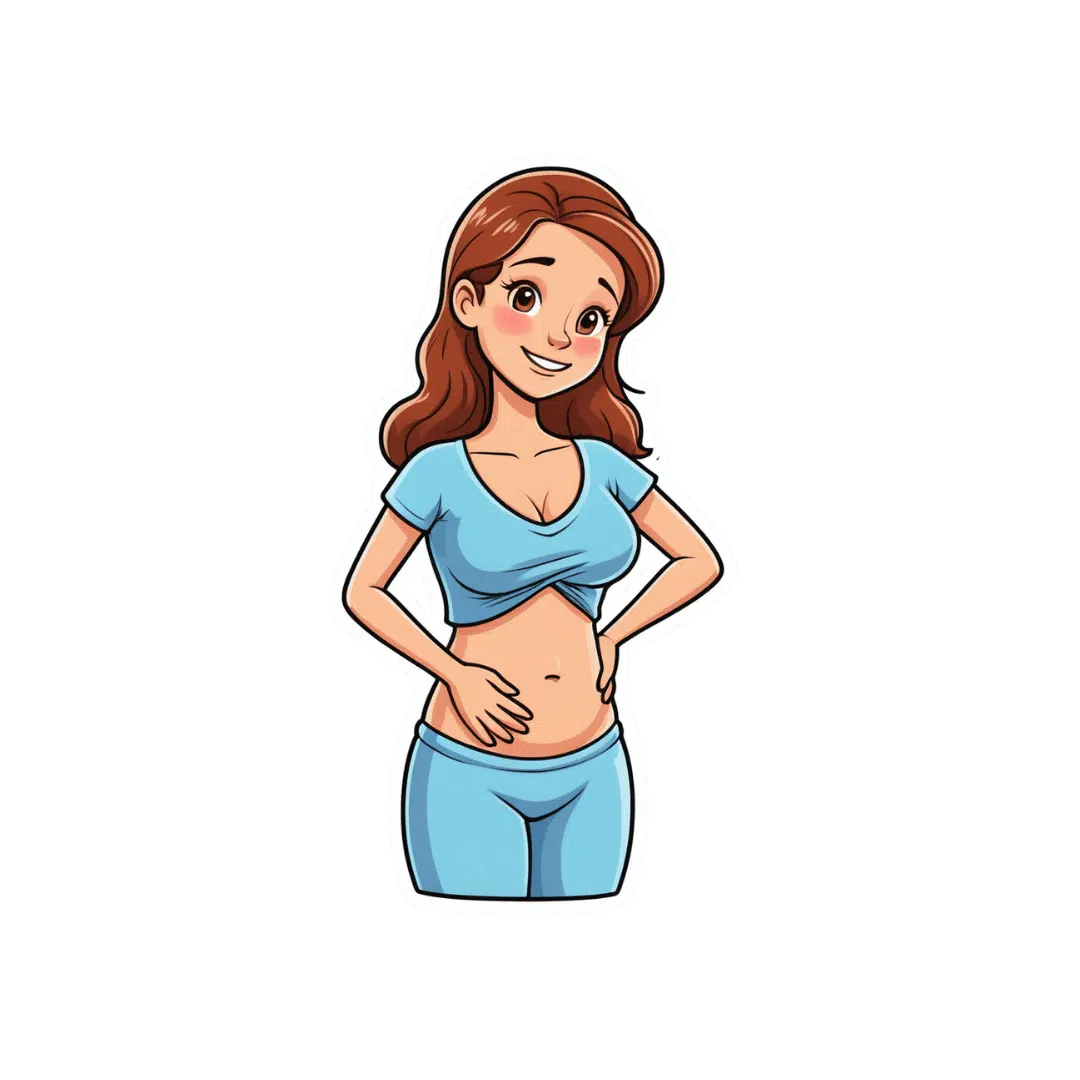
Girls with painful periods are twice as likely as their peers to have symptoms of anxiety or depression
10almonds is reader-supported. We may, at no cost to you, receive a portion of sales if you purchase a product through a link in this article.
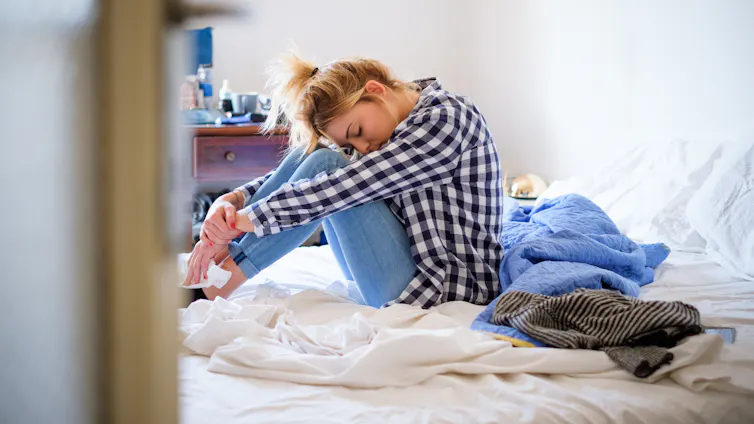
Around half of teenage girls experience moderate to severe period pain. The mechanical force of the uterus contracting and inflammatory chemicals such as prostaglandins contribute to this pain.
Moderate to severe period pain has a significant impact on daily life. Girls with period pain are three to five times more likely than their peers to miss school or university, and two to five times more likely to miss out on social and physical activities.
Our new research found girls with period pain reported higher levels of psychological distress as young adults, even after accounting for earlier mental health issues and socioeconomic factors.
What comes first?
Menstrual pain has been dismissed and under-treated. Women report there is a perception among some health-care providers that stress, anxiety, or depression cause their pain.
However, participants in our lived experience research have told us that period pain leads to psychological distress. As one woman explained:
mental health [is] used frequently by health professionals to diminish my symptoms and make me feel as though I have untreated mental health conditions that are the cause of my issues instead of my physical pain.
Prior research suggests a bi-directional link between pain and mental health. A study of almost 15,00 adolescents with chronic pain found an increased risk of lifetime anxiety and depression. While our prior research on pelvic pain in adults showed psychological distress can worsen functional pain over time.
Research exploring the relationship between mental health and pain in teens with period pain is limited, with the direction of the relationship still unclear.
Take the example of Ruby, who represents a composite of clinical cases:
Ruby was netball captain in Year 6 but painful periods led to her dropping out of the team in Year 8. By Year 10, she was socialising less with her friends. At 17, she felt like her mental health was deteriorating and was locked in a struggle with her own body. Ruby saw her GP and was told to take Nurofen and keep moving because anxiety and depression had caused chronic pain.
While research has linked mental health and pain perception, we set out to determine the direction of this link: do mental health difficulties lead to period pain? Or does period pain contribute to mental health issues?
Our new study
We used data from the Longitudinal Study of Australian Children, also known as Growing Up in Australia, which has tracked the lives of 10,000 children and their families since 2004. We used data that tracked 1,600 girls who reported on their periods from age 14, 16 and 18.
Parents reported symptoms of anxiety and depression when the girls were 14–16 years old. The young women self-reported these symptoms at age 18, and levels of psychological distress at age 20–21.
This multi-stage study allowed us to look at how menstrual pain and mental health show up together and change over time during an important stage in young women’s lives.
While conditions such as endometriosis (which causes tissue similar to that which lines the uterus to grow outside the uterus) can be associated with pelvic pain, including period pain, the survey didn’t ask participants about endometriosis or pain-related diagnoses. So this didn’t form part of our study.
Around half of the participants experienced moderate to severe period pain.
We found girls who had painful periods were much more likely to also have symptoms of anxiety and depression at ages 14, 16 and 18 compared to those who did not have painful periods.
At age 14, adolescents who experienced painful periods were around twice as likely to have symptoms of anxiety and depression, compared to their peers who said their periods were not painful, or only a little painful.
These adolescents also reported higher levels of psychological distress as young adults, even after accounting for earlier mental health issues and socioeconomic factors.
Adolescents who reported period pain throughout their teens were more likely to experience “moderate” psychological distress in early adulthood. In contrast, adolescents who did not have period pain were more likely to experience “mild” psychological distress in early adulthood.
Importantly, we showed that period pain often comes before mental health issues develop – not the other way around. This suggests period pain could be a risk factor for future mental health problems.
The findings underscore the importance of identifying adolescents who are experiencing period pain. Many adolescents believe period pain is something they just have to put up with, and don’t seek help.
What can be done about period pain?
We recommend treating period pain early with a variety of options.
First-line period pain management includes:
- anti-inflammatories such as ibuprofen, which are available over the counter
- seeing your GP to discuss hormonal therapies, such as the oral contraceptive pill.
Additional strategies to manage period pain can include:
- heat (such as heat pads)
- physiotherapy
- regular exercise – even gentle activities such as yoga.
Improved menstrual education is needed to ensure teens can recognise when their menstrual experience is unusual, and know where they can access support.
Some programs provide menstrual education across schools and community groups. This education should be extended to families and school health and wellbeing support staff to facilitate early recognition and intervention.
Finally, further research is needed to confirm whether addressing period pain promptly reduces the risk of longer-term mental health symptoms.
Subhadra Evans, Associate Professor, Psychology, Deakin University; Antonina Mikocka-Walus, Professor in Health Psychology, Deakin University, and Marilla L. Druitt, Affiliate Senior Lecturer, Faculty of Health, Deakin University
This article is republished from The Conversation under a Creative Commons license. Read the original article.
Don’t Forget…
Did you arrive here from our newsletter? Don’t forget to return to the email to continue learning!
Recommended
Learn to Age Gracefully
Join the 98k+ American women taking control of their health & aging with our 100% free (and fun!) daily emails:
-
Just One Heart – by Dr. Jonathan Fisher
10almonds is reader-supported. We may, at no cost to you, receive a portion of sales if you purchase a product through a link in this article.
First, what this is not: a book to say eat fiber, go easy on the salt, get some exercise, and so forth.
What this rather is: a book about the connection between the heart and mind; often written poetically, the simple biological reality is that our emotional state does have a genuine impact on our heart health, and as such, any effort to look after our heart (healthwise) would be incomplete without an effort to look after our heart (emotionally).
Dr. Fisher talks about the impact of stress and uncertainty, as well as peace and security, on heart health—and then, having sorted emotional states into “heart breakers” and “heart wakers”, he goes about laying out a plan for what is, emotionally and thus also physiologically, good for our heart.
Chapter by chapter, he walks us through the 7 principles to live by:
- Steadiness: how to steady your heart amid chaos
- Wisdom: how to develop a wise heart in uncertain times
- Openness: how to safely open your heart in a threatening world
- Wholeness: how to show up with your whole heart without going to pieces
- Courage: how to lead with a courageous heart when fear surrounds you
- Lightness: how to live with a light heart in a heavy world
- Warmth: how to love with a warm heart when life feels cold
The style is anything but clinical; it’s well-written, certainly, and definitely informed in part by his medical understanding of the heart, but it’s entirely the raw human element that shines throughout, and that makes the ideas a lot more tangible.
Bottom line: if you’d like your heart to be healthy (cardiac health) and your heart to be healthy (emotional health), this book is a very worthwhile read.
Click here to check out Just One Heart, and take care of yours!
Share This Post
-
Built from Broken – by Scott Hogan, CPT, COES
10almonds is reader-supported. We may, at no cost to you, receive a portion of sales if you purchase a product through a link in this article.
So many exercise programs come with the caveat “consult your doctor before engaging in any new activity”, and the safe-but-simple “do not try to train through an injury”.
Which is all very well and good for someone in fabulous health who sprained an ankle while running and can just wait a bit, but what about those of us carrying…
- long-term injuries
- recurring injuries
- or just plain unfixable physical disabilities?
That’s where physiotherapist Scott Hogan comes in. The subtitle line goes:
❝A Science-Based Guide to Healing Painful Joints, Preventing Injuries, and Rebuilding Your Body❞
…but he does also recognize that there are some things that won’t bounce back.
On the other hand… There are a lot of things that get written off by doctors as “here’s some ibuprofen” that, with consistent mindful training, could actually be fixed.
Hogan delivers again and again in this latter category! You’ll see on Amazon that the book has thousands of 4- and 5-star ratings and many glowing reviews, and it’s for a reason or three:
- The book first lays a foundational knowledge of the most common injuries likely to impede us from training
- It goes on to give step-by-step corrective exercises to guide your body through healing itself. Your body is trying to heal itself anyway; you might as well help it accomplish that!
- It finishes up with a comprehensive (and essential) guide to train for the strength and mobility that will help you avoid future problems.
In short: a potentially life-changing book if you have some (likely back- or joint-related) problem that needs overcoming!
And if you don’t? An excellent pre-emptive guide all the same. This is definitely one of those “an ounce of prevention is better than a pound of cure” things.
Share This Post
-
Might you have an eating disorder?
10almonds is reader-supported. We may, at no cost to you, receive a portion of sales if you purchase a product through a link in this article.
An eating disorder, or ED, is a mental health condition that causes an unhealthy relationship with food. Anyone can have an ED, many times without realizing it or getting a proper diagnosis. Research shows that 9 percent of people in the U.S. will have an ED in their lifetime.
Read on to learn about the types of EDs, how they’re diagnosed and treated, what barriers to care some people with EDs face, and how to find providers who can help.
What are the types and symptoms of eating disorders?
- Anorexia: Restricting food intake, fearing weight gain, and having a distorted self-image.
- Bulimia: Binging, or eating a large amount of food at once, followed by purging, or getting rid of the food by vomiting, taking laxatives, or over-exercising.
- Binge eating disorder: Repeatedly eating a large amount of food, followed by feelings of guilt and regret without purging.
- Avoidant/restrictive food intake disorder: Not getting enough nutrients due to a lack of interest in food or disliking many types of food.
Some people may have symptoms of multiple EDs at the same time or cycle between different types of EDs.
Who is at risk of developing an eating disorder?
“Eating disorders don’t discriminate, they can affect anyone regardless of age,” said U.K. psychotherapist Kerrie Jones, who specializes in ED treatment, in a Women’s Health article.
While anyone can develop an ED at any time, some factors may increase your risk:
- Having a family member with an ED.
- Having another mental health condition, like depression, anxiety, obsessive-compulsive disorder, or post-traumatic stress disorder.
- Having a history of dieting, weight loss attempts, or body-related bullying.
- Experiencing a major life change, like moving or starting a new job.
What are some warning signs that you might have an eating disorder?
“A focus on ‘healthy’ eating or nutrition can become a red flag for disordered eating when it becomes obsessive, rigid, or interferes with daily life,” Jones said. “If someone is labelling food as good or bad, with no flexibility or they are avoiding social situations such as going out for dinner with loved ones, or they are spending excessive time thinking about food, meal planning and avoiding ultra-processed food, it’s worth speaking to a professional.”
Other ED warning signs may include:
- Feeling preoccupied with food, counting calories, avoiding certain foods or food groups, or changes in weight.
- Eating in secret.
- Feeling preoccupied with your body size or shape.
If you think you may have an ED, talk to a health care provider. Your provider will likely ask questions about your eating and exercise habits and run tests to see if your ED is causing health problems.
What are the physical consequences of eating disorders?
EDs can cause deadly health problems. In fact, approximately one person in the U.S. dies from an ED every hour. Some short- and long-term consequences from EDs include:
- Heart problems
- Digestive problems
- Low blood pressure
- Dehydration
- Brittle bones
- Organ and tooth damage
- Stroke
- Infertility
How are eating disorders treated?
Treatment for EDs depends on the severity of your symptoms and your health risks. It may include a combination of therapy, medications to treat underlying mental health conditions like depression and anxiety, and nutrition counseling.
While some people may only need therapy once a week, others may require intensive outpatient therapy—which includes multiple therapy sessions per week—or inpatient treatment.
What barriers to treatment do people with eating disorders face?
Weight stigma
People of all body sizes can have EDs. Less than 6 percent of people with EDs are considered underweight, and research shows that higher-weight individuals are more likely to experience delays in ED diagnosis and treatment. Health care providers may be less likely to notice ED symptoms in higher-weight patients or may even reinforce a patient’s ED behaviors by commenting on their weight or praising weight loss.
“If you’re leaving the appointment feeling any type of shame or discomfort or guilt about eating or your body, that’s a clue that something went wrong,” registered dietitian Marlena Tanner said in a Fortune article. “You never have to continue with a provider that is damaging.”
If your care team is not taking your ED symptoms seriously due to your body size, you can find health care providers, therapists, and dietitians through the Health at Every Size Professionals Listing.
Racial bias
Media representing EDs typically focuses on white women, and research shows that health care providers may be less likely to diagnose people of color—particularly Black women—with an ED. Additionally, people of color may struggle to find culturally competent care. Across disciplines, 73 percent of ED care providers are white.
“Some therapists and dietitians focus on working with [Black, Indigenous, and people of color] clients and understand how racism, cultural expectations, and body image intersect,” says Paula Edwards-Gayfield, an Oklahoma City-based therapist and clinical advisor for the National Eating Disorders Association, to Public Good News. “Seek out providers who talk about cultural identity, anti-racism, or social justice in their work. There are also groups and nonprofit organizations that may help fill the gaps left by traditional treatment centers.”
If you’re a person of color seeking care at an ED treatment center, Edwards-Gayfield recommends asking the following questions:
- Does the center have a diverse staff?
- Do they talk about race, culture, or identity in treatment?
- Can you meet with someone who understands your background?
Gender bias
A 2019 study found that men and boys make up one-third of people with EDs, yet many go undiagnosed.
“There was such a lack of awareness for a long time, and often men were more likely to be diagnosed with depression or something else versus an eating disorder because there has been this really inaccurate mindset that men don’t get eating disorders,” said Tiffany Brown, psychology professor at Auburn University and co-director of the Auburn Eating Disorders Clinic, in a 2024 American Psychological Association article.
Men and boys may also experience symptoms that don’t match typical ED diagnostic criteria, such as a preoccupation with having a muscular physique. If you’re overwhelmed with thoughts about food or body image, talk to a health care provider, even if you’re not sure if you have an ED.
While LGBTQ+ individuals experience higher rates of EDs compared to their straight, cisgender peers, many struggle to access LGBTQ-informed ED treatment, especially transgender people.
“The reality is that most medical trainings, administrative processes, and social discussions and understandings of bodies, gender, health, reproduction, and privacy are based on the erasure of transgender and intersex people, and bodies, creating a large gap in understanding them medically, and socially, for many providers,” members of the trans-led collective Fighting Eating Disorders in Underrepresented Populations (FEDUP) tell PGN.
Trans people are also more likely to face financial burdens that can prevent them from accessing ED care. FEDUP connects low-income trans people with EDs to dietitians who offer sliding scale appointments. The collective also maintains a list of trans-affirming ED treatment providers and hosts free, virtual, peer-led support groups for LGBTQ+ people with EDs.
Cost
“Eating disorder treatment is often out of pocket, geographically inaccessible, and time intensive,” says Edwards-Gayfield. “Furthermore, insurance often denies coverage for individuals who don’t meet strict weight or symptom thresholds, reinforcing a system that privileges a narrow presentation of disordered eating.”
If you’re uninsured, are struggling to pay for ED treatment, or don’t know how to find care, reach out to Project HEAL’s Treatment Access Program, which connects people with EDs to no-cost and sliding scale treatment, cash assistance, and insurance help.
NEDA also offers a list of free, virtual support groups.
For more information, talk to your health care provider.
If you or anyone you know is considering suicide or self-harm or is anxious, depressed, or upset or needs to talk, call the Suicide & Crisis Lifeline at 988 or text the Crisis Text Line at 741-741. For international resources, here is a good place to begin.
This article first appeared on Public Good News and is republished here under a Creative Commons Attribution-NoDerivatives 4.0 International License.
Share This Post
Related Posts
-
Relaxation Revolution – by Dr. Herbert Benson & Dr. William Proctor
10almonds is reader-supported. We may, at no cost to you, receive a portion of sales if you purchase a product through a link in this article.
Stress management makes a huge difference to a lot of aspects of physical health, yet it’s a very commonly overlooked area for improvement. Everyone’s all “I must eat better and exercise more”, but the truth is that being able to relax is just as important.
The premise of this book is to first do something that we should find not at all arduous or unpleasant to do (that is: relax) and then weaponize that against all manner of ailments.
Of course, it’s not a panacea, but stress makes almost every bodily process worse (aside from some of those actually needed in an acute crisis, e.g. to fight a tiger), which means that relaxation makes almost every bodily process better.
The style of the book is a mix of old-school pop-science, anecdotes, and direct, practical “do this, do that” advice, often in the form of meditative exercises to perform, as well as what doesn’t get called CBT in the book, but it is.
We’ll also mention that there are 22 pages of bibliography at the back, which is sufficiently respectable for a book of this size (good rule of thumb = if the bibliography is at least 10% of the size of the main content section of the book, it’s probably decent).
Bottom line: if you’d like to be walked through the process of leveraging relaxation to improve your body’s ability to look after (and restore and repair) itself, then this book can help with that.
Click here to check out Relaxation Revolution, and indeed relax!
Don’t Forget…
Did you arrive here from our newsletter? Don’t forget to return to the email to continue learning!
Learn to Age Gracefully
Join the 98k+ American women taking control of their health & aging with our 100% free (and fun!) daily emails:
-
LGBTQ+ People Relive Old Traumas as They Age on Their Own
10almonds is reader-supported. We may, at no cost to you, receive a portion of sales if you purchase a product through a link in this article.
Bill Hall, 71, has been fighting for his life for 38 years. These days, he’s feeling worn out.
Hall contracted HIV, the virus that can cause AIDS, in 1986. Since then, he’s battled depression, heart disease, diabetes, non-Hodgkin lymphoma, kidney cancer, and prostate cancer. This past year, Hall has been hospitalized five times with dangerous infections and life-threatening internal bleeding.
But that’s only part of what Hall, a gay man, has dealt with. Hall was born into the Tlingit tribe in a small fishing village in Alaska. He was separated from his family at age 9 and sent to a government boarding school. There, he told me, he endured years of bullying and sexual abuse that “killed my spirit.”
Because of the trauma, Hall said, he’s never been able to form an intimate relationship. He contracted HIV from anonymous sex at bath houses he used to visit. He lives alone in Seattle and has been on his own throughout his adult life.
“It’s really difficult to maintain a positive attitude when you’re going through so much,” said Hall, who works with Native American community organizations. “You become mentally exhausted.”
It’s a sentiment shared by many older LGBTQ+ adults — most of whom, like Hall, are trying to manage on their own.
Of the 3 million Americans over age 50 who identify as gay, bisexual, or transgender, about twice as many are single and living alone when compared with their heterosexual counterparts, according to the National Resource Center on LGBTQ+ Aging.
This slice of the older population is expanding rapidly. By 2030, the number of LGBTQ+ seniors is expected to double. Many won’t have partners and most won’t have children or grandchildren to help care for them, AARP research indicates.
They face a daunting array of problems, including higher-than-usual rates of anxiety and depression, chronic stress, disability, and chronic illnesses such as heart disease, according to numerous research studies. High rates of smoking, alcohol use, and drug use — all ways people try to cope with stress — contribute to poor health.
Keep in mind, this generation grew up at a time when every state outlawed same-sex relations and when the American Psychiatric Association identified homosexuality as a psychiatric disorder. Many were rejected by their families and their churches when they came out. Then, they endured the horrifying impact of the AIDS crisis.
“Dozens of people were dying every day,” Hall said. “Your life becomes going to support groups, going to visit friends in the hospital, going to funerals.”
It’s no wonder that LGBTQ+ seniors often withdraw socially and experience isolation more commonly than other older adults. “There was too much grief, too much anger, too much trauma — too many people were dying,” said Vincent Crisostomo, director of aging services for the San Francisco AIDS Foundation. “It was just too much to bear.”
In an AARP survey of 2,200 LGBTQ+ adults 45 or older this year, 48% said they felt isolated from others and 45% reported lacking companionship. Almost 80% reported being concerned about having adequate social support as they grow older.
Embracing aging isn’t easy for anyone, but it can be especially difficult for LGBTQ+ seniors who are long-term HIV survivors like Hall.
Related Links
- Americans With HIV Are Living Longer. Federal Spending Isn’t Keeping Up. Jun 17, 2024
- ‘Stonewall Generation’ Confronts Old Age, Sickness — And Discrimination May 22, 2019
- Staying Out Of The Closet In Old Age Oct 17, 2016
Of 1.2 million people living with HIV in the United States, about half are over age 50. By 2030, that’s estimated to rise to 70%.
Christopher Christensen, 72, of Palm Springs, California, has been HIV-positive since May 1981 and is deeply involved with local organizations serving HIV survivors. “A lot of people living with HIV never thought they’d grow old — or planned for it — because they thought they would die quickly,” Christensen said.
Jeff Berry is executive director of the Reunion Project, an alliance of long-term HIV survivors. “Here people are who survived the AIDS epidemic, and all these years later their health issues are getting worse and they’re losing their peers again,” Berry said. “And it’s triggering this post-traumatic stress that’s been underlying for many, many years. Yes, it’s part of getting older. But it’s very, very hard.”
Being on their own, without people who understand how the past is informing current challenges, can magnify those difficulties.
“Not having access to supports and services that are both LGBTQ-friendly and age-friendly is a real hardship for many,” said Christina DaCosta, chief experience officer at SAGE, the nation’s largest and oldest organization for older LGBTQ+ adults.
Diedra Nottingham, a 74-year-old gay woman, lives alone in a one-bedroom apartment in Stonewall House, an LGBTQ+-friendly elder housing complex in New York City. “I just don’t trust people,“ she said. “And I don’t want to get hurt, either, by the way people attack gay people.”
When I first spoke to Nottingham in 2022, she described a post-traumatic-stress-type reaction to so many people dying of covid-19 and the fear of becoming infected. This was a common reaction among older people who are gay, bisexual, or transgender and who bear psychological scars from the AIDS epidemic.
Nottingham was kicked out of her house by her mother at age 14 and spent the next four years on the streets. The only sibling she talks with regularly lives across the country in Seattle. Four partners whom she’d remained close with died in short order in 1999 and 2000, and her last partner passed away in 2003.
When I talked to her in September, Nottingham said she was benefiting from weekly therapy sessions and time spent with a volunteer “friendly visitor” arranged by SAGE. Yet she acknowledged: “I don’t like being by myself all the time the way I am. I’m lonely.”
Donald Bell, a 74-year-old gay Black man who is co-chair of the Illinois Commission on LGBTQ Aging, lives alone in a studio apartment in subsidized LGBTQ+-friendly senior housing in Chicago. He spent 30 years caring for two elderly parents who had serious health issues, while he was also a single father, raising two sons he adopted from a niece.
Bell has very little money, he said, because he left work as a higher-education administrator to care for his parents. “The cost of health care bankrupted us,” he said. (According to SAGE, one-third of older LGBTQ+ adults live at or below 200% of the federal poverty level.) He has hypertension, diabetes, heart disease, and nerve damage in his feet. These days, he walks with a cane.
To his great regret, Bell told me, he’s never had a long-term relationship. But he has several good friends in his building and in the city.
“Of course I experience loneliness,” Bell said when we spoke in June. “But the fact that I am a Black man who has lived to 74, that I have not been destroyed, that I have the sanctity of my own life and my own person is a victory and something for which I am grateful.”
Now he wants to be a model to younger gay men and accept aging rather than feeling stuck in the past. “My past is over,” Bell said, “and I must move on.”
KFF Health News is a national newsroom that produces in-depth journalism about health issues and is one of the core operating programs at KFF—an independent source of health policy research, polling, and journalism. Learn more about KFF.
Subscribe to KFF Health News’ free Morning Briefing.
This article first appeared on KFF Health News and is republished here under a Creative Commons license.
Don’t Forget…
Did you arrive here from our newsletter? Don’t forget to return to the email to continue learning!
Learn to Age Gracefully
Join the 98k+ American women taking control of their health & aging with our 100% free (and fun!) daily emails:
-
6 Ways To Look After Your Back
10almonds is reader-supported. We may, at no cost to you, receive a portion of sales if you purchase a product through a link in this article.
Back To Back
When people think about looking after their back, often thought does not go much further than sitting with good posture, and perhaps even standing with good posture. And those things are important, but:
1) People’s efforts to have good posture often result in overcorrecting creating an anterior pelvic tilt that causes lower back problems.
Quick tip: if you’re sticking your butt out, you’re doing it wrong (no matter how great your butt is). Instead, to find the correct posture, go up on your tip-toes for a moment, then imagine a plumb-line down the center of your body, thus perpendicular to the floor, going all the way down to the ground. Now, slowly return your heels to the ground, but as you do so, keep your spine aligned to the plumb-line, so you’re not moving backwards as you drop, just directly down. This will land you in perfect posture.
Unless you have scoliosis. In which case, it’ll get you as close to good posture as is likely attainable from any quick tip.
2) There’s a lot more to looking after our back than just good posture!
Here are 5 other important things to do:
Be strong
Do strength-training for your back. How to do that is beyond the scope of today’s feature, but there are many good guides and also personal trainers that can be found.
Start off easy and work up, but do start. The stronger your back is, the less likely a momentary lapse in concentration is to throw out your back because you picked something up with imperfect form.
See also: Resistance Is Useful! (Especially As We Get Older)
Stretch intentionally
Many back injuries occur as a result of stretching and/or twisting awkwardly, so if you ensure your basic mobility and range of motion is good, the less likely it is that unthinkingly twisting around 270° to see where that wasp was going will slip a disk.
The more you stretch intentionally (carefully, please), the more you will be able to stretch unintentionally without injury.
See also: Building & Maintaining Mobility
Stand when you can, walk when you can
We humans have outrun our evolution in a lot of ways, and/but one thing our bodies are definitely not well-adapted for is sitting. Unless we are sitting in a low squat the way you might often see an orang-utan sitting, sitting is not a good way of being for us. Even sitting seiza-style or cross-legged is passable for a short while, not for too long.
So, while there sure are times we need to sit (especially if you’re driving!) minimizing those times is ideal. There are a lot of activities that are traditionally done sitting, where there’s no need for it to be so. For example, your writer here sits for the day’s main meal, but takes any smaller meal standing (and when guests visit for a coffee or such, I’ll offer them the couch while I myself prop up the fireplace). Standing desks are also great if you spend a lot of time at the computer for any reason.
See also: The Doctor Who Wants Us To Exercise Less & Move More
Rest when you need to
You can’t stand all the time! But know this: if you want to rest your legs, lying down is a lot better for your back (and internal organs) than sitting.
Taking a 5 minute break lying on your couch, or bed, or floor, is a perfectly good option and only social convention says otherwise.
If you want a compromise option, though? A recliner chair, in the reclined position, is a better for your back than being scrunched up in the Economy Class Flight position.
PS: About that bed situation…
What Mattress Is Best, By Science?
Kill pain before it kills you
Painkillers aren’t great for the health per se, but pain (or rather, our bodily responses to such) can be worse. Half the time, when it comes to musculoskeletal problems, things get a lot worse a lot more quickly because of how we overcompensate due to the pain. So, take your pain seriously, and remember, the right amount of pain is zero.
If you’re thinking “but pain relief option xyz isn’t good for me”, we strongly recommend checking out:
The 7 Approaches To Pain Management
Take care!
Don’t Forget…
Did you arrive here from our newsletter? Don’t forget to return to the email to continue learning!
Learn to Age Gracefully
Join the 98k+ American women taking control of their health & aging with our 100% free (and fun!) daily emails:


