Winter viruses can trigger a heart attack or stroke, our study shows. It’s another good reason to get a flu or COVID shot

10almonds is reader-supported. We may, at no cost to you, receive a portion of sales if you purchase a product through a link in this article.

Winter is here, along with cold days and the inevitable seasonal surge in respiratory viruses.

But it’s not only the sniffles we need to worry about. Heart attacks and strokes also tend to rise during the winter months.

In new research out this week we show one reason why.

Our study shows catching common respiratory viruses raises your short-term risk of a heart attack or stroke. In other words, common viruses, such as those that cause flu and COVID, can trigger them.
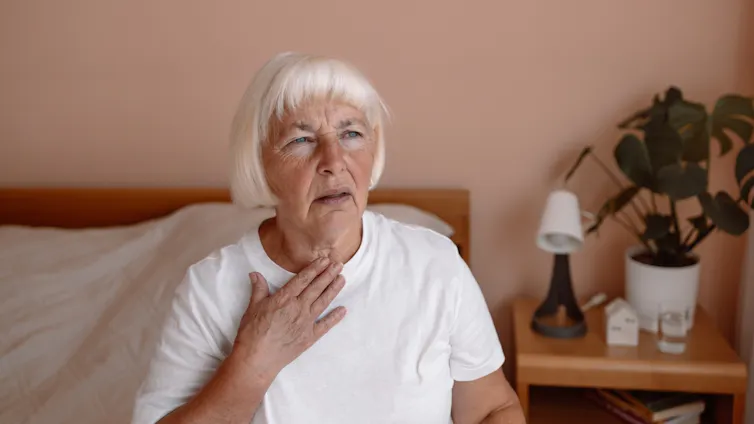
Irina Shatilova/Shutterstock

Wait, viruses can trigger heart attacks?

Traditional risk factors such as smoking, high cholesterol, high blood pressure, diabetes, obesity and lack of exercise are the main reasons for heart attacks and strokes.

And rates of heart attacks and strokes can rise in winter for a number of reasons. Factors such as low temperature, less physical activity, more time spent indoors – perhaps with indoor air pollutants – can affect blood clotting and worsen the effects of traditional risk factors.

But our new findings build on those from other researchers to show how respiratory viruses can also be a trigger.

The theory is respiratory virus infections set off a heart attack or stroke, rather than directly cause them. If traditional risk factors are like dousing a house in petrol, the viral infection is like the matchstick that ignites the flame.

Light matchstick, horizontal
Think of a viral infection as the matchstick that ignites the flame, leading to a heart attack or stroke. anokato/Shutterstock

For healthy, young people, a newer, well-kept house is unlikely to spontaneously combust. But an older or even abandoned house with faulty electric wiring needs just a spark to lead to a blaze.

People who are particularly vulnerable to a heart attack or stroke triggered by a respiratory virus are those with more than one of those traditional risk factors, especially older people.

What we did and what we found

Our team conducted a meta-analysis (a study of existing studies) to see which respiratory viruses play a role in triggering heart attacks and strokes, and the strength of the link. This meant studying more than 11,000 scientific papers, spanning 40 years of research.

Overall, the influenza virus and SARS-CoV-2 (the virus that causes COVID) were the main triggers.

If you catch the flu, we found the risk of a heart attack goes up almost 5.4 times and a stroke by 4.7 times compared with not being infected. The danger zone is short – within the first few days or weeks – and tapers off with time after being infected.

Catching COVID can also trigger heart attacks and strokes, but there haven’t been enough studies to say exactly what the increased risk is.

We also found an increased risk of heart attacks or strokes with other viruses, including respiratory syncytial virus (RSV), enterovirus and cytomegalovirus. But the links are not as strong, probably because these viruses are less commonly detected or tested for.

What’s going on?

Over a person’s lifetime, our bodies wear and tear and the inside wall of our blood vessels becomes rough. Fatty build-ups (plaques) stick easily to these rough areas, inevitably accumulating and causing tight spaces.

Generally, blood can still pass through, and these build-ups don’t cause issues. Think of this as dousing the house in petrol, but it’s not yet alight.

So how does a viral infection act like a matchstick to ignite the flame? Through a cascading process of inflammation.

High levels of inflammation that follow a viral infection can crack open a plaque. The body activates blood clotting to fix the crack but this clot could inadvertently block a blood vessel completely, causing a heart attack or stroke.

Some studies have found fragments of the COVID virus inside the blood clots that cause heart attacks – further evidence to back our findings.

We don’t know whether younger, healthier people are also at increased risk of a heart attack or stroke after infection with a respiratory virus.

That’s because people in the studies we analysed were almost always older adults with at least one of those traditional risk factors, so were already vulnerable.

The bad news is we will all be vulnerable eventually, just by getting older.

What can we do about it?

The triggers we identified are mostly preventable by vaccination.

There is good evidence from clinical trials the flu vaccine can reduce the risk of a heart attack or stroke, especially if someone already has heart problems.

We aren’t clear exactly how this works. But the theory is that avoiding common infections, or having less severe symptoms, reduces the chances of setting off the inflammatory chain reaction.

COVID vaccination could also indirectly protect against heart attacks and strokes. But the evidence is still emerging.

Heart attacks and strokes are among Australia’s biggest killers. If vaccinations could help reduce even a small fraction of people having a heart attack or stroke, this could bring substantial benefit to their lives, the community, our stressed health system and the economy.

What should I do?

At-risk groups should get vaccinated against flu and COVID. Pregnant women, and people over 60 with medical problems, should receive RSV vaccination to reduce their risk of severe disease.

So if you are older or have predisposing medical conditions, check Australia’s National Immunisation Program to see if you are eligible for a free vaccine.

For younger people, a healthy lifestyle with regular exercise and balanced diet will set you up for life. Consider checking your heart age (a measure of your risk of heart disease), getting an annual flu vaccine and discuss COVID boosters with your GP.

Tu Nguyen, PhD Candidate, Department of Paediatrics, University of Melbourne, Murdoch Children’s Research Institute; Christopher Reid, John Curtin Distinguished Professor, cardiovascular epidemiologist and clinical trialist, Curtin University; Diana Vlasenko, Research Assistant, Murdoch Children’s Research Institute; Hazel Clothier, Lead Epidemiologist, Centre for Health Informatics, Murdoch Children’s Research Institute, and Jim Buttery, Professor of Child Health Informatics, Department of Paediatrics, Murdoch Children’s Research Institute

This article is republished from The Conversation under a Creative Commons license. Read the original article.

Don’t Forget…

Did you arrive here from our newsletter? Don’t forget to return to the email to continue learning!

Learn to Age Gracefully

Join the 98k+ American women taking control of their health & aging with our 100% free (and fun!) daily emails:

  • The New Optimum Nutrition Bible – by Patrick Holford

    10almonds is reader-supported. We may, at no cost to you, receive a portion of sales if you purchase a product through a link in this article.

    While the author is not “Dr. Patrick Holford”, it’s worth mentioning that he is a career nutritionist with half the alphabet after his name, and decades of experience in the field.

    Next, before getting into the real review of the book, we’ll also mention that his career has not been without controversy, but this has mostly been when he has strayed out of his field, such as when he bought into the (since not only soundly refuted, but outright demonstrated to be fraudulent) claim that the MMR vaccine causes autism.

    In this book, he focuses on nutrition, and as such, the only nutritional advice that hasn’t stood the test of time was that he errantly claimed vitamin C could outperform the antiviral drugs of the day in beating HIV (a claim that would have killed anyone with HIV who believed it and swapped their AVT for vitamin C).

    But the rest? Honestly, he was prescient in many respects. Arguably, this meant he came to conclusions for which the science was quite new at the time of writing, so perhaps indicative of the same person who believed the aforementioned false claims, but fact is, there he was, in the 90s, arguing for what has since come to be known as nutritional psychiatry and is now backed by decades more science, as well as championing phytochemicals that back then were little-known and/or ignored, but that we now know to have very potent beneficial effects; he talked about antinutrients that hardly anyone was talking about then, and more and more and more.

    Bottom line: 49 chapters, each on a different nutrition-related health topic, and one of them had an overly bold nutritional claim that didn’t stand the test of time? We think that’s pretty good.

    Click here to check out The New Optimum Nutrition Bible, and see how comprehensive it is!

    Share This Post

  • Make Overnight Oats Shorter Or Longer For Different Benefits!

    10almonds is reader-supported. We may, at no cost to you, receive a portion of sales if you purchase a product through a link in this article.

    It’s Q&A Day at 10almonds!

    Have a question or a request? We love to hear from you!

    In cases where we’ve already covered something, we might link to what we wrote before, but will always be happy to revisit any of our topics again in the future too—there’s always more to say!

    As ever: if the question/request can be answered briefly, we’ll do it here in our Q&A Thursday edition. If not, we’ll make a main feature of it shortly afterwards!

    So, no question/request too big or small

    ❝How long do I have to soak oats for to get the benefits of “overnight oats”?❞

    The primary benefit of overnight oats (over cooked oats) is that they are soft enough to eat without having been cooked (as cooking increases their glycemic index).

    So, if it’s soft, it’s good to eat. A few hours should be sufficient.

    Bonus information

    If, by the way, you happen to leave oats and milk (be it animal or plant milk) sealed in a jar at room temperature for a 2–3 days (less if your “room temperature” is warmer than average), it will start to ferment.

    • Good news: fermentation can bring extra health benefits!
    • Bad news: you’re on your own if something pathogenic is present

    For more on this, you might like to read:

    Fermenting Everything: How to Make Your Own Cultured Butter, Fermented Fish, Perfect Kimchi, and Beyond

    Enjoy!

    Share This Post

  • Creatine: Very Different For Young & Old People

    10almonds is reader-supported. We may, at no cost to you, receive a portion of sales if you purchase a product through a link in this article.

    What’s the Deal with Creatine?

    Creatine is best-known for its use as a sports supplement. It has a few other uses too, usually in the case of helping to treat (or recover from) specific medical conditions.

    What actually is it?

    Creatine is an organic compound formed from amino acids (mostly l-arginine and lysine, can be l-methionine, but that’s not too important for our purposes here).

    We can take it as a supplement, we can get it in our diet (unless we’re vegan, because plants don’t make it; vertebrates do), and we can synthesize it in our own bodies.

    What does it do?

    While creatine supplements mostly take the form of creatine monohydrate, in the body it’s mostly stored in our muscle tissue as phosphocreatine, and it helps cells produce adenosine triphosphate, (ATP).

    ATP is how energy is kept ready to use by cells, and is cells’ immediate go-to when they need to do something. For this reason, it’s highly instrumental in cell repair and rebuilding—which is why it’s used so much by athletes, especially bodybuilders or other athletes that have a vested interest in gaining muscle mass and enjoying faster recovery times.

    See: Creatine use among young athletes

    However! For reasons as yet not fully known, it doesn’t seem to have the same beneficial effect after a certain age:

    Read: Differential response of muscle phosphocreatine to creatine supplementation in young and old subjects

    What about the uses outside of sport?

    Almost all studies outside of athletic performance have been on animals, despite it being suggested as potentially helpful for many things, including:

    • Alzheimer’s disease
    • Parkinson’s disease
    • Huntington’s disease
    • ischemic stroke
    • epilepsy
    • brain or spinal cord injuries
    • motor neuron disease
    • memory and brain function in older adults

    However, research that’s been done on humans has been scant, if promising:

    In short: creatine may reduce symptoms and slow the progression of some neurological diseases, although more research in humans is needed, and words such as “promising”, “potential”, etc are doing a lot of the heavy lifting in those papers we just cited.

    Is it safe?

    It seems so: Creatine supplementation and health variables: a retrospective study

    Nor does it appear to create the sometimes-rumored kidney problems, cramps, or dehydration:

    Common questions and misconceptions about creatine supplementation: what does the scientific evidence really show?

    Where can I get it?

    You can get it from pretty much any sports nutrition outlet, or you can order online. For example:

    Click here to check it out on Amazon!

    Share This Post

  • Dyslexia Test

    10almonds is reader-supported. We may, at no cost to you, receive a portion of sales if you purchase a product through a link in this article.

    (and it’s mostly not about reading/writing!)

    More than just shuffled letters

    This video provides a self-test based on the Bangor Dyslexia Test (BDT). The BDT is 94% accurate in identifying dyslexia, and it includes 9 parts, with a mix of questions and tasks. Answering “yes” or struggling with tasks indicates possible dyslexia. Collecting 4+ indicators suggests dyslexia, but of course is not a replacement for official diagnosis.

    It’s best to watch the video if you can, but here’s what to expect:

    1. Left-Right confusion: point your left hand to your right/left shoulder.
    2. Family history: any family members with dyslexia or struggles with reading/writing?
    3. Repeating numbers (order): repeat a given sequence of numbers in order.
    4. Letter confusion (e.g. b/d): do you confuse letters like “b” and “d” beyond age 8?
    5. Times tables: recite the 6, 7, and 8 times tables.
    6. Word manipulation: replace the letters in a word to create a new word, e.g. change “slide” (s ⇾ g) to “glide.”
    7. Repeating numbers (reversed): repeat a given sequence of numbers in reverse order.
    8. Months in reverse: recite the months of the year in reverse order.
    9. Subtraction: do you struggle with subtraction, e.g. 44-9 or 55-12?

    Writer’s anecdote: I am not dyslexic, and/but I have an impressive level of dyscalculia (the purely numerical equivalent), to the point I’ll sometimes use a calculator to do single-digit calculations, and I am so bad at calculating ages or other differences between dates (I will have to count on my fingers or else run the severe risk of out-by-one errors). I have also been known to make mistakes counting down from 10, which really ruins dramatic tension.

    In contrast, the left-right thing is interesting, because when I was first learning Arabic, I had no trouble reading/writing right-to-left, but I initially struggled so much to remember which way the “backspace” key would take me (in Arabic the backspace key backspaces to the right, despite still pointing to the left).

    Anyway, for the test itself, enjoy:

    Click Here If The Embedded Video Doesn’t Load Automatically!

    Want to learn more?

    You might also like to read:

    Reading, Better (Reading As A Cognitive Exercise)

    Take care!

    Don’t Forget…

    Did you arrive here from our newsletter? Don’t forget to return to the email to continue learning!

    Learn to Age Gracefully

    Join the 98k+ American women taking control of their health & aging with our 100% free (and fun!) daily emails:

  • How Not to Diet – by Dr. Michael Greger

    10almonds is reader-supported. We may, at no cost to you, receive a portion of sales if you purchase a product through a link in this article.

    We’ve talked before about Dr. Greger’s famous “How Not To Die” book, and we love it and recommend it… But… It is, primarily, a large, dry textbook. Full of incredibly good science and information about what is statistically most likely to kill us and how to avoid that… but it’s not the most accessible.

    How Not To Diet“, on the other hand, is a diet book, is very readable, and assumes the reader would simply like to know how to healthily lose weight.

    By focussing on this one problem, rather than the many (admittedly important) mortality risks, the reading is a lot easier and lighter. And, because it’s still Dr. Greger advocating for the same diet, you’ll still get to reduce all those all-cause mortality risks. You won’t be reading about them in this book; it will now just be a happy side effect.

    While in “How Not To Die”, Dr. Greger looked at what was killing people and then tackled those problems, here he’s taken the same approach to just one problem… Obesity.

    So, he looks at what is causing people to be overweight, and methodically tackles those problems.

    We’ll not list them all here—there are many, and this is a book review, not a book summary. But suffice it to say, the work is comprehensive.

    Bottom line: this book methodically and clinically (lots of science!) looks at what makes us overweight… And tackles those problems one by one, giving us a diet optimized for good health and weight loss. If you’d like to shed a few pounds in a healthy, sustainable way (that just happens to significantly reduce mortality risk from other causes too) then this is a great book for you!

    Click here to check out “How Not To Diet” on Amazon and get healthy for life!

    Don’t Forget…

    Did you arrive here from our newsletter? Don’t forget to return to the email to continue learning!

    Learn to Age Gracefully

    Join the 98k+ American women taking control of their health & aging with our 100% free (and fun!) daily emails:

  • Metformin vs Cancer/Aging

    10almonds is reader-supported. We may, at no cost to you, receive a portion of sales if you purchase a product through a link in this article.

    …and other items from this week’s health science news:

    Metabolic health is more than most people think

    Researchers (Dr. Emilie Lavallée et al.) found that ATP5I is a direct molecular target of metformin. This may not mean much to most readers, so: ATP5I is part of the enzyme complex that produces ATP, the primary “energy currency” of cells. Specifically it seems to help organize and assemble the ATP synthase machinery, rather than directly carrying out ATP production itself.

    In other words: it helps your cellular energy mechanisms work better

    As for why you should care about cellular energy mechanisms: you are made of cells, and the energy they have is the energy you have*.

    *unless we want to get pedantic, in which case yes, you also have some gravitational potential energy due to your mass, including non-cellular mass, and its relationship to gravity. But that won’t help you get through your day, for the most part.

    Usefully, this also highlights a likely reason why people who take metformin have a lower risk of many cancers, bearing in mind that while things like diabetes and heart disease are thought of as metabolic disorders (and they are), so are cancer and aging:

    Read in full: Why metformin matters beyond diabetes: New target could reshape aging and cancer research

    Related: How Metformin Reduces Long COVID Risk By 63%

    Kidney disease is fast becoming epidemic

    Bad news: early chronic kidney disease (CKD) often causes no noticeable symptoms, allowing kidney damage to progress for years before being detected.

    Worse news: CKD has entered the world’s top 10 causes of death, with approximately 1.5 million deaths in the US attributed directly to the disease in 2023 (yes, science typically lags with numbers like that, because of peer review, here we are in 2026 at time of writing, reading stats from 2023, but it’s better to have correct stats from a couple of years ago than guess at more recent ones without appropriate scientific rigor).

    Further, impaired kidney function contributed to about 12% of global cardiovascular deaths, making all-too-clear the strong connection between kidney disease and heart disease.

    Underdiagnosis remains a major problem too: many people are never tested, so the true prevalence may be higher than current estimates suggest; researchers emphasized greater use of urine testing and kidney function screening in at-risk individuals.

    Good news: treatment options are improving! Newer medications, including SGLT2 inhibitors, GLP-1–based therapies, and nonsteroidal mineralocorticoid receptor antagonists, can help protect kidney function and reduce cardiovascular risk in appropriate patients.

    However, prevention definitely remains much better than treatment, so it’s as well to get ahead of things and check out our “related” link below to learn now:

    Read in full: A silent kidney crisis is spreading far faster than experts expected

    Related: Are your Kidneys Ok? Detect Early To Protect Kidney Health (Here’s How)

    When industry has beef with scientists

    Researchers (Dr. Katherine Sievert et al.) researchers reviewed 500 nutrition studies published between 2014 and 2023 that examined links between meat consumption and health outcomes, then compared study conclusions with declared funding sources, author affiliations, and conflicts of interest.

    In few words: a lot of those 500 studies had some form of meat-industry involvement (i.e: the meat industry paid for those studies, in part or in full), and these studies were 16x more likely to conclude that meat was harmless, beneficial, or health-promoting than studies without such ties to the meat industry.

    So, in other words: when encountering headlines claiming that meat is healthy, it is worth checking who funded the study, whether authors disclosed financial relationships, and whether the findings align with the broader body of independent evidence.

    Read in full: How ‘big meat’ shapes science to give steak a healthy glow up

    Related: What Health Difference Does Pasture-Raised Beef Actually Make?

    Take care!

    Don’t Forget…

    Did you arrive here from our newsletter? Don’t forget to return to the email to continue learning!

    Learn to Age Gracefully

    Join the 98k+ American women taking control of their health & aging with our 100% free (and fun!) daily emails: