
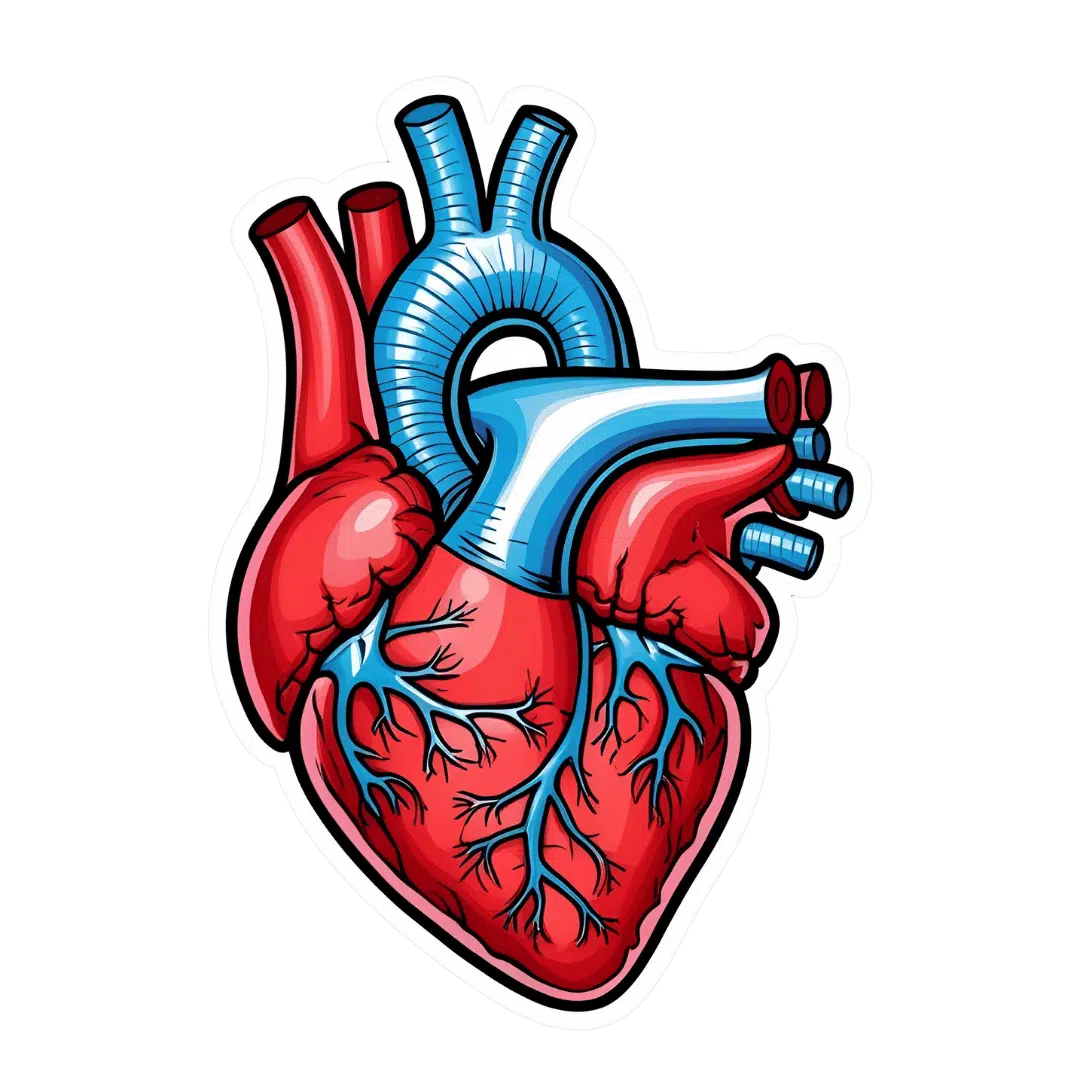
Infections, Heart Failure, & More
10almonds is reader-supported. We may, at no cost to you, receive a portion of sales if you purchase a product through a link in this article.
Some health news to round off the week:
The Infection That Leads To Heart Failure
It’s long been held that, for example, flossing reduces heart disease risk, with the hypothesis being that if plaque bacteria enter the blood stream, well, that’s an even worse place for plaque bacteria to be. Now, with much more data, attention has turned to
- actual infections, and
- actual heart failure
Way to up the ante! And, it holds true regardless of what kind of infection. So, you might think that a UTI, for example, is surely “downstream” and should not affect the heart, but it does. Because of this, researchers currently believe that it is not the infection itself, so much as the body’s inflammation response to infection, that leads to the heart failure. Which is reasonable, because, for example, atherosclerosis is made mostly not of cholesterol itself, but rather mostly of dead immune cells that got stuck in the cholesterol.
Moreover, it’s not so much about the acute inflammatory response (which is almost always a good thing, circumstantially), but rather that after cases where an infection managed to take hold, the immune system can then often stay on high alert for many years alter. Long COVID is an obvious recent example of this, but it’s hardly a new phenomenon; see for example post-polio syndrome, and consider how many more such post-infection maladies are likely to exist that never got a name because they flew under the radar or got diagnosed as fibromyalgia or something (fibromyalgia is a common diagnosis doctors give when they acknowledge something’s wrong, and it causes pain and exhaustion, but they don’t know what, and it appears to be stable—so while it can be helpful to put a name to the collection of symptoms, it’s a non-diagnosis diagnosis on the doctors’ part. It’s saying “I diagnose you with hurty tiredness”).
The take-away from all this? Avoid infections, for your heart’s sake, and if you do get an infection, take it seriously even if it’s minor. The safe amount of infection is “no infection”.
Read in full: Study uncovers new link between infections and heart failure
Cold Water Immersion: Hot Or Not?
The evidence is clear for some benefits; for others, not so much:
- It’s great (if you’re already in fair health, and definitely not if you have a heart condition) to improve circulation and stress response
- There may be some benefits to immune function, but however reasonable the hypothesis, actual evidence is thin on the ground
- The oft-hyped mood benefits are a) marginal b) short-lived, with benefits fading after 3 months of regular cold baths/showers/etc
Read in full: The big chill: Is cold-water immersion good for our health?
Related: Ice Baths: To Dip Or Not To Dip?
The Unspoken Trials Of Going To The Gym (While Being A Woman)
Public health decision-makers often think that getting people to go to the gym more is a matter of public information, or perhaps branding. Some who have their thinking heads on might even realize that there may be economic factors for many. But for women, there’s an additional factor—or rather, an additionally prominent factor. The study we’ll link started with this observation (please read it in the voice of your favorite nature documentary narrator):
❝Despite an increase in gym memberships, women are less active than men and little is known about the barriers women face when navigating gym spaces.❞
What then, of these shy, elusive creatures that make up a mere 51% of the world’s population?
A medium-sized (n=279) study of women, of whom 84% being current gym-goers, reported often feeling “judged for their appearance or performance, as well as having to fight for space in the gym and to be taken seriously, while navigating harassment and unsolicited comments from men”
Even gym attire becomes an issue:
❝Aligning with previous literature, women often chose attire based on comfort and functionality. However, their choices were also influenced by comparisons with others or fear of judgement for wearing non-branded attire or looking too put together. Many women also chose gym attire to hide perceived problem areas or avoid appearance concerns, including visible sweat stains.❞
…which main seem silly; you’re at the gym, of course you’re going to sweat, but if you’re the only one with visible sweat stains, then there can be social consequences (bad ones).
Similarly, there’s a “damned if you do; damned if you don’t” when it comes to working out while fat—on the one hand, society conflates fatness with laziness; on the other, it can be extra intimidating to be the only fat person in a gym full of people who look like they’re going to audition for a superhero movie.
❝In the gym, just like in other areas of life, women often feel stuck between being seen as ‘too much’ and ‘not enough’, dealing with judgement about how they look, how they perform, and even how much space they take up. Even though the pressure to be super thin is decreasing, the growing focus on being muscular and athletic is creating new challenges. It is pushing unrealistic standards that can negatively affect women’s body image and overall well-being.❞
Writer’s note: I live a few minutes walk from my nearest gym, and I work out at home instead. This way, if I want to do yoga in my pajamas, I can. If I want to use my treadmill naked and watch my T+A bounce in the mirror, I can. If I want to lift weights in the dress I happened to be wearing, I can. Alas that I can’t swim at home!
Read in full: Women face multiple barriers while exercising in gyms
Related: Body Image Dissatisfaction/Appreciation Across The Ages
Take care!
Don’t Forget…
Did you arrive here from our newsletter? Don’t forget to return to the email to continue learning!
Recommended

Learn to Age Gracefully
Join the 98k+ American women taking control of their health & aging with our 100% free (and fun!) daily emails:
-
Bell Pepper vs Cucumber – Which is Healthier?
10almonds is reader-supported. We may, at no cost to you, receive a portion of sales if you purchase a product through a link in this article.
Our Verdict
When comparing bell pepper to cucumber, we picked the bell pepper.
Why?
First, you might remember that different color bell peppers have different nutritional profiles. So, you might be wondering why we didn’t specify the color. The reason is: the things that differ from one color to another are important differences between the respective bell peppers, but they make no difference to this comparison, as for any given nutrient that changes from one color to another, it doesn’t change whether or not it beats cucumber (in fact, for all the things that change, the weakest bell pepper for each one still beats cucumber).
Now, let’s get down to it:
In terms of macros, bell pepper has nearly 4x the fiber for only slightly more carbs, winning this round.
In the category of vitamins, bell pepper has more of vitamins A, B1, B3, B6, B9, C, and E, while cucumber has more of vitamins B5 and K, making a compelling 7:2 victory for bell peppers here.
Looking at minerals, bell pepper has more copper, iron, manganese, and potassium, while cucumber has more calcium, magnesium, phosphorus, selenium, and zinc, so cucumber scores a win in this round.
When it comes to other considerations, bell peppers have more polyphenols and an impressive array of carotenoids (not technically polyphenols, but fulfil a similar function), while cucumber has some anti-inflammatory properties of its own (see links below for details). We could call this a tie, or possibly a win for bell peppers depending on how we want to weight things in this round.
Whatever we do with that last category, adding up the sections still gives an overall win for bell peppers, but by all means enjoy either or both; diversity is good!
Want to learn more?
You might like:
- Which Bell Peppers To Pick? A Spectrum Of Specialties ← for the differences between the different colors
- Cucumber Extract Beats Glucosamine & Chondroitin… At 1/135th Of The Dose?!
Enjoy!
Share This Post
-
Egg Whites vs Whole Eggs – Which is Healthier?
10almonds is reader-supported. We may, at no cost to you, receive a portion of sales if you purchase a product through a link in this article.
Our Verdict
When comparing egg whites to whole eggs, we picked the whole eggs.
Why?
Egg whites are mostly protein. Egg yolks are mostly fat, with some protein.
However, fat ≠ bad, and the yolk is also where the choline is stored, which itself (as well as its benefits for your brain) will tend to reduce fat storage in the body.
Furthermore, the yolk contains an assortment of vitamins, minerals, and essential amino acids. After all, the yolk is there specifically to contain everything needed to turn a cluster of cells into a small bird.
Share This Post
-
Perfectionism, And How To Make Yours Work For You
10almonds is reader-supported. We may, at no cost to you, receive a portion of sales if you purchase a product through a link in this article.
Harness The Power Of Your Perfectionism
A lot of people see perfectionism as a problem—and it can be that!
We can use perfectionism as a would-be shield against our fear of failure, by putting things off until we’re better prepared (repeat forever, or at least until the deadliniest deadline that ever deadlined), or do things but really struggle to draw a line under them and check them off as “done” because we keep tweaking and improving and improving… With diminishing returns (forever). So, that’s not helpful.
But, if we’re mindful, we can also leverage our perfectionism to our benefit.
Great! How?
First we need to be able to discern the ways in which perfectionism can be bad or good for us. Or as it’s called in psychology, ways in which our perfectionism can be maladaptive or adaptive.
- Maladaptive: describing a behavioral adaptation to our environment—specifically, a reactive behavioral adaptation that is unhealthy and really is not a solution to the problem at hand
- Adaptive: describing a behavioral adaptation to our environment—specifically, a responsive behavioral adaptation that is healthy and helps us to thrive
So in the case of perfectionism, one example for each might be:
- Maladaptive: never taking up that new hobby, because you’re just going to suck at it anyway, and what’s the point if you’re not going to excel? You’re a perfectionist, and you don’t settle for anything less than excellence.
- Adaptive: researching the new hobby, learning the basics, and recognizing that even if the results are not immediately perfect, the learning process can be… Yes, even with mistakes along the way, for they too are part of learning! You’re a perfectionist, and you’re going to be the best possible student of your new hobby.
Did you catch the key there?
When it comes to approaching things we do in life—either because we want to or because we must—there are two kinds of mindset: goal-oriented, and task-oriented.
Broadly speaking, each has their merits, and as a general topic, it’s beyond the scope of today’s main feature. Here we’re looking at it in the context of perfectionism, and in that frame, there’s a clear qualitative difference:
- The goal-oriented perfectionist will be frustrated to the point of torment, at not immediately attaining the goal. Everything short of that will be a means to an end, at best. Not fun.
- The task-oriented perfectionist will take joy in going about the task in the best way possible, and optimizing their process as they go. The journey itself will be rewarding and a tangible product of their consistent perfectionism.
The good news is: you get to choose! You’re not stuck in a box.
If you’re thinking “I’m a perfectionist and I’m generally a goal-oriented person”, that’s fine. You’re just going to need to reframe your goals.
- Instead of: my goal is to be fluent in Arabic
- …so you never speak it, because to err is human, all too human, and you’re a perfectionist, so you don’t want that!
- Let’s try: my goal is to study Arabic for at least 15 minutes per day, every day, without fail, covering at least some new material each time, no matter how small the increase
- …and then you go and throw yourself into conversation way out of your depth, make mistakes, and get corrections, because that’s how you learn, and you’re a perfectionist, so you want that!
This goes for any field of expertise, of course.
- If you want to play the violin solo in Carnegie Hall, you have to pick up your violin and practice each day.
- If you want to be a world-renowned pastry chef, you have to make a consistent habit of baking.
- If you want to write a bestselling book, you have to show up at your keyboard.
Be perfect all you want, but be the perfect student.
And as your skills grow, maybe you’ll upgrade that to also being the perfect practitioner, and perhaps later still, the perfect teacher.
But just remember:
Perfection comes not from the end goal (that would be backwards thinking!) but from the process (which includes mistakes; they’re an important part of learning; embrace them and grow!), so perfect that first.
Share This Post
Related Posts
-
Dark Calories – by Dr. Catherine Shanahan
10almonds is reader-supported. We may, at no cost to you, receive a portion of sales if you purchase a product through a link in this article.
You may be wondering: do we really need a 416-page book to say “don’t use vegetable oils”?
The author, who was a biochemist before becoming a family physician, takes a lot of care to explain in ways the non-chemists amongst us can understand (with molecular diagrams very well-labelled), exactly why certain seed/vegetable oils (both of those names being imprecise and unhelpful as umbrella terms) cause metabolic problems for us, when in contrast olive oil, avocado oil, and even peanut oil, do not.
Understanding is, for many, the root foundation of compliance. We are more likely to abide by rules we understand the logic behind, than seemingly arbitrary “thou shalt not…” proclamations.
So that’s an important strength of the book, demystifying various fats and how our body responds to them on a biochemical level, not just “is associated with such-and-such, based on observational population studies”. This kind of explanation clears up why, for example, seed oils correlate with obesity more than calories, sugar, wheat, or beef—having as it does to do with affecting our body’s ability to generate and use energy.
She also offers practical tips/reminders throughout, such as how “organic” does not necessarily mean “healthy” (indeed, many poisonous plants can be grown “organically”), and nor does “organic” mean “unrefined”, it speaks only for the conditions in which the raw product was first made, before other things were done to it later.
We learn a lot, too, about the processes of oxidation, the biochemistry behind that (more diagrams!), and of course the inflammatory response to same (an important factor in most if not all chronic disease).
The style is mostly very easy-to-read pop-science, though if you’re not a chemist, you’ll probably need to slow down for the biochemistry explanations (this reviewer certainly did).
Bottom line: this is more than just a litany against vegetable oils; it’s a ground-upwards education in metabolic biochemistry for the layperson, and what that means for us in terms of chronic disease risks.
Click here to check out Dark Calories, and learn what’s going on with these oils!
Don’t Forget…
Did you arrive here from our newsletter? Don’t forget to return to the email to continue learning!
Learn to Age Gracefully
Join the 98k+ American women taking control of their health & aging with our 100% free (and fun!) daily emails:
-
How Stress Causes Physical Pain: The Brain–Body Connection Explained Simply
10almonds is reader-supported. We may, at no cost to you, receive a portion of sales if you purchase a product through a link in this article.
Dr. Amy Konvalin talks us through why it happens and what to do about it (besides just “manage stress”!):
It’s about signalling
Stress has a lot of effects when it comes to pain-signalling: it changes nervous system activity, increases cortisol, activates the fight-or-flight response, raises muscle tension, and can also excite inflammatory pathways, all of which can magnify existing pain even when there is a real biomechanical injury underneath.
- First, understand the pain cycle: irritation or injury sends signals to the brain, the brain interprets them as pain, and muscles tighten in response, which can worsen irritation, reduce movement, trap inflammatory chemicals, and create a repeating cycle where pain becomes increasingly widespread and sensitive.
- Next, what to do about it: because stress often causes shallow breathing (using your neck and shoulder muscles instead of your diaphragm), increasing tension, this means that deep diaphragmatic breathing can help by activating the vagus nerve, helping to shift the body out of fight-or-flight mode, improve regulation of inflammation, and reduce pain sensitivity.
In practical terms, lowering pain intensity even slightly can help people identify which activities truly aggravate symptoms, as shown in the example of a patient who only recognized prolonged desk sitting as a trigger after her overall pain level decreased through treatment, breathing work, and lifestyle adjustments.
One final note before we move on: pain is processed in the brain, so in that sense all pain is “in your head,” but that doesn’t mean it is imaginary or emotionally fabricated, because stress can biologically amplify real physical pain through nervous system and inflammatory mechanisms.
For more on all of this, enjoy:
Click Here If The Embedded Video Doesn’t Load Automatically!
Want to learn more?
You might also like:
Take care!
Don’t Forget…
Did you arrive here from our newsletter? Don’t forget to return to the email to continue learning!
Learn to Age Gracefully
Join the 98k+ American women taking control of their health & aging with our 100% free (and fun!) daily emails:
-
Drop Acid: The Surprising New Science of Uric Acid – by Dr. David Perlmutter
10almonds is reader-supported. We may, at no cost to you, receive a portion of sales if you purchase a product through a link in this article.
A lot of books have “the new science of” in the title or subtitle, and most of the time the science is not, in fact, new. So, how does this one measure up?
The science is so new that, in fact, it’s largely still in the hypothesis stage. Dr. Perlmutter acknowledges this, and simply makes the argument that it is a reasonable hypothesis, and that in time, it’ll either be validated or refuted.
Meanwhile, he advises us about (well-established) health risks associated with high uric acid levels, and recommends we avoid foods high in purines (as is also current scientific consensus), as well as fructose that has been stripped of fiber (scientific consensus holds for that fructose-without-fiber is indeed terrible for metabolic health, but does not hold that it has anything to do with uric acid levels), and grains (current scientific consensus holds that whole grains are positively healthy for most people, and again, does not connect them to uric acid levels).
The potential tie between metabolic health and uric acid levels is something this book explores a lot, before going on to give us a week-by-week guide to reducing our uric acid levels. There are also recipes, but not many.
The style is light pop-science, very easy to read, little hard science. There is a bibliography, but more often the references are for cited statistics, rather than for scientific claims, which frequently go unsupported by the science that has yet to be done.
Bottom line: this is a very speculative book, but it makes a reasonable case, and is at the very least an interesting read with some ideas one won’t find in every second dietary health book out there.
Click here to check out Drop Acid, and drop your uric acid levels!
Don’t Forget…
Did you arrive here from our newsletter? Don’t forget to return to the email to continue learning!
Learn to Age Gracefully
Join the 98k+ American women taking control of their health & aging with our 100% free (and fun!) daily emails:


