
Hanging Exercises For Complete Beginners & Older Adults
10almonds is reader-supported. We may, at no cost to you, receive a portion of sales if you purchase a product through a link in this article.
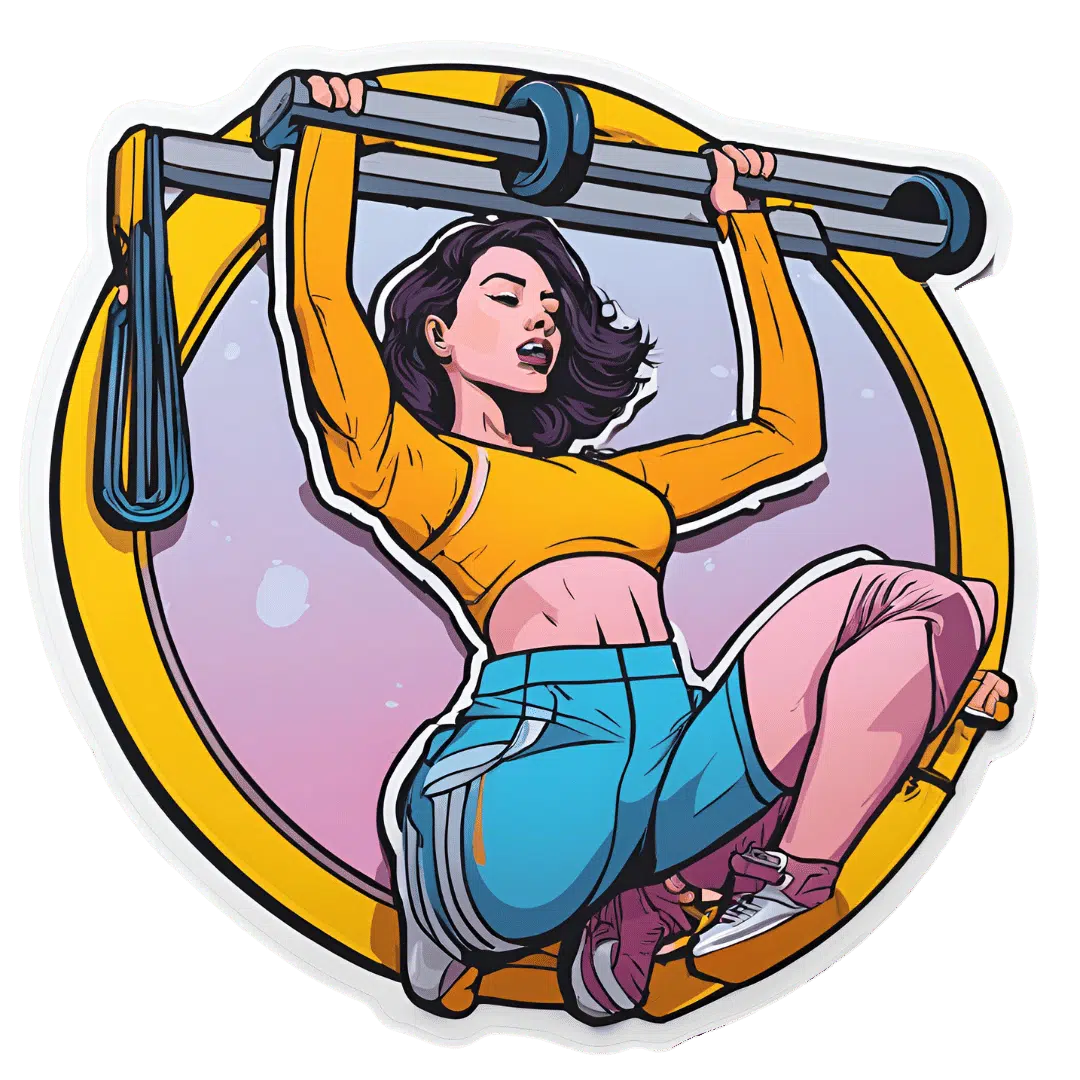
Hanging (not the kind with a gallows) is great for the heath, improving not just strength and mobility, but also—critically—looking after spinal health too. Amanda Raynor explains in this video how this exercise is accessible to anyone (unless you have no arms, in which case, sorry, this one is just not for you—though hanging by your legs will also give similar spinal benefits!).
Hanging out
Hanging can be done at home or at a park, with minimal equipment (a bar, a sturdy tree branch, etc).
Note: the greater the diameter of the bar, the more it will work your grip strength, and/but the harder it will be. So, it’s recommend to start with a narrow-diameter bar first.
Getting started:
- Start with a “dead hang”: grip the bar with hands shoulder-width apart, thumb wrapped around.
- Aim to hang without pulling up; build endurance gradually (10–30 seconds is fine at first).
- Work up to holding for 60 seconds in three sets as a fitness goal.
Progression:
- If unable to hang at all initially, use a chair or stool to support some body weight.
- Gradually reduce foot support to increase duration of free hanging.
- Start with 10 seconds, progressing by small increments (e.g: 15, 20, 25 seconds) until reaching 60 seconds.
Advanced variations:
- Move the body while hanging (e.g., circles, knee lifts).
- Experiment with different grips (overhand, underhand) for varied muscle engagement.
- Try scapular pulls or one-arm hangs for additional challenge and strength-building.
For more on all of this plus visual demonstrations, enjoy:
Click Here If The Embedded Video Doesn’t Load Automatically!
Want to learn more?
You might also like:
Take care!
Don’t Forget…
Did you arrive here from our newsletter? Don’t forget to return to the email to continue learning!
Recommended
Learn to Age Gracefully
Join the 98k+ American women taking control of their health & aging with our 100% free (and fun!) daily emails:
-
A New, Smarter Wearable That Fights Joint Pain
10almonds is reader-supported. We may, at no cost to you, receive a portion of sales if you purchase a product through a link in this article.
…and other items from this week’s health news:
The Wearable “Goldilocks” Heater
If you’ve ever used a heating pad to combat joint pain, chances are you ran into two problems:
- Getting it to be and remain where it needs to be
- Getting it to a therapeutic temperature without the heat then building up to the point that it needs to be switched off after a short while
Scientists (and engineers) have now tackled this:
❝Our goal was to make thermal therapy truly wearable—not just portable, but adaptive and intuitive. By integrating precise sensors and closed-loop control into a stretchable format, we’re giving patients the ability to receive therapy in real time, tailored to their specific environment and condition.
This technology reflects the future of personalized medicine, where treatment moves with the body and responds as needed. It’s not just engineering—it’s empathy through innovation.❞
This flexibility and adaptiveness was found to be durable throughout testing (including more than 1,000 use cycles), and even remained accurate during exercise:
Read in full: Flexible smart heater delivers real-time thermal therapy for joint pain
Related: 10 Tips To Reduce Morning Pain & Stiffness With Arthritis
How Likely is not recovering from covid now?
After the initial lockdowns in what is now the increasingly dim and distant past, numbers were crunched, and it was decided that it was best to lift anti-COVID measures, and that hopefully the deaths would be mostly confined to minorities such as the very young, the old, the chronically ill, the disabled, and so forth.
Which may have a bit of a Lord Farquaad “Some of you may die, but it’s a sacrifice I am willing to make” feel to it (if you know the meme), but it’s certainly become “the new normal”. Of course, the reports on incidence rates (and thus, mortality rates) have gone down a lot since testing was discontinued, so it’s difficult to know certain parts of the statistical background to COVID in the US in 2025.
What we can know, however, is that of those that are recorded, and who survive initial infection (which, one bit of good news, does at least seem to be most people nowadays), there is approximately a 20% chance of not recovering fully within a year. That doesn’t mean “it’ll take a year to recover”, by the way, that means “it was 12-month study” so what happens to those people in the future after those 12 months is not yet known.
However, it seems fair to say that even at the very best if it’s been a year and you haven’t recovered, it’s not exactly “just a cold”.
Read in full: One in five never fully recover quality of life after COVID-like illness
Related: Why Some People Get Sick More (And How To Not Be One Of Them)
It’s time for diabetes prevention
Intermittent fasting is a common tool used with the intention of improving metabolic health, and there has been much discussion about how much it matters what time of day (in the context of the rest of our circadian rhythm) we eat.
To this end, researchers investigated how the timing of lifestyle habits (eating, sleeping, moving) affects metabolic health and risk for type 2 diabetes, using wearable tech and real-time tracking. They found:
About meal timing:
- Eating more between 14:00–17:00 was linked to lower fasting glucose.
- Eating more between 17:00–21:00 was linked to higher glucose, more time in hyperglycemia, and worse next-day glucose levels.
About the meals:
- Carbs from non-starchy vegetables were linked to better glucose control.
- Carbs from starchy vegetables were linked to higher fasting glucose and HbA1c.
About sleep:
- Greater variability in sleep efficiency led to higher night and next-day glucose.
- Irregular wake times were linked to worse glucose tolerance and lower incretin effects.
About links between diet and sleep:
- More legumes, fruit, potassium, and fiber = better and longer sleep.
- Early energy intake (especially 8:00–11:00) correlated with longer sleep duration.
About physical activity:
- More steps between 8:00–11:00 improved glucose control in insulin-resistant individuals.
- More steps between 14:00–17:00 improved glucose control in insulin-sensitive individuals.
- More steps after dinner but before midnight reduced nocturnal hyperglycemia.
- Nocturnal activity (00:00–5:00) worsened glucose regulation for all.
Also, longer sedentary periods at any time were linked to greater hyperglycemia.
Read in full: Meal and sleep timing play key roles in diabetes prevention
Related: The Circadian Rhythm: Far More Than Most People Know ← our expert insights feature on Dr. Satchin Panda, author of The Circadian Diabetes Code
Take care!
Share This Post
-
Bridging The Generation Gap Over The Holidays
10almonds is reader-supported. We may, at no cost to you, receive a portion of sales if you purchase a product through a link in this article.
Often seen as a time for family connection, this same holiday period is often experienced as a time of family tension. But it doesn’t have to be that way!
Hopefully this will be of benefit to readers of all ages, but we’re going to write with the largest age-group of our readership, which is people who are most likely to have Gen-Z grandkids.
why are we writing about this?
Not only are health and happiness closely linked, and not only is mental health also just health, but… In terms of the healthy longevity secrets of the “Blue Zones”, strong intergenerational connections are usually a feature.
First, the obvious:
Any holiday tensions, of course, don’t usually start with grandkids, and are more likely amongst the adults, but some points of friction can be the same:
- Differences of opinion on political/social/economic issues
- Difference of opinion on parenting/dating choices
- Differences of opinion on life priorities
And yes, by the way, that includes even young teens (and perhaps younger) having opinions on these things—we are living in an information age, and this does mean a lot of information is a lot more accessible than it used to be, including for kids. Problems (at all ages) may occur when someone is only really exposed to views from within a certain “bias bubble”, but for better or worse, most people will have an opinion on most well-known things.
As a general rule of thumb, all of these differences of opinion can be shelved if (and only if) those involved seek to avoid conflict. And while age is no guarantee of maturity, often it’ll be the older person(s) in the strongest position to redirect things. So, have a stack of “safe” topics up your sleeve.
Bonus: you can also have non-conversational distractions up your sleeve! These may be kitchen-related, for example (time to produce something distracting, or if the nascent conflict was only between you and one other person, time to go check on something, thus removing yourself from the situation).
Next, about “family time” and technology
It can be tempting to try to have a “phones away” rule, but this will tend to only exacerbate a younger person’s withdrawal.
Better: ask (with a tone of cheerful curiosity, not accusation) about what captures their attention so. Ask about their favorite YouTubers or TikTokers or whatever it is that it is for them. Learn about that Subreddit.
Or maybe (more likely for Millennials) they were following what is going on in the world via social media, which takes on an intermediary role for the delivery of world news. Hopefully this won’t run into the differences of opinion that we mentioned up top, but it could also be a perfectly good avenue of conversation, and maybe there’s more common ground than you might expect.
Meanwhile, if you’re the older generation present, chances are your own social media use is more about the human element. That’s great, but watch out:
A common faux pas is taking pictures without asking, let alone posting them online without asking. For many people this may seem an odd thing to object to, but generationally speaking, the younger someone is (down to the upper single digits, anyway) the more likely they might feel strongly about this. So, ask first.
The reason, by the way, is that in this age of digital hypervisibility, what we choose to share online can be a deeply personal thing. And, say what you will about the pros or cons of someone carefully curating an image of how they wish to be seen, shortcutting through that for them with a candid photo posted on Facebook will not endear you to them, even if you can’t see anything wrong with the photo in question, for example.
See also: Make Social Media Work For Your Mental Health
Show an interest, but don’t interrogate
This one doesn’t take too much explanation. If people want to share about their lives, they’ll need only the smallest nudge to do so. If someone passes up an opportunity to talk about something you showed an interest in, chances are they have their own reasons for not wanting to talk about it. This might be hurtful if you feel like they’re keeping you out of their life, but the best way to get them to talk to you is just to be a good listener—not an interrogator that they have to dodge.
For some powerful tools on this, see: Listening, Better
Lastly, if things aren’t so good…
43% of people are currently experiencing some sort of familial estrangement, so if that’s you, you’re not on your own.
Sometimes, it really is too late to fix things, but sometimes it isn’t; we put together a guide that might help:
Family Estrangement & How To Fix It
Take care!
Share This Post
-
Vaginal Dryness In Menopause | Causes & Solutions
10almonds is reader-supported. We may, at no cost to you, receive a portion of sales if you purchase a product through a link in this article.
Vaginal dryness is mostly* caused by declining estrogen during menopause, leading to thinner tissues, less lubrication, more pain during penetrative sex, and increased susceptibility to UTIs and infections due to pH changes and reduced “friendly” bacteria.
*There are also other causes and contributing factors; we’ll discuss those too!
Dr. Jennifer Roelands recommends 6 things that we can do about it:
Let’s get down to it
Aside from declining estrogen levels, other contributing factors include smoking, medications like many antihistamines and many antidepressants, as well as using scented soaps or douches which disrupt vaginal pH, the microbiome down there, and tissue health. So it’s good to avoid those where possible, and really, the only ones that may be unavoidable are the medications; everything else, it is best to absolutely skip entirely.
Aside from those things to avoid, here are 6 things to consider doing:
- Lubricants: offer temporary relief during penetrative sex but don’t restore moisture; avoid scented or chemical-laden products (counterintuitively, silicon-based is much better than water-based in this regard).
- Moisturizers: daily use products like Vag of Honor (with hyaluronic acid) help retain moisture and improve tissue health.
- Estrogen therapy: includes vaginal creams (e.g. Estrace), tablets (e.g. Vagifem), rings (e.g. Estring), or compounded formulas tailored to individual needs.
- Vaginal DHEA: improves tissue thickness and may enhance libido by converting to local estrogen and acting on androgen receptors.
- Probiotics: especially strains that support vaginal flora and pH; options with D-mannose and cranberry also support urinary health.
- Vulvar balms: for external dryness or conditions like lichen sclerosus; use simple, scent-free products like Vaseline or even coconut oil.
For more on all of this, enjoy:
Click Here If The Embedded Video Doesn’t Load Automatically!
Want to learn more?
You might also like:
“Why Does It Hurt When I Have Sex?” (And What To Do About It)
Take care!
Share This Post
Related Posts
-
11 Things That Can Change Your Eye Color
10almonds is reader-supported. We may, at no cost to you, receive a portion of sales if you purchase a product through a link in this article.
Eye color is generally considered so static that iris scans are considered a reasonable security method. However, it can indeed change—mostly for reasons you won’t want, though:
Ringing the changes
Putting aside any wishes of being a manga protagonist with violet eyes, here are the self-changing options:
- Aging in babies: babies are often born with lighter eyes, which can darken as melanocytes develop during the first few months of life. This is similar to how a small child’s blonde hair can often be much darker by the time puberty hits!
- Aging in adults: eyes may continue to darken until adulthood, while aging into the elderly years can cause them to lighten due to conditions like arcus senilis
- Horner’s syndrome: a nerve disorder that can cause the eyes to become lighter due to loss of pigment
- Fuchs heterochromic iridocyclitis: an inflammation of the iris that leads to lighter eyes over time
- Pigment dispersion syndrome: the iris rubs against eye fibers, leading to pigment loss and lighter eyes
- Kayser-Fleischer rings: excess copper deposits on the cornea, often due to Wilson’s disease, causing larger-than-usual brown or grayish rings around the iris
- Iris melanoma: a rare cancer that can darken the iris, often presenting as brown spots
- Cancer treatments: chemotherapy for retinoblastoma in children can result in lighter eye color and heterochromia
- Medications: prostaglandin-based glaucoma treatments can darken the iris, with up to 23% of patients seeing this effect
- Vitiligo: an autoimmune disorder that destroys melanocytes, mostly noticed in the skin, but also causing patchy loss of pigment in the iris
- Emotional and pupil size changes: emotions and trauma can affect pupil size, making eyes appear darker or lighter temporarily by altering how much of the iris is visible
For more about all these, and some notes about more voluntary changes (if you have certain kinds of eye surgery), enjoy:
Click Here If The Embedded Video Doesn’t Load Automatically!
Want to learn more?
You might also like to read:
Understanding And Slowing The Progression Of Cataracts
Take care!
Don’t Forget…
Did you arrive here from our newsletter? Don’t forget to return to the email to continue learning!
Learn to Age Gracefully
Join the 98k+ American women taking control of their health & aging with our 100% free (and fun!) daily emails:
-
Kidney Beans or Black Beans – Which is Healthier?
10almonds is reader-supported. We may, at no cost to you, receive a portion of sales if you purchase a product through a link in this article.
Our Verdict
When comparing kidney beans to black beans, we picked the black beans.
Why?
First, do note that black beans are also known as turtle beans, or if one wants to hedge one’s bets, black turtle beans. It’s all the same bean. As a small linguistic note, kidney beans are known as “red beans” in many languages, so we could have called this “red beans vs black beans”, but that wouldn’t have landed so well with our largely anglophone readership. So, kidney beans vs black beans it is!
They’re certainly both great, and this is a close one today…
In terms of macros, they’re equal on protein and black beans have more carbs and/but also more fiber. So far, so equal—or rather, if one pulls ahead of the other here, it’s a matter of subjective priorities.
In the category of vitamins, they’re equal on vitamins B2, B3, and choline, while kidney beans have more of vitamins B6, B9, C, and K, and black beans have more of vitamins A, B1, B5, and E. In other words, the two beans are still tied with a 4:4 split, unless we want to take into account that that vitamin E difference is that black beans have 29x more vitamin E, in which case, black beans move ahead.
When it comes to minerals, finally the winner becomes apparent; while kidney beans have a little more manganese and zinc, on the other hand black beans have more calcium, copper, iron, magnesium, phosphorus, potassium, and selenium. However, it should be noted that honestly, the margins aren’t huge here and kidney beans are almost as good for all of these minerals.
In short, black beans win the day, but kidney beans are very close behind, so enjoy whichever you prefer, or better yet, both! They go great together in tacos, burritos, or similar, by the way.
Want to learn more?
You might like to read:
- Kidney Beans vs Fava Beans – Which is Healthier?
- Chickpeas vs Black Beans – Which is Healthier?
- Bold Beans – by Amelia Christie-Miller ← this is a recipe book; if you’re looking to incorporate more beans into your diet and want to make it good, this cookbook can lead the way!
Take care!
Don’t Forget…
Did you arrive here from our newsletter? Don’t forget to return to the email to continue learning!
Learn to Age Gracefully
Join the 98k+ American women taking control of their health & aging with our 100% free (and fun!) daily emails:
-
Rice vs Buckwheat – Which is Healthier?
10almonds is reader-supported. We may, at no cost to you, receive a portion of sales if you purchase a product through a link in this article.
Our Verdict
When comparing rice to buckwheat, we picked the buckwheat.
Why?
It’s a simple one today:
- The vitamin and mineral profiles are very similar, so neither of these are a swaying factor
- In terms of macros, rice is higher in carbohydrates while buckwheat is higher in fiber
- Buckwheat also has more protein, but not by much
- Buckwheat has the lower glycemic index, and a lower insulin index, too
While buckwheat cannot always be reasonably used as a substitute for rice (often because the texture would not work the same), in many cases it can be.
And if you love rice, well, so do we, but variety is also the spice of life indeed, not to mention important for good health. You know that whole “eat 30 different plants per week” thing? Grains count in that tally! So substituting buckwheat in place of rice sometimes seems like a very good bet.
Not sure where to buy it?
Here for your convenience is an example product on Amazon
Want to know more about today’s topic?
Check out: Carb-Strong or Carb-Wrong?
Enjoy!
Don’t Forget…
Did you arrive here from our newsletter? Don’t forget to return to the email to continue learning!
Learn to Age Gracefully
Join the 98k+ American women taking control of their health & aging with our 100% free (and fun!) daily emails:


