
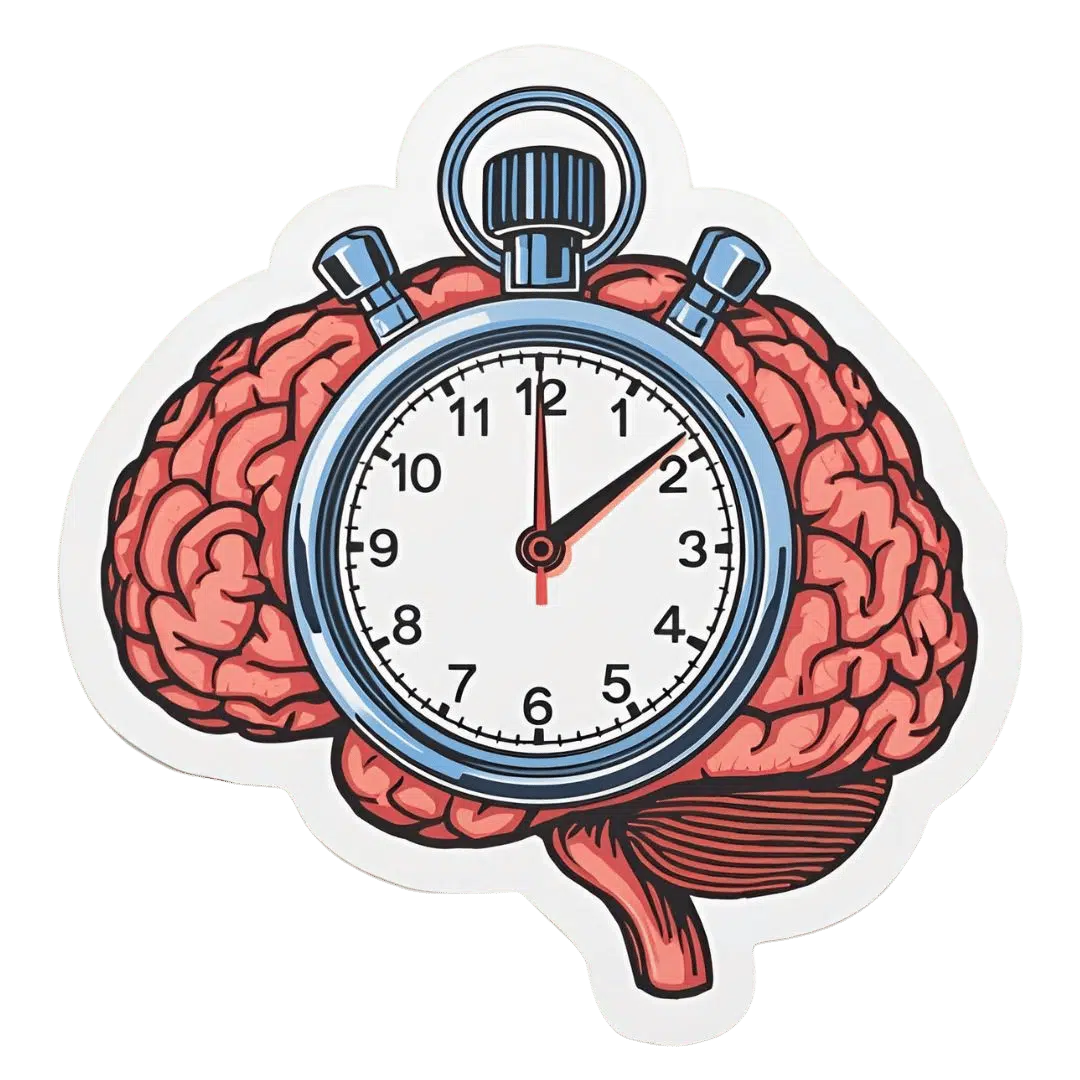
Can’t Start Tasks? Try This Now!
10almonds is reader-supported. We may, at no cost to you, receive a portion of sales if you purchase a product through a link in this article.
Oftentimes, we know what we need to do, and might even find it’s easy once we get going, but getting started is all-too-easily procrastinated.
So, how to get past this, when “just do it” isn’t working?
When it’s time to get going
These tips are by and for people with ADHD, who typically have particular difficulty with this, but can help most people regardless:
- Overwhelmed? Choose three priority tasks to focus on instead of trying to do everything at once—just don’t get stuck in deciding which three!
- No sense of urgency? Use a Pomodoro timer to help give the task time boundaries; scheduling breaks in the same way can also help.
- The task isn’t appealing? Pair the task with rewards like snacks, music, or a cozy setup (this approach is called “temptation bundling”).
- The task feels daunting? Break it into smaller steps and/or use tools like WikiHow to reduce how much you need to plan ahead, and enable you to do it step by step.
- Too many barriers? Clear obstacles such as clutter, missing supplies, or noise to make starting easier. But watch out! Lest you end up renovating your house while avoiding the original task. So, to preclude this derailment, set a clearly-defined parameter for what you’re going to do before the task, and when that’s done, switch to the task before embarking on any sidequests that occurred to you along the way.
For more on each of these, enjoy:
Click Here If The Embedded Video Doesn’t Load Automatically!
Want to learn more?
You might also like:
Get Past Executive Dysfunction
Take care!
Don’t Forget…
Did you arrive here from our newsletter? Don’t forget to return to the email to continue learning!
Recommended
Learn to Age Gracefully
Join the 98k+ American women taking control of their health & aging with our 100% free (and fun!) daily emails:
-
Chipotle Chili Wild Rice
10almonds is reader-supported. We may, at no cost to you, receive a portion of sales if you purchase a product through a link in this article.
This is a very gut-healthy recipe that’s also tasty and filling, and packed with polyphenols too. What’s not to love?
You will need
- 1 cup cooked wild rice (we suggest cooking it with 1 tbsp chia seeds added)
- 7 oz cooked sweetcorn (can be from a tin or from frozen or cook it yourself)
- 4 oz charred jarred red peppers (these actually benefit from being from a jar—you can use fresh or frozen if necessary, but only jarred will give you the extra gut-healthy benefits from fermentation)
- 1 avocado, pitted, peeled, and cut into small chunks
- ½ red onion, thinly sliced
- 6–8 sun-dried tomatoes, chopped
- 2 tbsp extra virgin olive oil
- 2 tsp chipotle chili paste (adjust per your heat preferences)
- 1 tsp black pepper, coarse ground
- ½ tsp MSG or 1 tsp low-sodium salt
- Juice of 1 lime
Method
(we suggest you read everything at least once before doing anything)
1) Mix the cooked rice, red onion, sweetcorn, red peppers, avocado pieces, and sun-dried tomato, in a bowl. We recommend to do it gently, or you will end up with guacamole in there.
2) Mix the olive oil, lime juice, chipotle chili paste, black pepper, and MSG/salt, in another bowl. If perchance you have a conveniently small whisk, now is the time to use it. Failing that, a fork will suffice.
3) Add the contents of the second bowl to the first, tossing gently but thoroughly to combine well, and serve.
Enjoy!
Want to learn more?
For those interested in some of the science of what we have going on today:
- Brown Rice vs Wild Rice – Which is Healthier?
- Making Friends With Your Gut (You Can Thank Us Later)
- Capsaicin For Weight Loss And Against Inflammation
Take care!
Share This Post
-
Applesauce vs Cranberry Sauce – Which is Healthier?
10almonds is reader-supported. We may, at no cost to you, receive a portion of sales if you purchase a product through a link in this article.
Our Verdict
When comparing applesauce to cranberry sauce, we picked the applesauce.
Why?
It mostly comes down to the fact that apples are sweeter than cranberries:
In terms of macros, they are both equal on fiber (both languishing at a paltry 1.1g/100g), and/but cranberry sauce has 4x the carbs, of which, more than 3x the sugar. Simply, cranberry sauce recipes invariably have a lot of added sugar, while applesauce recipes don’t need that. So this is a huge relative win for applesauce (we say “relative” because it’s still not great, but cranberry sauce is far worse).
In the category of vitamins, applesauce has more of vitamins B1, B2, B5, B6, B9, and C, while cranberry sauce has more of vitamins E, K, and choline. A more moderate win for applesauce this time.
When it comes to minerals, applesauce has more calcium, copper, magnesium, phosphorus, and potassium, while cranberry sauce has more iron, manganese, and selenium. Another moderate win for applesauce.
Since we’ve discussed relative amounts rather than actual quantities, it’s worth noting that neither sauce is a good source of vitamins or minerals, and neither are close to just eating the actual fruits. Just, cranberry sauce is the relatively more barren of the two.
While cranberries famously have some UTI-fighting properties, you cannot usefully gain this benefit from a sauce that (with its very high sugar content and minimal fiber) actively feeds the very C. albicans you are likely trying to kill.
All in all, a pitiful show of nutritional inadequacy from these two products today, but one is relatively less bad than the other, and that’s the applesauce.
Want to learn more?
You might like to read:
From Apples to Bees, and High-Fructose Cs: Which Sugars Are Healthier, And Which Are Just The Same?
Enjoy!
Share This Post
-
5 Hip Exercises To Strengthen Bones & Improve Balance (Osteoporosis-Friendly)
10almonds is reader-supported. We may, at no cost to you, receive a portion of sales if you purchase a product through a link in this article.
Today’s video choice was inspired by: your writer here just got back from the radiology clinic where she had her hips and spine scanned for bone density (I get the results in a week; wish me luck!).
This is an important topic, because…
- Bad news: hip fractures are common in adults over 50 and can lead to long recovery and loss of independence (or indeed, loss of life; too many people go into hospital with a broken hip, get an infection in hospital, and don’t come home)
- Good news: consistent, targeted exercises can strengthen bones and joints to reduce fracture risk and maintain an active, confident lifestyle (and indeed, one conducive to healthy longevity)
Dr. Alyssa Kuhn explains:
Use it or lose it
Dr. Kuhn recommends the following exercises:
- Side stomp: this gentle impact exercise involves stepping to the side and stomping to stimulate bone strengthening, with adjustable intensity and optional upper body support, aiming for 10–15 stomps per side.
- Weighted squat: you can strengthen your leg muscles and bones by doing controlled squats with or without weights (held at shoulder level), keeping an upright posture, avoiding forward bending, and placing weights on a raised surface to prevent unsafe lifting; aim for 10–12 reps, 2–3 sets.
- Heel drops: raise up onto your toes and let your heels drop to create vertical impact for bone strength, starting gently and increasing intensity gradually on soft surfaces or barefoot if comfortable, with a goal of 10–20 reps, 2–3 sets.
- Tandem walking: walk heel-to-toe in a straight line to challenge balance and lower fall risk, using a wall or counter for support and adjusting foot spacing if needed, aiming for 1–2 minutes per round, 2–3 rounds, focusing on control over speed.
- Hop (jumping): begin with supported hops to test readiness, then progress to controlled free jumps that keep knees aligned and hips engaged on landing to safely build hip bone strength, starting with 10–20 reps, 2–3 sets, and increasing gradually.
Find a way to build them (or at least: one or more of them) into your daily routine. A good example, since these are quite “casual” exercises and not the kind for which one necessarily gets changed and/or goes to the gym, is to do some of these while waiting for water to boil, or for the microwave, or things like that.
For more on each of these plus visual demonstrations, enjoy:
Click Here If The Embedded Video Doesn’t Load Automatically!
Want to learn more?
You might also like:
21% Stronger Bones in a Year at 62? Yes, It’s Possible (No Calcium Supplements Needed!)
Take care!
Share This Post
Related Posts
-
21 Most Beneficial Polyphenols & What Foods Have Them
10almonds is reader-supported. We may, at no cost to you, receive a portion of sales if you purchase a product through a link in this article.
We often write about polyphenols here at 10almonds; sometimes mentioning that a certain food is good because it has them, or else occasionally an entire article about a particular polyphenol. But what about a birds-eye view of polyphenols as a whole?
Well, there are many, but we’ve picked 21 particularly beneficial for human health, and what foods contain them.
We’ll be working from this fantastic database, by the way:
❝Phenol-Explorer is the first comprehensive database on polyphenol content in foods. The database contains more than 35,000 content values for 500 different polyphenols in over 400 foods. These data are derived from the systematic collection of more than 60,000 original content values found in more than 1,300 scientific publications. Each of these publications has been critically evaluated before inclusion in the database. The whole data on the polyphenol composition of foods is available for download.❞
Source: Phenol-Explorer.EU | Database on polyphenol content in foods
We use this database at least several times per week while writing 10almonds; it’s a truly invaluable resource!
However, 500 is a lot, so here’s a rundown of 21 especially impactful ones; we’ve sorted them per the categories used in the explorer, and in some cases we’ve aggregated several very similar polyphenols typically found together in the same foods, into one item (so for example we just list “quercetin” instead of quercetin 3-O-rutinoside + quercetin 4′-O-glucoside + quercetin 3,4′-O-diglucoside, etc etc). We’ve also broadly grouped some particularly populous ones such as “anthocyanins”, “catechins”, and so forth.
Without further ado, here’s what you ideally want to be getting plenty of in your diet:
Flavonoids
- Quercetin
- Foods: onions, apples, berries, kale, broccoli, capers.
- Benefits: anti-inflammatory, reduces allergy symptoms, supports heart and brain health, and may lower blood pressure.
- See also: Fight Inflammation & Protect Your Brain, With Quercetin
- Kaempferol
- Foods: spinach, kale, tea (green and black), capers, brussels sprouts.
- Benefits: antioxidant, may reduce the risk of cancer, supports cardiovascular health, and has anti-inflammatory properties.
- Epigallocatechin gallate (EGCG)
- Foods: green tea, matcha.
- Benefits: potent antioxidant, promotes weight loss, supports brain health, and may reduce the risk of heart disease.
- See also: What Does Kaempferol Do, Anyway?
- Anthocyanins
- Foods: blueberries, blackberries, raspberries, red cabbage, cherries.
- Benefits: improve brain health, support eye health, and reduce the risk of cardiovascular diseases.
- Apigenin
- Foods: parsley, celery, chamomile tea.
- Benefits: anti-inflammatory, reduces anxiety, and supports brain and immune system health.
- Luteolin
- Foods: peppers, thyme, celery, carrots.
- Benefits: anti-inflammatory, supports brain health, and may help reduce the growth of cancer cells.
- Catechins (aside from EGCG)
- Foods: green tea, dark chocolate, apples
- Benefits: boosts metabolism, supports cardiovascular health, and reduces oxidative stress.
- Hesperidin
- Foods: oranges, lemons, limes, grapefruits.
- Benefits: supports vascular health, reduces inflammation, and may help manage diabetes.
- Naringenin
- Foods: oranges, grapefruits, tomatoes.
- Benefits: antioxidant, supports liver health, and may improve cholesterol levels.
For more on epigallocatechin gallate and other catechins, see: Which Tea Is Best, By Science?
Phenolic Acids
- Chlorogenic acid
- Foods: coffee, artichokes, apples, pears.
- Benefits: supports weight management, improves blood sugar regulation, and reduces inflammation.
- See also: Green Coffee Bean Extract: Coffee Benefits Without The Coffee?
- Caffeic acid
- Foods: coffee, thyme, sage, basil.
- Benefits: antioxidant, anti-inflammatory, and supports skin health.
- See also: The Bitter Truth About Coffee (or is it?)
- Ferulic acid
- Foods: whole grains, rice bran, oats, flaxseeds, spinach.
- Benefits: protects skin from UV damage, reduces inflammation, and supports cardiovascular health.
- Gallic acid
- Foods: green tea, berries, walnuts.
- Benefits: antioxidant, may reduce the risk of cancer, and supports brain health.
Stilbenes
- Resveratrol
- Foods: red currants, blueberries, peanuts.
- Benefits: anti-aging properties, supports heart health, and reduces inflammation.
- See also: Resveratrol & Healthy Aging ← and no, you can’t usefully get it from red wine; here’s why!
Lignans
- Secoisolariciresinol
- Foods: flaxseeds, sesame seeds, whole grains.
- Benefits: supports hormone balance, reduces the risk of hormone-related cancers, and promotes gut health.
- Matairesinol
- Foods: rye, oats, barley, sesame seeds.
- Benefits: hormonal support, antioxidant, and may reduce the risk of cardiovascular diseases.
See also: Sprout Your Seeds, Grains, Beans, Etc ← for maximum nutritional availability!
Tannins
- Ellagic acid
- Foods: pomegranates, raspberries, walnuts.
- Benefits: anti-cancer properties, supports skin health, and reduces inflammation.
- Proanthocyanidins
- Foods: cranberries, apples, grapes, dark chocolate.
- Benefits: supports urinary tract health, reduces inflammation, and improves blood vessel health.
See also: Enjoy Bitter Foods For Your Heart & Brain
Curcuminoids
- Curcumin
- Foods: turmeric.
- Benefits: potent anti-inflammatory, supports joint health, and may reduce the risk of chronic diseases.
- See also: Why Curcumin (Turmeric) Is Worth Its Weight In Gold
Isoflavones
- Genistein
- Foods: soybeans, chickpeas.
- Benefits: supports bone health, reduces the risk of hormone-related cancers, and promotes heart health.
- Daidzein
- Foods: soybeans, legumes.
- Benefits: hormonal balance, supports bone health, and may help alleviate menopausal symptoms.
See also: What Does “Balance Your Hormones” Even Mean?
Well, that’s a lot of things to remember!
If you want to make it easier for yourself, you can simply make sure to get at least 30 different kinds of plant into your diet per week, and by doing so, statistically, you should cover most of these!
Read more: What’s Your Plant Diversity Score?
Alternatively, for a middle-ground approach of targetting 16 most polyphenol delivering foods, check out this super-dense arrangement:
Mediterranean Diet… In A Pill? ← it’s about plant extracts from 16 specific foods, and the polyphenols they deliver
Enjoy!
Don’t Forget…
Did you arrive here from our newsletter? Don’t forget to return to the email to continue learning!
Learn to Age Gracefully
Join the 98k+ American women taking control of their health & aging with our 100% free (and fun!) daily emails:
- Quercetin
-
Healing Trauma – by Dr. Peter Levine
10almonds is reader-supported. We may, at no cost to you, receive a portion of sales if you purchase a product through a link in this article.
Dr. Levine’s better-selling book about trauma, Waking The Tiger, laid the foundations for this one, but the reason we’re skipping straight into Healing Trauma, is that while the former book is more about the ideas that led him to what he currently believes is the best approach to healing trauma, this book is the one that explains how to actually do it.
The core thesis is that trauma is a natural, transient response, and is not inherently pathological, but that it can become so if not allowed to do its thing.
This book outlines exercises, trademarked as “somatic experiencing”, which allow the body to go through the physiological processes it needs to, to facilitate healing. If you buy the physical book, there is also an audio CD, which this reviewer has not listened to and cannot comment on, but the exercises are clearly described in the book in any case.
The physical aspects of the exercises are similar to the principles of progressive relaxation, while the mental aspects of the exercises are about re-experiencing trauma in a safer fashion, in small doses.
Any kind of dealing with trauma is not going to be comfortable, so this book is not an enjoyable read.
As for how useful the exercises are, your mileage may vary. Like many books about trauma, the expectation is that once upon a time you were in a situation that was unsafe, and now you are safe. If that describes your trauma, you will get the most out of this. However, if your trauma is unrelated to your personal safety, or if it is about your personal safety but the threat still remains extant, then a lot of this may not help and may even make things worse.
In terms of discussing sexual trauma specifically, it was probably not a good choice that the author favorably quoted Woody Allen, and little things like that may be quite jarring for a lot of readers.
Bottom line: if your trauma is PTSD of the kind “you faced an existential threat and now it is gone”, then chances are that this book can help you a lot. If your trauma is different, then your mileage may vary widely on this one.
Click here to check out Healing Trauma, if it seems right for you!
Don’t Forget…
Did you arrive here from our newsletter? Don’t forget to return to the email to continue learning!
Learn to Age Gracefully
Join the 98k+ American women taking control of their health & aging with our 100% free (and fun!) daily emails:
-
Slashed Federal Funding Cancels Vaccine Clinics Amid Measles Surge
10almonds is reader-supported. We may, at no cost to you, receive a portion of sales if you purchase a product through a link in this article.
More than a dozen vaccination clinics were canceled in Pima County, Arizona.
So was a media blitz to bring low-income children in Washoe County, Nevada, up to date on their shots.
Planned clinics were also scuttled in Texas, Minnesota, and Washington, among other places.
Immunization efforts across the country were upended after the federal Centers for Disease Control and Prevention abruptly canceled $11.4 billion in covid-related funds for state and local health departments in late March.
A federal judge temporarily blocked the cuts last week, but many of the organizations that receive the funds said they must proceed as though they’re gone, raising concerns amid a resurgence of measles, a rise in vaccine hesitancy, and growing distrust of public health agencies.
“I’m particularly concerned about the accessibility of vaccines for vulnerable populations,” former U.S. surgeon general Jerome Adams told KFF Health News. Adams served in President Donald Trump’s first administration. “Without high vaccination rates, we are setting those populations and communities up for preventable harm.”
The Department of Health and Human Services, which houses the CDC, does not comment on ongoing litigation, spokesperson Vianca Rodriguez Feliciano said. But she sent a statement on the original action, saying that HHS made the cuts because the covid-19 pandemic is over: “HHS will no longer waste billions of taxpayer dollars responding to a non-existent pandemic that Americans moved on from years ago.”
Still, clinics have also used the money to address other preventable diseases such as flu, mpox, and measles. More than 500 cases of measles so far in a Texas outbreak have led to 57 hospitalizations and the deaths of two school-age children.
In Pima County, Arizona, officials learned that one of its vaccination programs would have to end early because the federal government took away its remaining $1 million in grant money. The county had to cancel about 20 vaccine events offering covid and flu shots that it had already scheduled, said Theresa Cullen, director of the county health department. And it isn’t able to plan any more, she said.
The county is home to Tucson, the second-largest city in Arizona. But it also has sprawling rural areas, including part of the Tohono O’odham Nation, that are far from many health clinics and pharmacies, she said.
The county used the federal grant to offer free vaccines in mostly rural areas, usually on the weekends or after usual work hours on weekdays, Cullen said. The programs are held at community organizations, during fairs and other events, or inside buses turned into mobile health clinics.
Canceling vaccine-related grants has an impact beyond immunization rates, Cullen said. Vaccination events are also a chance to offer health education, connect people with other resources they may need, and build trust between communities and public health systems, she said.
County leaders knew the funding would run out at the end of June, but Cullen said the health department had been in talks with local communities to find a way to continue the events. Now “we’ve said, ‘Sorry, we had a commitment to you and we’re not able to honor it,’” she said.
Cullen said the health department won’t restart the events even though a judge temporarily blocked the funding cuts.
“The vaccine equity grant is a grant that goes from the CDC to the state to us,” she said. “The state is who gave us a stop work order.”
The full effect of the CDC cuts is not yet clear in many places. California Department of Public Health officials estimated that grant terminations would result in at least $840 million in federal funding losses for its state, including $330 million used for virus monitoring, testing, childhood vaccines, and addressing health disparities.
“We are working to evaluate the impact of these actions,” said California Department of Public Health Director Erica Pan.
In Washoe County, Nevada, the surprise cuts in federal funding mean the loss of two contract staffers who set up and advertise vaccination events, including state-mandated back-to-school immunizations for illnesses such as measles.
“Our core team can’t be in two places at once,” said Lisa Lottritz, division director for community and clinical health services at Northern Nevada Public Health.
She expected to retain the contractors through June, when the grants were scheduled to sunset. The health district scrambled to find money to keep the two workers for a few more weeks. They found enough to pay them only through May.
Lottritz immediately canceled a publicity blitz focused on getting children on government insurance up to date on their shots. Vaccine events at the public health clinic will go on, but are “very scaled back” with fewer staff members, she said. Nurses offering shots out and about at churches, senior centers, and food banks will stop in May, when the money to pay the workers runs out.
“The staff have other responsibilities. They do compliance visits, they’re running our clinic, so I won’t have the resources to put on events like that,” Lottritz said.
The effect of the cancellations will reverberate for a long time, said Chad Kingsley, district health officer for Northern Nevada Public Health, and it might take years for the full scope of decreasing vaccinations to be felt.
“Our society doesn’t have a collective knowledge of those diseases and what they did,” he said.
Measles is top of mind in Missouri, where a conference on strengthening immunization efforts statewide was abruptly canceled due to the cuts.
The Missouri Immunization Coalition, which organized the event for April 24-25, also had to lay off half its staff, according to board president Lynelle Phillips. The coalition, which coordinates immunization advocacy and education across the state, must now find alternative funding to stay open.
“It’s just cruel and unthinkably wrong to do this in the midst of a measles resurgence in the country,” Phillips said.
Dana Eby, of the health department in New Madrid County, Missouri, had planned to share tips about building trust for vaccines in rural communities at the conference, including using school nurses and the Vaccines for Children program, funded by the CDC.
New Madrid has one of the highest childhood vaccination rates in the state, despite being part of the largely rural “Bootheel” region that is often noted for its poor health outcomes. Over 98% of kindergartners in the county received the vaccine for measles, mumps, and rubella in 2023-24 compared with the state average of about 91%, and rates in some other counties as low as 61%.
“I will say I think measles will be a problem before I retire,” Eby, 42, said.
Also slated to speak at the Missouri event was former surgeon general Adams, who said he had planned to emphasize the need for community collaboration and the importance of vaccinations in protecting public health and reducing preventable diseases. He said the timing was especially pertinent given the explosion in measles cases in Texas and the rise in whooping cough cases and deaths in Louisiana.
“We can’t make America healthy again by going backwards on our historically high U.S. vaccination rates,” Adams said. “You can’t die from chronic diseases when you’re 50 if you’ve already died from measles or polio or whooping cough when you’re 5.”
California correspondent Christine Mai-Duc contributed to this article.
We’d like to speak with current and former personnel from the Department of Health and Human Services or its component agencies who believe the public should understand the impact of what’s happening within the federal health bureaucracy. Please message KFF Health News on Signal at (415) 519-8778 or get in touch here.
KFF Health News is a national newsroom that produces in-depth journalism about health issues and is one of the core operating programs at KFF—an independent source of health policy research, polling, and journalism. Learn more about KFF.
Subscribe to KFF Health News’ free Morning Briefing.
This article first appeared on KFF Health News and is republished here under a Creative Commons license.
Don’t Forget…
Did you arrive here from our newsletter? Don’t forget to return to the email to continue learning!
Learn to Age Gracefully
Join the 98k+ American women taking control of their health & aging with our 100% free (and fun!) daily emails:


