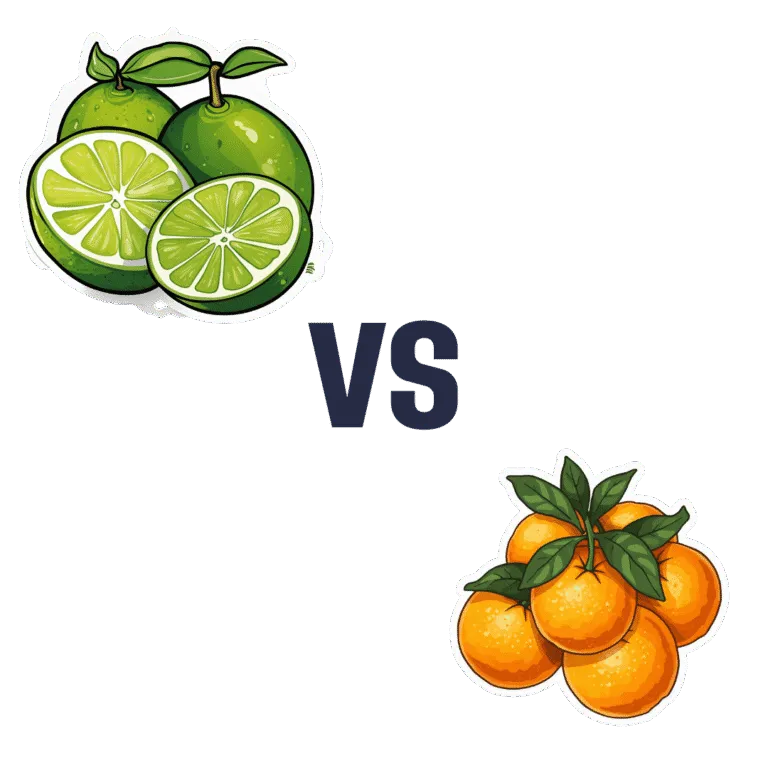
Applesauce vs Cranberry Sauce – Which is Healthier?

10almonds is reader-supported. We may, at no cost to you, receive a portion of sales if you purchase a product through a link in this article.

Our Verdict

When comparing applesauce to cranberry sauce, we picked the applesauce.

Why?

It mostly comes down to the fact that apples are sweeter than cranberries:

In terms of macros, they are both equal on fiber (both languishing at a paltry 1.1g/100g), and/but cranberry sauce has 4x the carbs, of which, more than 3x the sugar. Simply, cranberry sauce recipes invariably have a lot of added sugar, while applesauce recipes don’t need that. So this is a huge relative win for applesauce (we say “relative” because it’s still not great, but cranberry sauce is far worse).

In the category of vitamins, applesauce has more of vitamins B1, B2, B5, B6, B9, and C, while cranberry sauce has more of vitamins E, K, and choline. A more moderate win for applesauce this time.

When it comes to minerals, applesauce has more calcium, copper, magnesium, phosphorus, and potassium, while cranberry sauce has more iron, manganese, and selenium. Another moderate win for applesauce.

Since we’ve discussed relative amounts rather than actual quantities, it’s worth noting that neither sauce is a good source of vitamins or minerals, and neither are close to just eating the actual fruits. Just, cranberry sauce is the relatively more barren of the two.

While cranberries famously have some UTI-fighting properties, you cannot usefully gain this benefit from a sauce that (with its very high sugar content and minimal fiber) actively feeds the very C. albicans you are likely trying to kill.

All in all, a pitiful show of nutritional inadequacy from these two products today, but one is relatively less bad than the other, and that’s the applesauce.

Want to learn more?

You might like to read:

From Apples to Bees, and High-Fructose Cs: Which Sugars Are Healthier, And Which Are Just The Same?

Enjoy!

Don’t Forget…

Did you arrive here from our newsletter? Don’t forget to return to the email to continue learning!

Learn to Age Gracefully

Join the 98k+ American women taking control of their health & aging with our 100% free (and fun!) daily emails:

  • How To Survive A Heart Attack When You’re Alone

    10almonds is reader-supported. We may, at no cost to you, receive a portion of sales if you purchase a product through a link in this article.

    Dr. Alan Mandel emphasizes the importance of staying calm and following these steps to improve survival chances:

    Simple is best

    Here’s how you will survive a heart attack alone: briefly.

    So, you will need to get help as quickly as possible. 90% of people who make it to a hospital alive, go on to survive their heart attack, so that’s your top priority.

    Call emergency services as soon as you suspect you are having a heart attack. Stay on the line, and stay calm.

    While having a heart attack is not an experience that’s very conducive to relaxation, heightened emotions will exacerbate things, so focus on breathing calmly. One of the commonly reported symptoms of heart attack that doesn’t often make it to official lists is “a strong sense of impending doom”, and that is actually helpful as it helps separate it from “is this indigestion?” or such, but once you have acknowledged “yes, this is probably a heart attack”, you need to put those feelings aside for later.

    If you have aspirin available, Dr. Mandel says that the time to take it is once you have called an ambulance. However, if aspirin is not readily available, do not exert yourself trying to find some; indeed, don’t move more than necessary.

    Do not drive yourself to hospital; it will increase the risk of fainting, and you may crash.

    While you are waiting, your main job is to remain calm; he recommends deep breathing, and lying with knees elevated or feet on a chair; this latter is to minimize the strain on your heart.

    For more on all this, plus the key symptoms and risk factors, enjoy:

    Click Here If The Embedded Video Doesn’t Load Automatically!

    Want to learn more?

    You might also like to read:

    Heart Attack: His & Hers (Be Prepared!)

    Take care!

    Share This Post

  • Bird Flu Is Bad for Poultry and Dairy Cows. It’s Not a Dire Threat for Most of Us — Yet.

    10almonds is reader-supported. We may, at no cost to you, receive a portion of sales if you purchase a product through a link in this article.

    Headlines are flying after the Department of Agriculture confirmed that the H5N1 bird flu virus has infected dairy cows around the country. Tests have detected the virus among cattle in nine states, mainly in Texas and New Mexico, and most recently in Colorado, said Nirav Shah, principal deputy director at the Centers for Disease Control and Prevention, at a May 1 event held by the Council on Foreign Relations.

    A menagerie of other animals have been infected by H5N1, and at least one person in Texas. But what scientists fear most is if the virus were to spread efficiently from person to person. That hasn’t happened and might not. Shah said the CDC considers the H5N1 outbreak “a low risk to the general public at this time.”

    Viruses evolve and outbreaks can shift quickly. “As with any major outbreak, this is moving at the speed of a bullet train,” Shah said. “What we’ll be talking about is a snapshot of that fast-moving train.” What he means is that what’s known about the H5N1 bird flu today will undoubtedly change.

    With that in mind, KFF Health News explains what you need to know now.

    Q: Who gets the bird flu?

    Mainly birds. Over the past few years, however, the H5N1 bird flu virus has increasingly jumped from birds into mammals around the world. The growing list of more than 50 species includes seals, goats, skunks, cats, and wild bush dogs at a zoo in the United Kingdom. At least 24,000 sea lions died in outbreaks of H5N1 bird flu in South America last year.

    What makes the current outbreak in cattle unusual is that it’s spreading rapidly from cow to cow, whereas the other cases — except for the sea lion infections — appear limited. Researchers know this because genetic sequences of the H5N1 viruses drawn from cattle this year were nearly identical to one another.

    The cattle outbreak is also concerning because the country has been caught off guard. Researchers examining the virus’s genomes suggest it originally spilled over from birds into cows late last year in Texas, and has since spread among many more cows than have been tested. “Our analyses show this has been circulating in cows for four months or so, under our noses,” said Michael Worobey, an evolutionary biologist at the University of Arizona in Tucson.

    Q: Is this the start of the next pandemic?

    Not yet. But it’s a thought worth considering because a bird flu pandemic would be a nightmare. More than half of people infected by older strains of H5N1 bird flu viruses from 2003 to 2016 died. Even if death rates turn out to be less severe for the H5N1 strain currently circulating in cattle, repercussions could involve loads of sick people and hospitals too overwhelmed to handle other medical emergencies.

    Although at least one person has been infected with H5N1 this year, the virus can’t lead to a pandemic in its current state. To achieve that horrible status, a pathogen needs to sicken many people on multiple continents. And to do that, the H5N1 virus would need to infect a ton of people. That won’t happen through occasional spillovers of the virus from farm animals into people. Rather, the virus must acquire mutations for it to spread from person to person, like the seasonal flu, as a respiratory infection transmitted largely through the air as people cough, sneeze, and breathe. As we learned in the depths of covid-19, airborne viruses are hard to stop.

    That hasn’t happened yet. However, H5N1 viruses now have plenty of chances to evolve as they replicate within thousands of cows. Like all viruses, they mutate as they replicate, and mutations that improve the virus’s survival are passed to the next generation. And because cows are mammals, the viruses could be getting better at thriving within cells that are closer to ours than birds’.

    The evolution of a pandemic-ready bird flu virus could be aided by a sort of superpower possessed by many viruses. Namely, they sometimes swap their genes with other strains in a process called reassortment. In a study published in 2009, Worobey and other researchers traced the origin of the H1N1 “swine flu” pandemic to events in which different viruses causing the swine flu, bird flu, and human flu mixed and matched their genes within pigs that they were simultaneously infecting. Pigs need not be involved this time around, Worobey warned.

    Q: Will a pandemic start if a person drinks virus-contaminated milk?

    Not yet. Cow’s milk, as well as powdered milk and infant formula, sold in stores is considered safe because the law requires all milk sold commercially to be pasteurized. That process of heating milk at high temperatures kills bacteria, viruses, and other teeny organisms. Tests have identified fragments of H5N1 viruses in milk from grocery stores but confirm that the virus bits are dead and, therefore, harmless.

    Unpasteurized “raw” milk, however, has been shown to contain living H5N1 viruses, which is why the FDA and other health authorities strongly advise people not to drink it. Doing so could cause a person to become seriously ill or worse. But even then, a pandemic is unlikely to be sparked because the virus — in its current form — does not spread efficiently from person to person, as the seasonal flu does.

    Q: What should be done?

    A lot! Because of a lack of surveillance, the U.S. Department of Agriculture and other agencies have allowed the H5N1 bird flu to spread under the radar in cattle. To get a handle on the situation, the USDA recently ordered all lactating dairy cattle to be tested before farmers move them to other states, and the outcomes of the tests to be reported.

    But just as restricting covid tests to international travelers in early 2020 allowed the coronavirus to spread undetected, testing only cows that move across state lines would miss plenty of cases.

    Such limited testing won’t reveal how the virus is spreading among cattle — information desperately needed so farmers can stop it. A leading hypothesis is that viruses are being transferred from one cow to the next through the machines used to milk them.

    To boost testing, Fred Gingrich, executive director of a nonprofit organization for farm veterinarians, the American Association of Bovine Practitioners, said the government should offer funds to cattle farmers who report cases so that they have an incentive to test. Barring that, he said, reporting just adds reputational damage atop financial loss.

    “These outbreaks have a significant economic impact,” Gingrich said. “Farmers lose about 20% of their milk production in an outbreak because animals quit eating, produce less milk, and some of that milk is abnormal and then can’t be sold.”

    The government has made the H5N1 tests free for farmers, Gingrich added, but they haven’t budgeted money for veterinarians who must sample the cows, transport samples, and file paperwork. “Tests are the least expensive part,” he said.

    If testing on farms remains elusive, evolutionary virologists can still learn a lot by analyzing genomic sequences from H5N1 viruses sampled from cattle. The differences between sequences tell a story about where and when the current outbreak began, the path it travels, and whether the viruses are acquiring mutations that pose a threat to people. Yet this vital research has been hampered by the USDA’s slow and incomplete posting of genetic data, Worobey said.

    The government should also help poultry farmers prevent H5N1 outbreaks since those kill many birds and pose a constant threat of spillover, said Maurice Pitesky, an avian disease specialist at the University of California-Davis.

    Waterfowl like ducks and geese are the usual sources of outbreaks on poultry farms, and researchers can detect their proximity using remote sensing and other technologies. By zeroing in on zones of potential spillover, farmers can target their attention. That can mean routine surveillance to detect early signs of infections in poultry, using water cannons to shoo away migrating flocks, relocating farm animals, or temporarily ushering them into barns. “We should be spending on prevention,” Pitesky said.

    Q: OK it’s not a pandemic, but what could happen to people who get this year’s H5N1 bird flu?

    No one really knows. Only one person in Texas has been diagnosed with the disease this year, in April. This person worked closely with dairy cows, and had a mild case with an eye infection. The CDC found out about them because of its surveillance process. Clinics are supposed to alert state health departments when they diagnose farmworkers with the flu, using tests that detect influenza viruses, broadly. State health departments then confirm the test, and if it’s positive, they send a person’s sample to a CDC laboratory, where it is checked for the H5N1 virus, specifically. “Thus far we have received 23,” Shah said. “All but one of those was negative.”

    State health department officials are also monitoring around 150 people, he said, who have spent time around cattle. They’re checking in with these farmworkers via phone calls, text messages, or in-person visits to see if they develop symptoms. And if that happens, they’ll be tested.

    Another way to assess farmworkers would be to check their blood for antibodies against the H5N1 bird flu virus; a positive result would indicate they might have been unknowingly infected. But Shah said health officials are not yet doing this work.

    “The fact that we’re four months in and haven’t done this isn’t a good sign,” Worobey said. “I’m not super worried about a pandemic at the moment, but we should start acting like we don’t want it to happen.”

    KFF Health News is a national newsroom that produces in-depth journalism about health issues and is one of the core operating programs at KFF—an independent source of health policy research, polling, and journalism. Learn more about KFF.

    Subscribe to KFF Health News’ free Morning Briefing.

    Share This Post

  • Get Fitter As You Go

    10almonds is reader-supported. We may, at no cost to you, receive a portion of sales if you purchase a product through a link in this article.

    Dr. Jaime Seeman: Hard To Kill?

    This is Dr. Jaime Seeman. She’s a board-certified obstetrician-gynecologist with a background in nutrition, exercise, and health science. She’s also a Fellow in Integrative Medicine, and a board-certified nutrition specialist.

    However, her biggest focus is preventative medicine.

    What does she want us to know?

    The Five Pillars of being “Hard to Kill”!

    As an athlete when she was younger, she got away with poor nutrition habits with good exercise, but pregnancy (thrice) brought her poor thyroid function, other hormonal imbalances, and pre-diabetes.

    So, she set about getting better—not something the general medical establishment focuses on a lot! Doctors are pressured to manage symptoms, but are under no expectation to actually help people get better.

    So, what are her five pillars?

    Nutrition

    Dr. Seeman unsurprisingly recommends a whole-foods diet with lots of plants, but unlike many plant-enjoyers, she is also an enjoyer of the ketogenic diet.

    While keto-enthusiasts say “carbs are bad” and vegans say “meat is bad”, the reality is: both of those things can be bad, and in both cases, avoiding the most harmful varieties is a very good first step:

    Movement

    This is in two parts:

    • get your 150 minutes of moderate exercise per week
    • keep your body mobile!

    See also:

    Sleep

    This one’s quite straightforward, and Dr. Seeman uncontroversially recommends getting 7–9 hours per night; yes, even you:

    Mindset

    This is key to Dr. Seeman’s approach, and it is about not settling for average, because the average is undernourished, overmedicated, sedentary, and suffering.

    She encourages us all to keep working for better health, wherever we’re at. To not “go gentle into that good night”, to get stronger whatever our age, to showcase increasingly robust vitality as we go.

    To believe we can, and then to do it.

    Environment

    That previous item usually won’t last beyond a 10-day health-kick without the correct environment.

    As for how to make sure we have that? Check out:

    Our “food environments” affect what we eat. Here’s how you can change yours to support healthier eating

    Want more?

    She does offer coaching:

    Hard To Kill Academy: Master The Mindset To Maximize Your Years

    Take care!

    Share This Post

  • To Pee Or Not To Pee

    10almonds is reader-supported. We may, at no cost to you, receive a portion of sales if you purchase a product through a link in this article.

    Is it “strengthening” to hold, or are we doing ourselves harm if we do? Dr. Heba Shaheed explains in this short video:

    A flood of reasons not to hold

    Humans should urinate 4–6 times daily, but for many people, the demands of modern life often lead to delaying urination, raising questions about its effects on the body.

    So first, let’s look at how it all works: the bladder is part of the urinary system, which includes the kidneys, ureters, urethra, and sphincters. Urine is produced by the kidneys and transported via the ureters into the bladder, a hollow organ with a muscular wall. This muscle (called the detrusor) allows the bladder to inflate as it fills with urine (bearing in mind, the main job of any muscle is to be able to stretch and contract).

    As the bladder fills, stretch receptors in that muscle signal fullness to the spinal cord. This triggers the micturition reflex, causing the detrusor to contract and the internal urethral sphincter to open involuntarily. Voluntary control over the external urethral sphincter allows a person to delay or release urine as needed.

    So, at what point is it best to go forth and pee?

    For most people, bladder fullness is first noticeable at around 150-200ml, with discomfort occurring at 400-500ml (that’s about two cups*). Although the bladder can stretch to hold up to a liter, exceeding this capacity can cause it to rupture, a rare but serious condition requiring surgical intervention.

    *note, however, that this doesn’t necessarily mean that drinking two cups will result in two cups being in your bladder; that’s not how hydration works. Unless you are already perfectly hydrated, most if not all of the water will be absorbed into the rest of your body where it is needed. Your bladder gets filled when your body has waste products to dispose of that way, and/or is overhydrated (though overhydration is not very common).

    Habitually holding urine and/or urinating too quickly (note: not “too soon”, but literally, “too quickly”, we’re talking about the velocity at which it exits the body) can weaken pelvic floor muscles over time. This can lead to bladder pain, urgency, incontinence, and/or a damaged pelvic floor.

    In short: while the body’s systems are equipped to handle occasional delays, holding it regularly is not advisable. For the good of your long-term urinary health, it’s best to avoid straining the system and go whenever you feel the urge.

    For more on all of this, enjoy:

    Click Here If The Embedded Video Doesn’t Load Automatically!

    Want to learn more?

    You might also like to read:

    Keeping your kidneys happy: it’s more than just hydration!

    Take care!

    Don’t Forget…

    Did you arrive here from our newsletter? Don’t forget to return to the email to continue learning!

    Learn to Age Gracefully

    Join the 98k+ American women taking control of their health & aging with our 100% free (and fun!) daily emails:

  • Easy Ways To Fix Brittle, Dry, Wiry Hair

    10almonds is reader-supported. We may, at no cost to you, receive a portion of sales if you purchase a product through a link in this article.

    Dr. Sam Ellis, a dermatologist, specializes in skin, hair, and nail care—and she’s here with professional knowledge:

    Tackling the problem at the root

    As we age, hair becomes less shiny, more brittle, coarse, wiry, or gray. More concerningly for many, hair thinning and shedding increases due to shortened growth phases and hormonal changes.

    The first set of symptoms there are largely because sebum production decreases, leading to dry hair. It’s worth bearing in mind though, that factors like UV radiation, smoking, stress, and genetics contribute to hair aging too. So while we can’t do much about genetics, the modifiable factors are worth addressing.

    Menopause and the corresponding “andropause” impact hair health, and hormonal shifts, not just aging, drive many hair changes. Which is good to know, because it means that HRT (mostly: topping up estrogen or testosterone as appropriate) can make a big difference. Additionally, topical/oral minoxidil and DHT blockers (such as finasteride or dutasteride) can boost hair density. These things come with caveats though, so do research any possible treatment plan before embarking on it, to be sure you are comfortable with all aspects of it—including that if you use minoxidil, while on the one hand it indeed works wonders, on the other hand, you’ll then have to keep using minoxidil for the rest of your life or your hair will fall out when you stop. So, that’s a commitment to be thought through before beginning.

    Nutritional deficiencies (iron, zinc, vitamin D) and insufficient protein intake hinder hair growth, so ensure proper nutrition, with sufficient protein and micronutrients.

    While we’re on the topic of “from the inside” things: take care to manage stress healthily, as stress negatively affects hair health.

    Now, as for “from the outside”…

    Dr. Ellis recommends moisturizing shampoos/conditioners; Virtue and Dove brands she mentions positively. She also recommends bond repair products (such as K18 and Olaplex) that restore hair integrity, and heat protectants (she recommends: Unite 7 Seconds) as well as hair oils in general that improve hair condition.

    For more on all of this, enjoy:

    Click Here If The Embedded Video Doesn’t Load Automatically!

    Want to learn more?

    You might also like to read:

    Gentler Hair Health Options

    Take care!

    Don’t Forget…

    Did you arrive here from our newsletter? Don’t forget to return to the email to continue learning!

    Learn to Age Gracefully

    Join the 98k+ American women taking control of their health & aging with our 100% free (and fun!) daily emails:

  • Sharper Minder & Body In 3 Weeks With 1 Supplement

    10almonds is reader-supported. We may, at no cost to you, receive a portion of sales if you purchase a product through a link in this article.

    We’ve written before about supplements that can boost cognitive performance and often physical performance too, for example:

    And those are all great, but today we’ll be looking at something in quite a different category, insofar as it has only one mechanism of action (which should be enough for you to guess what it is):

    The pill that’ll please

    Researchers (Dr. Diletta Barbiani et al.) researchers tested whether a placebo—either deceptive or openly acknowledged—could improve cognitive, physical, and psychological function in older adults over 3 weeks.

    Placebo (which word is Latin for “I will please”) is popularly misunderstood, and understandably so, as it was never conceived with this sort of purpose in mind. Its original purpose was to placate patients who wanted medical attention but for whom the doctor felt sure nothing was really wrong.

    Nowadays, people think of the placebo effect as “imagining things”, but it’s not, it’s about the real measurable effect that placebo has on our body and its systems. Of course, placebo will work better for some things than others. It’s typically much better at reducing pain than it is at regrowing limbs, for example. But its effects can go far beyond the subjective—it can cause skin conditions to clear up, and cancers to shrink away. Not by magic, but because of how our own physiology adapted to deliver the expected result.

    That said, it can fail too, so please don’t rely on placebo alone, especially if it’s something critical/existential!

    Back to Dr. Barbiani’s study: 90 healthy adults aged 65–90 were randomized into three groups (no treatment, deceptive placebo, and open-label placebo) and completed both self-reports and objective tests before and after the intervention.

    Those groups were necessary because of otherwise running into a similar problem to: How Does One Test Acupuncture Against Placebo Anyway?

    In this case (Dr. Barbiani’s study), for clarity:

    • Deceptive placebo = the participants taking this were told it did contain an active ingredient that will improve various metrics of their health
    • Open-label placebo = the participants taking this were told that it was placebo, and/but that as such, it can still be beneficial to the health in various ways

    And the results?

    • Cognitive gains: memory and attention improved by 14.6% in the deceptive placebo group and 21.5% in the open-label placebo group
    • Physical gains: physical performance increased by 7% in the deceptive placebo group and 9.2% in the open-label placebo group
    • Stress reduction: the open-label placebo group showed a clear reduction in perceived stress compared with both other groups

    You can read the paper in full, here: Placebo mechanisms in aging: A randomized controlled trial comparing deceptive and open-label placebos on psychological, cognitive, and physical functioning in older adults

    Want to learn more?

    For our own main feature on the placebo effect, see:

    How To Leverage Placebo Effect For Yourself

    Enjoy!

    Don’t Forget…

    Did you arrive here from our newsletter? Don’t forget to return to the email to continue learning!

    Learn to Age Gracefully

    Join the 98k+ American women taking control of their health & aging with our 100% free (and fun!) daily emails: