
Can exercise reduce period pain? And what kind is best?

10almonds is reader-supported. We may, at no cost to you, receive a portion of sales if you purchase a product through a link in this article.

Having your period can be a painful experience.

Period pain, also known as dysmenorrhea, is a very common condition with around nine in ten young women aged 13 to 25 in Australia having regular period pain.

For many women, period pain can make exercise seem like an impossible task.

So should you avoid exercise if you have period pain? Or could exercising actually help?
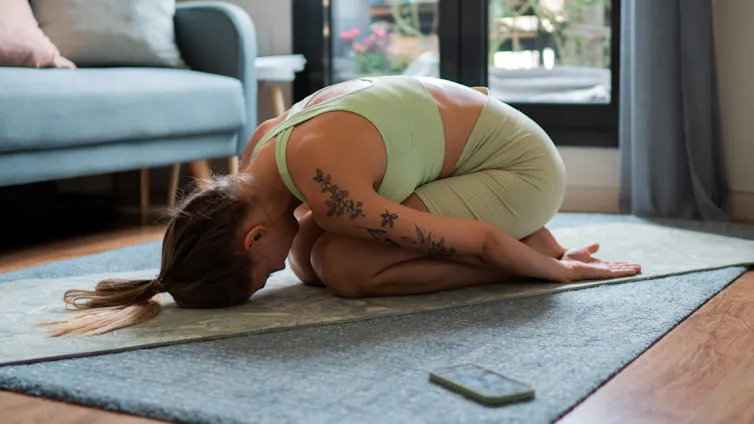
Olha Dobosh/Getty Images

What causes period pain?

There are two main types of period pain.

The most common is primary dysmenorrhea. This usually means painful cramps in the lower abdomen.

Research suggests this kind of period pain is caused by an increased number of prostaglandins. The body releases these hormone-like molecules when the lining of the uterus breaks down during the period. Prostaglandins can cause many different symptoms including period cramps, back or leg pain and loose bowels, also known as period poops.

The other type of period pain is secondary dysmenorrhea, which refers to pain caused by physical changes in the pelvis. One of the most common causes is endometriosis, a condition where tissue resembling uterine tissue grows in other parts of the body, leading to severe pain and fertility problems.

Can exercise reduce period pain?

Unfortunately, period pain is often difficult to treat. Many women don’t respond well to standard period pain treatments. These include non-steroidal anti-inflammatory medications such as ibuprofen or mefenamic acid, also known as Ponstan.

This has led researchers to examine exercise as a way to reduce period pain symptoms. And there is some evidence suggesting that regular physical activity can reduce how severe period pain is, and how long it lasts.

Imagine you have a period pain scale from zero to ten, where zero means no pain and ten indicates the worst pain. Research from 2019 suggests exercise can reduce the severity of period pain by an average of 2.5 points. This makes exercise more effective than other self-treatment methods, such as using a heat pack.

However, we have only one 2017 study which directly compares the effects of exercise and non-steroidal anti-inflammatory medications on period pain. This means it’s hard to make any clear recommendations. But this study suggests regular exercise is at least as helpful as taking mefenamic acid.

Exercise may also reduce how long period pain lasts. One study from 2025 found aerobic exercise, which aims to increase your breathing and heart rate, can shorten the duration of period pain by more than 12 hours.

Many women experience the worst pain in the first 48 hours of their period, so a potential 25% cut in the duration of period pain is significant.

What kinds of exercise are best?

Most of the evidence examining exercise and period pain focuses on aerobic exercise. This includes cycling, swimming and jogging. A handful of studies look at strength training, yoga and relaxation exercises such as gentle stretching.

There is some evidence to suggest strength training relieves period pain more than other kinds of exercise. However, researchers generally study a specific kind of strength training known as isometric exercises. These involve holding muscles in a static position, such as doing a plank.

Other studies show exercises such as progressive muscle relaxation, which involves tensing and then relaxing particular muscles, can also be very effective. A 2024 study found women who did relaxation-based exercises, combined with self-massage, experienced the greatest reduction in pain. And because they’re simple to do, participants were more likely to stick with relaxation-based exercises compared to other kinds of physical activity.

But most of this research focuses on primary dysmenorrhea. So for those whose period pain may be caused by an underlying condition, it may be best to start with gentler forms of exercise such as yoga. You can also speak to an exercise physiologist to get personalised advice. This is because we don’t fully understand if more intense exercise has the same effect on period pain caused by other conditions, such as endometriosis.

When and how often should I exercise?

There isn’t much research looking at the effects of exercising specifically during the period. But a 2025 review of existing studies suggests exercising two to three times a week can reduce period pain.

This review found participants who did strength training for at least 30 minutes at a time, over a minimum of eight weeks, experienced the greatest reduction in pain. However, existing research suggests you may start seeing some improvements in both pain intensity and duration in as few as four weeks.

The research is less clear when it comes to aerobic exercise. A 2025 review suggests shorter and less intense sessions of aerobic exercise may be most effective for managing period pain.

So doing at least 90 minutes of exercise a week, for at least eight weeks, may be the best exercise-based way to reduce period pain. This seems to be the case whether you exercise during your period or not. But if you experience any negative symptoms after exercising, such as pain below your belly button when you’re not menstruating, it’s best to speak to a doctor.

The bottom line

Overall, exercise is one way women can manage period pain. Current research suggests any kind of exercise, ranging from yoga to more intense aerobic workouts, can reduce the severity and duration of period pain. So everyone can benefit from exercise, regardless what time of the month it is.

Mike Armour, Associate Professor at NICM Health Research Institute, Western Sydney University

This article is republished from The Conversation under a Creative Commons license. Read the original article.

Don’t Forget…

Did you arrive here from our newsletter? Don’t forget to return to the email to continue learning!
  • Farmed Fish vs Wild Caught
    Discover the pros and cons of farmed fish versus wild, uncover the secrets to maintaining a healthy blood pressure, and more.

Learn to Age Gracefully

Join the 98k+ American women taking control of their health & aging with our 100% free (and fun!) daily emails:

  • Heart-Healthy Gochujang Noodles

    10almonds is reader-supported. We may, at no cost to you, receive a portion of sales if you purchase a product through a link in this article.

    Soba noodles are a good source of rutin, which is great for the heart and blood. Additionally, buckwheat (as soba noodles are made from) is healthier in various ways than rice, and certainly a lot healthier than wheat (remember that despite the name, buckwheat is about as related to wheat as a lionfish is to a lion). This dish is filled with more than just fiber though; there are a lot of powerful phytochemicals at play here, in the various kinds of cabbage, plus of course things like gingerol, capsaicin, allicin, and piperine.

    You will need

    • 14 oz “straight to wok” style soba noodles
    • 3 bok choi (about 7 oz)
    • 3½ oz red cabbage, thinly sliced
    • 10 oz raw and peeled large shrimp (if you are vegan, vegetarian, allergic to shellfish/crustaceans, or observant of a religion that does not eat such, substitute with small cubes of firm tofu)
    • 1 can (8 oz) sliced water chestnuts, drained (drained weight about 5 oz)
    • 2 tbsp gochujang paste
    • 2 tbsp low-sodium soy sauce
    • 1 tbsp sesame oil
    • 2 tsp garlic paste
    • 2 tsp ginger paste
    • 1 tbsp chia seeds
    • Avocado oil for frying (or another oil suitable for high temperatures—so, not olive oil)

    Note: ideally you will have a good quality gochujang paste always in your cupboard, as it’s a great and versatile condiment. However, you can make your own approximation, by blending 5 pitted Medjool dates, 1 tbsp rice wine vinegar, 2 tbsp tomato purée, 2 tsp red chili flakes, 1 tsp garlic granules, and ¼ tsp MSG or ½ tsp low-sodium salt. This is not exactly gochujang, but unless you want to go shopping for ingredients more obscure in Western stores than gochujang, it’s close enough.

    Method

    (we suggest you read everything at least once before doing anything)

    1) Mix together the gochujang paste with the sesame oil, soy sauce, garlic paste, and ginger paste, in a small bowl. Whisk in ¼ cup hot water, or a little more if it seems necessary, but go easy with it. This will be your stir-fry sauce.

    2) Slice the base of the bok choi into thin disks; keep the leaves aside.

    3) Heat the wok to the highest temperature you can safely muster, and add a little avocado oil followed by the shrimp. When they turn from gray to pink (this will take seconds, so be ready) add the sliced base of the bok choi, and also the sliced cabbage and water chestnuts, stirring frequently. Cook for about 2 minutes; do not reduce the heat.

    4) Add the sauce you made, followed 1 minute later by the noodles, stirring them in, and finally the leafy tops of the bok choi.

    5) Garnish with the chia seeds (or sesame seeds, but chia pack more of a nutritional punch), and serve:

    Enjoy!

    Want to learn more?

    For those interested in some of the science of what we have going on today:

    Take care!

    Share This Post

  • How To Look After Your Health When Your Life Falls Apart

    10almonds is reader-supported. We may, at no cost to you, receive a portion of sales if you purchase a product through a link in this article.

    Dr. Ruth Machin of “Wise Woman Wellbeing” is here with advice from recent experience:

    Holding it together

    For Dr. Machin, grief after her father’s death understandably disrupted her previously consistent habits like regular exercise, healthy eating, and 7–8 hours of sleep, leading to poor sleep, reduced appetite, increased cravings, and less movement.

    These sorts of things tend to unravel together, because stress and poor sleep raise cortisol and adrenaline levels, increase the hunger hormone ghrelin, and impair decision-making, which in turn drives cravings for high-fat, sugar, and salty foods, thus causing multiple habits to collapse in a chain reaction.

    In other words, these habit lapses don’t happen in isolation, but rather stack on top of each other, making it harder to restart, and turning a short disruption into a prolonged break from routines.

    • What to not do: the all-or-nothing approach fails because waiting for the “right time” delays action indefinitely, while going all-in sets unrealistic standards that lead to overwhelm and burnout.
    • What to do instead: adopting a “minimum viable routine” reframes health as part of your identity by maintaining small, consistent actions even during difficult periods.

    The core principle here is that consistency matters more than perfection, especially during challenging times when maintaining anything is more valuable than aiming for ideal habits and ending up crashing and burning instead.

    So, she recommends to identify the smallest reasonably possible set of daily actions that support your physical and mental health, and keep them going regardless of circumstances.

    This is critical, because maintaining even minimal habits during hard times prevents complete resets, making it easier to return to fuller routines when life stabilizes.

    For more on all of this, enjoy:

    Click Here If The Embedded Video Doesn’t Load Automatically!

    Want to learn more?

    You might also like:

    Take care!

    Share This Post

  • What Your Heart Health Means For Fracture Risk

    10almonds is reader-supported. We may, at no cost to you, receive a portion of sales if you purchase a product through a link in this article.

    No, not your risk of a broken heart, but more about its association with bone health and a 93% increased risk of osteoporosis incident fractures:

    When your calcium’s in entirely the wrong place

    Consider the following:

    • You want plenty of calcium in your bones, because that’s one of the (several!) important ingredients for making bones strong.
    • You do not want plenty of calcium lining your arteries, because that’s one of the (several!) important ingredients of atherosclerotic plaque.

    So, should you get more calcium or less? The crux lies in how your body directs it!

    We talk about one of the critical factors in the “learn more” section below (most people don’t know that vitamin K2 is essential for this, and many people have a dietary vitamin K deficiency, because it’s not a vitamin most people think about much.).

    Other vitamins are important too, and most people know that vitamin D is a relevant one, but watch out:

    Hormones are another thing that’s absolutely critical. For women, estrogen (specifically, estradiol) and progesterone are essential for healthy bone turnover. For men, testosterone does the job, but for menopausal women, it usually becomes necessary to supplement with HRT.

    For more on that, see:

    So, what does heart health have to do with this?

    For a start, there’s a clear relationship between “calcium levels in arteries” and “calcium levels in bones”, and the simplest version is “what gets stuck in the arteries doesn’t make it into the bones”.

    So, cardiovascular health becomes critical for bone health.

    All so recently (paper published last week, at the time of writing) researchers (Dr. Rafeka Hossain et al.) found that higher cardiovascular risk (measured using the PREVENT risk calculator that we talked about here: What The New Cholesterol Guidelines Mean For You) was linked to higher risks of major osteoporotic and hip fractures in postmenopausal women.

    And not a small difference, either: of the 21,300 participants, women in the high CVD risk group had a 93% higher risk of hip fracture compared with low-risk women!

    And yes, there was a dose-response effect: fracture risk increased commensurately from borderline to intermediate to high cardiovascular risk.

    There are some factors where it’s not that one thing causes the other, but rather they’re both caused by the same thing, e.g. postmenopausal hormonal changes, especially declining estrogen, contribute to both cardiovascular risk and bone loss simultaneously.

    There are also some that are more causal in nature, e.g. shared biological pathways passing on chronic inflammation, oxidative stress, impaired calcium regulation, and even reduced blood flow from atherosclerosis itself.

    You can read Dr. Hossain’s paper here: The association between 10-year cardiovascular risk and fracture incidence in postmenopausal women: a prospective analysis from the Women’s Health Initiative

    Want to learn more?

    You might like this book we reviewed a while back:

    Vitamin K2 And The Calcium Paradox – by Kate Rhéaume-Bleue ← you may be wondering whether this is somehow 288 pages to say “take vitamin K2”. And, it somewhat is, but there are a lot of details when it comes to things that have historically raised or lowered the amount of vitamin K2 in our diet, what can be done about it in dietary terms if preferring to go all-natural (hint: nattō is an excellent option, but far from the only one), and what other effects vitamin K2 (or its deficiency) can have on us, in many of the body’s systems, far beyond just bone health (and including things as varied as fertility and avoidance of Alzheimer’s).

    Take care!

    Share This Post

  • Insomnia? High blood pressure? Try these!

    10almonds is reader-supported. We may, at no cost to you, receive a portion of sales if you purchase a product through a link in this article.

    Your Questions, Our Answers!

    Q: Recipes for insomnia and high blood pressure and good foods to eat for these conditions?

    A: Insomnia can be caused by many things, and consequently can often require a very multi-vector approach to fixing it. But, we’ll start by answering the question you asked (and probably address the rest of dealing with insomnia in another day’s edition!):

    • First, you want food that’s easy to digest. Broadly speaking, this means plant-based. If not plant-based, fish (unless you have an allergy, obviously) is generally good and certainly better than white meat, which is better than red meat. In the category of dairy, it depends so much on what it is, that we’re not going to try to break it down here. If in doubt, skip it.
    • You also don’t want blood sugar spikes, so it’s good to lay off the added sugar and white flour (or white flour derivatives, like white pasta), especially in your last meal of the day.
    • Magnesium supports healthy sleep. A fine option would be our shchi recipe, but using collard greens rather than cabbage. Cabbage is a wonderful food, but collard greens are much higher in magnesium. Remember to add plenty of mushrooms (unless you don’t like them), as they’re typically high in magnesium too.

    As for blood pressure, last month we gave tips (and a book recommendation) for heart health. The book, Dr. Monique Tello’s “Healthy Habits for Your Heart: 100 Simple, Effective Ways to Lower Your Blood Pressure and Maintain Your Heart’s Health”, also has recipes!

    Here’s one from the “mains” section:

    Secret Ingredient Baltimore-Style Salmon Patties with Not-Oily Aioli

    ❝This is a family favorite, and no one knows that it features puréed pumpkin! Most salmon cake recipes all for eggs and bread crumbs as binders, but puréed pumpkin and grated carrot work just as well, lend a beautiful color, and add plenty of fiber and plant nutrients. Canned salmon is way cheaper than fresh and has just as much omega-3 PUFAs and calcium. Serve this alongside a salad (the Summer Corn, Tomato, Spinach, and Basil Salad would go perfectly) for a well-rounded meal.❞

    Serves 4 (1 large patty each)

    Secret Ingredient Baltimore-Style Salmon Patties:

    • 1 (15-oz) can pink salmon, no salt added
    • ½ cup puréed pumpkin
    • ½ cup grated carrot (I use a handheld box grater)
    • 2 tablespoons minced chives (Don’t have chives? Minced green onions or any onions will do)
    • 2 teaspoons Old Bay Seasoning
    • 1 tablespoon olive oil
    • ½ large lemon, sliced, for serving

    Not-Oily Aioli:

    • ½ cup plain low-fat Greek yogurt
    • Juice and zest from ½ large lemon
    • 1 clove garlic, crushed and minced fine
    • 2 tablespoons chopped fresh dill
    1. For the patties: mix all the ingredients for the salmon patties together in a medium bowl
    2. Form patties with your hands and set on a plate or tray (you should have 4 burger-sized patties)
    3. Heat oil in a large skillet over medium heat.
    4. Set patties in a skillet and brown for 4 minutes, then carefully flip.
    5. Brown the other side, then serve hot.
    6. For the Aioli: mix all the ingredients for the aioli together in a small bowl.
    7. Plop a dollop alongside or on top of each salmon patty and serve with a spice of lemon.

    Per serving: Calories: 367 | Fat: 13.6g | Saturated Fat: 4.4g | Protein: 46g | Sodium: 519mg | Carbohydrates: 13.2g | Fiber: 1.3g | Sugars: 9g | Calcium: 505mg | Iron: 1mg | Potassium 696mg

    Notes from the 10almond team:

    • If you want to make it plant-based, substitute cooked red lentils (no salt added) for the tinned salmon, and plant-based yogurt for the Greek yogurt
    • We recommend adding more garlic. Seriously, who uses 1 clove of garlic for anything, let alone divided between four portions?
    • The salads mentioned are given as recipes elsewhere in the same book. We strongly recommend getting her book, if you’re interested in heart health!

    Do you have a question you’d like to see answered here? Hit reply or use the feedback widget at the bottom; we’d love to hear from you!

    Don’t Forget…

    Did you arrive here from our newsletter? Don’t forget to return to the email to continue learning!

    Learn to Age Gracefully

    Join the 98k+ American women taking control of their health & aging with our 100% free (and fun!) daily emails:

  • Vitamin D & Dementia Risk

    10almonds is reader-supported. We may, at no cost to you, receive a portion of sales if you purchase a product through a link in this article.

    Most people, or at least most women of a certain age, know that vitamin D is especially important to us as we get older (women of a certain age, because: increased osteoporosis risk especially for women and especially with untreated menopause, because estrogen and progesterone are also essential for healthy bone turnover*)

    *Unless you’re a man with typical manly hormones, in which case, testosterone has you covered!

    But while vitamin D is well-known amongst our demographic to be important for bone health (and quite well-known for being relevant to immune health*, too), its effects on some other systems are not so widely understood, and that’s what we’ll talk about today.

    *See for example: Does Vitamin D Help Against COVID? ← short answer: vitamin D does so many things for your immune system, and/but no, protecting you from COVID is not one of them. However, it may reduce the risk of long COVID, at least.

    First though, a quick vitamin D primer for anyone catching up:

    So, what’s this about vitamin D and dementia?

    Vitamin D vs Tau protein aggregation

    There are some well-known blood biomarkers of Alzheimer’s disease pathology, due to the accumulation of harmful proteins in the brain, including α-synuclein, β-amyloid (also called amyloid-β; it’s the exact same protein just written down differently), and tau protein*.

    *…which just gets written like that instead of using a Greek letter τ, probably to avoid looking like the Greek letter τ that in mathematics denotes the ratio of the circumference to the radius of a circle (so in other words, 2π).

    We talk about this a bit here: New Alzheimer’s Test Makes Diagnoses 94.5% Accurate

    Researchers (Dr. Alexa Beiser et al.) did a prospective cohort study, in which 793 adults (average age 39 at the start of the study) had vitamin D levels measured, and then the researchers scanned their brains 16±2 years later, to check on their tau and amyloid-β levels.

    You might be wondering about how seriously the participants took their vitamin D levels; 34% of participants had low vitamin D, and only 5% were taking supplements.

    Their results, in few words: those who had higher vitamin D levels (>30 g/mL) in midlife, later enjoyed significantly lower tau aggregation, even after adjusting for factors like age, sex, depression, and cardiovascular health.

    However, there was no association between vitamin D levels in midlife and amyloid-β levels later on, so vitamin D clearly isn’t a “one thing fixes everything” solution!

    Indeed, technically the study does not prove causality outright, but as usual, the researchers are asking for more funding to find out.

    You can read their paper for yourself here: Association of Circulating Vitamin D in Midlife With Increased Tau-PET Burden in Dementia-Free Adults

    Want to do something about that tau aggregation?

    Here’s a very easy way to do it:

    Spermine vs Alzheimer’s & Parkinson’s!

    Take care!

    Don’t Forget…

    Did you arrive here from our newsletter? Don’t forget to return to the email to continue learning!

    Learn to Age Gracefully

    Join the 98k+ American women taking control of their health & aging with our 100% free (and fun!) daily emails:

  • How Much Weight Gain Do Antidepressants Cause?

    10almonds is reader-supported. We may, at no cost to you, receive a portion of sales if you purchase a product through a link in this article.

    There’s a lot of talk in the news lately about antidepressants and weight gain, so let’s look at some numbers.

    Here’s a study from July 2024 that compared the weight gain of eight popular antidepressants, and pop-science outlets have reported it with such snippets as:

    Bupropion users were approximately 15–20% less likely to gain a clinically significant amount of weight than those taking the most common medication, sertraline.

    The researchers considered weight gain of 5% or more as clinically significant.❞

    Read in full: Study compares weight gain across eight common antidepressants

    At this point, you might (especially if you or a loved one is on sertraline) be grabbing a calculator and seeing what 5% of your weight is, and might be concerned at the implications.

    However, this is a little like if, in our This or That section, we were to report that food A has 17x more potassium than food B, without mentioning that food A has 0.01mg/100g and food A has 0.17mg/100g, and thus that, while technically “17x more”, the difference is trivial.

    As a quick aside: we do, by the way, try to note when things like that might skew the stats and either wipe them out by not mentioning that they contain potassium at all (as they barely do), or if it’s a bit more, describing them as being “approximately equal in potassium” or else draw attention to the “but the amounts are trivial in both cases”.

    Back to the antidepressants: in fact, for those two antidepressants compared in that snippet, the truth is (when we go looking in the actual research paper and the data within):

    • sertraline was associated with an average weight change of +1.5kg (just over 3lb) over the course of 24 months
    • bupropion was associated with an average weight change of +0.5kg (just under 1lb) over the course of 24 months

    Sertraline being the most weight-gain-inducing of the 8 drugs compared, and bupropion being the least, this means (with them both having fairly even curves):

    • sertraline being associated with an average weight change of 0.06kg (about 2oz) per month
    • bupropion being associated with an average weight change of 0.02kg (less than 1oz) per month

    For all eight, see the chart here in the paper itself:

    Medication-Induced Weight Change Across Common Antidepressant Treatments ← we’ve made the link go straight to the chart, for your convenience, but you can also read the whole paper there

    While you’re there, you might also see that for some antidepressants, such as duloxetine, fluoxetine, and venlafaxine, there’s an initial weight gain, but then it clearly hits a plateau and weight ceases to change after a certain point, which is worth considering too, since “you’ll gain a little bit of weight and then stay at that weight” is a very different prognosis from “you’ll gain a bit of weight and keep gaining it forever until you die”.

    But then again, consider this:

    Most adults will gain half a kilo this year – and every year. Here’s how to stop “weight creep”

    That’s more weight gain than one gets on sertraline, the most weight-gain-inducing antidepressant tested!

    What about over longer-term use?

    Here’s a more recent study (December 2024) that looked at antidepressant use over 6 years, and found an average 2% weight gain over those 6 years, but it didn’t break it down by antidepressant type, sadly:

    Trajectories of antidepressant use and 6-year change in body weight: a prospective population-based cohort study

    …which seems like quite a wasted opportunity, since some of the medications considered are very different, working on completely different systems (for example, SSRIs vs NDRIs, working on serotonin or norepinephrine+dopamine, respectively—see our Neurotransmitter Cheatsheet for more about those) and having often quite different side effects. Nevertheless, the study (despite collecting this information) didn’t then tabulate the data, and instead considered them all to be the same factor, “antidepressants”.

    What this study did do that was useful was included a control group not on antidepressants so we know that on average:

    • never-users of antidepressants gained an average of 1% of their bodyweight over those 6 years
    • users-and-desisters of antidepressants gained an average of 1.8% of their bodyweight over those 6 years*
    • continuing users of antidepressants gained an average of 2% of their bodyweight over those 6 years

    *for this group, weight gain was a commonly cited reason for stopping taking the antidepressants in question

    Writer’s anecdote: I’ve been on mirtazapine (a presynaptic alpha2-adrenoreceptor antagonist which increases central noradrenergic and serotonergic neurotransmission) for some years and can only say that I wish I’d been on it decades previously. I requested mirtazapine specifically, because I’m me and I know my stuff and considered it would most likely be by far the best fit for me out of the options available. Starting at a low dose, the only meaningful side effect was mild sedation (expected, and associated only with low-dose use); increasing after a couple of weeks to a moderate dose, that side effect disappeared and now the only remaining side effect is a slight dryness of the mouth, which is fine, as it ensures I remember to stay hydrated 🙂 anyway, my weight hasn’t changed (beyond very small temporary fluctuations) in the time I’ve been on mirtazapine. Disclaimer: the plural of anecdote is not data, and I can only speak for my own experience, and am not making any particular recommendation here. Your personal physiology will be different from mine, and may respond well or badly to any given treatment according to your own physiology.

    Further considerations

    This is touched on in the “Discussion” section of the latter paper (so do check that out if you want all the details, more than we can reasonably put here), but there are other factors to consider, for example:

    • whether people were underweight/healthy weight/overweight at baseline (sometimes, a weight gain can be a good thing, recovering from an illness, and in the case of the illness that is depression, weight can swing either way)
    • antidepressants changing eating and exercise habits (generally speaking: more likely to eat more and exercise more)
    • body composition! How did they not cover this (neither paper did)?! Muscle weighs more than fat, and improvements in exercise can result in an increase in muscle and thus an increase in overall weight.

    As researchers like to say, “this highlights the need for more high-quality studies to look into…” (and then the various things that went unexamined).

    Want to know more?

    Check out our previous main feature:

    Antidepressants: Personalization Is Key!

    Take care!

    Don’t Forget…

    Did you arrive here from our newsletter? Don’t forget to return to the email to continue learning!

    Learn to Age Gracefully

    Join the 98k+ American women taking control of their health & aging with our 100% free (and fun!) daily emails: