
Are You Making This Warm-Up Mistake?

10almonds is reader-supported. We may, at no cost to you, receive a portion of sales if you purchase a product through a link in this article.

The most common warm-up mistake that people make is, of course, not warming up.

The second most common warm-up mistake people make, however, is this:

It’s about joints, and…

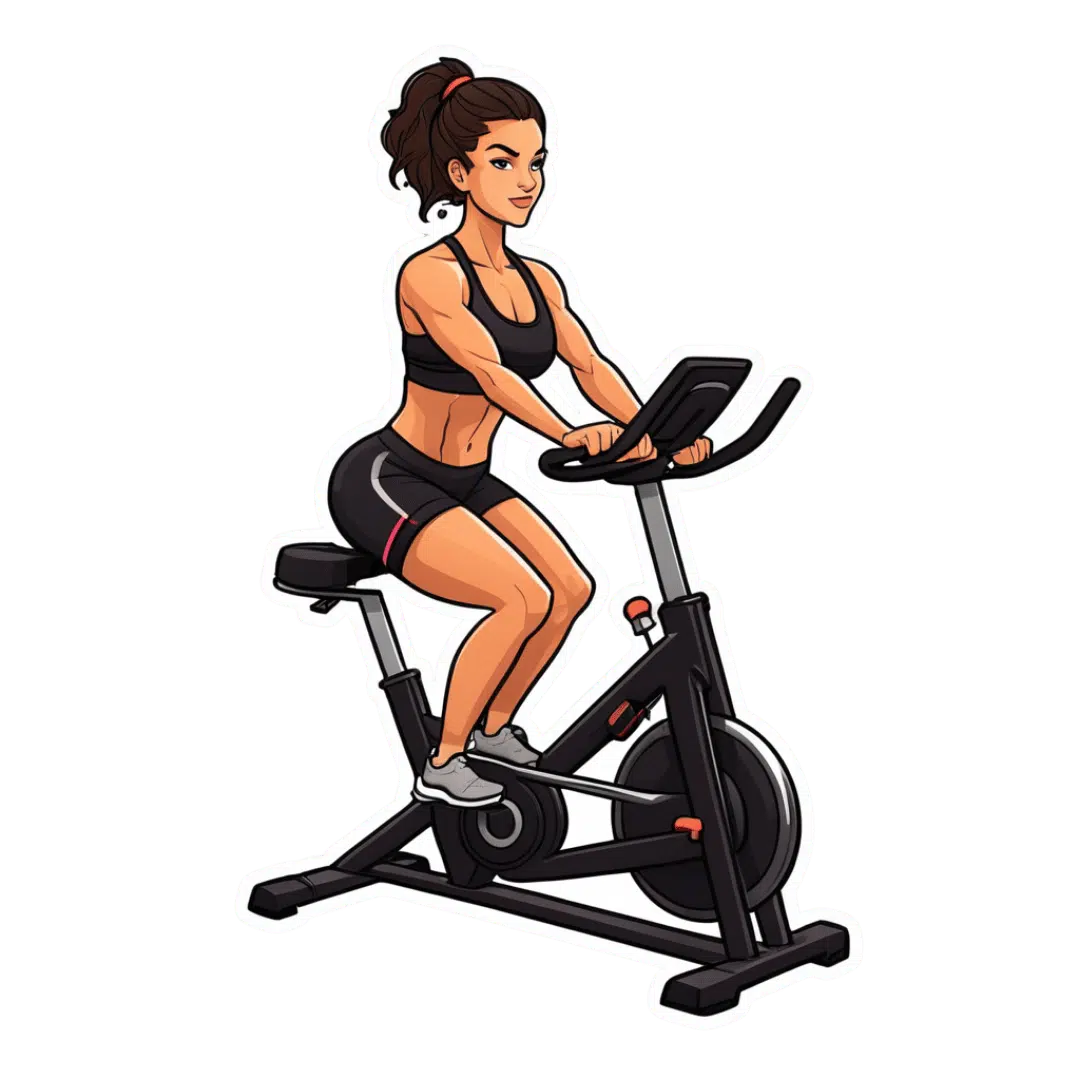
Why the stationary bike is a poor warm-up after 50: cycling raises your heart rate but does not prepare your joints, muscles, or movement patterns for resistance training unless you are about to cycle.

That’s the example in the video, but it also goes for other forms of cardio-centric warm-up that don’t address joints, muscles, and movement patterns as appropriate.

In short: your warm-up should closely match the movements and loads you will use in your workout.

So, how best to do that, without it amounting to going straight into the exercise without warming up because the warm-up is already the exercise?

  • First, practice the movement pattern: start with the exact exercise you plan to do using no resistance, then gradually increase the load in small steps to prepare your brain and your muscles.
  • Next, mobilize stiff or vulnerable joints: identify your personal “sticky” areas and mobilize them before training to reduce injury risk.

Some examples he gives:

  • Goblet squat workup: do bodyweight squats, then lighter sets, then a few reps near your working weight before resting briefly and starting your first full set.
  • Ankle mobility for squatting: chair-supported ankle dorsiflexion helps improve knee-over-toe movement and squat depth.
  • Hip and knee mobility drill: a simple supine sequence of straightening, bending, and hugging your leg to your chest improves full-range hip and knee motion.
  • Lower-back preparation: gentle side-to-side leg rotations while lying on your back expose your pelvis and lumbar spine to safe movement before lifting.

To be clear, he recommends to focus only on the drills that match your problem areas and do them briefly before your workout or before troublesome exercises.

For more on this, plus visual demonstrations of some examples, enjoy:

Click Here If The Embedded Video Doesn’t Load Automatically!

Want to learn more?

You might also like:

Overdone It? How To Speed Up Recovery After Exercise

Take care!

Don’t Forget…

Did you arrive here from our newsletter? Don’t forget to return to the email to continue learning!
Learn to Age Gracefully

Join the 98k+ American women taking control of their health & aging with our 100% free (and fun!) daily emails:

  • LSD vs Anxiety!

    10almonds is reader-supported. We may, at no cost to you, receive a portion of sales if you purchase a product through a link in this article.

    We’ve written before about how psychedelics can have lasting (beneficial!) effects, here:

    Psychedelics: Yes Even Once?

    However, after a lot of research into psilocybin (the active compound in “magic mushrooms”) and some other psychedelics, the “yes even once” part of that was in reference to a study using the psychedelic compound 25CN-NBOH, a selective serotonin 2A receptor agonist (which honestly does not have a snappier name than that or else we’d use it), and how it improved cognitive flexibility (albeit: in mice) in a lasting fashion.

    You can read that paper in full (and see graphs!) here:

    Single-dose psychedelic enhances cognitive flexibility and reversal learning in mice weeks* after administration

    *About “weeks”; the experiment ran for 20 days and that was that. It is not known how long the benefits would have persisted, only that in the first 20 days, they showed no signs of disappearing.

    Suffice it to say, an LSD trip does not last for weeks. So, it seems the changes have been made to the brain and that’s that.

    So, what about LSD and anxiety?

    A “chill pill” with safe, lasting effects?

    We previously shared this study:

    Repeated lysergic acid diethylamide (LSD) reverses stress-induced anxiety-like behavior, cortical synaptogenesis deficits and serotonergic neurotransmission decline

    However, that was (once again) mice. And, as the study title suggests, repeated LSD use, not just a single dose.

    Today, we’ll be looking at a study into the effects of LSD vs anxiety in humans, from a single dose.

    Researchers (Dr. Reid Robinson et al.) found that a single LSD dose eased anxiety symptoms for up to 3 months* in 198 patients with moderate to severe anxiety

    *This is a case of the study running for three months, so the researchers can’t comment on what how long it lasts after the three months, because the research grant didn’t have enough for a crystal ball for them to use to write about the future and what will happen with the study participants after the study period. After all, at some point one needs to draw a line under it and publish the results.

    About that timeline:

    • at baseline, all patients had moderate to severe anxiety
    • at four weeks, those who took higher doses significantly lowered anxiety scores compared to smaller doses or placebo
    • at 12 weeks, 65% of patients who took 100 mg still showed improvements and 48% were in remission

    One thing that set this study apart from many is that it unlike most psychedelic studies paired with therapy, this trial tested LSD alone under supervision to isolate the drug’s effect vs placebo, rather than the effect drug+therapy and being unsure whether it would have helped without the therapy.

    About that placebo: it was noted as a limitation of the study that that many patients correctly guessed whether they took LSD or placebo (weakening blinding). The resultant high dropout rate (because it’s not very motivating to keep at something where you’re almost certain you received the placebo) reduced the final data set. Still, the researchers did what they could under the circumstances.

    You can find the paper itself, here: Single Treatment With MM120 (Lysergide D-Tartrate) in Generalized Anxiety Disorder

    On which note, with regard to “lysergide D-tartrate”; that is a form of LSD (it’s a salt of LSD, which is then metabolized as such, so one could argue that it’s essentially a pro-drug), and/but since it is far from the only form of LSD, it cannot be said for sure whether the effects will be the same with any/all LSD. It seems likely that the results will translate just the same to other forms of LSD, but we can’t say that confidently without the science actually being done for it.

    Want to learn more?

    With regard to psychedelics in general, see:

    Taking A Trip Through The Evidence On Psychedelics

    Take care!

    Share This Post

  • Do “Natural” Painkillers Really Work?

    10almonds is reader-supported. We may, at no cost to you, receive a portion of sales if you purchase a product through a link in this article.

    It’s Q&A Day at 10almonds!

    Have a question or a request? We love to hear from you!

    In cases where we’ve already covered something, we might link to what we wrote before, but will always be happy to revisit any of our topics again in the future too—there’s always more to say!

    As ever: if the question/request can be answered briefly, we’ll do it here in our Q&A Thursday edition. If not, we’ll make a main feature of it shortly afterwards!

    So, no question/request too big or small 😎

    ❝A friend of mine has hip pain, especially after walking, and prefers to avoid ordinary painkillers. I’ve seen a natural products mentioned and wondered if you would recommend them, or suggest any other natural options for pain relief❞

    There are definitely natural pain relief options that work, albeit sometimes with drawbacks. There are plenty more that don’t work better than placebo.

    But first, let’s talk about placebo: when something “doesn’t work better than placebo”, it’s easy to think that that means it doesn’t help. In reality, it does!

    After all, placebo may be “all in your head”—but so is your ability to perceive pain.

    For more on that, check out: How To Leverage Placebo Effect For Yourself

    However, let’s say you want to know whether something is likely to work better than placebo. A fair question.

    How to check whether a product is likely to work better than placebo

    First: look at the ingredients. Is there anything that stands out here as having an obvious mechanism of action? That can include “this thing has a calming/relaxing effect” even if it doesn’t directly touch pain itself, but if that’s the case, it’s worth bearing in mind when weighing up options.

    Tip: if you want to Google an ingredient to find out whether it works, then whatever you write in the search bar, add the following:

    site:pubmed.ncbi.nlm.nih.gov

    You might want to save that line to your phone’s Notes app or something. That way, it’ll just return results from PubMed, which is a large online repository of most of the world’s peer-reviewed scientific literature. So, you’ll get actually verified information, rather than just what someone wrote on the Internet.

    Alternatively you can just bookmark PubMed itself and directly use their own search feature, here: https://pubmed.ncbi.nlm.nih.gov/

    Next: look at the ingredients again. Have we checked this is not a case of “this thing sounds like this other thing but it’s not”? This happens a lot with, for example, hemp products that are relying on medicinal cannabis marketing but do not actually contain THC (or sometimes, do not even contain CBD). See also: Do CBD Gummies Work? ← the answer is “sometimes”, and this page explains why and also links to further articles we’ve written on the science of CBD and, separately, THC specifically.

    Next: look at the ingredients yet again. Watch out for “made with real…” claims. If something actually contains the ingredient, they don’t usually say “made with real…”, they just list the ingredient. Often, what “made with real…” means is that an ingredient that is present was derived from the marketed ingredient, rather than actually being the marketed ingredient. We see this a lot on food products that are “made with real fruit”, for example, and what it really means it that they used sugar. The same switcheroo is often employed shamelessly when it comes to herbal products and the like.

    Next: look at the dosage. Similar to the previous item; does this have something that technically has a certain effect, but the dosage here is so small as to be practically homeopathic?

    On a tangential note there: homeopathy does not, by the way, outperform placebo (and sometimes does worse): Homeopathy: Evidence So Tiny That It’s Not there?

    Natural Options that work

    Here are some we’ve written about previously:

    And for a specialized biomechanical approach for the situation you described:

    Just the hips

    As for reducing/managing hip pain specifically, we wrote about that here:

    Head Over Hips

    For those who learning from short videos, here’s a trio of helpers (along with our own text-based overview for each):

    And for those who prefer just reading, here’s a book we reviewed on the topic:

    11 Minutes to Pain-Free Hips – by Melinda Wright

    Take care!

    Share This Post

  • Caffeine & Exercise… In The Heat?

    10almonds is reader-supported. We may, at no cost to you, receive a portion of sales if you purchase a product through a link in this article.

    Caffeine is generally considered a performance-enhancing drug that’s (for most people) safe, legal, not even banned in sports competitions, and even somewhat encouraged by sports scientists.

    See: International society of sports nutrition position stand: caffeine and exercise performance

    Depending on the rate at which you metabolize caffeine (there are genes for this), the effects will come/go earlier/later, but as a general rule of thumb, caffeine should work within about 20 minutes, and will peak in effect 1–2 hours after consumption:

    Nutrition Supplements to Stimulate Lipolysis: A Review in Relation to Endurance Exercise Capacity

    We covered this and more, in more detail, here:

    What To Eat, Take, And Do Before A Workout

    So, does hot weather change this?

    It is reasonable to wonder whether it’s really a good idea to take a vasoconstrictive stimulant in conditions when your body is under threat of overheating if it’s not already.

    Most of the time for most people, the benefits of caffeine outweigh the risks: Caffeine: Cognitive Enhancer Or Brain-Wrecker?

    We may also wonder about “isn’t caffeine dehydrating?” and the answer is that it is diuretic (so you will pee more). Now, even if you are not peeing while you are working out (and let us for the sake of science assume that you are not), this is still somewhat an issue, since fluids that have been dispatched by your kidneys to your bladder cannot be reclaimed directly from there; at that point, it’s already gone in every way that matters.

    However, when the body is overheating (even if subclinically, i.e. not to the extent of being a medical crisis, but just “the room is warm” or “the weather is hot today” or “we’ve worked up a sweat due to exercise”), then the body is sending little or no fluid to the bladder, because the kidneys “know” that the water is needed to cool down the body—hence the sweating. Which means if you’re sweating, then whether or not you took a diuretic shouldn’t make a big difference as your body won’t usually prepare to pee it out if you’re already sweating it out (unless you are overhydrated, which is rarer but perfectly possible—again, not an issue though, because this is your homeostatic system doing exactly the job it’s supposed to do to keep your body well).

    See also: Things Many People Forget When It Comes To Hydration

    And for that matter: When To Take Electrolytes (And When We Shouldn’t!)

    Researchers (Dr. Akira Katagiri et al.) studied whether caffeine taken during exercise improves performance in heat without worsening physiological strain.

    And the answer is… Yes it does:

    • The starting position: they noted that pre-exercise caffeine can impair performance in hot conditions due to hyperthermia, excessive breathing, and reduced brain blood flow.
    • Their hypothesis: in-exercise caffeine intake will delay peak blood caffeine levels, potentially enhancing late-stage performance and minimizing adverse effects.
    • How they tested it: the participants exercised in 35°C (95°F) heat, first at moderate intensity, then at high intensity until exhaustion, after ingesting a high dose of caffeine (5 mg/kg) or placebo, 5 minutes into the session. Then the intervention and control groups switched places (randomized controlled double-blind crossover).
    • Did it help? Yes, when consumed during exercise, caffeine levels rose slowly, improving endurance in later high-intensity activity and reducing perceived exertion.
    • Did it hurt? No (with one caveat*), as it didn’t worsen overheating-induced overbreathing or result in further reduced brain blood flow.

    *The caveat: while performance improved, caffeine led to slightly higher cardiorespiratory and temperature strain… At the very end of exercise. In other words, you remember when we said that it improved endurance? That means that it improved the duration before exhaustion, which means that the slightly higher cardiorespiratory and temperature strain occurred after the time point at which the non-caffeine group had met exhaustion and stopped exercising.

    You can find the paper itself here: In-Exercise Caffeine Improves Exercise Performance in the Heat Without Exacerbating Hyperventilation and Brain Hypoperfusion

    Before you grab your workout clothes and an energy drink, though, do also consider that sometimes exercise is best deferred whether or not you have caffeine.

    See: Sun, Sea, And Sudden Killers To Avoid: Stay Safe From Heat Exhaustion & Heatstroke!

    Want to take it further?

    For the most empoweringly refreshing workout drink, check out the science for how:

    Beetroot Juice & Caffeine Work Better Than Either Alone

    Enjoy!

    Share This Post

  • How & Why Non-Sleep Deep Rest Works (And What Activities Trigger The Same State)

    10almonds is reader-supported. We may, at no cost to you, receive a portion of sales if you purchase a product through a link in this article.

    Stress is a natural response that evolved over thousands of years to help humans meet challenges by priming the body and mind for action. However, chronic stress is harmful, as it diverts energy away from essential processes like cell maintenance and repair, leading to deterioration of health (physical and mental).

    Counteracting this requires intentional periods of deep rest… But how?

    Parasympathetic Response

    Practices as diverse as mindfulness meditation, yoga, prayer, tai chi, qigong, knitting, painting, gardening, and sound baths can help induce states of deep rest—these days often called “Non-Sleep Deep Rest” (NSDR), to differentiate it from deep sleep.

    How it works: these activities send signals to the brain that the body is safe, initiating biological changes that…

    • protect chromosomes from DNA damage
    • promote cellular repair, and
    • enhance mitochondrial function.

    If we then (reasonably!) conclude from this: “so, we must embrace moments of stillness and mindfulness, and allow ourselves to experience the ease and safety of the present”, that may sound a little wishy-washy, but the neurology of it is clear, the consequences of that neurological response on every living cell in the body are also clear, so by doing NSDR (whether by yoga nidra or knitting or something else) we can significantly improve our overall well-being.

    Note: the list of activities above is far from exhaustive, but do be aware that this doesn‘t mean any activity you enjoy and do to unwind will trigger NSDR. On the contrary, many activities you enjoy and do to unwind may trigger the opposite, a sympathetic nervous system response—watching television is a common example of this “wrong choice for NSDR”. Sure, it can be absorbing and a distraction from your daily stressors, but it also can be exciting (both cognitively and neurologically and thus also physiologically), which is the opposite of what we want.

    For more on all of this, enjoy:

    Click Here If The Embedded Video Doesn’t Load Automatically!

    Want to learn more?

    You might also like to read:

    Non-Sleep Deep Rest: A Neurobiologist’s Take

    Take care!

    Don’t Forget…

    Did you arrive here from our newsletter? Don’t forget to return to the email to continue learning!

    Learn to Age Gracefully

    Join the 98k+ American women taking control of their health & aging with our 100% free (and fun!) daily emails:

  • Almonds vs Peanuts – Which is Healthier?

    10almonds is reader-supported. We may, at no cost to you, receive a portion of sales if you purchase a product through a link in this article.

    Our Verdict

    When comparing almonds to peanuts, we picked the almonds.

    Why?

    No, it’s not just our pro-almonds bias… But it’s also not as one-sided, nutritionally speaking, as you might think!

    In terms of macros, almonds have a lot more fiber, and moderately more carbs, the ratio of which give almonds the lower glycemic index. On the other hand, peanuts have a little more protein. Both of these nuts are equally fatty, but peanuts have the higher saturated fat content. All in all, we say the biggest deciding factor is the fiber, and hand this one to the almonds.

    In the category of vitamins, almonds have more of vitamins B2 and E, while peanuts have more of vitamins B1, B3, B5, B6, B7, and B9. An easy win for peanuts this time.

    When it comes to minerals, almonds have more calcium, magnesium, manganese, phosphorus, and potassium, while peanuts have more copper, iron, selenium, and zinc. Thus, a 5:4 marginal win for almonds.

    Adding up the sections makes for an overall win for almonds, but as you can see, it was close and peanuts certainly have their merits too, so by all means enjoy either or both; diversity is good!

    Unless you are allergic, in which case, obviously please don’t do that.

    Want to learn more?

    You might like to read:

    Why You Should Diversify Your Nuts!

    Enjoy!

    Don’t Forget…

    Did you arrive here from our newsletter? Don’t forget to return to the email to continue learning!

    Learn to Age Gracefully

    Join the 98k+ American women taking control of their health & aging with our 100% free (and fun!) daily emails:

  • Cows’ Milk, Bird Flu, & You

    10almonds is reader-supported. We may, at no cost to you, receive a portion of sales if you purchase a product through a link in this article.

    When it comes to dairy products, generally speaking, fermented ones (such as most cheeses and yogurts) are considered healthy in moderation, and unfermented ones have their pros and cons that can be argued and quibbled “until the cows come home”. We gave a broad overview, here:

    Is Dairy Scary?

    Furthermore, you may recall that there’s some controversy/dissent about when human babies can have cows’ milk:

    When can my baby drink cow’s milk? It’s sooner than you think

    So, what about bird flu now?

    Earlier this year, the information from the dairy industry was that it was nothing to be worried about for the time being:

    Bird Flu Is Bad for Poultry and Dairy Cows. It’s Not a Dire Threat for Most of Us — Yet.

    More recently, the latest science has found:

    ❝We found a first-order decay rate constant of −2.05 day–1 equivalent to a T99 of 2.3 days. Viral RNA remained detectable for at least 57 days with no degradation. Pasteurization (63 °C for 30 min) reduced infectious virus to undetectable levels and reduced viral RNA concentrations, but reduction was less than 1 log10.

    The prolonged persistence of viral RNA in both raw and pasteurized milk has implications for food safety assessments and environmental surveillance❞

    You can find the study here:

    Infectivity and Persistence of Influenza A Virus in Raw Milk

    In short: raw milk keeps the infectious virus; pasteurization appears to render it uninfectious, though viral RNA remains present.

    This is relevant, because of the bird flu virus being found in milk:

    World Health Organization | H5N1 strain of bird flu found in milk

    To this end, a moratorium has been placed on the sale of raw milk, first by the California Dept of Public Health (following an outbreak in California):

    California halts sales of raw milk due to bird flu virus contamination

    And then, functionally, by the USDA, though rather than an outright ban, it’s requiring testing for the virus:

    USDA orders testing of milk supply for presence of bird flu virus

    So, is pasteurized milk safe?

    The official answer to this, per the FDA, is… Honestly, a lot of hand-wringing and shrugging. What we do know is:

    • the bird flu virus has been found in pasteurized milk too
    • the test for this is very sensitive, and has the extra strength/weakness that viral fragments will flag it as a positive
    • it is assumed that the virus was inactivated by the pasteurization process
    • it could, however, have been the entire virus, the test simply does not tell us which

    In the FDA’s own words:

    ❝The pasteurization process has served public health well for more than 100 years. Even if the virus is detected in raw milk, pasteurization is generally expected to eliminate pathogens to a level that does not pose a risk to consumer health❞

    So, there we have it: the FDA does not have a reassurance exactly, but it does have a general expectation.

    Source: US Officials: Bird flu viral fragments found in pasteurized milk

    Want to know more?

    You might like this mythbusting edition we did a little while back:

    Pasteurization: What It Does And Doesn’t Do ← this is about its effect on risks and nutrients

    Take care!

    Don’t Forget…

    Did you arrive here from our newsletter? Don’t forget to return to the email to continue learning!

    Learn to Age Gracefully

    Join the 98k+ American women taking control of their health & aging with our 100% free (and fun!) daily emails: