When can my baby drink cow’s milk? It’s sooner than you think

10almonds is reader-supported. We may, at no cost to you, receive a portion of sales if you purchase a product through a link in this article.

Parents are often faced with well-meaning opinions and conflicting advice about what to feed their babies.

The latest guidance from the World Health Organization (WHO) recommends formula-fed babies can switch to cow’s milk from six months. Australian advice says parents should wait until 12 months. No wonder some parents, and the health professionals who advise them, are confused.

So what do parents need to know about the latest advice? And when is cow’s milk an option?

What’s the updated advice?

Last year, the WHO updated its global feeding guideline for children under two years old. This included recommending babies who are partially or totally formula fed can have whole animal milks (for example, full-fat cow’s milk) from six months.

This recommendation was made after a systematic review of research by WHO comparing the growth, health and development of babies fed infant formula from six months of age with those fed pasteurised or boiled animal milks.

The review found no evidence the growth and development of babies who were fed infant formula was any better than that of babies fed whole, fresh animal milks.

The review did find an increase in iron deficiency anaemia in babies fed fresh animal milk. However, WHO noted this could be prevented by giving babies iron-rich solid foods daily from six months.

On the strength of the available evidence, the WHO recommended babies fed infant formula, alone or in addition to breastmilk, can be fed animal milk or infant formula from six months of age.

The WHO said that animal milks fed to infants could include pasteurised full-fat fresh milk, reconstituted evaporated milk, fermented milk or yoghurt. But this should not include flavoured or sweetened milk, condensed milk or skim milk.
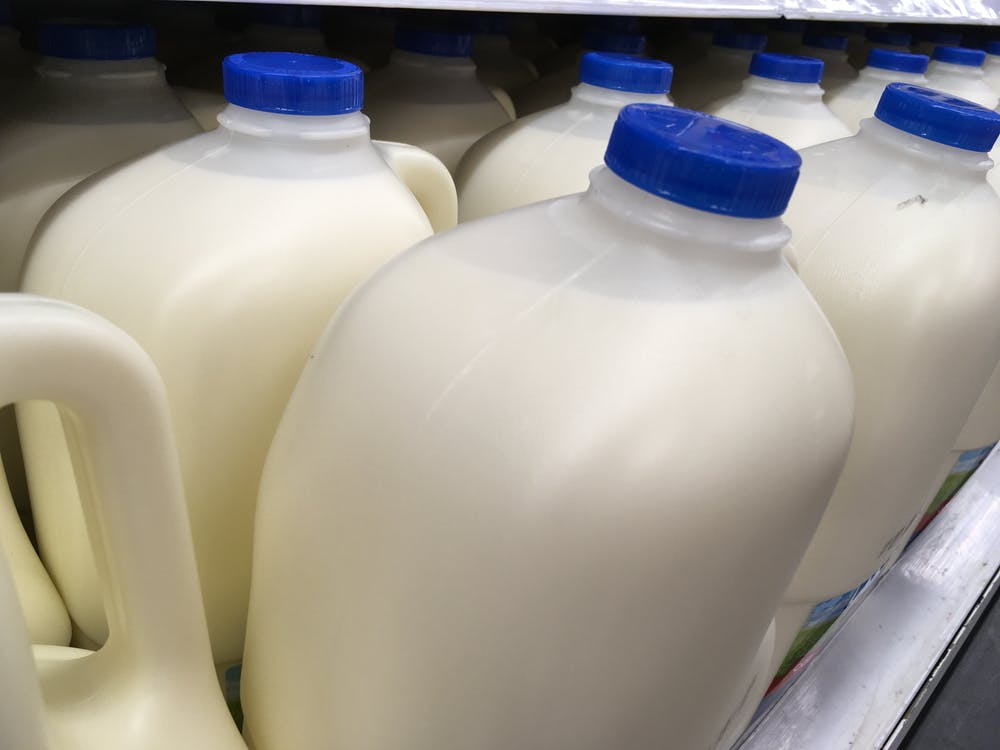
3L plastic bottles of milk
If you’re choosing cow’s milk for your baby, make sure it’s whole milk rather than skim milk. Mr Adi/Shutterstock

Why is this controversial?

Australian government guidelines recommend “cow’s milk should not be given as the main drink to infants under 12 months”. This seems to conflict with the updated WHO advice. However, WHO’s advice is targeted at governments and health authorities rather than directly at parents.

The Australian dietary guidelines are under review and the latest WHO advice is expected to inform that process.

OK, so how about iron?

Iron is an essential nutrient for everyone but it is particularly important for babies as it is vital for growth and brain development. Babies’ bodies usually store enough iron during the final few weeks of pregnancy to last until they are at least six months of age. However, if babies are born early (prematurely), if their umbilical cords are clamped too quickly or their mothers are anaemic during pregnancy, their iron stores may be reduced.

Cow’s milk is not a good source of iron. Most infant formula is made from cow’s milk and so has iron added. Breastmilk is also low in iron but much more of the iron in breastmilk is taken up by babies’ bodies than iron in cow’s milk.

Babies should not rely on milk (including infant formula) to supply iron after six months. So the latest WHO advice emphasises the importance of giving babies iron-rich solid foods from this age. These foods include:

You may have heard that giving babies whole cow’s milk can cause allergies. In fact, whole cow’s milk is no more likely to cause allergies than infant formula based on cow’s milk.
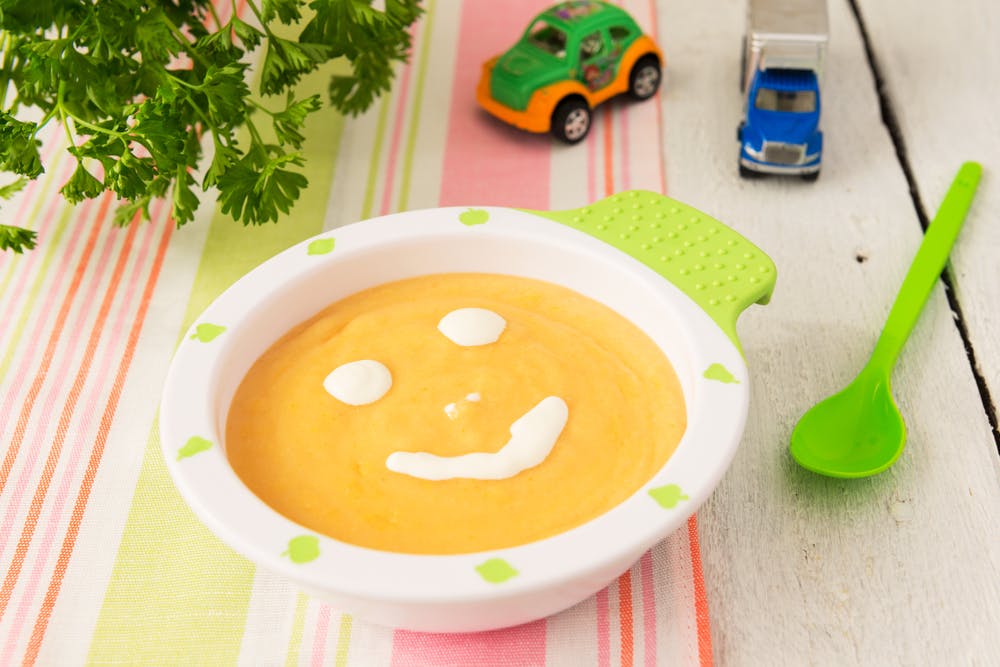
Lentil or pumpkin soup in a bowl with a smily face dolloped in cream or yoghurt
If you’re introducing cow’s milk at six months, offer iron-rich foods too, such as meat or lentils. pamuk/Shutterstock

What are my options?

The latest WHO recommendation that formula-fed babies can switch to cow’s milk from six months could save you money. Infant formula can cost more than five times more than fresh milk (A$2.25-$8.30 a litre versus $1.50 a litre).

For families who continue to use infant formula, it may be reassuring to know that if infant formula becomes hard to get due to a natural disaster or some other supply chain disruption fresh cow’s milk is fine to use from six months.

It is also important to know what has not changed in the latest feeding advice. WHO still recommends infants have only breastmilk for their first six months and then continue breastfeeding for up to two years or more. It is also still the case that infants under six months who are not breastfed or who need extra milk should be fed infant formula. Toddler formula for children over 12 months is not recommended.

All infant formula available in Australia must meet the same standard for nutritional composition and food safety. So, the cheapest infant formula is just as good as the most expensive.

What’s the take-home message?

The bottom line is your baby can safely switch from infant formula to fresh, full-fat cow’s milk from six months as part of a healthy diet with iron-rich foods. Likewise, cow’s milk can also be used to supplement or replace breastfeeding from six months, again alongside iron-rich foods.

If you have questions about introducing solids your GP, child health nurse or dietitian can help. If you need support with breastfeeding or starting solids you can call the National Breastfeeding Helpline (1800 686 268) or a lactation consultant.

Karleen Gribble, Adjunct Associate Professor, School of Nursing and Midwifery, Western Sydney University; Naomi Hull, PhD candidate, food security for infants and young children, University of Sydney, and Nina Jane Chad, Research Fellow, University of Sydney School of Public Health, University of Sydney

This article is republished from The Conversation under a Creative Commons license. Read the original article.

Don’t Forget…

Did you arrive here from our newsletter? Don’t forget to return to the email to continue learning!

Learn to Age Gracefully

Join the 98k+ American women taking control of their health & aging with our 100% free (and fun!) daily emails:

  • Parsnips vs Potatoes – Which is Healthier?

    10almonds is reader-supported. We may, at no cost to you, receive a portion of sales if you purchase a product through a link in this article.

    Our Verdict

    When comparing parsnips to potatoes, we picked the parsnips.

    Why?

    To be more specific, we’re looking at russet potatoes, and in both cases we’re looking at cooked without fat or salt, and with the skin on. In other words, the basic nutritional values of these plants in their edible form, without adding anything. With this in mind, once we get to the root of things (so to speak), there’s a clear winner:

    Looking at the macros first, parsnips have more fiber, while potatoes have more carbs. Potatoes do have more protein too, but given the small numbers involved when it comes to protein we don’t think this is enough of a plus to outweigh the extra fiber in the parsnips. So, that’s a win for parsnips in this category.

    In the category of vitamins, again a champion emerges: parsnips have more of vitamins B1, B2, B5, B9, C, E, and K, while potatoes have more of vitamins B3 and B6. So, a 7:2 win for parsnips here!

    When it comes to minerals, parsnips have more calcium copper, manganese, selenium, and zinc, while potatoes have more iron and potassium. Potatoes do also have more sodium, but for most people most of the time, this is not a plus, healthwise. Disregarding the sodium, this category sees a 5:2 win for parsnips.

    Adding up the sections makes a clear overall win for parsnips, but by all means enjoy either or both (in moderation, as with all starchy vegetables), as diversity is good!

    Want to learn more?

    You might like to read:

    Why You’re Probably Not Getting Enough Fiber (And How To Fix It)

    Take care!

    Share This Post

  • Come As You Are – by Dr. Emily Nagoski

    10almonds is reader-supported. We may, at no cost to you, receive a portion of sales if you purchase a product through a link in this article.

    We’ve all heard the jokes, things like: Q: “Why is the clitoris like Antarctica?” A: “Most men know it’s there; most don’t give a damn”

    But… How much do people, in general, really know about the anatomy and physiology of sexual function? Usually very little, but often without knowing how little we know.

    This book looks to change that. Geared to a female audience, but almost everyone will gain useful knowledge from this.

    The writing style is very easy-to-read, and there are “tl;dr” summaries for those who prefer to skim for relevant information in this rather sizeable (400 pages) tome.

    Yes, that’s “what most people don’t know”. Four. Hundred. Pages.

    We recommend reading it. You can thank us later!

    Get your copy of Come As You Are from Amazon today!

    Share This Post

  • Should I get a weighted vest to boost my fitness? And how heavy should it be?

    10almonds is reader-supported. We may, at no cost to you, receive a portion of sales if you purchase a product through a link in this article.

    Exercise training while wearing a weighted vest is undergoing somewhat of a renaissance. Social media posts and trainers are promoting them as a potential strategy for improving fitness and health.

    Exercising with additional weight attached to the body is nothing new. This idea has been used with soldiers for many centuries if not millennia – think long hikes with a heavy pack.

    The modern weighted vest comes in a range of designs that are more comfortable and can be adjusted in terms of the weight added. But could one be helpful for you?

    ZR10/Shutterstock

    What the research says

    One of the earliest research studies, reported in 1993, followed 36 older people wearing weighted vests during a weekly exercise class and at home over a 20-week period. Wear was associated with improvements in bone health, pain and physical function.

    Since then, dozens of papers have evaluated the exercise effects of wearing a weighted vest, reporting a range of benefits.

    Not surprisingly, exercise with a weighted vest increases physiological stress – or how hard the body has to work – as shown by increased oxygen uptake, heart rate, carbohydrate utilisation and energy expenditure.

    Adding weight equal to 10% of body weight is effective. But it doesn’t appear the body works significantly harder when wearing 5% extra weight compared to body weight alone.

    Does more load mean greater injury risk?

    A small 2021 study suggested additional weights don’t alter the biomechanics of walking or running. These are important considerations for lower-limb injury risk.

    The safety considerations of exercising with weighted vests have also been reported in a biomechanical study of treadmill running with added weight of 1% to 10% of body weight.

    While physiological demand (indicated by heart rate) was higher with additional weight and the muscular forces greater, running motion was not negatively affected.

    To date no research studies have reported increased injuries due to wearing weighted vests for recreational exercise. However a 2018 clinical study on weight loss in people with obesity found back pain in 25% of those wearing such vests. Whether this can be translated to recreational use in people who don’t have obesity is difficult to say. As always, if pain or discomfort is experienced then you should reduce the weight or stop vest training.

    Better for weight loss or bone health?

    While wearing a weighted vest increases the energy expenditure of aerobic and resistance exercise, research to show it leads to greater fat loss or retaining muscle mass is somewhat inconclusive.

    One older study investigated treadmill walking for 30 minutes, three times a week in postmenopausal women with osteoporosis. The researchers found greater fat loss and muscle gain in the participants who wore a weighted vest (at 4–8% body weight). But subsequent research in obese older adults could not show greater fat loss in participants who wore weighted vests for an average of 6.7 hours per day.

    There has been considerable interest in the use of weighted vests to improve bone health in older people. One 2003 study reported significant improvements in bone density in a group of older women over 32 weeks of weighted vest walking and strength training compared to a sedentary control group.

    But a 2012 study found no difference in bone metabolism between groups of postmenopausal women with osteoporosis walking on a treadmill with or without a weighted vest.

    Making progress

    As with any exercise, there is a risk of injury if it is not done correctly. But the risk of weighted vest training appears low and can be managed with appropriate exercise progression and technique.

    If you are new to training, then the priority should be to simply start exercising and not complicate it with wearing a weighted vest. The use of body weight alone will be sufficient to get you on the path to considerable gains in fitness.

    Once you have a good foundation of strength, aerobic fitness and resilience for muscles, joints and bones, using a weighted vest could provide greater loading intensity as well as variation.

    It is important to start with a lighter weight (such as 5% bodyweight) and build to no more than 10% body weight for ground impact exercises such as running, jogging or walking.

    For resistance training such as squats, push-ups or chin-ups, progression can be achieved by increasing loads and adjusting the number of repetitions for each set to around 10 to 15. So, heavier loads but fewer repetitions, then building up to increase the load over time.

    While weighted vests can be used for resistance training, it is probably easier and more convenient to use barbells, dumbbells, kettle bells or weighted bags.

    group of women exercising indoors using stretchy bands to add resistance
    The benefits of added weight can also be achieved by adding repetition or duration. Geert Pieters/Unsplash

    The bottom line

    Weighted vest training is just one tool in an absolute plethora of equipment, techniques and systems. Yes, walking or jogging with around 10% extra body weight increases energy expenditure and intensity. But training for a little bit longer or at a higher intensity can achieve similar results.

    There may be benefits for bone health in wearing a weighted vest during ground-based exercise such as walking or jogging. But similar or greater stimulus to bone growth can be achieved by resistance training or even the introduction of impact training such as hopping, skipping or bounding.

    Exercising with a weighted vest likely won’t increase your injury risk. But it must be approached intelligently considering fitness level, existing and previous injuries, and appropriate progression for intensity and repetition.

    Rob Newton, Professor of Exercise Medicine, Edith Cowan University

    This article is republished from The Conversation under a Creative Commons license. Read the original article.

    Share This Post

  • 3 Surprises: Yoga, Nut Milk, & Gluten

    10almonds is reader-supported. We may, at no cost to you, receive a portion of sales if you purchase a product through a link in this article.

    This week in the world of health science news, not everything is as it might seem…

    Yoga: not so good for the heart?

    To be clear: it’s not bad for the health either.

    Researchers (Dr. Poovitha Paramashiva et al.) found that yoga does, on balance, improve vascular health somewhat, but is significantly less effective than other structured exercise such as tai chi, Pilates, or HIIT.

    One of the notable problems is that prolonged sitting stiffens arteries—sometimes described as “the new smoking”, which steals years from vascular health.

    Of course, not every kind of yoga involves prolonged sitting, and some involve more movement than others. Dr. Paramashiva and her team conclude that yoga has many benefits, and/but should be supplemented with more dynamic exercise for full heart protection.

    Read in full: Yoga isn’t as heart-healthy as you think, new study reveals

    Related: Which Style Of Yoga Is Best For You?

    Nut milks: not a poor imitation

    Often thought it as poor imitations of milk from other mammals such as cows, nut milks have, on balance, more to offer healthwise.

    Nut milks provide healthy fats with a much better lipids profile than cows’ milk, and all are usually fortified with calcium, vitamin D, and often even vitamin B12.

    When it comes to fermented products (kefir, yogurts, cheeses), lactic acid bacteria improve safety, texture, antioxidant activity, and mineral bioavailability while producing bioactive peptides and probiotics; some strains also add natural thickening and prebiotic effects. All of this goes for plant-based products just the same as animal-based products.

    In terms of safety, in all cases traditional heat treatments (HTST, UHT) extend shelf life; advanced non-thermal methods (HPH, UHPH, HHP, PEF, HC, ohmic heating) improve microbial safety while preserving flavor and nutrients. In any case, you will certainly not get bird flu from nut milk, either way.

    One thing animal-based dairy products do have over nut-based equivalents is that they are usually higher in protein, so that’s one thing in their favor, to perhaps set against the usually poor lipids profiles in animal milks.

    Read in full: Can nut-based milks match dairy for safety, nutrition and flavor?

    Related: Which Plant Milk?

    The other side of gluten

    Everybody these days knows about the possibility of food allergies, sensitivities, and intolerances, and gluten is high on the public awareness list.

    However, sometimes one thing can be easily mistaken for another, and assuming a gluten sensitivity or similar can lead one to miss the real problem—which could be a matter of a serious medical condition going undiagnosed, or it could be like one commenter mentioned under the video we shared today, saying:

    ❝I think my biggest mistake was deciding my gut issues were gluten sensitivity rather than “crap food” sensitivity. Most GF products are highly processed so now I’m back on wheat at least I can eat real bread, sourdough wholemeal with added seeds.❞

    So that’s something that can happen.

    Furthermore, gluten may be better than merely harmless! As the below-linked science shows, gluten peptides can act as antioxidants, lower blood pressure, reduce cholesterol, improve blood sugar control, and favorably modulate immune function. Some opioid-like peptides (exorphins) can even influence mood, appetite, and gut function.

    This latter is in part because fermentation with lactic acid bacteria and fungal proteases (all of which normally live in our gut) can reduce harmful gluten fragments while releasing beneficial peptides.

    And if you do have a sensitivity? Protease supplements (like latiglutenase) aim to break down gluten in the gut to protect sensitive individuals from accidental exposure, but clinical results remain inconsistent, so don’t count on that one just yet.

    Similarly, in cases of Celiac disease, enzyme-based methods, such as prolyl endopeptidases, are being tested to neutralize toxic peptides—but this is a work in progress and the science is young so far.

    Read in full: How gluten harms some people but helps others

    Related: Why Going Gluten-Free Could Be A Bad Idea

    Take care!

    Don’t Forget…

    Did you arrive here from our newsletter? Don’t forget to return to the email to continue learning!

    Learn to Age Gracefully

    Join the 98k+ American women taking control of their health & aging with our 100% free (and fun!) daily emails:

  • 3 Unconventional Ways To Fix Your Stiff Neck (Without Stretching)

    10almonds is reader-supported. We may, at no cost to you, receive a portion of sales if you purchase a product through a link in this article.

    Dr. JJ Thomas (Doctor of Physical Therapy) shows us how to do it:

    Your neck is usually not the actual problem

    A stiff neck is often caused by underuse and lack of stability in the rest of the body, not overuse of the neck itself. Regaining rotational mobility therefore involves building stability below the neck. Here’s how:

    1. Anti-rotation band press: in a tall kneeling position, hold a resistance band at your belly button with both hands and press it straight outwards while preventing your torso from twisting; hold for 5 breaths, and repeat on both sides.
    2. Rotational band pull: in a half-kneeling position, rotate your torso (not your neck) towards your front leg using a lighter resistance band, allowing your head to follow passively while keeping your neck neutral.
    3. Anti-rotation plank with side step: in an elbow plank, keep your head neutral as you step one leg to the side, then bring your other leg over and return to the plank position, maintaining torso and neck stability throughout.

    For more on all of this, plus visual demonstrations, enjoy:

    Click Here If The Embedded Video Doesn’t Load Automatically!

    Want to learn more?

    You might also like:

    How To Stop Pain From Spreading

    Take care!

    Don’t Forget…

    Did you arrive here from our newsletter? Don’t forget to return to the email to continue learning!

    Learn to Age Gracefully

    Join the 98k+ American women taking control of their health & aging with our 100% free (and fun!) daily emails:

  • Tofu vs Seitan – Which is Healthier?

    10almonds is reader-supported. We may, at no cost to you, receive a portion of sales if you purchase a product through a link in this article.

    Our Verdict

    When comparing tofu to seitan, we picked the tofu.

    Why?

    This one is not close!

    In terms of macros, seitan does have about 2x the protein, but it also has 6x the carbs and 6x the sodium of tofu, as well as less fiber than tofu.. So we’ll call it a tie on macros. But…

    Seitan is also much more processed than tofu, as tofu has usually just been fermented and possibly pressed (depending on kind). Seitan, in contrast, is processed gluten that has been extracted from wheat and usually had lots of things happen to it on the way (depending on kind).

    About that protein… Tofu is a complete protein, meaning it has all of the essential amino acids. Seitain, meanwhile, is lacking in lysine.

    When it comes to vitamins and minerals, again tofu easily comes out on top; tofu has 5x the calcium, similar iron, more magnesium, 2x the phosphorous, 150% of the potassium, and contains several other nutrients that seitan doesn’t, such as folate and choline.

    So, easy winning for tofu across the board on micronutrients.

    Tofu is also rich in isoflavones, antioxidant phytonutrients, while seitan has no such benefits.

    So, another win for tofu.

    There are two reasons you might choose seitan:

    • prioritizing bulk protein above all other health considerations
    • you are allergic to soy and not allergic to gluten

    If neither of those things are the case, then tofu is the healthier choice!

    Want to learn more?

    You might like to read:

    Take care!

    Don’t Forget…

    Did you arrive here from our newsletter? Don’t forget to return to the email to continue learning!

    Learn to Age Gracefully

    Join the 98k+ American women taking control of their health & aging with our 100% free (and fun!) daily emails: