

4 ways to cut down on meat when dining out – and still make healthy choices
10almonds is reader-supported. We may, at no cost to you, receive a portion of sales if you purchase a product through a link in this article.
Many of us are looking for ways to eat a healthier and more sustainable diet. And one way to do this is by reducing the amount of meat we eat.
That doesn’t mean you need to become a vegan or vegetarian. Our recent research shows even small changes to cut down on meat consumption could help improve health and wellbeing.
But not all plant-based options are created equal and some are ultra-processed. Navigating what’s available when eating out – including options like tofu and fake meats – can be a challenge.
So what are your best options at a cafe or restaurant? Here are some guiding principles to keep in mind when cutting down on meat.
Health benefits to cutting down
Small amounts of lean meat can be part of a healthy, balanced diet. But the majority of Australians still eat more meat than recommended.
Only a small percentage of Australians (10%) are vegetarian or vegan. But an increasing number opt for a flexitarian diet. Flexitarians eat a diet rich in fruits and vegetables, while still enjoying small amounts of meat, dairy, eggs and fish.
Our recent research looked at whether the average Australian diet would improve if we swapped meat and dairy for plant-based alternatives, and the results were promising.
The study found health benefits when people halved the amount of meat and dairy they ate and replaced them with healthy plant-based foods, like tofu or legumes. On average, their dietary fibre intake – which helps with feeling fuller for longer and digestive health – went up. Saturated fats – which increase our blood cholesterol levels, a risk factor for heart disease – went down.
Including more fibre and less saturated fat helps reduce the risk of heart disease.
Achieving these health benefits may be as simple as swapping ham for baked beans in a toastie for lunch, or substituting half of the mince in your bolognese for lentils at dinner.

How it’s made matters
For a long time we’ve known processed meats – such as ham, bacon and sausages – are bad for your health. Eating high amounts of these foods is associated with poor heart health and some forms of cancer.
But the same can be true of many processed meat alternatives.
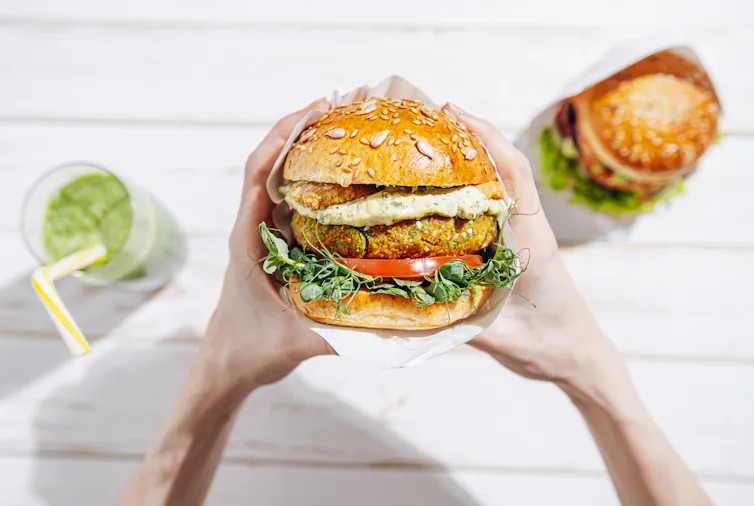
Plant-based alternatives designed to mimic meat, such as sausages and burgers, have become readily available in supermarkets, cafes and restaurants. These products are ultra-processed and can be high in salt and saturated fat.
Our study found when people replaced meat and dairy with ultra-processed meat alternatives – such as plant-based burgers or sausages – they ate more salt and less calcium, compared to eating meat or healthy plant-based options.
So if you’re cutting down on meat for health reasons, it’s important to think about what you’re replacing it with. The Australian Dietary Guidelines recommend eggs, legumes/beans, tofu, nuts and seeds.
Tofu can be a great option. But we recommend flavouring plain tofu with herbs and spices yourself, as pre-marinated products are often ultra-processed and can be high in salt.
What about when dining out?
When you’re making your own food, it’s easier to adapt recipes or reduce the amount of meat. But when faced with a menu, it can be difficult to work out what is the best option.
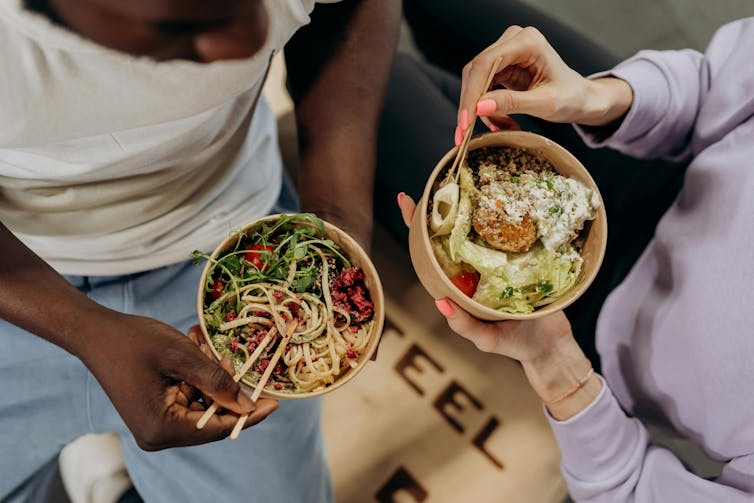
Here are our four ways to make healthy choices when you eat out:
1. Fill half your plate with vegetables
When cutting down on meat, aim for half your plate to be vegetables. Try to also eat a variety of colours, such as leafy green spinach, red capsicum and pumpkin.
When you’re out, this might look like choosing a vegetable-based entree, a stir-fry or ordering a side salad to have with your meal.
2. Avoid the deep fryer
The Australian Dietary Guidelines recommend limiting deep fried foods to once a week or less. When dining out, choose plant-based options that are sautéed, grilled, baked, steamed, boiled or poached – instead of those that are crumbed or battered before deep frying.
This could mean choosing vegetarian dumplings that are steamed not fried, or poached eggs at brunch instead of fried. Ordering a side of roast vegetables instead of hot chips is also a great option.
3. Pick wholegrains
Scan the menu for wholegrain options such as brown rice, wholemeal pizza or pasta, barley, quinoa or wholemeal burger buns. Not only are they good sources of protein, but they also provide more dietary fibre than refined grains, which help keep you fuller for longer.
4. If you do pick meat – choose less processed kinds
You may not always want, or be able, to make a vegetarian choice when eating out and with other people. If you do opt for meat, it’s better to steer clear of processed options like bacon or sausages.
If sharing dishes with other people, you could try adding unprocessed plant-based options into the mix. For example, a curry with lentils or chickpeas, or a vegetable-based pizza instead of one with ham or salami. If that’s not an option, try choose meat that’s a lean cut, such as chicken breast, or options which are grilled rather than fried.
Laura Marchese, PhD candidate at the Institute for Physical Activity and Nutrition, Deakin University and Katherine Livingstone, NHMRC Emerging Leadership Fellow and Senior Research Fellow at the Institute for Physical Activity and Nutrition, Deakin University
This article is republished from The Conversation under a Creative Commons license. Read the original article.
Don’t Forget…
Did you arrive here from our newsletter? Don’t forget to return to the email to continue learning!
Recommended
Learn to Age Gracefully
Join the 98k+ American women taking control of their health & aging with our 100% free (and fun!) daily emails:
-
Could an Apple watch really tell you if you have high blood pressure?
10almonds is reader-supported. We may, at no cost to you, receive a portion of sales if you purchase a product through a link in this article.
Apple has announced a package of health features, alongside the launch of the new Apple Watch Series 11, including an alert that the wearer may have high blood pressure, also known as hypertension.
Around 1.3 billion people worldwide have high blood pressure. But almost half are unaware of their diagnosis.
This lack of awareness is often due to limited access to regular medical care, the absence of noticeable symptoms or warning signs, and because a single blood pressure reading could miss the condition.
Better detection of high blood pressure could help prevent heart attacks, strokes, kidney disease and dementia.
But can the Apple Watch really tell if you have high blood pressure?
How does it work?
Limited details are available so far.
But we know the Apple Watch’s high blood pressure indicator is based on analysis of changes in blood volume as your heart beats. These are detected using the light sensor on the back of the watch.
This is not new technology; a number of other companies, such as Samsung and Aktiia, use similar approaches.
When the sensor and underlying algorithm identifies a significant change in blood flow, the user will get an alert that they may have high blood pressure. This is done without a conventional blood pressure cuff that tightens around the arm.
The alert isn’t a diagnosis, or a blood pressure number. Screenshot/Apple Newsroom However, if a user receives a “possible hypertension” notification, this is not a diagnosis, as their blood pressure has not yet been measured and confirmed by a health-care professional.
From what we know so far, it seems users won’t be given blood pressure numbers straight from the Apple Watch.
What does the evidence say?
Cuffless blood pressure monitoring devices can be more comfortable and convenient than using arm cuffs. Without a cuff, they can also more easily monitor blood pressure continuously during daily activities.
However, the evidence to show whether these technologies accurately estimate blood pressure remains scarce and with many limitations.
Unlike traditional cuff-based blood pressure devices, there is no standard protocol for manufacturers to test cuffless devices for accuracy, and to ensure they live up to their claims. Without such a protocol, it’s difficult to evaluate and compare their performance.
This is particularly important for cuffless devices, because accuracy depends on how well the signal picks up changes in blood flow – which can vary across different skin tones – and how well it performs in everyday settings, such as when a person is awake or asleep, sitting or standing, active or resting.
Nevertheless, some companies have received clearance from government regulatory agencies to market and sell these technologies as medical devices. Apple has received such clearance for its hypertension technology.
However, cuffless devices for measuring blood pressure are not currently recommended by any clinical guidelines based on the uncertainty about their accuracy. So it’s important to have your blood pressure checked regularly by a health-care professional and potentially also at home using a validated cuff-based device.
There is no evidence yet of how well these technologies would work when used clinically and with real patients. Studies are underway.
What are the challenges?
While these devices hold promise for improving individual and population health, they also pose some challenges.
Alerts for “possible hypertension” are just that: a sign for a potential health concern that needs to be evaluated and confirmed in a health-care setting.
Knowing the breadth of Apple’s market share and the prevalence of undiagnosed hypertension, these alerts have the potential to overburden existing health-care systems and cause patient anxiety.
As these devices become more mainstream, health-care systems may need to adapt to accommodate the growing number of patients seeking care.
What if you want to use it?
If you start using the new Apple Watch and receive the hypertension notification, you should check your blood pressure with a cuff-based monitor over three to seven days and take these readings to your doctor.
The fine print on Apple’s website notes this “possible hypertension” feature should not be used by people under 22 years old, those who are pregnant or those previously diagnosed with hypertension.
Cuffless devices have the potential to improve detection of high blood pressure – an urgent need – and these devices may be the future of optimal heart health. But this potential must be matched by rigorous efforts to confirm their accuracy and relevance for patients and clinicians.
Ritu Trivedi, Postdoctoral Research Fellow, School of Health Sciences, University of Sydney; Dean Picone, Senior Research Fellow, Sydney School of Health Sciences, Faculty of Medicine and Health, University of Sydney, and Tammy Brady, Professor, School of Medicine, Johns Hopkins University
This article is republished from The Conversation under a Creative Commons license. Read the original article.
Share This Post
-
Potatoes & Anxiety
10almonds is reader-supported. We may, at no cost to you, receive a portion of sales if you purchase a product through a link in this article.
It’s Q&A Day at 10almonds!
Have a question or a request? You can always hit “reply” to any of our emails, or use the feedback widget at the bottom!
In cases where we’ve already covered something, we might link to what we wrote before, but will always be happy to revisit any of our topics again in the future too—there’s always more to say!
As ever: if the question/request can be answered briefly, we’ll do it here in our Q&A Thursday edition. If not, we’ll make a main feature of it shortly afterwards!
So, no question/request too big or small
❝My other half considers potatoes a wonder food, except when fried. I don’t. I find, when I am eating potatoes I put on weight; and, when I’m not eating them, I lose it. Also, although I can’t swear to it, potatoes also make me feel a little anxious (someone once told me it could have something to do with where they are on the “glycemic index”). What does the science say?❞
The glycemic index of potatoes depends on the kind of potato (obviously) and also, less obviously, how it’s prepared. For a given white potato, boiling (which removes a lot of starch) might produce a GI of around 60, while instant mash (basically: potato starch) can be more like 80. For reference, pure glucose is 100. And you probably wouldn’t take that in the same quantity you’d take potato, and expect to feel good!
So: as for anxiety, it could be, since spiked blood sugars can cause mood swings, including anxiety.
Outside of the matter of blood sugars, the only reference we could find for potatoes causing anxiety was fried potatoes specifically:
❝frequent fried food consumption, especially fried potato consumption, is strongly associated with 12% and 7% higher risk of anxiety and depression, respectively❞
…which heavily puts the blame not on the potatoes themselves, but on acrylamide (the orange/brown stuff that is made by the Maillard reaction of cooking starches in the absence of water, e.g. by frying, roasting, etc).
Here’s a very good overview of that, by the way:
A Review on Acrylamide in Food: Occurrence, Toxicity, and Mitigation Strategies
Back on the core topic of potatoes and GI and blood sugar spikes and anxiety, you might benefit from a few tweaks that will allow you to enjoy potatoes without spiking blood sugars:
10 Ways To Balance Blood Sugars
Enjoy!
Share This Post
-
Which Plant Milk?
10almonds is reader-supported. We may, at no cost to you, receive a portion of sales if you purchase a product through a link in this article.
Plant-based milks—what’s best?
You asked us to look at some popular plant milks and their health properties, and we said we’d do a main feature, so here it is!
We’ll also give a quick nod to environmental considerations at the end too (they might not be quite what you expect!). That said, as a health and productivity newsletter, we’ll be focusing on the health benefits.
While we can give a broad overview, please note that individual brands may vary, especially in two important ways:
- Pro: many (most?) brands of plant milks fortify their products with extra vitamins and minerals, especially vitamin D and calcium.
- Con: some brands also add sugar.
So, by all means use this guide to learn about the different plants’ properties, and/but still do check labels later.
Alternatively, consider making your own!
- Pros: no added sugar + cheaper
- Cons: no added vitamins and minerals + some equipment required
Almond milk
Almond milk is low in carbs and thus good for a carb-controlled diet. It’s also high in vitamin E and a collection of minerals.
Oat milk
Oats are one of the healthiest “staple foods” around, and while drinking oat milk doesn’t convey all the benefits, it does a lot. It also has one of the highest soluble fiber contents of any milk, which is good for reducing LDL (bad) cholesterol levels.
See for example: Consumption of oat milk for 5 weeks lowers serum cholesterol and LDL cholesterol in free-living men with moderate hypercholesterolemia
Coconut milk
Coconut has a higher fat content than most plant milks, but also contains medium-chain triglycerides (MCTs). These raise HDL (good) cholesterol levels.
Read the study: How well do plant based alternatives fare nutritionally compared to cow’s milk?
Hemp milk
Being made from hemp seeds that contain a lot of protein and healthy fats (including omega-3 and omega-6), hemp milk packs a nutritious punch. It’s carb-free. It’s also THC-free, in case you were wondering, which means no, it does not have psychoactive effects.
Pea milk
It’s very high in protein, and contains an array of vitamins and minerals. It’s not very popular yet, so there isn’t as much research about it. This 2021 study found that it had the nutritional profile the closest to cow’s milk (beating soy by a narrow margin) and praised it as a good alternative for those with a soy allergy.
This is Research Review Monday so we try to stick to pure science, but for your interest… here’s an interesting pop-science article (ostensibly in affiliation with the pea milk brand, Ripple) about the nutritional qualities of their pea milk specifically, which uses particularly nutrient-dense yellow peas, plus some extra vitamin and mineral fortifications:
Read: Ripple Milk: 6 Reasons Why You Should Try Pea Milk
Soy milk
Perhaps the most popular plant milk, and certainly usually the cheapest in stores. It’s high in protein, similar to cow’s milk. In fact, nutritionally, it’s one of the closest to cow’s milk without involving cows as a middleman. (Did you know three quarters of all soy in the world is grown to feed to livestock, not humans? Now you do).
And no, gentlemen-readers, it won’t have any feminizing effects. The human body can’t use the plant estrogens in soy for that. It does give some isoflavone benefits though, which are broadly good for everyone’s health. See for example this research review with 439 sources of its own:
Read: Soy and Health Update: Evaluation of the Clinical and Epidemiologic Literature
Quick note on flavor: nut milks have the flavor of the nut they were made from. Coconut milk tastes of coconut. The other milks listed above don’t have much of a flavor—which in many cases may be what you want.
Note on environmental considerations:
A lot of us try to be as socially responsible as reasonably possible in our choices, so this may be an influencing factor. In a nutshell:
- Oats and Soy are generally grown as vast monocrops, and these are bad for the environment
- They are still better for the environment than cow’s milk though, as for example most soy is grown to feed to cows, not humans. So including cows in the process means four times as much monocrop farming, plus adds several other environmental issues that are beyond the scope of this newsletter.
- Almonds are particularly resource-intensive when it comes to water use.
- Still nowhere near as much as cows, though.
- Peas are grown in places that naturally have very high rainfall, so are a good option here. Same generally goes for rice, which didn’t make the cut today. (Nor did hazelnuts, sorry—we can only include so much!)
- Hemp is by far and away the most environmentally friendly, assuming it is grown in a climate naturally conducive to such.
- Making plant milk at home is usually most environmentally friendly, depending on where your ingredients came from.
- Literally any plant milk is much more environmentally friendly than cow’s milk.
See the science for yourself: Reducing food’s environmental impacts through producers and consumers
See also (if you like graphs and charts): Environmental footprints of dairy and plant-based milks
Share This Post
Related Posts
-
Guava vs Pineapple – Which is Healthier?
10almonds is reader-supported. We may, at no cost to you, receive a portion of sales if you purchase a product through a link in this article.
Our Verdict
When comparing guava to pineapple, we picked the guava.
Why?
Pineapple is great, but guava just beats it in most ways:
In terms of macros, guava has nearly 4x the fiber and nearly 5x the protein, for the same carbs, giving it the notably lower glycemic index. An easy win for guava in this category.
In the category of vitamins, guava has a lot more of vitamins A, B2, B3, B5, B9, C, E, K, and choline, while pineapple has marginally more vitamin B1. Another clear win for guava.
When it comes to minerals, guava has more calcium, copper, magnesium, phosphorus, potassium, selenium, and zinc, while pineapple has more iron and manganese. One more win for guava.
One big thing in pineapple’s favor is that it contains bromelain, which is an enzyme* found in pineapple (and only in pineapple), that has many very healthful properties, some of them unique to bromelain (and thus: unique to pineapple)
*actually a combination of enzymes, but most often referred to collectively in the singular. But when you do see it referred to as “they”, that’s what that means.
However cool that is, we think it unfair to weight it against guava winning in every other category, so we still say guava gets the overall win.
Of course, enjoy either or both; diversity is good!
Want to learn more?
You might like:
Let’s Get Fruity: Bromelain vs Inflammation & Much More
Enjoy!
Don’t Forget…
Did you arrive here from our newsletter? Don’t forget to return to the email to continue learning!
Learn to Age Gracefully
Join the 98k+ American women taking control of their health & aging with our 100% free (and fun!) daily emails:
-
How influencers and content creators discuss birth control on social media: What research shows
10almonds is reader-supported. We may, at no cost to you, receive a portion of sales if you purchase a product through a link in this article.
News articles in recent weeks have documented the spread of misinformation about hormonal birth control methods on popular social media platforms like TikTok, YouTube and X, formerly called Twitter. Influencers with large and small followings are sharing unsubstantiated claims about the side effects of contraceptives, while directly or indirectly encouraging others to stop using them.
This trend has not escaped researchers, who for several years have been investigating what people who can get pregnant are posting on social media platforms about hormonal and non-hormonal birth control methods. Understanding the drivers of these trends is important because they have implications for policy and patient care, according to researchers. Some worry that during the post-Dobbs era, when there are continued strikes against reproductive rights in the U.S., misinformation about birth control on social media could have a negative influence on contraceptive preferences — potentially leading to more unwanted pregnancies.
More than 90% of women of reproductive age have used at least one contraceptive method, according to a 2023 report by the U.S. National Center for Health Statistics. However, the report also finds that the use of male condoms and withdrawal methods increased between 2006 and 2019, while the use of the birth control pill decreased. Non-hormonal contraception methods, including condoms, spermicides, withdrawal and menstrual cycle tracking, are 10% or less effective than hormonal contraceptives. The only exceptions are surgical sterilization and the copper intrauterine device.
To be sure, not all birth control-related content posted on social media platforms is negative, studies show. Health care professionals are sharing educational material with a high rate of engagement and non-health care professional users share their positive experiences with the birth control methods they use.
But as you will see in the studies curated below, researchers also find that social media users, including influencers, share inaccurate information about hormonal contraceptives on various social media platforms, discuss their discontinuation of birth control in favor of non-hormonal methods and engage in unsubstantiated fear-mongering of hormonal contraceptives.
Researchers also have learned that the content posted on social media platforms has changed in tone over time, mirroring the shift in the national political discourse.
In a 2021 study published in the American Journal of Obstetrics & Gynecology, researchers analyzed more than 800,000 English-language tweets mentioning at least one contraceptive method between March 2006, when Twitter was founded, and December 2019. They coded the sentiment of tweets as positive, neutral or negative.
“What we found over time was that the number of neutral tweets went down for each and every one of the birth control methods, and people became more polarized with regards to how they talk on these social media platforms over those 13 years,” says study co-author Dr. Deborah Bartz, an OB-GYN at Brigham and Women’s Hospital with expertise in complex family planning and an associate professor at Harvard Medical School.
In a February 2024 commentary in the Journal of Women’s Health, University of Delaware researchers Emily Pfender and Leah Fowler argue that ongoing dialogue about contraception on social media provides “a glimpse into public sentiment about available options” to people who can get pregnant.
The authors also note that misinformation and disinformation about hormonal contraception may have a larger effect on health disparities, especially among historically marginalized groups who may already mistrust the medical establishment.
“This may contribute to unintended pregnancy and delayed care, further widening health disparities and hindering progress toward equitable reproductive health outcomes,” Pfender and Fowler write.
Side effects
There are known side effects to hormonal birth control methods, including headaches, nausea, sore breasts and spotting. Most are mild and disappear with continued use or with switching to another method. Among hormonal contraceptives, only the Depo-Provera injection has been linked with weight gain, studies show.
But some social media influencers have spread false claims about the potential side effects of hormonal birth control methods, ranging from infertility to abortion to unattractiveness. Despite these false claims, physicians and professional organizations such as the American College of Obstetricians and Gynecologists find today’s contraceptive options safe and very effective.
“They’re about the most low-risk prescription that I give,” says Dr. Megana Dwarakanath, an adolescent medicine physician in Pittsburgh. “I always joke that if something goes wrong in someone’s life, they’re within the reproductive years, it always gets blamed on birth control.”
Dwarakanath says her young patients are most worried about two side effects: weight gain and mood. “Those are the things that they will almost always attribute to their birth control at a time that their bodies are also changing very rapidly,” she says. “Things like mental health diagnoses or personality disorders also tend to crop up during the time young people have started or have been on birth control.”
Most research on the link between oral contraceptives and cancer risk comes from observational studies, according to the National Cancer Institute. Overall, the studies have consistently shown that the risks of breast and cervical cancer are slightly increased for women who use oral contraceptives, whereas the risk of endometrial, ovarian and colorectal cancers are reduced.
The use of hormonal birth control has also been associated with an increase in the risk of developing blood clots, studies show. But that risk is not universal for everyone who takes hormonal birth control. This risk is higher for women 35 and older, those who smoke, are very overweight or have a history of cardiovascular disease. Overall, 3 to 9 out of 10,000 women who take the pill are at risk of developing blood clots within a given year. The risk for women who don’t take the pill is 1 to 5 out of 10,000.
There is no association between the pill and mood disorders, according to a large body of research, including a 2021 cohort study of nearly 740,000 young women.
It’s worth noting the dearth of research into women’s reproductive health due to chronic underfunding of women’s health research. An analysis of funding by the U.S. National Institutes of Health finds that in nearly three-quarters of the cases where a disease affects mainly one gender, the institute’s funding pattern favored males. Either the disease affected more women and was underfunded, or the disease affected more men and was overfunded, according to the 2021 study published in the Journal of Women’s Health.
Aside from underfunding, conducting robust research into the long-term effects of birth control is complex.
“Historically, people haven’t felt that it’s ethically OK to randomize people to birth control methods in large part because the outcome of unintended pregnancy is greater,” for people who are given the placebo, Bartz says.
Research on birth control misinformation on social media
Social media use is widespread among young adults. More than 90% of Americans between 18 and 29 reported ever using YouTube, while 78% said they had used Instagram, 62% used TikTok and 42% used Twitter, according to a 2023 survey of 5,733 U.S. adults by Pew Research Center.
These years overlap with the demographic of people who are most likely to use birth control. And because the use of contraceptives is less stigmatized today, people are more likely to talk with one another about their questions and concerns or share that information online.
In addition to investigating the general landscape of social media posts about birth control, researchers are also interested in the type of content influencers, who typically have 20,000 or more followers, post, because of their persuasive power over their audiences.
“When influencers disclose personal experiences and beliefs about various topics, audience members tend to form similar attitudes especially when they feel connected to the influencer,” Pfender and M. Marie Devlin write in a 2023 study published in the journal Health Communication.
Below we have curated several studies published in recent years documenting the spread of birth control misinformation on social media. The roundup is followed by a quick reference guide on female contraceptives and their actual potential side effects.
Contraceptive Content Shared on Social Media: An Analysis of Twitter
Melody Huang, et al. Contraception and Reproductive Medicine, February 2024.The study: The authors explore how contraceptive information is shared on X and understand how those posts affect women’s decisions. They analyze a random 1% of publicly available English-language tweets about reversible prescription contraceptive methods, from January 2014 and December 2019. The 4,434 analyzed tweets included at least 200 tweets per birth control method — IUDs, implants, the pill, patch and ring.
The findings: 26.7% of tweets about contraceptive methods discussed decision-making and 20.5% discussed side effects, especially the side effects of IUDs and the depot medroxyprogesterone acetate (DMPA or Depo-Provera) shot. Discussions about the pill, patch or ring prompted more discussions on logistics and adherence. About 6% of tweets explicitly requested information. Tweets about IUDs were most popular in terms of likes.
More importantly, 50.6% of the tweets were posted by contraceptive users, while only 6% came from official health or news sources. Tweets from news or journalistic sources were more frequent than tweets from a health care professional or organization.
Some tweets contained misinformation represented as facts, such as the unsubstantiated claim that IUDs can cause fertility issues. Others were outwardly misogynistic, shaming women and claiming that they wouldn’t be able to have kids because of using hormonal birth control.
One takeaway: “While Twitter may provide valuable insight, with more tweets being created by personal contraceptive users than official healthcare sources, the available information may vary in reliability. Asking patients about information from social media can help reaffirm to patients the importance of social networks in contraceptive decision-making while also addressing misconceptions to improve contraceptive counseling,” the authors write.
What Do Social Media Influencers Say About Birth Control? A Content Analysis of YouTube Vlogs About Birth Control
Emily J. Pfender and M. Marie Devlin. Health Communication, January 2023.The study: To explore what social media influencers shared on YouTube about their experiences with hormonal and non-hormonal methods of birth control, the researchers analyzed 50 vlogs posted between December 2019 and December 2021. Most of the 50 influencers were categorized on YouTube as Lifestyle (72%) and Fitness (16%). They had between 20,000 and 2.2 million subscribers each.
The findings: In total, 74% of the influencers talked about discontinuing hormonal birth control. About 44% said the main reason they were discontinuing birth control was to be more natural, while 32% said they wanted to improve their mental health and 20% were concerned about weight gain.
Forty percent of influencers mentioned using non-hormonal birth control methods such as menstrual cycle tracking, condoms, non-hormonal IUDs and the pull-out method. Twenty percent reported switching from hormonal to non-hormonal methods.
One takeaway: “Our content analysis revealed that discontinuation of hormonal birth control is commonly discussed among [social media influencers] on YouTube and sexual health information from influencers might not provide accurate educational information and tools… this is especially concerning given that social media is young adults’ primary tool for sexual health information. Future research is needed to understand the effects of SMI birth control content on sexual health behaviors,” the authors write.
Hormonal Contraceptive Side Effects and Nonhormonal Alternatives on TikTok: A Content Analysis
Emily J. Pfender, Kate Tsiandoulas, Stephanie R. Morain and Leah R. Fowler. Health Promotion Practice, January 2024.The study: The authors analyzed the content of 100 TikTok videos that used the hashtags #birthcontrolsideeffects and #nonhormonalcontraception. Their goal was to understand the types of content about side effects of hormonal and non-hormonal contraceptives on TikTok.
The findings: The videos averaged about 1 minute and garnered an average of 27,795 likes, 251 comments and 623 shares. For #birthcontrolsideeffects, 80% of the audience was 18 to 24 years old and videos with that hashtag had 43 million views worldwide as of July 7, 2023.
Thirty-two percent of the videos were by regular users (non-influencers), 26 by clinicians, 13% by health coaches and 2% by companies. Only 3% had a sponsorship disclosure and 6% included a medical disclaimer, that the person was not a doctor or was not providing medical advice.
Most of the 100 videos (71%) mentioned hormonal contraception. Among them 51% discussed unspecific hormonal contraceptives, 31% talked about the pill and 11% about hormonal IUDs. Four of the 71 creators explicitly recommended against using hormonal contraceptives.
Claims about hormonal contraceptives were mostly based on personal experience. About 25% of the creators cited no basis for their claims, 23% included outside evidence, including unspecified studies or information from the FDA insert, and 11% used a combination of personal and outside evidence.
Almost half (49%) mentioned discontinuing their hormonal contraception, with negative side effects cited as the most common reason.
The creators talked about mental health issues, weight gain, headaches, and less common risks of various cancers or chronic illness, change in personality and blood clots. They were less likely to mention the positive aspects of birth control.
About 52% of videos mentioned non-hormonal contraception, including copper IUDs and cycle tracking.
Nine of the 100 creators expressed feeling dismissed, pressured, gaslit or insufficiently informed about contraception by medical providers.
One takeaway: “Our findings support earlier work suggesting social media may fuel ‘hormonophobia,’ or negative framing and scaremongering about hormonal contraception and that this phobia is largely driven by claims of personal experience rather than scientific evidence,” the authors write. “Within these hashtag categories, TikTok creators frame their provider interactions negatively. Many indicate feeling ignored or upset after medical appointments, not sufficiently informed about contraceptive options, and pressured to use hormonal contraceptives. This finding aligns with previous social media research and among the general population, suggesting opportunities for improvements in contraceptive counseling.”
Popular Contraception Videos on TikTok: An Assessment of Content Topics
Rachel E. Stoddard, et al. Contraception, January 2024.The study: Researchers analyzed 700 English-language TikTok videos related to hormonal contraception, with a total of 1.2 billion views and 1.5 million comments, posted between October 2019 and December 2021. Their aim was to explore the types of contraception content on TikTok and to understand how the platform influences the information patients take into birth control counseling visits.
The findings: More than half of the videos (52%) were about patient experiences and how to use contraceptives. Other common topics included side effects (35%) and pregnancy (39%).
Only 19% of the videos were created by health care professionals, including midwives, physician assistants and medical doctors, although those videos garnered 41% of the total views, indicating higher engagement. While 93% of health care providers shared educational content, 23% of non-health care providers shared educational content.
One takeaway: “Our findings show an exceptional opportunity for education around contraception for young reproductive-aged individuals, given the accessibility and popularity of these videos. This may also extend to other topics around sex education and family planning, including sexually transmitted infection prevention and treatment and procuring abortion care,” the authors write.
TikTok, #IUD, and User Experience With Intrauterine Devices Reported on Social Media
Jenny Wu, Esmé Trahair, Megan Happ and Jonas Swartz. Obstetrics & Gynecology, January 2023.The study: Researchers used a web-scraping application to collect the top 100 TikTok videos tagged #IUD on April 6, 2022, based on views, comments, likes and shares. Their aim was to understand the perspectives and experiences of people with IUDs shared on TikTok. The videos had a total of 471 million views, 32 million likes and 1 million shares. Their average length was 33 seconds.
The findings: Some 89% of the creators identified as female and nearly 90% were from the United States; 37% were health care professionals; and 78% were 21 years or older.
Video types included patients’ own experiences with IUD removal (32%), educational (30%) and humorous (25%). More videos (38%) had a negative tone compared with 19% with a positive tone. The videos that portrayed negative user experiences emphasized pain and distrust of health care professionals.
Half of the videos were very accurate, while nearly a quarter were inaccurate (the authors did not use the term misinformation).
One takeaway: “The most liked #IUD videos on TikTok portray negative experiences related to pain and informed consent. Awareness of this content can help health care professionals shape education given the high prevalence of TikTok use among patients,” the authors write. “TikTok differs from other platforms because users primarily engage with an algorithmically curated feed individualized to the user’s interests and demographics.”
Types of female birth control
Most female hormonal contraceptives contain the synthetic version of natural female hormones estrogen and progesterone. They affect women’s hormone levels, preventing mature eggs from being released by the ovaries, a process that’s known as ovulation, hence, preventing a possible pregnancy.
Of the two hormones, progesterone (called progestin in synthetic form) is primarily responsible for preventing pregnancy. In addition to playing a role in preventing ovulation, progesterone inhibits sperm from penetrating through the cervix. Estrogen inhibits the development of follicles in the ovaries.
The information below is sourced from the CDC, the National Library of Medicine, the Cleveland Clinic and the Mayo Clinic.
Intrauterine contraception
Also called Long-Acting Reversible Contraception, or LARC, this method works by thickening the cervical mucus so the sperm can’t reach an egg. There are two types of IUDs: hormonal and non-hormonal.
- Levonorgestrel intrauterine system is a T-shaped device that’s placed inside the uterus by a doctor. It releases a small amount of progestin daily to prevent pregnancy. It can stay in place for 3 to 8 years. Its failure rate is 0.1% to 0.4%.
- Copper T intrauterine device is also T-shaped and is placed inside the uterus by a doctor. It does not contain hormones and can stay in place for up to 10 years. Its failure rate is 0.8%.
- Side effects: Copper IUDs may cause more painful and heavy periods, while progestin IUDs may cause irregular bleeding. In the very rare cases of pregnancy while having an IUD, there’s a greater chance of an ectopic pregnancy, which is when a fertilized egg grows outside of the uterus.
Hormonal methods
- The implant is a single, thin rod that’s inserted under the skin of the upper arm. It releases progestin over 3 years. Its failure rate is 0.1%, making it the most effective form of contraception available.
- Side effects: The most common side effect of an implant is irregular bleeding.
- The injection Depo-Provera or “shot” or “Depo” delivers progestin in the buttocks or arms every three months at the doctor’s office. Its failure rate is 4%.
- Side effects: The shot may cause irregular bleeding. The shot is also the only contraceptive that may cause weight gain. It may also be more difficult to predict when fertility returns once the shot is stopped.
- Combined oral contraceptives or “the pill” contain estrogen and progestin. They’re prescribed by a doctor. The pill has to be taken at the same time daily. The pill is not recommended for people who are older than 35 and smoke, have a history of blood clots or breast cancer. Its failure rate is 7%. Among women aged 15 to 44 who use contraception, about 25% use the pill.
- The skin patch is worn on the lower abdomen, buttocks or upper body, releasing progestin and estrogen. It is prescribed by a doctor. A new patch is used once a week for three weeks. No patch is worn for the fourth week. Its failure rate is 7%.
- Hormonal vaginal contraceptive ring releases progestin and estrogen. It’s placed inside the vagina. It is worn for three weeks and taken out on the fourth week. Its typical failure rate is 7%.
- Side effects: Contraceptives with estrogen, including the pill, the patch and the ring, increase the risk of developing blood clots.
- Progestin-only pill or “mini-pill” only has progestin and is prescribed by a doctor. It has to be taken daily at the same time. It may be a good option for women who can’t take estrogen. Its typical failure rate is 7%.
- Opill is the first over-the-counter daily oral contraceptive in the U.S., approved by the Food and Drug Administration in 2023. Opill only has progestin and like other birth control pills, it has to be taken at the same time every day. It should not be used by those who have or have had breast cancer. Its failure rate is 7%.
- Side effects: The most common side effect of progestin-only pills is irregular bleeding, although the bleeding tends to be light.
Non-hormonal birth control methods include using barriers such as a diaphragm or sponge, condoms and spermicides, withdrawal, and menstrual cycle tracking. Emergency contraception, including emergency contraception pills (the morning-after pill), is not a regular method of birth control.
Additional research studies to consider
Population Attitudes Toward Contraceptive Methods Over Time on a Social Media Platform
Allison A. Merz, et al. American Journal of Obstetrics & Gynecology, December 2020.Social Media and the Intrauterine Device: A YouTube Content Analysis
Brian T. Nguyen and Allison J. Allen. BMJ Sexual and Reproductive Health, November 2017.This article first appeared on The Journalist’s Resource and is republished here under a Creative Commons license.
Don’t Forget…
Did you arrive here from our newsletter? Don’t forget to return to the email to continue learning!
Learn to Age Gracefully
Join the 98k+ American women taking control of their health & aging with our 100% free (and fun!) daily emails:
-
21 Most Beneficial Polyphenols & What Foods Have Them
10almonds is reader-supported. We may, at no cost to you, receive a portion of sales if you purchase a product through a link in this article.
We often write about polyphenols here at 10almonds; sometimes mentioning that a certain food is good because it has them, or else occasionally an entire article about a particular polyphenol. But what about a birds-eye view of polyphenols as a whole?
Well, there are many, but we’ve picked 21 particularly beneficial for human health, and what foods contain them.
We’ll be working from this fantastic database, by the way:
❝Phenol-Explorer is the first comprehensive database on polyphenol content in foods. The database contains more than 35,000 content values for 500 different polyphenols in over 400 foods. These data are derived from the systematic collection of more than 60,000 original content values found in more than 1,300 scientific publications. Each of these publications has been critically evaluated before inclusion in the database. The whole data on the polyphenol composition of foods is available for download.❞
Source: Phenol-Explorer.EU | Database on polyphenol content in foods
We use this database at least several times per week while writing 10almonds; it’s a truly invaluable resource!
However, 500 is a lot, so here’s a rundown of 21 especially impactful ones; we’ve sorted them per the categories used in the explorer, and in some cases we’ve aggregated several very similar polyphenols typically found together in the same foods, into one item (so for example we just list “quercetin” instead of quercetin 3-O-rutinoside + quercetin 4′-O-glucoside + quercetin 3,4′-O-diglucoside, etc etc). We’ve also broadly grouped some particularly populous ones such as “anthocyanins”, “catechins”, and so forth.
Without further ado, here’s what you ideally want to be getting plenty of in your diet:
Flavonoids
- Quercetin
- Foods: onions, apples, berries, kale, broccoli, capers.
- Benefits: anti-inflammatory, reduces allergy symptoms, supports heart and brain health, and may lower blood pressure.
- See also: Fight Inflammation & Protect Your Brain, With Quercetin
- Kaempferol
- Foods: spinach, kale, tea (green and black), capers, brussels sprouts.
- Benefits: antioxidant, may reduce the risk of cancer, supports cardiovascular health, and has anti-inflammatory properties.
- Epigallocatechin gallate (EGCG)
- Foods: green tea, matcha.
- Benefits: potent antioxidant, promotes weight loss, supports brain health, and may reduce the risk of heart disease.
- See also: What Does Kaempferol Do, Anyway?
- Anthocyanins
- Foods: blueberries, blackberries, raspberries, red cabbage, cherries.
- Benefits: improve brain health, support eye health, and reduce the risk of cardiovascular diseases.
- Apigenin
- Foods: parsley, celery, chamomile tea.
- Benefits: anti-inflammatory, reduces anxiety, and supports brain and immune system health.
- Luteolin
- Foods: peppers, thyme, celery, carrots.
- Benefits: anti-inflammatory, supports brain health, and may help reduce the growth of cancer cells.
- Catechins (aside from EGCG)
- Foods: green tea, dark chocolate, apples
- Benefits: boosts metabolism, supports cardiovascular health, and reduces oxidative stress.
- Hesperidin
- Foods: oranges, lemons, limes, grapefruits.
- Benefits: supports vascular health, reduces inflammation, and may help manage diabetes.
- Naringenin
- Foods: oranges, grapefruits, tomatoes.
- Benefits: antioxidant, supports liver health, and may improve cholesterol levels.
For more on epigallocatechin gallate and other catechins, see: Which Tea Is Best, By Science?
Phenolic Acids
- Chlorogenic acid
- Foods: coffee, artichokes, apples, pears.
- Benefits: supports weight management, improves blood sugar regulation, and reduces inflammation.
- See also: Green Coffee Bean Extract: Coffee Benefits Without The Coffee?
- Caffeic acid
- Foods: coffee, thyme, sage, basil.
- Benefits: antioxidant, anti-inflammatory, and supports skin health.
- See also: The Bitter Truth About Coffee (or is it?)
- Ferulic acid
- Foods: whole grains, rice bran, oats, flaxseeds, spinach.
- Benefits: protects skin from UV damage, reduces inflammation, and supports cardiovascular health.
- Gallic acid
- Foods: green tea, berries, walnuts.
- Benefits: antioxidant, may reduce the risk of cancer, and supports brain health.
Stilbenes
- Resveratrol
- Foods: red currants, blueberries, peanuts.
- Benefits: anti-aging properties, supports heart health, and reduces inflammation.
- See also: Resveratrol & Healthy Aging ← and no, you can’t usefully get it from red wine; here’s why!
Lignans
- Secoisolariciresinol
- Foods: flaxseeds, sesame seeds, whole grains.
- Benefits: supports hormone balance, reduces the risk of hormone-related cancers, and promotes gut health.
- Matairesinol
- Foods: rye, oats, barley, sesame seeds.
- Benefits: hormonal support, antioxidant, and may reduce the risk of cardiovascular diseases.
See also: Sprout Your Seeds, Grains, Beans, Etc ← for maximum nutritional availability!
Tannins
- Ellagic acid
- Foods: pomegranates, raspberries, walnuts.
- Benefits: anti-cancer properties, supports skin health, and reduces inflammation.
- Proanthocyanidins
- Foods: cranberries, apples, grapes, dark chocolate.
- Benefits: supports urinary tract health, reduces inflammation, and improves blood vessel health.
See also: Enjoy Bitter Foods For Your Heart & Brain
Curcuminoids
- Curcumin
- Foods: turmeric.
- Benefits: potent anti-inflammatory, supports joint health, and may reduce the risk of chronic diseases.
- See also: Why Curcumin (Turmeric) Is Worth Its Weight In Gold
Isoflavones
- Genistein
- Foods: soybeans, chickpeas.
- Benefits: supports bone health, reduces the risk of hormone-related cancers, and promotes heart health.
- Daidzein
- Foods: soybeans, legumes.
- Benefits: hormonal balance, supports bone health, and may help alleviate menopausal symptoms.
See also: What Does “Balance Your Hormones” Even Mean?
Well, that’s a lot of things to remember!
If you want to make it easier for yourself, you can simply make sure to get at least 30 different kinds of plant into your diet per week, and by doing so, statistically, you should cover most of these!
Read more: What’s Your Plant Diversity Score?
Alternatively, for a middle-ground approach of targetting 16 most polyphenol delivering foods, check out this super-dense arrangement:
Mediterranean Diet… In A Pill? ← it’s about plant extracts from 16 specific foods, and the polyphenols they deliver
Enjoy!
Don’t Forget…
Did you arrive here from our newsletter? Don’t forget to return to the email to continue learning!
Learn to Age Gracefully
Join the 98k+ American women taking control of their health & aging with our 100% free (and fun!) daily emails:
- Quercetin


