
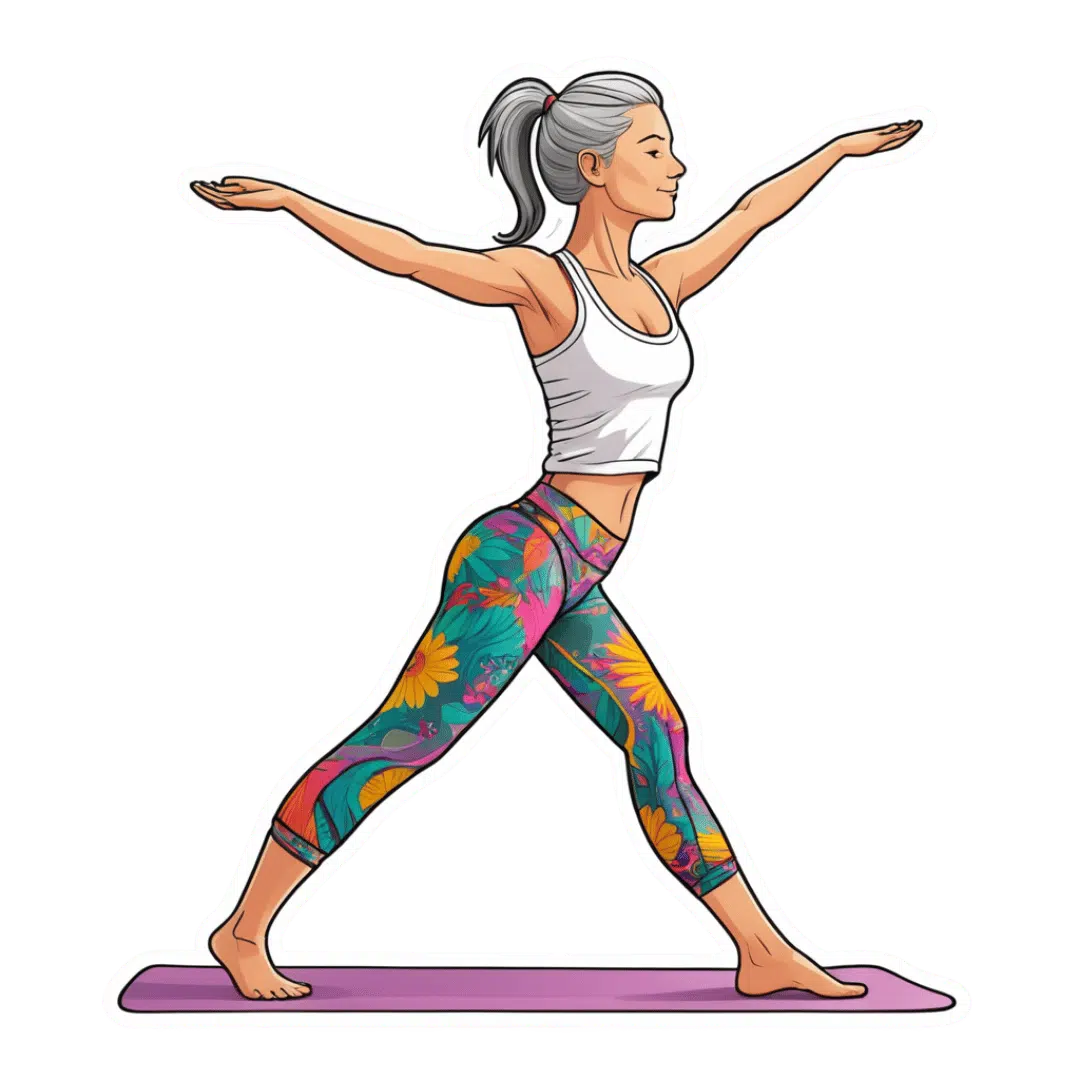
The Biggest Lie About Arthritis
10almonds is reader-supported. We may, at no cost to you, receive a portion of sales if you purchase a product through a link in this article.
Dr. Alyssa Kuhn, arthritis specialist, wishes more people knew this common belief isn’t true:
Move on from this myth
Contrary to popular belief, movement does not worsen arthritis—avoiding movement does. Inactivity reduces what your body is capable of, and accelerates stiffness, weakness, and pain.
In fact, by the science, exercise ranks as the most effective arthritis treatment, matching or exceeding popular drug-based pain relief, without the side effects. And as for ibuprofen and friends, a 2024 study found regular use of NSAIDs (like ibuprofen) was linked to worse symptoms and a threefold increase in total knee replacement risk:
The biggest problem is that medications mask pain, but don’t address the underlying problem, and so deterioration can be accelerated by wear and tear while the body isn’t paying attention.
But, doesn’t movement make the wear and tear worse?
It can, if you overdo it and/or do it very wrong. However, done gently and correctly, movement actually helps, because cartilage behaves like a sponge—moving a joint compresses and releases it, allowing nutrients to circulate. Without movement, cartilage is underfed, increasing irritation, inflammation, and pain.
Three strategies for getting it right:
- Start simple: focus on two or three exercises at a time, rather than trying to do everything at once.
- Warm up: give your body time to prepare before walking, stairs, sports, or lifting. Warm-ups are not just for intentional exercise sessions! They’re useful before any change in physical activity.
- Adapt rather than quitting: modify movements instead of abandoning them. For example, you could raise a chair for squats, use your arms to assist you, change how you use the stairs, or briefly reset your movement during a walk.
Lastly, Dr. Kuhn wants us to know that arthritis is not a binary of “can” or “can’t.”
The more useful question is: “how can I do this differently right now?”
For more on all of this, enjoy:
Click Here If The Embedded Video Doesn’t Load Automatically!
Want to learn more?
For a much more comprehensive guide to ideal exercises, consider:
Yoga Therapy for Arthritis – by Dr. Steffany Moonaz & Erin Byron
…which is a particularly good book, much better than most of its kind, because:
- One of the problems with arthritis and exercise is that arthritis can often impede exercise.
- Another of the problems with arthritis and exercise is that some kinds of exercise can exacerbate arthritis.
This book deals with both of those issues, by providing yoga specifically tailored to living with arthritis. Indeed, the first-listed author’s PhD in public health was the result of 8 years of study developing an evidence-based yoga program for people with arthritis, including osteoarthritis and rheumatoid arthritis.
The authors take the view that arthritis is a whole-person disease (i.e. it affects all parts of you), and so addressing it requires a whole-person approach, which is what this book delivers, and so that’s why we highly recommend it.
Take care!
Don’t Forget…
Did you arrive here from our newsletter? Don’t forget to return to the email to continue learning!
Recommended
Learn to Age Gracefully
Join the 98k+ American women taking control of their health & aging with our 100% free (and fun!) daily emails:
-
Beetroot vs Carrot – Which is Healthier?
10almonds is reader-supported. We may, at no cost to you, receive a portion of sales if you purchase a product through a link in this article.
Our Verdict
When comparing beetroot to carrots, we picked the carrots.
Why?
It was close! And beetroot does have its advantages, but we say carrots win on balance.
In terms of macros, these two root vegetables are close to identical, down to both having 9.57g carbs per 100g, and 2.8g fiber per 100g. Technically, beetroot has a smidgen more protein, but nobody’s eating these for their tiny protein content. So, a tie in this category.
In the category of vitamins, it’s not close and the margins are mostly huge: beetroot has a little more vitamin B9, while carrots have a lot more of vitamins A, B1, B2, B3, B5, B6, C, E, and K. Thus, a clear win for carrots in this round.
Looking at minerals next, superficially it swings the other way, but the margins this time are small. Nevertheless, beetroot has more copper, iron, magnesium, manganese, phosphorus, potassium, selenium, and zinc, while carrots have more calcium. The margins of difference being small, this means a modest victory for beetroot here.
In other considerations, beetroot has a generous betalain content and especially betanin, while carrots have more carotenoids (who’d have guessed?). So, we’re calling this round a tie.
Adding up the sections gives an even result, but the tie-breaker is the huge margins in the vitamins category, so carrots take the overall win today. But by all means do enjoy either or both, as diversity is best!
Want to learn more?
You might like to read:
Beetroot For More Than Just Your Blood Pressure
Take care!
Share This Post
-
Apples vs Dates – Which is Healthier?
10almonds is reader-supported. We may, at no cost to you, receive a portion of sales if you purchase a product through a link in this article.
Our Verdict
When comparing apples to dates, we picked the dates.
Why?
Both have their strengths, but ultimatley, it wasn’t close:
In terms of macros, dates have more fiber and carbs, for an approximately equal glycemic index. Thus, we say dates win this category as the more nutritionally dense option.
In the category of vitamins, apples have more of vitamins A, C, and E, while dates have more of vitamins B1, B2, B3, B5, B6, B7, B9, and K. A clear win for dates here!
When it comes to minerals, it’s even more one-sided: apples are not richer in any minerals, while dates have a lot more calcium, copper, iron, magnesium, manganese, phosphorus, potassium, selenium, and zinc. An overwhelming third win in a row for dates.
Adding up the sections makes for a resoundingly clear overall win for dates, but as ever, do by all means enjoy either or both, as diversity is best!
Want to learn more?
You might also like:
From Apples to Bees, and High-Fructose Cs: Which Sugars Are Healthier, And Which Are Just The Same?
Enjoy!
Share This Post
-
What Spending Time In Nature Does For Your Diet
10almonds is reader-supported. We may, at no cost to you, receive a portion of sales if you purchase a product through a link in this article.
It’s generally well-known that spending time in nature is good for you. See for example:
- Seasonal Affective Disorder (Beyond Sunlight!)
- How Nature Provides Us With A Surprisingly Powerful Painkiller
- Over-50s Physio: What My 5 Oldest Patients (Average Age 92) Do Right
And of course, it generally means you are getting exercise.
But could it possibly do for your diet?
We eat what we see
No, that doesn’t necessarily mean snacking on the nature as we go!
Although we can do! Only if you can positively identify what is safely edible, though.
Note: whatever you do, please do not rely on AI to tell you what is safe to eat. You will die:
❝Popular AI-based mushroom identification tools were tested using 100+ photos of nearly 60 species, taken in real-world conditions.
Even the best-performing tool failed in almost 15% of cases, with others performing worse.
None of tested applications consistently provided a single, correct answer, demonstrating they cannot be trusted for definitive life-or-death identification decisions.❞
Read in full: AI-mediated risks and real-life challenges in mushroom foraging
Note that this is not good when sometimes the choice is between:
- Agaricus bisporus: small smooth white globe in a little stalk, also called “button mushroom” when it’s small. Tasty and nutritious.
- Amanita phalloides: small smooth white globe in a little stalk, also called “death cap mushroom”. Reportedly also tasty, and/but they will be able to pour your liver out of your body at your autopsy some days later.
Those two mushrooms do disambiguate themselves visually when they get older, and there are signs to tell them apart when they’re younger, but signs that AI is going to detect with anything resembling reliability.
But rather, what we wanted to talk about here is partly related to what you might have read about in such articles as:
And we ourselves touched on in our own article: The Real Magic Number For Daily Fruit/Veg ← in that third study
But this does it better: it turns out that if we spend more time amongst plants, we want to eat more plants!
Researchers (Dr. Dahlia Stott et al.) found that people who reported more incidental or intentional contact with nature tended to have higher diet-quality scores (based on the Healthy Eating Index-2020) and more sustainable dietary patterns (based on the EAT-Lancet Index).
On which note, Dr. Stott and her team separated exposure into indirect (viewing nature), incidental (having plants or greenery nearby), and intentional (actively visiting parks or natural spaces), with incidental and intentional exposure showing the strongest associations with better diets.
And why does this happen?
Participants said that spending time in nature made them want to eat more fruits and vegetables or think more about the origin and sustainability of their food.
The researchers hypothesized several mechanisms of action:
- Stress reduction: feeling calmer after time in nature may reduce stress-driven or impulsive eating.
- Health motivation: people seeking better physical health may be drawn to both outdoor activity and healthier food choices simultaneously.
- Mindfulness and reflection: nature may promote reflective states that make people more deliberate about food choices.
- Nature connectedness: feeling connected to ecosystems may encourage diets perceived as more “natural” or sustainable, such as eating more plant foods (per what the participants said)
You can read the paper in full, here: The connections among interactions with nature, diet quality, and sustainable eating
Want to learn more
You might consider this book we reviewed a while back:
The Dirt Cure – by Dr. Maya Shetreat-Klein
Enjoy!
Share This Post
Related Posts
-
How To Really Look After Your Joints
10almonds is reader-supported. We may, at no cost to you, receive a portion of sales if you purchase a product through a link in this article.
The Other Ways To Look After Your Joints
When it comes to joint health, most people have two quick go-to items:
- Stretching
- Supplements like omega-3 and glucosamine sulfate
Stretching, and specifically, mobility exercises, are important! We’ll have to do a main feature on these sometime soon. But for today, we’ll just say: yes, gentle daily stretches go a long way, as does just generally moving more.
And, those supplements are not without their merits. For example:
- Effect of omega-3 on painful symptoms of patients with osteoarthritis of the synovial joints: systematic review and meta-analysis
- Glucosamine sulfate in the treatment of knee osteoarthritis symptoms: a randomized, double-blind, placebo-controlled study using acetaminophen as a side comparator
Of those, glucosamine sulfate may have an extra benefit in now just alleviating the symptoms, but also slowing the progression of degenerative joint conditions (like arthritis of various kinds). This is something it shares with chondroitin sulfate:
Effect of glucosamine or chondroitin sulfate on the osteoarthritis progression: a meta-analysis
An unlikely extra use for the humble cucumber…
As it turns out, cucumber extract beats glucosamine and chondroitin by 200%, at 1/135th of the dose.
You read that right, and it’s not a typo. See for yourself:
Reduce inflammation, have happier joints
Joint pain and joint degeneration in general is certainly not just about inflammation; there is physical wear-and-tear too. But combatting inflammation is important, and turmeric, which we’ve done a main feature on before, is a potent helper in this regard:
See also: Keep Inflammation At Bay
(a whole list of tips for, well, keeping inflammation at bay)
About that wear-and-tear…
Your bones and joints are made of stuff, and that stuff needs to be replaced. As we get older, the body typically gets worse at replacing it in a timely and efficient fashion. We can help it do its job, by giving it more of the stuff it needs.
And what stuff is that?
Well, minerals like calcium and phosphorus are important, but a lot is also protein! Specifically, collagen. We did a main feature on this before, which is good, as it’d take us a lot of space to cover all the benefits here:
We Are Such Stuff As Fish Are Made Of
Short version? People take collagen for their skin, but really, its biggest benefit is for our bones and joints!
Wrap up warmly and… No wait, skip that.
If you have arthritis, you may indeed “feel it in your bones” when the weather changes. But the remedy for that is not to try to fight it, but rather, to strengthen your body’s ability to respond to it.
The answer? Cryotherapy, with ice baths ranking top:
- Effects of an Exercise Program and Cold-Water Immersion Recovery in Patients with Rheumatoid Arthritis (RA): Feasibility Study
- Effectiveness of home-based conventional exercise and cryotherapy on daily living activities in patients with knee osteoarthritis: A randomized controlled clinical trial
- Local Cryotherapy, Comparison of Cold Air and Ice Massage on Pain and Handgrip Strength in Patients with Rheumatoid Arthritis
Note that this can be just localized, so for example if the problem joints are your wrists, a washing-up bowl with water and ice will do just nicely.
Note also that, per that last study, a single session will only alleviate the pain, not the disease itself. For that (per the other studies) more sessions are required.
We did a main feature about cryotherapy a while back, and it explains how and why it works:
A Cold Shower A Day Keeps The Doctor Away?
Take care!
Don’t Forget…
Did you arrive here from our newsletter? Don’t forget to return to the email to continue learning!
Learn to Age Gracefully
Join the 98k+ American women taking control of their health & aging with our 100% free (and fun!) daily emails:
-
Are Age Spots Inevitable? And What Do They Mean For Skin Health?
10almonds is reader-supported. We may, at no cost to you, receive a portion of sales if you purchase a product through a link in this article.
We’ll file this one under “life hacks” as we will address reducing them too!
First though, what are they? Also called liver spots, they’re yellow-brown (depending on intensity) marks in the skin that typically come with age.
You may be wondering: is it about liver health? And the answer is: no
In fact they have nothing to do with liver function, except insofar as a diseased liver will promote metabolic problems in general more rapid aging, but that is systemic, and is no more reasonably considerable a matter of liver function than graying hair or arthritis.
Liver health is very important for many things, though so do also check out: How To Unfatty A Fatty Liver
As for “liver spots”, however, the name comes from color, and that once upon a time it was popularly believed that they were connected, but there is no scientific basis to that.
What, then, does cause them?
As our cells age, they start bringing forward mistakes that accumulate over time, like a photocopy of a photocopy of a photocopy.
One common mistake is to bring forward senescent fibroblasts, whose non-senescent versions are supposed to be there, but whose senescent editions contain more melanin than average (as in, average for your normal skintone) which consequently also gets brought forward and with no reason to disappear, also accumulates over time.
You may be wondering: is this related to cancer? And the answer is: yes and no
More helpfully: it’s a somewhat similar process, but benign (in contrast to cancer cells that would be similar, but multiply rapidly as they divide without any programmed cell death).
However, since they can look a lot like skin cancer, that also means that they can mask skin cancer. For this reason, get it checked if what you have assumed to be an age spot…
- turns black
- turns multicolored
- gets bigger
- bleeds (for a reason other than: you just stabbed it with something)
Any one (or more) of those happening is cause for concern. Note, we say cause for concern, not cause for panic; it will quite possibly be fine, but it also might not be, so book yourself a doctor visit about it.
Learn more: We don’t all need regular skin cancer screening–but you can know your risk and check yourself
The other major factor besides simply “how many times your cells have been copied” is sun exposure, because UV radiation not only can cause cellular mutations in the long-run, but also cues our skin to speed up melanin production (it’s trying to save us by giving us darker skin*).
*Note: dark skin is moderately protective against sun damage (and resultant cancer risk) initially, but this is a double-edged sword, so please do still wear sunscreen even if you have naturally dark skin! Darker-skinned people who do get skin cancer have higher mortality rates than people with lighter skin (even if the same race/ethnicity and just lighter- or darker-skinned)—at least in part because it will then spread more aggressively. Simply put: dark skin will stop a lot of skin cancers from starting, but the cancers that do get past that initial hurdle are, on average, much worse.
How, then, to reduce them?
In advance:
- Wear sunscreen, and consider doing so even if it’s not very sunny; see: Do We Need Sunscreen In Winter, Really? ← the answer here isn’t a simple yes/no, so do read the article, as there is nuance that can help you decide when it’s worth it and when it’s not
- Kill your senescent cells at the earliest opportunity. That might sound drastic, but here be science: Fisetin: The Anti-Aging Assassin
- And as an encore: The Drug & Supplement Combo That Reverses Aging ← this is about dasatinib and quercetin, or else fisetin alone, and explores some very related science
After they show up:
- The same things as above; they will slow any exacerbation, and killing senescent cells does work retroactively too, per that (justified) “reverses aging” claim.
- Normal anti-aging skincare: here we’re talking things like: Undo The Sun’s Damage To Your Skin
- Laser treatment: or an at-home IPL device which is not technically laser but works on the same principles; it breaks up the pigment and allows your immune system to eat the resultant parts. However, this is only suitable for small, moderate pigmented spots, and only on skin that is notably lighter than it (or else it’ll superheat the natural pigmentation there, too, which means much more heat will be absorbed, creating a burn risk)
There are also harsher clinical options like cryotherapy (freezing it off) or chemical peels (corrosively removing the affected skin), and… Well, we’re not the boss of you, but we would encourage you to consider whether that’s really worth it for something that’s not harmful in itself, and will probably be a losing battle in the long run—since, if we be so fortunate as to live many more years, we’ll accumulate more as we go no matter how careful we are.
Want to tackle things the tastiest way?
Check out:
The Diet That Slows Skin Aging
Enjoy!
Don’t Forget…
Did you arrive here from our newsletter? Don’t forget to return to the email to continue learning!
Learn to Age Gracefully
Join the 98k+ American women taking control of their health & aging with our 100% free (and fun!) daily emails:
-
ADHD stimulants are being used recreationally, with consequences for users
10almonds is reader-supported. We may, at no cost to you, receive a portion of sales if you purchase a product through a link in this article.
Not long ago, most people thought of attention deficit hyperactivity disorder, or ADHD, as a childhood condition that would eventually be outgrown. Now it’s everywhere.
TikTok videos describe “ADHD moments” that feel instantly familiar, clinics are booked out for months, and adults are finally getting diagnoses that explain years of chaos and exhaustion.
This visibility has helped people understand ADHD. However, it has also led to a shift in how medicines intended to alleviate symptoms are being used and, in some cases, misused.
What is ADHD? How does medication treat it?
ADHD affects how the brain handles attention, motivation and self-control. For some, this means racing thoughts, missed deadlines and constant restlessness. For others, it feels like a fog of distraction that makes following through on tasks frustratingly difficult.
Brain imaging studies in people with ADHD show subtle differences in how attention and reward circuits communicate. These systems rely on chemical messengers such as dopamine and noradrenaline. When the signalling of these messengers is less efficient, even simple, everyday tasks become harder to start and sustain.
Medicines such as methylphenidate (Ritalin) and lisdexamfetamine (Vyvanse) boost dopamine and noradrenaline activity in the brain, enhancing focus, motivation and impulse control.
Large clinical reviews also show wider benefits, including reduced risks of depression, substance misuse, and even criminal behaviour in people with ADHD.
How many people take ADHD medications?
Stimulant prescriptions more than quadrupled between 2013 and 2023, from about 800,000 to more than 4 million scripts per year.
More people getting diagnosed and treated is a positive step. But it also means far more medication is circulating in the community and it’s easier for these drugs to be shared, sold, or used by someone they weren’t prescribed for.
The most recent National Drug Strategy Household Survey estimates roughly 400,000 Australians – about one in 48 people – used prescription stimulants non-medically in the past year. Among those in their 20s, this figure rises to about one in 20.
Why do people without ADHD use these drugs?
Some people use stimulants to stay awake studying or working long hours.
Others use them recreationally, seeking a “high” or to suppress their appetite.
Online, they’re often touted as “smart drugs” – or cognitive enhancers – promising to enhance productivity and brainpower. This isn’t a new idea. In the 1970s, psychologist Corneliu Giurgea coined the term “nootropic” arguing “man is not going to wait passively for millions of years before evolution offers him a better brain”. But more than 50 years later, the science doesn’t support that dream.
Research shows much of the “boost” people feel from stimulants comes from expectation rather than actual improvement. In one experiment, university students who believed they had taken Ritalin reported feeling more focused and euphoric even when they had a placebo – a sugar pill with no active drug.
For those without ADHD, stimulants can make you feel more awake and confident, but they don’t actually make you smarter. A controlled trial found that while stimulants led people to work longer and try harder, the quality of their work dropped, especially for those who performed well without the drugs.
So, these medications might push you to put in more effort, but that effort doesn’t always translate into better results.
What are the risks?
Medications such as Ritalin and Vyvanse are made to strict pharmaceutical standards, so many people assume they are safer than illicit drugs.
But their safety depends entirely on careful medical supervision, including appropriate dosing and regular health monitoring. Without this oversight, and when mixed with alcohol and other substances, risks increase sharply.
When people misuse these drugs – taking higher or more frequent doses – they risk developing a tolerance, meaning they need increasingly larger amounts to feel the same effects.
The high also wears off sharply, leading to a “crash” of fatigue, irritability and low mood, which can push people to take more.
Over time, this cycle may trigger anxiety, insomnia and heart problems.
Reflecting this, a study of emergency department presentations for stimulant-related problems from 2004 to 2014 found visits rose alongside greater availability.
How are these medications controlled?
In Australia, ADHD stimulants are Schedule 8 controlled drugs, meaning their prescribing is tightly regulated, however rules differ by state and territory.
New national ADHD guidelines recommend more consistent oversight, shared care between specialists and GPs, and better follow-up to reduce misuse and diversion.
Policy is evolving, but harm reduction hasn’t yet caught up. Compared with alcohol, tobacco or cannabis, public education on prescription stimulant misuse remains minimal.
Australia’s history offers a cautionary tale about responding to the misuse of prescription medications. When opioid and benzodiazepine prescribing surged in previous decades, supply restrictions alone failed to curb misuse.
Instead, people turned to black markets and unregulated online sources, where counterfeit and high-potency products fill the gap.
If stimulant policy follows a similar path – focusing on control but neglecting prevention and education – we risk repeating those mistakes.
In the United States, rising stimulant prescriptions have been accompanied by sharp increases in misuse and stimulant use disorder – the clinical term for addiction.
In response, health agencies adopted more balanced approaches – integrating prescription drug monitoring programs, clinician training on safer prescribing and community-based education campaigns.
As awareness and diagnosis of ADHD continue to rise in Australia, adopting these measures – including real-time prescription monitoring – could reduce harms while preserving access for those who genuinely need treatment.
Blair Aitken, Postdoctoral Research Fellow in Psychopharmacology, Swinburne University of Technology and Amie Hayley, Rebecca L. Cooper Al & Val Rosenstrauss Fellow and Senior Research Fellow, Swinburne University of Technology
This article is republished from The Conversation under a Creative Commons license. Read the original article.
Don’t Forget…
Did you arrive here from our newsletter? Don’t forget to return to the email to continue learning!
Learn to Age Gracefully
Join the 98k+ American women taking control of their health & aging with our 100% free (and fun!) daily emails:


