
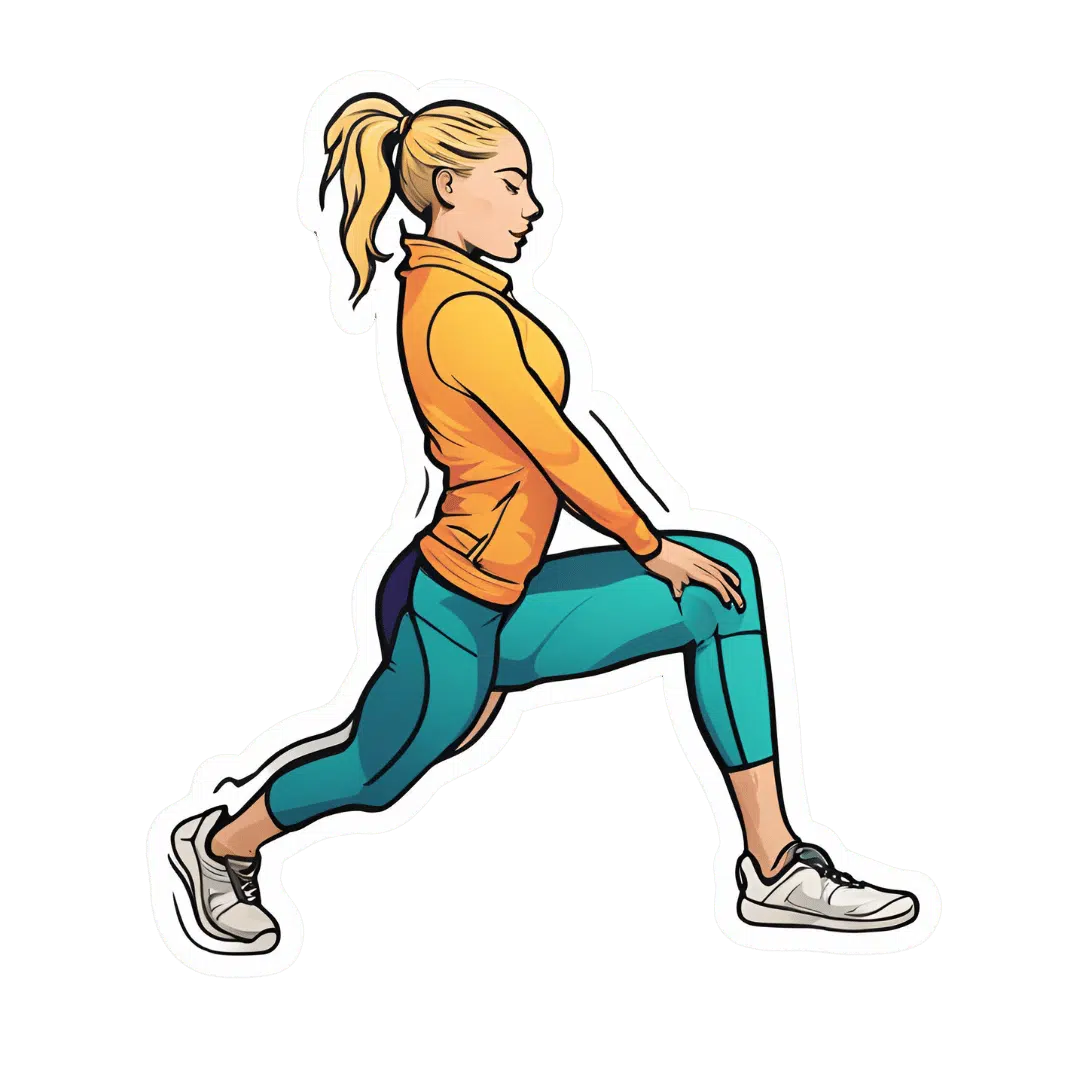
If You’re Not Flexible, These Are The Only 3 Stretches You Need, To Fix That

10almonds is reader-supported. We may, at no cost to you, receive a portion of sales if you purchase a product through a link in this article.

If you can’t put your leg behind your head while standing, try doing the splits against a wall first, and progress from there! ← text version of an item from a “if you can’t do this yet, try this first” picture set this writer saw on Instagram once upon a time

So, what if you’re more at the point of not quite being able to touch your toes yet?

From zero to…

Liv, of LivInLeggings fame, has these three starter-stretches that are actually starter-stretches:

Stretch 1: Reverse Tabletop with Foot Tuck Variation

  1. Sit on the floor, feet slightly wider than your hips, lean back onto your hands (fingertips pointing outward).
  2. Lift your hips towards a reverse tabletop, engage your glutes, and flatten the front of your hips.
  3. Add a foot tuck variation by stepping one foot back and pressing your weight forward.

Benefits:

  • Stretches multiple muscles, including the soles of the feet.
  • Improves foot arches, balance, and stability.
  • Loosens fascia, enhancing flexibility in subsequent stretches.

Stretch 2: Squat to Forward Fold

  1. Start in a low squat (feet wider than your hips, toes mostly forward).
  2. Alternate between a low squat and a forward fold, keeping your hands on the floor or your toes.

Benefits:

  • Stretches hamstrings, glutes, and lower back.
  • Maintains good form and avoids overstraining.

Stretch 3: Side Lunge with Side Body Reach

  1. Begin in a tall kneeling position, step one foot out to the side (toes pointing outward).
  2. Lunge your hips towards your front ankle, keeping your tailbone tucked.
  3. Add a side body reach by resting your forearm on your thigh and reaching the other arm overhead.
  4. For a deeper stretch, cradle the back of your head with your hand, pressing lightly for a tricep stretch.

Benefits:

  • Stretches inner thighs, lats, and triceps.
  • Improves posture, shoulder mobility, and low squat ability.

For more on each of these plus visual demonstrations, enjoy:

Click Here If The Embedded Video Doesn’t Load Automatically!

Want to learn more?

You might also like to read:

Test For Whether You Will Be Able To Achieve The Splits

Take care!

Don’t Forget…

Did you arrive here from our newsletter? Don’t forget to return to the email to continue learning!

Learn to Age Gracefully

Join the 98k+ American women taking control of their health & aging with our 100% free (and fun!) daily emails:

  • Lower Cholesterol Naturally

    10almonds is reader-supported. We may, at no cost to you, receive a portion of sales if you purchase a product through a link in this article.

    Lower Cholesterol, Without Statins

    We’ll start this off by saying that lowering cholesterol might not, in fact, be critical or even especially helpful for everyone, especially in the case of women. We covered this more in our article about statins:

    Statins: His & Hers?

    …which was largely informed by the wealth of data in this book:

    The Truth About Statins – by Dr. Barbara H. Roberts

    …which in turn, may in fact put a lot of people off statins. We’re not here to tell you don’t use them—they may indeed be useful or even critical for some people, as Dr. Roberts herself also makes makes clear. But rather, we always recommend learning as much as possible about what’s going on, to be able to make the most informed choices when it comes to what often might be literally life-and-death decisions.

    On which note, if anyone would like a quick refresher on cholesterol, what it actually is (in its various forms) and what it does, why we need it, the problems it can cause anyway, then here you go:

    Demystifying Cholesterol

    Now, with all that in mind, we’re going to assume that you, dear reader, would like to know:

    • how to lower your LDL cholesterol, and/or
    • how to maintain a safe LDL cholesterol level

    Because, while the jury’s out on the dangers of high LDL levels for women in particular, it’s clear that for pretty much everyone, maintaining them within well-established safe zones won’t hurt.

    Here’s how:

    Relax

    Or rather, manage your stress. This doesn’t just reduce your acute risk of a heart attack, it also improves your blood metrics along the way, and yes, that includes not just blood pressure and blood sugars, but even triglycerides! Here’s the science for that, complete with numbers:

    What are the effects of psychological stress and physical work on blood lipid profiles?

    With that in mind, here’s…

    How To Manage Chronic Stress (Even While Chronically Stressed)

    Not chemically “relaxed”, though

    While relaxing is important, drinking alcohol and smoking are unequivocally bad for pretty much everything, and this includes cholesterol levels:

    Can We Drink To Good Health? ← this also covers popular beliefs about red wine and heart health, and the answer is no, we cannot

    As for smoking, it is good to quit as soon as possible, unless your doctor specifically advises you otherwise (there are occasional situations where something else needs to be dealt with first, but not as many some might like to believe):

    Addiction Myths That Are Hard To Quit

    If you’re wondering about cannabis (CBD and/or THC), then we’d love to tell you about the effect these things have on heart health in general and cholesterol levels in particular, but the science is far too young (mostly because of the historic, and in some places contemporary, illegality cramping the research), and we could only find small, dubious, mutually contradictory studies so far. So the honest answer is: science doesn’t know this one, yet.

    Exercise… But don’t worry, you can still stay relaxed

    When it comes to heart health, the most important thing is keeping moving, so getting in those famous 150 minutes per week of moderate exercise is critical, and getting more is ideal.

    240 minutes per week is a neat 40 minutes per day, by the way and is very attainable (this writer lives a 20-minute walk away from where she does her daily grocery shopping, thus making for a daily 40-minute round trip, not counting the actual shopping).

    See: The Doctor Who Wants Us To Exercise Less, And Move More

    If walking is for some reason not practical for you, here’s a whole list of fun options that don’t feel like exercise but are:

    No-Exercise Exercise!

    Manage your hormones

    This one is mostly for menopausal women, though some people with atypical hormonal situations may find it applicable too.

    Estrogen protects the heart… Until it doesn’t:

    Menopause can bring increased cholesterol levels and other heart risks. Here’s why and what to do about it

    See also: World Menopause Day: Menopause & Cardiovascular Disease Risk

    Here’s a great introduction to sorting it out, if necessary:

    Dr. Jen Gunter: What You Should Have Been Told About Menopause Beforehand

    Eat a heart-healthy diet

    Shocking nobody, but it has to be said, for the sake of being methodical. So, what does that look like?

    What Matters Most For Your Heart? Eat More (Of This) For Lower Blood Pressure

    (it’s fiber in the #1 spot, but there’s a list of most important things there, that’s worth checking out and comparing it to what you habitually eat)

    You can also check out the DASH (Dietary Approaches to Stop Hypertension) edition of the Mediterranean diet, here:

    Four Ways To Upgrade The Mediterranean Diet

    As for saturated fat (and especially trans-fats), the basic answer is to keep them to minimal, but there is room for nuance with saturated fats at least:

    Can Saturated Fats Be Healthy?

    And lastly, do make sure to get enough omega 3 fatty-acids:

    What Omega-3s Really Do For Us

    And enjoy plant sterols and stanols! This would need a whole list of their own, so here you go:

    Take These To Lower Cholesterol! (Statin Alternatives)

    Take care!

    Share This Post

  • How To Know Whom To Trust In The Health World

    10almonds is reader-supported. We may, at no cost to you, receive a portion of sales if you purchase a product through a link in this article.

    It’s Q&A Day at 10almonds!

    Have a question or a request? We love to hear from you!

    In cases where we’ve already covered something, we might link to what we wrote before, but will always be happy to revisit any of our topics again in the future too—there’s always more to say!

    As ever: if the question/request can be answered briefly, we’ll do it here in our Q&A Thursday edition. If not, we’ll make a main feature of it shortly afterwards!

    So, no question/request too big or small 😎

    ❝How to tell good sources from bad, who to believe when everyone’s disagreeing about what’s healthy, what’s unhealthy, what’s dangerous? I know there’s a lot that modern science doesn’t know, but there’s also a lot of BS and quacks❞

    Short answer: there is almost always a clear scientific consensus, and then some countermovement. In such cases, the consensus almost always correct. About once every decade or so there is a huge counterexample, but guess what happens in such cases? It’s huge and scientific consensus adjusts accordingly. If ever there was a case for the phrase “the exception that proves the rule”, this is it, because even those exceptions highlight how scientific consensus swiftly follows good science.

    However. From a lay perspective, it might seem a lot more equal, because it’s just two sides shouting opposite things and they both seem equally loud. There are several reasons for this illusion:

    • Media thrives on conflict, and controversial statements increase viewing figures, clicks, or whatever else is being measured and sold to advertisers. Thus, many media outlets are incentivized to make it look more balanced than it is, and thus give extra weight to things that are, in the science world, fringe beliefs.
    • Conscientious scientists and grifting quacks make their respective statements in very different ways. Consider:
      • “These results suggest that supplement xyz’s antioxidant and antiproliferative effects may offer therapeutic potential as an auxiliary treatment in cases of [specific cancer type]. Further trials are necessary to establish dosage and safe limits.”
      • “Common health food XYZ is KILLING YOU and destroying your kidneys! Here’s what doctors won’t tell you and why you should immediately get it out of your fridge!”

    The latter, of course, is much less likely to catch attention and stick in someone’s mind.

    So, how to figure out what the consensus is?

    There are two ways to go about this; a fiddly-but-near-certain way, and an easy-and-usually-correct way.

    The fiddly-but-near-certain way involves at least some scientific literacy. If you go to a large repository of scientific literature such as PubMed, you can plug in keywords and see what comes up.

    Here’s an example: https://pubmed.ncbi.nlm.nih.gov/?term=vaccines+autism

    At time of writing, it shows 1,235 results, and from browsing through those, we can see page after page of “no, vaccines do not cause autism”.

    PubMed searches are how we at 10almonds have sourced most of our Mythbusting editions.

    The easy-but-fallible-but-usually-correct way is, honestly, Wikipedia. No, it’s not reliable. However, while it has unavoidable biases in many areas (e.g. politics, history, etc), when it comes to science, including medicine and health science, it can usually be relied upon, not for any kind of detail, but if you see the word “pseudoscience” in the intro, that’s a pretty clear indicator.

    Of course, because something is pseudoscientific does not necessarily mean it doesn’t work, it just means that the explanation for how it works is pseudoscientific. Whether or not the thing works anyway, is usually a question that actual science can answer fairly easily.

    For example, if a child hears “for good health, you should eat the rainbow and get plants of all colors”, and then believes that this is because of magical rainbow powers, then that is pseudoscientific, but eating the fruits and vegetables will still convey health, for actual scientific reasons (usually: many plant pigments have beneficial health properties).

    However, it is fair to say that many pseudoscientific complementary/alternative therapies do not outperform placebo.

    Some do have some clear benefits, though! Check out our mythbusting section to learn more about these 😎

    What if this is one of those once-in-a-while cases where the consensus is wrong?

    A flippant answer would be “statistically speaking, it’s not likely it is”.

    A more useful answer is that the crux lies in how the consensus has been wrong, and what new evidence has come to light. If this new evidence comes from one study, or a handful of studies with clear flaws, then it is usually best to wait for further evidence before changing our health practices, as any decent scientist is always telling us. Sometimes, the previous consensus was built on one study, or a handful of studies with clear flaws, and now it’s simply that more science has been done since.

    This is, of course, another instance where the media problems we mentioned up top can come into play.

    See for example: How Science News Outlets Can Lie To You (Yes, Even If They Cite Studies!)

    What about people? How can we tell the difference between a real expert and quack?

    We have an article about this:

    4 Ways To Spot A Dodgy “Expert”

    Besides those points, another thing to bear in mind at least as a factor, is someone’s qualifications. Note, however, that this is not a surefire way of telling, because:

    • Someone can have an MD from Harvard and at some point in their career they decided they’d get more rich and famous if they did their own thing, and are now doing it, good science be damned
    • Someone can have confusing or unclear qualifications, and be a genuine expert in their field, operating at the cutting edge of science, with a robust evidence-based approach*
    • Someone can be somewhere in between; a lot of science educators fall into this category. Indeed, we at 10almonds are not world-leading scientists and doctors, but we critically examine and follow good-quality evidence, and thus give you information that’s backed by good science, and if in some cases we don’t have good science for it yet, we’ll tell you that, too.

    *Robin McKenzie is a great example of this. Indeed, one could correctly say he’s “not even a doctor”. But he’s a career physiotherapist with over 40 years of practice to his name and 33 letters after his name (CNZM OBE FCSP (Hon) FNZSP (Hon) Dip MDT Dip MT). And certainly, if you visit any other physiotherapist, they will probably have some of his books on their own shelves. He is truly an expert in his field.

    On the other hand, if someone is keen to big up some qualification that, when examined, means little more than that they paid for a short course from an unaccredited institution that sells certificates of being something that sounds good but doesn’t actually mean much and isn’t a protected title, then that’s probably a sign that “something wrong is not right” there. For this reason, if you don’t understand someone’s job title or qualification, it’s often a good idea to Google that title or qualification to see what (if anything) it actually is.

    This goes double if they want to sell you that qualification too! Self-regulating industries can sometimes do a good job of that and thus provide respectable qualifications, but it’s worth at least asking yourself whether something looks suspiciously like a pyramid scheme and/or “diploma mill”.

    If in doubt…

    You might want to apply a personal version of the Hippocratic oath.

    By this we mean: where the Hippocratic oath says “first, do no harm”, a personal version can be “first, doubt”.

    This doubt can and should be open-minded skepticism, but until the evidence is clear one way or the other, it is usually best to not make a change to your health practices if there is any way it could conceivably be dangerous.

    For example:

    • Mindfulness meditation? Actually very well-evidenced, but even if you didn’t know that, it would be reasonable to try it anyway if you like, since it’s difficult to imagine how it could possibly cause harm.
    • Ear candling? Doctors are usually telling you not to put anything in your ear unless they themselves prescribed it, so putting flaming items in your ear is probably a bad idea, unless strong evidence to the contrary appears (so far, all science for this says “not only does this not work, its proposed mechanism of action is actively disproven”).
    • Putting castor oil on your eyeballs? Surprisingly, the evidence is there for this one. But without knowing that, the default stance should be “that sounds like it could cause harm”.

    …and so on.

    Take care!

    Share This Post

  • The Breathing Cure – by Patrick McKeown

    10almonds is reader-supported. We may, at no cost to you, receive a portion of sales if you purchase a product through a link in this article.

    We’ve previously reviewed this author’s “The Oxygen Advantage”, which as you might guess from the title, was also about breathing. So, what’s different here?

    While The Oxygen Advantage was mostly about improving good health with optimized breathing, and with an emphasis on sports too, The Breathing Cure is more about the two-way relationship between ill health and disordered breathing (and how to fix it).

    Many kinds of illnesses can affect our breathing, and our breathing can affect many types of illness; McKeown covers a lot of these, including the obvious things like respiratory diseases (including COVID and Long COVID, as well as non-infectious respiratory conditions like asthma), but also things like diabetes and heart disease, as well as peri-disease things like chronic pain, and demi-disease things like periods and menopause.

    In each case (and more), he examines what things make matters better or worse, and how to improve them.

    While the style itself is just as pop-science as The Oxygen Advantage, this time it relies less on anecdote (though there are plenty of anecdotes too), and leans more heavily on a generous chapter-by-chapter scientific bibliography, with plenty of citations to back up claims.

    Bottom line: if you’d like to breathe better, this book can help in very many ways.

    Click here to check out The Breathing Cure, and breathe easy!

    Share This Post

  • I’m autistic and don’t speak. Here’s what I want you to know

    10almonds is reader-supported. We may, at no cost to you, receive a portion of sales if you purchase a product through a link in this article.

    My travels with autism started long before my diagnosis at the age of three years and three months.

    My family noticed autistic features from around 15 months of age. I never looked at people and did not respond when called. I lined up toys instead of playing with them. When I wanted something, I took people’s hand to get it for me. I had frequent meltdowns in busy environments or when routines changed unexpectedly, but I couldn’t let people know why I was upset.

    I was later diagnosed with autism. My family grieved to hear that I might never be able to lead an independent or full life.

    But my mother wasted no time in organising supports. Soon, my days were filled with home-based intensive behavioural programs, speech therapy and other supports. But unfortunately, I never learned to speak.

    Kateryna Kovarzh/Getty

    But I learned to communicate another way

    A turning point came when I was nine. I began learning how to communicate with a type of augmentative and alternative communication known as supported typing. I type on a machine with a keyboard, called a Lightwriter, which speaks what I type. Another person touches my shoulder as I type. This touch helps me be aware of my body, and helps me focus on communicating my message.

    I used supported typing at school and now at university, where I am a PhD candidate. I’m researching neurodiversity in autistic people with minimal, unreliable, or no speech, or those with complex communication and high support needs.

    With supported typing, I am able to live life more fully, to give a TEDx talk, one of the first by a nonspeaker, and to write my autobiography. I used supported typing to write this article.

    How common is it for an autistic person to not speak?

    Autism affects how people communicate, interact and perceive the world. Autistic people show differences in social communication as well as narrow interests, such as Lego or trains.

    In 2022, there were 290,900 autistic Australians. About one-third are nonspeaking.

    This nonspeaking autistic community is socially vulnerable and frequently experience nonacceptance and exclusion. As a member of this community, I am driven to bust some myths.

    Myth 1: we don’t use language

    Autistic nonspeakers cannot use speech to communicate. But many of us are verbal, that is, we understand and use language.

    I am a visual thinker, and I sense my world in pictures and images. Initially, speech was just sounds without meaning. Around six years of age, I realised words were used to represent things and to communicate. By linking people’s speech to their behaviour, I began to understand the symbolic nature of language, which helped me communicate.

    Because of sensory and movement differences, autistic people with complex communication needs require support to communicate, do routine activities and participate socially.

    For instance, physical touch to our hand, arm or shoulder provides feedback on our position, balance and movement to help us point to pictures, spell or type. Support workers also help us focus and remain calm so we can communicate.

    Myth 2: we don’t understand your mind

    Autistic people, especially those with complex communication needs, need extra time to decode, make sense of, and abstract meaning from experiences.

    But with effort and time, many autistic nonspeakers can empathise and understand other people’s minds.

    This can involve using social stories to understand mental and emotional states. These teach us about social situations and how to participate. They can be used to describe what to expect ahead of time. They can give us time to rehearse and we can draw on them during the situation in real life.

    For example, when meeting someone for the first time, we may feel overwhelmed. We use a social story to know what to expect, to sit at a comfortable distance to introduce ourselves, to ask and respond to questions. The story helps us process new information, and suggests how to tell people when we are overloaded and need space to chill.

    Giving us the time, space and permission to process social situations helps us navigate social life.

    Myth 3: we rock, hum and sometimes scream or run off for no reason

    Autistic people, especially those with complex communication needs, can feel unsafe in busy environments. For example, bright lights or noises from people talking and moving around cause sensory overload and distress. This leads to increased stress levels and a reduced ability to respond appropriately.

    Autistic nonspeakers may use various strategies to manage the overload and lessen this sensory distress. This may include lying down, staring at blinking lights or revolving objects, humming to block out overwhelming sensations, as well as rocking, spinning or weaving our bodies to restore a sense of balance. These behaviours allow us to self-regulate.

    However, when these strategies are insufficient, autistic nonspeakers may behave in unconventional ways such as screaming, running off or having meltdowns.

    Such behaviours do not arise because we don’t understand how to act appropriately. They occur when we feel highly unsafe and anxious in demanding situations.

    When a quiet space is available, we will be able to chill and regain feelings of safety and control, without resorting to concerning behaviours.

    The next time

    So the next time you meet an autistic person who doesn’t speak, please meet us halfway. Give us the time and space to process and think about how to reply.

    Timothy HoYuan Chan, PhD Candidate, Sociology, Faculty of Education and Arts, Australian Catholic University

    This article is republished from The Conversation under a Creative Commons license. Read the original article.

    Don’t Forget…

    Did you arrive here from our newsletter? Don’t forget to return to the email to continue learning!

    Learn to Age Gracefully

    Join the 98k+ American women taking control of their health & aging with our 100% free (and fun!) daily emails:

  • Foreign aid cuts could mean 10 million more HIV infections by 2030 – and almost 3 million extra deaths

    10almonds is reader-supported. We may, at no cost to you, receive a portion of sales if you purchase a product through a link in this article.

    In January, the Trump administration ordered a broad pause on all US funding for foreign aid.

    Among other issues, this has significant effects on US funding for HIV. The United States has been the world’s biggest donor to international HIV assistance, providing 73% of funding in 2023.

    A large part of this is the US President’s Emergency Plan for AIDS Relief (PEPFAR), which oversees programs in low- and middle-income countries to prevent, diagnose and treat the virus. These programs have been significantly disrupted.

    What’s more, recent funding cuts for international HIV assistance go beyond the US. Five countries that provide the largest amount of foreign aid for HIV – the US, the United Kingdom, France, Germany and the Netherlands – have announced cuts of between 8% and 70% to international aid in 2025 and 2026.

    Together, this may mean a 24% reduction in international HIV spending, in addition to the US foreign aid pause.

    We wanted to know how these cuts might affect HIV infections and deaths in the years to come. In a new study, we found the worst-case scenario could see more than 10 million extra infections than what we’d otherwise anticipate in the next five years, and almost 3 million additional deaths.

    CI Photos/Shutterstock

    What is HIV?

    HIV (human immunodeficiency virus) is a virus that attacks the body’s immune system. HIV can be transmitted at birth, during unprotected sex or thorough blood-to-blood contact such as shared needles.

    If left untreated, HIV can progress to AIDS (acquired immunodeficiency syndrome), a condition in which the immune system is severely damaged, and which can be fatal.

    HIV was the world’s deadliest infectious disease in the early 1990s. There’s still no cure for HIV, but modern treatments allow the virus to be suppressed with a daily pill. People with HIV who continue treatment can live without symptoms and don’t risk infecting others.

    A sustained global effort towards awareness, prevention, testing and treatment has reduced annual new HIV infections by 39% (from 2.1 million in 2010 to 1.3 million in 2023), and annual deaths by 51% (from 1.3 million to 630,000).

    Most of that drop happened in sub-Saharan Africa, where the epidemic was worst. Today, nearly two-thirds of people with HIV live in sub-Saharan Africa, and nearly all live in low- and middle-income countries.

    Gloved hands perform a finger prick blood test on another person's hand.
    HIV can be diagnosed with a simple blood test. MaryBeth Semosky/Shutterstock

    Our study

    We wanted to estimate the impact of recent funding cuts from the US, UK, France, Germany and the Netherlands on HIV infections and deaths. To do this, we used our mathematical model for 26 low- and middle-income countries. The model includes data on international HIV spending as well as data on HIV cases and deaths.

    These 26 countries represent roughly half of all people living with HIV in low- and middle income countries, and half of international HIV spending. We set up each country model in collaboration with national HIV/AIDS teams, so the data sources reflected the best available local knowledge. We then extrapolated our findings from the 26 countries we modelled to all low- and middle-income countries.

    For each country, we first projected the number of new HIV infections and deaths that would occur if HIV spending stayed the same.

    Second, we modelled scenarios for anticipated cuts based on a 24% reduction in international HIV funding for each country.

    Finally, we modelled scenarios for the possible immediate discontinuation of PEPFAR in addition to other anticipated cuts.

    With the 24% cuts and PEPFAR discontinued, we estimated there could be 4.43 million to 10.75 million additional HIV infections between 2025 and 2030, and 770,000 to 2.93 million extra HIV-related deaths. Most of these would be because of cuts to treatment. For children, there could be up to an additional 882,400 infections and 119,000 deaths.

    In the more optimistic scenario in which PEPFAR continues but 24% is still cut from international HIV funding, we estimated there could be 70,000 to 1.73 million extra new HIV infections and 5,000 to 61,000 additional deaths between 2025 and 2030. This would still be 50% higher than if current spending were to continue.

    The wide range in our estimates reflects low- and middle-income countries committing to far more domestic funding for HIV in the best case, or broader health system dysfunction and a sustained gap in funding for HIV treatment in the worst case.

    Some funding for HIV treatment may be saved by taking that money from HIV prevention efforts, but this would have other consequences.

    The range also reflects limitations in the available data, and uncertainty within our analysis. But most of our assumptions were cautious, so these results likely underestimate the true impacts of funding cuts to HIV programs globally.

    Sending progress backwards

    If funding cuts continue, the world could face higher rates of annual new HIV infections by 2030 (up to 3.4 million) than at the peak of the global epidemic in 1995 (3.3 million).

    Sub-Saharan Africa will experience by far the greatest effects due to the high proportion of HIV treatment that has relied on international funding.

    In other regions, we estimate vulnerable groups such as people who inject drugs, sex workers, men who have sex with men, and trans and gender diverse people may experience increases in new HIV infections that are 1.3 to 6 times greater than the general population.

    The Asia-Pacific received US$591 million in international funding for HIV in 2023, which is the second highest after sub-Saharan Africa. So this region would likely experience a substantial rise in HIV as a result of anticipated funding cuts.

    Notably, more than 10% of new HIV infections among people born in Australia are estimated to have been acquired overseas. More HIV in the region is likely to mean more HIV in Australia.

    But concern is greatest for countries that are most acutely affected by HIV and AIDS, many of which will be most affected by international funding cuts.

    Rowan Martin-Hughes, Senior Research Fellow, Burnet Institute; Debra ten Brink, Senior Research Officer, Burnet Institute, and Nick Scott, Head of Modelling and Biostatistics, Burnet Institute

    This article is republished from The Conversation under a Creative Commons license. Read the original article.

    Don’t Forget…

    Did you arrive here from our newsletter? Don’t forget to return to the email to continue learning!

    Learn to Age Gracefully

    Join the 98k+ American women taking control of their health & aging with our 100% free (and fun!) daily emails:

  • 12 Most Powerful Supplements and Foods to Increase Energy & Slow Down Aging

    10almonds is reader-supported. We may, at no cost to you, receive a portion of sales if you purchase a product through a link in this article.

    If you see the energy that this health coach has and would like some of that, here are the top 10 supplements she recommends—most being available from food, which she discusses too:

    The Other “Daily Dozen”

    We’ve written about most of these before, so those we have, we’ve added links for your convenience!

    1. Coenzyme Q10 (CoQ10): can be supplemented, usually from yeast, or consumed by eating other animals, in particular organ meats.
    2. PQQ (Pyrroloquinoline Quinone): promotes new mitochondria, found in spinach, parsley, carrots, tomatoes, green tea.
    3. Creatine: enhances energy, muscle recovery, brain health.
    4. Spirulina: anti-inflammatory, detoxifying, improves exercise performance.
    5. Anti-Factor Phospholipids: helps repair mitochondrial membranes.
    6. Nitrates: found in leafy greens and beets; boosts circulation and endurance.
    7. Curcumin (from Turmeric): reduces inflammation and supports brain health.
    8. Astaxanthin: found in seafood (from algae upwards), fights inflammation, protects skin.
    9. Medicinal Mushrooms (e.g. chaga, cordyceps, reishi, lion’s mane, etc—not psilocybin and friends!): boosts energy, immune function.
    10. Panax Ginseng: reduces oxidative stress and fatigue.
    11. NAD+ & B3 (Niacin): supports cellular energy and metabolism.
    12. Yerba Mate Tea: increases dopamine and boosts energy naturally.

    For more on all of these plus a pointer with regard to making use of hydroponics to grow your own (she sells a kit), enjoy:

    Click Here If The Embedded Video Doesn’t Load Automatically!

    Want to learn more?

    You might also like to read:

    Dr. Greger’s Daily Dozen

    Take care!

    Don’t Forget…

    Did you arrive here from our newsletter? Don’t forget to return to the email to continue learning!

    Learn to Age Gracefully

    Join the 98k+ American women taking control of their health & aging with our 100% free (and fun!) daily emails: