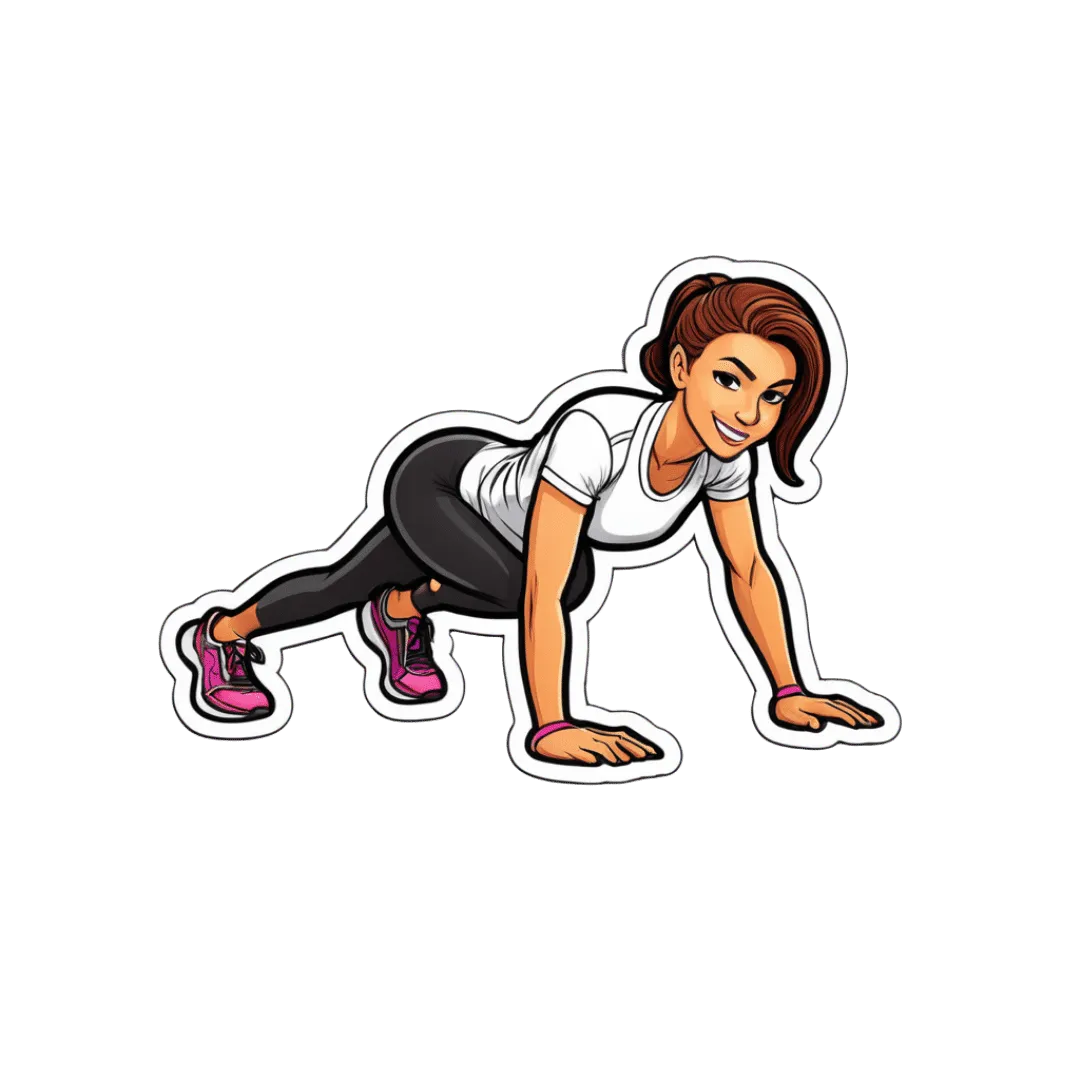
Why Your Legs Get Weaker After 50 (Do This Before It’s Too Late) 

10almonds is reader-supported. We may, at no cost to you, receive a portion of sales if you purchase a product through a link in this article.

It doesn’t have to go this way! Instead, you can…

Maintain a good foundation

With age, the body naturally tends towards losing muscle (sarcopenia), but the bigger issue is that people stop challenging their legs in meaningful ways. This is because your body adapts to the demands you place on it, so if you stop using your legs with intention, your strength and balance decline.

In other words: sarcopenia isn’t a guaranteed fate—you maintain much more muscle and stability if you keep training your legs!

So, what does “training” mean here? Four things: strength, balance, mobility, and coordination.

And as for ways to train each of these:

  • Strength can be trained using chair squats, split squats, step-ups: use slow lowering and strong standing, use support if needed, and choose step height that matches your ability
  • Balance can be trained using single-leg balance, heel-to-toe walk, tightrope walk: hold (or better, just lightly touch) support if needed at first, move slowly, and challenge yourself gradually with vision changes or narrower base
  • Mobility can be trained using deep squat holds, hip flexor stretch, 90/90 hip rotation: use support as needed, focus on keeping your pelvis tucked during stretches, and rotate your hips slowly for control
  • Coordination can be trained using floor getups and bear crawls: use your hands if needed at first, reduce support over time, and crawl in multiple directions to build full-body control

As with most things when it comes to exercise, consistency of practice does matter a lot, of course. Just doing “little and often” can go a long way.

For more on all of this, plus visual demonstrations, enjoy:

Click Here If The Embedded Video Doesn’t Load Automatically!

Want to learn more?

You might also like:

Crawl Daily To Stay Young!

Take care!

Don’t Forget…

Did you arrive here from our newsletter? Don’t forget to return to the email to continue learning!

Learn to Age Gracefully

Join the 98k+ American women taking control of their health & aging with our 100% free (and fun!) daily emails:

  • Functional Exercise For Seniors – by James Atkinson

    10almonds is reader-supported. We may, at no cost to you, receive a portion of sales if you purchase a product through a link in this article.

    A lot of exercises books are tailored to 20-year-old athletes training for their first Tough Mudder. Others, that the only thing standing between us and a perfect Retroflex Countersupine Divine Pretzel position is a professionally-lit Instagrammable photo.

    This one’s not like that.

    But! Nor does it think being over a certain age is a reason to not have genuinely robust health, of the kind that may make some younger people envious. So, it lays out, in progressive format, guidelines for exercises targeted at everything we need to build and maintain as we get older.

    The writing style is clear, and the illustrations too (the cover art is the same style as the illustrations inside).

    Bottom line: if you’re looking for a workout guide that understands you are nearer 80 than 18, and/but also doesn’t assume your age limits your exercise potential to “wrist exercises in chair”, then this book is a fine pick.

    Click here to check out Functional Exercises For Seniors, and build your stability, balance, strength and mobility!

    Share This Post

  • The Joy of Saying No – by Natalie Lue

    10almonds is reader-supported. We may, at no cost to you, receive a portion of sales if you purchase a product through a link in this article.

    Superficially, this seems an odd topic for an entire book. “Just say no”, after all, surely! But it’s not so simple as that, is it?

    Lue looks into what underpins people-pleasing, first. Then, she breaks it down into five distinct styles of people-pleasing that each come from slightly different motivations and ways of perceiving how we interact with those around us.

    Lest this seem overly complicated, those five styles are what she calls: gooding, efforting, avoiding, saving, suffering.

    She then looks out how to have a healthier relationship with our yes/no decisions; first by observing, then by creating healthy boundaries. “Healthy” is key here; this isn’t about being a jerk to everyone! Quite the contrary, it involves being honest about what we can and cannot reasonably take on.

    The last section is about improving and troubleshooting this process, and constitutes a lot of the greatest value of the book, since this is where people tend to err the most.

    Bottom line: this book is informative, clear, and helpful. And far from disappointing everyone with “no”, we can learn to really de-stress our relationships with others—and ourselves.

    Click here to check out The Joy of Saying No, and have more energy for the right “yes” items in your life!

    Share This Post

  • The Trick That Makes Spices More Than 100x More Anti-Inflammatory

    10almonds is reader-supported. We may, at no cost to you, receive a portion of sales if you purchase a product through a link in this article.

    If you’re a regular 10almonds reader, you’ll know that many spices have potent anti-inflammatory benefits (as well as other benefits beyond the scope of today’s article), and you may even remember our top picks:

    Our Top 5 Spices: How Much Is Enough For Benefits? ← which also links to separate main features for each of the 5 spices, respectively

    You might even know the trick of “enjoy some black pepper with your turmeric to increase the bioavailability”.

    But, it can get a lot better than just that!

    Variety is the spice of spice

    Here at 10almonds, we’re often encouraging readers to enjoy a wide variety of plants, as diversity really does make a huge difference.

    We even did a main feature about it: What’s Your Plant Diversity Score?

    There are many reasons, and the main one discussed there is for the benefit of gut health, which in turn affects all other aspects of health.

    So, what about spices in that regard?

    Well, in the matter of spices and gut health specifically, we’ve written about that too: Spicy Foods & Your Gut

    It gets more exciting though! Researchers (Dr. Gen-Ichiro Arimura et al.) tested whether combining plant compounds produces stronger anti-inflammatory effects than using them alone (like the good old “black pepper with turmeric” trick).

    The compounds in question included menthol (mint), 1,8-cineole (eucalyptus), capsaicin (chili peppers), and β-eudesmol (found in hops and ginger), using immune cells exposed to a bacterial trigger to simulate inflammation.

    What they found is that while capsaicin alone was the most potent single compound, combining it with menthol or cineole boosted anti-inflammatory effects by up to 699x and 154x more, respectively

    ❝We demonstrated that this synergistic effect is not a coincidence, but is based on a novel mode of action resulting from the simultaneous activation of different intracellular signaling pathways❞

    ~ Dr. Gen-Ichiro Arimura

    How the signaling synergy works: menthol and cineole act through TRP channel–driven calcium signaling, while capsaicin works through a separate pathway, creating a multi-pathway “stacking” effect inside cells.

    In other words: this supports the idea that plant-rich diets work at their best through compound interactions rather than isolated “superfoods” (however good they may genuinely be even when used alone).

    You can read the paper in full, here: Functional Phytochemicals Cooperatively Suppress Inflammation

    This is, of course, very consistent with our own article: How to Prevent (or Reduce) Inflammation

    …and the more diet-specific: Anti-Inflammatory Diet 101 (What to Eat to Fight Inflammation)

    Want to learn more?

    You might like this excellent book we reviewed a while back:

    Healing Spices – by Dr. Bharat Aggarwal & Debora Yost

    Enjoy!

    Share This Post

  • Eat Move Sleep – by Tom Rath

    10almonds is reader-supported. We may, at no cost to you, receive a portion of sales if you purchase a product through a link in this article.

    The subtitle of this book, “how small choices lead to big changes“, is very much the idea that a lot of what we do here at 10almonds is about.

    And the title itself, “Eat Move Sleep”? Well, that’s 3/5 of The Usual Five Things™ that we promote here (the other two being: reduce or eliminate alcohol, and don’t smoke). So, naturally this book got our attention.

    One of the key ideas that Rath presents is that every action we take leads to a net gain or loss in health. The question then is: what are the biggest point-swingers? In other words, what are the places in our life where the smallest changes can make the biggest difference?

    Rath looks at what parts of diet make the biggest difference to our health, and the findings there alone probably make reading the book worthwhile.

    When it comes to movement, he actually flips this! For Rath, it’s less about how much exercise you get, and more about minimizing how long we spend not moving… And especially, minimizing how long we spend sitting. So, lots of little tweaks for that.

    In the category of sleep: a key idea is that quality is as important as quantity, and there’s an aspect of bringing together as a synergistic routine. To finish off a productive day with good rest, and power up ready for the next morning.

    In short: tying these items together—and focusing on the smallest choices that lead to the biggest changes—makes for quite a manifesto that we could describe as “Atomic Habits, for health specifically”.

    Click here to check out Eat Move Sleep on Amazon!

    Don’t Forget…

    Did you arrive here from our newsletter? Don’t forget to return to the email to continue learning!

    Learn to Age Gracefully

    Join the 98k+ American women taking control of their health & aging with our 100% free (and fun!) daily emails:

  • What Menopausal HRT Does To Your Brain

    10almonds is reader-supported. We may, at no cost to you, receive a portion of sales if you purchase a product through a link in this article.

    ❝There’s been a controversy over hormone therapy use. There was a study back in 2002 called the Women’s Health Initiative, and its results scared everybody out of using estrogen therapy. For a long time, people stopped prescribing and using those therapies, thinking that it was going to lead to negative outcomes. Since then, there’s been a lot of revisiting of those findings and discovering that there were some problems with them❞

    ~ Dr. Amber Watts

    We at 10almonds previously covered the (deeply flawed) WHI study, discussing its (many) faults, here: Cancer & HRT: What’s Safe?

    And followed it up with such news as: New Evidence: HRT Doesn’t Increase Cancer Risk Even If You Have The Genes For It

    But that’s all about cancer. What about the brain?

    Sooner or later…

    Should we put off menopausal HRT for as long as possible?

    Or should we hurry to get it as soon as it becomes clinically relevant?

    The first thing to understand when it comes to HRT and brain health, is the critical role that sex hormones play in Alzheimer’s pathogenesis and progression.

    We wrote about that, here: Alzheimer’s Sex Differences May Not Be What They Appear

    But HRT’s effects on the brain are more far-reaching than just that, as explained in our article: Your Brain On (And Off) Estrogen

    To answer the “sooner or later” question, researchers (Dr. Robyn Honea et al., wherein the “et al.” includes as second-listed author the Dr. Amber Watts we quoted up top), analyzed 459 women aged 65–80 and found that greater lifetime exposure to female hormones, particularly estrogen, was associated with brain structures generally linked to healthier brain aging.

    This was true even from quite small doses: women who had used hormonal birth control had larger gray matter volumes in parts of the temporal, occipital, and frontal lobes compared with those who had never used it.

    In particular, women who used both hormonal birth control earlier in life and menopausal hormone therapy later in life showed greater brain volume in parietal and temporal regions, along with thicker cortex in areas including the posterior cingulate, a region often affected early in Alzheimer’s disease.

    Not only was it found that women who experienced menopause at a later age, resulting in longer exposure to female hormones, had greater cortical thickness in several brain regions vulnerable to Alzheimer’s disease, but also, people who underwent early surgical removal of the ovaries (thus creating a surgically-induced early menopause) definitely benefited from early exposure to hormone therapy, too.

    As for why this happens?

    Estrogen is neuroprotective. It’s beneficial for white matter integrity. It helps protect neurons and strengthens neural connections.

    It is also important for vascular function. One of the things we get wrong about estrogen is people think of estrogen as this thing that has to do with reproduction. But really, estrogen is very important for a lot of different body systems. It’s important for the brain, it’s important for the heart, it’s important for bone density, and it’s important for the immune system.❞

    ~ Dr. Amber Watts again

    A refreshing read, in times when even the use of hormonal birth control, let alone menopausal HRT (which involves much higher doses than those needed for contraceptive purposes), is often demonized, including (invariably unsourced) claims of being harmful to the brain.

    You can read the paper in full, here: Lifespan exposure to hormone therapies and structural brain morphometry in older women

    Want to learn more?

    You might like this book we reviewed:

    The Menopause Brain – by Dr. Lisa Mosconi

    Take care!

    Don’t Forget…

    Did you arrive here from our newsletter? Don’t forget to return to the email to continue learning!

    Learn to Age Gracefully

    Join the 98k+ American women taking control of their health & aging with our 100% free (and fun!) daily emails:

  • Apples vs Bananas – Which is Healthier?

    10almonds is reader-supported. We may, at no cost to you, receive a portion of sales if you purchase a product through a link in this article.

    Our Verdict

    When comparing apples to bananas, we picked the bananas.

    Why?

    Both apples and bananas contain lots of vitamins, but bananas contain far more of Vitamins A, B, and C.

    Apples beat bananas only for vitamins E and K.

    This may seem like “well that’s 2 vs 3; that’s pretty close” until one remembers that vitamin B is actually eight vitamins in a trenchcoat. Bananas have more of vitamins B1, B2, B3, B5, B6, and B9.

    If you’re wondering about the other numbers: neither fruit contains vitamins B7 (biotin) or B12 (cobalamins of various kinds). Vitamins B4, B8, B10, and B11 do not exist as such (due to changes in how vitamins are classified).

    Both apples and bananas contain lots of minerals, but bananas contain far more of iron, magnesium, phosphorus, potassium, zinc, copper, manganese, and selenium.

    Apples beat bananas only for calcium (and then, only very marginally)

    Both apples and bananas have plenty of fiber.

    Apples have marginally less sugar, but given the fiber content, this is pretty much moot when it comes to health considerations, and apples are higher in fructose in any case.

    In short, both are wonderful fruits (and we encourage you to enjoy both!), and/but bananas beat apples healthwise in almost all measures.

    PS: top tip if you find it challenging to get bananas at the right level of ripeness for eating… Try sun-dried! Not those hard chip kinds (those are mechanically and/or chemically dried, and usually have added sugar and preservatives), but sun-dried.

    Here’s an example product on Amazon

    Warning: since there aren’t many sun-dried bananas available on Amazon, double-check you haven’t been redirected to mechanically/chemically dried ones, as Amazon will try that sometimes!

    Don’t Forget…

    Did you arrive here from our newsletter? Don’t forget to return to the email to continue learning!

    Learn to Age Gracefully

    Join the 98k+ American women taking control of their health & aging with our 100% free (and fun!) daily emails: