

Here’s why you might want to clean your headphones
10almonds is reader-supported. We may, at no cost to you, receive a portion of sales if you purchase a product through a link in this article.
Whether it’s enjoying a podcast, listening to music or chatting on the phone, many of us spend hours a day using our headphones. One 2017 study of 4,185 Australians showed they used headphones on average 47–88 hours a month.
Health advice about headphones tends to focus on how loud sounds might affect our hearing. For example, to avoid hearing loss, the World Health Organization advises people to keep the volume at below 60% their device’s maximum and to use devices that monitor sound exposure and limit volume.
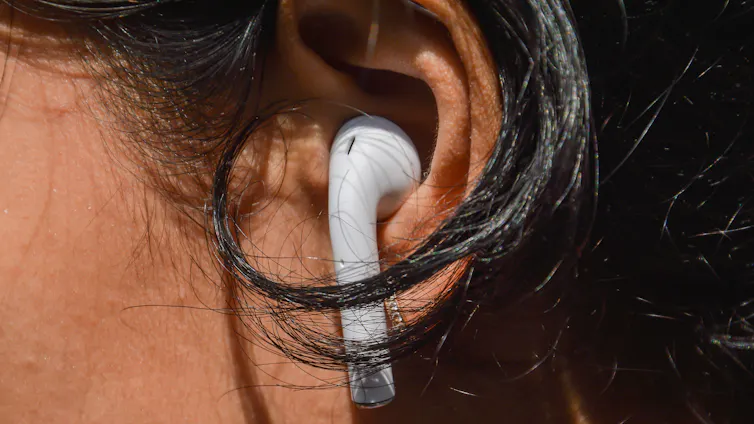
But apart from sound, what else is going in our ears? Using headphones – particularly in-ear versions such as earbuds – blocks the ear canal and puts the skin in contact with any dirt or bacteria they may be carrying.
Here’s what you need to know about keeping your ears clean and safe.
First, let’s take a look at your ear
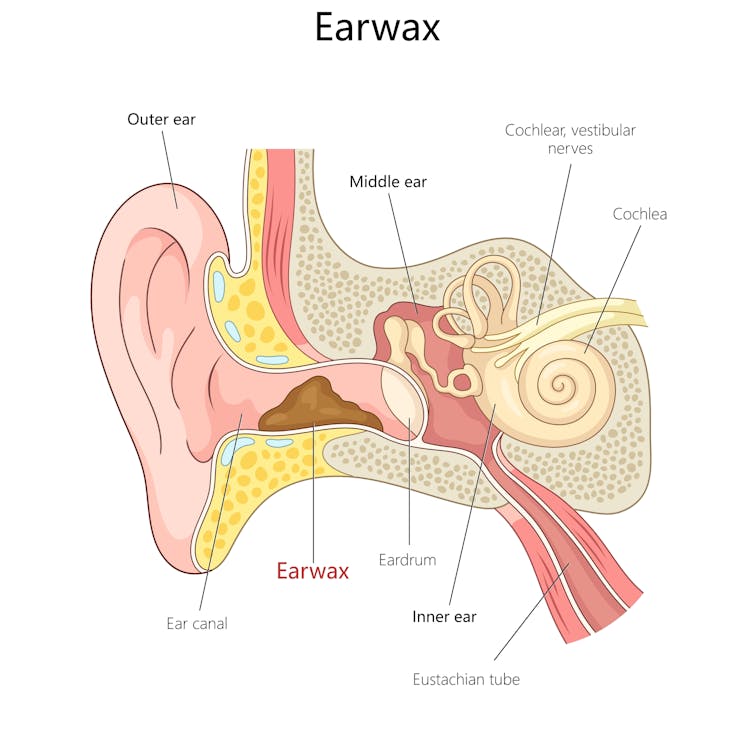
Over-ear headphones cover the entire external ear – the elastic cartilage covered by skin that’s shaped to trap soundwaves. In-ear headphones (as well as hearing aids) are shaped to fit and cover the entrance to the external ear canal, which is called the concha.
Sound vibrations travel through the ear canal – which is S-shaped and a few centimetres long – to reach your ear drum.
Deeper parts of the ear canal produce earwax and oils. These help keep your skin healthy, hydrated and less vulnerable to infection.
Tiny hairs in the ear canal also help regulate temperature and keep foreign debris out. These hairs and earwax help trap and move small particles, shed skin and bacteria out of the ear canal.
Earwax is the ear’s self-cleaning method and we only tend to notice it when there’s too much.
Excessive buildup can block your hearing or even clog the mesh of your earpods. But don’t try to dig earwax out of your ears yourself. If you’re concerned, speak to a pharmacist or GP for advice.
How headphones can affect the ear’s bacteria
Healthy ear canals host a range of non-harmful microbes – mainly bacteria, but fungi and viruses too. They compete for space and nutrients, and this diversity makes it trickier for any potential pathogens (disease-causing microorganisms) to take hold.
But wearing headphones (and other in-ear devices such as hearing aids or ear plugs) may upset the balance between “good” and “bad” bacteria.
One 2024 study compared bacteria in the external ear canals of 50 people who used hearing aids and 80 who didn’t. The researchers found hearing-aid users – whose external ear canals are blocked for extended periods – had fewer types of bacteria than those who didn’t.
Another 2025 study looked at how using headphones (including over-ear, in-ear and on-ear) affected fungi and bacteria in the ear canal. It found using headphones was linked to a greater risk of ear infections, especially if people shared them.
This may because wearing headphones – especially in-ear devices – makes the external ear canal hotter and more humid. Trapped moisture is especially likely if you exercise and sweat while wearing headphones.
Higher humidity increases your risk of ear infection and discharge, including pus.
Wearing in-ear devices such as hearing aids or headphones for extended periods can also interfere with the ear’s natural “self-cleaning” function, aided by earwax.
So, what should I do?
Most of us need – or like – to wear headphones in our day-to-day routines. But for good ear health, it’s important to give your ears a break.
Allow your ear canals to “breathe” at different points throughout the day so they’re not constantly blocked and growing humid and hot.
You could also try bone conduction headphones. These don’t block the ear canal, because they transmit sound through your skull directly into the inner ear, without needing to block the ear canal. These can be expensive though. And while they allow our ears to breathe, high-intensity vibrations (high volume) can still damage hearing, so as with all headphones caution is required.
Other tips
Clean your devices regularly
Recommendations range from once a week to daily to after a physical workout.
For example, you can wipe them with a cloth or use a soft-bristled children’s toothbrush dampened with mildly soapy water. Blot dry with a paper towel and allow a few hours of drying before recharging or reuse.
But it’s best to follow your manufacturer’s guidelines. And don’t forget to clean the case and the body of your earbuds too.
Don’t use headphones when sick
If you have an ear infection, avoid using earphones as they may increase the temperature and humidity in your ear and slow recovery.
Watch for symptoms
If your ears become itchy, red or have discharge, stop using in-ear devices and seek medical advice.
Rina Wong (Fu), Research Fellow, Health Sciences, Curtin University
This article is republished from The Conversation under a Creative Commons license. Read the original article.
Don’t Forget…
Did you arrive here from our newsletter? Don’t forget to return to the email to continue learning!

Recommended
Learn to Age Gracefully
Join the 98k+ American women taking control of their health & aging with our 100% free (and fun!) daily emails:
-
Correct An Upper Spine Hump (Simple Stretch & Exercise)
10almonds is reader-supported. We may, at no cost to you, receive a portion of sales if you purchase a product through a link in this article.
Generally called a neck hump in this video, it can be in the cervical (neck) vertebrae or it can be in the thoracic (upper back) vertebrae. It’s also known as a dowager’s hump, buffalo hump, or kyphosis.
However, it can be fixed:
What to do
First understand the cause: it generally comes from poor posture, especially from prolonged desk work or phone use.
With that in mind…
- Posture adjustments: lean back in a chair to counter gravity’s pull on your head. Avoid slumping; keep your head aligned with your spine.
- Stretching: lie flat on the floor without pillows to restore spinal alignment. Gradually reduce pillow height during sleep to decrease neck hyperflexion.
- Neck retraction: pull chin straight back while keeping your eyes looking forwards. Hold for 15 seconds, gradually increasing to 60 seconds. Perform 10 repetitions, resting between sets.
- Strengthening: lean forward and pull the chin back against gravity. Hold, or repeat for 10 repetitions. Over time, increase duration to a minute.
For more on all of this plus visual demonstrations, enjoy:
Click Here If The Embedded Video Doesn’t Load Automatically!
Want to learn more?
You might also like to read:
The Pains That Good Posture Now Can Help You Avoid Later
Take care!
Share This Post
-
The Stress Prescription (Against Aging!)
10almonds is reader-supported. We may, at no cost to you, receive a portion of sales if you purchase a product through a link in this article.
The Stress Prescription (Against Aging!)
This is Dr. Elissa Epel, whose work has for the past 20 years specialized in the effect of stress on aging. She’s led groundbreaking research on cortisol, telomeres, and telomerase, all in the context of aging, especially in women, as well as the relationship between stress and weight gain. She was elected member of the National Academy of Medicine for her work on stress pathways, and has been recognized as a key “Influencer in Aging” by the Alliance for Aging Research.
Indeed, she’s also been named in the top 0.1% of researchers globally, in terms of publication impact.
What’s that about stress and aging?
In her words,
❝Women with the highest levels of perceived stress have telomeres shorter on average by the equivalent of at least one decade of additional aging compared to low stress women❞
Source: Accelerated telomere shortening in response to life stress
We say “in her words”, as she is the top-listed author on this paper—an honour reserved for the lead researcher of any given study/paper.
However, we’d be remiss not to note that the second-listed author is Nobel Prize Laureate Dr. Elizabeth Blackburn. What a team! Maybe we’ll do a spotlight feature on Dr. Blackburn’s work one of these days, but for now, back to Dr. Epel…
What does she want us to do about it?
She has the following advice for us:
Let go of what we can’t control
This one is simple enough, and can be as simple as learning how to set anxiety aside, and taking up the practice of radical acceptance of what we cannot control.
Be challenged, not afraid
This is about eustress, and being the lion, not the gazelle. Dr. Epel uses the example of how when lions are hunting gazelles, both are stressed, but both are feeling the physiological effects of that stress in terms of the augmentation to their immediate abilities, but only one of them is suffering by it.
We’ll let her explain how to leverage this:
TED ideas | Here’s how you can handle stress like a lion, not a gazelle | Dr. Elissa Epel
Build resilience through controlled discomfort
Don’t worry, you don’t have to get chased by lions. A cold shower will do it! This is about making use of hormesis, the body’s ability to build resilience to stressors by small doses of controlled cortisol release—as for example when one undergoes thermal shock, which sounds drastic, but for most people, a cold shower (or even an ice bath) is safe enough.
You can read more about this here:
A Cold Shower A Day Keeps The Doctor Away
Connect with nature
You don’t have to hug a tree, but you do have get to a natural (or at least, natural-seeming) environment once in a while. Simply put, we did not evolve to be in the urban or even suburban settings where most of us spend most of our time. Getting to be around greenery with at least some kind of regularity is hugely beneficial. It doesn’t have to be a national park; a nice garden or local park can suffice, and potted plants at home are better than nothing. Even spending time in virtual reality “nature” is an option:
(you can see an example there, of the kind of scenery this study used)
Breathe deeply, and rest deeply
Mindful breathing, and good quality sleep, are very strongly evidence-based approaches to reduce stress, for example:
Practice gratitude to build optimism
Optimism has a huge positive impact on health outcomes, even when other factors (including socioeconomic factors, pre-existing conditions, and general reasons for one person to be more optimistic than another) are controlled for.
Read: Optimism and Cause-Specific Mortality: A Prospective Cohort Study
There are various ways to increase optimism, and practising gratitude is one of them—but that doesn’t necessarily mean abandoning realism, either:
How To Practise (Non-Toxic) Positivity
There are other ways too, though, and Dr. Epel discusses some with her friend and colleague, Dr. Elizabeth Blackburn, here:
Want to learn more from Dr. Epel?
We reviewed one of her books, The Telomere Effect, previously. It’s about what we can do to lengthen our telomeres (a key factor in health aging; effectively, being biologically younger). You also might enjoy her newer book, The Stress Prescription, as well as her blog.
Enjoy!
Share This Post
-
‘Free birthing’ and planned home births might sound similar but the risks are very different
10almonds is reader-supported. We may, at no cost to you, receive a portion of sales if you purchase a product through a link in this article.
The death of premature twins in Byron Bay in an apparent “wild birth”, or free birth, last week has prompted fresh concerns about giving birth without a midwife or medical assistance.
This follows another case from Victoria this year, where a baby was born in a critical condition following a reported free birth.
It’s unclear how common free birthing is, as data is not collected, but there is some evidence free births increased during the COVID pandemic.
Planned home births also became more popular during the pandemic, as women preferred to stay away from hospitals and wanted their support people with them.
But while free births and home births might sound similar, they are a very different practice, with free births much riskier. So what’s the difference, and why might people opt for a free birth?
What are home births?
Planned home births involve care from midwives, who are registered experts in childbirth, in a woman’s home.
These registered midwives work privately, or are part of around 20 publicly funded home birth programs nationally that are attached to hospitals.
They provide care during the pregnancy, labour and birth, and in the first six weeks following the birth.
The research shows that for women with low risk pregnancies, planned home births attended by competent midwives (with links to a responsive mainstream maternity system) are safe.
Home births result in less intervention than hospital births and women perceive their experience more positively.
What are free births?
A free birth is when a woman chooses to have a baby, usually at home, without a registered health professional such as a midwife or doctor in attendance.
Different terms such as unassisted birth or wild pregnancy or birth are also used to refer to free birth.
The parents may hire an unregulated birth worker or doula to be a support at the birth but they do not have the training or medical equipment needed to manage emergencies.
Women may have limited or no health care antenatally, meaning risk factors such as twins and breech presentations (the baby coming bottom first) are not detected beforehand and given the right kind of specialist care.
Why do some people choose to free birth?
We have been studying the reasons women and their partners choose to free birth for more than a decade. We found a previous traumatic birth and/or feeling coerced into choices that are not what the woman wants were the main drivers for avoiding mainstream maternity care.
Australia’s childbirth intervention rates – for induction or augmentation of labour, episiotomy (cutting the tissue between the vaginal opening and the anus) and caesarean section – are comparatively high.
One in ten women report disrespectful or abusive care in childbirth and some decide to make different choices for future births.
Lack of options for a natural birth and birth choices such as home birth or birth centre birth also played a major role in women’s decision to free birth.
Publicly funded home birth programs have very strict criteria around who can be accepted into the program, excluding many women.
In other countries such as the United Kingdom, Netherlands and New Zealand, publicly funded home births are easier to access.
It can be difficult to access home birth services in Australia.
Ink Drop/ShutterstockOnly around 200 midwives provide private midwifery services for home births nationally. Private midwives are yet to obtain insurance for home births, which means they are risking their livelihoods if something goes wrong and they are sued.
The cost of a home birth with a private midwife is not covered by Medicare and only some health funds rebate some of the cost. This means women can be out of pocket A$6-8,000.
Access to home birth is an even greater issue in rural and remote Australia.
How to make mainstream care more inclusive
Many women feel constrained by their birth choices in Australia. After years of research and listening to thousands of women, it’s clear more can be done to reduce the desire to free birth.
As my co-authors and I outline in our book, Birthing Outside the System: The Canary in the Coal Mine, this can be achieved by:
- making respectful care a reality so women aren’t traumatised and alienated by maternity care and want to engage with it
- supporting midwifery care. Women are seeking more physiological and social ways of birthing, minimising birth interventions, and midwives are the experts in this space
- supporting women’s access to their chosen place of birth and model of care and not limiting choice with high out-of-pocket expenses
- providing more flexible, acceptable options for women experiencing risk factors during pregnancy and/or birth, such as having a previous caesarean birth, having twins or having a baby in breech position. Women experiencing these complications experience pressure to have a caesarean section
- getting the framework right with policies, guidelines, education, research, regulation and professional leadership.
Ensuring women’s rights and choices are informed and respected means they’re less likely to feel they’re left with no other option.
Hannah Dahlen, Professor of Midwifery, Associate Dean Research and HDR, Midwifery Discipline Leader, Western Sydney University
This article is republished from The Conversation under a Creative Commons license. Read the original article.
Share This Post
Related Posts
-
Running: Getting Started – by Jeff Galloway
10almonds is reader-supported. We may, at no cost to you, receive a portion of sales if you purchase a product through a link in this article.
Superficially, running is surely one of the easiest sports to get into, for most people. You put one foot in front of the other, repeat, and pick up the pace.
However, many people do not succeed. They head out of the door (perhaps on January the first), push themselves a little, experience runner’s high, think “this is great”, and the next day wake up with some minor aches and no motivation. This book is here to help you bypass that stage.
Jeff Galloway has quite a series of books, but the others seem derivative of this one. So, what makes this one special?
It’s quite comprehensive; it covers (as the title promises) getting started, setting yourself up for success, finding what level your ability is at safely rather than guessing and overdoing it, and building up from there.
He also talks about what kit you’ll want; this isn’t just about shoes, but even “what to wear when the weather’s not good” and so forth; he additionally shares advice about diet, exercise on non-running days, body maintenance (stretching and strengthening), troubleshooting aches and pains, and running well into one’s later years.
Bottom line: if you’d like to take up running but it seems intimidating (perhaps for reasons you can’t quite pin down), this book will take care of all those things, and indeed get you “up and running”.
Click here to check out Running: Getting Started, and get started!
Don’t Forget…
Did you arrive here from our newsletter? Don’t forget to return to the email to continue learning!
Learn to Age Gracefully
Join the 98k+ American women taking control of their health & aging with our 100% free (and fun!) daily emails:
-
Cashew & Chickpea Balti
10almonds is reader-supported. We may, at no cost to you, receive a portion of sales if you purchase a product through a link in this article.
When it comes to curries, the humble balti is perhaps the best when you don’t have all day to let something simmer. Filled with healthful spices, this one also comes complete with lots of fiber as well as healthy proteins and fats, with most of its calories coming from the nuts themselves, and the haricot paste base makes for a deliciously creamy curry without having to add anything unhealthy.
You will need
- 1 cup cashews, soaked in warm water for at least 5 minutes, and drained (if allergic, omit)
- 1 can chickpeas (keep the water)
- 1 can haricot beans (keep the water)
- 1 can crushed tomatoes
- 2 medium (or 3 small) red onions, sliced
- red or green chilis, quantity per your preference re heat, chopped
- ½ bulb garlic, crushed
- ½ oz fresh ginger, peeled and finely chopped
- 1 tbsp tomato paste
- 1 tbsp garam masala
- 1 tbsp ground coriander
- 1 tbsp black pepper, coarse ground
- 2 tsp turmeric
- 1 tsp mustard seeds (if allergic, omit)
- 1 tsp sweet cinnamon
- 1 tsp coriander seeds
- ½ tsp MSG or 1 tsp low-sodium salt
- Avocado oil, for frying (extra virgin olive-oil, or cold-pressed coconut oil, are fine alternatives)
- Garnish: handful fresh cilantro, chopped (or parsley, if you have the “cilantro tastes like soap” gene)
Method
(we suggest you read everything at least once before doing anything)
1) Heat a little oil in a large sauté pan (we’re going to need space to work; a large wok is traditional but a sauté pan is convenient), and add the garlic, ginger, mustard seeds, and coriander seeds, stirring for about 2 minutes, then add the onions and chilis, stirring for another 3 minutes. The onions and chilis won’t be fully cooked yet, but that’s fine, we just needed to get them started.
2) Add the crushed tomatoes, stirring them in, and when they get to temperature, turn the heat down to a simmer.
3) Add the chickpeas to the pan, but separately put the chickpea water into a high-speed blender.
4) Add the haricot beans, including the water they came in, to the high-speed blender, as well as the tomato paste and the remaining spices (including the MSG or salt), and blend on high until smooth. Add the curry paste (that’s what you’ve just made in the blender) to the pan, and stir in well.
5) Add the cashews, stirring in well. Taste, and adjust any spices if necessary for your liking. If the onions still aren’t fully cooked, let them simmer until they are, but it shouldn’t take long.
10almonds tip: if perchance you made it too spicy, you can add a little lime juice and the acidity will counteract the heat. Adding lemon juice, lime juice, or some kind of vinegar (depending on what works with the flavor profile of your recipe) is a good last resort to have up your sleeve for fixing a dish that got too spicy.
6) Add the garnish, and serve—we recommend serving it with our Tasty Versatile Rice, but any carb is fine.
Enjoy!
Want to learn more?
For those interested in some of the science of what we have going on today:
- Why You Should Diversify Your Nuts!
- Three Daily Servings of Beans?
- Cashew Nuts vs Coconut – Which is Healthier?
- What Matters Most For Your Heart?
- Our Top 5 Spices: How Much Is Enough For Benefits? ← we hit 5/5 again today!
Take care!
Don’t Forget…
Did you arrive here from our newsletter? Don’t forget to return to the email to continue learning!
Learn to Age Gracefully
Join the 98k+ American women taking control of their health & aging with our 100% free (and fun!) daily emails:
-
“Bulletproof” Your Knees With This Routine
10almonds is reader-supported. We may, at no cost to you, receive a portion of sales if you purchase a product through a link in this article.
Knees are the most injury-prone joint in sports (41% of injuries), due to their structural instability compared to the hip (surrounded by strong muscles) and ankle (supported by bones), while also bearing full body weight. For the same reasons, they can become quite a liability as we get older. But, we can improve our odds a lot:
For reliable knees…
While this routine won’t make your knees literally invulnerable (alas), it will increase the strength, resilience, and mobility around the knee joint to facilitate pain-free movement and avoid injuries:
- Poliquin step-up: targets the vastus medialis oblique (VMO), a key quad muscle for knee stability; done on a 6-inch elevated surface with heel raised, focusing on alignment and pelvic control to correct inner-outer knee strength imbalance.
- Quad stretch: stretches tight quads that can misalign the kneecap and cause pain; done using a bench while tucking the pelvis to intensify the stretch—hold for 30 seconds, ideally repeating 3 times per leg.
- Hamstring curls with resistance band: strengthens hamstrings, which stabilize the knee during flexion; resistance band adds tension where the knee is most vulnerable—aim for 8–12 reps, 3 sets (machine alternative is fine too).
- Hip mobility drill: enhances hip mobility to prevent stress from transferring to the knee; involves seated leg rotations and contract-relax stretching of outer glutes—more mobile hips reduce injury risk overall.
Limitation: if you have a connective tissue disorder such as some kind of Ehlers-Danlos Syndrome (there are many kinds; it’s an umbrella term), there’s a good chance that no matter how much you strengthen it, your associated nerves aren’t going to believe it, so every now and again your legs will still fold like laundry no matter how strong they are. These exercises still have merit though, as they will help avoid exactly the kind of injury that the “oh no, collapse immediately!” response in EDS is also trying to help you avoid.
For more on these exercises, plus visual demonstrations, enjoy:
Click Here If The Embedded Video Doesn’t Load Automatically!
Want to learn more?
You might also like:
The Best Exercise to Stop Your Legs From Giving Out
Take care!
Don’t Forget…
Did you arrive here from our newsletter? Don’t forget to return to the email to continue learning!
Learn to Age Gracefully
Join the 98k+ American women taking control of their health & aging with our 100% free (and fun!) daily emails:


