
‘Free birthing’ and planned home births might sound similar but the risks are very different
10almonds is reader-supported. We may, at no cost to you, receive a portion of sales if you purchase a product through a link in this article.
The death of premature twins in Byron Bay in an apparent “wild birth”, or free birth, last week has prompted fresh concerns about giving birth without a midwife or medical assistance.
This follows another case from Victoria this year, where a baby was born in a critical condition following a reported free birth.
It’s unclear how common free birthing is, as data is not collected, but there is some evidence free births increased during the COVID pandemic.
Planned home births also became more popular during the pandemic, as women preferred to stay away from hospitals and wanted their support people with them.
But while free births and home births might sound similar, they are a very different practice, with free births much riskier. So what’s the difference, and why might people opt for a free birth?
What are home births?
Planned home births involve care from midwives, who are registered experts in childbirth, in a woman’s home.
These registered midwives work privately, or are part of around 20 publicly funded home birth programs nationally that are attached to hospitals.
They provide care during the pregnancy, labour and birth, and in the first six weeks following the birth.
The research shows that for women with low risk pregnancies, planned home births attended by competent midwives (with links to a responsive mainstream maternity system) are safe.
Home births result in less intervention than hospital births and women perceive their experience more positively.
What are free births?
A free birth is when a woman chooses to have a baby, usually at home, without a registered health professional such as a midwife or doctor in attendance.
Different terms such as unassisted birth or wild pregnancy or birth are also used to refer to free birth.
The parents may hire an unregulated birth worker or doula to be a support at the birth but they do not have the training or medical equipment needed to manage emergencies.
Women may have limited or no health care antenatally, meaning risk factors such as twins and breech presentations (the baby coming bottom first) are not detected beforehand and given the right kind of specialist care.
Why do some people choose to free birth?
We have been studying the reasons women and their partners choose to free birth for more than a decade. We found a previous traumatic birth and/or feeling coerced into choices that are not what the woman wants were the main drivers for avoiding mainstream maternity care.
Australia’s childbirth intervention rates – for induction or augmentation of labour, episiotomy (cutting the tissue between the vaginal opening and the anus) and caesarean section – are comparatively high.
One in ten women report disrespectful or abusive care in childbirth and some decide to make different choices for future births.
Lack of options for a natural birth and birth choices such as home birth or birth centre birth also played a major role in women’s decision to free birth.
Publicly funded home birth programs have very strict criteria around who can be accepted into the program, excluding many women.
In other countries such as the United Kingdom, Netherlands and New Zealand, publicly funded home births are easier to access.
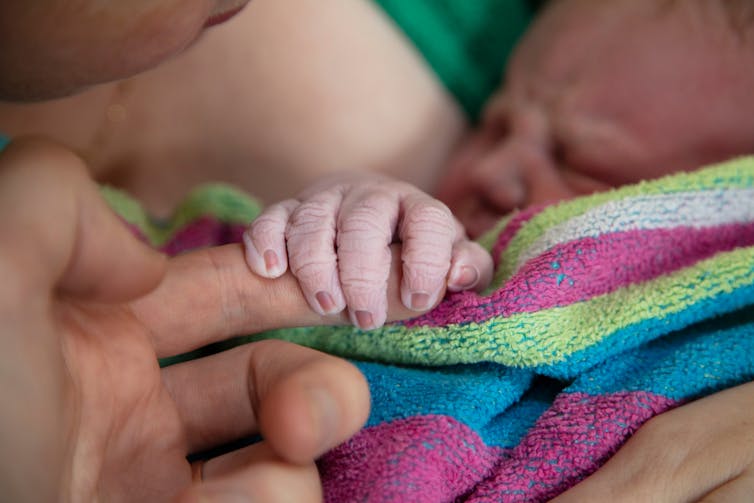
Ink Drop/Shutterstock
Only around 200 midwives provide private midwifery services for home births nationally. Private midwives are yet to obtain insurance for home births, which means they are risking their livelihoods if something goes wrong and they are sued.
The cost of a home birth with a private midwife is not covered by Medicare and only some health funds rebate some of the cost. This means women can be out of pocket A$6-8,000.
Access to home birth is an even greater issue in rural and remote Australia.
How to make mainstream care more inclusive
Many women feel constrained by their birth choices in Australia. After years of research and listening to thousands of women, it’s clear more can be done to reduce the desire to free birth.
As my co-authors and I outline in our book, Birthing Outside the System: The Canary in the Coal Mine, this can be achieved by:
- making respectful care a reality so women aren’t traumatised and alienated by maternity care and want to engage with it
- supporting midwifery care. Women are seeking more physiological and social ways of birthing, minimising birth interventions, and midwives are the experts in this space
- supporting women’s access to their chosen place of birth and model of care and not limiting choice with high out-of-pocket expenses
- providing more flexible, acceptable options for women experiencing risk factors during pregnancy and/or birth, such as having a previous caesarean birth, having twins or having a baby in breech position. Women experiencing these complications experience pressure to have a caesarean section
- getting the framework right with policies, guidelines, education, research, regulation and professional leadership.
Ensuring women’s rights and choices are informed and respected means they’re less likely to feel they’re left with no other option.
Hannah Dahlen, Professor of Midwifery, Associate Dean Research and HDR, Midwifery Discipline Leader, Western Sydney University
This article is republished from The Conversation under a Creative Commons license. Read the original article.
Don’t Forget…
Did you arrive here from our newsletter? Don’t forget to return to the email to continue learning!
Recommended
Learn to Age Gracefully
Join the 98k+ American women taking control of their health & aging with our 100% free (and fun!) daily emails:
-
Robert F. Kennedy Jr says vitamin A protects you from deadly measles. Here’s what the study he cites actually says
10almonds is reader-supported. We may, at no cost to you, receive a portion of sales if you purchase a product through a link in this article.
Robert F. Kennedy Jr, who oversees the health of more than 340 million Americans, says vitamin A can prevent the worst effects of measles rather than urging more people to get vaccinated.
In an opinion piece for Fox News, the US health secretary said he was “deeply concerned” about the current measles outbreak in Texas. However, he said the decision to vaccinate was a “personal one” and something for parents to discuss with their health-care provider.
Kennedy mentioned updated advice from the Centers for Disease Control (CDC) to treat measles with vitamin A. He also cited a study he said shows vitamin A can reduce the risk of dying from measles.
Here’s what the vitamin A study actually says and why public health officials are so concerned about Kennedy’s latest statement.
RobsPhoto/Shutterstock Why is a measles outbreak so worrying?
Measles is a highly contagious disease caused by a virus. It spreads easily including when an infected person breathes, coughs or sneezes.
Measles initially infects the respiratory tract and then the virus spreads throughout the body. Symptoms include a high fever, cough, red eyes, runny nose and a rash all over the body.
Measles can also be severe, can cause complications including blindness and swelling of the brain, and can be fatal. Measles can affect anyone but is most common in children.
The Texan health department has confirmed 150-plus cases of measles and one death of an unvaccinated child during the current outbreak. While this is by far the largest measles outbreak in the US in 2025, the CDC has reported smaller outbreaks in several other states so far this year.
Why vitamin A?
Vitamin A is essential for our overall health. It has many roles in the body, from supporting our growth and reproduction, to making sure we have healthy vision, skin and immune function.
Foods rich in vitamin A or related molecules include orange, yellow and red coloured fruits and vegetables, green leafy vegetables, as well as dairy, egg, fish and meat. You can take it as a supplement.
Vitamin A can also be used therapeutically. In other words, doctors may prescribe vitamin A to treat a deficiency. Vitamin A deficiency has long been associated with more severe cases of infectious disease, including measles. Vitamin A boosts immune cells and strengthens the respiratory tract lining, which is the body’s first defence against infections.
Because of this, the CDC has recently said vitamin A can also be prescribed as part of treatment for children with severe measles – such as those in hospital – under doctor supervision.
One key message from the CDC’s advice is that people are already sick enough with measles to be in hospital. They’re not taking vitamin A to prevent catching measles in the first place.
The other key message is vitamin A is taken under medical supervision, under specific circumstances, where patients can be closely monitored to prevent toxicity from high doses.
Vitamin A toxicity can cause birth defects and increase the risk of fractures in elderly people. Vitamin A and beta-carotene (which the body turns into vitamin A) from supplements may also increase your risk of cancer, especially if you smoke.
Taking too much vitamin A can lead to toxicity and cause birth defects. ChameleonsEye/Shutterstock How about the study Kennedy cites?
Kennedy cites and links to a 2010 study, a type known as a systematic review and meta-analysis. Researchers reviewed and analysed existing studies, which included ones that looked at the effectiveness of vitamin A in preventing measles deaths.
They found three studies that looked at vitamin A treatment by specific dose. There were different doses depending on the age of the children, measured in IU (international units). Having two doses of vitamin A (200,000IU for children over one year of age or 100,000IU for infants below one year) reduced mortality by 62% compared to children who did not have vitamin A.
The 2010 study did not show vitamin A reduced your risk of getting measles from another infected person. To my knowledge no study has shown this.
To be fair, Kennedy did not say that vitamin A stops you from catching measles from another infected person. Instead, he used the following vague statement:
Studies have found that vitamin A can dramatically reduce measles mortality.
It’s easy to see how a reader could misinterpret this as “take vitamin A if you want to avoid dying from measles”.
We know what works – vaccines
The World Health Organization recommends all children receive two doses of measles vaccine.
The CDC states two doses of the measles vaccine (measles-mumps-rubella or MMR vaccine) is 97% effective against getting measles. This means out of every 100 people who are vaccinated only three will get it, and this will be a milder form.
But these facts were missing from Kennedy’s statement. Should we be surprised? Kennedy is well known for his vaccine sceptism and for undermining vaccination efforts, including for the measles vaccine.
As Sue Kressly, president of the American Academy of Pediatrics, told the Washington Post:
relying on vitamin A instead of the vaccine is not only dangerous and ineffective […] it puts children at serious risk.
Evangeline Mantzioris, Program Director of Nutrition and Food Sciences, Accredited Practising Dietitian, University of South Australia
This article is republished from The Conversation under a Creative Commons license. Read the original article.
Share This Post
-
The Kindness Method – by Shahroo Izadi
10almonds is reader-supported. We may, at no cost to you, receive a portion of sales if you purchase a product through a link in this article.
Shahroo Izadi here covers everything from alcohol addiction to procrastination to weight loss. It’s a catch-all handbook for changing your habits—in general, and/or in whatever area of your life you most feel you want or need to.
She herself went from yo-yo dieting to a stable healthy lifestyle, and wants to share with us how she did it. So she took what worked for her, organized and dilstilled it, and named it “the kindness method”, which…
- promotes positivity not in a “head in the sand” sense but rather: you have strengths, let’s find them and use them
- offers many exploratory exercises to help you figure out what’s actually going to be best for you
- plans support in advance—you’re going to be your own greatest ally here
Basically it’s about:
- being kind to yourself rather than setting yourself up to fail, and “judging a fish by how well it can climb a tree”
- being kind to yourself by being compassionate towards your past self and moving on with lessons learned
- being kind to yourself by getting things in order for your future self, because you need to treat your future self like a loved one
In fact, why not buy a copy of this book as a gift for your future self?
Click Here To Order Your Copy of “The Kindness Method” on Amazon Today!
Share This Post
-
Creatine, Genomic Screening, & More
10almonds is reader-supported. We may, at no cost to you, receive a portion of sales if you purchase a product through a link in this article.
In this week’s health news…
Creatine: no difference vs control at 5g/day
A study found, as the title suggests, no difference between creatine and placebo, at the usual dose of 5g/day, while doing a supervised resistance training program.
This was a 12-week trial, and in the first week, the creatine group put on an average of 0.5kg more lean (i.e. not fat) body mass than the control group, however, as this quickly equalized after the first week, it is assumed that the brief extra weight gain was water weight (creatine promotes water retention, especially in the initial phase).
However, it is still possible that it may promote weight gain at higher doses.
This study was done with adult participants under the age of 50; we’ve noted before that it is generally young people who use creatine for bodybuilding, so in principle, this should have been ideal for that, but it wasn’t.
Read in full: Sports supplement creatine makes no difference to muscle gains, trial finds
Related: Creatine’s Brain Benefits Increase With Age ← this, on the other hand, does work—but only for older adults.
Genomics & disease risk: what to know
In a recent study evaluation, 175,500 participants were screened, and 1 in 30 received medically important genetic results. More than 90% of those found to have a genetic risk were previously unaware of it.
This is important, because most current genetic risk assessment for patients is based on personal and family history, which often misses a lot of data due to barriers to care or lack of family history.
Genomic screening helps close these gaps:
Read in full: Genomic screening is important in identifying disease risk, study finds
Related: Do You Have A Personalized Health Plan? (Here’s How)
FDA-Approved Antivirals (Not Vaccines) Ineffective Against H5N1
The H5N1 avian influenza outbreak is now rife amongst dairy farms, with the virus found in cows’ milk and infecting farmworkers. Researchers studied potential treatments, revealing two FDA-approved antivirals (baloxavir and oseltamivir) were generally ineffective in treating severe H5N1 infections.
Oral infections per raw milk consumption, were the most severe and hardest to treat, and the virus spread quickly to the blood and brain (when the infection is respiratory, it is much slower to spread from the respiratory tract).
It wasn’t a complete loss, though:
- Eye infections were better controlled with baloxavir, achieving a 100% survival rate compared to 25% with oseltamivir.
- For nasal infections, baloxavir reduced viral levels better but still allowed the virus to reach the brain. Survival rates were 75% for baloxavir and 50% for oseltamivir.
The researchers in question are urging preventative measures as being of critical importance, given the difficulty of treatment:
Read in full: Current antivirals likely less effective against severe infection caused by bird flu virus in cows’ milk
Related: Bird Flu: Children At High Risk; Older Adults Not So Much
Take care!
Share This Post
Related Posts
-
Heart-Healthy Lifestyle, Life-Long Healthy Brain
10almonds is reader-supported. We may, at no cost to you, receive a portion of sales if you purchase a product through a link in this article.
Here at 10almonds, often say “what’s good for your heart is good for your brain” and it’s true, largely because the blood is what nourishes the brain (with oxygen and nutrients), and ultimately takes away detritus that shouldn’t be there (including α-synuclein and β-amyloid clearance, to protect you from Parkinson’s and Alzheimer’s, respectively).
See also: Brainwashing (but not like that)
So, you cannot have a healthy brain if your blood supply is not healthy (indeed, if you interrupt the blood supply, then the brain will shut down in seconds).
Genes predispose; they don’t predetermine
Or, more colorfully expressed: genes load the gun, but it’s lifestyle that pulls the trigger.
We explored the implications of genetics and lifestyle when it comes to vascular dementia, here:
What’s Your Vascular Dementia Risk? ← this includes the American Heart Association’s risk calculator tool!
So, time for some good news: a very large (n=365,000) study found that a heart-healthy lifestyle can protect your brain, regardless of your genetic risk factors for heart disease.
By that we mean: completely independently of the genetic risk factor.
Now, those with high genetic and lifestyle risk for heart disease also had, by default, a higher chance of getting dementia, especially vascular dementia (for obvious reasons). But those who followed a heart-healthy lifestyle (e.g. eating a heart-healthy diet, staying active, sleeping enough, not smoking, and keeping blood pressure, weight, and cholesterol in check) had a much lower risk of dementia, no matter their genetic risk.
In fact, those with the aforementioned healthy habits cut their risk of vascular dementia by up to 50%.
In short: even if you’re born with a higher risk, your daily choices really can make a big difference for your brain and your heart.
You can read the paper in full here: Genetic and Lifestyle Risks for Coronary Artery Disease and Long-Term Risk of Incident Dementia Subtypes
Want to know more?
If you’d like a simple 5-step plan to better heart health, then here you go:
The S.T.E.P.S. To A Healthier Heart
And if you think the 7 habits focused-on in the study (and the American Heart Association’s “simple 7” risk calculator tool linked further up) are just a bit too simple, then check out this excellent book that we reviewed, that has 100 heart-healthy habits, each of which can improve your heart health, and protect your brain:
Take care!
Don’t Forget…
Did you arrive here from our newsletter? Don’t forget to return to the email to continue learning!
Learn to Age Gracefully
Join the 98k+ American women taking control of their health & aging with our 100% free (and fun!) daily emails:
-
100 Hikes of a Lifetime – by Kate Siber
10almonds is reader-supported. We may, at no cost to you, receive a portion of sales if you purchase a product through a link in this article.
This is published by National Geographic, so you can imagine the quality of the photos throughout.
Inside, and after a general introduction and guide to gear and packing appropriately, it’s divided into continents, with a diverse array of “trips of a lifetime” for anyone who enjoys hiking.
It’s not a narrative book, rather, it is a guide, a little in the style of “Lonely Planet”, with many “know before you go” tips, information about the best time to go, difficult level, alternative routes if you want to get most of the enjoyment while having an easier time of it (or, conversely, if you want to see some extra sights along the way), and what to expect at all points.
Where the book really excels is in balancing inspiration with information. There are some books that make you imagine being in a place, but you’ll never actually go there. There are other books that are technical manuals but not very encouraging. This one does both; it provides the motivation and the “yes, you really can, here’s how” information that, between them, can actually get you packing and on your way.
Bottom line: if you yearn for breathtaking views and time in the great outdoors, but aren’t sure where to start, this will give you an incredible menu to choose from, and give you the tools to go about doing it.
Click here to check out 100 Hikes Of A Lifetime, and live it!
Don’t Forget…
Did you arrive here from our newsletter? Don’t forget to return to the email to continue learning!
Learn to Age Gracefully
Join the 98k+ American women taking control of their health & aging with our 100% free (and fun!) daily emails:
-
The Surprising Link Between Vitamin D & Pain
10almonds is reader-supported. We may, at no cost to you, receive a portion of sales if you purchase a product through a link in this article.
Most people, or at least most women of a certain age, know that vitamin D is especially important to us as we get older (women of a certain age, because: increased osteoporosis risk especially for women and especially with untreated menopause, because estrogen and progesterone are also essential for healthy bone turnover*)
*Unless you’re a man with typical manly hormones, in which case, testosterone has you covered! But for the rest of us, estrogen and progesterone are what’s needed to avoid the increased risk, and for all of us, vitamin D is necessary to for health bone rebuilding.
However! While vitamin D is well-known amongst our demographic to be important for bone health (and quite well-known for being relevant to immune health*, too), its effects on some other systems are not so widely understood, and that’s what we’ll talk about today.
*See for example: Does Vitamin D Help Against COVID? ← short answer: vitamin D does so many things for your immune system, and/but no, protecting you from COVID is not one of them. However, it may reduce the risk of long COVID, at least.
First though, a quick vitamin D primer for anyone catching up:
- Vitamin D2 vs Vitamin D3: What You Would Benefit From Knowing
- Vit D + Calcium: Too Much Of A Good Thing? ← this also talks about safe and effective doses, and what goes wrong if you take too much
- How Taking Vitamin D Supplements Can Sabotage Your Vitamin D Levels
So, what’s this about vitamin D and pain?
It’s about how the body responds
Researchers (Dr. Mahdy Abdelhady et al.) investigated this matter and found that women with vitamin D deficiency who underwent surgery were about 3x more likely to experience moderate to severe postoperative pain and used substantially more opioid medication afterwards.
In numbers:
- It was an observational study with 184 women undergoing surgery between September 2024 and April 2025, with half of the participants deficient in vitamin D and half having higher levels.
- Patients with vitamin D levels below 30nmol/L were classified as deficient, while those above that threshold formed the comparison group (we could call it a control group, but since it was an observational study rather than a RCT, we don’t say that).
- Patients with low vitamin D required more fentanyl during* surgery and, on average, used 112 mg more tramadol after surgery through patient-controlled pain pumps.
- None of the patients reported extremely severe pain, but the vitamin D deficient group had many more cases of moderate pain scores between 4 and 6 on a 10-point scale.
- Nausea after surgery was more common in the vitamin D deficient group, and vomiting occurred only in that group, although the vomiting difference wasn’t statistically significant.
*Yes, pain relief is needed even while unconscious during general anesthesia, for reasons explained here: How Does Anesthesia Work?
As for why this happened the way it did: it’s an observational study so we can’t say for 100% sure, but the researchers believe it is likely mostly because of how vitamin D influences pain processing through its effects on inflammation and the immune system, which in turn also affect how the body responds to injury.
You can read this paper in full here: Association between preoperative vitamin D level and postoperative pain in patients undergoing breast cancer surgery: a prospective observational study
Want to learn more?
We’ve written quite a bit about pain management, including:
- Before You Reach For That Tylenol…
- How To Stop Pain Spreading
- How To Dial Down Your Pain
- Managing Chronic Pain (Realistically!)
- Get The Right Help For Your Pain
- The 7 Approaches To Pain Management
- Science-Based Alternative Pain Relief (When Painkillers Aren’t Helping, These Things Might)
Take care!
Don’t Forget…
Did you arrive here from our newsletter? Don’t forget to return to the email to continue learning!
Learn to Age Gracefully
Join the 98k+ American women taking control of their health & aging with our 100% free (and fun!) daily emails:


