
How does the hair-loss drug finasteride work? Can it affect my mental health?
10almonds is reader-supported. We may, at no cost to you, receive a portion of sales if you purchase a product through a link in this article.
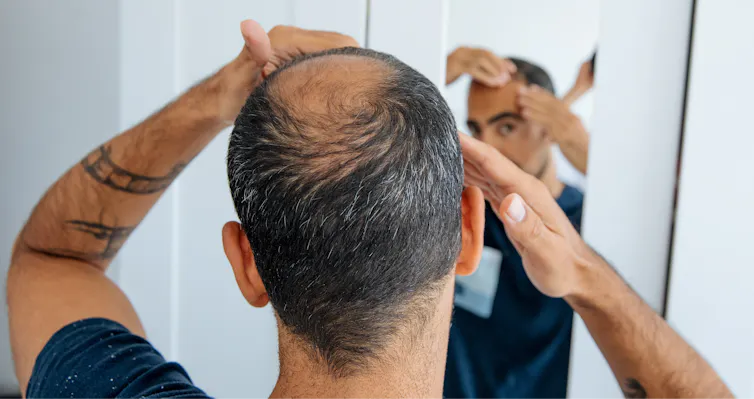
For many men the gradual thinning of hair is about more than just their appearance. Finasteride, a drug widely prescribed for the treatment of male pattern baldness has been used effectively for many years for this deeply personal problem.
Yet, behind its use are growing concerns about its link to the development of depression, anxiety, and even suicidal thoughts.
There is now critical discussion among both users and health-care professionals about the potential hazards associated with its continued use.
So how does the drug work? And what does the evidence say about the risk of developing a mental health problem?
How does finasteride work?
Finasteride is used to treat androgenetic alopecia, also known as male pattern baldness. It works to regrow hair and prevent the further loss of hair.
One of the key causes of pattern baldness is the production of a hormone called dihydrotestosterone which the body makes from testosterone. When it binds to the follicles of hairs, it initiates a process called hair follicle miniaturisation. This is where the growth cycle of the hair becomes progressively shorter, resulting in thinner and weaker hair.
Finasteride works by blocking the enzyme that converts testosterone to dihydrotestosterone. By blocking the enzyme, dihydrotestosterone concentrations can be reduced by around 60โ70% for the majority of men.
Finasteride was first approved in the late 1990s as a prescription-only medicine and is taken as a daily 1 milligram oral tablet. Medications available at a higher 5 mg daily dose are not used for baldness, but as a treatment for non-cancerous prostate enlargement.
This medication is not indicated for women, even though they can also have this type of hair loss.
How can it impact your mental health?
Changes in mental health are not listed as an established side effect in Australian guidance given to health-care professionals.
Based on clinical trials, the most common effects include:
- decreased libido
- erectile dysfunction
- reduced semen production.
The guidance also describes an increased risk of prostate cancer and a potential risk for breast cancer. Yes, men can get breast cancer too.
While initial clinical trials conducted to obtain approval for the drug didnโt demonstrate mental health concerns, monitoring of patients using the drug has since indicated a potential increased risk of depression and suicidal thoughts. But as this is based on patients self-reporting symptoms, according to the guidance there is no definitive link.
However, in May 2025, the European Medicines Agency safety committee stated suicidal thoughts was a confirmed side effect of finasteride. The European Union also advises patients that finasteride can cause a depressed mood and depression.
Similarly, in a warning about compounded finasteride, the United States Food and Drug Administration stated in April 2025 that topical formulations of the drug has similar side effects to the oral version. These include depression, anxiety and suicidal thoughts.
What should you do if it is affecting your mental health?
If you notice changes in your mental health while taking the drug, try not to handle significant mood changes by yourself. If youโre feeling unusually low, anxious or emotionally unstable, check in with a doctor so they can help you figure out whether finasteride is contributing to your mood and what support you may need.
If the symptoms are mild, they may suggest pausing finasteride to see whether things improve, or continuing with additional mental health support. If your symptoms are more severe, stopping the medication and getting prompt medical review may be appropriate.
If you are taking finasteride and are worried about its side effects, it is safe to stop immediately. Most side effects ease once the medication is out of your system, although a small number of people have reported symptoms that persist.
If you do decide to stop, this will mean that your hormone levels will gradually return to baseline and the hair growth seen with the drug will be lost over time.
If finasteride is not the right fit for you, there is another evidence-based alternative.
Topical minoxidil is a first-line treatment that can be used on its own or with other treatments and is available from pharmacies over the counter. It only works while itโs being used and may irritate the scalp, but its effectiveness is well-established and widely recommended.
While depression and anxiety are associated with minoxidil, the incidence is much lower because of their topical application.
There is also a medication called dutasteride. However, as it works in a similar way to finasteride, it may also increase your risk of developing mental health problems. So it is best to avoid dutasteride if finasteride is not suitable for you.
If this story has raised any issues for you, please contact one of the services below:
- Lifeline: 13 11 14 or lifeline.org.au
- Suicide Call Back Service (ages 15+): 1300 659 467 or suicidecallbackservice.org.au
Nial Wheate, Professor, School of Natural Sciences, Macquarie University and Jasmine Lee, Pharmacist and PhD Candidate, University of Sydney
This article is republished from The Conversation under a Creative Commons license. Read the original article.
Don’t Forget…
Did you arrive here from our newsletter? Don’t forget to return to the email to continue learning!
Recommended

Learn to Age Gracefully
Join the 98k+ American women taking control of their health & aging with our 100% free (and fun!) daily emails:
-
What is myasthenia gravis, the rare disease tennis great Monica Seles lives with?
10almonds is reader-supported. We may, at no cost to you, receive a portion of sales if you purchase a product through a link in this article.
Former tennis star Monica Seles recently revealed she is living with the rare disease myasthenia gravis, which affects 12 in 100,000 people globally.
Seles explained her first symptoms appeared suddenly around three years ago. She began experiencing double vision and weakness in her arms and legs. This made everyday activities, such as drying her hair, a challenge.
Clive Brunskill/Getty Images So what is this condition?
Myasthenia gravis is a chronic autoimmune disorder, where your own immune system disrupts the communication between nerves and skeletal muscle.
In healthy people, nerve cells send a chemical messenger called acetylcholine. This tells muscles to contract by binding to its receptor.
In myasthenia gravis, antibodies block or destroy these receptors, so the signal is weakened or lost.
The result is muscle weakness that worsens with activity and improves with rest. This is called โfatigueabilityโ.
What are the symptoms?
Muscle weakness can affect everyday functions such as walking, speaking, breathing and swallowing.
Symptoms, which can appear suddenly, may also affect the eyes, causing drooping eyelids and double vision.
In some cases, weakness of the muscles makes it difficult to breathe or can result in choking on food or water. This is called a โmyasthenic crisisโ and requires hospitalisation and sometimes life support.
In our research interviews, a young woman in her 30s living with myasthenia gravis described what it feels like to experience a crisis:
My speech slows, and I sound like Iโm drunk, even though Iโm fighting to breathe. Sometimes I canโt talk at all. Having my mum there to advocate for me has been life-saving, because I canโt explain whatโs happening. Staying calm helps me cope.
Another man in his 70s explained just how suddenly the disease can appear:
It came on at my 70th birthday party. I developed ocular MG [a form of myasthenia gravis affecting the eyes] in the middle of my speech, and my grown children thought I was having a stroke. They rushed me to hospital โ and thatโs how it all began.
What causes it and who does it affect?
Itโs unclear what causes the disease but itโs not thought to be hereditary.
There is some evidence it is more likely to occur with other autoimmune conditions such as autoimmune thyroid disease, lupus and rheumatoid arthritis but the evidence remains incomplete.
Myasthenia gravis can appear at any age. Early onset is more common in women (often before 40), while men are more likely to develop myasthenia gravis later in life.
How is it diagnosed?
Despite its serious impact, myasthenia gravis remains under-recognised and is difficult to diagnose. The diagnosis is โclinicalโ, which requires a doctor with experience in myasthenia gravis to make a judgement, based on the information available.
A handful of tests are available to support the diagnosis: blood tests for antibodies, nerve conduction studies and needle electromyography, which record the electrical activity of nerves and muscles. But these are far from perfect in establishing the diagnosis.
How is it treated?
There is currently no cure for myasthenia gravis, but a range of treatments can help manage symptoms. These include:
- oral medicines called anticholinesterase inhibitors, which temporarily improve communication between nerves and muscles
- immunosuppressant medications, which are generally taken by mouth. These dampen the immune system and reduce its attack
- plasma exchange and intravenous immunoglobulin (IVIg), which is a blood product. These are resource-intensive therapies that remove or block the harmful antibodies. These treatments require hospital admission for at least half a day to administer via an intravenous drip
- in some patients, surgery is performed to remove the thymus gland, which is located in the chest between the lungs. This plays a key role in the abnormal immune response in people with myasthenia gravis.
While most treatments are subsidised through the health system, access remains a challenge for some people. Plasma exchange and IVIg are not available in all hospitals, for example, meaning patients in regional areas may face long travel distances or delays in receiving urgent care.
What is the long-term outlook?
While myasthenic crises are life-threatening, the evidence so far suggests the disease wonโt have a significant impact on life expectancy for most people. Treatments aim to reduce disease activity rather than offering a complete cure.
People with myasthenia gravis can have very different journeys with their disease. Some may need frequent hospital admissions, and around 10% have a form of disease which is difficult to treat.
Others may experience minimal symptoms requiring little to no treatment.
Many find their symptoms are unpredictable. As a woman in her 60s, who has had myasthenia gravis for ten years, told us:
I think you just get used to managing โ to finding your own rhythm in all the uncertainty.
Gozde Aydin, Research Fellow, Centre for Health Economics, Monash University and Yong Lin Wang, Neurologist and Phd Candidate, Monash University
This article is republished from The Conversation under a Creative Commons license. Read the original article.
Share This Post
-
Ozempic Helps People Walk Further
10almonds is reader-supported. We may, at no cost to you, receive a portion of sales if you purchase a product through a link in this article.
There’s often a catch-22 when it comes to exercise: it’s important for good health, and/but people with ill health usually cannot exercise much.
A recent (published today, at time of writing, the 29th of March 2025, never let it be said we don’t bring you the very most up-to-date health science!) study by Dr. Neda Rasouli et al. has shown there is a possible way through that catch-22, depending on the nature of the illness.
This study followed 792 people across 112 outpatient clinical trial sites in 20 countries in North America, Asia, and Europe, with type 2 diabetes and peripheral artery disease.
What they found
Patients taking semaglutide (specifically, 1mg Ozempic) enjoyed a 21% median increase in walking distance, as well as some bonus benefits, namely:
- Weight reduction: the semaglutide group saw a greater reduction in body weight (โ4.1 kg; P < 0 .0001)
- HbA1c levels: semaglutide lowered HbA1c by 1 percentage point (P < 0.0001)
- Blood pressure: systolic blood pressure decreased by 3.2 mmHg (P = 0.0042)
You may be wondering what that “P =” means: it’s the probability of this occurring by random chance, on a scale from zero (impossible outcome) to 1 (unavoidable outcome).
For example:
“We hypothesized that singing the happy birthday song before tossing a coin would result in it landing on heads. We sang the happy birthday song and tossed the coin; it landed on heads (P = 0.5)”
In science, generally speaking anything with a probability of under 0.05 (expressed as: “P < 0.05”) is considered a statistically significant result.
All this to say, the cited figures of, for example, P < 0.0001, are very significant indeed.
On which note, that 21% median increase in walking distance? P < 0.0004.
As for side effects? Serious adverse events related to the drug occurred in 1% of the semaglutide group vs 2% in the placebo group. So, that seems quite safe indeed.
You can find the paper itself here:
Want to learn more?
Check out:
- The Doctor Who Wants Us To Exercise Less, & Move More
- Walkingโฆ Better.
- 5 Ways To Naturally Boost The โOzempic Effectโ
Take care!
Share This Post
-
Metformin For Weight-Loss & More
10almonds is reader-supported. We may, at no cost to you, receive a portion of sales if you purchase a product through a link in this article.
Metformin Without Diabetes?
Metformin is a diabetes drug; it works by:
- decreasing glucose absorption from the gut
- decreasing glucose production in the liver
- increasing insulin sensitivity
It doesnโt change how much insulin is secreted, and is unlikely to cause hypoglycemia, making it relatively safe as diabetes drugs go.
Itโs a biguanide drug, and/but so far as science knows (so far), its mechanism of action is unique (i.e. no other drug works the same way that metformin does).
Today weโll examine its off-label uses and see what the science says!
A note on terms: โoff-labelโ = when a drug is prescribed to treat something other than the main purpose(s) for which the drug was approved.
Other examples include modafinil against depression, and beta-blockers against anxiety.
Why take it if not diabetic?
There are many reasons people take it, including just general health and life extension:
However, its use was originally expanded (still โoff-labelโ, but widely prescribed) past โjust for diabetesโ when it showed efficacy in treating pre-diabetes. Here for example is a longitudinal study that found metformin use performed similarly to lifestyle interventions (e.g. diet, exercise, etc). In their words:
โ Lifestyle intervention or metformin significantly reduced diabetes development over 15 years. There were no overall differences in the aggregate microvascular outcome between treatment groupsโ
But, it seems it does more, as this more recent review found:
โLong-term weight loss was also seen in both [metformin and intensive lifestyle intervention] groups, with better maintenance under metformin.
Subgroup analyses from the DPP/DPPOS have shed important light on the actions of metformin, including a greater effect in women with prior gestational diabetes, and a reduction in coronary artery calcium in men that might suggest a cardioprotective effect.
Long-term diabetes prevention with metformin is feasible and is supported in influential guidelines for selected groups of subjects.โ
Source: Metformin for diabetes prevention: update of the evidence base
We were wondering about that cardioprotective effect, soโฆ
Cardioprotective effect
In short, another review (published a few months after the above one) confirmed the previous findings, and also added:
โPatients with BMI > 35 showed an association between metformin use and lower incidence of CVD, including African Americans older than age 65. The data suggest that morbidly obese patients with prediabetes may benefit from the use of metformin as recommended by the ADA.โ
We wondered about the weight loss implications of this, andโฆ
For weight loss
The short version is, it works:
- Effectiveness of metformin on weight loss in non-diabetic individuals with obesity
- Metformin for weight reduction in non-diabetic patients: a systematic review and meta-analysis
- Metformin induces weight loss associated with gut microbiota alteration in non-diabetic obese women
โฆand many many more where those came from. As a point of interest, it has also been compared and contrasted to GLP-1 agonists.
Compared/contrasted with GLP-1 agonists
Itโs not quite as effective for weight loss, and/but itโs a lot cheaper, is tablets rather than injections, has fewer side effects (for most people), and doesnโt result in dramatic yoyo-ing if thereโs an interruption to taking it:
Or if you prefer a reader-friendly pop-science version:
Ozempic vs Metformin: Comparing The Two Diabetes Medications
Is it safe?
For most people yes, but there are a stack of contraindications, so itโs best to speak with your doctor. However, particular things to be aware of include:
- Usually contraindicated if you have kidney problems of any kind
- Usually contraindicated if you have liver problems of any kind
- May be contraindicated if you have issues with B12 levels
See also: Metformin: Is it a drug for all reasons and diseases?
Where can I get it?
As itโs a prescription-controlled drug, we canโt give you a handy Amazon link for this one.
However, many physicians are willing to prescribe it for off-label use (i.e., for reasons other than diabetes), so speak with yours (telehealth options may also be available).
If you do plan to speak with your doctor and youโre not sure theyโll be agreeable, you might want to get this paper and print it to take it with you:
Off-label indications of Metformin – Review of Literature
Take care!
Share This Post
Related Posts
-
When Did You Last Have a Cognitive Health Check-Up?
10almonds is reader-supported. We may, at no cost to you, receive a portion of sales if you purchase a product through a link in this article.
When Did You Last Have a Cognitive Health Check-Up?
Regular health check-ups are an important part of a good health regime, especially as we get older. But after youโve been prodded, probed, sampled and so forthโฆ When did you last have a cognitive health check-up?
Keeping on top of things
In our recent Monday Research Review main feature about citicoline, we noted that it has beneficial effects for a lot of measures of cognitive health.
And that brought us to realize: just how on top of this are we?
Your writer here today could tell you what her sleep was like on any night in the past year, what her heart rate was like, her weight, and all that. Moods too! Thereโs an app for that. But cognitive health? My last IQ test was in 2001, and I forget when my last memory test was.
Itโs important to know how weโre doing, or else how to we know if there has been some decline? Weโve talked previously about the benefits of brain-training of various kinds to improve cognition, so in some parts weโll draw on the same resources today, but this time the focus is on getting quick measurements that we can retest regularly (mark the calendar!)
Some quick-fire tests
These tests are all free, quick, and accessible. Some of them will try to upsell you on other (i.e. paid) services; we leave that to your own discretion, but the things weโll be using today are free.
Test your verbal memory
This oneโs a random word list generator. It defaults to 12 words, but you can change that if you like. Memorize the words, and then test yourself by seeing how many you can write down from memory. If it gets too easy, crank up the numbers.
Test your visual memory
This oneโs a series of images; the test is to click to say whether youโve seen this exact image previously in the series or not.
Test your IQ
This oneโs intended to be general purpose intelligence; in reality, IQ tests have their flaws too, but itโs not a bad metric to keep track of. Just donโt get too hung up on the outcome, and remember, your only competition is yourself!
Test your attention / focus
This writer opened this and this three other attention tests (to get you the best one) before getting distracted, noting the irony, and finally taking the test. Hopefully you can do better!
Test your creativity
This oneโs a random object generator. Give yourself a set period of time (per your preference, but make a note of the time you allow yourself, so that you can use the same time period when you retest yourself at a later date) in which to list as many different possible uses for the item.
Test your musical sense
This oneโs a pitch recognition test. So, with the caveat that it is partially testing your hearing as well as your cognition, itโs a good one to take and regularly retest in any case.
How often should you retest?
Thereโs not really any โshouldโ here, but to offer some advice:
- If you take them too often, you might find you get bored of doing so and stop, essentially burning out.
- If you donโt take them regularly, you may forget, lose this list of tests, etc.
- Likely a good โsweet spotโ is quarterly or six-monthly, but thereโs nothing wrong with testing annually either.
Itโs all about the big picture, after all.
Don’t Forget…
Did you arrive here from our newsletter? Don’t forget to return to the email to continue learning!
Learn to Age Gracefully
Join the 98k+ American women taking control of their health & aging with our 100% free (and fun!) daily emails:
-
Why Psyllium Is Healthy Through-And-Through
10almonds is reader-supported. We may, at no cost to you, receive a portion of sales if you purchase a product through a link in this article.
Psyllium is the powder of the husk of the seed of the plant Plantago ovata.
It can be taken as a supplement, and/or used in cooking.
Whatโs special about it?
It is fibrous, and the fiber is largely soluble fiber. Itโs a โbulk-forming laxativeโ, which means that (dosed correctly) it is good against both constipation (because itโs a laxative) and diarrhea (because itโs bulk-forming).
See also, because this is Research Review Monday and we provide papers for everything:
In other words, it will tend things towards being a 3 or 4 on the Bristol Stool Scale โ this is not pretty, but it is informative.
Before the bowels
Because of how it increases the viscosity of substances it finds itself in, psyllium slows stomach-emptying, and thus improves feelings of satiety.
Hereโs a study in which taking psyllium before breakfast and lunch resulted in increased satiety between meals, and reduction in food-related cravings:
Satiety effects of psyllium in healthy volunteers
Prebiotic benefits
We canโt digest psyllium, but our gut bacteria canโsomewhat! Because they can only digest some of the psyllium fibers, that means the rest will have the stool-softening effect, while we also get the usual in-gut benefits from prebiotic fiber first too:
The Effect of Psyllium Husk on Intestinal Microbiota in Constipated Patients and Healthy Controls
Cholesterol-binding
Psyllium can bind to cholesterol during the digestive process. Why only โcanโ? Well, if you donโt consume cholesterol (for example, if you are vegan), then there wonโt be cholesterol in the digestive tract to bind to (yes, we do need some cholesterol to live, but like most animals, we can synthesize it ourselves).
What this cholesterol-binding action means is that the dietary cholesterol thus bound cannot enter the bloodstream, and is simply excreted instead:
Heart health beyond cholesterol
Psyllium supplementation can also help lower high blood pressure but does not significantly lower already-healthy blood pressure, so it can be particularly good for keeping things in safe ranges:
โGiven the overarching benefits and lack of reported side effects, particularly for hypertensive patients, health care providers and clinicians should consider the use of psyllium supplementation for the treatment or abatement of hypertension, or hypertensive symptoms.โ
Read in full: The effect of psyllium supplementation on blood pressure: a systematic review and meta-analysis of randomized controlled trials โ you can see the concrete numbers here
Is it safe?
Psyllium is first and foremost a foodstuff, and is considered very safe unless you have an allergy (which is rare, but possible).
However, it is still recommended to start at a low dose and work up, because anything that changes your gut microbiota, even if it changes it for the better, will be easiest if done slowly (or else, you will hear about it from your gut).
Want to try some?
We donโt sell it, but here for your convenience is an example product on Amazon
Enjoy!
Don’t Forget…
Did you arrive here from our newsletter? Don’t forget to return to the email to continue learning!
Learn to Age Gracefully
Join the 98k+ American women taking control of their health & aging with our 100% free (and fun!) daily emails:
-
Ferment: The Life-Changing Power of Microbes โ by Dr. Tim Spector
10almonds is reader-supported. We may, at no cost to you, receive a portion of sales if you purchase a product through a link in this article.
You probably know that the gut microbiome is key to a lot of aspects of health.
Dr. Tim Spector, most well-known for the huge ZOE epigenetic study which covered, amongst other things, the effect of diet on the gut microbiome, and the effect of the gut microbiome on health, explains here about the process of fermentation. Butโฆ
Unlike the usual โand then the product is fermented and ready to consumeโ usual end-point of such description, Dr. Spector also covers what happens in the mouth, stomach, small intestine, large intestine.
Which is important, because all of these environments have very different conditions in terms of pH, temperature, and pre-existing microbiome (which latter will partially dictate how friendly or not the environment is to any given new arrivals, on a per-species basis).
For exampleโฆ
- If you take unprotected microbes (say, in kombucha) then most will die in the stomach acid and certainly not make it to the gut. Some may make it through though, and whether they then survive and flourish in the gut becomes a numbers game.
- Semi-protected microbes (say, in kimchi, where many may have made for themselves a home inside a piece of fermented vegetable, that allows for some temporary protection from the stomach acid, and save them long enough to get into the gut) will fare better.
- Specialist probiotics in nice safe capsules designed to release only in the gut will usually deliver their load safely, but will tend to have less biodiversity than fermented foods.
With these things in mind, itโs clear that getting a mix of all these things is best, and this book covers many kinds of fermented products, instructions on how to make them, and appropriate recipes with your fermented products too.
In terms of style, itโs Dr. Spectorโs usual very-accessible pop-science, well-referenced with a respectable bibliography.
Bottom line: if youโre curious about getting into fermenting your own products, and/or simply want to improve your gut health, this book will give you a lot of information thatโs easy to apply.
Don’t Forget…
Did you arrive here from our newsletter? Don’t forget to return to the email to continue learning!
Learn to Age Gracefully
Join the 98k+ American women taking control of their health & aging with our 100% free (and fun!) daily emails:


