
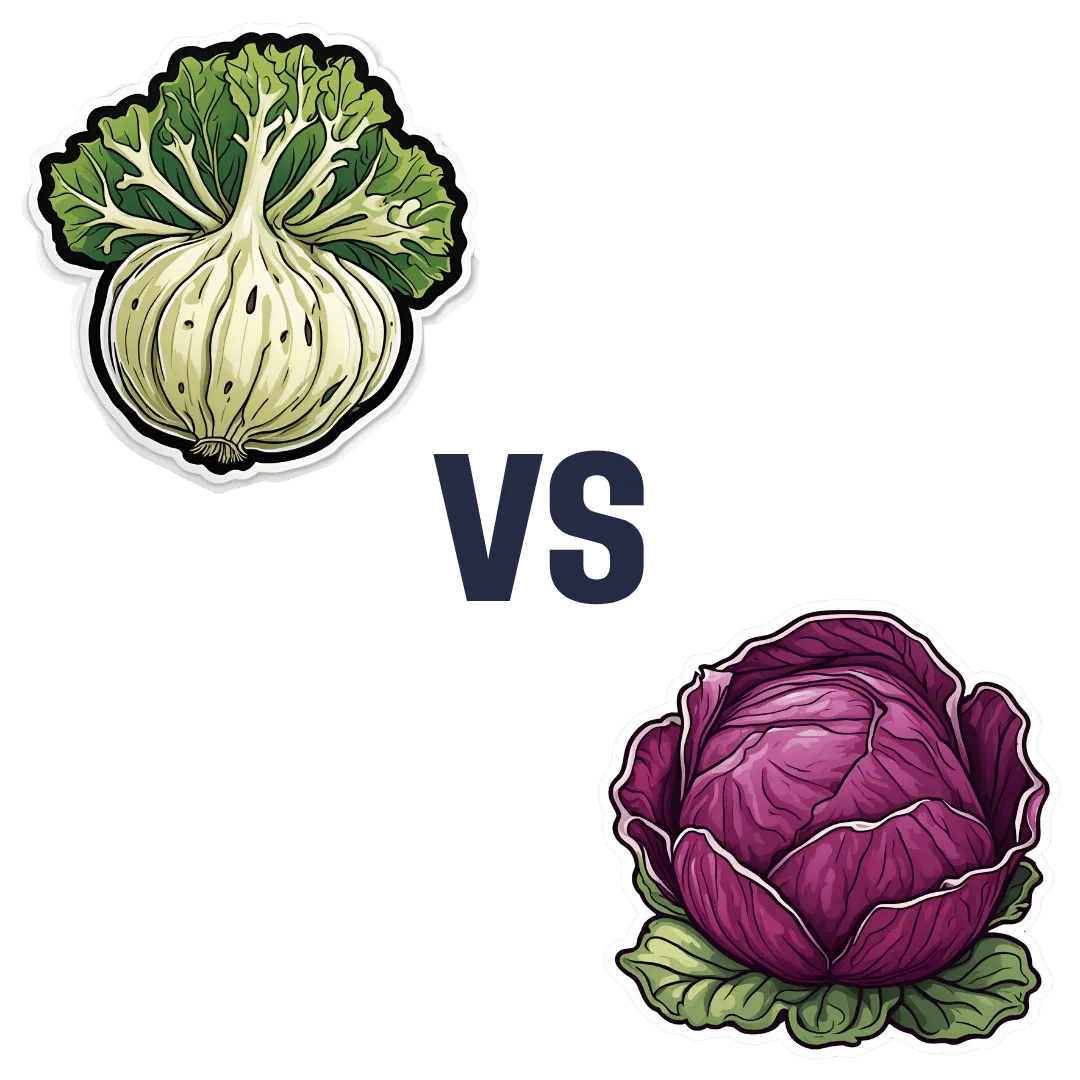
Celeriac vs Red Cabbage – Which is Healthier?

10almonds is reader-supported. We may, at no cost to you, receive a portion of sales if you purchase a product through a link in this article.

Our Verdict

When comparing celeriac to red cabbage, we picked the celeriac.

Why?

In terms of macros, there’s really nothing between them; they have almost identical numbers for fiber, carbs, and protein, so this first round’s a tie.

In the category of vitamins, celeriac has more of vitamins B3, B5, E, and K, while red cabbage has more of vitamins A, B9, and C, yielding a modest win to celeriac here.

Looking at minerals, celeriac has more copper, magnesium, phosphorus, potassium, selenium, and zinc, while red cabbage has more iron and manganese, for a 6:2 win to celeriac in this round.

In other considerations, celeriac has more polyphenols, with, for example, 24x more apigenin than red cabbage. So, that’s another point in celeriac’s favor.

Adding up the sections makes for an overall win for celeriac, but by all means do enjoy either or both, as diversity is best!

Want to learn more?

You might like:

21 Most Beneficial Polyphenols & What Foods Have Them

Enjoy!

Don’t Forget…

Did you arrive here from our newsletter? Don’t forget to return to the email to continue learning!

Learn to Age Gracefully

Join the 98k+ American women taking control of their health & aging with our 100% free (and fun!) daily emails:

  • Native Americans Have Shorter Life Spans. Better Health Care Isn’t the Only Answer.

    10almonds is reader-supported. We may, at no cost to you, receive a portion of sales if you purchase a product through a link in this article.

    HISLE, S.D. — Katherine Goodlow is only 20, but she has experienced enough to know that people around her are dying too young.

    Goodlow, a member of the Lower Brule Sioux Tribe, said she’s lost six friends and acquaintances to suicide, two to car crashes, and one to appendicitis. Four of her relatives died in their 30s or 40s, from causes such as liver failure and covid-19, she said. And she recently lost a 1-year-old nephew.

    “Most Native American kids and young people lose their friends at a young age,” said Goodlow, who is considering becoming a mental health therapist to help her community. “So, I’d say we’re basically used to it, but it hurts worse every time we lose someone.”

    Native Americans tend to die much earlier than white Americans. Their median age at death was 14 years younger, according to an analysis of 2018-21 data from the Centers for Disease Control and Prevention

    The disparity is even greater in Goodlow’s home state. Indigenous South Dakotans who died between 2017 and 2021 had a median age of 58 — 22 years younger than white South Dakotans, according to state data.

    Donald Warne, a physician who is co-director of the Johns Hopkins Center for Indigenous Health and a member of the Oglala Sioux Tribe, can rattle off the most common medical conditions and accidents killing Native Americans.

    But what’s ultimately behind this low life expectancy, agree Warne and many other experts on Indigenous health, are social and economic forces. They argue that in addition to bolstering medical care and fully funding the Indian Health Service — which provides health care to Native Americans — there needs to be a greater investment in case management, parenting classes, and home visits.

    “It’s almost blasphemy for a physician to say,” but “the answer to addressing these things is not hiring more doctors and nurses,” Warne said. “The answer is having more community-based preventions.”

    The Indian Health Service funds several kinds of these programs, including community health worker initiatives, and efforts to increase access to fresh produce and traditional foods.

    Private insurers and state Medicaid programs, including South Dakota’s, are increasingly covering such services. But insurers don’t pay for all the services and aren’t reaching everyone who qualifies, according to Warne and the National Academy for State Health Policy.

    Warne pointed to Family Spirit, a program developed by the Johns Hopkins center to improve health outcomes for Indigenous mothers and children.

    Chelsea Randall, the director of maternal and child health at the Great Plains Tribal Leaders’ Health Board, said community health workers educate Native pregnant women and connect them with resources during home visits.

    “We can be with them throughout their pregnancy and be supportive and be the advocate for them,” said Randall, whose organization runs Family Spirit programs across seven reservations in the Dakotas, and in Rapid City, South Dakota.

    The community health workers help families until children turn 3, teaching parenting skills, family planning, drug abuse prevention, and stress management. They can also integrate the tribe’s culture by, for example, using their language or birthing traditions.

    The health board funds Family Spirit through a grant from the federal Health Resources and Services Administration, Randall said. Community health workers, she said, use some of that money to provide child car seats and to teach parents how to properly install them to counter high rates of fatal crashes.

    Other causes of early Native American deaths include homicide, drug overdoses, and chronic diseases, such as diabetes, Warne said. Native Americans also suffer a disproportionate number of infant and maternal deaths.

    The crisis is evident in the obituaries from the Sioux Funeral Home, which mostly serves Lakota people from the Pine Ridge Reservation and surrounding area. The funeral home’s Facebook page posts obituaries for older adults, but also for many infants, toddlers, teenagers, young adults, and middle-aged residents.

    Misty Merrival, who works at the funeral home, blames poor living conditions. Some community members struggle to find healthy food or afford heat in the winter, she said. They may live in homes with broken windows or that are crowded with extended family members. Some neighborhoods are strewn with trash, including intravenous needles and broken bottles.

    Seeing all these premature deaths has inspired Merrival to keep herself and her teenage daughter healthy by abstaining from drugs and driving safely. They also talk every day about how they’re feeling, as a suicide-prevention strategy.

    “We’ve made a promise to each other that we wouldn’t leave each other like that,” Merrival said.

    Many Native Americans live in small towns or on poor, rural reservations. But rurality alone doesn’t explain the gap in life expectancy. For example, white people in rural Montana live 17 years longer, on average, than Native Americans in the state, according to state data reported by Lee Enterprises newspapers.

    Many Indigenous people also face racism or personal trauma from child or sexual abuse and exposure to drugs or violence, Warne said. Some also deal with generational trauma from government programs and policies that broke up families and tried to suppress Native American culture.

    Even when programs are available, they’re not always accessible.

    Families without strong internet connections can’t easily make video appointments. Some lack cars or gas money to travel to clinics, and public transportation options are limited.

    Randall, the health board official, is pregnant and facing her own transportation struggles.

    It’s a three-hour round trip between her home in the town of Pine Ridge and her prenatal appointments in Rapid City. Randall has had to cancel several appointments when family members couldn’t lend their cars.

    Goodlow, the 20-year-old who has lost several loved ones, lives with seven other people in her mother’s two-bedroom house along a gravel road. Their tiny community on the Pine Ridge Reservation has homes and ranches but no stores.

    Goodlow attended several suicide-prevention presentations in high school. But the programs haven’t stopped the deaths. One friend recently killed herself after enduring the losses of her son, mother, best friend, and a niece and nephew.

    A month later, another friend died from a burst appendix at age 17, Goodlow said. The next day, Goodlow woke up to find one of her grandmother’s parakeets had died. That afternoon, she watched one of her dogs die after having seizures.

    “I thought it was like some sign,” Goodlow said. “I started crying and then I started thinking, ‘Why is this happening to me?’”

    Warne said the overall conditions on some reservations can create despair. But those same reservations, including Pine Ridge, also contain flourishing art scenes and language and cultural revitalization programs. And not all Native American communities are poor.

    Warne said federal, state, and tribal governments need to work together to improve life expectancy. He encourages tribes to negotiate contracts allowing them to manage their own health care facilities with federal dollars because that can open funding streams not available to the Indian Health Service.

    Katrina Fuller is the health director at Siċaŋġu Co, a nonprofit group on the Rosebud Reservation in South Dakota. Fuller, a member of the Rosebud Sioux Tribe, said the organization works toward “wicozani,” or the good way of life, which encompasses the physical, emotional, cultural, and financial health of the community.

    Siċaŋġu Co programs include bison restoration, youth development, a Lakota language immersion school, financial education, and food sovereignty initiatives.

    “Some people out here that are struggling, they have dreams, too. They just need the resources, the training, even the moral support,” Fuller said. “I had one person in our health coaching class tell me they just really needed someone to believe in them, that they could do it.”

    KFF Health News is a national newsroom that produces in-depth journalism about health issues and is one of the core operating programs at KFF—an independent source of health policy research, polling, and journalism. Learn more about KFF.

    Subscribe to KFF Health News’ free Morning Briefing.

    Share This Post

  • People on Ozempic may have fewer heart attacks, strokes and addictions – but more nausea, vomiting and stomach pain

    10almonds is reader-supported. We may, at no cost to you, receive a portion of sales if you purchase a product through a link in this article.

    Ozempic and Wegovy are increasingly available in Australia and worldwide to treat type 2 diabetes and obesity.

    The dramatic effects of these drugs, known as GLP-1s, on weight loss have sparked huge public interest in this new treatment option.

    However, the risks and benefits are still being actively studied.

    In a new study in Nature Medicine, researchers from the United States reviewed health data from about 2.4 million people who have type 2 diabetes, including around 216,000 people who used a GLP-1 drug, between 2017 and 2023.

    The researchers compared a range of health outcomes when GLP-1s were added to a person’s treatment plan, versus managing their diabetes in other ways, often using glucose-lowering medications.

    Overall, they found people who used GLP-1s were less likely to experience 42 health conditions or adverse health events – but more likely to face 19 others.

    myskin/Shutterstock

    What conditions were less common?

    Cardiometabolic conditions

    GLP-1 use was associated with fewer serious cardiovascular and coagulation disorders. This includes deep vein thrombosis, pulmonary embolism, stroke, cardiac arrest, heart failure and myocardial infarction.

    Neurological and psychiatric conditions

    GLP-1 use was associated with fewer reported substance use disorders or addictions, psychotic disorders and seizures.

    Infectious conditions

    GLP-1 use was associated with fewer bacterial infections and pneumonia.

    What conditions were more common?

    Gastrointestinal conditions

    Consistent with prior studies, GLP-1 use was associated with gastrointestinal conditions such as nausea, vomiting, gastritis, diverticulitis and abdominal pain.

    Other adverse effects

    Increased risks were seen for conditions such as low blood pressure, syncope (fainting) and arthritis.

    Ozempic in the fridge
    People who took Ozempic were more likely to experience stomach upsets than those who used other type 2 diabetes treatments. Douglas Cliff/Shutterstock

    How robust is this study?

    The study used a large and reputable dataset from the US Department of Veterans Affairs. It’s an observational study, meaning the researchers tracked health outcomes over time without changing anyone’s treatment plan.

    A strength of the study is it captures data from more than 2.4 million people across more than six years. This is much longer than what is typically feasible in an intervention study.

    Observational studies like this are also thought to be more reflective of the “real world”, because participants aren’t asked to follow instructions to change their behaviour in unnatural or forced ways, as they are in intervention studies.

    However, this study cannot say for sure that GLP-1 use was the cause of the change in risk of different health outcomes. Such conclusions can only be confidently made from tightly controlled intervention studies, where researchers actively change or control the treatment or behaviour.

    The authors note the data used in this study comes from predominantly older, white men so the findings may not apply to other groups.

    Also, the large number of participants means that even very small effects can be detected, but they might not actually make a real difference in overall population health.

    Woman runs on a road
    Observational studies track outcomes over time, but can’t say what caused the changes. Jacob Lund/Shutterstock

    Other possible reasons for these links

    Beyond the effect of GLP-1 in the body, other factors may explain some of the findings in this study. For example, it’s possible that:

    • people who used GLP-1 could be more informed about treatment options and more motivated to manage their own health
    • people who used GLP-1 may have received it because their health-care team were motivated to offer the latest treatment options, which could lead to better care in other areas that impact the risk of various health outcomes
    • people who used GLP-1 may have been able to do so because they lived in metropolitan centres and could afford the medication, as well as other health-promoting services and products, such as gyms, mental health care, or healthy food delivery services.

    Did the authors have any conflicts of interest?

    Two of the study’s authors declared they were “uncompensated consultants” for Pfizer, a global pharmaceutical company known for developing a wide range of medicines and vaccines. While Pfizer does not currently make readily available GLP-1s such as Ozempic or Wegovy, they are attempting to develop their own GLP-1s, so may benefit from greater demand for these drugs.

    This research was funded by the US Department of Veterans Affairs, a government agency that provides a wide range of services to military veterans.

    No other competing interests were reported.

    Diabetes vs weight-loss treatments

    Overall, this study shows people with type 2 diabetes using GLP-1 medication generally have more positive health outcomes than negative health outcomes.

    However, the study didn’t include people without type 2 diabetes. More research is needed to understand the effects of these medications in people without diabetes who are using them for other reasons, including weight loss.

    While the findings highlight the therapeutic benefits of GLP-1 medications, they also raise important questions about how to manage the potential risks for those who choose to use this medication.

    The findings of this study can help many people, including:

    • policymakers looking at ways to make GLP-1 medications more widely available for people with various health conditions
    • health professionals who have regular discussions with patients considering GLP-1 use
    • individuals considering whether a GLP-1 medication is right for them.

    Lauren Ball, Professor of Community Health and Wellbeing, The University of Queensland and Emily Burch, Accredited Practising Dietitian and Lecturer, Southern Cross University

    This article is republished from The Conversation under a Creative Commons license. Read the original article.

    Share This Post

  • Lumps Under The Skin—Cyst Or Lipoma?

    10almonds is reader-supported. We may, at no cost to you, receive a portion of sales if you purchase a product through a link in this article.

    Dr. Andrea Suarez, dermatologist, shares her professional knowledge with us:

    Cystn’t

    First things first: lipomas and epidermoid (sebaceous*) cysts are benign, non-cancerous, and not dangerous, even though they can be annoying or uncomfortable.

    *This is their most common name, but it’s misleading, as they are not sebaceous, but rather keratinous, i.e. they are not filled with sebum, but keratin.

    With that in mind…

    • What a lipoma is: a slow-growing, benign tumor of mature fat cells that sits below the skin, feels firm and rubbery, is usually painless, and shows no change on the skin surface. Further, they’re movable under the skin, don’t rupture or burst, can grow from about 1 to 10 cm, and don’t cause inflammation or scarring on their own.
    • What an epidermoid cyst is: a cyst arising from a hair follicle or pore that contains keratin, feels fixed in the skin, and is usually same color as your skin, but with a visible punctum (small opening). It’s usually smaller than a lipoma (often 1–2 cm), may ooze foul-smelling, cheesy material when squeezed, and can resemble a large blackhead on the face.

    While neither are dangerous per se, cysts to present more potential problems, especially their rupture risk—unlike lipomas, epidermoid cysts can rupture, especially if squeezed, leading to inflammation, scarring, and a higher risk of infection.

    If you’re the sort of person who’s tempted to pop such things, then do be aware that popping a cyst doesn’t cure it, and in fact it encourages recurrence, makes surgical removal harder due to scar tissue, and can require antibiotics if infection develops. So please don’t do that.

    So, what can be done?

    Firstly, doing nothing is reasonable for both lipomas and epidermoid cysts iff they’re small and not bothersome. However, if they’re a bother, then lipomas require simple surgical excision and usually don’t come back, while epidermoid cysts also require a surgical intervention, and/but must have the entire cyst wall removed to prevent recurrence.

    In few words: neither lump is life-threatening, but knowing the differences can reduce anxiety and help you decide whether observation or removal makes the most sense for you.

    For more on all this plus some visual illustrations as appropriate, enjoy;

    Click Here If The Embedded Video Doesn’t Load Automatically!

    Want to learn more?

    You might also like:

    What Your Face Says About Your Health

    Take care!

    Share This Post

  • Healthy Kids, Happy Kids – by Dr. Elisa Song

    10almonds is reader-supported. We may, at no cost to you, receive a portion of sales if you purchase a product through a link in this article.

    If you have young children or perhaps grandchildren, you probably care deeply about those children and their wellbeing, but there can often be a lot more guesswork than would be ideal, when it comes to ensuring they be and remain healthy.

    Nevertheless, a lot of common treatments for children are based (whether parents know it or not—and often they dont) on what is most convenient for the parent, not necessarily what is best for the child. Dr. Song looks to correct that.

    Rather than dosing kids with acetaminophen or even antibiotics, assuming eczema can be best fixed with a topical cream (treating the symptom rather than the cause, much?), and that some things like asthma “just are”, and “that’s unfortunate”, Dr. Song takes us on a tour of pediatric health, centered around the gut.

    Why the gut? Well, it’s pretty central to us as adults, and it’s the same for kids, except one difference: their gut microbiome is changing even more quickly than ours (along with the rest of their body), and as such, is even more susceptible to little nudges for better or for worse, having a big impact in either direction. So, might as well make it a good one!

    After an explanatory overview, most of the book is given over to recognizing and correcting what things can go wrong, including the top 25 acute childhood conditions, and the most critical chronic ones, and how to keep things on-track as a team (the child is part of the team! An important part!).

    The style of the book is very direct and instructional; easy to understand throughout. It’s a lot like being in a room with a very competent pediatrician who knows her stuff and explains it well, thus neither patronizing nor mystifying.

    Bottom line: if there are kids in your life, be they yours or your grandkids or someone else, this is a fine book for giving them the best foundational health.

    Click here to check out Healthy Kids, Happy Kids, and take care of yours!

    Don’t Forget…

    Did you arrive here from our newsletter? Don’t forget to return to the email to continue learning!

    Learn to Age Gracefully

    Join the 98k+ American women taking control of their health & aging with our 100% free (and fun!) daily emails:

  • Some women start menopause after surgery or medical treatment. Here’s how it’s different

    10almonds is reader-supported. We may, at no cost to you, receive a portion of sales if you purchase a product through a link in this article.

    For most women, menopause occurs naturally around the age of 49. In the lead up to menopause, the quality and quantity of eggs declines over time. Then the ovaries stop releasing eggs completely.

    At this time, the ovaries also stop producing the sex hormones oestrogen and progesterone. This causes menstrual periods to end. When you clock 12 months of no periods, you’re in menopause.

    But some women will start menopause quickly after having their ovaries removed in surgery. Others will transition to menopause over a longer timeframe if medical treatments, such as chemotherapy or radiotherapy, damage their ovaries.

    So what can you expect from menopause due to surgery or medical treatments?

    MomentoJpeg/Getty Images

    What treatments can cause menopause?

    Surgical menopause occurs when women have their ovaries removed to treat conditions such as ovarian cancer.

    Some women with a genetic predisposition to ovarian and breast cancer, such as those like Angelina Jolie who carry the BRCA1 gene, may also have their ovaries removed to stop the production of oestrogen. This reduces the risk of ovarian and breast cancers, which are considered oestrogen-dependent cancers.

    Other pelvic surgery can damage the ovaries and trigger menopause, such as removal of ovarian cysts or treatment for endometriosis.

    Medical treatments that severely damage or are toxic to the ovaries can also trigger menopause. These include chemotherapy or radiotherapy for cancer, and treatment for rheumatological conditions such as lupus.

    Whether you become menopausal after medical treatment will depend on your age, underlying ovarian reserve, as well as the type and dose of chemotherapy or radiotherapy. Younger women generally have greater ovarian stores so can withstand more damage.

    When does it happen? How is it diagnosed?

    Menopause due to medical treatment may occur earlier than the typical age of natural menopause. When menopause occurs between 40 and 45 years, it’s called early menopause. Around 12% of women will have early menopause.

    Before 40, early menopause is called “premature ovarian insufficiency”. This is because for women whose periods spontaneously stop, there’s still a chance of their ovarian function returning. But this is less likely if periods stop due to the effect of medical treatments. And it’s impossible after surgical menopause. Around 4% of women have premature ovarian insufficiency.

    The diagnosis of surgical menopause is clear. But making a diagnosis of menopause after medical treatments can be more difficult. The diagnosis is based on four months or more of no or irregular menstrual periods, plus a high follicle-stimulating hormone level, which is determined using a blood test.

    What are the symptoms? How do they differ?

    Symptoms of oestrogen deficiency, such as hot flushes, usually start quickly after surgical menopause. Other symptoms such as vaginal dryness may develop more slowly. Symptoms of surgical menopause are often more severe than natural menopause.

    But every person’s experience is different. And symptoms can vary within and between people. It can also be hard to tell what symptoms are due to menopause and what are due to the underlying health problem or treatment, such as the effects of chemotherapy on cognition.

    Low oestrogen from premature ovarian insufficiency can cause vaginal dryness, reduced libido, muscle decline and bone loss, and may also impair brain function. It can also increase risk risk of heart disease and stroke, with a higher risk after surgical menopause than spontaneous premature menopause.

    Premature ovarian insufficiency can can also result in poorer mental health and quality of life, and can impact your ability to work.

    Women with surgical menopause cannot become pregnant, while women with premature ovarian insufficiency are unlikely to fall pregnant naturally.

    How is it treated?

    Our previous research has shown women with early menopause and premature ovarian insufficiency often receive poor health care. There is a large variation of quality between health providers.

    To assist health-care professionals provide best-practice care, in 2024 we updated the evidence-based guidelines with 145 recommendations to treat early menopause and premature ovarian insufficiency.

    Hormone-replacement therapy (HRT), which replaces the missing oestrogen (plus progesterone if you still have your uterus), is the mainstay of treatment for women with premature ovarian insufficiency and early menopause.

    Women who have undergone surgical menopause or are experiencing premature ovarian insufficiency can consider HRT for symptom relief and bone protection.

    However, HRT cannot be used if you have certain health conditions such as hormone-sensitive breast cancers.

    It’s important you talk to you health-care provider about the pros and cons of HRT in your situation.

    Other treatment options include:

    • vaginal oestrogen, which can be helpful for vaginal dryness
    • cognitive behavioural therapy (CBT), which be helpful for managing hot flushes, sleep and mood.

    Although Chinese herbal medicine may alleviate menopausal symptoms in some women, overall there isn’t enough scientific evidence that complementary therapies can effectively manage premature ovarian insufficiency.

    Health practitioners should talk to patients about the likely symptoms and risks of surgical menopause and premature ovarian insufficiency before starting any treatments that can cause these conditions.

    Options to minimise these risks and preserve fertility should also be discussed and may require a referral to a specialist.

    Carolyn Ee, Associate Professor, Cancer Survivorship and Primary Care, Caring Futures Institute, Flinders University; Western Sydney University and Amanda Vincent, Adjunct Clinical Associate Professor and Endocrinologist, Monash University

    This article is republished from The Conversation under a Creative Commons license. Read the original article.

    Don’t Forget…

    Did you arrive here from our newsletter? Don’t forget to return to the email to continue learning!

    Learn to Age Gracefully

    Join the 98k+ American women taking control of their health & aging with our 100% free (and fun!) daily emails:

  • Sweet Potato vs Pumpkin – Which is Healthier?

    10almonds is reader-supported. We may, at no cost to you, receive a portion of sales if you purchase a product through a link in this article.

    Our Verdict

    When comparing sweet potato to pumpkin, we picked the sweet potato.

    Why?

    In terms of macros, sweet potato has a lot more fiber, carbs, and protein, winning easily in this category.

    In the category of vitamins, sweet potato has more of vitamins A, B1, B2, B3, B5, B6, B7, C, and K, while pumpkin has (slightly) more of vitamins B9 and E, yielding to sweet potato an 8:2 victory here.

    Looking at minerals next, sweet potato has more calcium, copper, iron, magnesium, manganese, phosphorus, potassium, and zinc, while pumpkin is not higher in any minerals—an open-and-shut case in favor of sweet potato.

    Adding up the sections makes for an overall win for sweet potato, but by all means enjoy either or both, as diversity is good!

    Want to learn more?

    You might like:

    Carb-Strong or Carb-Wrong? Should You Go Light Or Heavy On Carbs?

    Enjoy!

    Don’t Forget…

    Did you arrive here from our newsletter? Don’t forget to return to the email to continue learning!

    Learn to Age Gracefully

    Join the 98k+ American women taking control of their health & aging with our 100% free (and fun!) daily emails: