
Housing stress takes a toll on mental health. Here’s what we can do about it

10almonds is reader-supported. We may, at no cost to you, receive a portion of sales if you purchase a product through a link in this article.

Australia’s housing crunch is no longer just an economic issue. Research clearly shows people who face housing insecurity are more likely to experience mental ill-health.

For this reason, secure housing must sit at the heart of any mental health plan.
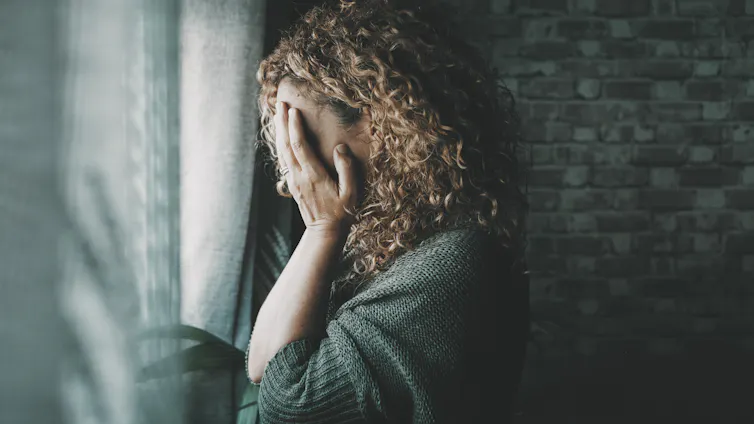
simonapilolla/Getty Images

Australia’s housing shortfall

Rents rose so fast in 2024 that Australia’s Rental Affordability Index now labels all major cities and regional areas “critically unaffordable” for people relying on benefits such as JobSeeker or a pension.

Vacancy rates hover near 1%, the lowest in decades. Mortgage costs chew the biggest slice of income since the mid-1980s.

On Census night in 2021, 122,494 Australians were homeless. Of these, more than 7,600 people slept rough, and nearly one-quarter were aged 12–24.

Data from homelessness services and headcounts of rough sleepers since 2021 suggest today’s figure is higher.

Housing stress quickly turns into mental distress

In a national survey, four in five renters said they spend more than 30% of their income on housing.

This 30% threshold is important. A 2025 study that followed more than 10,000 Australian renters found mental health drops fast once housing costs exceed the 30% mark. Missing a rental payment was linked to a further drop in mental health.

Earlier research has similarly found that among low- to moderate-income households, when housing costs exceed 30% of income, mental-health scores fall compared with similar households who spend less than 30%.

Another recent Australian survey found 38% of private renters feel their housing circumstances harm their mental health, versus 23% of owner-occupiers. This is driven by a mix of housing insecurity (such as short leases and eviction risk) and poor housing conditions (for example, cold homes or mould).

Meanwhile, helplines have reported cost-of-living pressures, including housing insecurity and homelessness, are driving an increasing number of calls.

Who is at highest risk?

In a sense, the housing ladder doubles as a mental health ladder.

Homeowners, with long-term security, sit on the top rung.

Private renters arguably ride the roughest road. Six-month leases, “no-grounds” evictions and “rent bidding” (where applicants may feel compelled to offer above the advertised rent to beat other applicants) keep people on edge.

Social housing residents often start with bigger challenges (43% live with mental health issues), but low rent and fixed leases steady the ship.

People with no stable home face the steepest climb. One review looking at people experiencing homelessness in high-income countries found 76% had a current mental illness.

This is likely linked in a large part to a feeling psychologists call “learned helplessness”. After the tenth rejected rental application – or the 15th, or the 20th – people ask “why keep trying?”. Motivation drops, and depression rises.

What’s more, a stable home makes it easier to do things like hold down a job or finish TAFE. Housing insecurity can therefore compound other problems such as unemployment, which are also linked to poor mental health.

What can we do about it?

Mental ill-health already drains roughly A$220 billion from Australia’s economy each year in lost productivity and health-care costs.

Housing stress piles extra costs onto the health-care system: more GP visits, more ambulance call-outs, more pressure on emergency departments.

Meanwhile, homeless shelters turn people away daily because beds are full.

This is without even accounting for the physical health effects of poor quality housing, including illnesses caused or exacerbated by problems such as mould, damp and cold.

All this means fixing the housing crisis is likely to generate savings for the health-care budget.

There are several ways we can do this.

1. Build more social housing

As of June 2024, about 4% of Australian households lived in social housing, equating to roughly 452,000 dwellings nationwide.

The National Housing Supply and Affordability Council’s State of the Housing System 2025 report recommends boosting social housing to 6%, with a long-term target of 10% of all homes. This would be a major step to cool the market and cut mental distress.

2. Protect renters

This should include ending no-grounds evictions, capping rent hikes to wage growth, and lifting Commonwealth Rent Assistance.

3. Link housing to health policy

On this point, Australia can take lessons from abroad. Finland, for example, has made “Housing First” national policy. This approach gives people experiencing long-term homelessness a permanent apartment and access to support. It has cut rough sleeping significantly.

Meanwhile, Aotearoa New Zealand’s Homelessness Action Plan aims to make homelessness “rare, brief and non-recurring” by funding Housing First in every region.

A trial in Canada gave more than 2,000 participants across several cities experiencing homelessness and mental illness a permanent home plus access to voluntary support.

Evidence from Canada shows Housing First keeps people housed and reduces demand on emergency and hospital services. Pilots in the United Kingdom are indicating similar benefits.

While there have been some promising programs in parts of Australia, there’s more to do.

Secure housing targets should sit inside the National Mental Health and Suicide Prevention Agreement. On the flip side, Australia is currently drafting a National Housing and Homelessness Plan. Mental health goals should be incorporated into that plan.

Just as clean water prevents disease and seat belts cut road deaths, a stable, affordable home is vital for mental health. Without bold action, we face a long-term social crisis.

This article is part of a series, Healthy Homes.

Ehsan Noroozinejad, Senior Researcher and Sustainable Future Lead, Urban Transformations Research Centre, Western Sydney University; Greg Morrison, Professor, Director of the Urban Transformations Research Centre, Lang Walker Endowed Chair in Urban Transformation, Western Sydney University, and Shameran Slewa-Younan, Associate Professor in Mental Health, Western Sydney University

This article is republished from The Conversation under a Creative Commons license. Read the original article.

Don’t Forget…

Did you arrive here from our newsletter? Don’t forget to return to the email to continue learning!
  • Artichoke vs Carrots – Which is Healthier?
    Our Verdict When comparing artichoke to carrots, we picked the artichoke. Why? Both are great, but still, it wasn’t close: In terms of macros, the artichoke has nearly 2x the fiber and more than 3x the protein, for the same carbs; a clear first-round win for artichoke. In the category of vitamins, artichoke has more…

Learn to Age Gracefully

Join the 98k+ American women taking control of their health & aging with our 100% free (and fun!) daily emails:

  • The Power of When – by Dr. Michael Breus

    10almonds is reader-supported. We may, at no cost to you, receive a portion of sales if you purchase a product through a link in this article.

    There’s a lot more to one’s circadian rhythm than just when one wakes and sleeps. This book goes into that quite deeply!

    For example, those items in the subtitle? You could do them all at the same time, but it probably wouldn’t be optimal (although honestly, that does sound like quite a good life!). Rather, there are distinct times of day that we’re going to be better at certain things, and there are distinct times of day when certain things are going to be better for us.

    Of course, some items are not so simple as a one-size fits all, so Dr. Breus outlines for us how to figure out our own chronotype (within four main schemas), and how to make that work for us as well as possible.

    They style is easy-reading pop-science, with frequent summaries, bullet-points, quizzes, and so forth, making it easy to understand, learn, and apply.

    Bottom line: if you feel like your sleep could use a do-over, then this book can help you get it into order—and the rest of your daily activities too!

    Click here to check out The Power of When, and optimize your health!

    Share This Post

  • Why Belly Fat Is The Last To Go (& 3 Signs You’re Nearly There)

    10almonds is reader-supported. We may, at no cost to you, receive a portion of sales if you purchase a product through a link in this article.

    Cori Lefkowitz, of “Strong At Every Age” advises:

    See the signs

    It’s usually the last place to shrink, even though it’s the first place we want; it doesn’t help that most people quit too early or obsess over the scale, which can sabotage progress.

    Three mistakes to avoid:

    1. Unduly focusing on calories: not only are listed caloric values often misleading, calorie-counting typically leads to restriction, fatigue, and rebound weight gain, none of which are good. Instead, track macros to keep your metabolism ticking over nicely, build/maintain muscle, and make what you’re doing sustainable.
    2. Prioritizing hard work over intentional work: random hard workouts and extreme restrictions will ultimately burn you out. Instead, every action should serve a clear purpose towards your goals, so do make a point of planning ahead from time to time (e.g. each month, make a plan, follow it, and then review your progress to plan again for the next month).
    3. Not following a workout progression: stringing random moves together won’t normally build lean muscle. Instead, she advises to repeat a structured plan for 3–6 weeks, progressively challenge yourself, measure results, and repeat until you’ve got to where you want to be.

    Three signs you’re nearly there:

    1. Seeing more definition in other body parts: fat often comes off first from areas we don’t care about; this can even make the belly look bigger temporarily, but it’s actually progress!
    2. Clothes fitting more loosely: even without scale changes, fat loss and recomposition show up in how clothing fits over time.
    3. Improvements in performance, sleep, and health: stronger workouts, better energy, and healthier markers mean your body is functioning better and supporting fat loss.

    For more on all of this, enjoy:

    Click Here If The Embedded Video Doesn’t Load Automatically!

    Want to learn more?

    You might also like:

    Can You Shrink A Waist In Seven Days?

    Take care!

    Share This Post

  • Mythbusting The Mask Debate

    10almonds is reader-supported. We may, at no cost to you, receive a portion of sales if you purchase a product through a link in this article.

    Mythbusting The Mask Debate

    We asked you for your mask policy this respiratory virus season, and got the above-depicted, below-described, set of responses:

    • A little under half of you said you will be masking when practical in indoor public places
    • A little over a fifth of you said you will mask only if you have respiratory virus symptoms
    • A little under a fifth of you said that you will not mask, because you don’t think it helps
    • A much smaller minority of you (7%) said you will go with whatever people around you are doing
    • An equally small minority of you said that you will not mask, because you’re not concerned about infections

    So, what does the science say?

    Wearing a mask reduces the transmission of respiratory viruses: True or False?

    True…with limitations. The limitations include:

    • The type of mask
      • A homemade polyester single-sheet is not the same as an N95 respirator, for instance
    • How well it is fitted
      • It needs to be a physical barrier, so a loose-fitting “going through the motions” fit won’t help
    • The condition of the mask
      • And if applicable, the replaceable filter in the mask
    • What exactly it has to stop
      • What kind of virus, what kind of viral load, what kind of environment, is someone coughing/sneezing, etc

    More details on these things can be found in the link at the end of today’s main feature, as it’s more than we could fit here!

    Note: We’re talking about respiratory viruses in general in this main feature, but most extant up-to-date research is on COVID, so that’s going to appear quite a lot. Remember though, even COVID is not one beast, but many different variants, each with their own properties.

    Nevertheless, the scientific consensus is “it does help, but is not a magical amulet”:

    Wearing a mask is actually unhygienic: True or False?

    False, assuming your mask is clean when you put it on.

    This (the fear of breathing more of one’s own germs in a cyclic fashion) was a point raised by some of those who expressed mask-unfavorable views in response to our poll.

    There have been studies testing this, and they mostly say the same thing, “if it’s clean when you put it on, great, if not, then well yes, that can be a problem”:

    ❝A longer mask usage significantly increased the fungal colony numbers but not the bacterial colony numbers.

    Although most identified microbes were non-pathogenic in humans; Staphylococcus epidermidis, Staphylococcus aureus, and Cladosporium, we found several pathogenic microbes; Bacillus cereus, Staphylococcus saprophyticus, Aspergillus, and Microsporum.

    We also found no associations of mask-attached microbes with the transportation methods or gargling.

    We propose that immunocompromised people should avoid repeated use of masks to prevent microbial infection.❞

    Source: Bacterial and fungal isolation from face masks under the COVID-19 pandemic

    Wearing a mask can mean we don’t get enough oxygen: True or False?

    False, for any masks made-for-purpose (i.e., are by default “breathable”), under normal conditions:

    However, wearing a mask while engaging in strenuous best-effort cardiovascular exercise, will reduce VO₂max. To be clear, you will still have more than enough oxygen to function; it’s not considered a health hazard. However, it will reduce peak athletic performance:

    Effects of wearing a cloth face mask on performance, physiological and perceptual responses during a graded treadmill running exercise test

    …so if you are worrying about whether the mask will impede you breathing, ask yourself: am I engaging in an activity that requires my peak athletic performance?

    Also: don’t let it get soaked with water, because…

    Writer’s anecdote as an additional caveat: in the earliest days of the COVID pandemic, I had a simple cloth mask on, the one-piece polyester kind that we later learned quite useless. The fit wasn’t perfect either, but one day I was caught in heavy rain (I had left it on while going from one store to another while shopping), and suddenly, it fitted perfectly, as being soaked through caused it to cling beautifully to my face.

    However, I was now effectively being waterboarded. I will say, it was not pleasant, but also I did not die. I did buy a new mask in the next store, though.

    tl;dr = an exception to “no it won’t impede your breathing” is that a mask may indeed impede your breathing if it is made of cloth and literally soaked with water; that is how waterboarding works!

    Want up-to-date information?

    Most of the studies we cited today were from 2022 or 2023, but you can get up-to-date information and guidance from the World Health Organization, who really do not have any agenda besides actual world health, here:

    Coronavirus disease (COVID-19): Masks | Frequently Asked Questions

    At the time of writing this newsletter, the above information was last updated yesterday.

    Take care!

    Share This Post

  • Calcium + Vitamin D: “Little To No Use” vs Fractures?

    10almonds is reader-supported. We may, at no cost to you, receive a portion of sales if you purchase a product through a link in this article.

    We’ve written before about supplementation of calcium and vitamin D, for example:

    Vit D + Calcium: Too Much Of A Good Thing? ← this also talks about safe and effective doses, and what goes wrong if you take too much

    And even if you get the dosage right, there are still more ways to mess it up! See: How Taking Vitamin D Supplements Can Sabotage Your Vitamin D Levels

    Which latter is mostly because of people making mistakes in the category of: Vitamin D2 vs Vitamin D3: What You Would Benefit From Knowing

    But we still should supplement to keep our bones healthy, right?

    Per the title of this one (the main title, at the top, with the words “little to not use” in it), no, it’s probably not that helpful, really. To be clear, getting plenty of these things one way or another is important; diet is the best means of doing it (more on this later in the “learn more” section), and if anything, it’s possible those who supplement in order to “be on the safe side” and “cover all bases” may:

    1. fall into the sabotage trap we talked about up top
    2. fall into complacency by not including enough dietary sources “because the supplements will cover it”

    Recently, researchers (Dr. Katherine Desforges et al.) did a very large (n=153,902 over the course of 69 randomized controlled trials) systematic review and meta-analysis and found that calcium supplements, vitamin D supplements, or the combination of both provided little to no clinically meaningful reduction in fractures for most adults studied, and even the absolute reduction in fracture risk was too small to be considered clinically meaningful.

    That’s absolute risk reduction for fractures in general; calcium, vitamin D, and/or combined supplementation also showed little to no benefit for:

    • Total number of falls
    • Hip fractures
    • Vertebral fractures
    • Non-vertebral fractures
    • Risk of falling*

    *This may seem like an odd one to include, but it is relevant too, for example: The Common Meds That Make You More Likely To Die From A fall

    You may be wondering how applicable these numbers are to you, and who the sample population was. Most participants were:

    • Not considered at high risk for fractures or falls (73%)
    • Living independently in the community (87%)

    The findings therefore apply mainly to typical independently-living adults, especially older adults without severe osteoporosis or other major bone disorders. Evidence was more limited for:

    • Individuals with specific metabolic bone diseases
    • People at very high fracture risk
    • Residents of nursing homes or long-term care facilities
    • People already receiving osteoporosis medications

    For the longest time, calcium and vitamin D supplementation has been routinely recommended for bone health. This review shakes that all up, and strongly suggests that for the average adult, these supplements are unlikely to meaningfully prevent fractures or falls.

    You can read the paper itself, here: Calcium, vitamin D, or combined supplementation to prevent fractures and falls: systematic review and meta-analysis

    As for what to do instead, you might consider checking out:

    Want to learn more?

    There is also a common issue that a lot of people get enough calcium and vitamin D, but then a lot of that calcium doesn’t make it past the arteries.

    Thus, the calcium paradox: we want to get (usually: more) calcium, but we want it building our bones, not lining our arteries. How, then, to resolve this problem, and simultaneously fight the dual threats of calcium deficiency (osteoporosis) and calcium excess (atherosclerosis)?

    The answer lies in vitamin K2, which assists the calcium in getting to where you need it, rather than having it accumulating where you don’t.

    Learn more: Vitamin K2 And The Calcium Paradox

    And as for why you might want to favor getting it from food if you can, then while the title says “vitamins”, this book discusses an assortment of vitamins, minerals, and other nutrients; the “other nutrients” category including amino acids (branched chain and essential), prebiotics and probiotics, and triglycerides of various kinds:

    Eat Your Vitamins – by Mascha Davis, RDN ← see our review, here

    Take care!

    Don’t Forget…

    Did you arrive here from our newsletter? Don’t forget to return to the email to continue learning!

    Learn to Age Gracefully

    Join the 98k+ American women taking control of their health & aging with our 100% free (and fun!) daily emails:

  • Intermittent Fasting, Intermittently?

    10almonds is reader-supported. We may, at no cost to you, receive a portion of sales if you purchase a product through a link in this article.

    It’s Q&A Day at 10almonds!

    Have a question or a request? We love to hear from you!

    In cases where we’ve already covered something, we might link to what we wrote before, but will always be happy to revisit any of our topics again in the future too—there’s always more to say!

    As ever: if the question/request can be answered briefly, we’ll do it here in our Q&A Thursday edition. If not, we’ll make a main feature of it shortly afterwards!

    So, no question/request too big or small 😎

    ❝Have you come across any research on alternate-day intermittent fasting—specifically switching between one day of 16:8 fasting and the next day of regular eating patterns? I’m curious if there are any benefits or drawbacks to this alternating approach, or if the benefits mainly come from consistent intermittent fasting?❞

    Short and unhelpful answer: no

    Longer and hopefully more helpful answer:

    As you probably know, usually people going for approaches based on the above terms either

    • practise 16:8 fasting (fast for 16 hours each day, eat during an 8-hour window) or
    • practise alternate-day fasting (fast for 24 hours, eat whenever for 24 hours, repeat)

    …which latter scored the best results in this large meta-analysis of studies:

    Effects of different types of intermittent fasting on metabolic outcomes: an umbrella review and network meta-analysis

    There is also the (popular) less extreme version of alternate-day fasting, sometimes called “eat stop eat”, which is not a very helpful description because that describes almost any kind of eating/fasting, but it usually refers to “once per week, take a day off from eating”.

    You can read more about each of these (and some other variants), here:

    Intermittent Fasting: What’s The Truth?

    What you are describing (doing 16:8 fasting on alternate days, eating whenever on the other days) is essentially: intermittent fasting, just with one 16-hour fast per 48 hours instead of per the usual 24 hours.

    See also: International consensus on fasting terminology ← the section on the terms “STF & PF” covers why this gets nudged back under the regular IF umbrella

    Good news: this means there is a lot of literature into the acute (i.e., occurring the same day, not long-term)* benefits of 16:8 IF, and that means that you will be getting those benefits, every second day.

    You remember that meta-analysis we posted above? While it isn’t mentioned in the conclusion (which only praised complete alternate-day fasting producing the best outcomes overall), sifting through the results data discovers that time-restricted eating (which is what you are doing, by these classifications) was the only fasting method to significantly reduce fasting blood glucose levels.

    (However, no significant differences were observed between any IF form and the reference (continuous energy restriction, CER, i.e. calorie-controlled) diets in fasting insulin and HbA1c levels)

    *This is still good news in the long-term though, because getting those benefits every second day is better than getting those benefits on no days, and this will have a long-term impact on your healthy longevity, just like how it is better to exercise every second day than it is to exercise no days, or better to abstain from alcohol every second day than it is to abstain on no days, etc.

    In short, by doing IF every second day, you are still giving your organs a break sometimes, and that’s good.

    All the same, if it would be convenient and practical for you, we would encourage you to consider either the complete alternate-day fasting (which, according to a lot of data, gives the best results overall),or time-restricted eating (TRE) every day (which, according to a lot of data, gives the best fasting blood sugar levels).

    You could also improve the TRE days by shifting to 20:4 (i.e., 20 hours fasting and 4 hours eating), this giving your organs a longer break on those days.

    Want to learn more?

    For a much more comprehensive discussion of the strengths and weaknesses of different approaches to intermitted fasting, check out:

    Complete Guide To Fasting: Heal Your Body Through Intermittent, Alternate-Day, and Extended Fasting – By Dr. Jason Fung

    Enjoy!

    Don’t Forget…

    Did you arrive here from our newsletter? Don’t forget to return to the email to continue learning!

    Learn to Age Gracefully

    Join the 98k+ American women taking control of their health & aging with our 100% free (and fun!) daily emails:

  • What’s The Healthiest Sweetener?

    10almonds is reader-supported. We may, at no cost to you, receive a portion of sales if you purchase a product through a link in this article.

    It’s Q&A Day at 10almonds!

    Have a question or a request? We love to hear from you!

    In cases where we’ve already covered something, we might link to what we wrote before, but will always be happy to revisit any of our topics again in the future too—there’s always more to say!

    As ever: if the question/request can be answered briefly, we’ll do it here in our Q&A Thursday edition. If not, we’ll make a main feature of it shortly afterwards!

    So, no question/request too big or small 😎

    ❝What sweetners are healthy and which will give us brain cancer etc?❞

    Short answer: none are great, and the science is very mixed

    More helpful answer: some are definitely better or worse than others, and there are strategies that can be employed to limit harm

    Firstly, there is a problem with sweeteners for simply being sweet to the taste, so that’s going to bring down the overall healthiness of literally any sweetener.

    The problem, in few words, is that we can build tolerance to sweetness, and thus we will gradually need more of it to get the same experience. This occurs especially in the case of artificial sweeteners, because many sugar substitutes are many times (in some cases, hundreds of times) sweeter than sugar. This leads to other sweet foods tasting more bland, causing people to crave sweeter and sweeter foods for the same satisfaction level.

    With this in mind…

    The World Health Organization has released a report offering guidance regards the use of sugar-free sweeteners.

    In a nutshell, the guidance is: don’t

    Let’s take some popular ones one-by-one

    We answered a question about sugar a little while back:

    Is Sugar The New Smoking? ← the answer is: no it isn’t, but it’s still very bad

    For more detail on different kinds of sugars, though, see: From Apples to Bees, and High-Fructose Cs: Which Sugars Are Healthier, And Which Are Just The Same?

    Sucralose is a popular one, because it’s “a sugar that isn’t processed as a sugar” (although as new research has discovered, it might be at least partially metabolized as sugar after all), and it does have other problems too:

    • The Sucralose News: Scaremongering Or Serious? ← this is about genotoxicity, but the science is as yet unclear
    • The Sweetener That Interferes With Hunger/Satiety Signals ← specifically, sucralose prolongs hunger, and can even boost cravings, which makes it excellent in culinary terms, but (for most people, at least) not fabulous for the health. Why “for most people”? Well, some people struggle with eating enough, so something that chemically tricks people into eating more could contextually be beneficial. But most people aren’t in that boat, and are more likely to have the opposite problem.

    We’ve also talked about: The Fascinating Truth About Aspartame, Cancer, & Neurotoxicity

    …which covers how the most popular beliefs about aspartame are myths, and in large part stemming from a single viral hoax chain letter in the 90s.

    Erythritol is increasingly common these days, perhaps because of others getting negative press. It has its own specific issues:

    Erythritol & Brain Damage: Is The Science As Scary As It Sounds?

    …and the answer is that while erythritol was linked to a higher risk of heart attack, stroke, and early death in vivo, and in vitro, exposing brain blood vessel cells to erythritol levels similar to a typical sugar-free drink caused:

    • increased reactive oxygen species (which age and inflame tissues)
    • reduced nitric oxide (leading to less vessel relaxation)
    • increased endothelin-1 (causing more vessel constriction)
    • impaired production of t-PA (reducing the ability to break down clots)

    …all of which increase stroke risk. That said, this latter study was about what happens in a petri dish, so it could be that it’s not what happens in a living human being; we don’t know yet. Either way, the higher risk of heart attack, stroke, and early death is compelling as that was from data in real live (prior to early death, anyway) humans, We talked about that here:

    Xylitol vs Erythritol – Which is Healthier?

    The answer we came to in that head-to-head was:

    ❝The one thing that sets them apart is their respective safety profiles. Xylitol is prothrombotic and associated with major adverse cardiac events (CI=95, adjusted hazard ratio=1.57, range=1.12-2.21). Erythritol is also prothrombotic and more strongly associated with major adverse cardiac events (CI=95, adjusted hazard ratio=2.21, range=1.20-4.07).

    So, xylitol is bad and erythritol is worse, which means the relatively “healthier” is xylitol. We don’t recommend either, though.

    (we showed studies for this, linked in the “This or That” page here)

    As a quick aside: readers with good memories may recall that we’ve sometimes recommended xylitol for good oral health (it’s not just “not too bad as sweeteners go”, it actively does good things too; the crux is that it’s being used in the mouth (such as with xylitol-sweetened gum) but not actually ingested in meaningful amounts.

    You can learn more about that here: Xylitol: Cavity Fighter Or Gut Disruptor? The Dose Makes the Poison

    Now for some more positive news…

    Stevia‘s mostly been found to be “not bad”, see: Stevia vs Acesulfame Potassium – Which is Healthier?

    …which found that moderate consumption of stevia improves gut microdiversity, whereas acesulfame potassium harms gut microdiversity:

    Lastly, one we’re not aware of any downsides of beyond the sweetness tolerance spiral problem we mentioned up top…

    Glycine is about as sweet as sugar (sucrose), but it’s an amino acid that’s important for a good number of things, including collagen synthesis:

    The Sweet Truth About Glycine

    So if you’re going to go with some kind of non-sugar sweetener, we’d recommend that 😎

    Enjoy (in moderation though please, because of the sweetness tolerance problem)!

    Don’t Forget…

    Did you arrive here from our newsletter? Don’t forget to return to the email to continue learning!

    Learn to Age Gracefully

    Join the 98k+ American women taking control of their health & aging with our 100% free (and fun!) daily emails: