Are You Getting The Right Kinds Of Flavonoids?

10almonds is reader-supported. We may, at no cost to you, receive a portion of sales if you purchase a product through a link in this article.

First, a quick note on terms:

  • Polyphenol: often simplified to “beneficial phytochemical”, but that’s misleading as there are many beneficial phytochemicals (naturally-occurring chemicals in plants) that do not meet the definition of “polyphenol”, which is very specifically: a compound containing more than one phenolic hydroxyl group
    • Flavonoid: a class of polyphenolic secondary metabolites found in many plants, named for its association with yellow pigment (although the end result in appearance might not be yellow, depending on what else is present, but it’s present in the mix biochemically!). Flavonoids can also be further subcategorized into:
      • Anthocyanidins
      • Anthoxanthins
      • Flavanones
      • Flavanonols
      • Flavans
      • Isoflavonoids

…which can each be subcategorized further, but if we continue expanding the tree of possibilities each time, this page is going to get very long, so we’ll call it sufficient there for now!

However, this subcategorization isn’t only important to biologists who get excited about taxonomy; it has important health implications too.

For example, let’s remember when we wrote about how you can Fight Inflammation & Protect Your Brain, With Quercetin ← Quercetin is a flavonol (which, in turn, is a kind of anthoxanthin)!

Well, not really!

By this we mean it’s not one flavonol, but rather a stack of flavonols in a trenchcoat, and by “trenchcoat” we mean a vegetable or something.

In fact, in today’s “This or That” article, we mentioned that one of the items compared has “more polyphenols (most notably a wide range of flavonoids including multiple anthocyanins, luteolin, and 6 different kinds of quercetin)”. Because we’ve a little more room here and we’re writing about flavonoids, we’ll mention that the data we were looking at, looked like this:

  • Flavonoids
    • Anthocyanins
      • Cyanidin 3-O-(6”-malonyl-glucoside)
      • Cyanidin 3-O-glucoside
    • Flavones
      • Luteolin 7-O-glucuronide
    • Flavonols
      • Quercetin 3-O-(6″-malonyl-glucoside)
      • Quercetin 3-O-(6″-malonyl-glucoside) 7-O-glucoside
      • Quercetin 3-O-galactoside
      • Quercetin 3-O-glucoside
      • Quercetin 3-O-glucuronide
      • Quercetin 3-O-rhamnoside

…along with a lot of additional data that we won’t bore you with here, pertaining to mg/100g values, minimums and maximums, standard deviations, studies done, etc. The data table fills the screen and more.

So you see, even following the tree of possibilities down as far as quercetin yields 9 flavonoids including 6 kinds of quercetin present in that plant alone, and that’s a fairly modest list.

Why this matters for your health

Scientists (Dr. Alysha Thompson et al.) examined an uncontroversial topic, the connection between flavonoid intake and good health.

What was a little different from the norm, though, was that the study looked beyond flavonoid quantity, to also look at diversity of flavonoids.

They found that people who consumed a greater variety of flavonoids had much lower risks of death and major chronic diseases, independent of total quantity consumed.

This was a big (n=124,805) study, looking at UK adults aged 40+: participants were mostly women (56%), with 60% overweight or obese and 25% hypertensive.

Shocking nobody in this British population study, 67% of the total flavonoid consumption came from tea.

Which is a problem. Not because there’s anything wrong with tea (it’s a very healthful drink), but rather because very many people had it as their primary source of flavonoids, which isn’t very diverse; indeed, flavan-3-ols (mostly found in tea) made up 87% of total flavonoid intake.

Quantity vs Diversity

People who consumed the largest amounts of flavonoids (mostly from tea) often consumed the least diverse flavonoids (i.e. fewest kinds).

Which made the results all the starker, since those consuming a wider range of flavonoids got more from beneficial compounds like anthocyanins, flavanones, and proanthocyanidins—rather than just thearubigins from tea.

Notably, the people who did get more diversity of flavonoids tended to be healthier overall; they were also (as a matter of demographic information, since it’s there in the paper) more likely to be female, older, leaner, more physically active, better educated, and less likely to smoke.

This means that while previous recommendations focused on quantity (e.g. 400–600 mg/day of flavan-3-ols), this study suggests expanding to include as many different sources of flavonoids as reasonably possible.

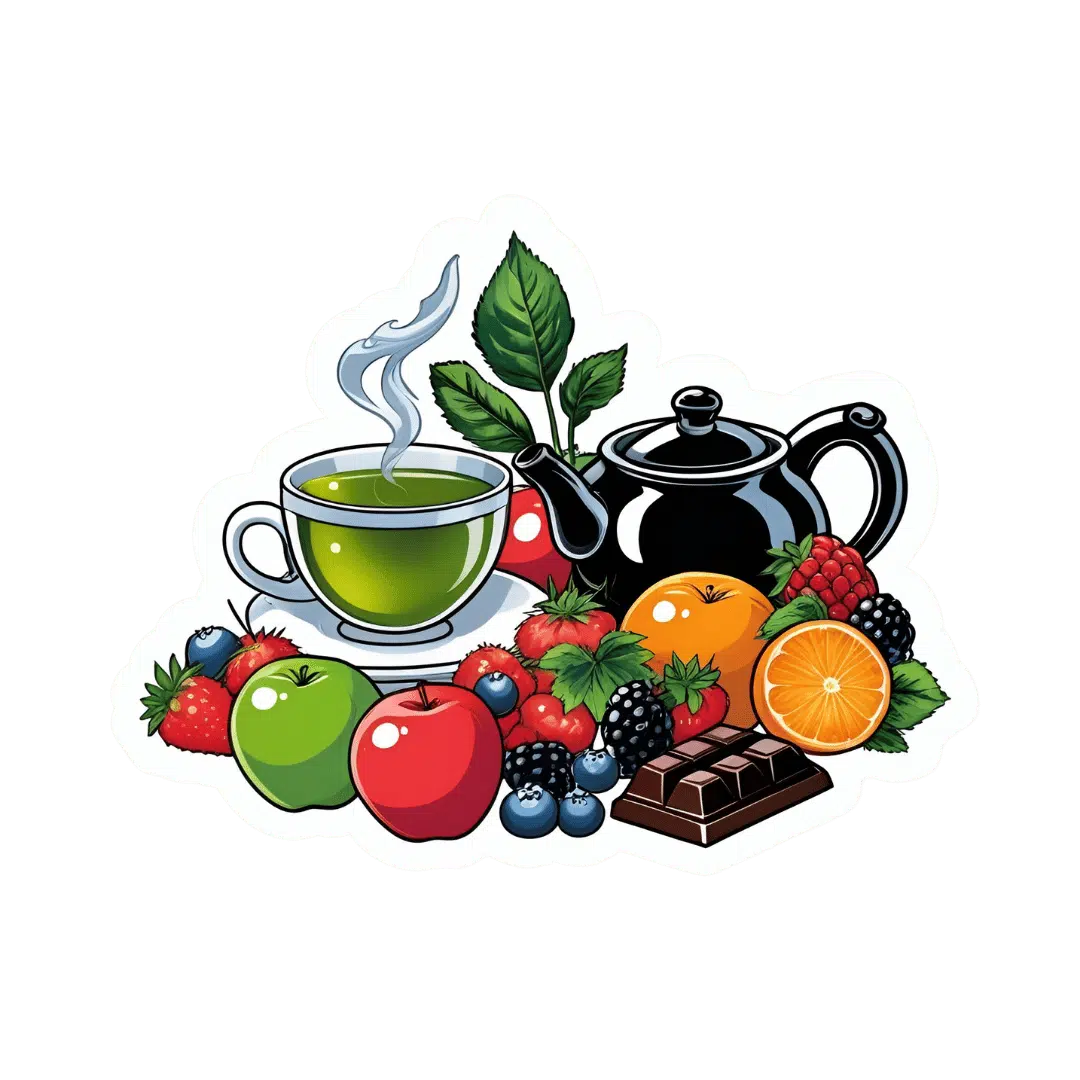
In particular, the researches found that top-scorers for diversity of flavonoids includes berries, apples, citrus fruits, so they’re best enjoyed alongside black and green teas (which are very good), and yes, even some dark chocolate if you like.

Note that written like that, it looks like 6 different sources. But for example, how many different kinds of flavonoid does a blueberry contain?

Well, we can’t give an exhaustive list because each one has to be tested for individually, but we can say that a partial list of different kinds of flavonoids contained in a blueberry looks like this:

  • Cyanidin 3-O-(6”-acetyl-galactoside)
  • Cyanidin 3-O-(6”-acetyl-glucoside)
  • Cyanidin 3-O-arabinoside
  • Cyanidin 3-O-galactoside
  • Cyanidin 3-O-glucoside
  • Delphinidin 3-O-(6”-acetyl-galactoside)
  • Delphinidin 3-O-(6”-acetyl-glucoside)
  • Delphinidin 3-O-arabinoside
  • Delphinidin 3-O-galactoside
  • Delphinidin 3-O-glucoside
  • Malvidin 3-O-(6”-acetyl-galactoside)
  • Malvidin 3-O-(6”-acetyl-glucoside)
  • Malvidin 3-O-arabinoside
  • Malvidin 3-O-galactoside
  • Malvidin 3-O-glucoside
  • Peonidin 3-O-(6”-acetyl-galactoside)
  • Peonidin 3-O-(6”-acetyl-glucoside)
  • Peonidin 3-O-arabinoside
  • Peonidin 3-O-galactoside
  • Peonidin 3-O-glucoside
  • Petunidin 3-O-(6”-acetyl-galactoside)
  • Petunidin 3-O-(6”-acetyl-glucoside)
  • Petunidin 3-O-arabinoside
  • Petunidin 3-O-galactoside
  • Petunidin 3-O-glucoside
  • (-)-Epicatechin
  • Kaempferol 3-O-glucoside
  • Myricetin 3-O-arabinoside
  • Myricetin 3-O-rhamnoside
  • Quercetin 3-O-acetyl-rhamnoside
  • Quercetin 3-O-arabinoside
  • Quercetin 3-O-galactoside
  • Quercetin 3-O-glucoside
  • Quercetin 3-O-xyloside

And there are plenty of other polyphenols in a blueberry too; that’s just the flavonoids, and not even an exhaustive list of those!

So, all this to say, diversity can be found easily, if you know where to look 😎

You can read the paper in full, here: High diversity of dietary flavonoid intake is associated with a lower risk of all-cause mortality and major chronic diseases

In summary…

The trick to getting the most health benefits out of flavonoids is not focusing on total quantity, but on diversity.

Want to learn more?

Check out:

Alternatively, for a middle-ground approach of targeting 16 most polyphenol delivering foods, see this super-dense arrangement:

Mediterranean Diet… In A Pill? ← it’s about plant extracts from 16 specific foods, and the polyphenols they deliver

Enjoy!

Don’t Forget…

Did you arrive here from our newsletter? Don’t forget to return to the email to continue learning!

Learn to Age Gracefully

Join the 98k+ American women taking control of their health & aging with our 100% free (and fun!) daily emails:

  • This Bill Aims To Help Firefighters With Cancer. Getting It Passed Is Just the Beginning.

    10almonds is reader-supported. We may, at no cost to you, receive a portion of sales if you purchase a product through a link in this article.

    As firefighters battled the catastrophic blazes in Los Angeles County in January, California’s U.S. senators, Adam Schiff and Alex Padilla, signed onto legislation with a simple aim: Provide federal assistance to first responders diagnosed with service-related cancer.

    The Honoring Our Fallen Heroes Act is considered crucial by its supporters, with climate change fueling an increase in wildfire frequency and firefighting deemed carcinogenic by the World Health Organization. Firefighters have a 14% higher chance of dying from cancer than the general population, according to a 2024 study, and the disease was responsible for 66% of career firefighter line-of-duty deaths from 2002 to 2019.

    The Los Angeles wildfires brought the fear generated by these statistics into bold relief. As homes, businesses, and cars — and the products within them — were incinerated, gases, chemicals, asbestos, and other toxic pollutants were released into the air, often settling into soil and dust. First responders working at close range, often without adequate respiratory protection, were at higher risk of developing adverse health conditions.

    Just days after the fires were contained, researchers tested a group of 20 firefighters who had come from Northern California to help battle the flames and found dangerously elevated levels of lead and mercury in their blood.

    “Firefighters and first responders put their lives on the line without a second thought to protect California communities from the devastating Southern California fires,” Padilla said in a statement. “When they sacrifice their lives or face severe disabilities due to service-related cancers, we have a shared duty to help get their families back on their feet.”

    But while the Honoring Our Fallen Heroes Act has bipartisan support, it still faces a rough road politically, and those who’ve spent years dealing with similar government-run programs warn of major implementation issues should the measure become law.

    The Senate Judiciary Committee passed a similar bill in 2024, but the measure didn’t advance to a vote on the floor. And with legislators pondering potentially massive federal budget cuts, its fate in Congress this year is far from clear. What is clear is that, for legislation tying benefits to service-related health conditions, the devil is in the details.

    “Getting the piece of legislation passed is not as hard as guarding it,” said John Feal, who was injured at the 9/11 ground zero site while working as a demolition supervisor. He has since become a fierce advocate for first responders and military veterans.

    “You will watch the legislation mature, as more and more people who need the assistance come forward,” Feal said. At that point, he added, the program’s capacity to grow — and to successfully process the applications of those who’ve come forward for help — may become a challenge.

    That, Feal said, is what happened with the various government programs created after the 9/11 attacks to provide monetary compensation and health care to injured first responders, including some later diagnosed with cancer. Both the September 11th Victim Compensation Fund and the World Trade Center Health Program encountered substantial funding issues and were beset by logistical failures.

    The structure of the Honoring Our Fallen Heroes Act, sponsored by Sen. Amy Klobuchar (D-Minn.), might allow it to sidestep some funding pitfalls. Rather than create a new benefit program, the bill would grant firefighters who have non-9/11 cancer-related conditions access to the long-standing Public Safety Officers’ Benefits Program, which provides monetary death, disability, and education benefits to line-of-duty responders and surviving family members.

    Death benefits in such programs are considered mandatory spending and are funded regardless of congressional budget decisions. Funding for disability and education benefits, however, depends on annual appropriations.

    Even with full funding, the legislation could face implementation problems similar to those plaguing the 9/11 programs, including complex eligibility criteria, difficulty documenting that illnesses are service-related, and — more recently — long waits to enroll amid seesawing federal attempts at cutbacks.

    Attorney Michael Barasch represented the late New York police detective James Zadroga, who developed pulmonary fibrosis from toxic exposure at the World Trade Center site and for whom the 9/11 Health and Compensation Act is named. Barasch, who still represents 9/11 victims and lobbies Congress for program improvements and funding, said the Honoring Our Fallen Heroes Act should streamline the process for first responders to document that their cancers are related to fighting wildfires.

    “In my experience representing more than 40,000 members of the 9/11 community, any similar program should have a clear set of standards to determine eligibility,” Barasch told KFF Health News. “Needless complexity creates a serious risk that responders who should have been eligible might not have access to benefits.”

    Feal added that lawmakers should be ready to bolster funding to adequately staff the Public Safety Officers’ Benefits Program if it adds to the conditions currently covered, noting that the 9/11 programs have swelled as more and more first responders have presented service-related conditions.

    “There were 75,000 people in the program in 2015. There’s now close to 140,000,” Feal said. “There’s a backlog on enrollment into the WTC program because they’re understaffed, and there’s also a backlog on getting your illnesses certified so you can get compensated.”

    As the Public Safety Officers’ Benefits Program is currently implemented, firefighters and other first responders are eligible for support for physical injuries they incur in the line of duty or for deaths from duty-related heart attacks, strokes, mental health conditions, and 9/11-related illnesses. The bill would add provisions for those who die or become permanently disabled from other service-related cancers.

    A study has already been launched to track the short- and long-term health impacts of the Los Angeles wildfires. “This was an environmental and health disaster that will unfold over decades,” Kari Nadeau, a professor at Harvard’s T.H. Chan School of Public Health, said in announcing the study.

    Firefighters who battled the massive 2018 Camp Fire in Northern California, meanwhile, have been found to carry higher levels of carcinogens and other toxic substances in their blood than the general population, according to a study commissioned by the San Francisco Firefighters Cancer Prevention Foundation.

    The Honoring Our Fallen Heroes Act was first introduced in 2023 and reintroduced on Jan. 23 of this year, with Klobuchar referencing the California wildfires in her press release. The Congressional Budget Office estimated last year that the bill would cost about $250 million annually from 2024 to 2034; it has not weighed in since the measure was reintroduced.

    “Cancer’s grip on the fire service is undeniable,” said Edward Kelly, president of the International Association of Fire Fighters. “When a firefighter dies from occupational cancer, we owe it to them to ensure their families get the line-of-duty death benefits they are owed.”

    This article was produced by KFF Health News, which publishes California Healthline, an editorially independent service of the California Health Care Foundation. 

    KFF Health News is a national newsroom that produces in-depth journalism about health issues and is one of the core operating programs at KFF—an independent source of health policy research, polling, and journalism. Learn more about KFF.

    Subscribe to KFF Health News’ free Morning Briefing.

    This article first appeared on KFF Health News and is republished here under a Creative Commons license.

    Share This Post

  • The 7-Minute Morning Routine That Eliminates Stiffness

    10almonds is reader-supported. We may, at no cost to you, receive a portion of sales if you purchase a product through a link in this article.

    The video title says “65+”, but honestly, if you are younger than that, and wait until you are 65 to attend to such things as mobility maintenance, then you’ll wish you’d started a long time previously!

    So, today is always a good day to start, whatever your age.

    A good way to start the day

    The exercises do not, in fact, include the forwards bend depicted in the thumbnail. Rather, they are:

    Exercise 1: toe wiggles (1 minute):

    • while lying in bed, open and close your toes to improve foot mobility.
    • this may seem silly and/or trivial, but it’s vital for overall mobility as foot health impacts daily movement, and your toes are responsible for a surprising amount when it comes to your posture, gait, etc.

    Exercise 2: calf and hamstring stretch (1 minute):

    • use a rolled-up towel (or similar non-stretchy long thing) to pull one foot towards you while straightening your leg.
    • hold the stretch for 30 seconds per leg to relieve tightness in the calf or hamstring.

    Exercise 3: knee flexion (1 minute):

    • bend your knee as much as possible and pull your shin towards you.
    • perform for 30 seconds per leg, gently easing into stiffness if necessary to improve knee mobility (i.e. if this is difficult at first).

    Exercise 4: knee extension (1 minute):

    • straighten one leg on the bed and press your knee down while pulling the toes up.
    • hold for 5 seconds, repeat six times per leg, improving knee extension and strengthening the quads.

    Exercise 5: hip flexion mobilization (1 minute):

    • with your knees bent, pull one knee towards your chest and release in a rhythmic motion (see video for differences from #3)
    • do 30 seconds per leg to improve hip mobility and loosen stiffness, especially beneficial for those with hip arthritis.

    exercise 6: cat-cow stretch (1 minute):

    • on all fours, alternate between arching your back (cat) and dipping it (cow).
    • improves mobility in the neck, mid-back, and lower back.

    exercise 7: shoulder and upper back stretch (1 minute):

    • stand facing a wall, place your hands on the wall, and hinge at the hips to drop your torso between your arms.
    • stretches lats, shoulders, and the upper back; do two 30-second holds..

    Click Here If The Embedded Video Doesn’t Load Automatically!

    Want to learn more?

    You might also like:

    Over 50? Do These 3 Stretches Every Morning To Avoid Pain

    Take care!

    Share This Post

  • Sweet Dreams Are Made Of Cheese (Or Are They?)

    10almonds is reader-supported. We may, at no cost to you, receive a portion of sales if you purchase a product through a link in this article.

    It’s Q&A Day at 10almonds!

    Have a question or a request? You can always hit “reply” to any of our emails, or use the feedback widget at the bottom!

    In cases where we’ve already covered something, we might link to what we wrote before, but will always be happy to revisit any of our topics again in the future too—there’s always more to say!

    As ever: if the question/request can be answered briefly, we’ll do it here in our Q&A Thursday edition. If not, we’ll make a main feature of it shortly afterwards!

    So, no question/request too big or small

    ❝In order to lose a little weight I have cut out cheese from my diet – and am finding that I am sleeping better. Would be interested in your views on cheese and sleep, and whether some types of cheese are worse for sleep than others. I don’t want to give up cheese entirely!❞

    In principle, there’s nothing in cheese that, biochemically, should impair sleep. If anything, its tryptophan content could aid good sleep.

    Tryptophan is found in many foods, including cheese, which (of common foods, anyway), for example cheddar cheese ranks second only to pumpkin seeds in tryptophan content.

    Tryptophan can be converted by the body into 5-HTP, which you’ve maybe seen sold as a supplement. Its full name is 5-hydroxytryptophan.

    5-HTP can, in turn, be used to make melatonin and/or serotonin. Which of those you will get more of, depends on what your body is being cued to do by ambient light/darkness, and other environmental cues.

    If you are having cheese and then checking your phone, for instance, or otherwise hanging out where there are white/blue lights, then your body may dutifully convert the tryptophan into serotonin (calm wakefulness) instead of melatonin (drowsiness and sleep).

    In short: the cheese will (in terms of this biochemical pathway, anyway) augment some sleep-inducing or wakefulness-inducing cues, depending on which are available.

    You may be wondering: what about casein?

    Casein is oft-touted as producing deep sleep, or disturbed sleep, or vivid dreams, or bad dreams. There’s no science to back any of this up, though the following research review is fascinating:

    Dreams of the Rarebit Fiend: food and diet as instigators of bizarre and disturbing dreams

    (it largely supports the null hypothesis of “not a causal factor” but does look at the many more likely alternative explanations, ranging from associated actually casual factors (such as alcohol and caffeine) and placebo/nocebo effect)

    Finally, simple digestive issues may be the real thing at hand:

    Association between digestive symptoms and sleep disturbance: a cross-sectional community-based study

    Worth noting that around two thirds of all people, including those who regularly enjoy dairy products, have some degree of lactose intolerance:

    Lactose Intolerance in Adults: Biological Mechanism and Dietary Management

    So, in terms of what cheese may be better/worse for you in this context, you might try experimenting with lactose-free cheese, which will help you identify whether that was the issue!

    Share This Post

  • What is air hunger, and can it be treated?

    10almonds is reader-supported. We may, at no cost to you, receive a portion of sales if you purchase a product through a link in this article.

    Can you hold your breath until you’re almost bursting to take another breath in? This urgent feeling that you need to get more air is called “air hunger”.

    You may feel this sensation when you exercise intensely and push to your limit. Your breath will usually return to normal quickly once you’ve stopped exerting yourself.

    But some people – such as those living with lung conditions or severe anxiety – experience air hunger frequently in their day-to-day lives. Air hunger, which is sometimes described as “drowning” or “suffocating” from a lack of air, can be incredibly distressing.

    And it can be hard not to panic.

    So, what helps if you experience air hunger? And when should you get help?

    Olga Pankova/Getty

    What is air hunger?

    Many conditions can cause shortness of breath (also called dyspnoea). These commonly include heart diseases and lung conditions such as asthma, chronic obstructive pulmonary disease or long COVID.

    Although the terms are sometimes used interchangeably, air hunger is not the same as shortness of breath.

    Air hunger is an extreme and distinct feature of breathlessness: the feeling you can’t get enough air or take a full breath in.

    This sensation can make people take bigger breaths or breathe faster, to try and get more oxygen. But this can actually make the feeling of breathlessness worse. Some people may also find they yawn or sigh a lot as they try to get more air.

    For some people, an episode may be brief and resolve on its own. Others may pass out and need immediate medical attention to regain their breath.

    In addition to difficulty breathing, symptoms can include chest tightness, sweating, dizziness and coughing. If you experience any of these symptoms, especially for the first time, you should seek immediate medical attention by calling triple 0.

    Identifying the cause

    The key to treating air hunger is understanding what’s behind it. So a doctor will first try to identify the underlying cause.

    Air hunger may happen as part of an acute condition that causes breathlessness. For example, if you have a chest infection, you may struggle to breathe deeply and get enough oxygen. When you recover from the illness, you may no longer experience the feeling that you’re unable to fill your lungs.

    But air hunger can also be a feature of a chronic condition. Those who live with severe heart or lung conditions – such as congestive cardiac failures or interstitial lung diseases – may never feel they can breathe deeply or fully fill their lungs. This can significantly limit their ability to exercise or participate in everyday activities.

    Living with mental health conditions such as an anxiety or panic disorder can also mean frequent episodes of air hunger.

    Even when air hunger resolves by itself, you should still see your doctor for further assessment, to identify the cause and work out how to manage it.

    What a doctor will look at

    Your doctor will typically observe your breathing rate and ask about your symptoms, how often you experience air hunger, and how much distress it causes.

    They may also ask you to rate your shortness of breath using a Borg scale, which involves picking a number on the scale to best describe how short of breath you feel.

    Your doctor will also measure vital signs such as your pulse rate and oxygen saturation levels. Oxygen saturation means how much oxygen is actually making it into your bloodstream, and can be measured with a device called a pulse oximeter.

    If you’ve felt short of breath regularly over at least six weeks, you may need to do further testing. A lung function test or an exercise stress test can provide a comprehensive report on your lung capacity and how well your lungs and heart function under stress. Your doctor may also be refer you to a specialist.

    What helps?

    Depending on the cause, you may be prescribed medication, such as inhalers or oxygen for a lung condition. Opioids (morphine) or benzodiazepines (diazepam) may alleviate symptoms, but these would only be used in the short term, due to the risk of becoming dependent.

    Apart from medications, breathing and relaxation techniques may help some people manage the unpleasant sensation. These include:

    • pursed lip breathing: pucker your lips and focus on blowing the air out slowly, until you are able to take a big breath in

    https://www.youtube.com/embed/7kpJ0QlRss4?wmode=transparent&start=0 Pursed lip breathing can help you stay calm and slow the pace of your breathing.

    • mindful breathing: find a relaxed resting position where you can draw your attention to your breath and focus on regaining control of your rate of breathing

    https://www.youtube.com/embed/-YHRb2S4uvg?wmode=transparent&start=0 Videos like this may also help you regain control of your breathing.

    • timed breathing: while moving, time your breath with your body. For example, focus on breathing out when stepping with your right leg and breathing in when you step out with your left
    • the cool fan technique: blow a fan (electric or hand-held) directly onto your face. The cool air stimulates the nerves in the face to reduce the sensation of breathlessness. A cool washer on your face may help create the same effect.

    When to seek help

    To manage air hunger episodes, you should follow your health professional’s advice about how and when to take medications.

    Your doctor will also provide you with a management plan to guide you and your loved ones on what to do when you have an air hunger episode. Check in with your doctor regularly, as the plan may need updating if or when your condition changes.

    In an emergency, or if you are experiencing air hunger for the first time, always call triple 0.

    Clarice Tang, Senior Lecturer in Physiotherapy, Victoria University

    This article is republished from The Conversation under a Creative Commons license. Read the original article.

    Don’t Forget…

    Did you arrive here from our newsletter? Don’t forget to return to the email to continue learning!

    Learn to Age Gracefully

    Join the 98k+ American women taking control of their health & aging with our 100% free (and fun!) daily emails:

  • Does Vitamin D Help Against COVID?

    10almonds is reader-supported. We may, at no cost to you, receive a portion of sales if you purchase a product through a link in this article.

    Vitamin D does benefit the immune system in quite a number of ways.

    For example, it…

    All that said and done, sometimes taking vitamin D can actually create problems:

    The Mistake That Weakens Your Immunity: How Taking Vitamin D Supplements Can Sabotage Your Vitamin D Levels

    But, it can be done right, so let’s assume you do it right, and…

    So how about vs COVID?

    Researchers (Dr. JoAnn Manson et al.) looked into this, and specifically tested whether high-dose vitamin D3 could reduce COVID severity or prevent infections in a large randomized trial, charmingly called the VIVID study.

    What they did: participants (1,747 adults with COVID, plus 277 household contacts) took vitamin D3 at 9,600 IU per day for 2 days followed by 3,200 IU per day for 4 weeks, while the control group received a placebo.

    As for the results:

    • Did it reduce infection? No, it didn’t lower the risk of being infected for the household members.
    • Did it reduce the severity? No, it didn’t reduce the severity, nor the number of healthcare visits, hospitalizations, or deaths.
    • Did it have any benefit vs COVID? Yes, somewhat, maybe, when it came to the further-down-the-line symptoms, such as fatigue, shortness of breath, brain fog, and other long COVID symptoms.
      • Specifically, 21% of vitamin D users reported persistent symptoms at 8 weeks versus 25% in the placebo group.
        • You might be wondering how significant that difference is. Given the same size, the difference was borderline statistically significant, meaning it could represent a real effect but the evidence isn’t strong enough yet to confirm it.

    Dr. Manson herself concluded that the trial found no benefit for acute COVID, but the long COVID symptom reduction is “promising” and should be tested in larger studies.

    You can find the paper itself, here: A Randomized Trial of Vitamin D Supplementation and COVID-19 Clinical Outcomes and Long COVID: The Vitamin D for COVID-19 Trial

    Want to try supplemental vitamin D3?

    We don’t sell it, but here for your convenience is an example product on Amazon 😎

    But watch out with the doses, if supplementing vitamin D in either form, because…

    Vit D + Calcium: Too Much Of A Good Thing? ← this also talks about safe and effective doses, and what goes wrong if you take too much

    Want to learn more?

    Check out:

    What Can Be Done About Long COVID? ← scientists have found a possible cure, a procedure known as epipharyngeal abrasive therapy, which as enjoyable as it sounds, and is not yet proven to cure it completely (although to give it its due, the science so far really is promising)

    Take care!

    Don’t Forget…

    Did you arrive here from our newsletter? Don’t forget to return to the email to continue learning!

    Learn to Age Gracefully

    Join the 98k+ American women taking control of their health & aging with our 100% free (and fun!) daily emails:

  • Soy Allergy? No Problem! Turn Any Legume Into Tofu (Here’s How)

    10almonds is reader-supported. We may, at no cost to you, receive a portion of sales if you purchase a product through a link in this article.

    Legumes have similar chemical composition, which means they can generally be used in the same ways as each other:

    Variety is the spice of life

    In the video, he demonstrates this with green peas, red lentils, and green lentils, and mentions that it is the same for chickpeas too. The process is:

    1. Soak 100g dried legumes overnight in plenty of water.
    2. Drain and blend with 250ml fresh water until smooth.
    3. Pour into a nonstick frying pan, add ½ tsp salt, and stir.
    4. Cook until it thickens into a paste, then cook for another 2–3 minutes on low heat.
    5. Transfer to a 500ml mold, smooth the top, and set in the fridge for 1 hour.
    6. If properly set, it can be eaten as-is or fried into crispy cubes.
    7. Stir-fry tofu with: ginger, spring onions, garlic, and chili.
    8. Sauce: suggestions include soy sauce, rice wine vinegar, mirin, sesame oil.
    9. Garnish with: sesame and coriander seeds

    Science behind it: heating alters protein bonds and starches, forming a thick paste that sets.

    Note: legumes contain natural toxins that are destroyed by cooking. For some, like those mentioned above, frying for a few minutes is sufficient. However, kidney beans are high in phytohemagglutinin, which requires at least 20 minutes of cooking to be safe, making them unsuitable for this process.

    For more on all of this, plus visual demonstrations, enjoy:

    Click Here If The Embedded Video Doesn’t Load Automatically!

    Want to learn more?

    You might also like to read:

    Six Ways To Eat For Healthier Skin

    Take care!

    Don’t Forget…

    Did you arrive here from our newsletter? Don’t forget to return to the email to continue learning!

    Learn to Age Gracefully

    Join the 98k+ American women taking control of their health & aging with our 100% free (and fun!) daily emails: