
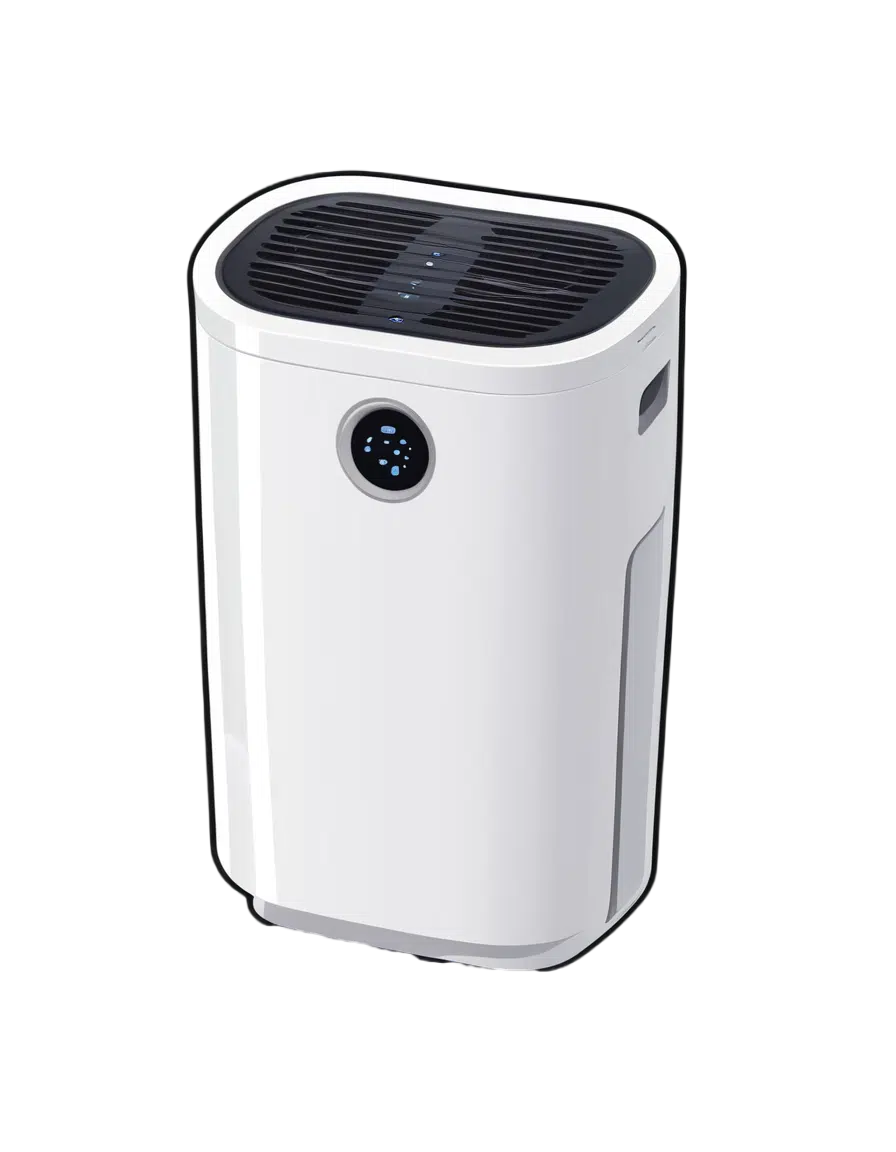
Air Purifiers & Sleep

10almonds is reader-supported. We may, at no cost to you, receive a portion of sales if you purchase a product through a link in this article.

It’s Q&A Day at 10almonds!

Have a question or a request? We love to hear from you!

In cases where we’ve already covered something, we might link to what we wrote before, but will always be happy to revisit any of our topics again in the future too—there’s always more to say!

As ever: if the question/request can be answered briefly, we’ll do it here in our Q&A Thursday edition. If not, we’ll make a main feature of it shortly afterwards!

So, no question/request too big or small

❝I’ve read that air pollution has a negative effect on sleep quality and duration. Since I live next to a busy road, I was wondering whether I should invest in an air purifier. What are 10Almonds’s views?❞

Going straight to the science, there are two questions here:

  • Does air pollution negatively affect sleep quality and duration?
  • Does the use of an air purify actually improve the air quality in the way(s) necessary to make a difference?

We thought we’d have to tackle these questions separately, but we did find one study that addressed your question directly. It was a small study (n=30 if you believe the abstract; n=29 if you read the paper itself—one person dropped out); the results were modest but clear:

❝The purifier filter was associated with increased total sleep time for an average of 12 min per night, and increased total time in bed for an average of 19 min per night relative to the placebo.

There were several sleep and mood outcomes for which no changes were observed, and time awake after sleep onset was higher for the purifier filter. Air quality was better during the high-efficiency particulate air filter condition.

These findings offer positive indications that environmental interventions that improve air quality can have benefits for sleep outcomes in healthy populations who are not exhibiting clinical sleep disturbances.❞

Source: Can air purification improve sleep quality? A 2-week randomised-controlled crossover pilot study in healthy adults

In the above-linked paper’s introduction, it does establish the deleterious effect of air pollution on a wide variety of health metrics, including sleep, this latter evidenced per Caddick et al. (2018): A review of the environmental parameters necessary for an optimal sleep environment

Now, you may be wondering: is an extra 12 minutes per night worth it?

That’s your choice to make, but we would argue that it is. We can make many choices in our lives that affect our health slightly for the better or the worse. If we make a stack of choices in a particular direction, the effects will also stack, if not outright compound.

So in the case of sleep, it might be (arbitrary numbers for the sake of illustration):

  • Get good exercise earlier in the day (+3%)
  • Get good food earlier in the day (+2.5%)
  • Practice mindfulness/meditation before bed (+2.5%)
  • Have a nice dark room (+5%)
  • Have fresh bedding (+2.5%)
  • Have an air purifier running (+3%)

Now, those numbers are, as we said, arbitrary*, but remember that percentages don’t add up; they compound. So that “+3%” starts being a lot more meaningful than if it were just by itself.

*Confession: the figure of 3% for the air purifier wasn’t entirely arbitrary; it was based on 100(12/405) = 80/27 ≈ 3, wherein the 405 figure was an approximation of the average total time (in minutes) spent sleeping with placebo, based on a peep at their results graph. There are several ways the average could be reasonably calculated, but 6h45 (i.e., 405 minutes) was an approximate average of those reasonable approximate averages.

So, 12 minutes is a 3% improvement on that.

Don’t have an air purifier and want one?

We don’t sell them, but here’s an example on Amazon, for your convenience

Take care!

Don’t Forget…

Did you arrive here from our newsletter? Don’t forget to return to the email to continue learning!

Recommended

Learn to Age Gracefully

Join the 98k+ American women taking control of their health & aging with our 100% free (and fun!) daily emails:

  • Get More Exercise Benefits (Without Exercising More Or Harder!)

    10almonds is reader-supported. We may, at no cost to you, receive a portion of sales if you purchase a product through a link in this article.

    Everybody loves the benefits of exercise!

    However, not everybody loves exercise itself. And even for those who do love exercise, we can’t always do as much as we’d like!

    So, what’s this one all about it?

    Variety really is the spice of life

    Researchers (Dr. Qi Sun et al.) examined whether long-term engagement in individual physical activities and/or a greater variety of activities are associated with a 19% lower risk of death, independent of total activity volume.

    111,467 people started the study, and 38,847 of them died before it was over.

    It’s a little sad that experiments like this always have a large death toll, but let’s make sure it was worth it.

    Added up together, this resulted in 2,431,381 person-years of data.

    During the time that they had before the end, the participants recorded time spent in up to 11–13 different activities, with energy expenditure estimated using MET-hours* per week.

    *Metabolic Equivalent of Task. This is a way of standardizing all exercises per how much energy is expended into them.

    Notably, higher total physical activity was linked to a lower risk of death, but benefits plateaued at around 20 weekly MET-hours, suggesting that after that point, more is not necessarily better.

    Some activities were better than others for health outcomes: most activities were associated with lower all-cause mortality, but the strongest associations were seen for walking, racquet sports, rowing, callisthenics, weight training, running, jogging, and stair climbing, while swimming—surprisingly—showed no clear association.

    We may hypothesize that swimming didn’t score so well as it’s neither particularly strong resistance work, nor is it necessarily training movements that are used a lot in daily life, and thus keeping that mobility.

    It can do!

    • For example, front crawl and backstroke are excellent for shoulder mobility, but…
    • if you’re spending your swimming time on breast stroke, that’s half a range of motion, and…
    • if you’re just sculling, that’s nothing at all beyond some mild cardio work.

    Here’s the good part, though: engaging in a broader mix of activities was associated with a 19% lower risk of death from all causes, even after adjusting for total activity volume.

    You can read the paper in full, here: Physical activity types, variety, and mortality: results from two prospective cohort studies

    How to benefit the most

    Clearly, what’s necessary here is to enjoy a wider variety of physical activities. And as the above science shows, you don’t have to do a lot at once!

    See also: How Useful Is “Exercise Snacking”, Really?

    If you do want to do a lot at once, then we recommend considering High-Intensity Interval Training (HIIT), but carefully:

    How To Do HIIT (Without Wrecking Your Body) ← important, because the “high-intensity” part can cause problems for some people, if not undertaken attentively

    Which can further be expanded to: HIIT, But Make It HIRT ← high-intensity resistance training, undertaken per HIIT principles

    On which note, do see: Resistance Is Useful! (Especially As We Get Older) ← for more on resistance training methods in general

    If you like that idea but don’t like gyms and weights and such, then don’t worry, we’ve got you covered: Resistance Beyond Weights

    And finally, if you don’t like exercise in general, then check out these: No-Exercise Exercise!

    Enjoy!

    Share This Post

  • Broad Beans vs Sweetcorn – Which is Healthier?

    10almonds is reader-supported. We may, at no cost to you, receive a portion of sales if you purchase a product through a link in this article.

    Our Verdict

    When comparing broad beans to sweetcorn, we picked the broad beans.

    Why?

    Firstly, you may be wondering: “aren’t broad beans fava beans?”, and yes, yes they are, but by convention, broad beans are the young green beans, while fava beans are the mature beans of the plant. Similar situation to the relationship between edamame and soybeans. And, in both cases, you’re more likely to put the young green beans in a salad, thus making the broad beans the more reasonable vegetable to compare to the sweetcorn. On which note…

    In terms of macros, the broad beans have more protein and fiber, while the sweetcorn has more carbs. We call that a win for the beans.

    Looking at the vitamins, the broad beans have (barely) more vitamin B6, while the sweetcorn has more of vitamins A, B1, B2, B5, B9, E, and choline. An easy win for the corn this time.

    In the category of minerals, the situation is reversed: broad beans have more calcium, copper, iron, magnesium, manganese, phosphorus, potassium, selenium, and zinc, while sweetcorn is not higher in any minerals. So, a clear win for the beans.

    Adding up the sections gives a 2:1 win for the beans over the corn, but by all means enjoy either or both—together is great, and diversity is good!

    Want to learn more?

    You might like to read:

    What’s Your Plant Diversity Score?

    Enjoy!

    Share This Post

  • Trouble getting out of bed? Signs the ‘winter blues’ may be something more serious

    10almonds is reader-supported. We may, at no cost to you, receive a portion of sales if you purchase a product through a link in this article.

    Winter is here. As the days grow shorter and the skies turn darker, you might start to feel a bit “off”. You may notice a dip in your mood or energy levels. Maybe you’re less motivated to do things you previously enjoyed in the warmer months.

    The “winter blues” can feel like an inevitable part of life. You might feel sluggish or less social, but you can still get on with your day.

    However, if your winter blues are making everyday life difficult and interfering with your work and relationships, it could be the sign of something more serious.

    Seasonal affective disorder is more than a seasonal slump – it’s a recognised psychiatric condition. Here’s what to look for and how to get help.

    Justin Paget/Getty

    What is seasonal affective disorder?

    The Diagnostic and Statistical Manual of Mental Disorders officially recognises seasonal affective disorder as a recurrent major depressive disorder “with seasonal pattern”.

    In other words, the condition shares many symptoms with major depressive disorder, but it also follows a seasonal rhythm. While this might be most common in winter, the disorder can also occur in summer.

    Symptoms include:

    • persistent low mood or feelings of sadness
    • loss of interest in activities you once enjoyed
    • low energy and fatigue, even after lots of sleep
    • changes in appetite
    • weight gain or weight loss
    • difficulty concentrating
    • sleeping more or less than usual
    • feelings of hopelessness or worthlessness
    • in some cases, thoughts of self-harm or suicide.

    Research suggests seasonal affective disorder affects up to 10% of the global population.

    Although it can affect anyone, it is more common in women, people aged between 18 and 30 years, and those living far from the equator, where winter daylight hours are especially limited.

    A review of the Australian research on seasonal affective disorder showed the highest proportion of Australians with seasonal affective disorder was found in the most southern state, Tasmania (9% of the population).

    What causes it?

    Unfortunately, the exact cause of seasonal affective disorder is still poorly understood.

    Some theories propose it is primarily caused by a lack of light in the environment, although we are not exactly sure how this leads to depression.

    As sunlight is responsible for the production of vitamin D, some have suggested a lack of vitamin D is what causes depression. However, the evidence for such a link is inconclusive.

    Others suggest a lack of light in winter delays the circadian rhythms which regulate our sleep/wake cycle. Poor sleep is related to many mental health difficulties, including depression.

    Seasonal affective disorder can be treated

    Fortunately, there are several evidence-based treatments for seasonal affective disorder. Relief may be found through a combination of approaches.

    Bright light therapy is usually the first treatment recommended for seasonal affective disorder. It involves sitting near a specially designed lightbox (with a strength of 10,000 lux) for about 20 to 30 minutes a day to mimic natural sunlight and help regulate the body’s internal clock.

    Cognitive behavioural therapy aims to help people develop some flexibility around the negative thoughts that might maintain seasonal affective disorder symptoms (for example, “I am worthless because I never get up to anything meaningful in winter”).

    Lifestyle changes such as regular exercise, time spent outdoors (even on gloomy days), a balanced diet, and good sleep hygiene can all support recovery.

    Antidepressants – especially selective serotonin reuptake inhibitors (SSRIs) – may be prescribed when symptoms are moderate to severe, or when other treatments have not worked.

    What else helps?

    Even those without seasonal affective disorder might need to fight the winter blues. So, what works?

    Prioritise social connection

    Schedule regular, achievable and pleasant activities with friends, such as trivia at the pub or a brisk walk.

    Reframe winter

    Rather than dreading the cold, see if you can embrace what is special about this time of year. The mindset of “hygge” (a Danish and Norwegian term for cosiness and contentment) may help.

    Let winter be your excuse for snuggling on your couch with a thick blanket and hot chocolate while catching up on books and TV shows. Or see if there are any winter-specific activities (such as night markets) where you live.

    Maximise daylight

    Taking a walk during lunchtime when the sun is out, even briefly, can make a difference.

    The bottom line

    If your “winter blues” last more than two weeks, start interfering with your daily life or feel overwhelming, then it might be time to seek professional help.

    Speaking to your GP or mental health professional can help you get support early and prevent symptoms getting worse.

    Kelvin (Shiu Fung) Wong, Senior Lecturer in Clinical Psychology, Swinburne University of Technology

    This article is republished from The Conversation under a Creative Commons license. Read the original article.

    Share This Post

Related Posts

  • Red-dy For Anything Polyphenol Salad

    10almonds is reader-supported. We may, at no cost to you, receive a portion of sales if you purchase a product through a link in this article.

    So, you’ve enjoyed your Supergreen Superfood Salad Slaw, and now you’re ready for another slice of the rainbow. Pigments in food aren’t just for decoration—they each contain unique benefits! Today’s focus is on some red foods that, combined, make a deliciously refreshing salad that’s great for the gut, heart, and brain.

    You will need

    • 1 cup crème fraîche or sour cream (if vegan, use our Plant-Based Healthy Cream Cheese recipe, and add the juice of 1 lime)
    • ½ small red cabbage, thinly sliced
    • 1 red apple, cored and finely chopped
    • 1 red onion, thinly sliced
    • 10 oz red seedless grapes, halved
    • 10 oz red pomegranate seeds
    • 1 tsp red chili flakes

    Method

    (we suggest you read everything at least once before doing anything)

    1) Combine all the red ingredients in a big bowl.

    2) Add the crème fraîche and mix gently but thoroughly.

    3) If you have time, let it sit in the fridge for 48 hours before enjoying, as its colors will intensify and its polyphenols will become more bioavailable. But if you want/need, you can serve immediately; that’s fine too.

    Enjoy!

    Want to learn more?

    For those interested in some of the science of what we have going on today:

    Take care!

    Don’t Forget…

    Did you arrive here from our newsletter? Don’t forget to return to the email to continue learning!

    Learn to Age Gracefully

    Join the 98k+ American women taking control of their health & aging with our 100% free (and fun!) daily emails:

  • What you need to know about menopause

    10almonds is reader-supported. We may, at no cost to you, receive a portion of sales if you purchase a product through a link in this article.

    Menopause describes the time when a person with ovaries has gone one full year without a menstrual period. Reaching this phase is a natural aging process that marks the end of reproductive years.

    Read on to learn more about the causes, stages, signs, and management of menopause.

    What causes menopause?

    As you age, your ovaries begin making less estrogen and progesterone—two of the hormones involved in menstruation—and your fertility declines, causing menopause.

    Most people begin perimenopause, the transitional time that ends in menopause, in their late 40s, but it can start earlier. On average, people in the U.S. experience menopause in their early 50s.

    Your body may reach early menopause for a variety of reasons, including having an oophorectomy, a surgery that removes the ovaries. In this case, the hormonal changes happen abruptly rather than gradually.

    Chemotherapy and radiation therapy for cancer patients may also induce menopause, as these treatments may impact ovary function.

    What are the stages of menopause?

    There are three stages:

    • Perimenopause typically occurs eight to 10 years before menopause happens. During this stage, estrogen production begins to decline and ovaries release eggs less frequently.
    • Menopause marks the point when you have gone 12 consecutive months without a menstrual period. This means the ovaries have stopped releasing eggs and producing estrogen.
    • Postmenopause describes the time after menopause. Once your body reaches this phase, it remains there for the rest of your life.

    How do the stages of menopause affect fertility?

    Your ovaries still produce eggs during perimenopause, so it is still possible to get pregnant during that stage. If you do not wish to become pregnant, continue using your preferred form of birth control throughout perimenopause.

    Once you’ve reached menopause, you can no longer get pregnant naturally. People who would like to become pregnant after that may pursue in vitro fertilization (IVF) using eggs that were frozen earlier in life or donor eggs.

    What are the signs of menopause?

    Hormonal shifts result in a number of bodily changes. Signs you are approaching menopause may include:

    • Hot flashes (a sudden feeling of warmth).
    • Irregular menstrual periods, or unusually heavy or light menstrual periods.
    • Night sweats and/or cold flashes.
    • Insomnia.
    • Slowed metabolism.
    • Irritability, mood swings, and depression.
    • Vaginal dryness.
    • Changes in libido.
    • Dry skin, eyes, and/or mouth.
    • Worsening of premenstrual syndrome (PMS).
    • Urinary urgency (a sudden need to urinate).
    • Brain fog.

    How can I manage the effects of menopause?

    You may not need any treatment to manage the effects of menopause. However, if the effects are disrupting your life, your doctor may prescribe hormone therapy.

    If you have had a hysterectomy, your doctor may prescribe estrogen therapy (ET), which may be administered via a pill, patch, cream, spray, or vaginal ring. If you still have a uterus, your doctor may prescribe estrogen progesterone/progestin hormone therapy (EPT), which is sometimes called “combination therapy.”

    Both of these therapies work by replacing the hormones your body has stopped making, which can reduce the physical and mental effects of menopause.

    Other treatment options may include antidepressants, which can help manage mood swings and hot flashes; prescription creams to alleviate vaginal dryness; or gabapentin, an anti-seizure medication that has been shown to reduce hot flashes.

    Lifestyle changes may help alleviate the effects on their own or in combination with prescription medication. Those changes include:

    • Incorporating movement into your daily life.
    • Limiting caffeine and alcohol.
    • Quitting smoking.
    • Maintaining a regular sleep schedule.
    • Practicing relaxation techniques, such as meditation.
    • Consuming foods rich in plant estrogens, such as grains, beans, fruits, vegetables, and seeds.
    • Seeking support from a therapist and from loved ones.

    What health risks are associated with menopause?

    Having lower levels of estrogen may put you at greater risk of certain health complications, including osteoporosis and coronary artery disease.

    Osteoporosis occurs when bones lose their density, increasing the risk of fractures. A 2022 study found that the prevalence of osteoporotic fractures in postmenopausal women was 82.2 percent.

    Coronary artery disease occurs when the arteries that send blood to your heart become narrow or blocked with fatty plaque.

    Estrogen therapy can reduce your risk of osteoporosis and coronary artery disease by preserving bone mass and maintaining cardiovascular function.

    For more information, talk to your health care provider.

    This article first appeared on Public Good News and is republished here under a Creative Commons license.

    Don’t Forget…

    Did you arrive here from our newsletter? Don’t forget to return to the email to continue learning!

    Learn to Age Gracefully

    Join the 98k+ American women taking control of their health & aging with our 100% free (and fun!) daily emails:

  • The Vicious Cycle Of CKM Syndrome

    10almonds is reader-supported. We may, at no cost to you, receive a portion of sales if you purchase a product through a link in this article.

    About 90% of American adults have never heard of cardiovascular-kidney-metabolic (CKM) syndrome—an interconnected health condition that affects nearly 90% of American adults through combinations of heart disease, kidney disease, diabetes, and poor energy metabolism.

    Source: About 9 in 10 haven’t heard of condition that affects nearly 90% of U.S. adults, survey reveals

    Why these things go together and why that matters

    Our body is a “system of systems”, including:

    • a countless number of cells (most of them not human) working together to continually make us us
    • ecosystems like our various microbiomes (gut being most talked-about and far-reaching in its effects, but also oral, skin, vaginal, and so forth)
    • a very complex interplay of hormones in our endocrine system
    • large-scale systems like the nervous systems, circulatory systems, immune systems, etc, and yes those are all in the plural because we categorically have more than one of each
    • and more, we could go on all day, depending on how we categorize them

    All this means that if one system goes wrong, the others will soon start to have problems, and we really don’t have any systems that are expendable.

    So, what happens if one system does start failing?

    According to the same American Heart Association poll as gave the “90% of American adults don’t know about this” figure,

    • 68% of respondents mistakenly thought the best approach is to manage each condition separately or were unsure
    • 42% believed a healthy heart wouldn’t likely be affected by other organs or weren’t sure

    However…

    As just one example, there’s a two-way relationship between heart and kidneys:

    1. The heart pumps blood to the body
    2. The metabolic system turns glucose (sugar) from the blood into energy
    3. The process of metabolism dumps waste back into the blood
    4. The kidneys filter waste from the blood and balance fluids, which helps with blood pressure
    5. Blood pressure affects how the heart pumps blood into the body

    When this feedback loop goes bad, this is cardiovascular-kidney-metabolic (CKM) syndrome.

    So, what to do about it?

    The AHA recommend focusing on 4 specific things; we’ll mention them and in each case share one of our main features about that topic:

    1. Healthy blood pressure: Hypertension: Factors Far More Relevant Than Salt
    2. Healthy blood sugars: Improve Your Insulin Sensitivity!
    3. Healthy cholesterol levels: Lower Cholesterol Naturally
    4. Healthy body weight: How To Lose Weight (Healthily!)

    For less information, see also the AHA’s press release: Paying attention to four health factors can help prevent CKM syndrome

    Want to do more?

    Check out:

    Are your Kidneys Ok? Detect Early To Protect Kidney Health (Here’s How) ← especially relevant if you are over 60

    Take care!

    Don’t Forget…

    Did you arrive here from our newsletter? Don’t forget to return to the email to continue learning!

    Learn to Age Gracefully

    Join the 98k+ American women taking control of their health & aging with our 100% free (and fun!) daily emails: