
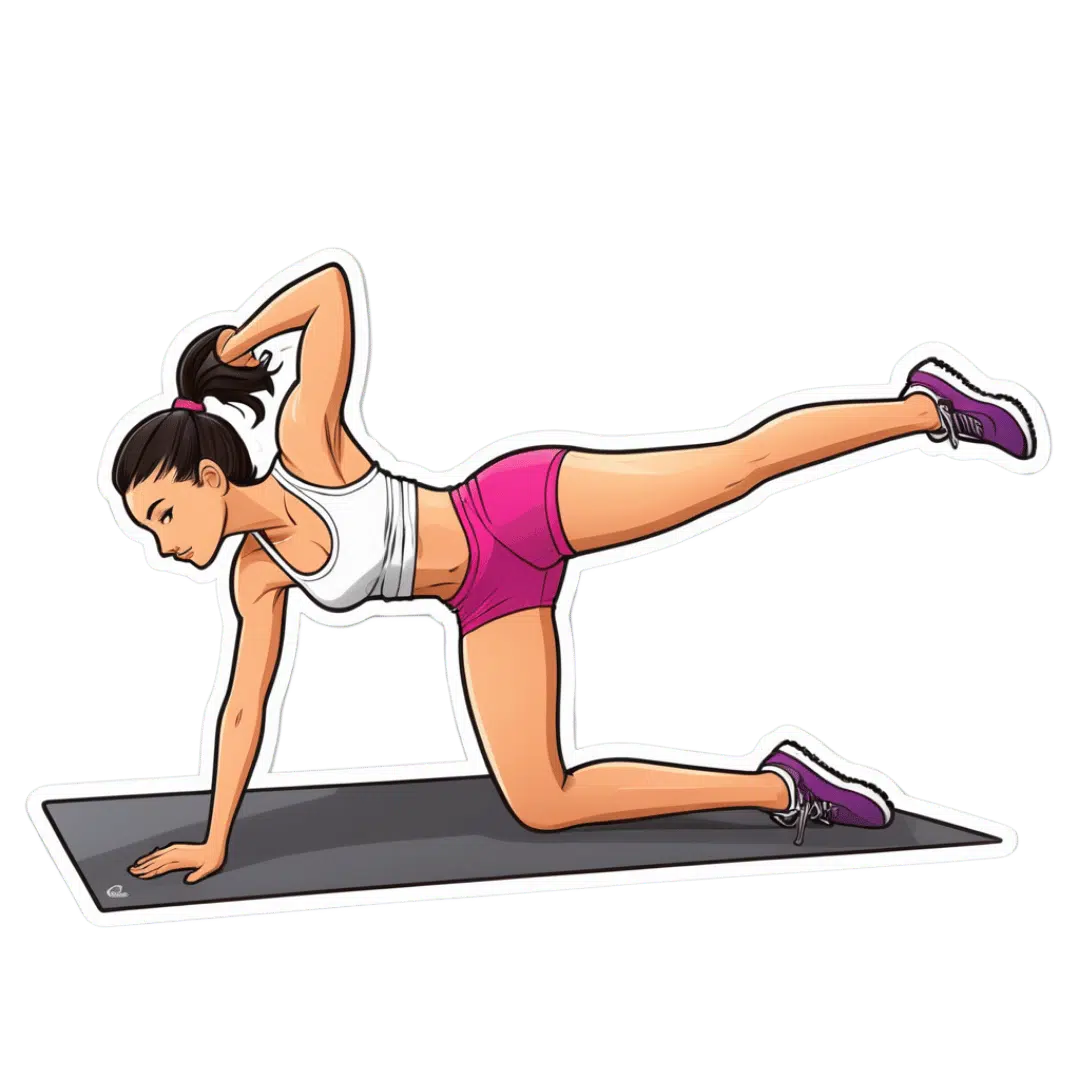
5 Golden Rules To Improve Your Mobility (At Any Age)
10almonds is reader-supported. We may, at no cost to you, receive a portion of sales if you purchase a product through a link in this article.
Implement these rules, and enjoy good mobility for life:
It’s about focus
Or mindfulness, if you prefer. Intentionality, perhaps, but then you have to actually carry out the intentions too (daydreaming will not suffice)!
So, five things to keep in mind (and act upon):
- Regress to progress: in other words, allow yourself to return to the basics when needed. Modifying an exercise, even to ostensibly “make it easier” is matching it to what your body needs right now. In a subjective sense, it’s not easier at all, if the effort required to do it is the same. Backing off helps you rebuild strength, correct compensations, and feel the right muscles working.
- Follow the three-part prehab process: every warm-up should include foam rolling, dynamic stretching, and activation. Foam rolling relaxes tight muscles, stretching mobilizes joints, and activation wakes up underactive muscles. This sequence builds flexibility, mobility, and stability so your body can perform optimally during training.
- Be intentional when you exercise: prioritize quality over load, e.g. focus on full range of motion rather than heavier weights or faster reps. Proper loading through the full range helps maintain and improve mobility which is, at the end of the day, what you’re doing this for. The numbers in your exercise log don’t matter—your body does. So, pay attention to what muscles you feel working—those are the ones benefitting.
- Perfect form doesn’t always mean perfect muscle recruitment: you can have textbook form but still use the wrong muscles! For example, compensations can hide behind good-looking movements, leading to pain and imbalance. Always check what you actually feel working, and correct recruitment through mobility and activation drills targeted to your weak links, as applicable.
- Use it or lose it: mobility, like strength, needs maintenance. Keep doing the prehab and activation work that made you feel better—don’t drop it once pain fades. Consistent small efforts protect against regression and help you stay strong, supple, and pain-free as you age.
For more on all of this, enjoy:
Click Here If The Embedded Video Doesn’t Load Automatically!
Want to learn more?
You might also like:
Mobility For Now & For Later: Train For The Marathon That Is Your Life!
Take care!
Don’t Forget…
Did you arrive here from our newsletter? Don’t forget to return to the email to continue learning!
Recommended
Learn to Age Gracefully
Join the 98k+ American women taking control of their health & aging with our 100% free (and fun!) daily emails:
-
Apricots vs Blueberries – Which is Healthier?
10almonds is reader-supported. We may, at no cost to you, receive a portion of sales if you purchase a product through a link in this article.
Our Verdict
When comparing apricots to blueberries, we picked the apricots.
Why?
Both have their merits!
In terms of macros, apricots have about 2x the protein (but it’s not a lot) while blueberries have very slightly more fiber and carbs. Ultimately we’re calling this category a tie, but it could be swung one way or the other if you have strong feelings about prioritizing things.
In the category of vitamins, apricots have more of vitamins A, B3, B5, B7, B9, C, and E, while blueberries have more of vitamins B1, K, and choline. A clear win for apricots here, even before considering the huge margin of difference on vitamin A (apricots having 32x the amount that blueberries do).
When it comes to minerals, apricots have more calcium, copper, iron, magnesium, manganese, phosphorus, potassium, and zinc, while blueberries have more manganese. Another win for apricots.
Looking at phytochemicals, apricots have some cancer-killing properties, while blueberries have more polyphenols in total. Pros and cons to each, here. We’re going to call this category a tie, but as with the macros, an argument could be made for either fruit.
Adding up the sections gives us an overall win for apricots, but it’s close, and blueberries are certainly great too, so by all means enjoy either or both!
Want to learn more?
You might like:
Top 8 Fruits That Prevent & Kill Cancer
Enjoy!
Share This Post
-
Immunity – by Dr. William Paul
10almonds is reader-supported. We may, at no cost to you, receive a portion of sales if you purchase a product through a link in this article.
This book gives a very person-centric (i.e., focuses on the contributions of named individuals) overview of advances in the field of immunology—up to its publication date in 2015. So, it’s not cutting edge, but it is very good at laying the groundwork for understanding more recent advances that occur as time goes by. After all, immunology is a field that never stands still.
We get a good grounding in how our immune system works (and how it doesn’t), the constant arms race between pathogens and immune responses, and the complexities of autoimmune disorders and—which is functionally in an overlapping category of disease—cancer. And, what advances we can expect soon to address those things.
Given the book was published 8 years ago, how did it measure up? Did we get those advances? Well, for the mostpart yes, we have! Some are still works in progress. But, we’ve also had obvious extra immunological threats in years since, which have also resulted in other advances along the way!
If the book has a downside, it’s that sometimes the author can be a little too person-centric. It’s engaging to focus on human characters, and helps us bring information to life; name-dropping to excess, along with awards won, can sometimes feel a little like the book was co-authored by Tahani Al-Jamil.
Nevertheless, it certainly does keep the book from getting too dry!
Bottom line: this book is a great overview of immunology and immunological research, for anyone who wants to understand these things better.
Click here to check out Immunity, and boost your knowledge of yours!
Share This Post
-
Early Dementia Screening From Your Blood & More
10almonds is reader-supported. We may, at no cost to you, receive a portion of sales if you purchase a product through a link in this article.
Dementia is, statistically speaking, the most feared disease in the US. Notwithstanding…
- heart disease killing more
- COVID being more of a lottery
- cancer being the “yes you can modify risk factors but it can come for anyone” life-changing (and often life-ending) disease,
…it’s still dementia that Americans report fearing the most.
And yet… Early dementia screening is seriously underused
It may be a case of a head-in-sand approach to avoid unwanted news, or it could be a case of not knowing what’s available.
So, with that in mind…
How to watch out: first line warning signs
You walk into a room of your house, and suddenly stop: “what did I come in here for?”, you wonder.
A moment later, you’re worrying whether this is a sign of age-related cognitive decline.
The good news: it usually isn’t. In fact, you did that when you were younger, too, you just didn’t pay enough attention at the time to remember it now.
Dementia-related memory loss is less “where did I put my car keys?”, and more “what is this thing for?” (it’s your car keys). Or at a less advanced stage: “whose are these car keys?” (they are yours).
You can read about some of the nuances here:
Is It Dementia? Spot The Signs (Because None Of Us Are Immune) ← If you’d like an objective test of memory and other cognitive impairments, this article also has a link to the industry’s gold standard test (it’s free)
(The Self-Administered Gerocognitive Exam (SAGE) is designed to detect early signs of cognitive, memory or thinking impairments)
Tests you can’t do at home
We wrote a little while back about how one kind of blood testing for Alzheimer’s disease works:
The Brain Alarm Signs That Warn Of Dementia
Why “Brain Alarm Signs” if it’s a blood test? Because the blood gets (in very lay terms) bits of broken brain in it. Or more specifically, they tested the blood for density of cerebrovascular endothelial extracellular vesicles (CEEVs), which are bits of the cells from the lining of blood vessels in the brain. These cerebrovascular endothelial extracellular vesicles should not, ideally, be falling off and riding around your bloodstream, and the greater the density of them, the greater likelihood of mild cognitive impairment now, and by extension, dementia later.
It’s not the only blood test available though, see:
Highly accurate blood test for Alzheimer’s disease is similar or superior to clinical cerebrospinal fluid (CSF) tests ← this one checks the ratio of phosporylated-tau217 to non-phosphorylated tau (which is a protein antibody), which equalled or outperformed FDA-approved CSF tests in classifying amyloid-β positron emission topography (PET, as in a PET scan) status, with a confidence interval as high as, or better than, industry standards.
If you don’t like having your blood taken, trust us that you’d find having your cerebrospinal fluid taken even less enjoyable, so this is a very welcome improvement!
In case you’re curious about how the CSF test works, here you go: NPTX2 in Cerebrospinal Fluid Predicts the Progression From Normal Cognition to Mild Cognitive Impairment ← NPTX2 is a protein biomarker of Alzheimer’s risk
…but again, we really think the blood test is preferable.
Tests beyond the physiological
There are, of course, psychological tests that can be done, including a linguistic analysis of your conversation, compared with a vast database of other people’s conversations, with and without various degrees of cognitive impairment
As Dr. Ioannis Paschalidis explains:
❝We wanted to predict what would happen in the next six years—and we found we can reasonably make that prediction with relatively good confidence and accuracy.
Rather than using acoustic features of speech, like enunciation or speed, the model is just pulling from the content of the interview—the words spoken, how they’re structured.
You can think of the score as the likelihood, the probability, that someone will remain stable or transition to dementia. It had significant predictive ability.
Digital is the new blood. You can collect it, analyze it for what is known today, store it, and reanalyze it for whatever new emerges tomorrow.❞
You can read the full paper here: Prediction of Alzheimer’s disease progression within 6 years using speech: A novel approach leveraging language models
See also: AI: The Doctor That Never Tires?
What if the news isn’t good?
While bad news is never welcome per se, it is preferable to not knowing, insofar as we can then take steps to manage the situation.
You may be wondering: what can be done that I wouldn’t already be doing to minimize my dementia risk in the first place?
And the answer is: yes, do continue those things of course, but there is more to do:
See: Beyond Guarding Against Dementia: When Age’s Brain-Changes Come Knocking
Take care!
Share This Post
Related Posts
-
Resveratrol & Healthy Aging
10almonds is reader-supported. We may, at no cost to you, receive a portion of sales if you purchase a product through a link in this article.
Resveratrol & Healthy Aging
Resveratrol is the compound found in red grapes, and thus in red wine, that have resulted in red wine being sometimes touted as a heart-healthy drink.
However, at the levels contained in red wine, you’d need to drink 100–1000 glasses of wine per day (depending on the wine) to get the dose of resveratrol that was associated with heart health benefits in mouse studies.
Which also means: if you are not a mouse, you might need to drink even more than that!
Further reading: can we drink to good health?
Resveratrol supplementation
Happily, resveratrol supplements exist. But what does resveratrol do?
It lowers blood pressure:
Effect of resveratrol on blood pressure: a meta-analysis of randomized controlled trials
It improves blood lipid levels:
It improves insulin sensitivity:
It has neuroprotective effects too:
Resveratrol promotes clearance of Alzheimer’s disease amyloid-beta peptides
Is it safe?
For most people, it is generally recognized as safe. However, if you are on blood-thinners or otherwise have a bleeding disorder, you might want to skip it:
Antiplatelet activity of synthetic and natural resveratrol in red wine
You also might want to check with your pharmacist/doctor, if you’re on blood pressure meds, anxiety meds, or immunosuppressants, as it can increase the amount of these drugs that will then stay in your system:
Resveratrol modulates drug- and carcinogen-metabolizing enzymes in a healthy volunteer study
And as ever, of course, if unsure just check with your pharmacist/doctor, to be on the safe side.
Where to get it?
We don’t sell it, but here’s an example product on Amazon for your convenience
Enjoy!
Don’t Forget…
Did you arrive here from our newsletter? Don’t forget to return to the email to continue learning!
Learn to Age Gracefully
Join the 98k+ American women taking control of their health & aging with our 100% free (and fun!) daily emails:
-
Bamboo Shoots vs Zucchini – Which is Healthier?
10almonds is reader-supported. We may, at no cost to you, receive a portion of sales if you purchase a product through a link in this article.
Our Verdict
When comparing bamboo shoots to zucchini, we picked the bamboo.
Why?
Both have their merits! But…
In terms of macros, bamboo has more than 2x the fiber for slightly more carbs and more than 2x the protein, scoring an easy first round win.
In the category of vitamins, bamboo has more of vitamins B1, B3, B6, and E, while zucchini has more of vitamins B2, B5, B9, and C, tying 4:4 here.
Looking at minerals, bamboo has more copper, iron, manganese, phosphorus, potassium, selenium, and zinc, while zucchini has more calcium and iron, netting bamboo a 7:2 victory in this round.
Adding up the sections makes for an overall win for bamboo, but by all means enjoy either or both, as diversity is good!
Want to learn more?
You might like:
Don’t Be Bamboozled By Bamboo! ← for how to prepare it, plus some of the special properties of bamboo’s fiber content
Enjoy!
Don’t Forget…
Did you arrive here from our newsletter? Don’t forget to return to the email to continue learning!
Learn to Age Gracefully
Join the 98k+ American women taking control of their health & aging with our 100% free (and fun!) daily emails:
-
The Midlife Mindset Blocking Your Health Goals
10almonds is reader-supported. We may, at no cost to you, receive a portion of sales if you purchase a product through a link in this article.
How much compromise is best? Dr. Ruth Machin advises:
Don’t let perfect be the enemy of good
All-or-nothing thinking, also called black-and-white or dichotomous thinking, is a cognitive distortion where people think in extremes, ignoring the grey areas in between. It can derail health goals by fostering guilt, shame, burnout, perfectionism, and often as not, completely abandoning goals when setbacks occur.
It’s particularly common in diet culture, because food is unavoidable and often tied to generational messages about thinness and restriction. Restrictive diets invariably fail long-term because the brain rebels against deprivation and has a negativity bias, focusing on perceived failures and amplifying them.
Dr. Machin points out that perfectionism tied to black-and-white thinking has been linked to depression, anxiety, emotional eating, and can worsen mood changes, including those that are common in menopause.
Her advice: notice when it happens, challenge whether your thoughts are truly black or white, and reframe them with kinder, more realistic alternatives. Focus on balance rather than perfection; for example, walking 4 days per week is better than none, 7,000 steps per day is frankly as good as 10,000, and an “80%” rule when it comes to eating rarely goes far wrong.
For more on all of this, enjoy:
Click Here If The Embedded Video Doesn’t Load Automatically!
Want to learn more?
You might also like:
What Flexible Dieting Really Means
Take care!
Don’t Forget…
Did you arrive here from our newsletter? Don’t forget to return to the email to continue learning!
Learn to Age Gracefully
Join the 98k+ American women taking control of their health & aging with our 100% free (and fun!) daily emails:


