
Chard vs Red Cabbage – Which is Healthier?
10almonds is reader-supported. We may, at no cost to you, receive a portion of sales if you purchase a product through a link in this article.
Our Verdict
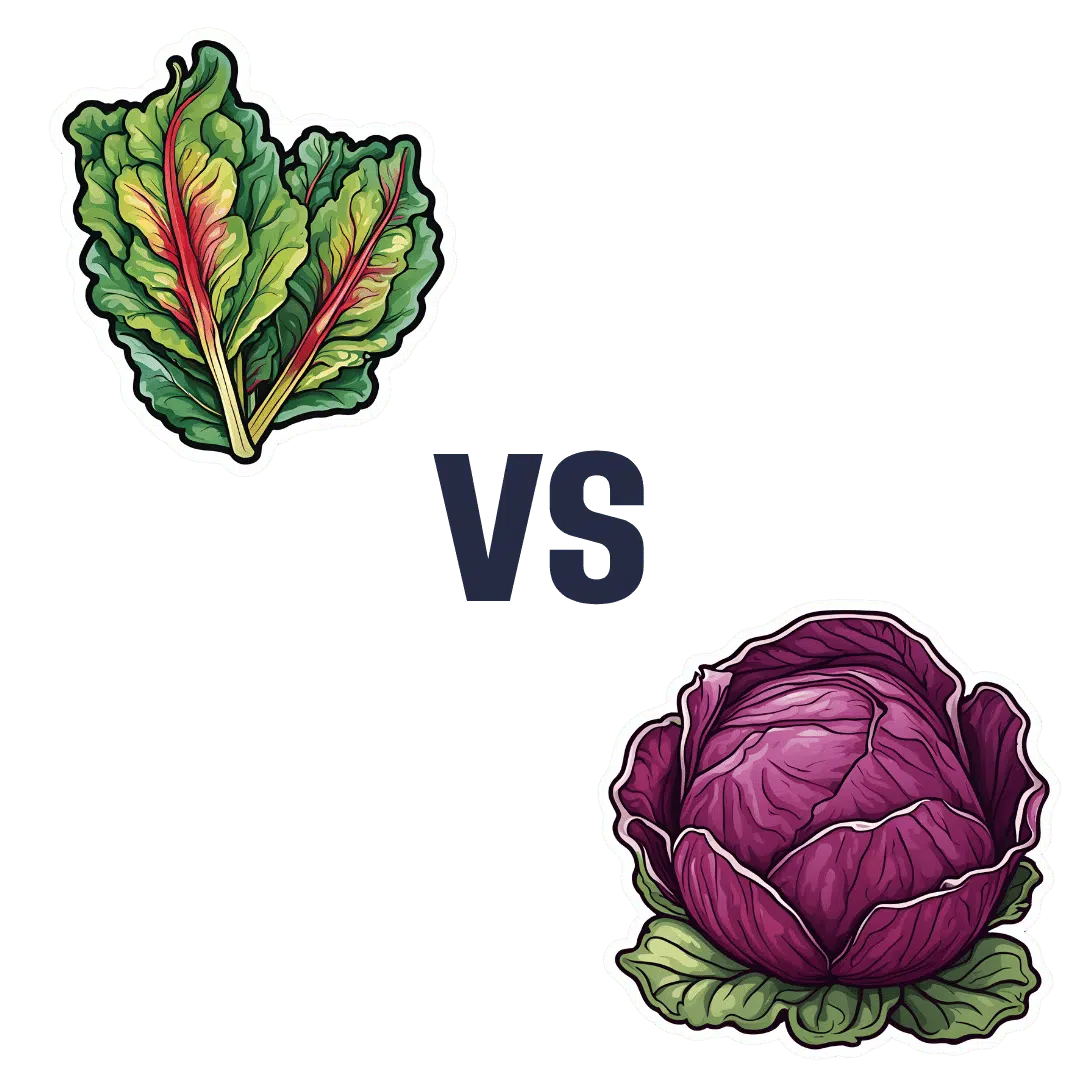
When comparing chard to red cabbage, we picked the chard.
Why?
Often thought of as containing nothing much of anything much, the leafy greens come out on top:
In terms of macros, red cabbage has 2x the carbs, for approximately the same fiber and protein. This could be a win either way or a tie depending on how you feel about the carbs; given that the actual carb amounts involved are tiny, however, we’re calling this round a tie.
In the category of vitamins, chard has a lot more of vitamins A, B2, B5, E, and K, while red cabbage has slightly more of vitamins B1, B6, and B9, yielding a compelling 5:3 win to chard.
Looking at minerals, chard has more calcium, copper, iron, magnesium, manganese, phosphorus, potassium, selenium, and zinc, while red cabbage is not higher in any minerals—a complete win for chard in this round.
In other considerations, chard has a lot more polyphenols, so that’s one more point in its favor.
Adding up the sections makes a clear overall win for chard, but by all means enjoy either or both, as diversity is good!
Want to learn more?
You might like:
21 Most Beneficial Polyphenols & What Foods Have Them
Enjoy!
Don’t Forget…
Did you arrive here from our newsletter? Don’t forget to return to the email to continue learning!
Recommended
Learn to Age Gracefully
Join the 98k+ American women taking control of their health & aging with our 100% free (and fun!) daily emails:
-
The Surprising Relationship Between Glucosamine & Alzheimer’s
10almonds is reader-supported. We may, at no cost to you, receive a portion of sales if you purchase a product through a link in this article.
Glucosamine is popularly taken for joint health,
and it really is the best thing out there for that.No wait, it’s not: Cucumber Extract Beats Glucosamine & Chondroitin… At 1/135th Of The Dose?!
Today, we’re not doing glucosamine’s PR any favors, but well, we’re a health science publication and the truth is there may be a problem:
Glucosamine, hyperglycosylation, & you
Researchers (Dr. Tara Hawkinson et al.) analyzed thousands of US health records, and found that glucosamine use was associated with:
- 25% higher likelihood of progressing from mild cognitive impairment (MCI) to dementia
- 25% higher mortality risk among people who already had Alzheimer’s disease or related dementias.
Among the patients studied, about 8% reported taking glucosamine supplements, including 2,750 people with MCI and 1,896 people with dementia.
And as for how this happened?
Dr. Hawkinson and her team found that excessive protein glycosylation (the attachment of sugar structures to proteins) appeared to be a significant driver of Alzheimer’s disease progression, suggesting that glucosamine may worsen an already overactive “sugar-tagging pathway” in the Alzheimer’s brain.
Now, that data was from humans, and/but this was an observational retrospective study, meaning it couldn’t prove cause and effect by itself.
However, when they went on to test it in mice with Alzheimer’s disease, glucosamine increased protein glycosylation and worsened social-memory performance, while suppressing glycosylation improved memory.
Back to humans: examination of post-mortem Alzheimer’s brain tissue showed significantly higher levels of protein glycosylation than in non-Alzheimer’s control brains, further supporting the idea that this pathway likely contributes to disease progression.
This is important, because glucosamine has often been considered relatively safe and has even been linked in some studies to lower risks of certain chronic diseases, but this research suggests that effects may depend on the disease context, and quite possibly may be harmful in the context of Alzheimer’s disease.
In other words:
❝A lot of these people actively take an over-the-counter supplement that could be making their disease progression worse.❞
~ Dr. Ramon Sun, a colleague of Dr. Hawkinson and fellow researcher in this study
You can read the paper itself, here: Hyperglycosylation is a metabolic driver of Alzheimer’s disease ← notice the bold statement in the title; scientists are very reticent to make concrete claims without concrete evidence. Here, they are expressing their strong clear finding that hyperglycosylation is a metabolic driver or Alzheimer’s disease.
Want to learn more?
We’ve written quite a bit about reducing the risk of cognitive decline in general and Alzheimer’s in particular; here are just a few:
- Alzheimer’s Causative Factors To Avoid
- How To Reduce Your Alzheimer’s Risk
- How To Walk Away From Alzheimer’s
- How To Clean Your Brain (Glymphatic Health Primer)
- Take Care Of Your Lymphatic System To Beat Cognitive Decline
- Goodnight, Glymphatic System: How Your Sleep Position Changes Dementia Risk
- The 6 Dimensions Of Sleep (And Why They Matter)
Take care!
Share This Post
-
Peanuts vs Macadamias – Which is Healthier?
10almonds is reader-supported. We may, at no cost to you, receive a portion of sales if you purchase a product through a link in this article.
Our Verdict
When comparing peanuts to macadamias, we picked the peanuts.
Why?
In terms of macros, peanuts have more than 3x the protein while macadamias have a lot more fat. It’s mostly healthy monounsaturated fat, but all the same, we’ll prioritize the protein over the fat, which becomes the deciding factor since they are approximately equal on carbs and fiber. So, a subjective win for peanuts in this category.
In the category of vitamins, peanuts have a lot more of vitamins B3, B5, B6, B9, E, and choline, while macadamias have slightly more of vitamins B1, B2, and C. A clear and convincing win for peanuts.
When it comes to minerals, peanuts have more calcium, copper, iron, magnesium, phosphorus, potassium, selenium, and zinc, while macadamias have more manganese. An overwhelming win for peanuts.
Adding up the sections with their various degrees of win for peanuts, makes for an overall absolute win for peanuts, but by all means enjoy either or both; diversity is good!
Want to learn more?
You might like to read:
Why You Should Diversify Your Nuts
Enjoy!
Share This Post
-
Calcium Supplements & Dementia Risk
10almonds is reader-supported. We may, at no cost to you, receive a portion of sales if you purchase a product through a link in this article.
Do you remember the famous (deeply flawed, further misreported, debunked) Women’s Health Initiative (WHI) study that misrepresented data about hormone replacement therapy (HRT), understating the benefits and overstating the risks, scaring a generation off HRT for no good reason?
If not, then here’s more detail about that: Cancer & HRT: What’s Safe?
With that in mind, guess what else WHI data has been (mis)used by third-parties to warn us against? If you guessed calcium supplementation, you guessed correctly:
❝Calcium supplements with or without vitamin D modestly increase the risk of cardiovascular events, especially myocardial infarction, a finding obscured in the WHI CaD Study by the widespread use of personal calcium supplements. A reassessment of the role of calcium supplements in osteoporosis management is warranted.❞
You may be thinking: today’s title said about dementia, and this paper is about cardiovascular events, so what’s the connection?
The connection is: stroke is a cardiovascular event, and vascular dementia is a very common kind of dementia.
For much more detail on this, see: What’s Your Vascular Dementia Risk? ← includes actual numbers and a risk calculator tool and things like that
However, there’s more, for example:
❝The present study demonstrates that the use of Ca-containing dietary supplements, even low-dose supplements, by older adults may be associated with greater lesion volumes.
Evaluation of randomised controlled trials is warranted to determine whether this relationship is a causal one.❞
Can you see how the press might take the first line and run with it, without addressing the second line?
See also: How Science News Outlets Can Lie To You (Yes, Even If They Cite Studies!)
We’ve also seen things like:
❝Calcium supplementation may increase the risk of developing dementia in elderly women with cerebrovascular disease.
Because our sample was relatively small and the study was observational, these findings need to be confirmed.❞
Source: Calcium supplementation and risk of dementia in women with cerebrovascular disease
Once again, a lot of news outlets will run with the first part without mentioning the latter parts.
And sometimes, it will be a case of “the title looks damning, even if the actual conclusion isn’t”, for example:
❝There was no association between treatment assignment and incident cognitive impairment.
Further studies are needed to investigate the effects of vitamin D and calcium separately, on men, in other age and ethnic groups, and with other doses.❞
Source: Calcium and Vitamin D Supplementation and Cognitive Impairment in the Women’s Health Initiative
…which will get shared around and seen by millions of people who don’t read beyond the title and think “oh, there is an association between calcium and vitamin D supplementation and cognitive impairment, the Women’s Health Initiative says so”, when in fact none of these things are what it is saying.
And that is how rumors run around the world while the truth hasn’t even tied its shoelaces yet.
And now for the truth
A long-term analysis of 1,460 women aged 70+ has found that daily calcium supplementation did not increase dementia risk over nearly 15 years of follow-up.
Specifically,
❝Mean baseline age was 75.1 ± 2.7 years. Dementia events were recorded in 269 women (18.4%), comprising 243 hospitalisations (16.6%) or 114 deaths (7.8%). No differences in the cumulative dementia-free survival rates were observed between groups in ITT and PP analyses.
Compared to placebo, calcium supplements did not increase risk of dementia-related events (unadjusted ITT hazard ratio [HR] 0.90, 95% confidence interval (CI) 0.71–1.15), hospitalisations (HR 0.89, 95% CI 0.69–1.15) or deaths (HR 0.78, 95% CI 0.54–1.13). Similar results were observed in PP analyses.❞
As you can see, the range neatly straddles “1” in each case, meaning that on average, it neither increases nor decreases the risk. And with regard to the different analyses, what that means is that both before and after adjusting for lifestyle, dietary, and genetic factors, there continued to be no association whatsoever.
In terms of p-score (a measure of how statistically significant the results are, by expressing the probability that this could have been arrived at by chance),
❝There was no significant difference (p = 0.28) in AMS scores between the calcium (n = 569) and placebo (n = 579) groups at the end of the RCT; median (IQR): 10 (9–10) in both groups.❞
You can read the paper in full, here: Calcium supplementation and the risk of dementia in the Perth Longitudinal Study of Aging Women: a post-hoc analysis of a randomised clinical trial for fracture prevention
That was, by the way, at 1200mg/day. So, a very normal amount of calcium, and generally considered slightly above what most people need.
Want to learn more?
While it appears calcium supplementation is healthful for most people at normal levels, there are still safe limits, and connected health considerations to bear in mind at the same time:
Vit D + Calcium: Too Much Of A Good Thing? ← this also talks about safe and effective doses, and what goes wrong if you take too much
There is also a common issue that a lot of people get enough calcium and vitamin D, but then a lot of that calcium doesn’t make it past the arteries.
Thus, the calcium paradox: we want to get (usually: more) calcium, but we want it building our bones, not lining our arteries. How, then, to resolve this problem, and simultaneously fight the dual threats of calcium deficiency (osteoporosis) and calcium excess (atherosclerosis)?
The answer lies in vitamin K2, which assists the calcium in getting to where you need it, rather than having it accumulating where you don’t.
Learn more: Vitamin K2 And The Calcium Paradox
Take care!
Share This Post
Related Posts
-
Aging Is Inevitable… Or is it?
10almonds is reader-supported. We may, at no cost to you, receive a portion of sales if you purchase a product through a link in this article.
Aging is inevitable… Or is it?
We’ve talked before about how and why aging happens. We’ve also talked about the work to tackle aging as basically an engineering problem, with the premise that our bodies are biological machines, and machines can be repaired. We also recommended a great book about this, by the way. But that’s about interfering with the biological process of aging. What about if the damage is already done?
“When the damage is done, it’s done”
We can do a lot to try to protect ourselves from aging, and we might be able to slow down the clock, but we can’t stop it, and we certainly can’t reverse it… right?
Wrong! Or at least, so we currently understand, in some respects. Supplementation with phosphatidylserine, for example, has shown promise for not just preventing, but treating, neurodegeneration (such as that caused by Alzheimer’s disease). It’s not a magic bullet and so far the science is at “probably” and “this shows great promise for…” and “this appears to…”
Phosphatidylserene does help slow neurodegeneration
…because of its role in allowing your cells to know whether they have permission to die.
This may seem a flippant way of putting it, but it’s basically how cell death works. Cells do need to die (if they don’t, that’s called cancer) and be replaced with new copies, and those copies need to be made before too much damage is accumulated (otherwise the damage is compounded with each new iteration). So an early cell death-and-replacement is generally better for your overall health than a later one.
However, neurons are tricky to replace, so phosphatidylserine effectively says “not you, hold on” to keep the rate of neuronal cell death nearer to the (slow) rate at which they can be replaced.
One more myth to bust…
For the longest time we thought that adults, especially older adults, couldn’t make new brain cells at all, that we grew a certain number, then had to hang onto them until we died… suffering diminished cognitive ability with age, on account of losing brain cells along the way.
It’s partly true: it’s definitely easier to kill brain cells than to grow them… Mind you, that’s technically true of people, too, yet the population continues to boom!
Anyway, new research showing that adults do, in fact, grow new braincells was briefly challenged by a 2018 study that declared: Human hippocampal neurogenesis drops sharply in children to undetectable levels in adults after all, never mind, go back to your business.
So was adult neurogenesis just a myth to be busted after all? Nope.
It turned out, the 2018 study had a methodological flaw!
To put it in lay terms: they had accidentally melted the evidence.
A 2019 study overcame this flaw by using a shorter fixation time for the cell samples they wanted to look at, and found that there were tens of thousands of “baby neurons” (again with the lay terms), newly-made brain cells, in samples from adults ranging from 43 to 87.
Now, there was still a difference: the samples from the youngest adult had 30% more newly-made braincells than the 87-year-old, but given that previous science thought brain cell generation stopped in childhood, the fact that an 87-year-old was generating new brain cells 30% less quickly than a 43-year-old is hardly much of a criticism!
As an aside: samples from patients with Alzheimer’s also had a 30% reduction in new braincell generation, compared to samples from patients of the same age without Alzheimer’s. But again… Even patients with Alzheimer’s were still growing some new brain cells.
Read it for yourself: Adult hippocampal neurogenesis is abundant in neurologically healthy subjects and drops sharply in patients with Alzheimer’s disease
In a nutshell…
- We can’t fully hit pause on aging just yet, but we can definitely genuinely slow it
- We can also, in some very specific ways, reverse it
- We can slow the loss of brain cells
- We can grow new brain cells
- We can reduce our risk of Alzheimer’s, and at least somewhat mitigate it if it appears
- We know that phosphatidylserine supplementation may help with most (if not all) of the above
- We don’t sell that (or anything else) but for your convenience, here it is on Amazon if you’re interested
Don’t Forget…
Did you arrive here from our newsletter? Don’t forget to return to the email to continue learning!
Learn to Age Gracefully
Join the 98k+ American women taking control of their health & aging with our 100% free (and fun!) daily emails:
-
How To Reduce Your Alzheimer’s Risk
10almonds is reader-supported. We may, at no cost to you, receive a portion of sales if you purchase a product through a link in this article.
Reduce Your Alzheimer’s Risk
Alzheimer’s is just one cause of dementia, but it’s a very notable one, not least of all because it’s
- a) the most common cause of dementia, and
- b) a measurably terminal disease.
For that reason we’re focusing on Alzheimer’s today, although most of the advice will go for avoiding dementia in general.
First, some things not everyone knows about Alzheimer’s:
- Alzheimer’s is a terminal disease.
- People who get a diagnosis at age 60 are typically given 4–8 years to live.
- Some soldier on for as many as 20, but those are rare outliers.
- Alzheimer’s begins 20 years or more before other symptoms start to develop.
- This makes this information very relevant for younger people approaching 40, for example.
- Alzheimer’s accounts for 60–80% of dementia, and affects around 6% of people over 60.
- By the age of 65, that figure is 10%. By the age of 70, however, the percentage is still about the same—this is because of the mortality rate preventing the accumulation of Alzheimer’s patients over time.
Want to know more? Read: 2023 Alzheimer’s Disease Facts And Figures Special Report ← this is a very comprehensive downloadablereference, by the way, including a lot of information about diagnosis, treatmentpathways, and earlyinterventions.
Speaking of diagnosis…
Know what the symptoms are… and aren’t!
Forgetting your car keys can be frustrating. Forgetting them frequently can be worrying.
But: there’s a difference between forgetting your car keys, and forgetting what car keys are used for. The latter is the kind of memory loss that’s more of a red flag for Alzheimer’s.
Similarly: forgetting someone’s name can be embarrassing. Forgetting someone’s name, asking them, forgetting asking them, asking them again, forgetting again (lather rinse repeat) is more of a red flag for Alzheimer’s.
There are other symptoms too, some of them less commonly known:
❝Difficulty remembering recent conversations, names or events; apathy; and depression are often early symptoms. Communication problems, confusion, poor judgment and behavioral changes may occur next. Difficulty walking, speaking, and swallowing are common in the late stages of the disease❞
If you or a loved one are experiencing worrying symptoms: when it comes to diagnosis and intervention, sooner is a lot better than later, so do talk to your doctor.
As for reducing your risk? First, the obvious stuff:
The usual 5 things that go for almost everything:
- Have a good diet—the Mediterranean Diet is once again recommended (we expect this will not be a surprise to regular readers!)
- Get regular exercise—in the case of avoiding Alzheimer’s and other dementias, typically the most important thing here is heart health, so getting regular cardiovascular exercise, such walking, running, or dancing is great. Cycling too. Swimming, not so much. Not that swimming’s bad or anything, it’s just that when your body is horizontal, the heart has less work to do, especially in the upper part of the body, because it’s not defying gravity. Similarly, yoga is great for the health but won’t particularly help with this, nor will weight training.
- Get good sleep—as we get older, we tend to need less sleep, and tend more towards the lower end of the standard “7–9 hours” prescription, but getting at least those 7 hours makes a huge difference.
- Cut down (or eliminate) alcohol consumption—and especially avoid binge-drinking. While “binge-drinking” is typically associated with young people, that Christmas party where that one uncle gets very drunk is also binge-drinking, for example. Plus, heavy drinking in early life has also been correlated with higher risk of Alzheimer’s later.
- Don’t smoke. It’s bad for everything, and Alzheimer’s risk is no exception.
How much do lifestyle changes alone make a difference?
They make a big difference. This 2022 population-based cohort study (so: huge sample size) looked at people who had 4–5 of the healthy lifestyle factors being studied, vs people who had 0–1 of them. They found:
❝A healthy lifestyle was associated with a longer life expectancy among men and women, and they lived a larger proportion of their remaining years without Alzheimer’s dementia.❞
The numbers of years involved by the way ranged between 3 and 20 years, in terms of life expectancy and years without or with Alzheimer’s, with the average increase of healthy life years being approximately the same as the average increase in years. This is important, because:
A lot of people think “well if I’m going to go senile, I might as well [unhealthy choice that shortens lifespan]”, but they misunderstand a critical factor:
The unhealthy choices will reduce their healthy life years, and simply bring the unhealthy ones (and subsequent death) sooner. If you’re going to spend your last few years in ill-health, it’s better to do so at 90 than 50.
The other thing you may already know… And a thing about it that not everyone considers:
Keeping cognitively active is important. This much is broadly known by the general public, and to clinicians, this was the fourth “healthy factor” in the list of five (instead of the sleep that we put there, because we were listing the 5 things that go for most preventable health issues).
Everyone leaps to mention sudoku at this point, so if that’s your thing, great, enjoy it! (This writer personally enjoys chess, which isn’t everyone’s cup of tea; if it yours though, you can come join her on Chess.com and we’ll keep sharp together)
But the more parts of your mental faculties you keep active, the better. Remember, brainpower (as with many things in health and life) is a matter of “use it or lose it” and this is on a “per skill” basis!
What this means: doing sudoku (a number-based puzzle game) or chess (great as it may be) won’t help as much for keeping your language skills intact, for example. Given that language skills are one of the most impactful and key faculties to get lost to Alzheimer’s disease, neglecting such would be quite an oversight!
Some good ways to keep your language skills tip-top:
- Read—but read something challenging, if possible. It doesn’t have to be Thomas Scanlon’s What We Owe To Each Other, but it should be more challenging than a tabloid, for example. In fact, on the topic of examples:
- This newsletter is written to be easy to read, while not shying away from complex ideas or hard science. Our mission is literally to “make [well-sourced, science-based] health and productivity crazy simple”.
- But the academic papers that we link? Those aren’t written to be easy to read. Go read them, or at least the abstracts (in academia, an abstract is essentially an up-front summary, and is usually the first thing you’ll see when you click a link to a study or such). Challenge yourself!
- Write—compared to reading/listening, producing language is a (related, but) somewhat separate skill. Just ask any foreign language learner which is more challenging: reading or writing!
- Journaling is great, but writing for others is better (as then you’ll be forced to think more about it)
- Learn a foreign language—in this case, what matters it that you’re practicing and learning, so in the scale of easy to hard, or doesn’t matter if it’s Esperanto or Arabic. Duolingo is a great free resource that we recommend for this, and they have a wide range of extensive courses these days.
Now for the least obvious things…
Social contact is important.
Especially in older age, it’s easy to find oneself with fewer remaining friends and family, and getting out and about can be harder for everyone. Whatever our personal inclinations (some people being more introverted or less social than others), we are fundamentally a social species, and hundreds of thousands of years of evolution have built us around the idea that we will live our lives alongside others of our kind. And when we don’t, we don’t do as well.
See for example: Associations of Social Isolation and Loneliness With Later Dementia
If you can’t get out and about easily:
- Online socialising is still socializing.
- Online community is still community.
- Online conversations between friends are still conversations between friends.
If you don’t have much (or anyone) in the category of friends and family, join Facebook groups related to your interests, for example.
Berries are surprisingly good
^This may read like a headline from 200,000 BCE, but it’s relevant here!
Particularly recommended are:
- blueberries
- blackberries
- raspberries
- strawberries
- cranberries
We know that many of these berries seem to have a shelf-life of something like 30 minutes from time of purchase, but… Frozen and dried are perfectly good nutritionally, and in many cases, even better nutritionally than fresh.
Read: Effect of berry-based supplements and foods on cognitive function: a systematic review
Turmeric’s health benefits appear to include protecting against Alzheimer’s
Again, this is about risk reduction, and turmeric (also called curcumin, which is not the same as cumin) significantly reduces the build-up of amyloid plaques in the brain. Amyloid plaques are part of the progression of Alzheimer’s.
See for yourself: Protective Effects of Indian Spice Curcumin Against Amyloid Beta in Alzheimer’s Disease
If you don’t like it as a spice (and even if you do, you probably don’t want to put it in your food every day), you can easily get it as a supplement in capsule form.
Lower your homocysteine levels
Lower our what now? Homocysteine is an amino acid used for making certain proteins, and it’s a risk factor for Alzheimer’s.
Foods high in folate (and possible other B-vitamins) seem to lower homocysteine levels. Top choices include:
- Leafy greens
- Cruciferous vegetables
- Tomatoes
Get plenty of lutein
We did a main feature about specifically this a little while ago, so we’ll not repeat our work here, but lutein is found in, well, the same things we just listed above, and lower levels of lutein are associated with Alzheimer’s disease. It’s not a proven causative factor—we don’t know entirely what causes Alzheimer’s, just a lot of factors that have a high enough correlation that it’d be remiss to ignore them.
Catch up on our previous article: Brain Food? The Eyes Have It
Don’t Forget…
Did you arrive here from our newsletter? Don’t forget to return to the email to continue learning!
Learn to Age Gracefully
Join the 98k+ American women taking control of their health & aging with our 100% free (and fun!) daily emails:
-
What Happens To Your Body When You Stop Drinking Alcohol
10almonds is reader-supported. We may, at no cost to you, receive a portion of sales if you purchase a product through a link in this article.
Immediately after we stop drinking is rarely when we feel our best. But how long is it before we can expect to see benefits, instead of just suffering?
Timeline
After stopping drinking alcohol for…
- Seconds: the liver starts making progress filtering out toxins and sugars; ethanol starts to leave the system
- 1 hour: fatigue sets in as the body uses a lot of energy to metabolize and eliminate alcohol. However, sleep quality (if one goes to sleep now) is low because alcohol disrupts the brain patterns required for restful sleep
- 6–12 hours: the immune system starts recovering from the suppression caused by alcohol
- 24 hours: immune system is back to normal; withdrawal symptoms may occur in the case of heavy drinkers
- 3–5 days: resting blood pressure begins to drop, as stress levels decrease (alcohol may seem anxiolytic, but it is actually anxiogenic; it just masks its own effect in this regard). Also, because of insulin responses improving, appetite reduces. The liver, once it has finished dealing your last drinking session (if you used to drink all the time, it probably had a backlog to clear), can now begin to make repairs on itself.
- 1 week: skin will start looking better, as antidiuretic hormone levels neutralize, leading to a healthier maintenance of hydration
- 2 weeks: cognitive abilities improve as the brain begins to make progress in repairing itself. At the same time, kidneys start to heal.
- 3–4 weeks: the liver begins to regenerate in earnest. You may wonder what took it so long given the liver’s famous regenerative abilities, but in this case, the liver was also the organ that took the most damage from drinking, so its regeneration gets off to a slow start (in contrast, if the liver had “merely” suffered physical trauma, such as being shot, stabbed,
or eaten by eagles,it’d start regenerating vigorously as soon as the immediate wound-response had been tended to). Once it is able to pick up the pace though, overall health improves, as the liver can focus on breaking down other toxins. - 1–2 months: the heart is able to repair itself, and start to become stronger again (dependent on other lifestyle factors, of course).
- 3 months and more: bodily repairs continue (for example, the damage to the liver is often so severe that it can take quite a bit longer to recover completely, and repairs in the brain are always slow, for reasons beyond the scope of this article). Looking at the big picture, at this point we also see other benefits, such as reduced cancer risks.
In short… It’s never too soon to stop, but it’s also never too late, unless you are going to die in the next few days. So long as you’ll be in the land of the living for a few days yet, there’s time to enjoy the benefits of stopping.
Most importantly: the timeline for the most important repairs is not as long as many people might think, and that itself can be very motivating.
For more detail on much of the above, enjoy:
Click Here If The Embedded Video Doesn’t Load Automatically!
Want to learn more?
You might also like to read:
- Can We Drink To Good Health?
- How To Reduce Or Quit Alcohol
- Addiction Myths That Are Hard To Quit
- How To Unfatty A Fatty Liver
Take care!
Don’t Forget…
Did you arrive here from our newsletter? Don’t forget to return to the email to continue learning!
Learn to Age Gracefully
Join the 98k+ American women taking control of their health & aging with our 100% free (and fun!) daily emails:


