
The first night effect: why it’s hard to sleep when you’re somewhere new

10almonds is reader-supported. We may, at no cost to you, receive a portion of sales if you purchase a product through a link in this article.

It’s nighttime and you’re exhausted. But the hotel bed feels wrong. The mini fridge won’t stop making that low, irritating hum. The power outlet lights feel brighter than the sun. Outside, random car honks and noises make sleep feel like a distant possibility.

Many of us struggle to sleep in new environments, even when we’re physically tired. But why? The short answer: a mix of biology and psychology.
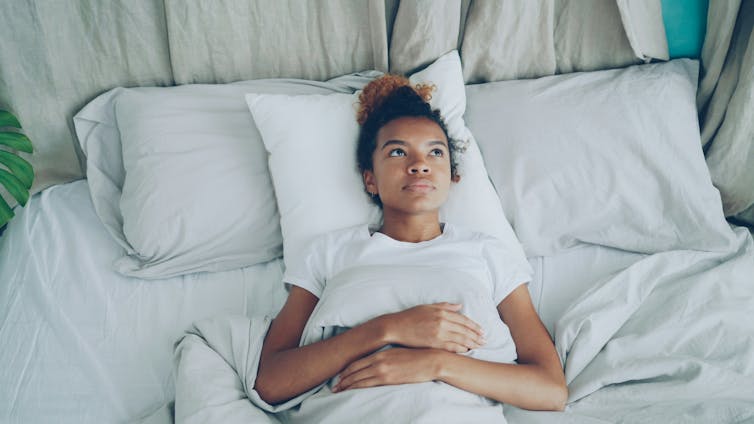
Vitaly Gariev/Unsplash

Broken routines and missing sleep cues

Your brain is wired for predictability, especially at night, during our most vulnerable behaviour: sleep.

A combination of internal and external cues work together to create the right conditions for rest.

Internally, your body signals that it’s time to sleep by decreasing core body temperature and increasing the sleep-promoting hormone melatonin. This makes you less alert.

Externally, your environment needs to support these signals, not compete with it. At home, your typical pre-sleep wind-down habits and familiar surroundings tell your body it is safe to sleep.

But sleeping somewhere new often disrupts these sights, sounds and sensations your body relies on.

There may be different light levels (for example, from hotel room clocks or street lights), unfamiliar noises (such as elevators, traffic and neighbours) and different bedding (for instance, a firmer mattress or softer pillows).

And you may be doing different activities, such as eating out late or working on a laptop on your bed.

An alert brain in a new place

From an evolutionary perspective, lighter sleep or more frequent awakenings when we’re somewhere new may be protective, allowing us to detect potential threats more quickly and respond to danger.

This is known as the “first-night effect”. It means when we sleep somewhere new, our brains don’t fully switch off.

Brain activity recordings have shown that during the first night in a new environment, the left side of the brain remains more responsive to unfamiliar sounds, even during deep sleep, compared to the second night. Once we become familiar with the space, this vigilance usually fades.

But even when we start to get used to a new environment, other factors can still interfere with our sleep.

Stress, travel and emotions

Sleeping in a new environment can also be stressful.

Your brain may be running through logistics and to-do lists, thinking about your early flight, or scenarios where you forget important belongings. Maybe you’re also experiencing jet lag.

Emotions such as homesickness, excitement, anticipation or anxiety can disrupt sleep as well. Even positive stress – for example, feeling excited about a big trip – activates the same arousal systems in the brain as negative stress. The brain doesn’t distinguish why those systems are switched on.

Unfortunately, a heightened arousal system and sleep are competitors. When your stress response is active, it directly interferes with the brain’s ability to disengage and transition into sleep, even when you’re physically exhausted.

But some people actually sleep better away from home

For some of us, being away from home can actually remove everyday distractions: there are no household responsibilities, no unfinished tasks competing for attention, and clearer boundaries between “work time” and “rest time”.

The change of environment may also reduce bedtime rumination, which is often triggered by familiar home environments tied to stress, deadlines or to-do lists.

Better sleep when we are away may be to do with the amount of sleep we usually get at home. Research shows that individuals who are not getting enough sleep at home are likely to get better sleep when travelling.

If your sleep improves when you’re away, it might be an opportunity to consider how stimulating or busy your usual sleep environment has become – and what you can do to make it calmer.

Tips for sweet dreams at home or away

Reassure yourself. If you have a rough night of sleep in a new place it doesn’t mean something is “wrong” with you. It’s a normal, protective response from a brain that’s tuned to safety and familiarity. You might need a night or two to settle in.

Choose sleep-friendly accommodation when you can. Many hotels are deliberately designed to support good sleep and these features, such as pillow menus, melatonin-rich foods on the room-service menu, or even a personal sleep butler, can make a real difference.

Plan for a slower first day. If you know you’re sleeping somewhere new, expect that the first night might not be your best. Where possible, avoid scheduling demanding tasks the next morning and give yourself time to adjust.

Pack your sleep routine in your suitcase. Just as parents might do for their small child, pack your sleep routine with you. If you have a particular pillow case or a sleep mask, or a certain scent that helps you sleep at home, try bringing these with you so your brain has some familiar cues in an unfamiliar environment.

If you notice you sleep better away from home, take a look at your home sleep routine and environment. Keep your room cool and dark and make your bed comfortable with supportive pillows and fresh bedding. Establish a relaxing wind-down routine: dim lights and limit screens in the evening, and stick to consistent bed and wake times, even on weekends.

Charlotte Gupta, Sleep Researcher, Appleton Institute, HealthWise Research Group, CQUniversity Australia and Dayna Easton, Postdoctoral Research Fellow, College of Medicine and Public Health, Flinders University

This article is republished from The Conversation under a Creative Commons license. Read the original article.

Don’t Forget…

Did you arrive here from our newsletter? Don’t forget to return to the email to continue learning!

Learn to Age Gracefully

Join the 98k+ American women taking control of their health & aging with our 100% free (and fun!) daily emails:

  • Older Men’s Connections Often Wither When They’re on Their Own

    10almonds is reader-supported. We may, at no cost to you, receive a portion of sales if you purchase a product through a link in this article.

    At age 66, South Carolina physician Paul Rousseau decided to retire after tending for decades to the suffering of people who were seriously ill or dying. It was a difficult and emotionally fraught transition.

    “I didn’t know what I was going to do, where I was going to go,” he told me, describing a period of crisis that began in 2017.

    Seeking a change of venue, Rousseau moved to the mountains of North Carolina, the start of an extended period of wandering. Soon, a sense of emptiness enveloped him. He had no friends or hobbies — his work as a doctor had been all-consuming. Former colleagues didn’t get in touch, nor did he reach out.

    His wife had passed away after a painful illness a decade earlier. Rousseau was estranged from one adult daughter and in only occasional contact with another. His isolation mounted as his three dogs, his most reliable companions, died.

    Rousseau was completely alone — without friends, family, or a professional identity — and overcome by a sense of loss.

    “I was a somewhat distinguished physician with a 60-page resume,” Rousseau, now 73, wrote in the Journal of the American Geriatrics Society in May. “Now, I’m ‘no one,’ a retired, forgotten old man who dithers away the days.”

    In some ways, older men living alone are disadvantaged compared with older women in similar circumstances. Research shows that men tend to have fewer friends than women and be less inclined to make new friends. Often, they’re reluctant to ask for help.

    “Men have a harder time being connected and reaching out,” said Robert Waldinger, a psychiatrist who directs the Harvard Study of Adult Development, which has traced the arc of hundreds of men’s lives over a span of more than eight decades. The men in the study who fared the worst, Waldinger said, “didn’t have friendships and things they were interested in — and couldn’t find them.” He recommends that men invest in their “social fitness” in addition to their physical fitness to ensure they have satisfying social interactions.

    Slightly more than 1 in every 5 men ages 65 to 74 live alone, according to 2022 Census Bureau data. That rises to nearly 1 in 4 for those 75 or older. Nearly 40% of these men are divorced, 31% are widowed, and 21% never married.

    That’s a significant change from 2000, when only 1 in 6 older men lived by themselves. Longer life spans for men and rising divorce rates are contributing to the trend. It’s difficult to find information about this group — which is dwarfed by the number of women who live alone — because it hasn’t been studied in depth. But psychologists and psychiatrists say these older men can be quite vulnerable.

    When men are widowed, their health and well-being tend to decline more than women’s.

    “Older men have a tendency to ruminate, to get into our heads with worries and fears and to feel more lonely and isolated,” said Jed Diamond, 80, a therapist and the author of “Surviving Male Menopause” and “The Irritable Male Syndrome.”

    Add in the decline of civic institutions where men used to congregate — think of the Elks or the Shriners — and older men’s reduced ability to participate in athletic activities, and the result is a lack of stimulation and the loss of a sense of belonging.

    Depression can ensue, fueling excessive alcohol use, accidents, or, in the most extreme cases, suicide. Of all age groups in the United States, men over age 75 have the highest suicide rate, by far.

    For this column, I spoke at length to several older men who live alone. All but two (who’d been divorced) were widowed. Their experiences don’t represent all men who live alone. But still, they’re revealing.

    The first person I called was Art Koff, 88, of Chicago, a longtime marketing executive I’d known for several years. When I reached out in January, I learned that Koff’s wife, Norma, had died the year before, leaving him hobbled by grief. Uninterested in eating and beset by unremitting loneliness, Koff lost 45 pounds.

    “I’ve had a long and wonderful life, and I have lots of family and lots of friends who are terrific,” Koff told me. But now, he said, “nothing is of interest to me any longer.”

    “I’m not happy living this life,” he said.

    Nine days later, I learned that Koff had died. His nephew, Alexander Koff, said he had passed out and was gone within a day. The death certificate cited “end stage protein calorie malnutrition” as the cause.

    The transition from being coupled to being single can be profoundly disorienting for older men. Lodovico Balducci, 80, was married to his wife, Claudia, for 52 years before she died in October 2023. Balducci, a renowned physician known as the “patriarch of geriatric oncology,” wrote about his emotional reaction in the Journal of the American Geriatrics Society, likening Claudia’s death to an “amputation.”

    “I find myself talking to her all the time, most of the time in my head,” Balducci told me in a phone conversation. When I asked him whom he confides in, he admitted, “Maybe I don’t have any close friends.”

    Disoriented and disorganized since Claudia died, he said his “anxiety has exploded.”

    We spoke in late February. Two weeks later, Balducci moved from Tampa to New Orleans, to be near his son and daughter-in-law and their two teenagers.

    “I am planning to help as much as possible with my grandchildren,” he said. “Life has to go on.”

    Verne Ostrander, a carpenter in the small town of Willits, California, about 140 miles north of San Francisco, was reflective when I spoke with him, also in late February. His second wife, Cindy Morninglight, died four years ago after a long battle with cancer.

    “Here I am, almost 80 years old — alone,” Ostrander said. “Who would have guessed?”

    When Ostrander isn’t painting watercolors, composing music, or playing guitar, “I fall into this lonely state, and I cry quite a bit,” he told me. “I don’t ignore those feelings. I let myself feel them. It’s like therapy.”

    Ostrander has lived in Willits for nearly 50 years and belongs to a men’s group and a couples’ group that’s been meeting for 20 years. He’s in remarkably good health and in close touch with his three adult children, who live within easy driving distance.

    “The hard part of living alone is missing Cindy,” he told me. “The good part is the freedom to do whatever I want. My goal is to live another 20 to 30 years and become a better artist and get to know my kids when they get older.”

    The Rev. Johnny Walker, 76, lives in a low-income apartment building in a financially challenged neighborhood on Chicago’s West Side. Twice divorced, he’s been on his own for five years. He, too, has close family connections. At least one of his several children and grandchildren checks in on him every day.

    Walker says he had a life-changing religious conversion in 1993. Since then, he has depended on his faith and his church for a sense of meaning and community.

    “It’s not hard being alone,” Walker said when I asked whether he was lonely. “I accept Christ in my life, and he said that he would never leave us or forsake us. When I wake up in the morning, that’s a new blessing. I just thank God that he has brought me this far.”

    Waldinger recommended that men “make an effort every day to be in touch with people. Find what you love — golf, gardening, birdwatching, pickleball, working on a political campaign — and pursue it,” he said. “Put yourself in a situation where you’re going to see the same people over and over again. Because that’s the most natural way conversations get struck up and friendships start to develop.”

    Rousseau, the retired South Carolina doctor, said he doesn’t think about the future much. After feeling lost for several years, he moved across the country to Jackson, Wyoming, in the summer of 2023. He embraced solitude, choosing a remarkably isolated spot to live — a 150-square-foot cabin with no running water and no bathroom, surrounded by 25,000 undeveloped acres of public and privately owned land.

    “Yes, I’m still lonely, but the nature and the beauty here totally changed me and focused me on what’s really important,” he told me, describing a feeling of redemption in his solitude.

    Rousseau realizes that the death of his parents and a very close friend in his childhood left him with a sense of loss that he kept at bay for most of his life. Now, he said, rather than denying his vulnerability, he’s trying to live with it. “There’s only so long you can put off dealing with all the things you’re trying to escape from.”

    It’s not the life he envisioned, but it’s one that fits him, Rousseau said. He stays busy with volunteer activities — cleaning tanks and running tours at Jackson’s fish hatchery, serving as a part-time park ranger, and maintaining trails in nearby national forests. Those activities put him in touch with other people, mostly strangers, only intermittently.

    What will happen to him when this way of living is no longer possible?

    “I wish I had an answer, but I don’t,” Rousseau said. “I don’t see my daughters taking care of me. As far as someone else, I don’t think there’s anyone else who’s going to help me.”

    We’re eager to hear from readers about questions you’d like answered, problems you’ve been having with your care, and advice you need in dealing with the health care system. Visit http://kffhealthnews.org/columnists to submit your requests or tips.

    KFF Health News is a national newsroom that produces in-depth journalism about health issues and is one of the core operating programs at KFF—an independent source of health policy research, polling, and journalism. Learn more about KFF.

    USE OUR CONTENT

    This story can be republished for free (details).

    KFF Health News is a national newsroom that produces in-depth journalism about health issues and is one of the core operating programs at KFF—an independent source of health policy research, polling, and journalism. Learn more about KFF.

    Subscribe to KFF Health News’ free Morning Briefing.

    Share This Post

  • Pink Himalayan Salt: Health Facts

    10almonds is reader-supported. We may, at no cost to you, receive a portion of sales if you purchase a product through a link in this article.

    It’s Q&A Day at 10almonds!

    Q: Great article about the health risks of salt to organs other than the heart! Is pink Himalayan sea salt, the pink kind, healthier?

    Thank you! And, no, sorry. Any salt that is sodium chloride has the exact same effect because it’s chemically the same substance, even if impurities (however pretty) make it look different.

    If you want a lower-sodium salt, we recommend the kind that says “low sodium” or “reduced sodium” or similar. Check the ingredients, it’ll probably be sodium chloride cut with potassium chloride. Potassium chloride is not only not a source of sodium, but also, it’s a source of potassium, which (unlike sodium) most of us could stand to get a little more of.

    For your convenience: here’s an example on Amazon!

    Bonus: you can get a reduced sodium version of pink Himalayan salt too!

    Share This Post

  • Cancer patients from migrant backgrounds have a 1 in 3 chance of something going wrong in their care

    10almonds is reader-supported. We may, at no cost to you, receive a portion of sales if you purchase a product through a link in this article.

    More than 7 million people in Australia were born overseas. Some 5.8 million people report speaking a language other than English at home.

    But how well are we looking after culturally and linguistically diverse (CALD) Australians?

    In countries around the world, evidence suggests people from CALD backgrounds are at increased risk of harm as a result of the health care they receive when compared to the general population. Common problems include a higher risk of contracting a hospital-acquired infection or medication errors.

    People receiving cancer care are at particularly high risk of harm associated with their health care.

    In a recent study, we found CALD cancer patients in Australia had roughly a one-in-three risk of something going wrong during their cancer care. This is unacceptably high.

    SeventyFour/Shutterstock

    We reviewed medical records

    We worked with four cancer services (two in New South Wales and two in Victoria) that provide care to high proportions of people from CALD backgrounds. These four cancer services offer a combination of care to patients in hospitals, clinics and in their homes.

    We analysed de-identified medical records of people from CALD backgrounds who received care at any of the four cancer services during 2018. To identify CALD patients, we used information from their medical records including “country of birth”, “preferred language”, “language spoken at home” and “interpreter required”.

    We reviewed a total of 628 medical records of CALD cancer patients. We found roughly one in three medical records (212 out of 628) had at least one patient safety event recorded. We defined a patient safety event as any event that could have or did result in harm to the patient as a result of the health care they receive. We also found 44 patient records had three or more safety events recorded over a 12-month period.

    Medication-related safety events were common, such as the wrong medication type or dose being given to a patient. Sometimes the patients themselves took the wrong type or dose of a medication or stopped medication all together. We also observed a variety of other patient safety events such as falls, pressure ulcers and infections after surgery.

    The number of incidents could even be higher than what we observed. We know from other research that not all patient safety events are documented.

    A man in a hospital bed is seen by a male doctor.
    Our research looked at patient safety incidents among CALD patients at four Australian cancer services in 2018. Monkey Business Images/Shutterstock

    We didn’t have a control group, which is the main limitation of our study. In other words, we didn’t examine medical records of patients from non-CALD backgrounds to compare how common patient safety events were between groups.

    But looking at other data suggests the rate of incidents is much higher in CALD patients.

    Studies over many years indicate around one in ten patients admitted to hospital experience a safety event.

    One study from Norway found cancer patients have a 39% greater risk of experiencing adverse events in hospital when compared to other patients (24.2% compared to 17.4%).

    Why is the risk of incidents so high for CALD patients?

    We identified miscommunication as a key factor that put cancer patients from CALD backgrounds at risk.

    For example, we observed from one patient’s notes that the patient didn’t take their medication because they were confused by the instructions given by different clinicians. This confusion might have stemmed from language barriers or health literacy issues.

    In some medical records, we also saw interpreter requirements were unmet. For example, at the time of admission, assessment for language needs noted an interpreter was not required. However, later notes mentioned the patient had poor English or needed an interpreter.

    Also, with the limited availability of interpreters, they’re often reserved for specialist appointments, and not used for “routine” tasks, such as during chemotherapy treatment. This may result in side effects from cancer medications not being properly identified and responded to, potentially leading to patient harm.

    A young nurse talks with a senior woman.
    Risks may increase if a patient needs an interpreter but doesn’t have one. THICHA SATAPITANON/Shutterstock

    What can we do to improve things?

    To make care safer, patients, their families and the clinicians who care for them should come together so that any solutions developed are practical, relevant, and informed by their combined experiences.

    As an example, we developed a tool with consumers from CALD backgrounds and their clinicians that seeks to ensure that when patient medications are changed, there is common understanding between the clinician and the patient of their medication and care instructions. This includes recognising the side effects of the medications and who to contact if they have concerns.

    This tool uses images and simple language to support common understanding of medication and care instructions. It takes into account specific cultural expectations and is available in different languages. It’s currently being evaluated in two cancer clinics.

    To make cancer care safer for patients from CALD backgrounds, health systems and services will need to support and invest in strategies that are specifically targeted towards people from these backgrounds. This will ensure more equitable health solutions that improve the health of all Australians.

    Ashfaq Chauhan, Research Fellow, Australian Institute of Health Innovation, Macquarie University; Melvin Chin, Senior Lecturer, School of Clinical Medicine, UNSW Sydney; Meron Pitcher, Honorary, Medicine, Dentistry and Health Sciences, The University of Melbourne, and Reema Harrison, Professor, Australian Institute of Health Innovation, Macquarie University

    This article is republished from The Conversation under a Creative Commons license. Read the original article.

    Share This Post

  • What Can Moderate Drinking Mean For Healthy Longevity?

    10almonds is reader-supported. We may, at no cost to you, receive a portion of sales if you purchase a product through a link in this article.

    Alcohol is, of course, unhealthy. Not even the famous “small glass of red” is recommended:

    Can We Drink To Good Health? ← this was mostly about the purported heart health benefits, and the answer to the question is: no, we cannot, and as WHO has declared, “the only safe amount of alcohol is zero”)

    See also: How Much Alcohol Does It Take To Increase Cancer Risk? ← the answer is “any” (although, the risk is dose-dependent, so if not abstaining completely, less is still better than more)

    A lot of why people think that moderate drinking is healthy, that widespread popular belief stems from flawed associative studies that compared the following two categories of people:

    • non-drinkers, including many former heavy drinkers who stopped because they realized the harm they were doing to themselves
    • light drinkers, who have been able to continue drinking because of their otherwise good health

    In other words, they looked at now-teetotal former alcoholics whose health was ruined by drinking and concluded “aha, non-drinkers have bad health; clearly some drinking is best”.

    You can read more about this and how that flawed research was later disproven once the confounding variables were removed, here: Are You Making This Alcohol Mistake?

    But that’s background history. Now here’s for…

    The latest evidence that makes things clearer

    Researchers (Dr. Sinead George et al.) wanted to know the lifetime risk of alcohol-attributable death and illness in the US based on average weekly alcohol consumption, using evidence from more than 7,200 pre-existing research papers as well as national survey, census, mortality, and morbidity data.

    So, can there be any benefit from moderate drinking?

    In few words: no overall protective health effect was found at low levels of alcohol consumption, and even what is commonly considered moderate drinking was associated with increased risks of premature death and chronic disease.

    In numbers: estimated lifetime alcohol-attributable mortality risk exceeded 1 in 1,000 at more than 6.5 drinks per week for men and more than 7.0 drinks per week for women, rose above 1 in 100 at more than 8.5 drinks per week for everyone and reached 1 in 25 (4%) at 14 drinks per week for men.

    As for disease risk:

    • Chronic disease in general: alcohol consumption increased the risk of multiple conditions, including cancers of the esophagus, mouth, and breast, cardiovascular disease, liver disease, and alcohol-related injuries.
    • Heart disease in particular: although low alcohol intake was associated with a lower risk of ischemic heart disease and stroke, these potential benefits were outweighed by increased risks of cancer and other alcohol-related diseases when all health outcomes were considered together.

    If you’d like to read the paper in full, here it is: Moderate alcohol consumption linked to premature death and chronic illness

    If you’d like to rethink drinking for yourself, then feel free to check out: Rethinking Drinking: How To Reduce Or Quit Alcohol

    Worried you’ve already done too much harm?

    It’s never too early to quit drinking, but it’s also never too late:

    What Happens To Your Body When You Stop Drinking Alcohol ← for a detailed timeline which parts of your body recover when

    Take care!

    Don’t Forget…

    Did you arrive here from our newsletter? Don’t forget to return to the email to continue learning!

    Learn to Age Gracefully

    Join the 98k+ American women taking control of their health & aging with our 100% free (and fun!) daily emails:

  • Practical Programming for Strength Training – by Mark Rippetoe & Andy Baker

    10almonds is reader-supported. We may, at no cost to you, receive a portion of sales if you purchase a product through a link in this article.

    Strength training is an important part of overall health maintenance, but it can be hard to find a good guide to progressive strength improvement that isn’t a bodybuilding book.

    This one gives a ground-upwards approach, explaining small details to even quite basic things, before taking the reader through to more advanced progressions, and how to get the most strength-building out of each exercise over time.

    As such, this is a good book for anyone of any level from beginner to quite experienced, and you can hop in at any point since there are always catch-up summaries and/or reiterations of the previous concepts that we’re now building on from.

    The authors do also talk nutrition, hormones, and so forth, but most of it is about the exercises and the progressions thereof.

    There is a slightly patronizing chapter towards the end, about “special populations”, for example offering “novice and intermediate training for women”, but it doesn’t take away from the majority of the book, as the exercises don’t care about your gender. Muscles are muscles, and we all start from wherever we are. Yes, testosterone boosts muscle mass, but let’s face it, there are a lot of women in the world who are stronger than a lot of men.

    One thing to bear in mind is that a lot of this is barbell training, so you will need a barbell (or access to one at a gym). If purely bodyweight training is your preference, or perhaps some other form of weightlifting (e.g. kettlebells or such) then this isn’t the book for that.

    Bottom line: if strength training is your focus and you like barbells, then this is a great book to take you quite a way along that road.

    Click here to check out Practical Programming For Strength Training, and get stronger!

    Don’t Forget…

    Did you arrive here from our newsletter? Don’t forget to return to the email to continue learning!

    Learn to Age Gracefully

    Join the 98k+ American women taking control of their health & aging with our 100% free (and fun!) daily emails:

  • Gut-Healthy Labneh Orecchiette

    10almonds is reader-supported. We may, at no cost to you, receive a portion of sales if you purchase a product through a link in this article.

    Labneh (a sort of yogurt-cheese made from strained yogurt) is a great probiotic, and there’s plenty of resistant starch in this dish too, from how we cook, cool, and reheat the pasta. Add to this the lycopene from the tomatoes, the ergothioneine from the mushrooms, and the healthful properties of the garlic, black pepper, and red chili, and we have a very healthy dish!

    You will need

    • 10 oz labneh (if you can’t buy it locally, you can make your own by straining Greek yogurt through a muslin cloth, suspended over a bowl to catch the water that drips out, overnight—and yes, plant-based is also fine if you are vegan, and the gut benefits are similar because unlike vegan cheese, vegan yogurt is still fermented)
    • 6 oz wholegrain orecchiette (or other pasta, but this shape works well for this sauce)
    • ¼ bulb garlic, grated
    • Juice of ½ lemon
    • Large handful chopped parsley
    • Large handful chopped dill
    • 9 oz cherry tomatoes, halved
    • 9 oz mushrooms (your choice what kind), sliced (unless you went for shiitake or similar, which don’t need it due to already being very thin)
    • 2 tsp black pepper, coarse ground
    • 1 tsp red chili flakes
    • ¼ tsp MSG or ½ tsp low-sodium salt
    • Extra virgin olive oil

    Method

    (we suggest you read everything at least once before doing anything)

    1) Cook the pasta as you normally would. Drain, and rinse with cold water. Set aside.

    2) Combine the labneh with the garlic, black pepper, dill, parsley, and lemon juice, in a large bowl. Set aside.

    3) Heat a little olive oil in a skillet; add the chili flakes, followed by the mushrooms. Cook until soft and browned, then add the tomatoes and fry for a further 1 minute—we want the tomatoes to be blistered, but not broken down. Stir in the MSG/salt, and take off the heat.

    4) Refresh the pasta by passing a kettle of boiling water through it in a colander, then add the hot pasta to the bowl of labneh sauce, stirring to coat thoroughly.

    5) Serve, spooning the mushrooms and tomatoes over the labneh pasta.

    Enjoy!

    Want to learn more?

    For those interested in some of the science of what we have going on today:

    Take care!

    Don’t Forget…

    Did you arrive here from our newsletter? Don’t forget to return to the email to continue learning!

    Learn to Age Gracefully

    Join the 98k+ American women taking control of their health & aging with our 100% free (and fun!) daily emails: