
PCOS affects 1 in 8 women worldwide, yet it’s often misunderstood. A name change might help

10almonds is reader-supported. We may, at no cost to you, receive a portion of sales if you purchase a product through a link in this article.

Polycystic ovary syndrome (PCOS) affects one in eight women globally. However, this complex hormonal condition is under-researched and often misunderstood.

This is partly due to its name, which overemphasises “cysts” and the ovaries. In fact, you can have PCOS without cysts.

It can affect many parts of the body, not just the ovaries, leading to acne, excess body hair, changes in metabolism and even mental health issues.

Our new research, published today, shows that changing the name would help better reflect the complexity of PCOS and improve awareness about this condition. We surveyed 7,700 health professionals and people with PCOS and found the majority supported a name change.
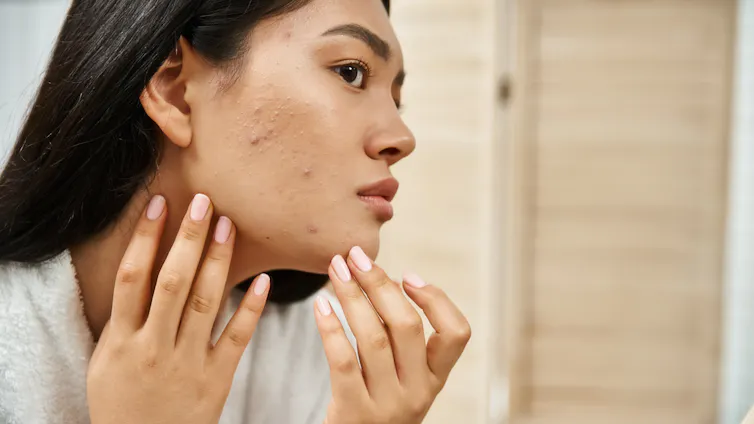
LightField Studios/Shutterstock

What is PCOS?

PCOS is a chronic condition caused by an imbalance of multiple hormones – the body’s chemical messengers – that circulate through the body.

Genes and environment play a role. Lifestyle factors, such as diet (especially ultraprocessed foods) and activity, can also lead to weight gain and worsen its severity.

In PCOS, the “cysts” are actually partially developed eggs that, due to underlying hormonal imbalance, remain dormant. This means they are less likely to be released (ovulation).

Unlike conventional ovarian cysts, these dormant eggs will generally not grow larger, cause pain, require surgery or burst. Instead, they are slowly reabsorbed over time back into the ovary.

Having dormant eggs in your ovaries is not, by itself, enough to be diagnosed with PCOS – and you can have PCOS without any dormant eggs.

So, what’s needed to diagnose PCOS?

For adults, a diagnosis requires two of three features:

1) irregular periods (due to limited ovulation)

2) high levels of certain hormones (androgens), such as testosterone, which is evident either in blood tests or symptoms (excess facial and body hair, acne, and thinning/balding scalp)

3) excess dormant eggs detected either on an ultrasound or ovarian hormone blood test

In adolescents, only the first two criteria are needed for a diagnosis. Ovary tests (ultrasound or blood tests) are not recommended until after age 20, as changes in the ovaries are common during normal adolescent development.

However, these criteria focus heavily on the ovaries and menstrual cycles, neglecting the condition’s broader impacts.

Widespread health effects

In fact, hormonal imbalances in PCOS affect multiple systems in the body. This can include:

metabolism – higher blood pressure and cholesterol, and greater risk of heart disease and diabetes.

reproductive system – irregular menstrual cycles, reduced fertility and pregnancy complications and increased endometrial cancer risk.

skin – excess facial/body hair, acne, scalp hair thinning and dark skin patches.

mental health – anxiety, depression, disordered eating and body image concerns.

PCOS has also been linked to sleep apnoea (a sleep disorder involving irregular breathing, snoring and fatigue) and inflammatory conditions such as asthma.
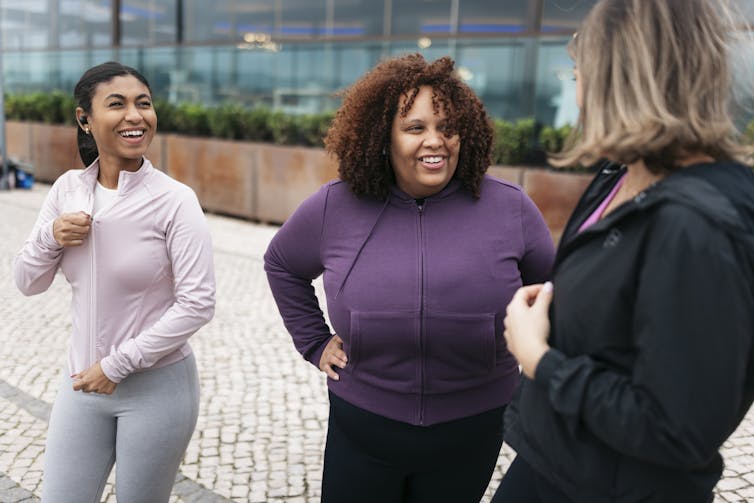
Three smiling women in exercise gear.
PCOS affects one in eight women globally. Brothers91/Getty

Widespread confusion

It’s not uncommon for women with PCOS to see two or three doctors and wait years for a diagnosis. Many types of doctors, including GPs and hormone, skin and fertility specialists, may be involved in care.

Often, health-care providers focus on reproductive concerns, overlooking other health impacts.

Common but problematic approaches include not informing women of the diagnosis, telling them not to “worry” about their PCOS until they wish to conceive, providing inadequate information or only addressing the problem in their speciality area, such as infertility.

This fragmentation creates a troubling paradox. Some are told they’ll face infertility. Yet without proper education they may be unaware they can still occasionally ovulate and may experience unexpected pregnancies.

Conversely, others planning for families often face unforeseen fertility difficulties that early comprehensive care – such as reproductive life planning, healthy lifestyle and early treatment – could have addressed.

The case to change the name

In our new study, we surveyed 3,462 health professionals and 4,246 people with PCOS across six continents.

We wanted to find out what health-care professionals, doctors and those affected by the condition understood about PCOS, and whether understanding has improved over time.

We also wanted to understand whether changing the name – for example, to include “endocrine” or “metabolic” – could have a positive impact, given frequent confusion and misdiagnosis.

Support for a name change was widespread: 86% of women with PCOS and 76% of health professionals said renaming PCOS would better reflect the condition, reduce confusion and likely lead to better outcomes.

We are now leading an international process to find a consensus on a new name and formally change it in the International Classification of Diseases. This involves engaging widely with health professionals and people with PCOS.

By reframing PCOS beyond a purely reproductive disorder, a name change can support broader research funding, education and advocacy. It may lead to better recognition and improved diagnosis, care and outcomes for people with PCOS.

Combating misinformation with evidence

Accurate information is critical for proper PCOS management. Yet misinformation about the condition – for example, that PCOS can be cured through diet or exacerbated by the oral contraceptive pill – is rife on social media.

We have also co-designed and developed evidence-based guidelines and free resources for people with PCOS to find out more about the condition, including the free “Ask PCOS” app.

Renaming PCOS is another key step in improving knowledge about this understudied condition – and care for the 170 million women affected worldwide.

Helena Teede, Director of Monash Centre for Health Research Implementation, Monash University; Chau Thien Tay (Jillian), Research Fellow, Monash Centre for Health Research and Implementation, Monash University, and Lorna Berry, Consumer Lead, Centre for Research Excellence in Women’s Health in Reproductive Life, Monash University

This article is republished from The Conversation under a Creative Commons license. Read the original article.

Don’t Forget…

Did you arrive here from our newsletter? Don’t forget to return to the email to continue learning!

Learn to Age Gracefully

Join the 98k+ American women taking control of their health & aging with our 100% free (and fun!) daily emails:

  • Cashew Nuts vs Coconut – Which is Healthier?

    10almonds is reader-supported. We may, at no cost to you, receive a portion of sales if you purchase a product through a link in this article.

    Our Verdict

    When comparing cashew nuts to coconut, we picked the cashews.

    Why?

    It can be argued this isn’t a fair comparison, as coconuts aren’t true nuts, but it’s at the very least a useful comparison, because they have very similar (often the same) culinary uses, so deciding between one or the other is something people will often do.

    In terms of macros, cashews have 6x the protein and more than 2x the fiber, as well as slightly more fat (but the fats are healthy, as are those of coconut, by the way) and 2x the carbs. Depending on what you’re looking for, this head-to-head could come out differently, but we say it’s a win for cashews.

    You may be wondering: if cashews have more of all those things, what are coconuts made of? And the answer is that coconuts have 8x the water (and yes, this is counting the coconut meat only, not including the milk inside). Of course, if you get dessicated coconut, then it won’t have that, but we’re comparing fresh to fresh.

    In the category of vitamins, cashews have a lot more of vitamins B1, B2, B3, B5, B6, E, and K. Meanwhile, coconut has more vitamin C, but it’s not a lot. An easy win for cashews here.

    When it comes to minerals, cashews have rather more calcium, copper, iron, magnesium, manganese, phosphorus, potassium, selenium, and zinc. On the other hand, coconut has more sodium. Another easy win for cashews.

    Cashews also have the lower glycemic index.

    All in all, cashews win the day.

    Want to learn more?

    You might like to read:

    Take care!

    Share This Post

  • This Is When Your Muscles Are Strongest

    10almonds is reader-supported. We may, at no cost to you, receive a portion of sales if you purchase a product through a link in this article.

    Dr. Karyn Esser is a professor in the Department of Physiology and Aging at the University of Florida, where she’s also the co-director of the University of Florida Older Americans Independence Center, and she has insights to share on when it’s best to exercise:

    It’s 4–5pm

    Surprise, no clickbait or burying the lede!

    This goes regardless of age or sex, but as we get older, it’s common for our circadian rhythm to weaken, which may result in a tendency to fluctuate a bit more.

    However, since it’s healthy to keep one’s circadian rhythm as stable as reasonably possible, this is a good reason to try to keep our main exercise focused around that time of day, as it provides a sort of “anchor point” for the rest of our day to attach to, so that our body can know what time it is relative to that.

    It’s also the most useful time of day to exercise, because most exercises give benefits proportional to progressive overloading, so training at our peak efficiency time will give the most efficient results. So much for those 5am runs!

    On which note: while the title says “strongest” and the thumbnail has dumbbells, this does go for all different types of exercises that have been tested.

    For more details on all of the above, enjoy:

    Click Here If The Embedded Video Doesn’t Load Automatically!

    Want to learn more?

    You might also like to read:

    The Circadian Rhythm: Far More Than Most People Know

    Take care!

    Share This Post

  • Are berries safe to eat? How worried should I be about the pesticide dimethoate?

    10almonds is reader-supported. We may, at no cost to you, receive a portion of sales if you purchase a product through a link in this article.

    Australia’s regulator has suspended use of a common pesticide used on blueberries, raspberries and blackberries known as dimethoate.

    But this year-long suspension isn’t due to any new information about the pesticide itself. Rather, the Australian Pesticides and Veterinary Medicines Authority (APVMA) says it’s because we’re eating more berries so our potential exposure has increased.

    In particular, it says children aged two to six years may be at increased risk of exceeding maximum limits.

    Here’s what we know about dimethoate and whether berries are still safe to eat. https://www.youtube.com/embed/dds_-BiSng4?wmode=transparent&start=0

    Alexander Sinn/Unsplash

    What is dimethoate?

    Dimethoate is a pesticide that has been used in Australia since 1956. It belongs to a class of pesticides that inhibits the enzyme acetylcholinesterase. This prevents the breakdown of a key neurotransmitter (chemical messenger) and so paralyses an insect’s nervous system, killing it.

    Mammals, including humans, also have the enzyme acetylcholinesterase, and can be poisoned by this class of pesticide.

    So careful regulation of both application of dimethoate and levels of dimethoate residues on food are required so we are not exposed to harmful levels.

    The amount of maximum permissible residues depends, in turn, on how much someone is exposed to from their food.

    To do this, you need to have estimates of how much residue is on food and how much food we eat.

    How much is too much?

    The APVMA has a maximum limit for how much dimethoate we should be exposed to from our food. This is known as the acute reference dose (or ARfD), which is 0.02 milligrams per kilogram of body weight.

    This maximum dose includes a safety factor of ten. In other words, the maximum dose allowed is ten times lower than the lowest dose that has no effect.

    This dose was set in 2017. But it is consistent with current World Health Organization limits and Canadian regulations. Australia’s maximum dose is lower than limits from the United States Environmental Protection Agency.

    So, what’s changed?

    But our dietary habits have changed. Australian consumption of blueberries, blackberries and raspberries has increased substantially since the APVMA last assessed dimethoate. Consumption is up 285–962% compared to levels considered for its 2017 assessment.

    Eating more berries is a good thing. But this means that current trace levels of dimethoate on berries (0.0033 micrograms per kilogram of body weight per day for a toddler) might potentially exceed the maximum limit for children aged two to six years.

    The APVMA states:

    The level of residues detected are unlikely to pose a serious risk to human health, but has proposed suspension of these specific dimethoate products as a precautionary measure.

    What can you do?

    Don’t give up on berries. Eating berries is an important part of a balanced diet. And the APVMA is at pains to emphasise the risk of harm is low.

    The simplest approach is to wash your berries. You should be washing fruit and vegetables anyway. Washing helps get rid of soil, and potentially harmful microorganisms.

    Washing berries will not remove all dimethoate, but can substantially reduce the levels so you can continue to enjoy them and their benefits.

    Ian Musgrave, Senior Lecturer in Pharmacology, University of Adelaide

    This article is republished from The Conversation under a Creative Commons license. Read the original article.

    Share This Post

  • Sesame & Peanut Tofu

    10almonds is reader-supported. We may, at no cost to you, receive a portion of sales if you purchase a product through a link in this article.

    Yesterday we learned how to elevate tofu from “nutrition” to “nutritious tasty snack” with our Basic Baked Tofu recipe; today we’re expanding on that, to take it from “nutritious tasty snack” to “very respectable meal”.

    You will need

    For the tofu:

    • The Basic Baked Tofu that we made yesterday (consider making this to be “step zero” of today’s recipe if you don’t already have a portion in the fridge)

    For the sauce:

    • ⅓ cup peanut butter, ideally with no added sugar or salt (if allergic to peanuts specifically, use almond butter; if allergic to nuts generally, use tahini)
    • ¼ bulb garlic, grated or crushed
    • 1 tbsp tamarind paste
    • 1½ tbsp tamari sauce (or low-sodium soy sauce, if a substitution is necessary)
    • 1 tbsp sambal oelek (or sriracha sauce, if a substitution is necessary)
    • 1 tsp ground coriander
    • 1 tsp ground black pepper
    • ½ tsp ground sweet cinnamon
    • ½ tsp MSG (or else omit; do not substitute with salt in this case unless you have a particular craving)
    • zest of 1 lime

    For the vegetables:

    • 14 oz broccolini / tenderstem broccoli, thick ends trimmed (failing that, any broccoli)
    • 6 oz shelled edamame
    • 1½ tsp toasted sesame oil

    For serving:

    • 4 cups cooked rice (we recommend our Tasty Versatile Rice recipe)
    • ½ cup raw cashews, soaked in hot water for at least 5 minutes and then drained (if allergic, substitute cooked chickpeas, rinsed and drained)
    • 1 tbsp toasted sesame seeds
    • 1 handful chopped cilantro, unless you have the “this tastes like soap” gene, in which case substitute chopped parsley

    Method

    (we suggest you read everything at least once before doing anything)

    1) Combine the sauce ingredients in a bowl and whisk well (or use a blender if you have one that’s comfortable with this relatively small quantity of ingredients). Taste it, and adjust the ingredient ratios if you’d like more saltiness, sweetness, sourness, spiciness, umami.

    2) Prepare a bowl with cold water and some ice. Steam the broccolini and edamame for about 3 minutes; as soon as they become tender, dump them into the ice bathe to halt the cooking process. Let them chill for a few minutes, then drain, dry, and toss in the sesame oil.

    3) Reheat the tofu if necessary (an air fryer is great for this), and then combine with half of the sauce in a bowl, tossing gently to coat well.

    4) Add a little extra water to the remaining sauce, enough to make it pourable, whisking to an even consistency.

    5) Assemble; do it per your preference, but we recommend the order: rice, vegetables, tofu, cashews, sauce, sesame seeds, herbs.

    Enjoy!

    Want to learn more?

    For those interested in some of the science of what we have going on today:

    Take care!

    Don’t Forget…

    Did you arrive here from our newsletter? Don’t forget to return to the email to continue learning!

    Learn to Age Gracefully

    Join the 98k+ American women taking control of their health & aging with our 100% free (and fun!) daily emails:

  • Stolen Focus – by Johann Hari

    10almonds is reader-supported. We may, at no cost to you, receive a portion of sales if you purchase a product through a link in this article.

    Having trouble concentrating for long periods? It’s not just a matter of getting older…

    Johann Hari outlines twelve key ways in which our attention has not merely “wandered”, so much as it has been outright stolen.

    By whom? For what purpose? Obvious culprits include social media and outrage-stoking news outlets, but the problem, as Hari illustrates, goes much deeper than that.

    He talks about how we cannot truly multi-task, and can only switch beween tasks, at a cost. And yet, the modern world is not at all friendly to single-tasking!

    Writer’s note: as I write this, I have active two screens, containing four windows, one of which has three tabs open. I am not multitasking; all those things pertain to the work I am doing right now. If I closed them between use, it’d only cost me more time and attention opening and closing them all the time. And yet, my working conditions are considered practically “hyperfocused” in this century!

    • We learn about how the working world has changed, and the rise of physical and mental exhaustion that has come with it.
    • We learn about the collapse of sustained reading, that started well before the modern Internet.
    • We learn about factors such as dietary shifts that sap our energy too.

    …and more. Twelve key things, remember.

    But, it’s not all doom and gloom. There are things we can do to fight back. Some are personal changes; others are societal changes to push for.

    The last part of the book is given over to, essentially, a manifesto (and how-to guide) for reclaiming our attention and thinking deeply again.

    Bottom line: if you struggle with maintaining attention; this is a book for you. You might want to put your phone in a drawer while you read it, though

    Click here to check out Stolen Focus, and reclaim yours!

    Don’t Forget…

    Did you arrive here from our newsletter? Don’t forget to return to the email to continue learning!

    Learn to Age Gracefully

    Join the 98k+ American women taking control of their health & aging with our 100% free (and fun!) daily emails:

  • Chicken or Fish – Which is Healthier?

    10almonds is reader-supported. We may, at no cost to you, receive a portion of sales if you purchase a product through a link in this article.

    Our Verdict

    When comparing chicken to fish, we picked the fish.

    Why?

    To understand the choice, we have to start a bit earlier on the decision tree. For most people most of the time, when it comes to a diet high in plants or high in animals, the plant-centric diet will generally be best:

    Do We Need Animal Products To Be Healthy?

    When it comes to animal meats, red meat is a fairly uncontroversial first thing to strike off the list:

    Eat To Beat Cancer

    …with pork and some other meats not being much better.

    But chicken? Poultry in general appears to be quite health-neutral. The jury is out and the science has mixed results, but the data is leaning towards “it’s probably fine”.

    See for example this huge (n=29,682) study:

    Associations of Processed Meat, Unprocessed Red Meat, Poultry, or Fish Intake With Incident Cardiovascular Disease and All-Cause Mortality

    this same paper shows that…

    ❝higher intake of processed meat, unprocessed red meat, or poultry, but not fish, was significantly associated with a small increased risk of incident CVD, whereas higher intake of processed meat or unprocessed red meat, but not poultry or fish, was significantly associated with a small increased risk of all-cause mortality❞

    So, since poultry isn’t significantly increasing all-cause mortality, and fish isn’t significantly increasing all-cause mortality or cardiovascular disease, fish comes out as the hands-down (fins-down?) winner.

    One more (this time, easy) choice to make, though!

    While fish in general (please, not fried, though!) is generally considered quite healthy, there is a big difference (more than you might think, and for reasons that are quite alarming), between…

    Health Risks & Nutrition: Farmed Fish vs Wild-Caught

    Enjoy, and take care!

    Don’t Forget…

    Did you arrive here from our newsletter? Don’t forget to return to the email to continue learning!

    Learn to Age Gracefully

    Join the 98k+ American women taking control of their health & aging with our 100% free (and fun!) daily emails: