Are berries safe to eat? How worried should I be about the pesticide dimethoate?

10almonds is reader-supported. We may, at no cost to you, receive a portion of sales if you purchase a product through a link in this article.

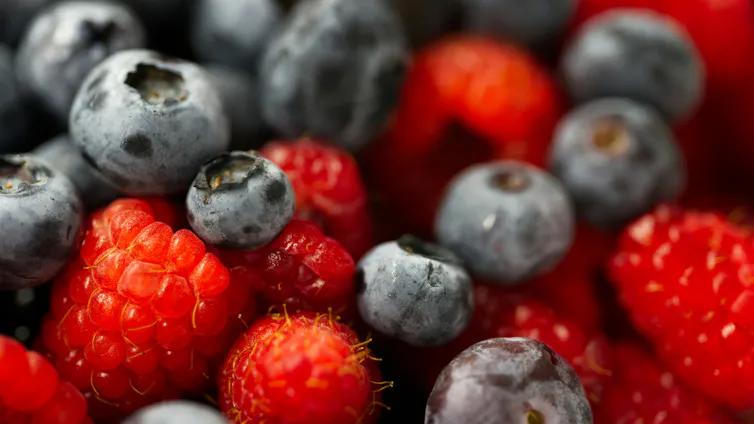
Australia’s regulator has suspended use of a common pesticide used on blueberries, raspberries and blackberries known as dimethoate.

But this year-long suspension isn’t due to any new information about the pesticide itself. Rather, the Australian Pesticides and Veterinary Medicines Authority (APVMA) says it’s because we’re eating more berries so our potential exposure has increased.

In particular, it says children aged two to six years may be at increased risk of exceeding maximum limits.

Here’s what we know about dimethoate and whether berries are still safe to eat. https://www.youtube.com/embed/dds_-BiSng4?wmode=transparent&start=0
Alexander Sinn/Unsplash

What is dimethoate?

Dimethoate is a pesticide that has been used in Australia since 1956. It belongs to a class of pesticides that inhibits the enzyme acetylcholinesterase. This prevents the breakdown of a key neurotransmitter (chemical messenger) and so paralyses an insect’s nervous system, killing it.

Mammals, including humans, also have the enzyme acetylcholinesterase, and can be poisoned by this class of pesticide.

So careful regulation of both application of dimethoate and levels of dimethoate residues on food are required so we are not exposed to harmful levels.

The amount of maximum permissible residues depends, in turn, on how much someone is exposed to from their food.

To do this, you need to have estimates of how much residue is on food and how much food we eat.

How much is too much?

The APVMA has a maximum limit for how much dimethoate we should be exposed to from our food. This is known as the acute reference dose (or ARfD), which is 0.02 milligrams per kilogram of body weight.

This maximum dose includes a safety factor of ten. In other words, the maximum dose allowed is ten times lower than the lowest dose that has no effect.

This dose was set in 2017. But it is consistent with current World Health Organization limits and Canadian regulations. Australia’s maximum dose is lower than limits from the United States Environmental Protection Agency.

So, what’s changed?

But our dietary habits have changed. Australian consumption of blueberries, blackberries and raspberries has increased substantially since the APVMA last assessed dimethoate. Consumption is up 285–962% compared to levels considered for its 2017 assessment.

Eating more berries is a good thing. But this means that current trace levels of dimethoate on berries (0.0033 micrograms per kilogram of body weight per day for a toddler) might potentially exceed the maximum limit for children aged two to six years.

The APVMA states:

The level of residues detected are unlikely to pose a serious risk to human health, but has proposed suspension of these specific dimethoate products as a precautionary measure.

What can you do?

Don’t give up on berries. Eating berries is an important part of a balanced diet. And the APVMA is at pains to emphasise the risk of harm is low.

The simplest approach is to wash your berries. You should be washing fruit and vegetables anyway. Washing helps get rid of soil, and potentially harmful microorganisms.

Washing berries will not remove all dimethoate, but can substantially reduce the levels so you can continue to enjoy them and their benefits.

Ian Musgrave, Senior Lecturer in Pharmacology, University of Adelaide

This article is republished from The Conversation under a Creative Commons license. Read the original article.

Don’t Forget…

Did you arrive here from our newsletter? Don’t forget to return to the email to continue learning!

Learn to Age Gracefully

Join the 98k+ American women taking control of their health & aging with our 100% free (and fun!) daily emails:

  • Wouldn’t It Be Nice To Have Regenerative Superpowers?

    10almonds is reader-supported. We may, at no cost to you, receive a portion of sales if you purchase a product through a link in this article.

    The Best-Laid Schemes of Mice and Medical Researchers…

    This is Dr. Ellen Heber-Katz. She’s an internationally-renowned immunologist and regeneration biologist, but her perhaps greatest discovery was accidental.

    Unlike in Robert Burns’ famous poem, this one has a happy ending!

    But it did involve the best-laid schemes of mice and medical researchers, and how they did indeed “gang gagly“ (or in the English translation, “go awry”).

    How it started…

    Back in 1995, she was conducting autoimmune research, and doing a mouse study. Her post-doc assistant was assigned to punch holes in the ears of mice that had received an experimental treatment, to distinguish them from the control group.

    However, when the mice were later checked, none of them had holes (nor even any indication there ever had been holes punched)—the experiment was ruined, though the post-doc swore she did her job correctly.

    So, they had to start from scratch in the new year, but again, a second batch of mice repeated the trick. No holes, no wounds, no scarring, not disruption to their fur, no damage to the cartilage that had been punched through.

    In a turn of events worthy of a superhero origin story, they discovered that their laboratory-made autoimmune disease had accidentally given the mice super-healing powers of regeneration.

    In the animal kingdom, this is akin to a salamander growing a new tail, but it’s not something usually found in mammals.

    Read: A New Murine Model for Mammalian Wound Repair and Regeneration

    How it’s going…

    Dr. Heber-Katz and colleagues took another 20 years of work to isolate hypoxia-inducible factor-1a (HIF-1a) as a critical molecule that, if blocked, would eliminate the regenerative response.

    Further, a drug (which they went on to patent), 1,4-dihydrophenonthrolin-4-one-3-carboxylic acid (1,4-DPCA), chemically induced this regenerative power:

    See: Drug-induced regeneration in adult mice

    Another 5 years later, they found that this same drug can be used to stimulate the regrowth of bones, too:

    An injectable hydrogel-formulated inhibitor of prolyl-4-hydroxylase promotes T regulatory cell recruitment and enhances alveolar bone regeneration during resolution of experimental periodontitis

    And now…

    The research is continuing. Here’s the latest, a little over a month ago:

    Epithelial–mesenchymal transition: an organizing principle of mammalian regeneration

    Regrowing nerves has also been added into the list of things the drug can do.

    What about humans?

    Superpowered mice are all very well and good, but when can we expect this in humans?

    The next step is testing the drug in larger animals, which she hopes to do next year, followed eventually by studies in humans.

    Read the latest:

    Regrowing nerves and healing without scars? A scientist’s career-long quest comes closer to fruition

    Very promising!

    Share This Post

  • What Hypothyroidism Does To Your Heart

    10almonds is reader-supported. We may, at no cost to you, receive a portion of sales if you purchase a product through a link in this article.

    Hypothyroidism affects 4–7% of the population, but most goes undiagnosed.

    If you’re a woman, you’re 11–15% more likely to have it than if you’re a man.

    The epidemiology of this is interesting, but not our main topic today, so if you’d like to read more about that, then you might want to bookmark this paper to read later: Low awareness and under-diagnosis of hypothyroidism

    If you’re wondering if this might be you, then check out: Doctor Explains: 15 Signs Of Hypothyroidism

    And perhaps, while you’re at it, A Fresh Take On Hypothyroidism

    Meanwhile, what’s this about hypothyroidism and your heart?

    Let’s get to the heart of things

    Researchers (Dr. Irsa Munir et al.) analyzed 112 ICU patients with hypothyroidism using transthoracic echocardiography and speckle-tracking echocardiography, including patients with myxedema coma.

    That’s a lot of big words, but a fair oversimplification would be: they used low- and high-tech means to monitor cardiac function in various ways.

    What they found is that hypothyroidism was strongly associated with measurable heart dysfunction, which makes it look a lot like low thyroid hormone levels can directly impair how well the heart contracts and relaxes.

    In numbers:

    • 66.7% had abnormal diastolic function
    • 68.2% had impaired left ventricular global longitudinal strain
    • 37.5% had reduced left ventricular ejection fraction
    • 34.0% had impaired right ventricular strain

    You might be wondering: why are we assuming causality?

    And the answer is: thyroid hormones help regulate your heart’s response to adrenaline, energy use, blood vessel tone, and the timing and force of contraction, so deficiency can weaken cardiac performance.

    Notably, cardiac abnormalities occurred at similar rates in patients with and without overt myxedema coma, indicating that hypothyroidism itself (not only the coma state) was linked to dysfunction.

    Another factor that Dr. Munir and her team highlighted is that of the various thyroid hormones, low T3 levels are common in septic shock and raised the possibility that prolonged thyroid hormone deficiency can contribute to septic cardiomyopathy.

    You can read the paper in full, here: Heart ventricular function in hospitalized patients with severe hypothyroidism and myxedema coma

    As for what to do about it? Their preliminary lab work strongly suggested thyroid hormones can improve cardiac muscle contractility within minutes, and a clinical trial protocol has been approved to test hormone replacement in septic shock patients, so we’ll look forward to seeing that when it comes out.

    Aside from treating it with thyroid hormones directly, this problem is often approached from the perspective of “can we fix it with diet?”, and indeed, there are prevailing methods for at least managing the condition, for example: Foods For Managing Hypothyroidism (incl. Hashimoto’s)

    However, we recently wrote about an approach that evidence suggests is not only stronger, but also much easier to adhere to in real life with real life’s practicalities: No More Restrictions In This Diet Against Thyroid Disease?

    Want to learn more?

    If you’d like to read more about a common form of hypothyroidism, then check out:

    Hashimoto’s Food Pharmacology – by Dr. Izabella Wentz

    Take care!

    Share This Post

  • Why Some People Get Sick More (And How To Not Be One Of Them)

    10almonds is reader-supported. We may, at no cost to you, receive a portion of sales if you purchase a product through a link in this article.

    Some people have never yet had COVID (so far so good, this writer included); others are on their third bout already; others have not been so lucky and are no longer with us to share their stories.

    Obviously, even the healthiest and/or most careful person can get sick, and it would be folly to be complacent and think “I’m not a person who gets sick; that happens to other people”.

    Nor is COVID the only thing out there to worry about; there’s always the latest outbreak-du-jour of something, and there are always the perennials such as cold and flu—which are also not to be underestimated, because both weaken us to other things, and flu has killed very many, from the 50,000,000+ in the 1918 pandemic, to the 700,000ish that it kills each year nowadays.

    And then there are the combination viruses:

    Move over, COVID and Flu! We Have “Hybrid Viruses” To Contend With Now

    So, why are some people more susceptible?

    Firstly, some people are simply immunocompromised. This means for example that:

    • perhaps they have an inflammatory/autoimmune disease of some kind (e.g. lupus, rheumatoid arthritis, type 1 diabetes), or…
    • perhaps they are taking immunosuppressants for some reason (e.g. because they had an organ transplant), or…
    • perhaps they have a primary infection that leaves them vulnerable to secondary infections. Most infections will do this to some degree or another, but some are worse for it than others; untreated HIV is a clear example. The HIV itself may not kill people, but (if untreated) the resultant AIDS will leave a person open to being killed by almost any passing opportunistic pathogen. Pneumonia of various kinds being high on the list, but it could even be something as simple as the common cold, without a working immune system to fight it.

    See also: How To Prevent (Or Reduce) Inflammation

    And for that matter, since pneumonia is a very common last-nail-in-the-coffin secondary infection (especially: older people going into hospital with one thing, getting a secondary infection and ultimately dying as a result), it’s particularly important to avoid that, so…

    See also: Pneumonia: What We Can & Can’t Do About It

    Secondly, some people are not immunocompromised per the usual definition of the word, but their immune system is, arguably, compromised.

    Cortisol, the stress hormone, is an immunosuppressant. We need cortisol to live, but we only need it in small bursts here and there (such as when we are waking up the morning). When high cortisol levels become chronic, so too does cortisol’s immunosuppressant effect.

    Top things that cause elevated cortisol levels include:

    • Stress
    • Alcohol
    • Smoking

    Thus, the keys here are to 1) not smoke 2) not drink, ideally, or at least keep consumption low, but honestly even one drink will elevate cortisol levels, so it’s better not to, and 3) manage stress.

    See also: Lower Your Cortisol! (Here’s Why & How)

    Other modifiable factors

    Being aware of infection risk and taking steps to reduce it (e.g. avoiding being with many people in confined indoor places, masking as appropriate, handwashing frequently) is a good preventative strategy, along with of course getting any recommended vaccines as they come available.

    What if they fail? How can we boost the immune system?

    We talked about not sabotaging the immune system, but what about actively boosting it? The answer is yes, we certainly can (barring serious medical reasons why not), as there are some very important lifestyle factors too:

    Beyond Supplements: The Real Immune-Boosters!

    One final last-line thing…

    Since if we do get an infection, it’s better to know sooner rather than later… A recent study shows that wearable activity trackers can (if we pay attention to the right things) help predict disease, including highlighting COVID status (positive or negative) about as accurately (88% accuracy) as rapid screening tests. Here’s a pop-science article about it:

    Wearable activity trackers show promise in detecting early signals of disease

    Take care!

    Share This Post

  • Mocktails – by Moira Clark

    10almonds is reader-supported. We may, at no cost to you, receive a portion of sales if you purchase a product through a link in this article.

    We’ve reviewed books about quitting alcohol before (such as this one), but today’s is not about quitting, so much as about enjoying non-alcoholic drinks; it’s simply a recipe book of zero-alcohol cocktails, or “mocktails”.

    What sets this book apart from many of its kind is that every recipe uses only natural and fresh ingredients, rather than finding in the ingredients list some pre-made store-bought component. Instead, because of its “everything from scratch” approach, this means:

    • Everything is reliably as healthy as the ingredients you use
    • Every recipe’s ingredients can be found easily unless you live in a food desert

    Each well-photographed and well-written recipe also comes with a QR code to see a step-by-step video tutorial (or if you get the ebook version, then a direct link as well).

    Bottom line: this is the perfect mocktail book to have in (and practice with!) before the summer heat sets in.

    Click here to check out Mocktails: A Delicious Collection of Non-Alcoholic Drinks, and get mixing!

    Don’t Forget…

    Did you arrive here from our newsletter? Don’t forget to return to the email to continue learning!

    Learn to Age Gracefully

    Join the 98k+ American women taking control of their health & aging with our 100% free (and fun!) daily emails:

  • 5 Surprising Benefits Of Exercise After 50 (More Than Just Fitness)

    10almonds is reader-supported. We may, at no cost to you, receive a portion of sales if you purchase a product through a link in this article.

    It’s easy to want to do less as we get older, but the benefits of continuing to actively exercise, pushing oneself even just a little, can be far-reaching.

    Direct and indirect benefits

    As well as the obvious fitness benefits, keeping up good levels of exercise can also offer:

    Healthy Skin

    Exercise improves circulation, bringing growth factors (thus: regeneration, because it’s replacing cells), oxygen, and nutrients to the skin. Accordingly, it can lead to healthier, more youthful-looking skin as a low-cost alternative to a lot of skincare products. That said, it also encourages good skin habits, like daily sunscreen use.

    Bone Health

    Weight-bearing and resistance exercises (which between them, encompasses most forms of exercise) improve bone density. This is because physical stress signals bones to strengthen, reducing the risk of fractures. This includes activities like walking, hiking, and using resistance bands or weights. Note however that it is on a “per bone” basis. So for example, hiking will improve your lower body and spine, but do nothing for your arms. On the other hand, doing a daily groceries trip on foot, if local geography makes that practicable, can do the whole body, if one is then carrying groceries home (this writer lives about 2 miles from where she buys groceries, and does this pretty much daily).

    Mental Health

    Exercise, especially outdoors, has well-established positive effects on mental well-being, and can relieve stress and improve mood. As a bonus, community engagement and shared experiences can enhance mental health benefits for many people—but if you prefer it as peaceful time for yourself, that’s beneficial in its own way too!

    Better Sleep

    Physical activity helps promote better sleep quality, which is important for so many aspects of health—because fatiguing the body through exercise can lead to a more restful night, which is often harder to achieve with age.

    Visibility and Confidence

    Staying active and taking on challenges (e.g. training for some event) can boost visibility in social and family settings, countering “invisibility” often felt from midlife onwards. And even if one doesn’t do those things, exercise fosters confidence and helps people carry themselves with more self-assurance, which has a lot of knock-on benefits too.

    For more on all of these things, enjoy:

    Click Here If The Embedded Video Doesn’t Load Automatically!

    Want to learn more?

    You might also like to read:

    Are There Any Sensible Age Limits To Exercise?

    Take care!

    Don’t Forget…

    Did you arrive here from our newsletter? Don’t forget to return to the email to continue learning!

    Learn to Age Gracefully

    Join the 98k+ American women taking control of their health & aging with our 100% free (and fun!) daily emails:

  • Salt Sugar Fat – by Michael Moss

    10almonds is reader-supported. We may, at no cost to you, receive a portion of sales if you purchase a product through a link in this article.

    You are probably already aware that food giants put unhealthy ingredients in processed food. So what does this book offer of value?

    Sometimes, better understanding leads to better movation. In this case, while a common (reasonable) view has been:

    “The food giants fill their food with salt, sugar, and fat, because it makes that food irresistibly delicious”

    …but that doesn’t exactly put us off the food, does it? It just makes it a guilty pleasure. Ah yes, the irresistible McDouble Dopamineburger. The time-honored tradition of Pizza Night; a happy glow; a special treat.

    What Pulitzer-winning author Michael Moss brings to us is different.

    He examines not just how they hooked us, but why. And the answer is not merely the obvious “profit and greed”, but also “survival, under capitalism”. That without regulation forcing companies to keep salt/sugar/fat levels down, companies that have tried to do so voluntarily have quickly had to u-turn to regain any hope of competitiveness.

    He also looks at how the salt/sugar/fat components are needed to mask the foul taste of the substandard ingredients they use to maintain lower costs… Processed food, without the heavy doses of salt/sugar/fat, is not anywhere close to what you might make at home. Industry will cut costs where it can.

    Bottom line: if you need a push to kick the processed food habit, this is the book that will do it.

    Click here to check out Salt Sugar Fat, and reclaim your health!

    Don’t Forget…

    Did you arrive here from our newsletter? Don’t forget to return to the email to continue learning!

    Learn to Age Gracefully

    Join the 98k+ American women taking control of their health & aging with our 100% free (and fun!) daily emails: