
Can blood tests really detect cancer?
10almonds is reader-supported. We may, at no cost to you, receive a portion of sales if you purchase a product through a link in this article.
If you’re feeling worn out or have suddenly lost some weight, your doctor might send you for a blood test.
Blood tests are a common way health-care professionals detect, diagnose, and monitor a range of medical conditions.
But can they help us detect more serious conditions such as cancer? Let’s dive into the research.
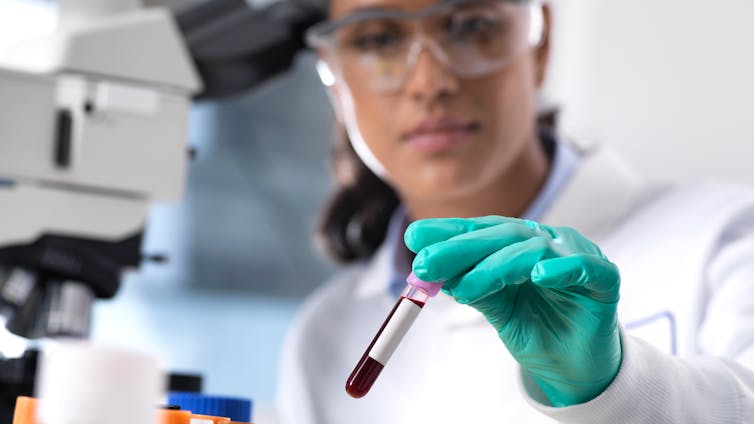
How do blood tests work?
Blood tests are a technique used in the field of pathology, which is the study of the nature and causes of disease.
Blood tests assess what cells, proteins, and molecules are present in the blood. Health-care professionals use them to monitor things like organ health, nutrition levels, immune system function, and the presence of some infections.
To test for anaemia, for example, you would take a blood test and count the number of red blood cells in that blood sample. Another example is blood sugar testing, which is used to measure the glucose levels of a patient with diabetes.
What can blood tests tell us about cancer?
Currently, we can’t reliably diagnose most cancers using a blood test. One major reason is it’s often difficult to distinguish between cancer cells and normal, healthy cells. This is especially true when it comes to early-stage tumours.
But blood test results can give us clues about whether certain cancers are present in the body. So how do they do this?
1. By revealing abnormalities in your blood
Blood cancers will often cause clear changes in the number and types of cells in the bloodstream. We can measure these changes using a complete blood count, also known as a “full blood examination”.
This type of blood test counts all the different types of cells present in the blood: red blood cells, white blood cells, platelets, and more. Blood cancers arise when your body produces an abnormal amount of any type of blood cell. White blood cells, which fight infection, are the most common example. So a high number of one or more of these cell types may suggest the presence of a blood cancer.
But complete blood counts aren’t enough to make a conclusive diagnosis of blood cancer. We need to perform other tests to confirm whether the problem is a cancer or a different disease. These tests may include a biopsy or imaging techniques such as an MRI, CT scan, or X-ray.
2. By identifying “tumour markers”
We can also use blood tests to detect specific proteins which cancer cells often produce in greater numbers. These proteins are known as “tumour markers”.
One example of a tumour marker is prostate-specific antigen. This antigen is a protein made exclusively by the prostate gland. A healthy male will have only a small amount of prostate-specific antigen in his blood. In contrast, a male with prostate cancer will often produce abnormally high levels of this antigen. In this way, the prostate-specific antigen can serve as a “marker” of prostate cancer.
There are many different tumour markers used to identify different cancers. However, measuring tumour markers is not a foolproof solution. This is because they can be influenced by other factors. For example, an injury to or inflammation of the prostate gland could cause prostate-specific antigen levels to increase. So your doctor may perform additional tests to confirm if a person has cancer.
3. By locating rogue cells
For other types of cancer, blood tests can look for circulating tumour cells. Circulating tumour cells are produced when cancer cells break off from the original tumour and then enter the bloodstream. This usually only happens when a cancer reaches a more advanced stage and is metastatic, meaning it has spread to other parts of the body.
But this type of test is usually prognostic, rather than diagnostic. This means we can only use it to monitor the progression of a cancer which has already been diagnosed. So if a blood test does identify circulating tumour cells, it is best to conduct additional tests before proceeding with treatment.
So, are we close to creating a cancer-detecting blood test?
Unfortunately, we are yet to find a way to detect cancer with a single blood test. It’s a very difficult task, but researchers are making progress.
Circulating tumour DNA is a current topic of interest. These DNA molecules have mutations which distinguish them from healthy cells and can give information about the cancer they came from.
In one 2025 trial, Australian researchers measured the amount of circulating tumour DNA in 441 people with colon cancer to determine which patients would respond to chemotherapy. Another study from 2025 used circulating tumour DNA to monitor how 940 patients with lung cancer responded to different treatments.
One test did claim to successfully use circulating tumour DNA to detect more than 50 types of early-stage cancer. It’s known as the “Galleri test” and was first trialled in the UK in 2021. However, some experts have since raised concerns about the test’s effectiveness.
Researchers are also exploring other ways of using blood tests. In one 2025 study, Australian researchers adapted an existing test to use blood instead of tissue samples to identify known markers of ovarian cancer.
Another Australian study from 2025 investigated whether molecules other than proteins could serve as cancer markers. It found certain fats in blood can indicate if a patient with advanced prostate cancer will respond to treatment.
So, it looks like we’re still a while away from creating a cancer-detecting blood test. But with some time, effort, and robust research, it could be a possibility.
John (Eddie) La Marca, Senior Research Officer, Blood Cells and Blood Cancer, WEHI (Walter and Eliza Hall Institute of Medical Research) ; Cameron Lewis, Clinician Scientist, WEHI (Walter and Eliza Hall Institute of Medical Research) , and Sarah Diepstraten, Senior Research Officer, Blood Cells and Blood Cancer Division, WEHI (Walter and Eliza Hall Institute of Medical Research)
This article is republished from The Conversation under a Creative Commons license. Read the original article.
Don’t Forget…
Did you arrive here from our newsletter? Don’t forget to return to the email to continue learning!
Recommended
Learn to Age Gracefully
Join the 98k+ American women taking control of their health & aging with our 100% free (and fun!) daily emails:
-
Why Curcumin (Turmeric) Is Worth Its Weight In Gold
10almonds is reader-supported. We may, at no cost to you, receive a portion of sales if you purchase a product through a link in this article.
Curcumin (Turmeric) is worth its weight in gold
Not financially! But, this inexpensive golden spice has an impressive list of well-studied health benefits, for something so freely available in any supermarket, and there’s a reason it gets a place in “Dr. Greger’s Daily Dozen”, right up there with things like “leafy greens” and “berries” when it comes to superfoods.
Let’s do a quick run-down:
- It fights inflammation, and thus helps fight many diseases where inflammation is a factor (ranging from atherosclerosis to arthritis to Alzheimer’s and more)
- It has powerful antioxidant effects too
- It boosts brain-derived neurotropic factor (BDNF) and thus improves memory and attention
- It helps protect against heart disease…
- …and can give a 65% decreased risk of experiencing a heart attack
- It can help prevent cancer, and reduce cancerous lesions by 40%
- It’s also good against depression
- It even slows aging
In short, it’s—like we said—worth its weight in gold.
Quick advice though before we move on…
If you take curcumin with black pepper, it allows your body to use the curcumin around 2,000% better. This goes whether you’re cooking with both, or take them as a supplement (they’re commonly sold as a combo-capsule for this reason).
Want to get some?
Share This Post
-
Cortisol spikes are normal – so when is cortisol a real problem?
10almonds is reader-supported. We may, at no cost to you, receive a portion of sales if you purchase a product through a link in this article.
You may have noticed a plethora of reels and posts on social media claiming cortisol “spikes” are harmful. Some warn against drinking coffee on an empty stomach or even doing certain exercises lest they “spike” your cortisol levels.
As an endocrinologist, I live and breathe hormones. I can reassure you cortisol spikes are not something healthy people need to fear.
In fact, cortisol rhythms – which involve some ups and some downs – are an essential part of what keeps your body well.
Remind me, what is cortisol?
Cortisol is an essential hormone that regulates our metabolism, immune system and cognitive/emotional processes.
Cortisol regulation is complex.
While cortisol release comes from your adrenal glands that sit just above your kidneys, it is under direct control by another hormone released by the pituitary gland, or “master gland” at the base of our brain.
Cortisol production follows a strong daily rhythm.
There is a sharp rise in cortisol levels in the first hour after waking up, called the “cortisol awakening response”.
This awakening response helps you feel alert. In fact, the higher this peak, the better you can cope with the physical and mental challenges for the day ahead.
A blunted cortisol awakening response (meaning they are not as high as would be ideal) is associated with poorer health.
Over the course of a day, cortisol levels fall gradually and are naturally very low in the evening, designed to bring on sleep.
Overlying this background rhythm there are regular cortisol pulses throughout the day, when your body is faced with challenges such as a tough workout, a stressful deadline or an infection.
These cortisol rises are protective. They help you stay focused, maintain your blood pressure and release more energy when needed.
So, what about coffee on an empty stomach?
Cortisol levels are affected by many factors including gender, age and genetics, as well as food, exercise, stress, light and illness.
Understanding the effect of a simple cup of coffee in the morning depends on the intricate and complex nature of these dynamics.
Importantly, there have been no randomised controlled studies comparing coffee consumption on an empty stomach to having it after food.
Certainly, coffee has been linked to a rise in cortisol levels, of up to 30% in one study, and in another even when drunk with breakfast.
However, particularly in regular coffee drinkers, the effect may be negligible.
Interestingly, it might be more about the timing of coffee drinking rather than whether it is consumed with or without food.
In the study of habitual coffee drinkers, morning caffeine intake was not shown to meaningfully disturb the cortisol rhythm, whereas drinking coffee later in the afternoon did seem to contribute to higher cortisol levels over the course of the day.
This also may have relevance to when we exercise – some studies have shown that people exercising earlier in the day have a steeper cortisol decline after waking and lower evening levels. This might mean it is easier to get to sleep.
Don’t worry about ‘spikes’
Rather than being concerned about cortisol “spikes”, it is sustained elevations over the course of a day that are linked to adverse health outcomes.
Chronic stress states (meaning persistent and extended period of exposure to one or more stressors, such as prolonged work stress or relationship difficulties) and long-term use of cortisol-like medications (such as the corticosteroid prednisone) might be problematic. They expose the body to high cortisol levels without the natural rise and fall over a 24-hour period.
Rare conditions like Cushing’s syndrome (a consequence of tumours of the pituitary or adrenal gland in most people) cause chronically elevated cortisol levels.
Although some smart watches can monitor your “stress” levels, this is done indirectly via measurement of heart rate variability – not by measurement of cortisol levels.
Measuring high cortisol levels requires sophisticated testing that might involve urine, saliva, as well as a variety of blood tests; so don’t be too worried about cortisol based on what your watch is telling you.
If you are concerned about cortisol, you should consult your doctor. If abnormalities arise, a referral to an endocrinologist may be needed.
Ann McCormack, Conjoint Associate Professor in Endocrinology, UNSW Sydney
This article is republished from The Conversation under a Creative Commons license. Read the original article.
Share This Post
-
10,000 Steps, 30 Days, 4 Changes
10almonds is reader-supported. We may, at no cost to you, receive a portion of sales if you purchase a product through a link in this article.
Ariel wasn’t the most active person, and took on a “30 day challenge” to do the commonly-prescribed 10,000 steps per day—without adjusting her diet or doing any other exercise. How much of a difference does it make, really?
Stepping onwards
The 4 main things that she found changed for her weren’t all what she expected:
- Weight loss yes, but only marginally: she lost 3 lbs in a month, which did nevertheless make a visible difference. We might hypothesize that part of the reason for the small weight loss and yet visible difference is that she gained a little muscle, and the weight loss was specifically shifting away from a cortisol-based fat distribution, to a more healthy fat distribution.
- Different eating habits: she felt less hungry and craved less sugar. This likely has less to do with calorie consumption, and more to do with better insulin signalling.
- Increased energy and improved mood: these are going together in one item, because she said “4 things”, but really they are two related things. So, consider one of them a bonus item! In any case, she felt more energized and productive, and less reliant on caffeine.
- Improved sleep: or rather, at first, disrupted sleep, and then slept better and stayed better. A good reminder that changes for the better don’t always feel better in the first instance!
To hear about it in her own words, and see the before and after pictures, enjoy:
Click Here If The Embedded Video Doesn’t Load Automatically!
Want to learn more?
You might also like to read:
Take care!
Share This Post
Related Posts
-
Gut Renovation – by Dr. Roshini Raj, with Sheila Buff
10almonds is reader-supported. We may, at no cost to you, receive a portion of sales if you purchase a product through a link in this article.
Unless we actually feel something going on down there, gut health is an oft-neglected part of overall health—which is unfortunate, because invisible as it may often be, it affects so much.
Gastroenterologist Dr. Roshini Raj gives us all the need-to-know information, explanations of why things happen the way they do with regard to the gut, and tips, tricks, and hacks to improve matters.
She also does some mythbusting along the way, and advises about what things don’t make a huge difference, including what medications don’t have a lot of evidence for their usefulness.
The style is easy-reading pop-science, with plenty of high-quality medical content.
Reading between the lines, a lot of the book as it stands was probably written by the co-author, Sheila Buff, who is a professional ghostwriter and specializes in working closely with doctors to produce works that are readable and informative to the layperson while still being full of the doctor’s knowledge and expertise. So a reasonable scenario is that Dr. Raj gave her extensive notes, she took it from there, passed it back to her for medical corrections, and they had a little back and forth until it was done. Whatever their setup, the end result was definitely good!
Bottom line: if you’d like a guide to gut health that’s practical and easy to read, while being quite comprehensive and certainly a lot more than “eat probiotics and fiber”, then this book is a fine choice.
Don’t Forget…
Did you arrive here from our newsletter? Don’t forget to return to the email to continue learning!
Learn to Age Gracefully
Join the 98k+ American women taking control of their health & aging with our 100% free (and fun!) daily emails:
-
Rebounding Into The Best Of Health
10almonds is reader-supported. We may, at no cost to you, receive a portion of sales if you purchase a product through a link in this article.
“Trampoline” is a brand-name that’s been popularized as a generic name, and “rebounding”, the name used in this video, is the same thing as “trampolining”. With that in mind, let us bounce swiftly onwards:
Surprising benefits
It’s easy to think “isn’t that cheating?” to the point that such “cheating” could be useless, since surely the device is doing most of the work?
The thing is, while indeed it’s doing a lot of the work for you, your muscles are still doing a lot—mostly stabilization work, which is of course a critical thing for our muscles to be able to do. While it’s rare that we need to do a somersault in everyday life, it’s common that we have to keep ourselves from falling over, after all.
It also represents a kind of gentle resistance exercise, and as such, improves bone density—something first discovered during NASA research for astronauts. Other related benefits pertain to the body’s ability to deal with acceleration and deceleration; it also benefits the lymphatic system, which unlike the blood’s circulatory system, has no pump of its own. Rebounding does also benefit the cardiovascular system, though, as now the heart gets confused (in the healthy way, a little like it gets confused with high-intensity interval training).
Those are the main evidence-based benefits; anecdotally (but credibly, since these things can be said of most exercise) it’s also claimed that it benefits posture, improves sleep and mood, promotes weight loss and better digestion, reduces bloating, improves skin (the latter being due to improved circulation), and alleviates arthritis (most moderate exercise improves immune response, and thus reduces chronic inflammation, so again, this is reasonable, even if anecdotal).
For more details on all of these and more, enjoy:
Click Here If The Embedded Video Doesn’t Load Automatically!
Want to learn more?
You might also like to read:
- Exercise Less, Move More
- How To Do HIIT (Without Wrecking Your Body)
- Resistance Is Useful! (Especially As We Get Older)
- HIIT, But Make It HIRT
- The Lymphatic System Against Cancer & More
Take care!
Don’t Forget…
Did you arrive here from our newsletter? Don’t forget to return to the email to continue learning!
Learn to Age Gracefully
Join the 98k+ American women taking control of their health & aging with our 100% free (and fun!) daily emails:
-
Can you ‘microdose’ exercise?
10almonds is reader-supported. We may, at no cost to you, receive a portion of sales if you purchase a product through a link in this article.
“Microdosing” originally meant taking tiny amounts of psychedelics (such as mushrooms) to enhance mood or performance, with fewer side effects.
But the term has taken off to mean anything where you incorporate a much lower “dose” of something – and still reap the benefits.
So, does this work for exercise? If you can’t make time for a 30-minute run, will shorter bursts of activity do anything for your health?
Here’s what the evidence says.
Natalia Lebendinskaia/Getty The minimum you should move
According to the World Health Organization (WHO), adults should aim each week for either a minimum of 150 minutes of moderate intensity aerobic exercise – meaning it’s hard to hold a conversation – or 75 minutes of vigorous intensity – you are gasping for air at the end of it. Or you can do a combination of moderate and vigorous activity.
This can include activities such as brisk walking, cycling, running, swimming or rowing, and team sports such as football and basketball.
If you exercise every day, you’d need to do 20–30 minutes of these activities. Or you might do a couple of longer training sessions or matches two or three times a week.
WHO guidelines also recommend including muscle-strengthening activities (such as lifting weights, or high-impact exercise like sprinting) at least twice a week.
What counts as exercise?
Incidental activity – unplanned or everyday movement, such as playing with kids or walking to the bus stop – may contribute to your physical activity levels over the week.
So, yes, housework can count. For example, chores like mopping and vacuuming tend to have a similar physical demand as going for a walk.
While this activity wouldn’t be considered vigorous, it could contribute to your moderate intensity minutes.
So, do smaller chunks work?
Yes, the good news is doing small amounts of exercise throughout the day is just as effective as doing one long session.
In fact, it may have some additional benefits.
A 2019 review of 19 studies looked at this question, involving more than 1,000 participants. It found multiple, shorter “chunks” of exercise in a day improved heart and lung fitness and blood pressure as much as doing one longer session.
And there was some evidence these chunks actually led to more weight loss and lower cholesterol.
The most common way this exercise was compared in the 19 studies was with one group doing three ten-minute bouts of exercise five days a week, and another doing one 30-minute session, five days a week.
Even very short bouts might help
Another 2019 study in young adults examined the effect of short “exercise snacks” on fitness. While small, it had some interesting and positive results.
The exercise “snack” group did three very short sessions per day, three times a week, for six weeks. Each session involved a light two-minute warm-up, followed by a 20-second maximal effort sprint – where you push as hard as you can – and then a one-minute cool-down.
In total: just three minutes and 20 seconds of exercise, three times a day, three days a week.
The control group did one session a day, three days a week, but it was longer – a total of ten minutes. It involved a two-minute warm-up, followed by three 20-second sprints, with three minutes of light recovery between sprints, then a one-minute cool-down.
The “snack” group saw significant improvements in aerobic fitness, which is one of the strongest predictors of your risk of dying early and overall health.
Similar research has suggested this same approach can have positive effects on lowering cholesterol levels. However, it may not provide enough total exercise time to lose weight.
Shorter – but harder?
The research outlined above suggests the shorter your exercise session, the harder you need to push.
So you might need to adapt your exercise to increase intensity. For example, one minute of maximal intensity exercise might be worth two minutes of moderate intensity exercise.
Basically, if you’re short on time you will get more bang-for-your-buck by going harder.
So, is it worth still doing longer sessions?
For health and general fitness, the research suggests there aren’t downsides to breaking a long workout into smaller chunks.
But there are some reasons you might still want to keep exercising longer.
If you are training for a longer duration event (maybe a 10 kilometre run, a 30km ride, or even a marathon), you will need to do some longer sessions. This will ensure your muscles and joints are prepared to tolerate the demands of the event, and help your body adapt to maximise performance on the day.
For mental health, there is also some evidence to suggest doing more than the recommended minimum exercise might be better.
For example, two recent meta-analyses (studies which review the available evidence) found that around one hour of moderate intensity exercise a day can significantly improve anxiety and depression symptoms.
But these studies didn’t compare the benefits of one session versus chunks, so it’s likely you can still break up your exercise across the day and feel an effect.
The bottom line
Any exercise is better than none. If you struggle for time, as little as three minutes a day, spread across three sessions, can have a positive effect on our health.
But don’t forget – the shorter the session, the harder it needs to be.
Hunter Bennett, Lecturer in Exercise Science, University of South Australia
This article is republished from The Conversation under a Creative Commons license. Read the original article.
Don’t Forget…
Did you arrive here from our newsletter? Don’t forget to return to the email to continue learning!
Learn to Age Gracefully
Join the 98k+ American women taking control of their health & aging with our 100% free (and fun!) daily emails:


