
I want to eat healthily. So why do I crave sugar, salt and carbs?
10almonds is reader-supported. We may, at no cost to you, receive a portion of sales if you purchase a product through a link in this article.
We all want to eat healthily, especially as we reset our health goals at the start of a new year. But sometimes these plans are sabotaged by powerful cravings for sweet, salty or carb-heavy foods.
So why do you crave these foods when you’re trying to improve your diet or lose weight? And what can you do about it?
There are many reasons for craving specific foods, but let’s focus on four common ones:
1. Blood sugar crashes
Sugar is a key energy source for all animals, and its taste is one of the most basic sensory experiences. Even without specific sweet taste receptors on the tongue, a strong preference for sugar can develop, indicating a mechanism beyond taste alone.
Neurons responding to sugar are activated when sugar is delivered to the gut. This can increase appetite and make you want to consume more. Giving into cravings also drives an appetite for more sugar.
In the long term, research suggests a high-sugar diet can affect mood, digestion and inflammation in the gut.
While there’s a lot of variation between individuals, regularly eating sugary and high-carb foods can lead to rapid spikes and crashes in blood sugar levels. When your blood sugar drops, your body can respond by craving quick sources of energy, often in the form of sugar and carbs because these deliver the fastest, most easily accessible form of energy.
2. Drops in dopamine and serotonin
Certain neurotransmitters, such as dopamine, are involved in the reward and pleasure centres of the brain. Eating sugary and carb-rich foods can trigger the release of dopamine, creating a pleasurable experience and reinforcing the craving.
Serotonin, the feel-good hormone, suppresses appetite. Natural changes in serotonin can influence daily fluctuations in mood, energy levels and attention. It’s also associated with eating more carb-rich snacks in the afternoon.
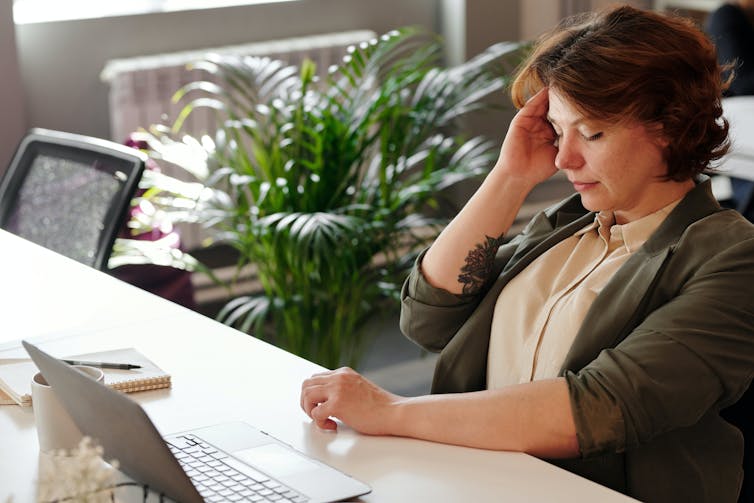
Marcus Aurelius/Pexels
Low carb diets may reduce serotonin and lower mood. However, a recent systematic review suggests little association between these diets and risk for anxiety and depression.
Compared to men, women tend to crave more carb rich foods. Feeling irritable, tired, depressed or experiencing carb cravings are part of premenstrual symptoms and could be linked to reduced serotonin levels.
3. Loss of fluids and drops in blood sugar and salt
Sometimes our bodies crave the things they’re missing, such as hydration or even salt. A low-carb diet, for example, depletes insulin levels, decreasing sodium and water retention.
Very low-carb diets, like ketogenic diets, induce “ketosis”, a metabolic state where the body switches to using fat as its primary energy source, moving away from the usual dependence on carbohydrates.
Ketosis is often associated with increased urine production, further contributing to potential fluid loss, electrolyte imbalances and salt cravings.
4. High levels of stress or emotional turmoil
Stress, boredom and emotional turmoil can lead to cravings for comfort foods. This is because stress-related hormones can impact our appetite, satiety (feeling full) and food preferences.
The stress hormone cortisol, in particular, can drive cravings for sweet comfort foods.
A 2001 study of 59 premenopausal women subjected to stress revealed that the stress led to higher calorie consumption.
A more recent study found chronic stress, when paired with high-calorie diet, increases food intake and a preference for sweet foods. This shows the importance of a healthy diet during stress to prevent weight gain.
What can you do about cravings?
Here are four tips to curb cravings:
1) don’t cut out whole food groups. Aim for a well-balanced diet and make sure you include:
- sufficient protein in your meals to help you feel full and reduce the urge to snack on sugary and carb-rich foods. Older adults should aim for 20–40g protein per meal with a particular focus on breakfast and lunch and an overall daily protein intake of at least 0.8g per kg of body weight for muscle health
- fibre-rich foods, such as vegetables and whole grains. These make you feel full and stabilise your blood sugar levels. Examples include broccoli, quinoa, brown rice, oats, beans, lentils and bran cereals. Substitute refined carbs high in sugar like processed snack bars, soft drink or baked goods for more complex ones like whole grain bread or wholewheat muffins, or nut and seed bars or energy bites made with chia seeds and oats
2) manage your stress levels. Practise stress-reduction techniques like meditation, deep breathing, or yoga to manage emotional triggers for cravings. Practising mindful eating, by eating slowly and tuning into bodily sensations, can also reduce daily calorie intake and curb cravings and stress-driven eating
3) get enough sleep. Aim for seven to eight hours of quality sleep per night, with a minimum of seven hours. Lack of sleep can disrupt hormones that regulate hunger and cravings
4) control your portions. If you decide to indulge in a treat, control your portion size to avoid overindulging.
Overcoming cravings for sugar, salt and carbs when trying to eat healthily or lose weight is undoubtedly a formidable challenge. Remember, it’s a journey, and setbacks may occur. Be patient with yourself – your success is not defined by occasional cravings but by your ability to manage and overcome them.
Hayley O’Neill, Assistant Professor, Faculty of Health Sciences and Medicine, Bond University
This article is republished from The Conversation under a Creative Commons license. Read the original article.
Don’t Forget…
Did you arrive here from our newsletter? Don’t forget to return to the email to continue learning!
Recommended
Learn to Age Gracefully
Join the 98k+ American women taking control of their health & aging with our 100% free (and fun!) daily emails:
-
Rebounding: Good Or Bad For Joints?
10almonds is reader-supported. We may, at no cost to you, receive a portion of sales if you purchase a product through a link in this article.
It’s Q&A Day at 10almonds!
Have a question or a request? We love to hear from you!
In cases where we’ve already covered something, we might link to what we wrote before, but will always be happy to revisit any of our topics again in the future too—there’s always more to say!
As ever: if the question/request can be answered briefly, we’ll do it here in our Q&A Thursday edition. If not, we’ll make a main feature of it shortly afterwards!
So, no question/request too big or small 😎
❝I was looking at rebounder trampolines and wondered if you know if they are appropriate to soften the impact for someone with bad joints to try to regain strength and mobility? I have slightly brittle bones due to some medications, and am hoping to find a good impact exercise to do that will strengthen my bones without breaking them❞
What an exciting plan!
Let us first bring attention to our usual medical/legal disclaimer, and also take the opportunity to note that we are not doctors, let alone your doctors, and certainly cannot speak for your specific condition. Please do speak with your osteopath, physiotherapist, and/or any other relevant medical professionals, before undertaking a new exercise routine.
What we can do, at least, is speak in some general terms, in accordance with what science is available. Let’s tackle this piece by piece:
Exercising in the context of bad joints
For people with bad joints, there’s often something of a catch-22:
- Exercise, and inflame them
- Don’t exercise, and they “seize up”
Hence, the trick is—in few words—to exercise them very gently, while taking them through a full range of motion.
That’s “in few words”, though, so if you’d like it in more words than that, we’ll refer you to our entire main feature that we did on this a little while ago:
When Bad Joints Stop You From Exercising (5 Things To Change)
If the issue with your joints is arthritis, then you might want to consider the relevant portions of:
…as applicable, and if the issue is cartilage problems (which can occur in arthritis and often does, especially osteoarthritis, but is certainly not confined to arthritis), then:
How To Rebuild Your Cartilage ← this is really critical, as it covers exactly what you are looking for; an approach to strengthen weakened joints without further damaging them in the process.
As for whether rebounding will be good for that latter… In principle it certainly can be, for exactly the reason you asked about and we’ve talked about so far (it softens the impact while allowing you to do full range of motion).
However, there are more things to consider, and since there’s overlap, let’s talk about it along with…
Exercising in the context of osteoporosis
There are two ways of looking at this:
- Pros of trampoline rebounding: indeed 80% or more of the impact is absorbed, making it gentle (and yes, the fact that it is still impact work will improve bone density)
- Cons of trampoline rebounding: if you land incorrectly, you may become a heap of broken bones (for this reason, it may be best if your bones are in at least decent condition already before starting)
This is relevant also for the issue with bad joints, independent of osteoporosis or osteopenia (the pre-stage of osteoporosis); in principle it makes the exercise gentler, but it also increases the chance of injury if anything goes wrong.
In terms of what is generally recommended when it comes to osteoporosis and exercising, exercises should be “steady” and “straight”. In other words, no unexpected movements or sudden changes of direction.
For trampoline rebounding:
- Are there unexpected movements? Not if everything goes according to plan, but one misstep may mean disaster.
- Are there sudden changes of direction? Not in the sense described, again, if and only if everything goes as planned.
You may be thinking: well that is fair, but any sporting activity comes with a risk of something going wrong, and that’s true, but there’s definitely a scale from swimming pool yoga on the light end, to horseback polo on the dangerous end, for example.
So the real question becomes: which sporting activities/exercises have the least potential for disaster? And faced with that question, one must admit that a yoga mat carries fewer risks than a trampoline.
You can read more about this topic here: Osteoporosis & Exercises: Which To Do (And Which To Avoid)
Want to learn more?
For more about rebounding on trampolines specifically, and the health claims vs the health science for them (or not, as the case may be), check out:
Putting Mini-trampolines to the Test ← this is an interesting read, mostly concerned with assorted health metrics for healthy participants, rather than with specific conditions, though.
We also shared a video about this a while ago: Rebounding Into The Best Of Health ← this does mention the bone density thing, but not from a perspective of already having low bone density
And finally, if you’d like a kind of exercise that does a lot of the “softened impact resistance work” with less throwing your body around at high heights, then you might want to consider:
What is reformer Pilates? And is it worth the cost?
Take care!
Share This Post
-
What is retinol? And will it make my acne flare? 3 experts unpack this trendy skincare ingredient
10almonds is reader-supported. We may, at no cost to you, receive a portion of sales if you purchase a product through a link in this article.
Retinol skincare products suddenly seem to be everywhere, promising clear, radiant and “youthful” skin.
But what’s the science behind these claims? And are there any risks?
You may have also heard retinol can increase your risk of sunburn and even make acne worse.
For some people, retinol may help reduce the appearance of fine lines. But it won’t be suitable for everyone. Here’s what you need to know.
Irina Kvyatkovskaya/Shutterstock What is retinol?
Retinol is part of a family of chemical compounds called retinoids. These are derived from or related to Vitamin A, a nutrient essential for healthy skin, vision and immune function.
All retinoids work because enzymes in our skin convert them into their “active” form, retinoic acid.
You can buy retinol in creams and other topical products over the counter.
These are often promoted as “anti-ageing” because retinol can help reduce the appearance of fine lines, wrinkles and even out skin tone (for example, sun spots or acne scars).
It also has an exfoliating effect, meaning it can help unclog pores.
Stronger retinoid treatments that target acne will require a prescription because they contain retinoic acid, which is regulated as a drug in the United States, European Union, United Kingdom and Australia.
How is retinol used in skincare?
One of the most common claims about retinol is that it helps to reduce visible signs of ageing.
How does this work?
With age, the skin’s barrier becomes weaker, making it more prone to dryness, injury and irritation.
Retinol can help counteract this natural thinning by stimulating the proliferation of keratinocytes – cells that form the outer skin layer and protect against damage and water loss.
Retinol also stimulates the production of collagen (a key protein that creates a scaffolding that keeps skin firm and elastic) and fibroblasts (cells that produce collagen and support skin structure).
It also increases how fast the skin sheds old cells and replaces them with new ones.
Over time, these processes help reduce fine lines, fade dark spots and even out skin tone. It can also make skin appear clearer.
While effective, this doesn’t happen overnight.
You may have also heard about a “retinol purge” – a temporary flare of acne when you first start using topical retinoids.
Studies have found the skin may become irritated and acne temporarily worsen in some cases. But more research needs to be done to understand this link.
The idea of a retinol purge is popular on social media. TikTok, CC BY-NC-ND So, is retinol safe?
At typical skincare concentrations (0.1–0.3%), side effects tend to be mild.
Most people who experience irritation (such as redness, dryness, or peeling) when starting retinol are able to build tolerance over time. This process is often called “retinisation”.
However, retinol increases the skin’s sensitivity to UV radiation (known as photosensitivity). This heightened reactivity can lead to sunburn, irritation and an increased risk of hyperpigmentation (spots or patches of darker colour).
For this reason, daily use of broad-spectrum sunscreen (SPF30 or higher) is strongly recommended while using retinol products.
Who should avoid retinol?
Teenagers and children generally don’t need retinol unless specifically prescribed by a doctor, for example, for acne treatment.
People with sensitive skin or conditions such as eczema (dry, itchy and inflamed skin) and rosacea (chronic redness and sensitivity) may find retinol too irritating.
Using retinol products alongside other skincare treatments, such as alpha-hydroxy acids, can over-exfoliate your skin and damage it.
Importantly, the active form of retinol, retinoic acid, is teratogenic (meaning it can cause birth defects). Over-the-counter retinol products are also not recommended during pregnancy or breastfeeding.
Choose and store retinol products wisely
Since retinol is classified as a cosmetic ingredient, companies are not required to disclose its concentration in their products.
The European Union is expected to introduce new regulations that will cap the concentration of retinol in cosmetic facial products to 0.3%.
These are precautionary measures aimed to limit exposure for vulnerable groups, such as pregnant women, given the risk of birth defects.
It’s therefore recommended to use products that clearly state the retinol concentration is between 0.1% and 0.3%.
Retinol is also a notoriously unstable molecule that degrades with exposure to air, light or heat.
Choosing a product with airtight, light-protective packaging will help with potential degradation problems that could lead to inactivity or harm.
What’s the safest way to try retinol?
The key is to go low and slow: a pea-sized amount of a low-concentration product (0.1%) once or twice a week, preferably at night (to avoid UV exposure), and then the frequency and concentration can be increased (to a maximum of 0.3%) as the skin adjusts.
Using a moisturiser after retinol helps to reduce dryness and irritation.
Wearing sunscreen every day is a must when using retinol to avoid the photosensitivity.
If you experience persistent redness, burning, or peeling, it’s better to stop using the product and consult your doctor or a dermatologist for personalised advice.
Laurence Orlando, Senior Lecturer, Product Formulation and Development, Analytical Methods, Monash University; Zanfina Ademi, Professor of Health Economics, Monash University, and Zoe Porter, Lecturer, Pharmacy and Pharmaceutical Science, Monash University
This article is republished from The Conversation under a Creative Commons license. Read the original article.
Share This Post
-
If You Sit 8 Hours a Day, Do This Before Bed
10almonds is reader-supported. We may, at no cost to you, receive a portion of sales if you purchase a product through a link in this article.
Undo the damage of sitting:
Time to hit “reset”
Passive stretching doesn’t work for this purpose because holding static positions after a full day of sitting doesn’t retrain your nervous system, so your body stays locked in the same trying-to-be-protective patterns.
Thus, what’s actually needed is to move through tension dynamically to give your nervous system new information instead of waiting for muscles to relax.
Step by step:
- Ground decompression: move into child’s pose with lateral reaches to create space through your rib cage, your spine, and your hips while breathing calmly.
- Spinal wave movement: transition slowly from cat cow into downward dog to restore segment-by-segment spinal motion and improve overall spinal health.
- Hip and low-back release: lie on your back and circle your knees gently to let your hips move freely while your lower back relaxes into the floor.
- Slow flow hip control: circle your hips in quadruped to relearn independent hip movement instead of moving your spine and hips as one unit.
- Dynamic hip flexor opening: rock forwards, backwards, and side to side in a low lunge to teach your hip flexors to lengthen and shorten actively.
- Active pigeon movement: lean and shift through pigeon to release hip tension using motion rather than static pressure.
- Rotational hip recovery: transition smoothly through 90-90 positions to restore internal and external hip rotation lost from prolonged sitting.
- Posterior chain integration: bridge gently from a supine pigeon position to connect release through your hips, your glutes, and your spine.
- Nervous system downregulation: rock slowly in happy baby to signal safety, reduce residual tension, and prepare your body for sleep.
For more on all of thus plus some visual demonstrations that are quicker and more effective than explaining some of the poses in words alone, enjoy:
Click Here If The Embedded Video Doesn’t Load Automatically!
Want to learn more?
You might also like:
Stand Up For Your Health (Or Don’t) ← our main feature on this also includes more things you can do if you must sit, to make sitting less bad!
Take care!
Share This Post
Related Posts
-
Shame and blame can create barriers to vaccination
10almonds is reader-supported. We may, at no cost to you, receive a portion of sales if you purchase a product through a link in this article.
Understanding the stigma surrounding infectious diseases like HIV and mpox may help community health workers break down barriers that hinder access to care.
Looking back in history can provide valuable lessons to confront stigma in health care today, especially toward Black, Latine, LGBTQ+, and other historically underserved communities disproportionately affected by COVID-19 and HIV.
Public Good News spoke with Sam Brown, HIV prevention and wellness program manager at Civic Heart, a community-based organization in Houston’s historic Third Ward, to understand the effects of stigma around sexual health and vaccine uptake.
Brown shared more about Civic Heart’s efforts to provide free confidential testing for sexually transmitted infections, counseling and referrals, and information about COVID-19, flu, and mpox vaccinations, as well as the lessons they’re learning as they strive for vaccine equity.
Here’s what Brown said.
[Editor’s note: This content has been edited for clarity and length.]
PGN: Some people on social media have spread the myth that vaccines cause AIDS or other immune deficiencies when the opposite is true: Vaccines strengthen our immune systems to help protect against disease. Despite being frequently debunked, how do false claims like these impact the communities you serve?
Sam Brown: Misinformation like that is so hard to combat. And it makes the work and the path to overall community health hard because people will believe it. In the work that we do, 80 percent of it is changing people’s perspective on something they thought they knew.
You know, people don’t even transmit AIDS. People transmit HIV. So, a vaccine causing immunodeficiency doesn’t make sense.
With the communities we serve, we might have a person that will believe the myth, and because they believe it, they won’t get vaccinated. Then later, they may test positive for COVID-19.
And depending on social determinants of health, it can impact them in a whole heap of ways: That person is now missing work, they’re not able to provide for their family—if they have a family. It’s this mindset that can impact a person’s life, their income, their ability to function.
So, to not take advantage of something like a vaccine that’s affordable, or free for the most part, just because of misinformation or a misunderstanding—that’s detrimental, you know.
For example, when we talk to people in the community, many don’t know that they can get mpox from their pet, or that it’s zoonotic—that means that it can be transferred between different species or different beings, from animals to people. I see a lot of surprise and shock [when people learn this].
It’s difficult because we have to fight the misinformation and the stigma that comes with it. And it can be a big barrier.
People misunderstand. [They] think that “this is something that gay people or the LGBTQ+ community get,” which is stigmatizing and comes off as blaming. And blaming is the thing that leads us to be misinformed.
PGN: In the last couple years, your organization’s HIV Wellness program has taken on promoting COVID-19, flu, and mpox vaccines to the communities you serve. How do you navigate conversations between sexual health and infectious diseases? Can you share more about your messaging strategies?
S.B.: As we promoted positive sexual health and HIV prevention, we saw people were tired of hearing about HIV. They were tired of hearing about how PrEP works, or how to prevent HIV.
But, when we had an outbreak of syphilis in Houston just last year, people were more inclined to test because of the severity of the outbreak.
So, what our team learned is that sometimes you have to change the message to get people what they need.
We changed our message to highlight more syphilis information and saw that we were able to get more people tested for HIV because we correlated how syphilis and HIV are connected and how a person can be susceptible to both.
Using messages that the community wants and pairing them with what the community needs has been better for us. And we see that same thing with COVID-19, the flu, and RSV. Sometimes you just can’t be married to a message. We’ve had to be flexible to meet our clients where they are to help them move from unsafe practices to practices that are healthy and good for them and their communities.
PGN: You’ve mentioned how hard it is to combat stigma in your work. How do you effectively address it when talking to people one-on-one?
S.B.: What I understand is that no one wants to feel shame. What I see people respond to is, “Here’s an opportunity to do something different. Maybe there was information that you didn’t know that caused you to make a bad decision. And now here’s an opportunity to gain information so that you can make a better decision.”
People want to do what they want to do; they want to live how they want to live. And we all should be able to do that as long as it’s not hurting anyone, but also being responsible enough to understand that, you know, COVID-19 is here.
So, instead of shaming and blaming, it’s best to make yourself aware and understand what it is and how to treat it. Because the real enemy is the virus—it’s the infection, not the people.
When we do our work, we want to make sure that we come from a strengths-based approach. We always look at what a client can do, what that client has. We want to make sure that we’re empowering them from that point. So, even if they choose not to prioritize our message right now, we can’t take that personally. We’ll just use it as a chance to try a new way of framing it to help people understand what we’re trying to say.
And sometimes that can be difficult, even for organizations. But getting past that difficulty comes with a greater opportunity to impact someone else.
This article first appeared on Public Good News and is republished here under a Creative Commons license.
Don’t Forget…
Did you arrive here from our newsletter? Don’t forget to return to the email to continue learning!
Learn to Age Gracefully
Join the 98k+ American women taking control of their health & aging with our 100% free (and fun!) daily emails:
-
Beyond Balancing The Books – by George Marino, CPA, CFP
10almonds is reader-supported. We may, at no cost to you, receive a portion of sales if you purchase a product through a link in this article.
We hear a lot about the importance of mindfulness, yet how can Zen-like non-attachment to the material world go well with actually surviving (let alone thriving) in a Capitalist society?
Books that try to connect the two often end up botching it badly to the level of early 2000s motivational posters.
So, what does this book do differently? Mostly it’s because rather than a motivational speech with exhortations to operate on a higher plain and manifest your destiny and all that, it gives practical, down-to-earth advice and offers small simple things you can do or change to mindfully engage with the world of business rather than operating on auto-pilot.
Basically: how to cut out the stress without cutting out your performance.
All in all, we think both your health and your productivity will thank you for it!
Take Your Business (and Brain) “Beyond Balancing The Books” Today
Don’t Forget…
Did you arrive here from our newsletter? Don’t forget to return to the email to continue learning!
Learn to Age Gracefully
Join the 98k+ American women taking control of their health & aging with our 100% free (and fun!) daily emails:
-
World Menopause Day Health News Round-Up
10almonds is reader-supported. We may, at no cost to you, receive a portion of sales if you purchase a product through a link in this article.
In order to provide variety in this week’s round-up, not all of this is menopause-related, but it is all important:
Menopause & CVD
Untreated menopause is associated with higher incidence of heart disease, and higher mortality. People often forget about how much estrogen does for us (well, for those of us with a physiology running on estrogen, anyway; gentlemen, your testosterone is fine for you), and think it is “just” a sex hormone, but it’s a lot more.
Read in full: Menopause transition linked to increased heart disease risk
Related: What Menopause Does To The Heart
Extraterrestrial medical technology
The much lower gravity in Earth orbit has allowed for tissue engineering techniques that Earth’s normal gravity imposes limitations on. This is big news, because it means that rather than replacing a whole liver, tissue implants could be grafted, allowing the extant liver to repair itself (something livers are famously good at, but they need enough undamaged base material to work with).
Read in full: How liver tissue from the International Space Station may transform tissue engineering
Related: How To Unfatty A Fatty Liver
One thing and then another
As if endometriosis weren’t unpleasant enough in and of itself, the endothelial dysfunction inherent to it also raises cardiovascular disease risk. This is important, because while endometriosis has (like many maladies predominantly affecting women) generally been shrugged off by the medical world as an unhappy inconvenience but not life-threatening, now we know it comes with extra existential risks too:
Read in full: Understanding cardiovascular risks in endometriosis patients
Related: What You Need To Know About Endometriosis
Push-button meditation
Unlike mindfulness meditation, listening to music is a very passive experience, and thus requires less effort from the user. And yet, it has been associated with lower perceived pain levels, lower self-reported anxiety levels, less opioid use, and measurably lower heart-rate.
Read in full: Listening to music may speed up recovery from surgery, research suggests
Related: Nobody Likes Surgery, But Here’s How To Make It Much Less Bad
Cholesterol in menopause: quality over quantity
Much like previous research has shown that the quantity of LDL is not nearly so predictive of health outcomes in women as it is in men, this study into HDL and menopausal women shows that quantity of HDL does not matter nearly so much as the quality of it.
Read in full: HDL quality, not quantity, contribute to the first sign of Alzheimer’s disease in women
Related: Statins: His & Hers? ← consistent with the above, statins (to lower LDL cholesterol) generally help more for men and produce more adverse side effects for women. So again, a case of “the actual amount of cholesterol isn’t so important for women as for men”.
Take care!
Don’t Forget…
Did you arrive here from our newsletter? Don’t forget to return to the email to continue learning!
Learn to Age Gracefully
Join the 98k+ American women taking control of their health & aging with our 100% free (and fun!) daily emails:


