
Inaccurate and misogynistic: why we need to make the term ‘hysterectomy’ history

10almonds is reader-supported. We may, at no cost to you, receive a portion of sales if you purchase a product through a link in this article.

Have you had a tonsillectomy (your tonsils taken out), appendectomy (your appendix removed) or lumpectomy (removal of a lump from your breast)? The suffix “ectomy” denotes surgical removal of the named body part, so these terms give us a clear idea of what the procedure entails.

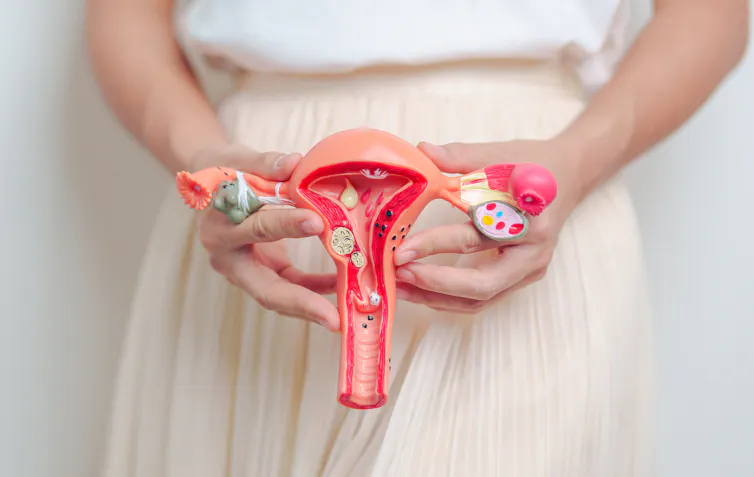
So why is the removal of the uterus called a hysterectomy and not a uterectomy?

The name hysterectomy is rooted in a mental health condition – “hysteria” – that was once believed to affect women. But we now know this condition doesn’t exist.

Continuing to call this significant operation a hysterectomy both perpetuates misogyny and hampers people’s understanding of what it is.
Panuwat Dangsungnoen/Getty Images

From the defunct condition ‘hysteria’

Hysteria was a psychiatric condition first formally defined in the 5th century BCE. It had many symptoms, including excessive emotion, irritability, anxiety, breathlessness and fainting.

But hysteria was only diagnosed in women. Male physicians at the time claimed these symptoms were caused by a “wandering womb”. They believed the womb (uterus) moved around the body looking for sperm and disrupted other organs.

Because the uterus was blamed for hysteria, the treatment was to remove it. This procedure was called a hysterectomy. Sadly, many women had their healthy uterus unnecessarily removed and most died.

The word “hysteria” did originally came from the ancient Greek word for uterus, “hystera”. But the modern Greek word for uterus is “mitra”, which is where words such as “endometrium” come from.

Hysteria was only removed as an official medical diagnosis in 1980. It was finally recognised it does not exist and is sexist.

“Hysterectomy” should also be removed from medical terminology because it continues to link the uterus to hysteria.

Common but confusing

About one in three Australian women will have their uterus removed. A hysterectomy is one of the most common surgeries worldwide. It’s used to treat conditions including:

  • abnormal uterine bleeding (heavy bleeding)
  • uterine fibroids (benign tumours)
  • uterine prolapse (when the uterus protrudes down into the vagina)
  • adenomyosis (when the inner layer of the uterus grows into the muscle layer)
  • cancer.

However, in a survey colleagues and I did of almost 500 Australian adults, which is yet to be published in a peer-reviewed journal, one in five people thought hysterectomy meant removal of the ovaries, not the uterus.

It’s true some hysterectomies for cancer do also remove the ovaries. A hysterectomy or partial hysterectomy is the removal of only the uterus, a total hysterectomy removes the uterus and cervix, while a radical hysterectomy usually removes the uterus, cervix, uterine tubes and ovaries.

There are important differences between these hysterectomies, so they should be named to clearly indicate the nature of the surgery.

Research has shown ambiguous terminology such as “hysterectomy” is associated with low patient understanding of the procedure and the female anatomy involved.
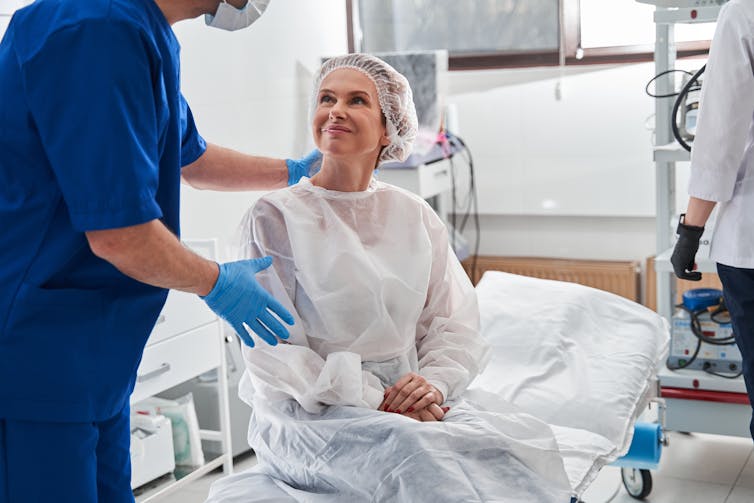
A woman in a surgical cap and gown being prepared for surgery.
There are different types of hysterectomies, and the label can be confusing. Olena Yakobchuk/Shutterstock

Uterectomy should be used for removal of the uterus, in combination with the medical terms for removal of the cervix, uterine tubes and ovaries as needed. For example, a uterectomy plus cervicectomy would refer to the removal of the uterus and the cervix.

This could help patients understand what is (and isn’t) being removed from their bodies and increase clarity for the wider public.

Other female body parts and procedures have male names

There are many eponyms (something named after a person) in anatomy and medicine, such as the Achilles tendon and Parkinson’s disease. They are almost exclusively the names of white men.

Eponyms for female anatomy and procedures include the Fallopian tubes, Pouch of Douglas, and Pap smear.

The anatomical term for Fallopian tubes is uterine tubes. “Uterine” indicates these are attached to the uterus, which reinforces their important role in fertility.

The Pouch of Douglas is the space between the rectum and uterus. Using the anatomical name (rectouterine pouch) is important, because this a common site for endometriosis and can explain any associated bowel symptoms.

Pap smear gives no indication of its location or function. The new cervical screening test is named exactly that, which clarifies it samples cells of the cervix. This helps people understand this tests for risk of cervical cancer.

Language matters in medicine and health care

Language in medicine impacts patient care and health. It needs to be accurate and clear, not include words associated with bias or discrimination, and not disempower a person.

For these reasons, the International Federation of Associations of Anatomists recommends removing eponyms from scientific and medical communication.

Meanwhile, experts have rightly argued it’s time to rename the hysterectomy to uterectomy.

A hysterectomy is an emotional procedure with not only physical but also psychological effects. Not directly referring to the uterus perpetuates the historical disregard of female reproductive anatomy and functions. Removing the link to hysteria and renaming hysterectomy to uterectomy would be a simple but symbolic change.

Educators, medical doctors and science communicators will play an important role in using the term uterectomy instead of hysterectomy. Ultimately, the World Health Organization should make official changes in the International Classification of Health Interventions.

In line with increasing awareness and discussions around female reproductive health and medical misogyny, now is the time to improve terminology. We must ensure the names of body parts and medical procedures reflect the relevant anatomy.

Theresa Larkin, Associate Professor of Medical Sciences, University of Wollongong

This article is republished from The Conversation under a Creative Commons license. Read the original article.

Don’t Forget…

Did you arrive here from our newsletter? Don’t forget to return to the email to continue learning!

  • Longevity Noodles
    Noodles for Longevity: Discover the health benefits of ergothioneine-rich mushrooms paired with gluten-free soba noodles in our step-by-step recipe. Your path to a wholesome meal starts here!

Learn to Age Gracefully

Join the 98k+ American women taking control of their health & aging with our 100% free (and fun!) daily emails:

  • Cavolo Nero & Sweet Potato Hash

    10almonds is reader-supported. We may, at no cost to you, receive a portion of sales if you purchase a product through a link in this article.

    🎶 Sweet potato hash? It’s a seasonal smash… Catches on in a flash… Let’s do the hash 🎶

    You will need

    • 6 oz cavolo nero, tough stems removed, chopped
    • 1 large sweet potato, diced
    • 1 large red onion, finely chopped
    • 1 parsnip, grated
    • 1 small red pepper, chopped
    • 4 oz baby portobello mushrooms, chopped
    • ½ cup fresh or thawed peas
    • ¼ bulb garlic, thinly sliced
    • 1 tbsp nutritional yeast
    • 2 tsp black pepper, coarse ground
    • 1 tsp dried rosemary
    • 1 tsp dried thyme (dried for convenience; fresh is also fine if you have it)
    • 1 tsp red chili flakes (dried for convenience; fresh is also fine if you have it)
    • 1 tsp ground turmeric
    • ½ tsp MSG or 1 tsp low-sodium salt
    • Extra virgin olive oil

    Method

    (we suggest you read everything at least once before doing anything)

    1) Preheat the oven to 425℉ / 220℃.

    2) Toss the diced sweet potato in 1 tbsp olive oil, as well as the nutritional yeast, ground turmeric, black pepper, and MSG/salt, ensuring an even distribution. Roast in the oven on a lined baking tray, for 30 minutes, turning at least once to get all sides of the potato. When it is done, remove from the oven and set aside.

    3) Heat a little oil in a sauté pan or large skillet (either is fine; we’re not adding liquids today), and fry the onion, parsnip, and pepper until softened, which should take about 5 minutes (this is one reason why we grated the parsnip; the other is for the variation in texture).

    4) Add the garlic, mushrooms, herbs, and chili flakes, and cook for a further 1 minute, while stirring.

    5) Add the cavolo nero and peas, stir until the cavolo nero begins to wilt, and then…

    6) Add the roasted sweet potato; cook for about 5 more minutes, pressing down with the spatula here and there to mash the ingredients together.

    7) Turn the hash over when it begins to brown on the bottom, to lightly brown the other side too.

    8) Serve hot.

    Enjoy!

    Want to learn more?

    For those interested in some of the science of what we have going on today:

    Take care!

    Share This Post

  • The Best Sleeping Positions If You Have Scoliosis

    10almonds is reader-supported. We may, at no cost to you, receive a portion of sales if you purchase a product through a link in this article.

    Scoliosis does not, as a general rule of thumb, make life easier. Sleeping is certainly no exception.

    But there are ways to do it and save your back:

    S is for scoliosis sleep

    With scoliosis, sleeping on your back gives the most even pressure distribution along your spine; you can make it more comfortable by placing a cushion under your knees if you like. Further, a butterfly-shaped pillow (designed for side-sleeping) can be wrapped around your neck to stop your head dropping sideways, creating a more supported feeling,

    If you prefer to side-sleep (which is generally considered best for brain health, and sleeping on one’s right side is specifically best for heart health), then use a head cushion that keeps your head aligned with your spine, since scoliosis makes pressure distribution asymmetrical when you lie on your side.

    Assuming you have only one scoliosis curve, then you’ll have a concave (to which the spine turns) and a convex side (away from which the spine turns):

    • Lying on your convex side lets gravity drag your curve into the mattress and increase pressure
    • Lying on your concave side draws your spine into a more supported position

    If sleeping on your concave side is uncomfortable too, you can put a rolled towel or similarly-shaped cushion under your waist to lift it and improve alignment.

    But what if you have an S-curve? First, identify the driving curve (thoracic or lumbar) using an X-ray or other means of diagnosis, or just the direction of your hip shift (hips shift away from the dominant curve), and aim to sleep on the concave side of your dominant curve:

    • Thoracic-dominant example: with a major right thoracic curve, you would sleep on your left (concave) side and support your lumbar curve with a rolled blanket; avoid supporting your thoracic curve because it puts pressure on your ribs
    • Lumbar-dominant example: if your lumbar curve is bigger, sleep on the concave side of your lumbar curve (as in the video example: sleep on your right side)
    • Double-major curves: when thoracic and lumbar Cobb angles are similar, go by the lumbar curve because your thoracic region is protected by your ribcage while your lumbar region sinks more deeply into the mattress

    If in doubt, of course go with what feels comfortable for you, and ideally coordinate with your doctor and/or physiotherapist.

    For more on all of this plus some very helpful visual demonstrations, enjoy:

    Click Here If The Embedded Video Doesn’t Load Automatically!

    Want to learn more?

    You might also like:

    Sleeping Positions & Your Heart & Brain

    Take care!

    Share This Post

  • Chair Stretch Workout Guide

    10almonds is reader-supported. We may, at no cost to you, receive a portion of sales if you purchase a product through a link in this article.

    It’s Q&A Day at 10almonds!

    Have a question or a request? You can always hit “reply” to any of our emails, or use the feedback widget at the bottom!

    In cases where we’ve already covered something, we might link to what we wrote before, but will always be happy to revisit any of our topics again in the future too—there’s always more to say!

    As ever: if the question/request can be answered briefly, we’ll do it here in our Q&A Thursday edition. If not, we’ll make a main feature of it shortly afterwards!

    So, no question/request too big or small

    ❝The 3 most important exercises don’t work if you can’t get on the floor. I’m 78, and have knee replacements. What about 3 best chair yoga stretches? Love your articles!❞

    Here are six!

    Share This Post

  • Two Patients Faced Chemo. The One Who Survived Demanded a Test To See if It Was Safe

    10almonds is reader-supported. We may, at no cost to you, receive a portion of sales if you purchase a product through a link in this article.

    JoEllen Zembruski-Ruple, while in the care of New York City’s renowned Memorial Sloan Kettering Cancer Center, swallowed the first three chemotherapy pills to treat her squamous cell carcinoma on Jan. 29, her family members said. They didn’t realize the drug could kill her.

    Six days later, Zembruski-Ruple went to Sloan Kettering’s urgent care department to treat sores in her mouth and swelling around her eyes. The hospital diagnosed oral yeast infection and sent her home, her sister and partner said. Two days later, they said, she returned in agony — with severe diarrhea and vomiting — and was admitted. “Enzyme deficiency,” Zembruski-Ruple texted a friend.

    The 65-year-old, a patient advocate who had worked for the National Multiple Sclerosis Society and other groups, would never go home.

    Covered in bruises and unable to swallow or talk, she eventually entered hospice care and died March 25 from the very drug that was supposed to extend her life, said her longtime partner, Richard Khavkine. Zembruski-Ruple was deficient in the enzyme that metabolizes capecitabine, the chemotherapy drug she took, said Khavkine and Susan Zembruski, one of her sisters. Zembruski-Ruple was among about 1,300 Americans each year who die from the toxic effects of that pill or its cousin, the IV drug fluorouracil known as 5-FU.

    Doctors can test for the deficiency — and then either switch drugs or lower the dosage if patients have a genetic variant that carries risk. The FDA approved an antidote in 2015, but it’s expensive and must be administered within four days of the first chemotherapy treatment.

    Newer cancer drugs sometimes include a companion diagnostic to determine whether a drug works with an individual patient’s genetics. But 5-FU went on the market in 1962 and sells for about $17 a dose; producers of its generic aren’t seeking approval for toxicity tests, which typically cost hundreds of dollars. Doctors have only gradually understood which gene variants are dangerous in which patients, and how to deal with them, said Alan Venook, a colorectal and liver cancer specialist at the University of California-San Francisco.

    By the time Zembruski-Ruple’s doctors told her she had the deficiency, she had been on the drug for eight days, said Khavkine, who watched over his partner with her sister throughout the seven-week ordeal.

    Khavkine said he “would have asked for the test” if he had known about it, but added “nobody told us about the possibility of this deficiency.” Zembruski-Ruple’s sister also said she wasn’t warned about the fatal risks of the chemo, or told about the test.

    “They never said why they didn’t test her,” Zembruski said. “If the test existed, they should have said there is a test. If they said, ‘Insurance won’t cover it,’ I would have said, ‘Here’s my credit card.’ We should have known about it.”

    Guidance Moves at a Glacial Pace

    Despite growing awareness of the deficiency, and an advocacy group made up of grieving friends and relatives who push for routine testing of all patients before they take the drug, the medical establishment has moved slowly.

    A panel of the National Comprehensive Cancer Network, or NCCN — specialists from Sloan Kettering and other top research centers — until recently did not recommend testing, and the FDA does not require it.

    In response to a query from KFF Health News about its policy, Sloan Kettering spokesperson Courtney Nowak said the hospital treats patients “in accordance with NCCN guidelines.” She said the hospital would not discuss a patient’s care.

    On Jan. 24, the FDA issued a warning about the enzyme deficiency in which it urged health care providers to “inform patients prior to treatment” about the risks of taking 5-FU and capecitabine.

    On March 31 — six days after Zembruski-Ruple’s death — the network’s expert panel for most gastrointestinal cancers took a first step toward recommending testing for the deficiency.

    Worried that President Donald Trump’s FDA might do nothing, Venook said, the panel — whose guidance shapes the practices of oncologists and health insurers — recommended that doctors consider testing before dosing patients with 5-FU or capecitabine.

    However, its guidance stated that “no specific test is recommended at this time,” citing a lack of data to “inform dose adjustments.”

    Sloan Kettering “will consider this guidance in developing personalized treatment plans for each patient,” Nowak told KFF Health News.

    The new NCCN guidance was “not the blanket recommendation we were working toward, but it is a major step toward our ultimate goal,” said Kerin Milesky, a public health official in Brewster, Massachusetts, who’s part of an advocacy group for testing. Her husband, Larry, died two years ago at age 73 after a single treatment of capecitabine.

    European drug regulators began urging oncologists to test patients for deficiency in May 2020. Patients with potentially risky genetics are started on a half-dose of the cancer drug. If they suffer no major toxicity, the dose is increased.

    A Lifesaving Ultimatum?

    Emily Alimonti, a 42-year-old biotech salesperson in upstate New York, chose that path before starting capecitabine treatment in December. She said her doctors — including an oncologist at Sloan Kettering — told her they didn’t do deficiency testing, but Alimonti insisted. “Nope,” she said. “I’m not starting it until I get the test back.”

    The test showed that Alimonti had a copy of a risky gene variant, so doctors gave her a lower dose of the drug. Even that has been hard to tolerate; she’s had to skip doses because of low white blood cell counts, Alimonti said. She still doesn’t know whether her insurer will cover the test.

    Around 300,000 people are treated with 5-FU or capecitabine in the United States each year, but its toxicity could well have prevented FDA approval were it up for approval today. Short of withdrawing a drug, however, U.S. regulators have little power to manage its use. And 5-FU and capecitabine are still powerful tools against many cancers.

    At a January workshop that included FDA officials and cancer specialists, Venook, the NCCN panel’s co-chair, asked whether it was reasonable to recommend that doctors obtain a genetic test “without saying what to do with the result.”

    But Richard Pazdur, the FDA’s top cancer expert, said it was time to end the debate and commence testing, even if the results could be ambiguous. “If you don’t have the information, how do you have counseling?” he asked.

    Two months later, Venook’s panel changed course. The price of tests has fallen below $300 and results can be returned as soon as three days, Venook said. Doubts about the FDA’s ability to further confront the issue spurred the panel’s change of heart, he said.

    “I don’t know if FDA is going to exist tomorrow,” Venook told KFF Health News. “They’re taking a wrecking ball to common sense, and that’s one of the reasons we felt we had to go forward.”

    On May 20, the FDA posted a Federal Register notice seeking public input on the issue, a move that suggested it was considering further action.

    Venook said he often tests his own patients, but the results can be fuzzy. If the test finds two copies of certain dangerous gene variants in a patient, he avoids using the drug. But such cases are rare — and Zembruski-Ruple was one of them, according to her sister and Khavkine.

    Many more patients have a single copy of a suspect gene, an ambiguous result that requires clinical judgment to assess, Venook said.

    A full-gene scan would provide more information but adds expense and time, and even then the answer may be murky, Venook said. He worries that starting patients on lower doses could mean fewer cures, especially for newly diagnosed colon cancer patients.

    Power Should Rest With Patients

    Scott Kapoor, a Toronto-area emergency room physician whose brother Anil, a much-loved urologist and surgeon, died of 5-FU toxicity at age 58 in 2023, views Venook’s arguments as medical paternalism. Patients should decide whether to test and what to do with the results, he said.

    “What’s better — don’t tell the patient about the test, don’t test them, potentially kill them in 20 days?” he said. “Or tell them about the testing while warning that potentially the cancer will kill them in a year?”

    “People say oncologists don’t know what to do with the information,” said Karen Merritt, whose mother died after an infusion of 5-FU in 2014. “Well, I’m not a doctor, but I can understand the Mayo Clinic report on it.”

    The Mayo Clinic recommends starting patients on half a dose if they have one suspect gene variant. And “the vast majority of patients will be able to start treatment without delays,” Daniel Hertz, a clinical pharmacologist from the University of Michigan, said at the January meeting.

    Some hospitals began testing after patients died because of the deficiency, said Lindsay Murray, of Andover, Massachusetts, who has advocated for widespread testing since her mother was treated with capecitabine and died in 2021.

    In some cases, Venook said, relatives of dead patients have sued hospitals, leading to settlements.

    Kapoor said his brother — like many patients of non-European origin — had a gene variant that hasn’t been widely studied and isn’t included in most tests. But a full-gene scan would have detected it, Kapoor said, and such scans can also be done for a few hundred dollars.

    The cancer network panel’s changed language is disappointing, he said, though “better than nothing.”

    In video tributes to Zembruski-Ruple, her friends, colleagues, and clients remembered her as kind, helpful, and engaging. “JoEllen was beautiful both inside and out,” said Barbara McKeon, a former colleague at the MS Society. “She was funny, creative, had a great sense of style.”

    “JoEllen had this balance of classy and playful misbehavior,” psychotherapist Anastatia Fabris said. “My beautiful, vibrant, funny, and loving friend JoEllen.”

    KFF Health News is a national newsroom that produces in-depth journalism about health issues and is one of the core operating programs at KFF—an independent source of health policy research, polling, and journalism. Learn more about KFF.

    Subscribe to KFF Health News’ free Morning Briefing.

    This article first appeared on KFF Health News and is republished here under a Creative Commons license.

    Don’t Forget…

    Did you arrive here from our newsletter? Don’t forget to return to the email to continue learning!

    Learn to Age Gracefully

    Join the 98k+ American women taking control of their health & aging with our 100% free (and fun!) daily emails:

  • The Beautiful Cure – by Dr. Daniel Davis

    10almonds is reader-supported. We may, at no cost to you, receive a portion of sales if you purchase a product through a link in this article.

    This one is not just a book about the history of immunology and a primer on how the immune system works. It is those things too, but it’s more:

    Dr. Daniel Davis, a professor of immunology and celebrated researcher in his own right, bids us look at not just what we can do, but also what else we might.

    This is not to say that the book is speculative; Dr. Davis deals in data rather than imaginings. He also cautions us against falling prey to sensationalization of the “beautiful cures” that the field of immunology is working towards. What, then, are these “beautiful cures”?

    Just like our immune systems (in the plural; by Dr. Davis’ count, primarily talking about our innate and adaptive immune systems) can in principle deal with any biological threat, but in practice don’t always get it right, the same goes for our medicine.

    He argues that in principle, we categorically can cure any immune-related disease (including autoimmune diseases, and tangentially, cancer). The theoretical existence of such cures is a mathematically known truth. The practical, contingent existence of them? That’s what takes the actual work.

    The style of the book is accessible pop science, with a hard science backbone from start to finish.

    Bottom line: if you’d like to know more about immunology, and be inspired with hope and wonder without getting carried away, this is the book for you.

    Click here to check out The Beautiful Cure, and learn about these medical marvels!

    Don’t Forget…

    Did you arrive here from our newsletter? Don’t forget to return to the email to continue learning!

    Learn to Age Gracefully

    Join the 98k+ American women taking control of their health & aging with our 100% free (and fun!) daily emails:

  • Broccoli vs Green Beans – Which is Healthier?

    10almonds is reader-supported. We may, at no cost to you, receive a portion of sales if you purchase a product through a link in this article.

    Our Verdict

    When comparing broccoli to green beans, we picked the broccoli.

    Why?

    Both are great! But…

    In terms of macros, broccoli has more protein (surprising to beat a plant that has “beans” in the name for this, but it is as it is), while the green beans have more carbs, and the two plants have equal fiber, so we call that a win for broccoli.

    In the category of vitamins, broccoli has more of vitamins A, B2, B3, B5, B6, B7, B9, C, E, and K, while green beans have more vitamin B1, so that’s an overwhelming win for broccoli in this round.

    Looking at minerals next, broccoli has more calcium, phosphorus, potassium, selenium, and zinc, while green beans have more iron and manganese, yielding a 5:2 win for broccoli here.

    In other considerations, broccoli also has sulforaphane (see the “learn more” section below), which is another point in its favor.

    Adding up the sections makes for a very clear overall win for broccoli, but by all means do enjoy either or both, as diversity is best!

    Want to learn more?

    You might like:

    Broccoli Sprouts & Sulforaphane

    Enjoy!

    Don’t Forget…

    Did you arrive here from our newsletter? Don’t forget to return to the email to continue learning!

    Learn to Age Gracefully

    Join the 98k+ American women taking control of their health & aging with our 100% free (and fun!) daily emails: