
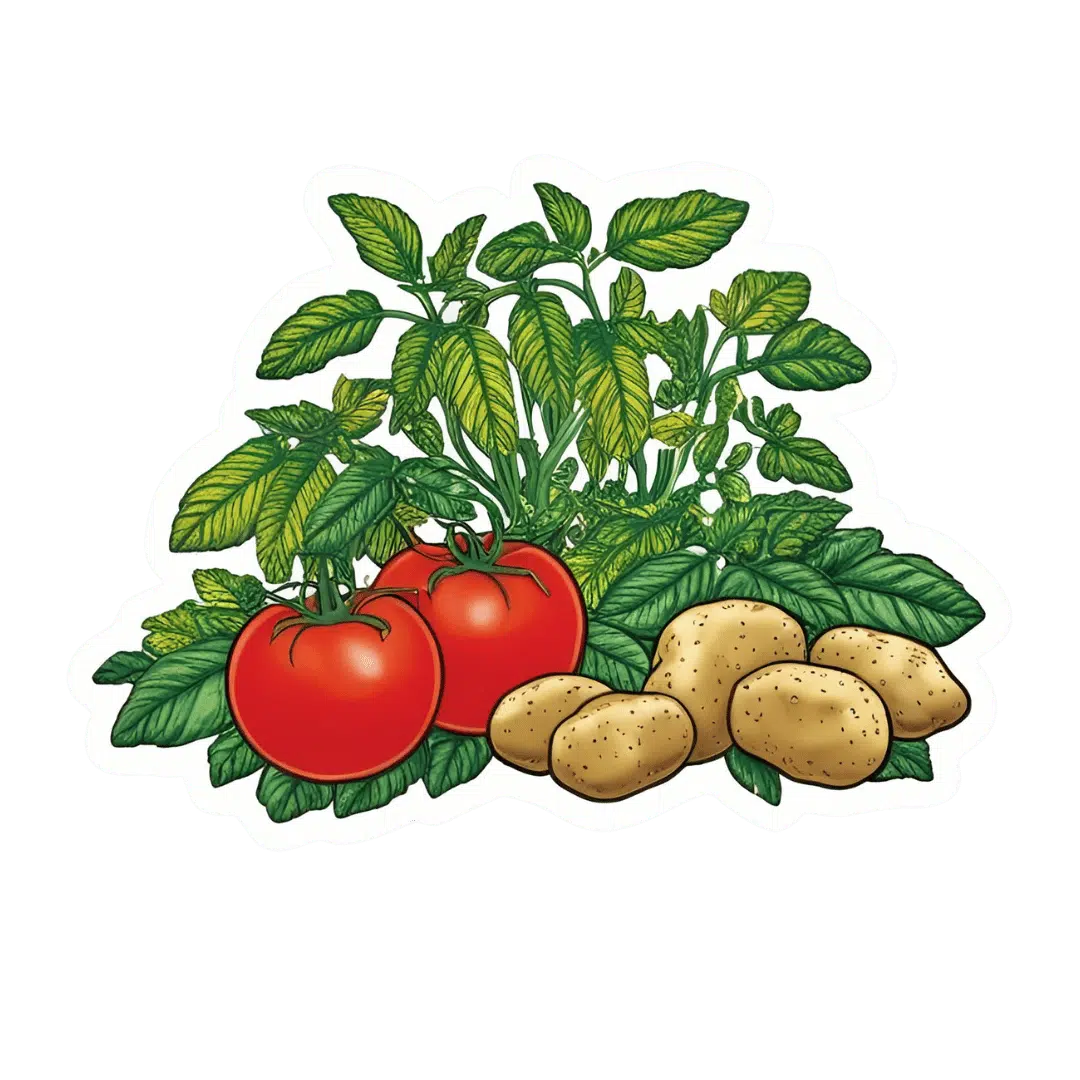
Do Tomatoes & Other Nightshades Cause Inflammation & Worsen Arthritis?
10almonds is reader-supported. We may, at no cost to you, receive a portion of sales if you purchase a product through a link in this article.
It’s Q&A Day at 10almonds!
Have a question or a request? We love to hear from you!
In cases where we’ve already covered something, we might link to what we wrote before, but will always be happy to revisit any of our topics again in the future too—there’s always more to say!
As ever: if the question/request can be answered briefly, we’ll do it here in our Q&A Thursday edition. If not, we’ll make a main feature of it shortly afterwards!
So, no question/request too big or small 😎
❝What is the science behind nightshades, especially tomatoes, causing inflammation and arthritis?❞
Good news: the science is not behind nightshades, including tomatoes, causing inflammation and arthritis. In fact, tomatoes are generally considered anti-inflammatory (not something their fellow nightshades, potatoes, can boast) due to their lycopene content and polyphenols.
See for example: Lycopene’s Benefits For The Gut, Heart, Brain, & More
Some nightshades are indeed dangerous
For example, is its first name “Deadly”? Because deadly nightshade, also called belladonna, amongst other names, is indeed one of the most toxic plants known to science, and ingesting even a tiny amount can be enough to kill. They contain a cocktail of toxins, with atropine probably the one most responsible for death, due to how it slows (and directly or indirectly, often ultimately stops) the heart.
“Nightshades” is the common name that we give to what botanists would call the taxonomic family of Solanaceae. Because taxonomy is not well-understood by most non-scientists, is easy to misunderstand the relevance of these, by orders of magnitude. You know how sometimes we mention that many vegetables are in fact all Brassica oleracea, and merely different cultivars of that species (cabbage, kale, broccoli, cauliflower, Brussels sprouts, etc)? While cultivars come below species in the taxonomic tree, the family comes above even the genus (the genus is the first part of the two-part scientific names we usually see, the latter part being the species).
Which means… If we are to ask “are nightshades (Solanaceae) dangerous?” it’s a bit like asking “are animals of the family Artiodactyla dangerous?” and well, that depends, are we talking about a mouse-deer (they mostly eat small leaves) or a killer whale (they often eat great white sharks)? Both are the same taxonomic family (Artiodactyla), so let’s appreciate that “nightshades” (Solanaceae) is an equally broad umbrella term too.
Nightshades that you can find in a supermarket are not dangerous
Well, ok, a potato can be dangerous if you throw it hard enough, and potentially you could choke on a tomato, just like any food. But the point is, their toxicity is low enough to make them safe and (depending on preparation) even very healthy foods.
You may be wondering: what is this toxicity that is “low enough”? Isn’t the right amount of toxicity zero?
And the answer is: everything is toxic in sufficient quantities, even things like water, and oxygen.
And as for foodstuffs, consider for example that capsaicin (the phytochemical that gives hot peppers their hot taste—peppers are also nightshades, by the way) is technically a neurotoxin. However, humans being what we are, we decided to eat them for fun, cultivated them to increase their spiciness, and (in moderation) can enjoy health benefits from them including, counterintuitively, anti-inflammatory powers:
Capsaicin For Weight Loss And Against Inflammation ← it’s very beneficial to the metabolism also
When it comes to potatoes and tomatoes, the “villain of the hour” that critics cite is solanine.
Solanine is toxic to the extent that symptoms of toxicity can arise at 2–5mg/kg (as in, mg of solanine per kg of body weight).
Given that solanine levels in potatoes are controlled by farmers, and that the average potato has around 0.075 mg solanine per gram of potato, then if you weigh about the same as this writer (currently around 72kg, or 163 lbs), then to hit even the low end of that distribution curve, you’d need to eat nearly 2kg (4.4 lbs) of potatoes at a time.
For chronic effects, you’d need to be doing that chronically, e.g. every day. And remember, that’s the low end of the distribution curve, meaning that for most people, toxicity still won’t be an issue yet until higher levels.
Source: Naturally occurring toxic alkaloids in foods: Solanum (potato) glycoalkaloids (solanine is a glycoalkaloid, hence its discussion there)
As for tomatoes? They don’t even contain solanine; their glycoalkaloid is lycopercisin, also called tomatine.
And they don’t contain much of that, unless you count one obscure kind of tomato grown in the Andes, if you eat it when it’s ripe, at which point its tomatine content causes the tomatoes to have a bitter flavor (that’s it, no more serious effects have been observed). But here it is, the tomato with the highest glycoalkaloid content in the world:
High alpha-tomatine content in ripe fruit of Andean Lycopersicon esculentum var. cerasiforme: developmental and genetic aspects (tl;dr = it’s tasty if you are accustomed to bitter flavors, otherwise you might not enjoy it so much, but that’s about the limit of any observed issues)
Any risks at all that we should be aware of?
Yes, a few things:
If potatoes are stored in sunlight and/or for extended periods of time (1–3 months), they may increase their solanine content. You can tell if this has happened, because they’ll have turned green. Even so, when researchers tested this,
❝Initially and after 1 and 3 months of storage, tubers were analyzed for their α-chaconine, α-solanine and total glycoalkaloid (TGA) contents. Mean α-chaconine, α-solanine and total glycoalkaloid contents of the tubers ranged from 0.41 to 3.45, 0.35 to 1.51 and 0.75 to 6.16 mg/100 g of tuber (wet weight), respectively. Statistical analysis of the results indicated that the interaction of location and storage time had a significant (P<0.05) effect on concentration of the individual and total glycoalkaloids in the tubers. The results also demonstrated that storage under these suboptimum conditions did not cause an increase of glycoalkaloids to a toxic level.❞
Note: in case you, like this writer, were momentarily confused by those numbers, realise that the researchers represented the numbers as mg/100g, instead of the mg/g norm we were using above.
Also, the skins of potatoes contain more solanine than the flesh, and the leaves of tomatoes contain more tomatine than the fruits.
So for example, you could get sick from eating about a pound of raw tomato leaves at a time. So don’t do that.
One other thing to bear in mind is that it’s always possible to have an allergy or a sensitivity, to anything. So if unsure about that, consider working with an allergist to see if it’s a problem in your case.
Beyond that, in the category of “are potatoes bad for the health?” the only other real issue is metabolic, and that depends on how you prepare them; for example mashed potato has a very high glycemic index, while baked potatoes are much healthier, and deep-frying is not good for anything’s health.
See also: Glycemic Index vs Glycemic Load vs Insulin Index
And: Carb-Strong or Carb-Wrong: Should You Go Light Or Heavy On Carbs?
Enjoy!
Don’t Forget…
Did you arrive here from our newsletter? Don’t forget to return to the email to continue learning!
Recommended
Learn to Age Gracefully
Join the 98k+ American women taking control of their health & aging with our 100% free (and fun!) daily emails:
-
If Your Knee Feels Unstable, Do These 3 Things Before It Gets Worse
10almonds is reader-supported. We may, at no cost to you, receive a portion of sales if you purchase a product through a link in this article.
Dr. Alyssa Kuhn, arthritis specialist, shows us how:
Strength, support, & control
Knee stability depends on three components working together:
- strength (your muscles being strong enough to do hold you up)
- support (weight-bearing confidence)
- control (balance and movement coordination)
Weakness in any one area can make your knee feel as though it may give out—or indeed, it may actually give out!
So, to ensure you have those three things:
- Chair stand: sit at the edge of a chair, stand up tall, then sit down with control, progressing by lowering yourself slowly over a three-second count (without* using your hands!)
- *If you need to use your hands at first in order to have good form, then so be it; do prioritize good form. However, if you must use your hands, use as light a touch as possible, and try to work up to not using your hands (including: not using swinging momentum, either)
- Stand-and-march: stand up from a chair, march one knee up, march with the other leg while balancing on one leg at a time, then sit back down with control.
- Weight-shift stepping: place most of your weight through the leg you’re training while lightly stepping the other leg forwards, sideways, and backwards, returning to the middle after each step. You can progress this one by passing a small weight around you in a circle. How small a weight? It should be very manageable to you, just enough that the balance is the hard part, not holding the weight up.
- Balance-beam stance with arm swings: stand with one foot directly in front of the other, shift most of your weight onto the back leg, then add controlled arm swings while maintaining your balance. Again you can progress this by adding weight to your hands.
Throughout, the main idea is to build strength, support, and control separately first, then progress to the combined exercises once the individual movements feel comfortable and controlled.
For more on all of this plus visual demonstrations, enjoy:
Click Here If The Embedded Video Doesn’t Load Automatically!
Want to learn more?
You might also like:
The Best Exercise to Stop Your Legs From Giving Out ← a different approach, with a single exercise, and this one has to do with correcting the golgi tendon reflex that can sometimes cause knees to just collapse for no obvious reason
Take care!
Share This Post
-
What you need to know about menopause
10almonds is reader-supported. We may, at no cost to you, receive a portion of sales if you purchase a product through a link in this article.
Menopause describes the time when a person with ovaries has gone one full year without a menstrual period. Reaching this phase is a natural aging process that marks the end of reproductive years.
Read on to learn more about the causes, stages, signs, and management of menopause.
What causes menopause?
As you age, your ovaries begin making less estrogen and progesterone—two of the hormones involved in menstruation—and your fertility declines, causing menopause.
Most people begin perimenopause, the transitional time that ends in menopause, in their late 40s, but it can start earlier. On average, people in the U.S. experience menopause in their early 50s.
Your body may reach early menopause for a variety of reasons, including having an oophorectomy, a surgery that removes the ovaries. In this case, the hormonal changes happen abruptly rather than gradually.
Chemotherapy and radiation therapy for cancer patients may also induce menopause, as these treatments may impact ovary function.
What are the stages of menopause?
There are three stages:
- Perimenopause typically occurs eight to 10 years before menopause happens. During this stage, estrogen production begins to decline and ovaries release eggs less frequently.
- Menopause marks the point when you have gone 12 consecutive months without a menstrual period. This means the ovaries have stopped releasing eggs and producing estrogen.
- Postmenopause describes the time after menopause. Once your body reaches this phase, it remains there for the rest of your life.
How do the stages of menopause affect fertility?
Your ovaries still produce eggs during perimenopause, so it is still possible to get pregnant during that stage. If you do not wish to become pregnant, continue using your preferred form of birth control throughout perimenopause.
Once you’ve reached menopause, you can no longer get pregnant naturally. People who would like to become pregnant after that may pursue in vitro fertilization (IVF) using eggs that were frozen earlier in life or donor eggs.
What are the signs of menopause?
Hormonal shifts result in a number of bodily changes. Signs you are approaching menopause may include:
- Hot flashes (a sudden feeling of warmth).
- Irregular menstrual periods, or unusually heavy or light menstrual periods.
- Night sweats and/or cold flashes.
- Insomnia.
- Slowed metabolism.
- Irritability, mood swings, and depression.
- Vaginal dryness.
- Changes in libido.
- Dry skin, eyes, and/or mouth.
- Worsening of premenstrual syndrome (PMS).
- Urinary urgency (a sudden need to urinate).
- Brain fog.
How can I manage the effects of menopause?
You may not need any treatment to manage the effects of menopause. However, if the effects are disrupting your life, your doctor may prescribe hormone therapy.
If you have had a hysterectomy, your doctor may prescribe estrogen therapy (ET), which may be administered via a pill, patch, cream, spray, or vaginal ring. If you still have a uterus, your doctor may prescribe estrogen progesterone/progestin hormone therapy (EPT), which is sometimes called “combination therapy.”
Both of these therapies work by replacing the hormones your body has stopped making, which can reduce the physical and mental effects of menopause.
Other treatment options may include antidepressants, which can help manage mood swings and hot flashes; prescription creams to alleviate vaginal dryness; or gabapentin, an anti-seizure medication that has been shown to reduce hot flashes.
Lifestyle changes may help alleviate the effects on their own or in combination with prescription medication. Those changes include:
- Incorporating movement into your daily life.
- Limiting caffeine and alcohol.
- Quitting smoking.
- Maintaining a regular sleep schedule.
- Practicing relaxation techniques, such as meditation.
- Consuming foods rich in plant estrogens, such as grains, beans, fruits, vegetables, and seeds.
- Seeking support from a therapist and from loved ones.
What health risks are associated with menopause?
Having lower levels of estrogen may put you at greater risk of certain health complications, including osteoporosis and coronary artery disease.
Osteoporosis occurs when bones lose their density, increasing the risk of fractures. A 2022 study found that the prevalence of osteoporotic fractures in postmenopausal women was 82.2 percent.
Coronary artery disease occurs when the arteries that send blood to your heart become narrow or blocked with fatty plaque.
Estrogen therapy can reduce your risk of osteoporosis and coronary artery disease by preserving bone mass and maintaining cardiovascular function.
For more information, talk to your health care provider.
This article first appeared on Public Good News and is republished here under a Creative Commons license.
Share This Post
-
What Would Happen If You Didn’t Sleep?
10almonds is reader-supported. We may, at no cost to you, receive a portion of sales if you purchase a product through a link in this article.
Dr. Claudia Aguirre explains:
What dreams may come (or not)
Story time: in 1965, 17-year-old Randy Gardner stayed awake for 264 hours (11 days); by the end he had severe cognitive and perceptual impairments, including poor concentration, memory problems, paranoia, and hallucinations, though he later recovered without lasting damage.
This is generally not a good idea. Sleep is essential for physical and mental health, with most adults needing 7–8 hours per night and adolescents needing more like 10–12 hours (because yes, they are essentially body-building!). “Needing” does not necessarily equate to “getting”, though, and about 30% of adults and 66% of adolescents in the United States are estimated to be regularly sleep-deprived.
During waking hours, brain cells generate waste products, including adenosine, which accumulate and increase the drive to sleep. Then, during non-REM sleep, breathing and heart rate slow, muscles relax, DNA repair occurs, and the body restores itself for the next day. And during sleep in general, the brain’s glymphatic system becomes much more active, using cerebrospinal fluid to flush away toxic waste products that accumulate between brain cells.
In contrast, missing sleep impairs learning, memory, mood, coordination, and reaction time, and is associated with inflammation, hallucinations, high blood pressure, diabetes, and more. In fact, chronic sleep deprivation can greatly increase the risk of stroke, and in extreme situations can even lead to death.
So… Sweet dreams!
For more on all of this, enjoy:
Click Here If The Embedded Video Doesn’t Load Automatically!
Want to learn more?
You might also like:
Can We Get Away With Sleeping Under 7 Hours?
Take care!
Share This Post
Related Posts
-
How Are You?
10almonds is reader-supported. We may, at no cost to you, receive a portion of sales if you purchase a product through a link in this article.
Answering The Most Difficult Question: How Are You?
Today’s feature is aimed at helping mainly two kinds of people:
- “I have so many emotions that I don’t always know what to do with them”
- “What is an emotion, really? I think I felt one some time ago”
So, if either those describe you and/or a loved one, read on…
Alexithymia
Alexi who? Alexithymia is an umbrella term for various kinds of problems with feeling emotions.
That could be “problems feeling emotions” as in “I am unable to feel emotions” or “problems feeling emotions” as in “feeling these emotions is a problem for me”.
It is most commonly used to refer to “having difficulty identifying and expressing emotions”.
There are a lot of very poor quality pop-science articles out there about it, but here’s a decent one with good examples and minimal sensationalist pathologization:
Alexithymia Might Be the Reason It’s Hard to Label Your Emotions
A somatic start
Because a good level of self-awareness is critical for healthy emotional regulation, let’s start there. We’ll write this in the first person, but you can use it to help a loved one too, just switching to second person:
Simplest level first:
Are my most basic needs met right now? Is this room a good temperature? Am I comfortable dressed the way I am? Am I in good physical health? Am I well-rested? Have I been fed and watered recently? Does my body feel clean? Have I taken any meds I should be taking?
Note: If the answer is “no”, then maybe there’s something you can do to fix that first. If the answer is “no” and also you can’t fix the thing for some reason, then that’s unfortunate, but just recognize it anyway for now. It doesn’t mean the thing in question is necessarily responsible for how you feel, but it’s good to check off this list as a matter of good practice.
Bonus question: it’s cliché, but if applicable… What time of the month is it? Because while hormonal mood swings won’t create moods out of nothing, they sure aren’t irrelevant either and should be listened to too.
Bodyscanning next
What do you feel in each part of your body? Are you clenching your jaw? Are your shoulders tense? Do you have a knot in your stomach? What are your hands doing? How’s your posture? What’s your breathing like? How about your heart? What are your eyes doing?
Your observations at this point should be neutral, by the way. Not “my posture is terrible”, but “my posture is stooped”, etc. Much like in mindfulness meditation, this is a time for observing, not for judging.
Narrowing it down
Now, like a good scientist, you have assembled data. But what does the data mean for your emotions? You may have to conduct some experiments to find out.
Thought experiments: what calls to you? What do you feel like doing? Do you feel like curling up in a ball? Breaking something? Taking a bath? Crying?
Maybe what calls to you, or what you feel like doing, isn’t something that’s possible for you to do. This is often the case with anxiety, for example, and perhaps also guilt. But whatever calls to you, notice it, reflect on it, and if it’s something that your conscious mind considers reasonable and safe for you to do, you can even try doing it.
Your body is trying to help you here, by the way! It will try (and usually succeed) to give you a little dopamine spike when you anticipate doing the thing it wants you to do. Warning: it won’t always be right about what’s best for you, so do still make your own decisions about whether it is a good idea to safely do it.
Practical experiments: whether you have a theory or just a hypothesis (if you have neither make up a hypothesis; that is also what scientists do), you can also test it:
If in the previous step you identified something you’d like to do and are able to safely do it, now is the time to try it. If not…
- Find something that is likely to (safely) tip you into emotional expression, ideally, in a cathartic way. But, whatever you can get is good.
- Music is great for this. What songs (or even non-lyrical musical works) make you sad, happy, angry, energized? Try them.
- Literature and film can be good too, albeit they take more time. Grab that tear-jerker or angsty rage-fest, and see if it feels right.
- Other media, again, can be completely unrelated to the situation at hand, but if it evokes the same emotion, it’ll help you figure out “yes, this is it”.
- It could be a love letter or a tax letter, it could be an outrage-provoking news piece or some nostalgic thing you own.
Ride it out, wherever it takes you (safely)
Feelings feel better felt. It doesn’t always seem that way! But, really, they are.
Emotions, just like physical sensations, are messengers. And when a feeling/sensation is troublesome, one of the best ways to get past it is to first fully listen to it and respond accordingly.
- If your body tells you something, then it’s good to acknowledge that and give it some reassurance by taking some action to appease it.
- If your emotions are telling you something, then it’s good to acknowledge that and similarly take some action to appease it.
There is a reason people feel better after “having a good cry”, or “pounding it out” against a punchbag. Even stress can be dealt with by physically deliberately tensing up and then relaxing that tension, so the body thinks that you had a fight and won and can relax now.
And when someone is in a certain (not happy) mood and takes (sometimes baffling!) actions to stay in that mood rather than “snap out of it”, it’s probably because there’s more feeling to be done before the body feels heard. Hence the “ride it out if you safely can” idea.
How much feeling is too much?
While this is in large part a subjective matter, clinically speaking the key question is generally: is it adversely affecting daily life to the point of being a problem?
For example, if you have to spend half an hour every day actively managing a certain emotion, that’s probably indicative of something unusual, but “unusual” is not inherently pathological. If you’re managing it safely and in a way that doesn’t negatively affect the rest of your life, then that is generally considered fine, unless you feel otherwise about it.
If you do think “I would like to not think/feel this anymore”, then there are tools at your disposal too:
- How To Manage Chronic Stress
- How To Set Anxiety Aside
- How To Stop Revisiting Those Memories
- How To Stay Alive (When You Really Don’t Want To)
Take care!
Don’t Forget…
Did you arrive here from our newsletter? Don’t forget to return to the email to continue learning!
Learn to Age Gracefully
Join the 98k+ American women taking control of their health & aging with our 100% free (and fun!) daily emails:
-
Reading At Night: Good Or Bad For Sleep? And Other Questions
10almonds is reader-supported. We may, at no cost to you, receive a portion of sales if you purchase a product through a link in this article.
It’s Q&A Day at 10almonds!
Have a question or a request? You can always hit “reply” to any of our emails, or use the feedback widget at the bottom!
In cases where we’ve already covered something, we might link to what we wrote before, but will always be happy to revisit any of our topics again in the future too—there’s always more to say!
As ever: if the question/request can be answered briefly, we’ll do it here in our Q&A Thursday edition. If not, we’ll make a main feature of it shortly afterwards!
So, no question/request too big or small
❝Would be interested in your views about “reading yourself to sleep”. I find that current affairs magazines and even modern novels do exactly the opposite. But Dickens – ones like David Copperfield and Great Expectations – I find wonderfully effective. It’s like entering a parallel universe where none of your own concerns matter. Any thoughts on the science that may explain this?!❞
Anecdotally: this writer is (like most writers) a prolific reader, and finds reading some fiction last thing at night is a good way to create a buffer between the affairs of the day and the dreams of night—but I could never fall asleep that way, unless I were truly sleep-deprived. The only danger is if I “one more chapter” my way deep into the night! For what it’s worth, bedtime reading for me means a Kindle self-backlit with low, soft lighting.
Scientifically: this hasn’t been a hugely researched area, but there are studies to work from. But there are two questions at hand (at least) here:
- one is about reading, and
- the other is about reading from electronic devices with or without blue light filters.
Here’s a study that didn’t ask the medium of the book, and concluded that reading a book in bed before going to sleep improved sleep quality, compared to not reading a book in bed:
Here’s a study that concluded that reading on an iPad (with no blue light filter) that found no difference in any metrics except EEG (so, there was no difference on time spent in different sleep states or sleep onset latency), but advised against it anyway because of the EEG readings (which showed slow wave activity being delayed by approximately 30 minutes, which is consistent with melatonin production mechanics):
Here’s another study that didn’t take EEG readings, and/but otherwise confirmed no differences being found:
We’re aware this goes against general “sleep hygiene” advice in two different ways:
- General advice is to avoid electronic devices before bedtime
- General advice is to not do activities besides sleep (and sex) in bed
…but, we’re committed to reporting the science as we find it!
Enjoy!
Don’t Forget…
Did you arrive here from our newsletter? Don’t forget to return to the email to continue learning!
Learn to Age Gracefully
Join the 98k+ American women taking control of their health & aging with our 100% free (and fun!) daily emails:
-
Can You Pass This 10-Second Walking Test?
10almonds is reader-supported. We may, at no cost to you, receive a portion of sales if you purchase a product through a link in this article.
This 10-second walking test should actually only take about 4 seconds, but it’s very important:
Stepping into good health
Set up a 12ft walkway (it doesn’t have to be anything special, just a flat floor on which you can walk in a straight line for about 12ft). Walk at a normal pace while timing yourself, and if it takes longer than about 4 seconds to walk that distance, then your walking speed is in a risk zone for future loss of independence.
Why walking speed matters: slower walking, especially after age 60, strongly predicts falls, fatigue, and declining independence, often before people realize there’s a problem.
So, what causes slow walking speed? Weak calves, stiff hips, and weak glutes are the three most common and most fixable reasons walking speed drops with age. Of those,
- Weak glutes: the gluteus maximus provides push-off power and upright stability, and when it isn’t firing, walking feels flat, slow, and draining.
- Weak calves: calves act as your walking engine, and when they weaken, pushing forwards feels harder, balance worsens, and walking becomes slower and more tiring.
- Stiff hips: tight hip flexors shorten your stride, making walking slower and more effortful, with prolonged sitting being the biggest contributor.
So, what to do about it?
- Prone glute training: lie on your front, gently squeeze your glutes, lift one leg slightly while keeping your lower back relaxed, then lower with control to target your glutes rather than your spine.
- Single-leg donkey calf raise: lean forwards with your hands on a chair or counter, lift one foot, and repeatedly push up onto your tiptoes and lower with control, using both legs if balance feels unsafe.
- Skateboard swings: no skateboard necessary; just stand holding a support, keep your back upright, place your weight on one leg, and swing the free leg forwards and backwards in a controlled motion to restore hip extension.
For more on all of this plus visual demonstrations, enjoy:
Click Here If The Embedded Video Doesn’t Load Automatically!
Want to learn more?
You might also like:
90% Of People Over 50 Fail This Balance Test. Will You?
Take care!
Don’t Forget…
Did you arrive here from our newsletter? Don’t forget to return to the email to continue learning!
Learn to Age Gracefully
Join the 98k+ American women taking control of their health & aging with our 100% free (and fun!) daily emails:


