

Why 10,000 Steps Might Be Making Your Pain Worse (+ What To Do Instead)
10almonds is reader-supported. We may, at no cost to you, receive a portion of sales if you purchase a product through a link in this article.
Walking can be pleasant, but (unless you’re walking on rough terrain) in biomechanical terms it’s very repetitive, and doesn’t challenge muscles enough to build strength or improve balance.
So, wear and tear can occur, but development won’t happen much after a certain very base level.
Dr. Alyssa Kuhn, arthritis expert, explains how to fix that:
Different Movements
If you sometimes find yourself struggling with stairs, low chairs, or daily movement, that usually means your muscles lack the correct strength. As with any kind of strength training, your muscles need to be challenged with increasing resistance, not just the same repetitive movement, or else they will have no reason to get stronger.
Dr. Kuhn recommends these exercises in particular:
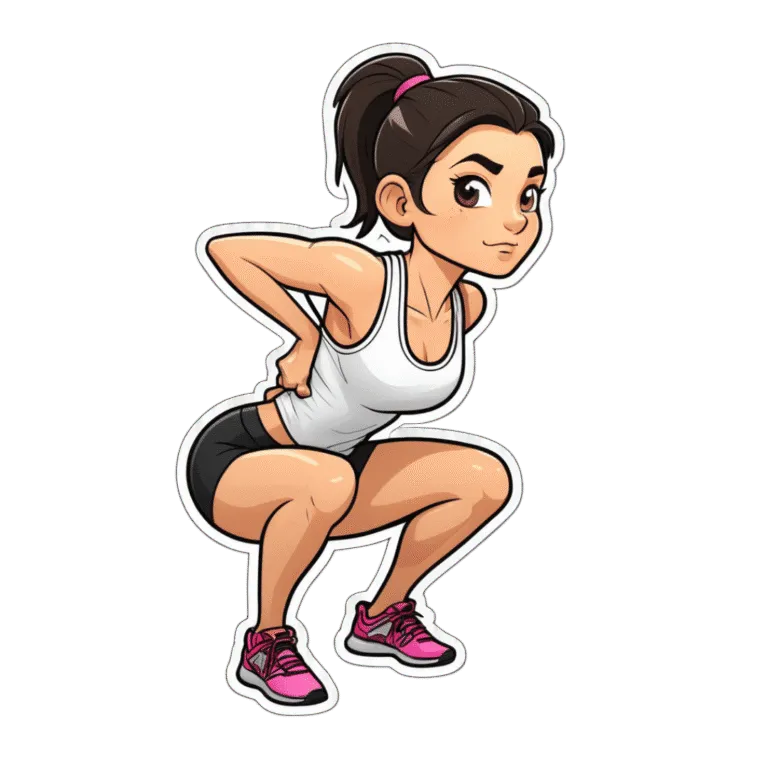
- Chair stands: sit at the edge of a chair, stand up, and sit back down to work your thighs, glutes, hamstrings, feet, and ankles. To make it easier, raise the seat height or use the chair arms for support. Alternatively to make it harder, hold a weight to your chest. Goal: 8–12 reps, 2–3 sets; optional 30-second test for number of stands.
- Step-back with knee march: step one leg backwards, then bring your knee up to your chest before repeating to build your hips, glutes, core, and balance. To make it easier, shorten your step and knee lift, and hold a chair for support. To make it harder, take a bigger step, make a faster knee drive, and step up onto a stool. Goal: 10–12 reps per side, 2–3 sets.
- Balance with weight pass: stand on one leg (or use your back toes as a sort kickstand for balance purposes, without putting much weight there) and pass a weight or object hand-to-hand. To make it harder, use a heavier weight and hold it further from your body. Goal: 20–30 passes or 30–60 seconds per side, 2–3 sets.
For more on all of this plus visual demonstrations, enjoy:
Click Here If The Embedded Video Doesn’t Load Automatically!
Want to learn more?
You might also like:
How To Make Downhill Walking Easier On The Knees
Take care!
Don’t Forget…
Did you arrive here from our newsletter? Don’t forget to return to the email to continue learning!
Recommended
Learn to Age Gracefully
Join the 98k+ American women taking control of their health & aging with our 100% free (and fun!) daily emails:
-
The Seven Circles – by Chelsey Luger & Thosh Collins
10almonds is reader-supported. We may, at no cost to you, receive a portion of sales if you purchase a product through a link in this article.
At first glance, this can seem like an unscientific book—you won’t find links to studies in this one, for sure! However, if we take a look at the seven circles in question, they are:
- Food
- Movement
- Sleep
- Ceremony
- Sacred Space
- Land
- Community
Regular 10almonds readers may notice that these seven items contain five of the things strongly associated with the “supercentenarian Blue Zones”. (If you are wondering why Native American reservations are not Blue Zones, the answer there lies less in health science and more in history and sociology, and what things have been done to a given people).
The authors—who are Native American, yes—present in one place a wealth of knowledge and know-how. Not even just from their own knowledge and their own respective tribes, but gathered from other tribes too.
Perhaps the strongest value of this book to the reader is in the explanation of noting the size of each of those circles, how they connect with each other, and providing a whole well-explained system for how we can grow each of them in harmony with each other.
Or to say the same thing in sciencey terms: how to mindfully improve integrated lifestyle factors synergistically for greater efficacy and improved health-adjusted quality-of-life years.
Bottom line: if you’re not averse to something that mostly doesn’t use sciencey terms of have citations to peer-reviewed studies peppered through the text, then this book has wisdom that’s a) older than the pyramids of Giza, yet also b) highly consistent with our current best science of Blue Zone healthy longevity.
Share This Post
-
Morning Routines That Just FLOW
10almonds is reader-supported. We may, at no cost to you, receive a portion of sales if you purchase a product through a link in this article.
Morning Routines That Just FLOW
“If the hardest thing you have to do in your day is eat a frog, eat that frog first!”, they say.
And, broadly speaking, it is indeed good to get anything stressful out of the way early, so that we can relax afterwards. But…
- Are we truly best at frog-eating when blurry-eyed and sleepy?
- Is there a spoonful of sugar that could make the medicine go down better?
- What do we need to turn eating the frog into an enjoyable activity?
Flow
“Flow” is a concept brought to public consciousness by psychologist Mihaly Csikszentmihalyi, and it refers to a state in which we feel good about what we’re doing, and just keep doing, at a peak performance level.
Writer’s note: as a writer, for example…
Sometimes I do not want to write, I pace to and fro near my computer, going on side-quests like getting a coffee or gazing out of the window into my garden. But once I get going, suddenly, something magical happens and before I know it, I have to trim my writing down because I’ve written too much. That magical window of effortless productivity was a state of flow.
Good morning!
What is a good morning, to you? Build that into your morning! Set parameters around it so you don’t get carried away timewise and find yourself in the afternoon (unless that would work for you!), but first thing in the morning is the time to light up each part of your brain with appropriate neurotransmitters.
Getting the brain juices flowing
Cortisol
When we wake up, we (unless we have some neurochemical imbalance, such as untreated depression) get a spike of cortisol. Cortisol is much-maligned and feared, and indeed it can be very much deleterious to the health in cases of chronic stress. But a little spike now and again is actually beneficial for us.
Quick Tip: if you want to artificially stimulate (or enhance) a morning cortisol spike, a cold shower is the way to go. Or even just a face-plunge into a bowl of ice-water (put ice in it, give it a couple of minutes to chill the water, then put your face in for a count of 30 seconds, or less if you can’t hold your breath that long).
Serotonin
Serotonin is generally thought of as “the happy chemical”, and it’s stimulated by blue/white light, and also by seeing greenery.
Quick tip: to artificially stimulate (or enhance) a morning serotonin boost, your best friend is sunlight. Even sun through a partly-clouded sky will tend to outperform artificial lighting, including artificial sunlight lighting. Try to get sun between 08:30 and 09:00, if you can. Best of all, do it in your garden or nearby park, as the greenery will be an extra boost!
Dopamine
Generally thought of as “the reward chemical”, but it’s also critical for a lot of kinds of brainwork, including language processing and problem-solving.
Quick Tip: to artificially stimulate* a dopamine surge to get you going, do something that you and/or your body finds rewarding. Examples include:
- Exercise, especially in a vigorous burst
- A good breakfast, a nice coffee, whatever feels right to you
- An app that has motivational bells and whistles, a streak for you to complete, etc
Note: another very enjoyable activity might come to mind that doesn’t even require you getting out of bed. Be aware, however, gentleman-readers specifically, that if you complete that activity, you’ll get a prolactin spike that will wipe out the dopamine you just worked up (because prolactin is antagonistic to dopamine). So that one’s probably better for a lazy morning when you can go back to sleep, than a day when you want to get up and go! Ladies, this is less of a worry for us as the physiology an orgasm driven by estrogen+progesterone rather than testosterone is different; there will not usually be a prolactin spike following the spike of dopamine; our orgasm-related dopamine spike is followed by a wave of oxytocin instead (“the cuddle chemical”), which is much more pleasant than prolactin.
*there’s no “(or enhance)” for this one; you won’t get dopamine from doing nothing, that’s just not how “the reward chemical” works
Flow-building in a stack
When you’ve just woken up and are in a blurry morning haze, that’s not the time to be figuring out “what should I be doing next?”, so instead:
- Work out the things you want to incorporate into your morning routine
- Put them in the order that will be easiest to perform—some things will go a lot better after others!
- Remember to also include things that are simply necessary—morning bathroom ablutions, for example
The goal here is to have a this-and-this-and-this-and-this list of items that you can go through without any deviations, and get in the habit of “after item 1 I automatically do item 2, after which I automatically do item 3, after which…”
Implement this, and your mornings will become practically automated, but in a joyous, life-enhancing way that sets you up in good order for whatever you want/need to do!
Share This Post
-
How can I improve my running? 5 top tips for every runner, from a biomechanics expert
10almonds is reader-supported. We may, at no cost to you, receive a portion of sales if you purchase a product through a link in this article.
Humans and our ancestors have been running for millions of years. Back then, it helped us capture – or avoid becoming – prey. Now, we do it to keep fit, boost mental health, unwind in nature, or play our favourite sport.
But while many of us were taught how to ride a bike, throw and catch a ball, or kick a footy, it seems very few people are ever taught how to run. You might’ve wondered: am I running wrong?
Well, the truth is there’s no one right way to run. Your ideal technique depends on factors such as leg and foot length, muscle mass, and even how springy your tendons are.
It also depends on whether you’re out for your Sunday run or running full pelt in a sprint.
That said, thinking a little more about how to run can make it feel easier and faster, and reduce injury risk.
Here are five basics to keep in mind.
Thinking a little more about how to run can make it feel easier and faster. Rocksweeper/Shutterstock 1. Feet: how you land matters
Some of us land on our heels, others on the balls of our feet. If you grew up running barefoot, you’ll more often land towards the forefoot.
Debate rages on which is best. The truth is heel-first striking stresses the knees a bit more while forefoot landing places more impact on the calves and Achilles tendon.
So, if you’re injury prone in one of those areas, it might be worth adjusting your style.
But for healthy runners, there’s no strong evidence one technique is better for injury.
If you’re considering a change, do it slowly over several months, ideally with expert help.
As you run faster, you’ll bounce more in each step. You’ll naturally land more on your forefoot, especially when sprinting.
Majdanski/Shutterstock 2. Legs: softer landings and smoother strides
Three things are worth focusing on:
- minimise the twisting of the legs under your body as you land, to reduce strain on knees and ankles
- keep your pelvis level during landings (dropping or rotating it increases injury risk)
- don’t bounce too high; a smooth, low trajectory uses less energy and keeps impacts manageable.
These principles are perfectly demonstrated by Ethiopian former long-distance runner Haile Gebrselassie:
Just keep relaxed, and allow the knees and ankles to flex normally.
If you find your landing style causes stress or pain, consider running with slightly shorter strides.
Then there’s the “leg recovery phase” – when your leg swings forward after push-off. During jogging, we pull the leg forward briefly with our hip muscles, but otherwise it’s a pretty passive task.
In sprinting, however, the faster leg recovery powered by your hip can contribute about 25% of your forward propulsion in each step. So make sure you flex at the hip while you push back into the ground, so your legs act like scissors as they swing.
Also, the faster you run, the more your knee should flex, and the more the foot should rise under you. This helps the leg swing forwards faster.
In other words: pick your feet up more as you pick up the pace.
3. Arms: built-in shock absorbers
During jogging, your arms help with balance, absorbing bumps or stumbles, especially on uneven ground, as seen here: https://www.youtube.com/embed/ifctluuNkXE?wmode=transparent&start=0
They swing mostly passively and act as shock absorbers during jogging; they can’t do their job when they’re stiff. Relaxation is key.
To keep energy cost low, try bending your elbows to keep their mass closer to your shoulder and keep your shoulders relaxed.
When sprinting, your arms become more active. They help stabilise your whole body in the short time your feet are on the ground.
Top sprint coaches often insist the “drive arm” (the arm swinging backwards) contributes to forward propulsion, thanks to physics.
But the limited studies to date suggest the effect on propulsion is moderate; future studies might shed more light.
That said, the fastest sprinters, like Usain Bolt, are renowned for their aggressive backwards arm drive: https://www.youtube.com/embed/D09QkQ8Cyow?wmode=transparent&start=0
See how his drive arm whips backwards with rapid extension of the shoulder and elbow? Meanwhile, the recovery arm – swinging forwards – is more flexed and moves much slower.
4. Torso: lean just a little
When we run, the torso naturally rotates left and right. That’s fine, although when we run faster there should be less rotation. A more aggressive arm swing helps balance out these rotations.
Our pelvis then rotates in the opposite direction to the torso. The twisting helps us balance, but also contributes a little to forward force.
But as we run faster, these rotations should become smaller as we use our arms to balance better. As your speed increases, swing your arms a bit harder and your body, legs and other arm will follow.
Finally, it’s generally accepted that we keep our torso upright when we run relaxed, with only a very slight forward lean.
But if we want to speed up, leaning forward is a great way to accelerate quickly without doing too much tiring muscle work.
And for those with knee troubles, leaning forward a bit might help reduce impact on the knees.
If you’re not sure how you run, try asking a friend to take a quick video of you running. Demkat/Shutterstock 5. Head: a balancing act
You might be tempted to tilt your head down when you run, to watch your feet or in an effort to accelerate forwards.
But during upright (non-sprinting) running, try to keep it in normal position. Rest your head quietly on the top of your shoulders, just as as evolution intended.
During sprinting, try looking about 20 metres in front of you (a slight chin tuck is fine). When jogging, try looking ahead toward the horizon.
Not sure what your own technique looks like? Try asking a friend to take a quick video of you running. Compare it to an experienced runner running at the same speed.
You might be surprised what you notice.
Anthony Blazevich, Professor of Biomechanics, Edith Cowan University
This article is republished from The Conversation under a Creative Commons license. Read the original article.
Share This Post
Related Posts
-
Occupational therapists tackle obstacles in the home, from support to cook a meal, to navigating public transport
10almonds is reader-supported. We may, at no cost to you, receive a portion of sales if you purchase a product through a link in this article.
Occupational therapists (OTs) have been in the spotlight this month after the National Disability Insurance Agency (NDIA) froze NDIS payments for these services at $193.99 per hour for the sixth year.
The NDIA also cut travel payments for OTs who visit people in their home and community by 50%.
Health Minister Mark Bulter says it’s important people on the NDIS aren’t paying more for therapy and support than they would pay in the health or aged care system.
But OTs are concerned this could affect therapists’ viability, including their ability to support people with disability in their homes and communities.
But what can OTs actually do? And why is it often better to do this in a person’s home and community?
Who might see an OT?
Imagine trying to get back to your daily life after a major health setback, such as a car accident or stroke, or an episode of a long-term condition or disability, such as depression or arthritis. The things you used to do with ease can become difficult and exhausting.
After such a setback, your home or community can also feel like an obstacle course. Maybe you can’t carry the laundry basket out to the line anymore, or you’re struggling to keep up with your children.
This is where occupational therapy can make a real difference. OTs are health professionals that enable people to do the things they need, want and love to do in daily life, from getting dressed to cooking dinner, gardening to driving.
Occupational therapists work with people of all ages. They overcome barriers by changing the environments and objects we use, teaching new skills, rehabilitating old ones and tweaking the way we tackle tasks.
What can OTs do in the home and community?
Seeing people in their own homes and communities allows the therapist to get a more accurate picture of a person’s strengths and abilities, which can be difficult to understand in a clinic.
OTs use their skills and creativity to provide personalised care, tailored to individual needs and circumstances.
An older person with dementia might, for example, cause alarm by putting a plastic kettle on the stove of a hospital kitchen. But they could make their cup of tea perfectly safely at home with their stove top kettle.
OTs can support home and community mobility, such as checking a wheelchair passes smoothly through doorways and can manoeuvre in tight spaces such as bathrooms.
But they can also advise on kitchen aids and seating to save energy for people with conditions such as multiple sclerosis, to support them continuing to cook family meals.
In their work with neurodivergent people of different ages, an OT might help an autistic teen develop sensory strategies to deal with their busy and noisy school day.
For other people, OT support might help them navigate their local public transport system. Learning and practising skills where they’re used makes it easier to carry them over into everyday life.
What does the research say?
Research shows home and community OT can lead to better activity and participation than clinic-based therapy. It’s also cost-effective.
For stroke survivors, OT makes everyday tasks like showering or getting dressed easier.
OT at home eases burden and stress for the parents of children with cerebral palsy and carers of people with dementia.
OT at home helps older people with ongoing health issues to be more actively involved in their communities.
Community OT is also effective in supporting recovery for people with mental health problems, enabling them to enjoy community and leisure activities, seek and maintain employment and enhance physical activity.
OT focuses on helping you do the things that keep you well and independent, which means fewer trips back to the hospital. OTs can spot and solve trip hazards within homes, for example, before a frail person has a fall.
People who get OT at home soon after leaving hospital are less likely to be readmitted. Emerging research also suggests OT can work jointly with paramedics when someone falls at home by visiting and offering immediate treatment that prevent avoidable hospital stays.
There are some downsides, such as limited access in disadvantaged communities. While telehealth can address some barriers, it is not suitable in every case.
How do Australians access OTs?
There are many pathways to access OT services, but the complexity of the health-care system means the process is challenging to navigate.
OT services can also be costly, due to severely limited funding, equipment and transport costs.
OT is available as part of Home Care Packages and the Commonwealth Home Support Programme for older people.
OT has also played a key role in supporting NDIS participants since the scheme’s inception. However, waiting lists often stretch for many months and not everyone knows about what OT can offer.
You can also access community OT through Medicare Chronic Disease Management plans, local community health centres and councils and through private health insurance rebates.
Thanks to Lana O’Neil (Occupational Therapist at Western Health in Victoria) and Sarah McCann (Senior Occupational Therapist at Western Health) for sharing their clinical expertise for this article.
Danielle Hitch, Senior Lecturer in Occupational Therapy, Deakin University
This article is republished from The Conversation under a Creative Commons license. Read the original article.
Don’t Forget…
Did you arrive here from our newsletter? Don’t forget to return to the email to continue learning!
Learn to Age Gracefully
Join the 98k+ American women taking control of their health & aging with our 100% free (and fun!) daily emails:
-
Is chocolate milk a good recovery drink after a workout? A dietitian reviews the evidence
10almonds is reader-supported. We may, at no cost to you, receive a portion of sales if you purchase a product through a link in this article.
Whether you enjoy chocolate milk regularly, as a weekend treat, or as an occasional dose of childhood nostalgia, it probably wouldn’t be the first option you think of for post-workout recovery.
Unless you’re on TikTok, perhaps. According to many people on the social media platform, chocolate milk is not only delicious, but it offers benefits comparable to sports drinks after a workout.
So is there any evidence to support this? Let’s take a look.
eldar nurkovic/Shutterstock Rehydrating after a workout is important
Water accounts for somewhere between 50% and 60% of our body weight. Water has many important functions in the body, including helping to keep our body at the right temperature through sweating.
We lose water naturally from our bodies when we sweat, as well as through our breathing and when we go to the toilet. So it’s important to stay hydrated to replenish the water we lose.
When we don’t, we become dehydrated, which can put a strain on our bodies. Signs and symptoms of dehydration can range from thirst and dizziness to low blood pressure and confusion.
Athletes, because of their higher levels of exertion, lose more water through sweating and from respiration (when their breathing rate gets faster). If they’re training or competing in hot or humid environments they will sweat even more.
Dehydration impacts athletes’ performance and like for all of us, can affect their health.
So finding ways to ensure athletes rehydrate quickly during and after they train or compete is important. Fortunately, sports scientists and dietitians have done research looking at the composition of different fluids to understand which ones rehydrate athletes most effectively.
The beverage hydration index
The best hydrating drinks are those the body retains the most of once they’ve been consumed. By doing studies where they give people different drinks in standardised conditions, scientists have been able to determine how various options stack up.
To this end, they’ve developed something called the beverage hydration index, which measures to what degree different fluids hydrate a person compared to still water.
According to this index beverages with similar fluid retention to still water include sparkling water, sports drinks, cola, diet cola, tea, coffee, and beer below 4% alcohol. That said, alcohol is probably best avoided when recovering from exercise.
Beverages with superior fluid retention to still water include milk (both full-fat and skim), soy milk, orange juice and oral rehydration solutions.
This body of research indicates that when it comes to rehydration after exercise, unflavoured milk (full fat, skim or soy) is better than sports drinks.
But what about chocolate milk?
A small study looked at the effects of chocolate milk compared to plain milk on rehydration and exercise performance in futsal players (futsal is similar to soccer but played on a court indoors). The researchers found no difference in rehydration between the two. There’s no other published research to my knowledge looking at how chocolate milk compares to regular milk for rehydration during or after exercise.
But rehydration isn’t the only thing athletes look for in sports drinks. In the same study, drinking chocolate milk after play (referred to as the recovery period) increased the time it took for the futsal players to become exhausted in further exercise (a shuttle run test) four hours later.
This was also shown in a review of several clinical trials. The analysis found that, compared to different placebos (such as water) or other drinks containing fat, protein and carbohydrates, chocolate milk lengthened the time to exhaustion during exercise.
What’s in chocolate milk?
Milk contains protein, carbohydrates and electrolytes, each of which can affect hydration, performance, or both.
Protein is important for building muscle, which is beneficial for performance. The electrolytes in milk (including sodium and potassium) help to replace electrolytes lost through sweating, so can also be good for performance, and aid hydration.
Compared to regular milk, chocolate milk contains added sugar. This provides extra carbohydrates, which are likewise beneficial for performance. Carbohydrates provide an immediate source of energy for athletes’ working muscles, where they’re stored as glycogen. This might contribute to the edge chocolate milk appears to have over plain milk in terms of athletic endurance.
The added sugar in chocolate milk provides extra carbohydrates. Brent Hofacker/Shutterstock Coffee-flavoured milk has an additional advantage. It contains caffeine, which can improve athletic performance by reducing the perceived effort that goes into exercise.
One study showed that a frappe-type drink prepared with filtered coffee, skim milk and sugar led to better muscle glycogen levels after exercise compared to plain milk with an equivalent amount of sugar added.
So what’s the verdict?
Evidence shows chocolate milk can rehydrate better than water or sports drinks after exercise. But there isn’t evidence to suggest it can rehydrate better than plain milk. Chocolate milk does appear to improve athletic endurance compared to plain milk though.
Ultimately, the best drink for athletes to consume to rehydrate is the one they’re most likely to drink.
While many TikTok trends are not based on evidence, it seems chocolate milk could actually be a good option for recovery from exercise. And it will be cheaper than specialised sports nutrition products. You can buy different brands from the supermarket or make your own at home with a drinking chocolate powder.
This doesn’t mean everyone should look to chocolate milk when they’re feeling thirsty. Chocolate milk does have more calories than plain milk and many other drinks because of the added sugar. For most of us, chocolate milk may be best enjoyed as an occasional treat.
Evangeline Mantzioris, Program Director of Nutrition and Food Sciences, Accredited Practising Dietitian, University of South Australia
This article is republished from The Conversation under a Creative Commons license. Read the original article.
Don’t Forget…
Did you arrive here from our newsletter? Don’t forget to return to the email to continue learning!
Learn to Age Gracefully
Join the 98k+ American women taking control of their health & aging with our 100% free (and fun!) daily emails:
-
Healthy Eating, With Rural Food Availabilities
10almonds is reader-supported. We may, at no cost to you, receive a portion of sales if you purchase a product through a link in this article.
It’s Q&A Day at 10almonds!
Have a question or a request? We love to hear from you!
In cases where we’ve already covered something, we might link to what we wrote before, but will always be happy to revisit any of our topics again in the future too—there’s always more to say!
No question/request too big or small 😎
❝Informtation about healthy food that doesn’t need obscure ingredients, things we can’t get in rural areas❞
Great suggestion, as we do have many readers who (like yourself, presumably) live in such places!
Generally speaking, what we try to do is give the most universally applicable health information possible, and trust people to apply that in the context of what’s available to them.
One of the reasons it’s hard to tailor dietary information to exclude “obscure” ingredients is that “obscure” is relative and subjective. Sometimes, one reader’s “what is this weird food I’ve never heard of?” is another reader’s everpresent staple!
So, while we can’t whip up a menu based on the products available in your local store without having an inventory of your local store, what we can do is offer some guiding principles:
Do what you can
It’s tempting to be sad that certain things aren’t locally available. This writer has a friend who often sends recipes that call for locally unavailable specific Middle Eastern and/or Surinamese* ingredients, and yes, it’s unfortunate.
*Which this writing software thinks is so obscure it did not even recognize the word “Surinamese” and highlighted it as a spelling mistake.
However, it’s best to focus on what is available, and work with that where possible.
Substitute or skip?
Sometimes, if you can’t get something fresh, canned or frozen or dried is fine. Sometimes it isn’t (in culinary terms, anyway; it’s almost always fine in nutrition terms, unless it’s lettuce or something in which case yes, only fresh will do).
Experiment, find out what works and what doesn’t. In the worst case scenario, you’ll have a disappointing meal once and not repeat that one.
Sometimes, the “inferior” choices work better! See for example: Super-Nutritious Shchi ← in this one, those dried herbs? They work better than fresh. The fresh herbs would give it a slightly sweeter taste that’s not appropriate here. And guess what, the Russian peasants who invented this dish did not have fresh rosemary and thyme (which grow nicely in a Mediterranean climate, and not so well in Siberia, say). Those tomatoes? We use fresh in the recipe there and it’s fine, but actually canned cherry tomatoes work great too.
On which note…
People think of “canned foods” as meaning “processed foods” and therefore bad. But the reality is it’s all dependent on what’s in the can (check the ingredients!). And as for nutrients?
Many canned fruits and vegetables contain more nutrients than fresh ones! This is because the way they’ve been stored preserves them better. For example:
- Canned tomatoes contain more bioavailable lycopene than fresh
- Canned spinach contains more bioavailable carotene than fresh
- Canned corn contains more bioavailable lutein than fresh
- The list goes on, but you get the idea!
Learn more: Nutrient Retention During Canned Food Production
Count the plant types
Getting at least 30 different types of plant in your diet each week is associated with much better health outcomes than not doing that.
It is not, in fact, a number out of a hat. It’s from a big (n=11,336) study into what things affect the gut microbiome for better or for worse. It was an observational population study, championing “citizen science” in which volunteers tracked various things and collected and sent in various samples for analysis.
The most significant finding of this study was that those who consumed more than 30 different kinds of plants per week, had a much better gut microbiome than those who consumed fewer than 10 different kinds of plants per week (there is a bell curve at play, and it gets steep around 10 and 30):
American Gut: an Open Platform for Citizen Science Microbiome Research
You can read more about it, here: What’s Your Plant Diversity Score?
Does it sound hard to get in 30 different plants, without good local availability?
In this writer’s pantry alone (so, only shelf-stable goods), there are (by coincidence, literally just counted them now) precisely 30 different kinds of plants, mostly in the form of various canned, jarred/fermented, or dried goods.
And that’s without counting herbs and spices (which would add another 21 to the tally).
Now, your local availability will differ from this writer’s, but we’re willing to bet that your local stores have a lot of different canned, jarred/fermented, or dried goods.
It’s easy to forget a lot of them are plants, if you’re only thinking of greenery and such. For example, nuts are plants! Canned beans/pulses are plants! Lentils are plants! Grains are plants! And so forth.
Minimize the bad
We generally advocate for focusing on adding healthy things more than eliminating unhealthy things, and we stand by that as a generally more useful principle, and certainly one that’s a lot easier to act on (and after all, dietary information is only useful if you actually implement it).
That said, there’s a strong case to be made for skipping alcohol, reducing sugar and salt, things like that. And those tweaks are usually things that one can do almost anywhere.
Keep your menu fresh, even if the ingredients aren’t
Variety’s important psychologically, not just nutritionally, and at the end of the day you’ll probably only do what doesn’t feel like a terrible chore.
So, with that in mind…
Enjoy!
Don’t Forget…
Did you arrive here from our newsletter? Don’t forget to return to the email to continue learning!
Learn to Age Gracefully
Join the 98k+ American women taking control of their health & aging with our 100% free (and fun!) daily emails:


