
Sick of eating the same things? 5 ways to boost your nutrition and keep meals interesting and healthy

10almonds is reader-supported. We may, at no cost to you, receive a portion of sales if you purchase a product through a link in this article.

Did you start 2025 with a promise to eat better but didn’t quite get there? Or maybe you want to branch out from making the same meal every week or the same lunch for work almost every day?

Small dietary changes can make a big difference to how you feel, how your body functions and health indicators such as blood pressure, blood sugar and cholesterol levels.

You can meet your nutrient needs by eating a range of foods from the key food groups:

  • vegetables and fruit
  • protein (legumes, beans, tofu, meats, poultry, fish, eggs, nuts, seeds)
  • grains (mostly wholegrain and high-fibre)
  • calcium-rich foods (milk, yoghurt, cheese, non-dairy alternatives).

But you also need a variety of foods to get enough vitamins, minerals and phytonutrients from plant foods. Phytonutrients have antioxidant, anti-inflammatory, anti-cancer and other functions that help keep you healthy.

Use these five dietary tweaks to boost your nutrient intake and add variety to what you eat.
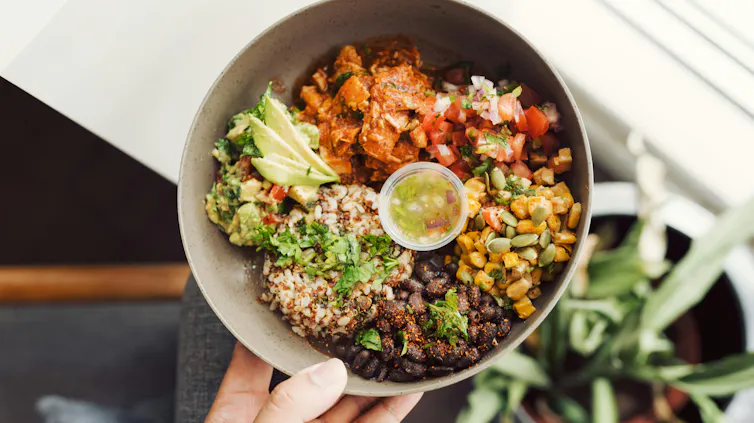
Loquellano/Pexels

1. Include different types of bran to boost your fibre intake

Different types of dietary fibre help improve bowel function through fermentation by gut microbes in the colon, or large bowel. This creates larger, softer bowel motions that then stimulate the colon to contract, leading to more regular bowel movements.

Add different types of dietary fibre – such as oat bran, wheat bran or psyllium husk – to breakfast cereal or add some into recipes that use white flour:

  • psyllium husk is high in soluble fibre. It dissolves in water forming viscous gel that binds to bile salts, which get excreted and your body is then not able to convert them into cholesterol. This helps lower blood cholesterol levels as well as with retaining water in your colon, making bowel motions softer. Soluble fibre also helps slow the digestive process, making you feel full and slows the normal rise in blood sugar levels after you eat
  • wheat bran is an insoluble fibre, also called roughage. It adds bulk to bowel motions, which helps keep your bowel function regular
  • oat bran contains beta-glucan, a soluble fibre, as well as some insoluble fibre.

Try keeping small containers topped up with the different fibres so you don’t forget to add them regularly to your breakfast.
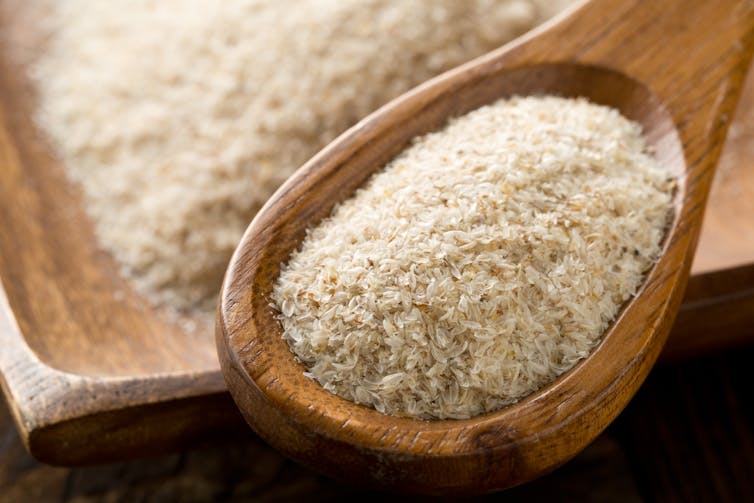
Heap of psyllium husk in wooden spoon
Psyllium husk is high in soluble fibre, which dissolves in water and slows digestion. Shawn Hempel/Shutterstock

2. Add a different canned bean to your shopping list

Dried beans are a type of legume. From baked beans to red kidney beans and chickpeas, the canned varieties are easy to use and inexpensive. Different colours and varieties have slightly different nutrient and phytonutrient profiles.

Canned beans are very high in total dietary fibre, including soluble fibre and resistant starch, a complex carbohydrate that resists digestion in the small intestine and then passes into the colon where it gets fermented.

The body digests and absorbs the nutrients in legumes slowly, contributing to their low glycemic index. So eating them makes you feel full.

Regularly eating more legumes lowers blood sugar levels, and total and LDL (bad) cholesterol.

Add legumes to dishes such as bolognese, curry, soups and salads (our No Money No Time website has some great recipes).

3. Try a different wholegrain, like buckwheat or 5-grain porridge

Wholegrain products contain all three layers of the grain. Both the inner germ layer and outer bran layer are rich in fibre, vitamins and minerals, while the inner endosperm contains mostly starch (think white flour).

Wholegrains include oats, corn (yes, popcorn too), rye, barley, buckwheat, quinoa, brown rice and foods made with wholegrains, like some breads and breakfast cereals such as rolled oats, muesli and five-grain porridge.

Wholegrains aren’t just breakfast and lunch foods. Dinner recipe ideas include tuna and veggie pasta bake, chicken quesadillas and buckwheat mushroom risotto.

4. Try a different vegetable or salad mix every week

A review of the relationship between plant-based diets and dying of any cause followed more than half a million people across 12 long-term studies.

It found people who ate the most plants had a lower risk of dying during the study and follow-up period than those who ate hardly any.
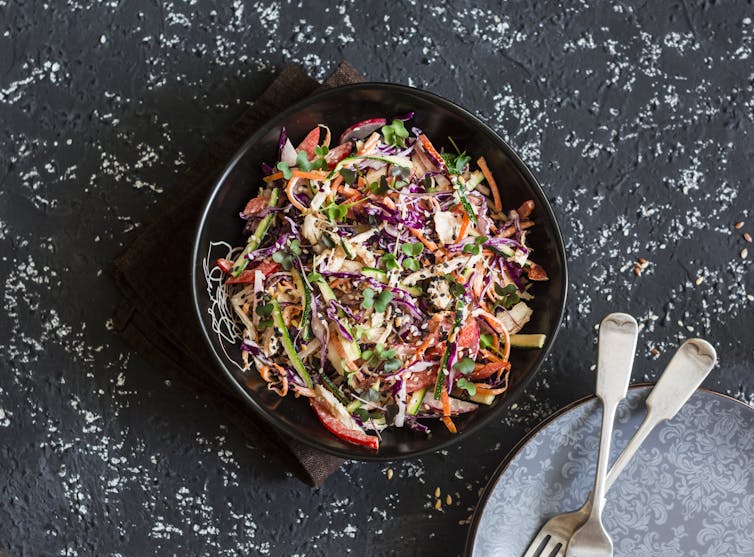
Rainbow slaw chicken
Add a rainbow coleslaw to your meal. Kiian Oksana/Shutterstock

Try adding a new or different vegetable or salad item to your weekly meals, such as rainbow coleslaw, canned beetroot, raw carrot, red onion, avocado or tomatoes.

Or try a stir-fry with bok choy, celery, capsicum, carrot, zucchini and herbs.

The more variety, the more colour, flavour and textures – not to mention phytonutrients.

5. Go nuts

Cashews, walnuts, almonds, macadamias, pecans and mixed nuts make a great snack.

(Peanuts are technically a legume because they grow in the ground but we count them as nuts because their nutrient profile is very similar to the tree nuts.)

You have to chew nuts well, which means your brain receives messages that you are eating and should expect to soon feel full.

Nuts are energy-dense, due to their high fat content. A matchbox portion size (30 grams) contains about 15 grams of fat, 5 grams of protein and 740 kilojoules.

While some people think you need to avoid nuts to lose weight, a review of energy restricted diets found people who ate nuts lost as much weight as those who didn’t.

My colleagues and I at the University of Newcastle have created a free Healthy Eating Quiz where you can check your diet quality score, see how healthy your usual eating patterns are and how your score compares to others. You can also get some great ideas to make your meals more interesting .

Clare Collins, Laureate Professor in Nutrition and Dietetics, University of Newcastle

This article is republished from The Conversation under a Creative Commons license. Read the original article.

Don’t Forget…

Did you arrive here from our newsletter? Don’t forget to return to the email to continue learning!

Learn to Age Gracefully

Join the 98k+ American women taking control of their health & aging with our 100% free (and fun!) daily emails:

  • This Book May Save Your Life – by Dr. Karan Rajan

    10almonds is reader-supported. We may, at no cost to you, receive a portion of sales if you purchase a product through a link in this article.

    The title is a bold sell, but the book does include a lot of information about what can go wrong in your body, and how those things can be avoided.

    What it’s not: a reiteration of Dr. Michael Greger’s “How Not To Die“. It’s not dense medical information, and it doesn’t cite papers at a rate of ten per page.

    What it is: an easy-reading tour guide of the human body and its many quirks and foibles, and how we can leverage those to our benefit. On which note…

    Hopefully, your insides will never see the light of day, but this author is a general surgeon and as such, is an experienced and well-qualified tour guide. Here, we learn about everything from the long and interesting journey through our gut, to the unique anatomical features and liabilities of the brain. From the bizarre oddities of the genitals, to things most people don’t know about the process of death.

    The style of the book is very casual, with lots of short sections (almost mini chapters-within-chapters, really) making for very light reading—and certainly enjoyable reading too, unless you are inclined to squeamishness.

    Bottom line: in honesty, the book is more informative than it is instructional, though it does contain the promised health tips too. With that in mind, it’s a very enjoyable and educational read, and we do recommend it.

    Click here to check out This Book May Save Your Life, and learn more about your own weird and wonderful body!

    Share This Post

  • Eat To Beat Chronic Fatigue!

    10almonds is reader-supported. We may, at no cost to you, receive a portion of sales if you purchase a product through a link in this article.

    How To Eat To Beat Chronic Fatigue

    Chronic fatigue is on the rise, and it can make life a living Hell. Days blur into one, and you try to take each day as it comes, but sometimes several days gang up on you at once.

    You probably know some lifestyle changes that might help—if only you had the energy to implement them.

    You’d like to eat well, but you need to…

    1. Buy the fresh produce (and take a little rest after)
    2. Put the groceries away (and take a little rest after)
    3. Wash the vegetables (and take a little rest after)
    4. Chop the things as necessary (and take a little rest after)
    5. Cook dinner (and take a little rest after)

    …and now you’re too exhausted to eat it.

    So, what can be done?

    First, avoid things that cause inflammation, as this is a major contributor to chronic fatigue. You might like our previous main feature:

    Keep Inflammation At Bay!

    Next up, really do stay hydrated. It’s less about quantity, and more about ubiquity. Hydrate often.

    Best is if you always have some (hydrating) drink on the go.

    Do experiment with your diet, and/but keep a food journal of what you eat and how you feel 30–60 minutes after eating it. Only make one change at a time, otherwise you won’t know which change made the difference.

    Notice what patterns emerge over time, and adjust your ingredients accordingly.

    Limit your caffeine intake. We know that sometimes it seems like the only way to get through the day, but you will always crash later, because it was only ever taxing your adrenal system (thus: making you more tired in the long run) and pulling the wool over the eyes of your adenosine receptors (blocking you from feeling how tired you are, but not actually reducing your body’s tiredness).

    Put simply, caffeine is the “payday loan” of energy.

    Eat more non-starchy vegetables, and enjoy healthy fats. Those healthy fats can come from nuts and seeds, avocado, or fish (not fried, though!).

    The non-starchy vegetables will boost your vitamins and fiber while being easy on your beleaguered metabolism, while the healthy fats will perk up your energy levels without spiking insulin like sugars would.

    Pay the fatigue tax up front. What this means is… Instead of throwing away vegetables that didn’t get used because it would take too much effort and you just need an easier dinner today, buy ready-chopped vegetables, for example.

    And if you buy vegetables frozen, they’re also often not only cheaper, but also (counterintuitively) contain more nutrients.

    A note of distinction:

    Many more people have chronic fatigue (the symptom: being exhausted all the time) than have chronic fatigue syndrome (the illness: myalgic encephalomyelitis).

    This is because fatigue can be a symptom of many, many other conditions, and can be heavily influenced by lifestyle factors too.

    A lot of the advice for dealing with chronic fatigue is often the same in both cases, but some will be different, because for example:

    • If your fatigue is from some other condition, that condition probably impacts what lifestyle factors you are (and are not) able to change, too
    • If your fatigue is from lifestyle factors, that hopefully means you can change those and enjoy less fatigue…
      • But if it’s not from lifestyle factors, as in ME/CFS, then advice to “exercise more” etc is not going to help so much.

    There are ways to know the difference though:

    Check out: Do You Have Chronic Fatigue Syndrome?

    Share This Post

  • Is black mould really as bad for us as we think? A toxicologist explains

    10almonds is reader-supported. We may, at no cost to you, receive a portion of sales if you purchase a product through a link in this article.

    Mould in houses is unsightly and may cause unpleasant odours. More important though, mould has been linked to a range of health effects – especially triggering asthma.

    However, is mould exposure linked to a serious lung disease in children, unrelated to asthma? As we’ll see, this link may not be real, or if it is, it’s so rare to not be a meaningful risk. Yet we still hear mould in damp homes described as “toxic”.

    Indeed, mouldy homes can harm people’s health, but not necessarily how you might think.

    Peeradontax/Shutterstock

    What is mould?

    Mould is the general term for a variety of fungi. The mould that people have focused on in damp homes is “black mould”. This forms unsightly black patches on walls and other parts of damp-affected buildings.

    Black mould is not a single fungus. But when people talk about black mould, they generally mean the fungus Stachybotrys chartarum or S. chartarum for short. It’s one of experts’ top ten feared fungi.

    The focus on this species comes from a report in the 1990s on cases of haemorrhagic lung disease in a number of infants. This is a rare disease where blood leaks into the lungs, and can be fatal. The report suggested chemicals known as mycotoxins associated with this species of fungus were responsible for the outbreak.

    What are mycotoxins?

    A variety of fungi produce mycotoxins to defend themselves, among other reasons.

    Hundreds of different chemicals are listed as myocytoxins. These include ones in poisonous mushrooms, and ones associated with the soil fungi Aspergillus flavus and A. parasiticus.

    The fungus typically associated with black mould S. chartarum can produce several mycotoxins. These include roridin, which inhibits protein synthesis in humans and animals, and satratoxins, which have numerous toxic effects including bleeding in the lungs.

    While the satratoxins, in particular, were mentioned in the report from the 90s in children, there are some problems when we look at the evidence.

    The amount of mycotoxins S. chartarum makes can vary considerably. Even if significant amounts of mycotoxin are present, getting them into the body in the required amount to cause damage is another thing.

    Inhaling spores in contaminated (mouldy) homes is the most probable way mycotoxins enter the body. For instance, we know mycotoxins can be found in S. chartarum spores. We also know direct injection of high concentrations of mycotoxin-bearing spores directly in the noses of mice can cause some lung bleeding.

    Stachybotrys chartarum mould
    Stachybotrys chartarum mycotoxins have been blamed for lung issues after exposure to black mould. Kateryna Kon/Shutterstock

    But just because inhaling spores is the probable route of contamination doesn’t mean this is very likely.

    That’s because S. chartarum doesn’t release a lot of spores. Its spores are typically embedded in a slimy mass and it rarely produces the spore densities needed to replicate the animal studies.

    The original reports suggesting the US infants who were diagnosed with haemorrhagic lung disease were exposed to toxic levels of mycotoxins were also flawed.

    Among other issues, the concentrations of mould spores was calculated incorrectly. Subsequent correction for these issues resulted in the association between S. chartarum and this disease cluster basically disappearing.

    The American Academy of Asthma Allergy and Immunology states while there is a clear, well-established relationship between damp indoor spaces and detrimental health effects, there is no good evidence black mould mycotoxins are involved.

    But mould can cause allergies

    Moulds can affect human health in ways unrelated to mycotoxins, typically through allergic reactions. Moulds including black moulds can trigger or worsen asthma attacks in people with mould allergies.

    Some rarer but severe reactions can include allergic fungal sinusitis, allergic bronchopulmonary aspergillosis and rarer still, hypersensitivity pneumonitis.

    These can typically be controlled by removing the mould (or removing the person from the source of mould).

    People with impaired immune systems (such as people taking immune-suppressant medications) may also be prone to mould infections.

    In a nutshell

    There is sufficient evidence that household mould is associated with respiratory issues attributable to their allergic effects.

    However, there is no strong evidence mycotoxins from household mould – and in particular black mould – are associated with substantial health issues.

    Ian Musgrave, Senior lecturer in Pharmacology, University of Adelaide

    This article is republished from The Conversation under a Creative Commons license. Read the original article.

    Share This Post

  • Can apps and digital resources support your child with autism or ADHD?

    10almonds is reader-supported. We may, at no cost to you, receive a portion of sales if you purchase a product through a link in this article.

    Neurodevelopmental conditions such as attention deficit hyperactivity disorder (ADHD) and autism affect about one in ten children. These conditions impact development, behaviour and wellbeing.

    But children with these conditions and their caregivers often can’t get the support they need. Families report difficulties accessing health-care providers and experience long wait lists to receive care.

    Digital tools, such as apps and websites, are often viewed as a solution to these gaps. With a single click or a download, families might be able to access information to support their child.

    There are lots of digital tools available, but it’s hard to know what is and isn’t useful. Our new study evaluated freely available digital resources for child neurodevelopment and mental health to understand their quality and evidence base.

    We found many resources were functional and engaging. However, resources often lacked evidence for the information provided and the claimed positive impact on children and families.

    This is a common problem in the digital resource field, where the high expectations and claims of impact from digital tools to change health care have not yet been realised.

    Fabio Principe/Shutterstock

    What type of resources?

    Our study identified 3,435 separate resources, of which 112 (43 apps and 69 websites) met our criteria for review. These resources all claimed to provide information or supports for child neurodevelopment, mental health or wellbeing.

    Resources had to be freely available, in English and have actionable information for children and families.

    The most common focus was on autism, representing 17% of all resources. Resources suggested they provided strategies to promote speech, language and social development, and to support challenging behaviours.

    Other common areas included language and communication (14%), and ADHD (10%).

    Resources had various purposes, including journalling and providing advice, scheduling support, and delivering activities and strategies for parents. Resources delivered information interactively, with some apps organising content into structured modules.

    Resources also provided options for alternative and assistive communication for people with language or communication challenges.

    Most apps were functional and accessible

    Our first question was about how engaging and accessible the information was. Resources that are hard to use aren’t used frequently, regardless of the information quality.

    We evaluated aesthetics, including whether digital tools were easy to use and navigate, stylistically consistent, with clean and appealing graphics for users.

    Most resources were rated as highly engaging, with strong accessibility and functionality.

    Girl plays on laptop
    Most apps and websites we evaluated were engaging. jamesteohart/Shutterstock

    But many lacked quality information

    We ranked resources on various features from 1 (inadequate) to 5 (excellent), with a ranking of 3 considered acceptable. These ratings looked at how credible the resource was and whether there was evidence supporting it.

    Despite their functionality, 37% of reviewed apps did not meet the minimum acceptable standards for information quality. This means many apps could not be recommended. Most websites fared better than apps.

    There also wasn’t a lot of scientific evidence to suggest using either apps or digital resources actually helped families. Studies show long-term engagement with digital tools is rare, and downloads don’t correspond to frequent usage or benefits.

    Digital tools are often viewed as a panacea to health-care gaps, but the evidence is yet to show they fill such gaps. Digital health is a fast-moving field and resources are often made available before they have been properly evaluated.

    What should you look for in digital resources?

    We found the highest quality resources were developed in collaboration with institutions, such as health, university or government groups.

    One highly rated resource was the Raising Children’s Network and the associated app, Raising Healthy Minds. These are co-developed with a university and hospital, and by people with appropriate qualifications.

    This resource provides information to support children’s overall health, development and wellbeing, with dedicated sections addressing neurodevelopmental needs and concerns.

    The Raising Children Network provides resources for child health, including neurodevelopmental needs. Raising Children Network screenshot

    Our research shows parents can assess whether digital resources are high quality by checking they are:

    • factually correct. Look for where the app or resource is getting its information. Does the author have the qualifications and training to provide the information? Are they a registered health expert who is accountable to a regulatory body (such as AHPRA, the Australian Health Practitioners Regulation Agency) for providing information that does not cause harm?
    • consistent across multiple credible sources, such as health institutions.
    • linked to supporting information. Look for reliable links to reputable institutions. Links to peer-reviewed scientific journals are often helpful as those articles will also usually describe the limitations of the research presented.
    • up-to-date. Apps should be frequently updated. For websites, dates of update are usually found on the homepage or at the bottom of individual pages.
    Man concentrates on computer, holding sheet of paper
    Check when information was last updated. fizkes/Shutterstock

    Beware of red flags

    Some things to watch out for are:

    • testimonials and anecdotes without evidence and scientific links to back the anecdotes up. If it sounds too good to be true, it probably is.
    • no information provided about conflicts of interest. Organisations gain when you click on their links or take their advice (financial, reputation and brand development). Think about what they gain when you use their information to help keep a balanced perspective.

    Remember, the app’s star rating doesn’t mean it will contain factual information from a reliable source or be helpful for you and your child.

    The role of digital tools

    Digital tools won’t usually replace a health professional, but they can support care in many different ways. They may be used to help to educate and prepare for meetings, and to collaborate with health providers.

    They may also be used to collect information about daily needs. Studies show reporting on sleep in children can be notoriously difficult, for example. But tracking sleep behaviour with actigraphy, where movement and activity patterns are measured using a wearable device, can provide information to support clinical care. With the promise of artificial intelligence, there will also be new opportunities to support daily living.

    Our findings reflect a broader problem for digital health, however. Much investment is often made in developing products to drive use, with spurious claims of health benefits.

    What’s needed is a system that prioritises the funding, implementation and evaluation of tools to demonstrate benefits for families. Only then may we realise the potential of digital tools to benefit those who use them.

    Kelsie Boulton, Senior Research Fellow in Child Neurodevelopment, Brain and Mind Centre, University of Sydney and Adam Guastella, Professor and Clinical Psychologist, Michael Crouch Chair in Child and Youth Mental Health, University of Sydney

    This article is republished from The Conversation under a Creative Commons license. Read the original article.

    Don’t Forget…

    Did you arrive here from our newsletter? Don’t forget to return to the email to continue learning!

    Learn to Age Gracefully

    Join the 98k+ American women taking control of their health & aging with our 100% free (and fun!) daily emails:

  • Mango vs Starfruit – Which is Healthier?

    10almonds is reader-supported. We may, at no cost to you, receive a portion of sales if you purchase a product through a link in this article.

    Our Verdict

    When comparing mango to starfruit, we picked the mango.

    Why?

    Both have their merits!

    In terms of macros, mango has 2x the carbs, while starfruit has 2x the fiber; we call that a win for starfruit in this category.

    In the category of vitamins, however, mango has a lot more of vitamins A, B1, B2, B3, B6, B7, B9, C, E, and K, while starfruit has more vitamin B5, that is, the vitamin that’s in nearly all foods and in which it’s almost impossible to be deficient unless literally starving to death. In any case, an overwhelming win for mango in this round.

    Looking at minerals, mango has more calcium, iron, manganese, phosphorus, and potassium, while starfruit has more copper and zinc; another win for mangos.

    Adding up the sections makes for a clear overall win for mangos, but by all means enjoy either or both, as diversity is best!

    Want to learn more?

    You might like:

    What’s Your Plant Diversity Score?

    Enjoy!

    Don’t Forget…

    Did you arrive here from our newsletter? Don’t forget to return to the email to continue learning!

    Learn to Age Gracefully

    Join the 98k+ American women taking control of their health & aging with our 100% free (and fun!) daily emails:

  • 6 Signs Of Stroke (One Month In Advance)

    10almonds is reader-supported. We may, at no cost to you, receive a portion of sales if you purchase a product through a link in this article.

    Most people can recognise the signs of a stroke when it’s just happened, but knowing the signs that appear a month beforehand would be very useful. That’s what this video’s about!

    The Warning Signs

    • Persistently elevated blood pressure: one more reason to have an at-home testing kit and use it regularly! Or a smartwatch or similar that’ll do it for you. The reason this is relevant is because high blood pressure can lead to damaging blood vessels, causing a stroke.
    • Excessive fatigue: of course, this one can have many possible causes, but one of them is a “transient ischemic attack” (TIA), which is essentially a micro-stroke, and can be a precursor to a more severe stroke. So, we’re not doing the Google MD thing here of saying “if this, then that”, but we are saying: paying attention to the overall patterns can be very useful. Rather than fretting unduly about a symptom in isolation, see how it fits into the big picture.
    • Vision problems: especially if sudden-onset with no obvious alternative cause can be a sign of neural damage, and may indicate a stroke on the way.
    • Speech problems: if there’s not an obvious alternative explanation (e.g. you’ve just finished your third martini, or was this the fourth?), then speech problems (e.g. slurred speech, trouble forming sentences, etc) are a very worrying indicator and should be treated as a medical emergency.
    • Neurological problems: a bit of a catch-all category, but memory issues, loss of balance, nausea without an obvious alternative cause, are all things that should get checked out immediately just in case.
    • Numbness or weakness in the extremities: especially if on one side of the body only, is often caused by the TIA we mentioned earlier. If it’s both sides, then peripheral neuropathy may be the culprit, but having a neurologist take a look at it is a good idea either way.
    https://www.youtube.com/watch?v=z0_yZkz2iXY

    Click Here If The Embedded Video Doesn’t Load Automatically!

    Want to learn more?

    You might also like to read:

    Two Things You Can Do To Improve Stroke Survival Chances

    Take care!

    Don’t Forget…

    Did you arrive here from our newsletter? Don’t forget to return to the email to continue learning!

    Learn to Age Gracefully

    Join the 98k+ American women taking control of their health & aging with our 100% free (and fun!) daily emails: