
What is gingivitis? How do I know if I haveĀ it?

10almonds is reader-supported. We may, at no cost to you, receive a portion of sales if you purchase a product through a link in this article.

Do your gums look red and often bleed when you brush them, but they’re not painful? If so, you could have the gum disease gingivitis.

Gingivitis is one of the most common inflammatory oral diseases. It affects an estimated 50–100% of adults and children at some point in their lives.

Luckily, gingivitis can be treated if caught in time. However, if left untreated, it can lead to more severe disease that could mean losing your teeth.

Here are some tell-tale signs of gingivitis and how you can work with a dental professional to treat it.
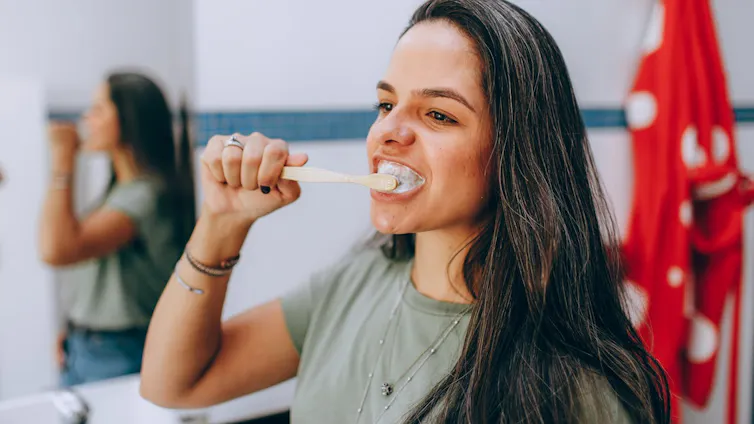
Helena Lopes/Pexels

What does gingivitis look like?

The term gingivitis tells us what to expect. It’s when the gums (the gingiva) are inflamed (-itis). It’s essentially the body’s immune response to microbes in the sticky biofilm or plaque on the tooth surface.

You might notice subtle redness of the gums, close to where they meet the teeth, or of the part of the gums between the teeth. You might notice mild-to-moderate swelling of the gums. Or your gums might bleed when you brush or floss.

It can affect the gums close to a few or multiple teeth. Sometimes, it can lead to bad breath (halitosis).

Gingivitis generally develops over time. And you’ll see the most common form starting to develop if you haven’t brushed your teeth well (and have not removed the plaque) for a few days. Gingivitis is painless to start with.

But if it’s not treated it may lead to a more severe form of disease called periodontitis. This is when you also lose some of the bone that holds teeth in place. If periodontitis is left untreated, your teeth loosen and may fall out.

Close-up of mouth, showing teeth and gums.
See how the gums are red and inflamed close to where they meet the bottom front teeth. This could be gingivitis. Ozkan Guner/Unsplash

How did I get it?

Several factors increase the chances and severity of gingivitis, beyond poor oral hygiene.

For instance, changes in sex hormones during puberty, the menstrual cycle, pregnancy and oral contraceptive use can increase the severity of gingivitis. This is due to increased blood flow or a change in plaque’s microbial composition.

Other conditions that can worsen gingivitis include diabetes, leukaemia, if you don’t produce much saliva, and certain medications.

An infectious disease could also be behind gingivitis. Bacterial infections (such as streptococcal disease, syphilis and tuberculosis); viral infections (herpes, human papillomavirus, hand-foot-and-mouth disease); and fungal infections (candida thrush) can all involve gingivitis. But unlike the more common type, gingivitis related to infectious disease can also come with fever and enlarged lymph nodes.

A new growth – whether benign (non-cancerous), precancerous (could develop into cancer) or cancer – can present as localised lesions with inflamed gums.

Finally, gingivitis can be traumatic. That is, if you brush your teeth too hard, use cocaine or other drugs, or burn your mouth while eating or drinking hot food and drink, you might see acute inflammation of the gums.

Can I manage it at home?

Only to a limited extent. If you get in at the early stage (one to three days of symptoms), brushing your teeth well will help remove plaque, and so some of the microbes that cause the inflammation.

But if you leave it any longer and the plaque begins to calcify, a dentist or a dental hygienist will need to remove these hardened, rough, surface deposits known as calculus.

They use tools called ultrasonic scalers or manual scalers to remove the calculus and overlying plaque. After this treatment, signs of gingivitis usually resolve.

However, if there are underlying health issues that contribute to gingivitis, they will need to be addressed to see any improvement.

For instance, this could be treating an infection before, during or after scaling. You might also be prescribed a special mouthwash to help healing or relieve symptoms.

If you have a growth, or are diagnosed with periodontitis, you’ll be referred for specialist treatment.

Can mouthwash help?

Mouthwash often helps reduce the bacterial load in plaque. But you can’t rely on it as your only treatment. It is, however, often recommended after your gingivitis has been treated professionally, during the healing phase.

Your dental health professional may recommend chlorhexidine mouthwash twice daily for up to two weeks. You can buy this in the supermarket or pharmacy.

But using mouthwash long term to manage gingivitis (or for other reasons) is not advised. Prolonged use of chlorhexidine mouthwash can lead to side effects such as staining of the teeth and an altered sense of taste.

Some mouthwash also contains a small percentage of alcohol, which might not be the best option for people with a dry mouth as alcohol can be dehydrating. You might also want to avoid these in children, who might not like the burning sensation. There are alcohol-free versions, which are just as effective.

How do I prevent gingivitis returning?

You can prevent gingivitis, and most oral diseases, by brushing your teeth well twice a day and flossing once a day.

Regular dental check-ups also give dental professionals a perfect opportunity to detect and manage most gingivitis (and tooth decay) before it progresses.

Dileep Sharma, Professor and Head of Discipline – Oral Health, University of Newcastle

This article is republished from The Conversation under a Creative Commons license. Read the original article.

Don’t Forget…

Did you arrive here from our newsletter? Don’t forget to return to the email to continue learning!
Learn to Age Gracefully

Join the 98k+ American women taking control of their health & aging with our 100% free (and fun!) daily emails:

  • Next Level – by Dr. Stacy Sims

    10almonds is reader-supported. We may, at no cost to you, receive a portion of sales if you purchase a product through a link in this article.

    First of all: if you are a man, you will probably get little to nothing out of this book on a personal level (you may, however, find it of interest anyway if you have women in your life), as it is heavily tailored towards women.

    We previously reviewed this author’s ā€œROARā€, which is about boosting athletic performance with female hormones in mind. This time, the focus is on thriving through menopause (including: postmenopause) and going from strength to strength.

    Dr. Sims uses the first few chapters to explain the menopause in more detail than most people know it, before launching into the main part of the book, which is the ā€œwhat to doā€ section.

    Here, we learn about HRT, adaptogens, and other interventions, the respective roles of cardio and resistance training, the undervalued yet critical importance of gut health, how to make sure your body gets all of what it needs in terms of nutrition when what it needs is changing, the dos and don’t of bone health when it comes to later-life athleticism, and a lot of mythbusting with regard to supplements (for some and against others), and plenty more besides.

    The style is accessible pop-science, with various facts, statistics, charts, and the like peppered throughout. On which note, there are no citations while reading, but there is a bibliography at the back, arranged on a chapter-by-chapter basis.

    Bottom line: if you find even just 10% of this book’s advices new and useful, then buying and reading this book will have been worthwhile and will have made a substantive difference (specifically: improvements) to your life.

    Click here to check out Next Level, and take your health to the next level!

    Share This Post

  • Miss Diagnosis: Anxiety, ADHD, & Women

    10almonds is reader-supported. We may, at no cost to you, receive a portion of sales if you purchase a product through a link in this article.

    It’s Q&A Day at 10almonds!

    Have a question or a request? We love to hear from you!

    In cases where we’ve already covered something, we might link to what we wrote before, but will always be happy to revisit any of our topics again in the future too—there’s always more to say!

    As ever: if the question/request can be answered briefly, we’ll do it here in our Q&A Thursday edition. If not, we’ll make a main feature of it shortly afterwards!

    So, no question/request too big or small

    āWhy is ADHD so often misdiagnosed as anxiety in women?āž

    A great question! A short and slightly flippant answer could be ā€œit’s the medical misogynyā€:

    Women and Minorities Bear the Brunt of Medical Misdiagnosis

    …and if you’d like to learn more in-depth about this, we recommend this excellent book:

    Unwell Women: Misdiagnosis and Myth in a Man-Made World – by Dr. Elinor Cleghorn ← you can read our review here

    However, in this case there is more going on too!

    Part of this is because ADHD is, like many psychiatric issues, a collection of symptoms that may or may not all always be present. Since clinical definitions are decided by clinicians, rather than some special natural law of the universe, sometimes this results in ā€œseveral small conditions in a trenchcoatā€, and if one symptom is or isn’t present, it can make things look quite different:

    What’s The Difference Between ADD and ADHD?

    There are two things at hand here: as in the above example, there’s the presence or absence of hyperactivity, but also, that ā€œattention deficitā€?

    It’s often not really a deficit of attention, so much as the attention is going somewhere else—an example of naming psychiatric disorders for how they affect other people, rather than the person in question.

    Sidenote: personality disorders really get the worst of this!

    ā€œYou have a deep insecurity about never being good enough, and you constantly mess up in your attempt to overcompensate? You may have Evil Bastard Disorder!ā€

    ā€œYou have a crippling fear of abandonment and that you are fundamentally unloveable, so you do all you can to try to keep people close? You must have Manipulative Bitch Disorder!ā€

    etc

    See also: Why Everyone You Don’t Like Is A Narcissist

    In the case of ADHD and anxiety and women, a lot of this comes down to how the redirection of focus is perceived:

    āFor some time, it has been held that women with ADHD are more likely to internalize symptoms and become anxious and depressed and to suffer emotional dysregulationāž

    ~ Dr. Patricia Quinn

    Source: Attention-deficit/hyperactivity disorder and its comorbidities in women and girls: An evolving picture

    This internalization of symptoms, vs the externalization more generally perceived in boys and men, is more likely to be seen as anxiety.

    Double standards also abound for social reasons, e.g:

    • He is someone who thinks ten steps ahead and covers all bases
    • She is anxious and indecisive and unable to settle on one outcome

    Here’s a very good overview of how this double-standard makes its way into diagnostic processes, along with other built-in biases:

    Miss. Diagnosis: A Systematic Review of ADHD in Adult Women

    Want to learn more?

    We’ve reviewed quite a few books about ADHD, but if we had to pick one to spotlight, we’d recommend this one:

    The Silent Struggle: Taking Charge of ADHD in Adults – by L. William Ross-Child, MLC

    Enjoy! And while we have your attention… Would you like this section to be bigger? If so, send us more questions!

    Share This Post

  • Fiber Without The Fiber?

    10almonds is reader-supported. We may, at no cost to you, receive a portion of sales if you purchase a product through a link in this article.

    “Eat more fiber!” everyone says. Including us, to be fair, because it’s quite correct—most Americans do not eat nearly enough:

    *This one is also a great read to understand more about the ā€œwhyā€ of fiber

    Meanwhile, the average American gets 16g of fiber per day.

    So if you’d like to improve your own score on that front, then check out our main feature on that topic, here: Level-Up Your Fiber Intake! (Without Difficulty Or Discomfort)

    However…

    More than one way to get things moving

    When it comes to the specific problem of constipation, there are some foods that work a lot better than just fiber.

    Researchers (Dr. Eirini Dimidi et al.) have found that kiwi, rye bread, and mineral-rich water are the most effective dietary options for chronic constipation relief, outperforming traditional ā€œeat more fiberā€ advice.

    Of course, two out of three of those do contain fiber, but on a gram-for-gram basis, they performed significantly better than a high fiber diet without those dietary items, for constipation relief.

    Some supplements were also found to help, namely psyllium, certain probiotics, and magnesium, which were also found to help manage symptoms, but again not nearly as much as the aforementioned top-scoring items.

    If you do want to do those latter three though, since they’re very recommendable in any case and it’s not like this is an “either/or” choice, then to make the most of them, see:

    Meanwhile, they also found that general high-fiber diets and senna supplements (commonly taken for laxative effect) lacked strong evidence for effectiveness in chronic constipation.

    This information seems quite reliable, since Dr. Dimidi and her team reviewed 75 clinical trials resulting in 59 recommendations, and these recommendations were further vetted by an expert panel including dietitians, a nutritionist, a gastroenterologist, a gut physiologist, and a general practitioner.

    To see this in full, you can find the full paper here: British Dietetic Association Guidelines for the Dietary Management of Chronic Constipation in Adults

    Do still eat plenty of fiber, though

    Dr. Dimidi herself noted that a high-fiber diet is still very important for overall health, even if it doesn’t seem to do as much as one might think with regard to constipation.

    We at 10almonds have also covered why fiber is a critical component in avoiding metabolic syndrome (and especially diabetes), here:

    From Apples to Bees, and High-Fructose Cs: Which Sugars Are Healthier, And Which Are Just The Same? ← while the title talks about sugar, the article talks about this and sugar’s counterpart for these purposes, fiber.

    Take care!

    Share This Post

  • Green Tea Allergies and Capsules

    10almonds is reader-supported. We may, at no cost to you, receive a portion of sales if you purchase a product through a link in this article.

    It’s Q&A Day at 10almonds!

    Have a question or a request? You can always hit ā€œreplyā€ to any of our emails, or use the feedback widget at the bottom!

    In cases where we’ve already covered something, we might link to what we wrote before, but will always be happy to revisit any of our topics again in the future too—there’s always more to say!

    As ever: if the question/request can be answered briefly, we’ll do it here in our Q&A Thursday edition. If not, we’ll make a main feature of it shortly afterwards!

    So, no question/request too big or small

    āHey Sheila – As always, your articles are superb !! So, I have a topic that I’d love you guys to discuss: green tea. I used to try + drink it years ago but I always got an allergic reaction to it. So the question I’d like answered is: Will I still get the same allergic reaction if I take the capsules ? Also, because it’s caffeinated, will taking it interfere with iron pills, other vitamins + meds ? I read that the health benefits of the decaffeinated tea/capsules are not as great as the caffeinated. Any info would be greatly appreciated !! Thanks much !!āž

    Hi! I’m not Sheila, but I’ll answer this one in the first person as I’ve had a similar issue:

    I found long ago that taking any kind of tea (not herbal infusions, but true teas, e.g. green tea, black tea, red tea, etc) on an empty stomach made me want to throw up. The feeling would subside within about half an hour, but I learned it was far better to circumvent it by just not taking tea on an empty stomach.

    However! I take an l-theanine supplement when I wake up, to complement my morning coffee, and have never had a problem with that. In all likelihood, the issue is neither caffeine (or else it’d happen for coffee or other sources of caffeine) nor theanine (or it’d happen for theanine supplements), but rather, the tannins in tea.

    Of course, my physiology is not your physiology, and this ā€œshouldn’tā€ be happening to either of us in the first place, so it’s not something there’s a lot of scientific literature about, and we just have to figure out what works for us.

    This last Monday I wrote (inspired in part by your query) about l-theanine supplementation, and how it doesn’t require caffeine to unlock its benefits after all, by the way. So that’s that part in order.

    I can’t speak for interactions with your other supplements or medications without knowing what they are, but I’m not aware of any known issue, beyond that l-theanine will tend to give a gentler curve to the expression of some neurotransmitters. So, if for example you’re talking anything that affects that (e.g. antidepressants, antipsychotics, ADHD meds, sleepy/wakefulness meds, etc) then checking with your doctor is best.

    Don’t Forget…

    Did you arrive here from our newsletter? Don’t forget to return to the email to continue learning!

    Learn to Age Gracefully

    Join the 98k+ American women taking control of their health & aging with our 100% free (and fun!) daily emails:

  • Six Ways To Eat For Healthier Skin

    10almonds is reader-supported. We may, at no cost to you, receive a portion of sales if you purchase a product through a link in this article.

    Sadia Badiei, the nutritionist-chef of “Pick Up Limes” fame, has advice:

    More than skin-deep:

    We’ll not keep them a mystery; here are the six points of focus:

    1. Collagen and skin elasticity

    Collagen is the structural protein that provides firmness and elasticity to the skin, but its production decreases with age, resulting in about a 1% annual loss starting at age 20. To support collagen, a diet rich in protein is essential, including foods like beans, lentils, tofu, tempeh, nuts, and seeds. They can’t do their work alone though; vitamins C and E play a critical role in collagen production and repair, protecting against damage from sun exposure, pollution, and free radicals. Vitamin E can be found in almonds, sunflower seeds, leafy greens, peanuts, and avocados, while vitamin C is abundant in citrus fruits, bell peppers, and broccoli.

    2. Skin healing and zinc

    Zinc is critical for wound healing and reducing inflammation, making it particularly helpful in managing skin conditions such as acne, eczema, psoriasis, and rosacea. Great dietary sources of zinc include nutritional yeast, pumpkin, sesame, and hemp seeds, as well as legumes and whole grains. However, zinc absorption can be hindered by phytate levels in some foods. Soaking, sprouting, or fermenting foods where possible can correct for that and improve zinc absorption.

    3. Dry skin and hydration

    Dry skin can result from many things, including dry air, hot water, abrasive soaps, and certain medications. While moisturizers provide external hydration, dietary omega-3 fats are essential for improving the skin’s barrier function, helping it retain moisture. Plant-based sources of omega-3s include walnuts, hemp seeds, chia seeds, flax seeds, and algae-based supplements. Staying adequately hydrated also supports overall health of course (everything runs on water in one way or another, after all), which indirectly benefits skin hydration, although drinking additional water only helps if dehydration is present.

    4. Sebum regulation

    Sebum, an oily substance that lubricates the skin, can cause issues like acne and blackheads when overproduced. Hormonal fluctuations and diet both influence sebum levels (in either direction). High glycemic index foods, such as sweetened beverages, refined grains, and sugary snacks, can lead to spikes in insulin, which in turn stimulates excess sebum production. In contrast, low glycemic index foods like vegetables, whole grains, tofu, nuts, and seeds regulate blood sugar and help manage sebum production, promoting clearer skin without an excess or a shortage of sebum.

    5. Gut health and skin

    The gut-skin connection means that imbalances in gut bacteria can contribute to skin issues like acne, eczema, and psoriasis. Supporting gut health involves increasing the diversity of beneficial bacteria through probiotic-rich foods. Fermented options like plant-based yogurts, kimchi, miso, sauerkraut, and kombucha not only improve gut microbiome health but also positively impact skin health by reducing inflammation and improving overall skin conditions.

    6. Inflammation and skin health

    Chronic inflammation is associated with so many health issues, and when it comes to skin, that includes acne, rosacea, and even wrinkles. Anti-inflammatory foods, especially those rich in antioxidants, can mitigate these effects and improve skin elasticity, smoothness, and color. Diets centered around fruits, vegetables, and other plant-based foods provide the necessary nutrients to combat inflammation, showcasing the significant role of nutrition in promoting radiant, healthy skin.

    For more on each of these, enjoy:

    Click Here If The Embedded Video Doesn’t Load Automatically!

    Want to learn more?

    You might also like to read:

    Undo The Sun’s Damage To Your Skin

    Take care!

    Don’t Forget…

    Did you arrive here from our newsletter? Don’t forget to return to the email to continue learning!

    Learn to Age Gracefully

    Join the 98k+ American women taking control of their health & aging with our 100% free (and fun!) daily emails:

  • The Household Cleaner That Triples Liver Disease Risk

    10almonds is reader-supported. We may, at no cost to you, receive a portion of sales if you purchase a product through a link in this article.

    Our liver is a remarkable organ that can regenerate itself better than any other—even better than our skin!

    Unlike our skin, our liver can regrow itself if 49% of it is removed (if you tried that with your skin, not only would it not regrow itself, but also you’d be dead very quickly unless in exceptional circumstances).

    The liver’s regenerative ability helps defend against MASLD (metabolic dysfunction–associated steatotic liver disease*), formerly known as NAFLD (non-alcoholic fatty liver disease).

    *If you noticed that the new initialism doesn’t add up to the letters in name, yes, we noticed that too, and no, we can’t explain it either

    You can read about how the liver performs this trick and others, here: How To Unfatty A Fatty Liver

    But, what’s to blame when someone gets liver disease despite not drinking alcohol or being subject to the other common risk factors for such?

    Scientists have found a newly-identified culprit for previously unexplained instances of liver disease:

    All about tetrachloroethylene (PCE)

    Researchers (Dr. Jennifer Dodge et al.), have found that people exposed to PCE were three times more likely to develop significant liver fibrosis, even without alcohol use, excess fat, or viral infection.

    In other words: in situations where none of the usual culprits are to blame.

    It gets worse: this risk rose fivefold for every one-nanogram-per-millilitre increase of PCE in the bloodstream, showing a clear dose–response relationship.

    Quick mathematical note: to be clear, one nanogram is one billionth of a gram. This is very very little.

    You may be wondering: how serious is this fibrosis, compared to MASLD?

    And the answer is: the PCE-induced hepatic fibrosis (scar tissue buildup in the liver) can progress to cancer and/or failure and death if undetected.

    About that cancer risk: PCE is believed to be a carcinogen, and is already tied to bladder cancer, multiple myeloma, non-Hodgkin lymphoma, and liver cancer. We say “believed to be”, because the causality isn’t technically proven, but it has to be said that the numbers look rather damning.

    Per the research conducted by Dr. Dodge and her team, about 7.4% of US adults have detectable PCE; and whereas poverty is a risk factor for most diseases, in this case, higher-income groups and dry-cleaning workers had greater exposure. This is in part because the chemical evaporates from recently dry-cleaned clothes.

    It’s also present in many spot-removers and metal polishes.

    You can find the paper itself, here: Tetrachloroethylene Is Associated With Presence of Significant Liver Fibrosis: A National Cross-Sectional Study in US Adults

    Want to look after your liver instead?

    Consider: N-Acetyl Cysteine For The Liver & More

    Want to learn more?

    For a much deeper dive into this broader topic, you might like this book that we reviewed a little while back:

    Healthy Living in a Contaminated World – by Dr. Donald Hoernschemeyer

    Take care!

    Don’t Forget…

    Did you arrive here from our newsletter? Don’t forget to return to the email to continue learning!

    Learn to Age Gracefully

    Join the 98k+ American women taking control of their health & aging with our 100% free (and fun!) daily emails: