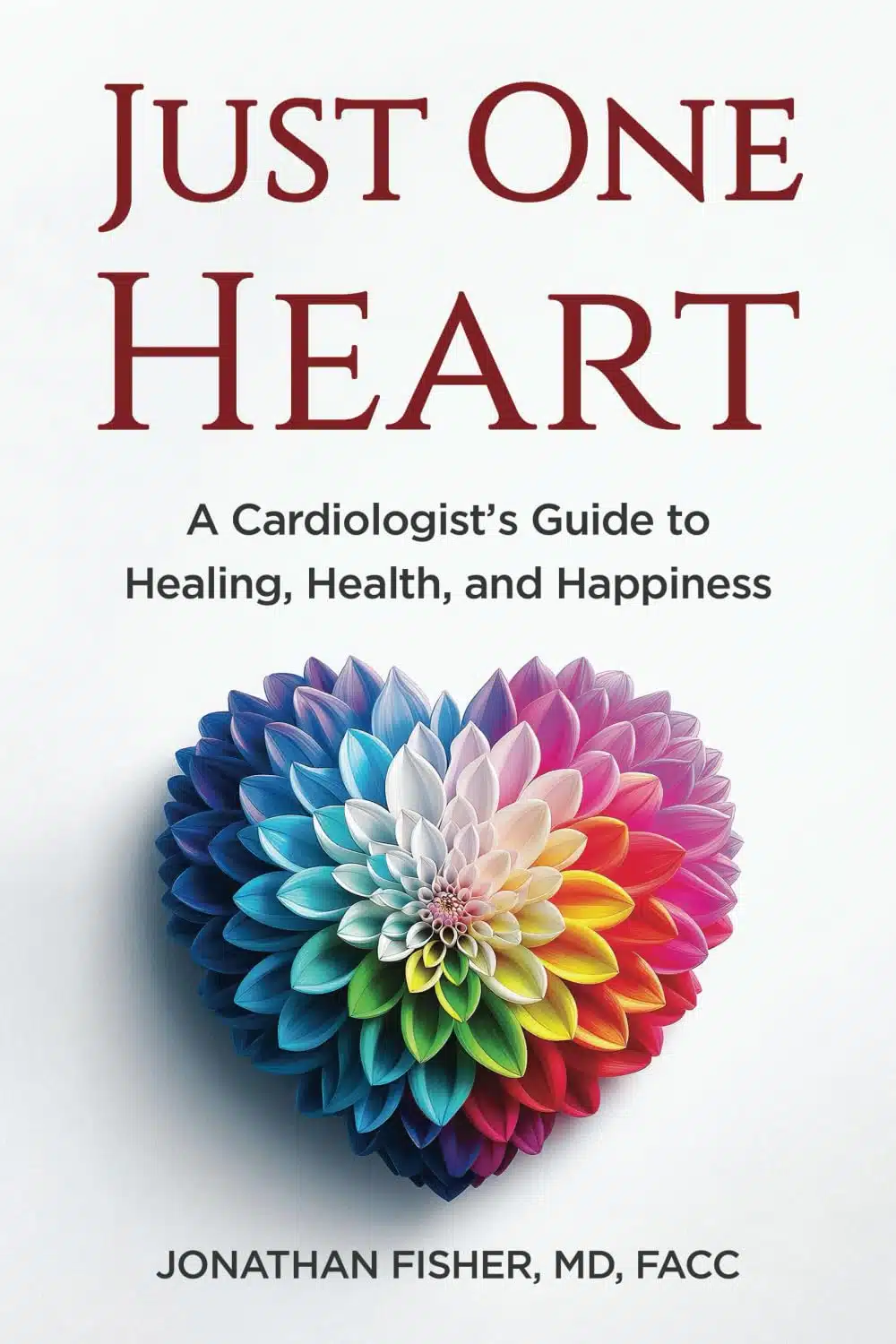
Just One Heart – by Dr. Jonathan Fisher

10almonds is reader-supported. We may, at no cost to you, receive a portion of sales if you purchase a product through a link in this article.

First, what this is not: a book to say eat fiber, go easy on the salt, get some exercise, and so forth.

What this rather is: a book about the connection between the heart and mind; often written poetically, the simple biological reality is that our emotional state does have a genuine impact on our heart health, and as such, any effort to look after our heart (healthwise) would be incomplete without an effort to look after our heart (emotionally).

Dr. Fisher talks about the impact of stress and uncertainty, as well as peace and security, on heart health—and then, having sorted emotional states into “heart breakers” and “heart wakers”, he goes about laying out a plan for what is, emotionally and thus also physiologically, good for our heart.

Chapter by chapter, he walks us through the 7 principles to live by:

  1. Steadiness: how to steady your heart amid chaos
  2. Wisdom: how to develop a wise heart in uncertain times
  3. Openness: how to safely open your heart in a threatening world
  4. Wholeness: how to show up with your whole heart without going to pieces
  5. Courage: how to lead with a courageous heart when fear surrounds you
  6. Lightness: how to live with a light heart in a heavy world
  7. Warmth: how to love with a warm heart when life feels cold

The style is anything but clinical; it’s well-written, certainly, and definitely informed in part by his medical understanding of the heart, but it’s entirely the raw human element that shines throughout, and that makes the ideas a lot more tangible.

Bottom line: if you’d like your heart to be healthy (cardiac health) and your heart to be healthy (emotional health), this book is a very worthwhile read.

Click here to check out Just One Heart, and take care of yours!

Don’t Forget…

Did you arrive here from our newsletter? Don’t forget to return to the email to continue learning!

  • Artichoke vs Carrots – Which is Healthier?
    Our Verdict When comparing artichoke to carrots, we picked the artichoke. Why? Both are great, but still, it wasn’t close: In terms of macros, the artichoke has nearly 2x the fiber and more than 3x the protein, for the same carbs; a clear first-round win for artichoke. In the category of vitamins, artichoke has more…

Learn to Age Gracefully

Join the 98k+ American women taking control of their health & aging with our 100% free (and fun!) daily emails:

  • Gentler Hair Health Options

    10almonds is reader-supported. We may, at no cost to you, receive a portion of sales if you purchase a product through a link in this article.

    Hair, Gently

    We have previously talked about the medicinal options for combatting the thinning hair that comes with age especially for men, but also for a lot of women. You can read about those medicinal options here:

    Hair-Loss Remedies, By Science

    We also did a whole supplement spotlight research review for saw palmetto! You can read about how that might help you keep your hair present and correct, here:

    One Man’s Saw Palmetto Is Another Woman’s Serenoa Repens

    Today we’re going to talk options that are less “heavy guns”, and/but still very useful.

    Supplementation

    First, the obvious. Taking vitamins and minerals, especially biotin, can help a lot. This writer takes 10,000µg (that’s micrograms, not milligrams!) biotin gummies, similar to this example product on Amazon (except mine also has other vitamins and minerals in, but the exact product doesn’t seem to be available on Amazon).

    When thinking “what vitamins and minerals help hair?”, honestly, it’s most of them. So, focus on the ones that count for the most (usually: biotin and zinc), and then cover your bases for the rest with good diet and additional supplementation if you wish.

    Caffeine (topical)

    It may feel silly, giving one’s hair a stimulant, but topical caffeine application really does work to stimulate hair growth. And not “just a little help”, either:

    ❝Specifically, 0.2% topical caffeine-based solutions are typically safe with very minimal adverse effects for long-term treatment of AGA, and they are not inferior to topical 5% minoxidil therapy❞

    ~ Dr. Bajoria et al.

    (AGA = Androgenic Alopecia)

    Read more: Comparing Current Therapeutic Modalities of Androgenic Alopecia: A Literature Review of Clinical Trials

    Argan oil

    As with coconut oil, argan oil is great on hair. It won’t do a thing to improve hair growth or decrease hair shedding, but it will help you hair stay moisturized and thus reduce breakage—thus, may not be relevant for everyone, but for those of us with hair long enough to brush, it’s important.

    Bonus: get an argan oil based hair serum that also contains keratin (the protein used to make hair), as this helps strengthen the hair too.

    Here’s an example product on Amazon

    Silk pillowcases

    Or a silk hair bonnet to sleep in! They both do the same thing, which is prevent damaging the hair in one’s sleep by reducing the friction that it may have when moving/turning against the pillow in one’s sleep.

    • Pros of the bonnet: if you have lots of hair and a partner in bed with you, your hair need not be in their face, and you also won’t get it caught under you or them.
    • Pros of the pillowcase: you don’t have to wear a bonnet

    Both are also used widely by people without hair loss issues, but with easily damaged and/or tangled hair—Black people especially with 3C or tighter curls in particular often benefit from this. Other people whose hair is curly and/or gray also stand to gain a lot.

    Here are Amazon example products of a silk pillowcase (it’s expensive, but worth it) and a silk bonnet, respectively

    Want to read more?

    You might like this article:

    From straight to curly, thick to thin: here’s how hormones and chemotherapy can change your hair

    Take care!

    Share This Post

  • The Sugar That Blocks COVID

    10almonds is reader-supported. We may, at no cost to you, receive a portion of sales if you purchase a product through a link in this article.

    Vaccines are considered the “gold standard” against COVID and similar pathogens, for their very high rate of efficacy, clear science, and at least moderately lasting effects (i.e., it’s not something like handwashing*, which must be redone very frequently). Since vaccines are not without their popular misunderstanders, we have written a little about that, here: Vaccine Mythbusting

    *See also: The Truth About Handwashing ← for another mythbusting edition, covering what actually works against what, and what doesn’t—as well as the disparity between people’s self-reports of handwashing, and how often/well they actually wash their hands!

    These are not the only things we can do; consider for example: Beyond Supplements: The Real Immune-Boosters! ← most people don’t know these things and the huge difference they make

    And for that matter: Why Some People Get Sick More (And How To Not Be One Of Them) ← for a very prophylactic approach

    So… What’s this about a sugar that blocks COVID?

    A sweet distraction

    What if, rather than triggering immune responses as vaccines do, we could provide a physical shield?

    Of course, masks do that, but are more important on an epidemiological level than personal (i.e. they protect society more than they protect the wearer), and they are impractical in many circumstances, and use of them is very low in most countries. So in other words: they’re good! But may be a lost cause at least for the time being.

    See also: Mythbusting The Mask Debate

    And, for that matter: Do We Simply Not Care About Old People?

    So… How about a nanotech version, that you can squirt up your nose and then it’s done, you’re protected?

    Researchers (Dr. Daniela Niemeyer et al.) have developed a synthetic sugar-coated polymer nanoparticle that blocks Covid-19 from infecting human cells!

    How it works: it’s two things in one:

    1. a decoy
    2. a trap

    The particle mimics the virus’s natural target (sialic acid chains) acting as a decoy. It then binds to the virus’s spike protein 500 times more strongly, preventing it from binding with cells (something the virus needs to do in order to replicate itself).

    How well it works: at low doses, reduced infection in human lung cells by 98.6%, working against both the original SARS-CoV-2 strain and the D614G variant.

    Now, there are two things to bear in mind here.

    Firstly, you may be wondering: what about the other 1.4%? And well, nothing is perfect, but 98.6% is good, and assuming you do have a functioning immune system, your immune system will be much more likely to throw off a pathogen that is able to affect only a few cells at a time, than one that is infecting almost every cell it touches, and multiplying exponentially as it does so.

    Secondly, about those human lung cells: they were in a petri dish, so we can’t say for sure yet that this will be safe and effective in vivo (i.e. in actual humans). However, the researchers are cautiously optimistic and are looking forward to the next testing stage.

    You can read the paper itself, here: Polysialosides Outperform Sulfated Analogs for Binding with SARS-CoV-2 ← not the most exciting title

    Lastly, you may be wondering: doesn’t this mean I will be left with live COVID viruses in my respiratory tract, stuck in these molecular traps? And the answer is: sort of, at least for a while. The virus will still be theoretically active insofar as it remains viable, not destroyed, but as it’s already bound to something it can’t infect, it can’t do any harm. Further, a virus that has been trapped in this fashion is much easier for our own immune system to locate and destroy, or even just locate and remove. Think of it like a fly trapped on a flypaper. It’s technically still viable, but it’s not going anywhere, and is easy to get rid of.

    On the flipside, that does raise an extra question of how long the protection will last—it’s currently being posited as a medium-term solution, but the timescales have not yet been worked out, as that’ll need to be studied in vivo.

    Want to learn more?

    Check out:

    The Minerals That Neutralize Viruses (While Being Harmless To Humans) ← for a similar approach with a very common food additive

    Take care!

    Share This Post

  • You Are the One You’ve Been Waiting For – by Dr. Richard Schwartz

    10almonds is reader-supported. We may, at no cost to you, receive a portion of sales if you purchase a product through a link in this article.

    As self-therapy approaches go, the title here could be read two ways: as pop-psychology fluff, or a suggestion of something deeper. And, while written in a way to make it accessible to all, we’re happy to report the content consists of serious therapeutic ideas, presented clearly.

    Internal Family Systems (IFS) is a large, internationally recognized, and popular therapeutic approach. It’s also an approach that lends itself quite well to self-therapy, as this book illustrates.

    Dr. Schwartz kicks off by explaining not IFS, but the problem that it solves… We (most of us, anyway) have over the course of our lives tried to plug the gaps in our own unmet psychological needs. And, that can cause resentment, strain, and can even be taken out on others if we’re not careful.

    The real meat of the book, however, is in its illustrative explanations of how IFS works, and can be applied by an individual. The goal is to recognize all the parts that make us who we are, understand what they need in order to be at peace, and give them that. Spoiler: most what they will need is just being adequately heard, rather than locked in a box untended.

    One of the benefits of using this book for self-therapy, of course, is that it requires a lot less vulnerability with a third party.

    But, speaking of which, what of these intimate relationships the subtitle of the book referenced? Mostly the benefits to such come from a “put your own oxygen mask on first” angle… but the book does also cover discussions between intimate partners, and approaches to love, including what the author calls “courageous love”.

    Bottom line: this is a great book if you want to do some “spring-cleaning of the soul” and live a little more lightly as a result.

    Click here to check out “You Are The One You’ve Been Waiting For” on Amazon today, and try out IFS for yourself!

    Share This Post

  • Gluten intolerance and coeliac disease can both cause nausea, bloating and pain. What’s the difference?

    10almonds is reader-supported. We may, at no cost to you, receive a portion of sales if you purchase a product through a link in this article.

    Around one in ten Australians say they follow a gluten-free diet.

    This means eliminating common foods – such as bread, pasta and noodles – that contain gluten, a protein found mainly in wheat, barley and rye.

    Not everyone who follows a gluten-free diet has an underlying condition. But if you experience nausea, bloating or stomach pain after eating gluten, it could be the sign of a gluten intolerance, or coeliac disease.

    While gluten intolerance and coeliac disease share many similar symptoms, one can cause intestinal damage and malnutrition. So, what’s the difference?

    fotodrobik/Shutterstock

    What is coeliac disease?

    Coeliac disease is an autoimmune disease. This means the body mistakenly starts attacking healthy cells and tissue – in this case, in the small intestine – causing inflammation.

    It affects around one in 70 Australians, but only 20% of this group are diagnosed.

    If you have coeliac disease, eating foods that contain gluten can damage your villi, structures in the small intestine that help the body absorb nutrients.

    Following a meal containing gluten, you may experience digestive problems including diarrhoea, bloating, nausea, gas and abdominal pain.

    Diagram shows healthy villi in the small intestine versus villi damaged by coeliac disease.
    Coeliac disease can lead to long-term damage in the small intenstine. Sakurra/Shutterstock

    Gluten can also cause non-digestive symptoms such as brain fog, headaches, dermatitis herpetiformis (an itchy, blistery skin rash), joint pain and fatigue.

    In the long term, untreated coeliac disease can lead to malnutrition because the damaged villi can’t absorb nutrients from food. It can also reduce bone mineral density and has been linked to neurological disorders such as epilepsy and dementia.

    How is coeliac disease diagnosed?

    For an accurate diagnosis, you must not have eliminated gluten from your diet yet. This is so its effect on your digestive system can be measured.

    A diagnosis involves blood tests followed by biopsies of the small intestine using an endoscope (an instrument with a light that can look inside the body).

    Blood tests look for antigens – markers of a reaction to gluten – while the biopsy inspects any damage to the villi in the intestine.

    In some cases, a capsule endoscopy, where a pill-sized camera is swallowed, is used to look at the intestine and observe for damage.

    What about gluten intolerance?

    People with gluten intolerance experience similar symptoms to coeliac disease. The difference is, after consuming gluten, there is no autoimmune response or intestinal damage.

    Gluten intolerance is sometimes known as non-coeliac gluten sensitivity.

    An estimated 1% of Australians live with a gluten intolerance, but only 12 in every 100 of this group are diagnosed by a doctor.

    Doctors will rule out coeliac disease and wheat allergies as a first step for a person with symptoms related to eating gluten.

    Once these have been ruled out, a gluten-free diet trial, supervised by an accredited practising dietitian, might be recommended to see if symptoms improve.

    A formal diagnosis of gluten intolerance can only be confirmed using a highly complex dietary trial that compares the effect of gluten and a placebo over at least eight weeks.

    This form of scientific study is very labour-intensive and not very common.

    So instead many people just choose to eliminate gluten, without a diagnosis.

    Extreme sensitivity to gluten

    Coeliac disease is more severe than gluten intolerance and sensitivity can vary among those diagnosed.

    Even traces of gluten can trigger symptoms. This means a strict, lifelong, gluten-free diet essential.

    It also means people with coeliac disease have to be careful about cross-contamination. For example, using the same knife, chopping board or toaster to cut or toast gluten-free bread and regular bread can transfer gluten particles and cause a reaction.

    According to the latest studies, consuming just 50mg of gluten per day is enough to cause intestinal damage for people with coeliac disease.

    For context, a slice of whole-wheat bread contains about 4,800mg of gluten, meaning 50mg is around 1/100th of a slice of bread.

    A small amount of gluten won’t affect someone with gluten intolerance in the same way. They may have temporary symptoms, but won’t experience intestinal damage.

    However, the symptoms and their severity can vary from person to person, depending on their individual sensitivity.

    Should I cut out gluten, just in case?

    You might be wondering if there is a downside to avoiding gluten, if you don’t have coeliac disease or an intolerance.

    There can be.

    Grain foods that contain gluten are rich in essential nutrients such as fibre, folate, iron and B-group vitamins.

    Avoiding gluten when you don’t need to can lead to nutritional deficiencies.

    Gluten-free products can also be more expensive and are sometimes higher in sugar, salt and fat to help compensate for texture and taste.

    Before making any changes to your diet, it is best to speak with an accredited practising dietitian to make sure you’re not missing out on important nutrients.

    So, what if you have symptoms?

    Common signs of a gluten intolerance or coeliac disease include bloating, diarrhoea or constipation, and stomach pain. Both conditions can trigger non-gastrointestinal symptoms such as headaches, fatigue and joint pain.

    If these symptoms sound familiar, it’s best to speak to a health-care professional who may test you for coeliac disease and/or a wheat allergy before eliminating gluten from your diet.

    Remember, self-diagnosing and removing gluten without proper guidance might do you more harm than good.

    If your symptoms concern you, speak to your GP, a gastroenterologist or a qualified dietitian. Dietitians Australia has a list of accredited practising dietitians.

    Yasmine Probst, Professor, School of Medical, Indigenous and Health Sciences. Advanced Accredited Practising Dietitian, University of Wollongong and Olivia Wills, Associate Lecturer, Nutrition and Dietetics, University of Wollongong

    This article is republished from The Conversation under a Creative Commons license. Read the original article.

    Don’t Forget…

    Did you arrive here from our newsletter? Don’t forget to return to the email to continue learning!

    Learn to Age Gracefully

    Join the 98k+ American women taking control of their health & aging with our 100% free (and fun!) daily emails:

  • Does intermittent fasting have benefits for our brain?

    10almonds is reader-supported. We may, at no cost to you, receive a portion of sales if you purchase a product through a link in this article.

    Intermittent fasting has become a popular dietary approach to help people lose or manage their weight. It has also been promoted as a way to reset metabolism, control chronic disease, slow ageing and improve overall health.

    Meanwhile, some research suggests intermittent fasting may offer a different way for the brain to access energy and provide protection against neurodegenerative diseases like Alzheimer’s disease.

    This is not a new idea – the ancient Greeks believed fasting enhanced thinking. But what does the modern-day evidence say?

    First, what is intermittent fasting?

    Our diets – including calories consumed, macronutrient composition (the ratios of fats, protein and carbohydrates we eat) and when meals are consumed – are factors in our lifestyle we can change. People do this for cultural reasons, desired weight loss or potential health gains.

    Intermittent fasting consists of short periods of calorie (energy) restriction where food intake is limited for 12 to 48 hours (usually 12 to 16 hours per day), followed by periods of normal food intake. The intermittent component means a re-occurrence of the pattern rather than a “one off” fast.

    Food deprivation beyond 24 hours typically constitutes starvation. This is distinct from fasting due to its specific and potentially harmful biochemical alterations and nutrient deficiencies if continued for long periods.

    4 ways fasting works and how it might affect the brain

    The brain accounts for about 20% of the body’s energy consumption.

    Here are four ways intermittent fasting can act on the body which could help explain its potential effects on the brain.

    1. Ketosis

    The goal of many intermittent fasting routines is to flip a “metabolic switch” to go from burning predominately carbohydrates to burning fat. This is called ketosis and typically occurs after 12–16 hours of fasting, when liver and glycogen stores are depleted. Ketones – chemicals produced by this metabolic process – become the preferred energy source for the brain.

    Due to this being a slower metabolic process to produce energy and potential for lowering blood sugar levels, ketosis can cause symptoms of hunger, fatigue, nausea, low mood, irritability, constipation, headaches, and brain “fog”.

    At the same time, as glucose metabolism in the brain declines with ageing, studies have shown ketones could provide an alternative energy source to preserve brain function and prevent age-related neurodegeneration disorders and cognitive decline.

    Consistent with this, increasing ketones through supplementation or diet has been shown to improve cognition in adults with mild cognitive decline and those at risk of Alzheimer’s disease respectively.

    2. Circadian syncing

    Eating at times that don’t match our body’s natural daily rhythms can disrupt how our organs work. Studies in shift workers have suggested this might also make us more prone to chronic disease.

    Time-restricted eating is when you eat your meals within a six to ten-hour window during the day when you’re most active. Time-restricted eating causes changes in expression of genes in tissue and helps the body during rest and activity.

    A 2021 study of 883 adults in Italy indicated those who restricted their food intake to ten hours a day were less likely to have cognitive impairment compared to those eating without time restrictions.

    older man playing chess
    Matching your eating to the active parts of your day may have brain benefits.
    Shutterstock

    3. Mitochondria

    Intermittent fasting may provide brain protection through improving mitochondrial function, metabolism and reducing oxidants.

    Mitochondria’s main role is to produce energy and they are crucial to brain health. Many age-related diseases are closely related to an energy supply and demand imbalance, likely attributed to mitochondrial dysfunction during ageing.

    Rodent studies suggest alternate day fasting or reducing calories by up to 40% might protect or improve brain mitochondrial function. But not all studies support this theory.

    4. The gut-brain axis

    The gut and the brain communicate with each other via the body’s nervous systems. The brain can influence how the gut feels (think about how you get “butterflies” in your tummy when nervous) and the gut can affect mood, cognition and mental health.

    In mice, intermittent fasting has shown promise for improving brain health by increasing survival and formation of neurons (nerve cells) in the hippocampus brain region, which is involved in memory, learning and emotion.

    medical clinician shows woman a sheet of brain scans
    What we eat can affect our brain, and vice versa.
    Shutterstock

    There’s no clear evidence on the effects of intermittent fasting on cognition in healthy adults. However one 2022 study interviewed 411 older adults and found lower meal frequency (less than three meals a day) was associated with reduced evidence of Alzheimer’s disease on brain imaging.

    Some research has suggested calorie restriction may have a protective effect against Alzheimer’s disease by reducing oxidative stress and inflammation and promoting vascular health.

    When we look at the effects of overall energy restriction (rather than intermittent fasting specifically) the evidence is mixed. Among people with mild cognitive impairment, one study showed cognitive improvement when participants followed a calorie restricted diet for 12 months.

    Another study found a 25% calorie restriction was associated with slightly improved working memory in healthy adults. But a recent study, which looked at the impact of calorie restriction on spatial working memory, found no significant effect.

    Bottom line

    Studies in mice support a role for intermittent fasting in improving brain health and ageing, but few studies in humans exist, and the evidence we have is mixed.

    Rapid weight loss associated with calorie restriction and intermittent fasting can lead to nutrient deficiencies, muscle loss, and decreased immune function, particularly in older adults whose nutritional needs may be higher.

    Further, prolonged fasting or severe calorie restriction may pose risks such as fatigue, dizziness, and electrolyte imbalances, which could exacerbate existing health conditions.

    If you’re considering intermittent fasting, it’s best to seek advice from a health professional such as a dietitian who can provide guidance on structuring fasting periods, meal timing, and nutrient intake. This ensures intermittent fasting is approached in a safe, sustainable way, tailored to individual needs and goals.The Conversation

    Hayley O’Neill, Assistant Professor, Faculty of Health Sciences and Medicine, Bond University

    This article is republished from The Conversation under a Creative Commons license. Read the original article.

    Don’t Forget…

    Did you arrive here from our newsletter? Don’t forget to return to the email to continue learning!

    Learn to Age Gracefully

    Join the 98k+ American women taking control of their health & aging with our 100% free (and fun!) daily emails:

  • 7 Essential Devices For Hand Arthritis: Regain Control of Your Life

    10almonds is reader-supported. We may, at no cost to you, receive a portion of sales if you purchase a product through a link in this article.

    Dr. Diana Girnita is a double board-certified physician in rheumatology and internal medicine. With a PhD in immunology (on top of her MD), and training at Harvard and top universities, she founded Rheumatologist OnCall, offering integrative medicine to broaden rheumatology access. Here’s what she has to say about things that make life easier:

    Get your hands on these…

    The seven devices that Dr. Girnita recommends are:

    • Hand grip strengthener: helps build grip strength with a spring-loaded mechanism. Regular use can improve strength and reduce pain.
    • Finger exerciser: different device; similar principle: it strengthens hand and finger muscles using resistance, enhancing hand function.
    • Moisturizing paraffin bath: a heated paraffin wax bath that soothes hands, providing heat therapy and moisturizing the skin.
    • Weighted silverware: weighted utensils (knives, forks, spoons) make gripping easier and provide stability for eating.
    • Foam tubing grips: foam covers to make kitchen tools, toothbrushes, and hairbrushes easier to grip.
    • Electric can-opener: reduces strain in opening cans, making meal preparation more accessible.
    • Compression gloves: provide gentle compression to reduce swelling and pain, improving hand flexibility and circulation.
    • Door knob cover grips: make it easier to turn doorknobs by providing a larger surface to grip.
    • Wider-grip pens: ergonomically designed pens with a larger diameter and softer grip reduce hand strain while writing.

    This writer, who does not have arthritis but also does not have anything like the grip strength she used to, also recommends a jar opener like this one.

    As a bonus, if you spend a lot of time writing at a computer, an ergonomic split keyboard like this one goes a long way to avoiding carpal tunnel syndrome, and logically must be better for arthritis than a regular keyboard; another excellent thing to have (that again this writer uses and swears by) is an ergonomic vertical mouse like this one (aligns the wrist bones correctly; the “normal” horizontal version is woeful for the carpal bones). These things are both also excellent to help avoid worsening peripheral neuropathy (something that troubles this writer’s wrists if she’s not careful, due to old injuries there).

    For more on the seven things otherwise listed above, enjoy:

    Click Here If The Embedded Video Doesn’t Load Automatically!

    Want to learn more?

    You might also like to read:

    Take care!

    Don’t Forget…

    Did you arrive here from our newsletter? Don’t forget to return to the email to continue learning!

    Learn to Age Gracefully

    Join the 98k+ American women taking control of their health & aging with our 100% free (and fun!) daily emails: