
I’ve been sick. When can I start exercising again?
10almonds is reader-supported. We may, at no cost to you, receive a portion of sales if you purchase a product through a link in this article.
You’ve had a cold or the flu and your symptoms have begun to subside. Your nose has stopped dripping, your cough is clearing and your head and muscles no longer ache.
You’re ready to get off the couch. But is it too early to go for a run? Here’s what to consider when getting back to exercising after illness.
Exercise can boost your immune system – but not always
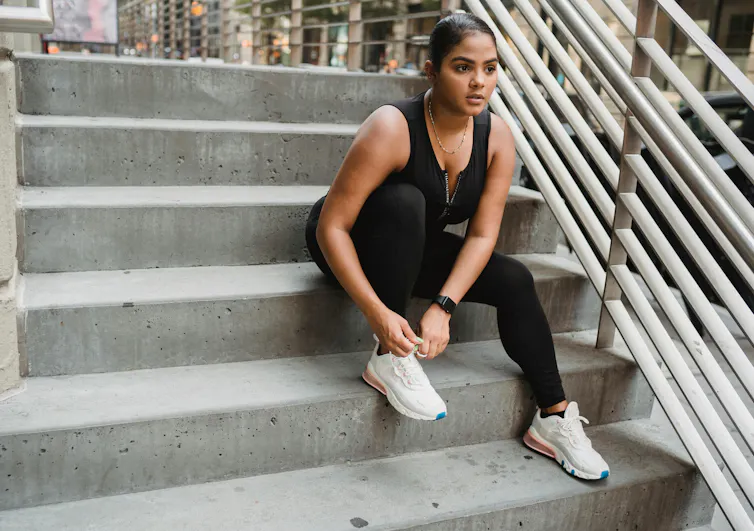
Exercise reduces the chance of getting respiratory infections by increasing your immune function and the ability to fight off viruses.
However, an acute bout of endurance exercise may temporarily increase your susceptibility to upper respiratory infections, such as colds and the flu, via the short-term suppression of your immune system. This is known as the “open window” theory.
A study from 2010 examined changes in trained cyclists’ immune systems up to eight hours after two-hour high-intensity cycling. It found important immune functions were suppressed, resulting in an increased rate of upper respiratory infections after the intense endurance exercise.
So, we have to be more careful after performing harder exercises than normal.
Can you exercise when you’re sick?
This depends on the severity of your symptoms and the intensity of exercise.
Mild to moderate exercise (reducing the intensity and length of workout) may be OK if your symptoms are a runny nose, nasal congestion, sneezing and minor sore throat, without a fever.
Exercise may help you feel better by opening your nasal passages and temporarily relieving nasal congestion.
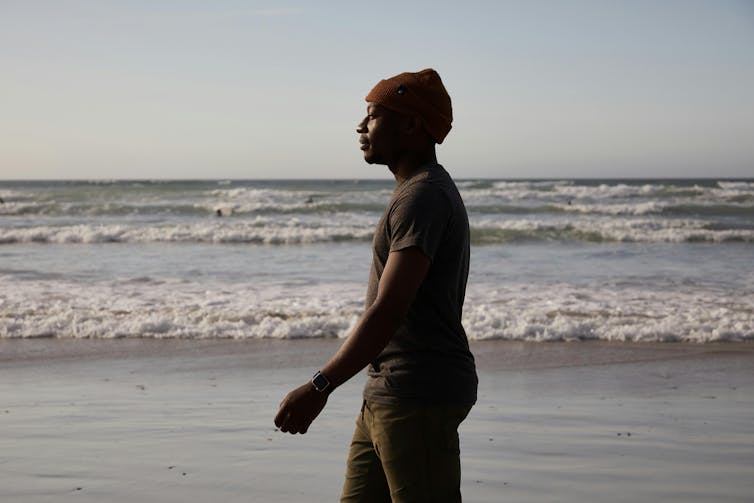
However, if you try to exercise at your normal intensity when you are sick, you risk injury or more serious illness. So it’s important to listen to your body.
If your symptoms include chest congestion, a cough, upset stomach, fever, fatigue or widespread muscle aches, avoid exercising. Exercising when you have these symptoms may worsen the symptoms and prolong the recovery time.
If you’ve had the flu or another respiratory illness that caused a high fever, make sure your temperature is back to normal before getting back to exercise. Exercising raises your body temperature, so if you already have a fever, your temperature will become high quicker, which makes you sicker.
If you have COVID or other contagious illnesses, stay at home, rest and isolate yourself from others.
When you’re sick and feel weak, don’t force yourself to exercise. Focus instead on getting plenty of rest. This may actually shorten the time it takes to recover and resume your normal workout routine.
I’ve been sick for a few weeks. What has happened to my strength and fitness?
You may think taking two weeks off from training is disastrous, and worry you’ll lose the gains you’ve made in your previous workouts. But it could be just what the body needs.
It’s true that almost all training benefits are reversible to some degree. This means the physical fitness that you have built up over time can be lost without regular exercise.
To study the effects of de-training on our body functions, researchers have undertaken “bed rest” studies, where healthy volunteers spend up to 70 days in bed. They found that V̇O₂max (the maximum amount of oxygen a person can use during maximal exercise, which is a measure of aerobic fitness) declines 0.3–0.4% a day. And the higher pre-bed-rest V̇O₂max levels, the larger the declines.
In terms of skeletal muscles, upper thigh muscles become smaller by 2% after five days of bed rest, 5% at 14 days, and 12% at 35 days of bed rest.
Muscle strength declines more than muscle mass: knee extensor muscle strength gets weaker by 8% at five days, 12% at 14 days and more than 20% after around 35 days of bed rest.
This is why it feels harder to do the same exercises after resting for even five days.
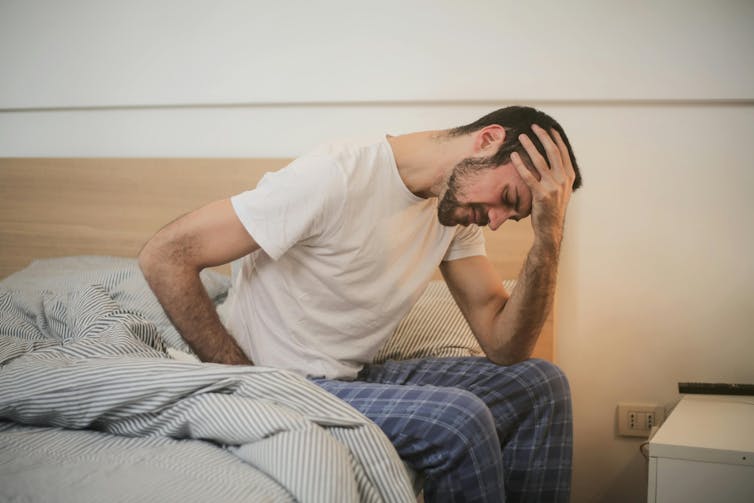
But in bed rest studies, physical activities are strictly limited, and even standing up from a bed is prohibited during the whole length of a study. When we’re sick in bed, we have some physical activities such as sitting on a bed, standing up and walking to the toilet. These activities could reduce the rate of decreases in our physical functions compared with study participants.
How to ease back into exercise
Start with a lower-intensity workout initially, such as going for a walk instead of a run. Your first workout back should be light so you don’t get out of breath. Go low (intensity) and go slow.
Gradually increase the volume and intensity to the previous level. It may take the same number of days or weeks you rested to get back to where you were. If you were absent from an exercise routine for two weeks, for example, it may require two weeks for your fitness to return to the same level.
If you feel exhausted after exercising, take an extra day off before working out again. A day or two off from exercising shouldn’t affect your performance very much.
Ken Nosaka, Professor of Exercise and Sports Science, Edith Cowan University
This article is republished from The Conversation under a Creative Commons license. Read the original article.
Don’t Forget…
Did you arrive here from our newsletter? Don’t forget to return to the email to continue learning!
Recommended
Learn to Age Gracefully
Join the 98k+ American women taking control of their health & aging with our 100% free (and fun!) daily emails:
-
Pear vs Peach – Which is Healthier?
10almonds is reader-supported. We may, at no cost to you, receive a portion of sales if you purchase a product through a link in this article.
Our Verdict
When comparing pears to peaches, we picked the peaches.
Why?
Both are great! But peaches are exceptional in some ways that pears just can’t match up to:
In terms of macros, pears have more carbs and fiber, the ratio of which results in an approximately equal glycemic index. Thus, we’ll say that pears win this round by virtue of being the nutritionally denser option.
Looking at the vitamins, pears have (slightly) more of vitamins B6, B9, and K, while peaches have (much) more of vitamins A, B1, B2, B3, B5, B7, C, E, and choline—thus sweeping this category easily for peaches.
In the category of minerals, pears have more calcium and copper, while peaches have more iron, magnesium, manganese, phosphorus, potassium, and zinc. This time, the margins of difference for each mineral are comparably low (i.e. pears are close behind peaches on all those minerals), but still, by strength of numbers, it’s a clear win for peaches.
When it comes to polyphenols, not only do peaches have more, but also, they have anticancer properties that pears don’t—see our link below for more about that!
Meanwhile, adding up the sections makes for an overall win for peaches, but as ever when it comes to fruits, by all means enjoy either or both; diversity is good!
Want to learn more?
You might like to read:
Top 8 Fruits That Prevent & Kill Cancer ← peaches in the #2 spot! They induce cell death in cancer cells while sparing healthy ones
Enjoy!
Share This Post
-
Lyme Disease At-A-Glance
10almonds is reader-supported. We may, at no cost to you, receive a portion of sales if you purchase a product through a link in this article.
It’s Q&A Day at 10almonds!
Have a question or a request? You can always hit “reply” to any of our emails, or use the feedback widget at the bottom!
In cases where we’ve already covered something, we might link to what we wrote before, but will always be happy to revisit any of our topics again in the future too—there’s always more to say!
As ever: if the question/request can be answered briefly, we’ll do it here in our Q&A Thursday edition. If not, we’ll make a main feature of it shortly afterwards!
So, no question/request too big or small
❝Good info as always…was wondering if you have any recommendations for fighting Lyme disease naturally along wDr advice? Dr’s aren’t real keen on alternatives so always interested. Thanks❞
That depends on whether we’re looking at prevention or cure!
Prevention:
- Try not to get bitten by Lyme-disease-carrying ticks. Boots and long socks are your friends. As are long-gauntletted gloves for gardening.
- If you are in a high-risk area and/or engage in high-risk activities, check your body daily.
- This is because it usually takes 36–48 hours of being attached for a tick to cause an infection
- Obviously best if you can get a partner or close friend to help you with this, unless you have mastered some advanced pretzel positions of yoga.
- Contrary to many folk remedies, the safest way to remove a tick is with tweezers (carefully!).
- If you find and remove a tick, or otherwise suspect you have developed symptoms, go to your doctor immediately (not next week; today; time really counts for this).
Cure:
- No. Sorry. Regretfully, antibiotics are the only known effective treatment.
However! As with almost any kind of recovery, getting good rest, including good quality sleep, will hasten things. Also sensible is reducing stress if possible, and anything that could worsen inflammation.
Share This Post
-
Bowel cancer rates are declining in people over 50. But why are they going up in younger adults?
10almonds is reader-supported. We may, at no cost to you, receive a portion of sales if you purchase a product through a link in this article.
Bowel cancer is the fourth most common cancer in Australia, with more than 15,000 cases diagnosed annually. It’s also the second most common cause of cancer-related death.
Recently, headlines have warned of an uptick in cases among younger adults, noting bowel cancer cases in people under 50 in Australia are among the highest in the world.
While this is very worrying, it’s also important to note the rate of new cases of bowel cancer in Australia overall has actually been falling over the past 20 years or so. Most cases of bowel cancer still occur in adults over 50, and thanks to a national screening program in this age group, rates are declining.
So why are rates increasing in younger people, and what can we do to mitigate the risk?
Thirdman/Pexels National screening is working
Australia was one of the first countries to commence population-based screening for bowel cancer. The National Bowel Cancer Screening Program was introduced in 2006. A kit is sent in the mail every two years to adults aged 50–74.
This simple poo test detects microscopic amounts of blood that may indicate the presence of cancer or a precancerous lesion, leading to earlier detection and higher rates of survival.
Despite the effectiveness of the program, participation rates are less than optimal at around 40%. We could see even further declines in rates of bowel cancer if more people took part.
How about younger adults?
In contrast to the falling incidence of bowel cancer in older people, emerging data over the past few years paints a different picture for people under 50.
Research I did with colleagues showed an increase in both bowel and rectal cancer from 1982 to 2014 in Australia in people under 50.
A recent preprint (a study yet to be peer-reviewed) includes data up to 2020, and further supports this trend. It suggests people born in the 1990s have two to three times the risk of bowel cancer compared to those born in the 1950s.
Similar trends have been noted in many countries, however international data suggests the rates of young-onset bowel cancer in Australia are among the highest in the world.
What’s driving this increase?
At the moment the causes are unclear. Some studies have focused on diet and lifestyle, obesity, and consumption of red meat.
However, diet as a cause of any disease is notoriously difficult to study. This is because it requires long-term data on what people eat, and following them up for the development of the disease (called an observational study).
If there are positive findings in the observational study, researchers may then test their hypothesis in a randomised controlled trial where one group eats a certain food (such as red meat) and the other does not, and then compare rates of bowel cancer in each group over time.
Due to the near impossibility of conducting these types of trials – as participants would need to follow strict dietary guidelines for years – dietary causes are challenging to prove.
More recent research has focussed on the potential role of E. coli infection in childhood, proposing that infection with some strains may lead to early DNA changes and subsequent increased cancer risk. Other research is looking at the role of an altered gut microbiome. These hypotheses warrant further work.
Ultimately, we don’t know why bowel cancer rates have been increasing in younger adults. Andrey_Popov/Shutterstock What can people do to reduce their risk?
It’s important to watch for any new or concerning symptoms. Any blood in your poo, particularly if it’s a new symptom, or a change in your regular bowel habits, are good reasons to promptly book a doctor’s appointment.
And while the bowel cancer screening kits are sent to adults from age 50 every two years, as of 2024 people aged 45–49 can request a kit to be sent to them.
Because the participation rate in the bowel cancer screening program is less than optimal, people over 50 who receive the kit in the mail are strongly encouraged to do the test as soon as possible. Increasing screening participation rates remains one of the most important ways we can reduce the burden of bowel cancer in Australia.
Suzanne Mahady, Associate Professor, Gastroenterologist & Clinical Epidemiologist, Monash University
This article is republished from The Conversation under a Creative Commons license. Read the original article.
Share This Post
Related Posts
-
Can You Pass This 10-Second Walking Test?
10almonds is reader-supported. We may, at no cost to you, receive a portion of sales if you purchase a product through a link in this article.
This 10-second walking test should actually only take about 4 seconds, but it’s very important:
Stepping into good health
Set up a 12ft walkway (it doesn’t have to be anything special, just a flat floor on which you can walk in a straight line for about 12ft). Walk at a normal pace while timing yourself, and if it takes longer than about 4 seconds to walk that distance, then your walking speed is in a risk zone for future loss of independence.
Why walking speed matters: slower walking, especially after age 60, strongly predicts falls, fatigue, and declining independence, often before people realize there’s a problem.
So, what causes slow walking speed? Weak calves, stiff hips, and weak glutes are the three most common and most fixable reasons walking speed drops with age. Of those,
- Weak glutes: the gluteus maximus provides push-off power and upright stability, and when it isn’t firing, walking feels flat, slow, and draining.
- Weak calves: calves act as your walking engine, and when they weaken, pushing forwards feels harder, balance worsens, and walking becomes slower and more tiring.
- Stiff hips: tight hip flexors shorten your stride, making walking slower and more effortful, with prolonged sitting being the biggest contributor.
So, what to do about it?
- Prone glute training: lie on your front, gently squeeze your glutes, lift one leg slightly while keeping your lower back relaxed, then lower with control to target your glutes rather than your spine.
- Single-leg donkey calf raise: lean forwards with your hands on a chair or counter, lift one foot, and repeatedly push up onto your tiptoes and lower with control, using both legs if balance feels unsafe.
- Skateboard swings: no skateboard necessary; just stand holding a support, keep your back upright, place your weight on one leg, and swing the free leg forwards and backwards in a controlled motion to restore hip extension.
For more on all of this plus visual demonstrations, enjoy:
Click Here If The Embedded Video Doesn’t Load Automatically!
Want to learn more?
You might also like:
90% Of People Over 50 Fail This Balance Test. Will You?
Take care!
Don’t Forget…
Did you arrive here from our newsletter? Don’t forget to return to the email to continue learning!
Learn to Age Gracefully
Join the 98k+ American women taking control of their health & aging with our 100% free (and fun!) daily emails:
-
Opioid use disorder can affect anyone—here’s how to find support
10almonds is reader-supported. We may, at no cost to you, receive a portion of sales if you purchase a product through a link in this article.
What you need to know
- Anyone can develop OUD, even if you’re prescribed opioids by a doctor.
- Taking opioids in any way other than prescribed, experiencing ongoing stress, or having a family history of substance use disorder can increase your risk of developing OUD.
- Harm reduction programs offer tools that prevent overdose deaths and support people in staying safer.
Opioids are a class of drugs that includes some prescription pain medications (like oxycodone and hydrocodone) and illegal substances (like heroin). Opioid use disorder is a chronic medical condition that affects the brain’s reward and stress systems, which may cause physical and mental distress. It can develop for many reasons and can happen to anyone, even if the opioids are prescribed by a doctor.
Read on to learn what causes OUD, who may be at higher risk, and how to find support.
What causes OUD?
When someone takes opioids repeatedly, the body doesn’t make as many endorphins, which are the hormones that reduce pain and stress. Over time, the same amount of opioids may not provide the same relief—a process known as tolerance. People may find themselves needing a higher dose to feel comfortable, and stopping opioids suddenly can lead to difficult withdrawal symptoms like pain, anxiety, or nausea.
Taking more opioids than prescribed increases the risk of overdose since opioids can slow down or stop your breathing.
If you think you’ve developed a tolerance to opioids, or you are having trouble reducing or stopping opioid use, talk to a health care provider right away. Stopping opioids suddenly can be dangerous, and a clinician can help you make a safe plan.
Who is most at risk for OUD?
Taking opioids for more than a few days, taking a higher dose than prescribed, or taking opioids in a way other than prescribed—like snorting or injecting them—increases the risk of OUD.
Experiencing stress, like losing a job or having problems at home, is a major risk factor for OUD and other substance use disorders.
“Often, the problems in our life can’t be resolved or fixed, and that lack of control can leave us feeling confused, disoriented and stuck,” said Amy Goodwin, a licensed professional counselor and behavioral health counselor at UCHealth Behavioral Health Clinic, in a UCHealth Today article. “Substances can give us the illusion that we are relieving our stress or distress without altering or evolving our behavior.”
Even exciting life changes can impact your relationship with substances like opioids, especially if you’re genetically predisposed to risk-taking behaviors.
“Starting a new job, or having a child may activate a genetic vulnerability,” said Wendy Richardson, a California-based certified addiction specialist, in an ADDitude article.
Other factors that increase your risk of OUD include:
- A family history of substance use disorder
- Mental health conditions or brain differences like ADHD
- A history of physical or emotional abuse
- Tobacco use
- Poor school performance
Teens and young adults are also more likely to develop OUD. Plus, women are at increased risk because they’re more likely to experience chronic pain, which can lead to prolonged prescription opioid use.
Tools that help prevent opioid overdose
Naloxone is a lifesaving, easy-to-use medication that can reverse an opioid overdose. Anyone can carry it. Having naloxone is especially important if you or someone in your household uses opioids—whether prescribed or not—or takes other drugs that may be unknowingly mixed with opioids.
Naloxone “is unequivocally a life-saving medication that works very well at reversing opioid overdoses. The more it is available in the community, the more likely it can help someone during those first critical couple of minutes when they need it,” said Dr. Kathryn Hawk, a Yale Medicine emergency and addiction medicine physician-researcher, in a 2023 YaleMedicine article. “It’s also very safe and won’t harm anybody who uses it.”
You may be able to get naloxone for free from local harm reduction programs and some community centers and public libraries. It’s also available without a prescription at many pharmacies, at some grocery and convenience stores, and online. A two-dose package typically costs less than $50.
Learn how to use naloxone from the American Medical Association or sign up for a free online training.
Some harm reduction programs may also offer drug test strips, which help people understand what’s in their drugs. Substances may be unknowingly mixed with fentanyl (a potent opioid) or xylazine (a non-opioid tranquilizer), which can increase the risk of overdose. Test strips give people more information to make safer choices. However, test strips are still considered “drug paraphernalia” in some states, which can limit access.
Learn how to use fentanyl test strips and xylazine test strips from NYC Health.
How can I get support for opioid use disorder?
Effective treatment for OUD often includes a combination of medication along with counseling or behavioral therapy. These treatments can help people with OUD stabilize brain chemistry, reduce cravings, and lower the risk of resuming opioid use.
If you’re looking for treatment for OUD, contact SAMHSA’s National Helpline (1-800-662-HELP) to find treatment options near you. Local harm reduction programs can also help connect people to treatment when they’re ready while offering ongoing care and community support.
For more information, talk to your health care provider.
This article first appeared on Public Good News and is republished here under a Creative Commons Attribution-NoDerivatives 4.0 International License.
Don’t Forget…
Did you arrive here from our newsletter? Don’t forget to return to the email to continue learning!
Learn to Age Gracefully
Join the 98k+ American women taking control of their health & aging with our 100% free (and fun!) daily emails:
-
Heart Smarter for Women – by Dr. Jennifer Mieres
10almonds is reader-supported. We may, at no cost to you, receive a portion of sales if you purchase a product through a link in this article.
Dr. Mieres takes us through understanding our own heart disease risks as individuals rather than as averages. As the title suggests, she does assume a female readership, so if you are a man and have no female loved ones, this might not be the book for you. But aside from that, she walks us through examining risk in the context of age, other health conditions, lifestyle factors, and so forth—including not turning a blind eye to factors that might intersect, such as for example if a physical condition reduces how much we can exercise, or if there’s some reason we can’t follow the usual gold standard of heart-healthy diet.
On which note, she does offer dietary advice, including information around recipes, meal-planning, and what things to always have in stock, as well as what things matter the most when it comes to what and how we eat.
It’s not all lifestyle medicine though; Dr. Mieres gives due attention to many of the medications available for heart health issues—and the pros and cons of these.
The style of the book is very simple and readable pop-science, without undue jargon, and with a generous glossary. As with many books of this genre, it does rely on (presumably apocryphal) anecdotes, though an interesting choice for this book is that it keeps a standing cast of four recurring characters, each to represent a set of circumstances and illustrate how certain things can go differently for different people, with different things then being needed and/or possible. Hopefully, any given reader will find themself represented at least moderately well somewhere in or between these four characters.
Bottom line: this is a very informative and accessible book, that demystifies a lot of common confusions around heart health.
Click here to check out Heart Smarter For Women, and take control of your health!
Don’t Forget…
Did you arrive here from our newsletter? Don’t forget to return to the email to continue learning!
Learn to Age Gracefully
Join the 98k+ American women taking control of their health & aging with our 100% free (and fun!) daily emails:


