

Bowel cancer rates are declining in people over 50. But why are they going up in younger adults?

10almonds is reader-supported. We may, at no cost to you, receive a portion of sales if you purchase a product through a link in this article.

Bowel cancer is the fourth most common cancer in Australia, with more than 15,000 cases diagnosed annually. It’s also the second most common cause of cancer-related death.

Recently, headlines have warned of an uptick in cases among younger adults, noting bowel cancer cases in people under 50 in Australia are among the highest in the world.

While this is very worrying, it’s also important to note the rate of new cases of bowel cancer in Australia overall has actually been falling over the past 20 years or so. Most cases of bowel cancer still occur in adults over 50, and thanks to a national screening program in this age group, rates are declining.

So why are rates increasing in younger people, and what can we do to mitigate the risk?
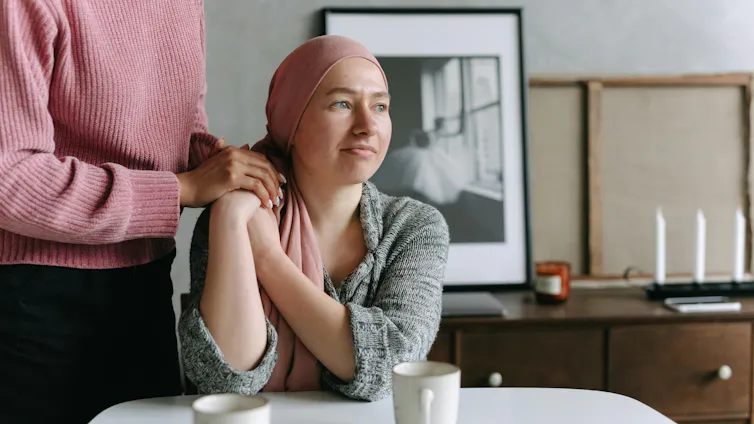
Thirdman/Pexels

National screening is working

Australia was one of the first countries to commence population-based screening for bowel cancer. The National Bowel Cancer Screening Program was introduced in 2006. A kit is sent in the mail every two years to adults aged 50–74.

This simple poo test detects microscopic amounts of blood that may indicate the presence of cancer or a precancerous lesion, leading to earlier detection and higher rates of survival.

Despite the effectiveness of the program, participation rates are less than optimal at around 40%. We could see even further declines in rates of bowel cancer if more people took part.

How about younger adults?

In contrast to the falling incidence of bowel cancer in older people, emerging data over the past few years paints a different picture for people under 50.

Research I did with colleagues showed an increase in both bowel and rectal cancer from 1982 to 2014 in Australia in people under 50.

A recent preprint (a study yet to be peer-reviewed) includes data up to 2020, and further supports this trend. It suggests people born in the 1990s have two to three times the risk of bowel cancer compared to those born in the 1950s.

Similar trends have been noted in many countries, however international data suggests the rates of young-onset bowel cancer in Australia are among the highest in the world.

What’s driving this increase?

At the moment the causes are unclear. Some studies have focused on diet and lifestyle, obesity, and consumption of red meat.

However, diet as a cause of any disease is notoriously difficult to study. This is because it requires long-term data on what people eat, and following them up for the development of the disease (called an observational study).

If there are positive findings in the observational study, researchers may then test their hypothesis in a randomised controlled trial where one group eats a certain food (such as red meat) and the other does not, and then compare rates of bowel cancer in each group over time.

Due to the near impossibility of conducting these types of trials – as participants would need to follow strict dietary guidelines for years – dietary causes are challenging to prove.

More recent research has focussed on the potential role of E. coli infection in childhood, proposing that infection with some strains may lead to early DNA changes and subsequent increased cancer risk. Other research is looking at the role of an altered gut microbiome. These hypotheses warrant further work.
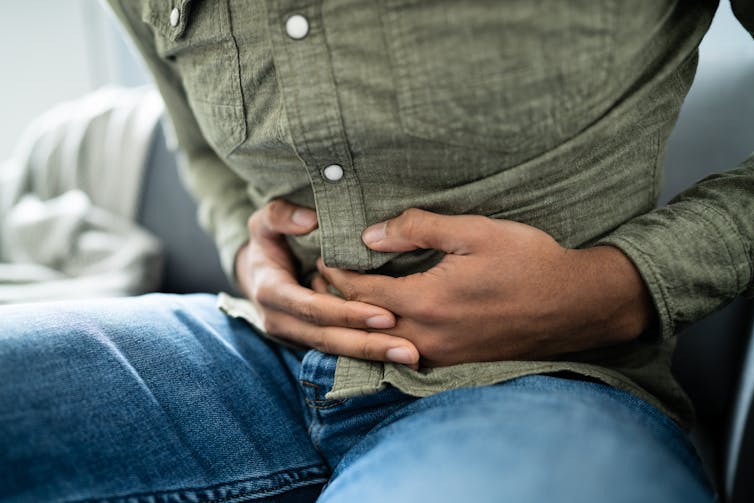
A man holding his stomach.
Ultimately, we don’t know why bowel cancer rates have been increasing in younger adults. Andrey_Popov/Shutterstock

What can people do to reduce their risk?

It’s important to watch for any new or concerning symptoms. Any blood in your poo, particularly if it’s a new symptom, or a change in your regular bowel habits, are good reasons to promptly book a doctor’s appointment.

And while the bowel cancer screening kits are sent to adults from age 50 every two years, as of 2024 people aged 45–49 can request a kit to be sent to them.

Because the participation rate in the bowel cancer screening program is less than optimal, people over 50 who receive the kit in the mail are strongly encouraged to do the test as soon as possible. Increasing screening participation rates remains one of the most important ways we can reduce the burden of bowel cancer in Australia.

Suzanne Mahady, Associate Professor, Gastroenterologist & Clinical Epidemiologist, Monash University

This article is republished from The Conversation under a Creative Commons license. Read the original article.

Don’t Forget…

Did you arrive here from our newsletter? Don’t forget to return to the email to continue learning!
Learn to Age Gracefully

Join the 98k+ American women taking control of their health & aging with our 100% free (and fun!) daily emails:

  • What Hypothyroidism Does To Your Heart

    10almonds is reader-supported. We may, at no cost to you, receive a portion of sales if you purchase a product through a link in this article.

    Hypothyroidism affects 4–7% of the population, but most goes undiagnosed.

    If you’re a woman, you’re 11–15% more likely to have it than if you’re a man.

    The epidemiology of this is interesting, but not our main topic today, so if you’d like to read more about that, then you might want to bookmark this paper to read later: Low awareness and under-diagnosis of hypothyroidism

    If you’re wondering if this might be you, then check out: Doctor Explains: 15 Signs Of Hypothyroidism

    And perhaps, while you’re at it, A Fresh Take On Hypothyroidism

    Meanwhile, what’s this about hypothyroidism and your heart?

    Let’s get to the heart of things

    Researchers (Dr. Irsa Munir et al.) analyzed 112 ICU patients with hypothyroidism using transthoracic echocardiography and speckle-tracking echocardiography, including patients with myxedema coma.

    That’s a lot of big words, but a fair oversimplification would be: they used low- and high-tech means to monitor cardiac function in various ways.

    What they found is that hypothyroidism was strongly associated with measurable heart dysfunction, which makes it look a lot like low thyroid hormone levels can directly impair how well the heart contracts and relaxes.

    In numbers:

    • 66.7% had abnormal diastolic function
    • 68.2% had impaired left ventricular global longitudinal strain
    • 37.5% had reduced left ventricular ejection fraction
    • 34.0% had impaired right ventricular strain

    You might be wondering: why are we assuming causality?

    And the answer is: thyroid hormones help regulate your heart’s response to adrenaline, energy use, blood vessel tone, and the timing and force of contraction, so deficiency can weaken cardiac performance.

    Notably, cardiac abnormalities occurred at similar rates in patients with and without overt myxedema coma, indicating that hypothyroidism itself (not only the coma state) was linked to dysfunction.

    Another factor that Dr. Munir and her team highlighted is that of the various thyroid hormones, low T3 levels are common in septic shock and raised the possibility that prolonged thyroid hormone deficiency can contribute to septic cardiomyopathy.

    You can read the paper in full, here: Heart ventricular function in hospitalized patients with severe hypothyroidism and myxedema coma

    As for what to do about it? Their preliminary lab work strongly suggested thyroid hormones can improve cardiac muscle contractility within minutes, and a clinical trial protocol has been approved to test hormone replacement in septic shock patients, so we’ll look forward to seeing that when it comes out.

    Aside from treating it with thyroid hormones directly, this problem is often approached from the perspective of “can we fix it with diet?”, and indeed, there are prevailing methods for at least managing the condition, for example: Foods For Managing Hypothyroidism (incl. Hashimoto’s)

    However, we recently wrote about an approach that evidence suggests is not only stronger, but also much easier to adhere to in real life with real life’s practicalities: No More Restrictions In This Diet Against Thyroid Disease?

    Want to learn more?

    If you’d like to read more about a common form of hypothyroidism, then check out:

    Hashimoto’s Food Pharmacology – by Dr. Izabella Wentz

    Take care!

    Share This Post

  • Diet, Drugs, and Dopamine – by Dr. David Kessler

    10almonds is reader-supported. We may, at no cost to you, receive a portion of sales if you purchase a product through a link in this article.

    Dr. Kessler takes the position that [junk] food addiction is not only real, but also overwhelmingly prevalent in industrialized nations in general, and the US in particular—the latter getting hit extra hard in large part because of much more relaxed regulations when it comes to both food production, and advertising, compared to most industrialized nations. Which results, he explains, in a man-made epidemic of addiction. Just like nicotine (an example he discusses at length, as a parallel), the hooking of the people did not occur by accident; it was calculated and built around the idea of leveraging addiction to secure more sales.

    What then, of personal responsibility? He argues that it is not the individual who is at fault at all. Speaking for himself and his lifelong battle with weight, he says:

    ❝I have two advanced degrees. I attended my third year of medical school and my third year of law school at the same time. I have been dean of two medical schools. I’ve run the FDA. No one would ever accuse me of not having discipline and determination. and yet, throughout my life, I have perpetually taken the path back to [overeating], despite how miserable I know I will be when I get there.❞

    As such, he does indeed make the case that it’s not an matter of willpower or intelligence or anything like that, and is much more a factor of biology—the details of which discusses in great depth over many chapters.

    The style is very engaging pop-science, easy to read and yet still with 10 pages of bibliography. He tells a lot of stories, and name-drops more often than Tahani Al-Jamil, often at a rate of 3–4 doctors per page, but unlike a lot of authors who seem keen to glamorize their connections, this one (not too surprising, given his own background) treats them for what they are in this context: resources to refer to.

    To this end, he even extensively quotes critics of his ideas, even in cases where he does not have an adequate response, and he seems quite self-aware of this, in the sense of: he does not require the ego-prop of always being right or always having all the answers, and is genuinely pleased that the topic is being engaged with in earnest, and he simply hopes that between them they can find the best way forwards.

    As for solutions? He considers it a matter of four main pillars: diet, exercise, psychology, and medicine.

    In the latter category, he hails GLP-1 receptor agonists as wonderdrugs, while still noting their downsides, and also recommends that, in order to be beneficial in the broadest scope, they need to be used in conjunction with the other things, such that one can take advantage of the cravings-lowering effect of the drugs, in order to change one’s habits in life.

    Bottom line: if you’re looking for a quick fix, a “three-week program” or such, this isn’t it. If, however, you’d like to better understand the physiology of food cravings, how this situation was largely engineered by food giants and how to fight back, then this is an excellent book.

    Click here to check out Diet, Drugs, & Dopamine, and learn all about it!

    Share This Post

  • Women spend more of their money on health care than men. And no, it’s not just about ‘women’s issues’

    10almonds is reader-supported. We may, at no cost to you, receive a portion of sales if you purchase a product through a link in this article.

    Medicare, Australia’s universal health insurance scheme, guarantees all Australians access to a wide range of health and hospital services at low or no cost.

    Although access to the scheme is universal across Australia (regardless of geographic location or socioeconomic status), one analysis suggests women often spend more out-of-pocket on health services than men.

    Other research has found men and women spend similar amounts on health care overall, or even that men spend a little more. However, it’s clear women spend a greater proportion of their overall expenditure on health care than men. They’re also more likely to skip or delay medical care due to the cost.

    So why do women often spend more of their money on health care, and how can we address this gap?

    Elizaveta Galitckaia/Shutterstock

    Women have more chronic diseases, and access more services

    Women are more likely to have a chronic health condition compared to men. They’re also more likely to report having multiple chronic conditions.

    While men generally die earlier, women are more likely to spend more of their life living with disease. There are also some conditions which affect women more than men, such as autoimmune conditions (for example, multiple sclerosis and rheumatoid arthritis).

    Further, medical treatments can sometimes be less effective for women due to a focus on men in medical research.

    These disparities are likely significant in understanding why women access health services more than men.

    For example, 88% of women saw a GP in 2021–22 compared to 79% of men.

    As the number of GPs offering bulk billing continues to decline, women are likely to need to pay more out-of-pocket, because they see a GP more often.

    In 2020–21, 4.3% of women said they had delayed seeing a GP due to cost at least once in the previous 12 months, compared to 2.7% of men.

    Data from the Australian Bureau of Statistics has also shown women are more likely to delay or avoid seeing a mental health professional due to cost.

    A senior woman in a medical waiting room looking at a clipboard.
    Women are more likely to live with chronic medical conditions than men. Drazen Zigic/Shutterstock

    Women are also more likely to need prescription medications, owing at least partly to their increased rates of chronic conditions. This adds further out-of-pocket costs. In 2020–21, 62% of women received a prescription, compared to 37% of men.

    In the same period, 6.1% of women delayed getting, or did not get prescribed medication because of the cost, compared to 4.9% of men.

    Reproductive health conditions

    While women are disproportionately affected by chronic health conditions throughout their lifespan, much of the disparity in health-care needs is concentrated between the first period and menopause.

    Almost half of women aged over 18 report having experienced chronic pelvic pain in the previous five years. This can be caused by conditions such as endometriosis, dysmenorrhoea (period pain), vulvodynia (vulva pain), and bladder pain.

    One in seven women will have a diagnosis of endometriosis by age 49.

    Meanwhile, a quarter of all women aged 45–64 report symptoms related to menopause that are significant enough to disrupt their daily life.

    All of these conditions can significantly reduce quality of life and increase the need to seek health care, sometimes including surgical treatment.

    Of course, conditions like endometriosis don’t just affect women. They also impact trans men, intersex people, and those who are gender diverse.

    Diagnosis can be costly

    Women often have to wait longer to get a diagnosis for chronic conditions. One preprint study found women wait an average of 134 days (around 4.5 months) longer than men for a diagnosis of a long-term chronic disease.

    Delays in diagnosis often result in needing to see more doctors, again increasing the costs.

    Despite affecting about as many people as diabetes, it takes an average of between six-and-a-half to eight years to diagnose endometriosis in Australia. This can be attributed to a number of factors including society’s normalisation of women’s pain, poor knowledge about endometriosis among some health professionals, and the lack of affordable, non-invasive methods to accurately diagnose the condition.

    There have been recent improvements, with the introduction of Medicare rebates for longer GP consultations of up to 60 minutes. While this is not only for women, this extra time will be valuable in diagnosing and managing complex conditions.

    But gender inequality issues still exist in the Medicare Benefits Schedule. For example, both pelvic and breast ultrasound rebates are less than a scan for the scrotum, and no rebate exists for the MRI investigation of a woman’s pelvic pain.

    Management can be expensive too

    Many chronic conditions, such as endometriosis, which has a wide range of symptoms but no cure, can be very hard to manage. People with endometriosis often use allied health and complementary medicine to help with symptoms.

    On average, women are more likely than men to use both complementary therapies and allied health.

    While women with chronic conditions can access a chronic disease management plan, which provides Medicare-subsidised visits to a range of allied health services (for example, physiotherapist, psychologist, dietitian), this plan only subsidises five sessions per calendar year. And the reimbursement is usually around 50% or less, so there are still significant out-of-pocket costs.

    In the case of chronic pelvic pain, the cost of accessing allied or complementary health services has been found to average A$480.32 across a two-month period (across both those who have a chronic disease management plan and those who don’t).

    More spending, less saving

    Womens’ health-care needs can also perpetuate financial strain beyond direct health-care costs. For example, women with endometriosis and chronic pelvic pain are often caught in a cycle of needing time off from work to attend medical appointments.

    Our preliminary research has shown these repeated requests, combined with the common dismissal of symptoms associated with pelvic pain, means women sometimes face discrimination at work. This can lead to lack of career progression, underemployment, and premature retirement.

    A woman speaks over the counter to a male pharmacist.
    More women are prescribed medication than men. PeopleImages.com – Yuri A/Shutterstock

    Similarly, with 160,000 women entering menopause each year in Australia (and this number expected to increase with population growth), the financial impacts are substantial.

    As many as one in four women may either shift to part-time work, take time out of the workforce, or retire early due to menopause, therefore earning less and paying less into their super.

    How can we close this gap?

    Even though women are more prone to chronic conditions, until relatively recently, much of medical research has been done on men. We’re only now beginning to realise important differences in how men and women experience certain conditions (such as chronic pain).

    Investing in women’s health research will be important to improve treatments so women are less burdened by chronic conditions.

    In the 2024–25 federal budget, the government committed $160 million towards a women’s health package to tackle gender bias in the health system (including cost disparities), upskill medical professionals, and improve sexual and reproductive care.

    While this reform is welcome, continued, long-term investment into women’s health is crucial.

    Mike Armour, Associate Professor at NICM Health Research Institute, Western Sydney University; Amelia Mardon, Postdoctoral Research Fellow in Reproductive Health, Western Sydney University; Danielle Howe, PhD Candidate, NICM Health Research Institute, Western Sydney University; Hannah Adler, PhD Candidate, Health Communication and Health Sociology, Griffith University, and Michelle O’Shea, Senior Lecturer, School of Business, Western Sydney University

    This article is republished from The Conversation under a Creative Commons license. Read the original article.

    Share This Post

  • Healing Spices – by Dr. Bharat Aggarwal & Debora Yost

    10almonds is reader-supported. We may, at no cost to you, receive a portion of sales if you purchase a product through a link in this article.

    This is exactly what the subtitle promises it to be, and more. It’s actually herbs and spices, but definitely mostly spices, and includes the kinds found in even the smallest supermarket, to some you might not have heard of, and might need to order online.

    We are treated to an explanation of the health-giving properties of each (and any potential contraindications), as well as the culinary properties, many tables of what goes with what and how and why, and even recipes to use them in. For the more adventurous, there’s even advice on how to grow, prepare, and store each of them.

    An extra benefit is that everything is cross-linked such that you can look things up by spice or by health condition or by flavor profile, and find what you need and what’ll go with it.

    The style is simple and informational, clearly laid-out in encyclopedic form.

    Bottom line: this book should be in your kitchen (or related nearby kitchen-book-place).

    Click here to check out Healing Spices, and advance your culinary repertoire!

    Don’t Forget…

    Did you arrive here from our newsletter? Don’t forget to return to the email to continue learning!

    Learn to Age Gracefully

    Join the 98k+ American women taking control of their health & aging with our 100% free (and fun!) daily emails:

  • How long is a vagina? And how do I know if mine is ‘short’?

    10almonds is reader-supported. We may, at no cost to you, receive a portion of sales if you purchase a product through a link in this article.

    We often use the word vagina to describe everything “down there”, but that’s not actually anatomically correct.

    The vagina is the stretchy, muscular tube that connects the external genitalia, or vulva, to the cervix, which is the entrance to the uterus (womb).

    Because it’s barely visible from the outside, many vagina owners wonder how long theirs is, or should be.

    Worried teenagers going through puberty regularly asked “Dolly Doctor” – the medical advice column Melissa wrote for over 20 years in Dolly magazine – whether their vaginas were too small or short.

    Often they were asking because inserting a tampon was difficult or painful.

    The vagina is an incredibly adaptable part of the body and its length can change – across your lifetime, within the month, and with hormonal changes and sexual arousal.

    Jarrod Simpson/Getty

    Length at different life stages

    Before puberty, the vagina usually measures between 5.5 and 8cm in length.

    During puberty (usually between 8–13 years old), not only does the length of the vagina increase, but hormones also change the vaginal lining.

    In the time of life between puberty and menopause, oestrogen levels rise and cause the lining of the vagina to thicken and soften. This is what makes the vagina moist and responsive to stimuli, such as when aroused.

    By adulthood, the vagina is typically between 6.5cm and 12.5cm. This varies greatly from person to person and continues to change at different times during our lives.

    What else can change the vagina’s length?

    When someone has their period, generally the cervix sits in a lower position, meaning the vaginal canal is shorter. Then, after menstruation, the cervix lifts upwards again and reaches its highest point during ovulation.

    The length of the vagina also changes during different reproductive stages. For example, in pregnancy the cervix sits higher up, meaning the vagina is longer.

    On the other hand, menopause, along with many other impacts such as vaginal dryness, can shorten the vaginal canal.

    A pelvic organ prolapse can also make the vagina shorter. This is when the pelvic floor becomes weakened and organs such as the womb or bladder bulge into the vagina.

    There are also some very rare conditions that can affect the development of the vagina before birth, such as vaginal atresia, which can cause the vagina to not fully form.

    What about sex?

    Sex also has a large impact on vaginal length.

    When someone with a vagina becomes aroused the vagina gets longer and moves the cervix further from the vaginal opening, which allows for sexual penetration.

    Despite this lengthening of the vagina, contact with the cervix can still occur during sex, for example with a sex toy, finger or penis. Some people will find cervical stimulation painful or sensitive, while for others it may be pleasurable.

    How sex feels can also change depending on your menstrual cycle.

    Remember, when you have your period, the cervix is likely to be sitting lower, so this can increase the chance of contact with the cervix during sex, especially during certain sexual positions.

    Touching the cervix during sex is very unlikely to cause any damage, although sometimes with vigorous sexual intercourse it can cause bruising. This is not usually dangerous and heals on its own.

    Ongoing communication with your partner is crucial to check in and see what feels good for both of you.

    So, how long is my vagina?

    It can be useful to feel the length of your vagina and the position of your cervix.

    For example, if you want to use a menstrual cup during your period, some brands will have different sizes. If you have a shorter vaginal canal, then a shorter or smaller cup may achieve a better fit.

    However, other factors – such as your age and how heavy your periods are – can also impact what size is right for you.

    To feel the position of your cervix, first wash your hands with soap and water. This is best done around the time of your period, when the vaginal canal will be shorter.

    Find a comfortable position, such as sitting, squatting or having one leg bent up on a chair. Then insert your finger into the vagina aiming up and back.

    The vagina feels soft and squishy, whereas the cervix is smooth and firm, with a tiny divot in the centre – imagine a mini doughnut.

    If you have to really stretch to feel the cervix, you may opt for a longer cup, whereas if you don’t need to insert your whole finger, it is probably sitting a bit lower and you may be more comfortable with a smaller size.

    Keep in mind, this will just give you a rough idea of your vagina’s length and where your cervix is sitting (although it may change tomorrow).

    Does the length of your vagina matter?

    All of our bodies are unique and there is a wide range of “normal”. Generally, having a “short” or “long” vagina doesn’t make any real difference.

    For example, a 2009 study of women over the age of 40 found vaginal length doesn’t affect sexual activity or function.

    The vagina is extremely elastic and can stretch and mould to accommodate a variety of needs, before returning back to its baseline.

    There are some symptoms that would be worth discussing with your GP though, such as pain during sex, difficulty inserting tampons or menstrual cups, or if you are concerned about a prolapse.

    Keersten Fitzgerald, Lecturer in General Practice, University of Sydney and Melissa Kang, Professor of Adolescent Health, Co-Head of the General Practice Clinical School, University of Sydney

    This article is republished from The Conversation under a Creative Commons license. Read the original article.

    Don’t Forget…

    Did you arrive here from our newsletter? Don’t forget to return to the email to continue learning!

    Learn to Age Gracefully

    Join the 98k+ American women taking control of their health & aging with our 100% free (and fun!) daily emails:

  • How To Get Rid Of Bloating Quickly (Bloating Relief Stretches)

    10almonds is reader-supported. We may, at no cost to you, receive a portion of sales if you purchase a product through a link in this article.

    There is, in fact, relief that’s quicker than waiting for it to resolve itself:

    Movements that help

    There’s a lot that can be released, and here’s how:

    1. Getting started: lie on your back with your knees bent, place one hand on your belly, and breathe gently into your belly, to calm your nervous system and thus ease the sensations of bloating.
    2. Cat/cow: come onto all fours, inhale as you lift your chest and tailbone, and exhale as you round through your spine, to mobilize your back and massage your organs.
    3. Thread the needle: reach one arm under your body and lower your shoulder to the floor, then switch sides, to create a gentle twist through your spine and upper back.
    4. Child’s pose: lower your hips back and rest as you take slow, steady breaths, to encourage relaxation and digestion.
    5. Child’s pose to cobra: inhale in child’s pose, then exhale and slide forwards into a gentle cobra, to open your chest and stimulate your abdominal area.
    6. Cross-body stretch: lie on your back, pull one knee in, and guide it across your body into a soft twist before changing sides, to support gut peristalsis.
    7. Abdominal massage: place your feet on the floor with your knees bent, and massage your belly in slow clockwise circles as you breathe.
    8. Knees to chest: draw both knees towards your chest, to create gentle (!) compression through your belly, and thus support digestion.
    9. Child’s pose with a cushion: place a cushion or folded blanket between your thighs and your belly and rest in child’s pose, to release any remaining tension and deeply relax.

    For more on all of this plus visual demonstrations, enjoy:

    Click Here If The Embedded Video Doesn’t Load Automatically!

    Want to learn more?

    You might also like:

    Lymphatic Drainage Massage vs Bloating ← for a different means to the same ends

    Take care!

    Don’t Forget…

    Did you arrive here from our newsletter? Don’t forget to return to the email to continue learning!

    Learn to Age Gracefully

    Join the 98k+ American women taking control of their health & aging with our 100% free (and fun!) daily emails: