
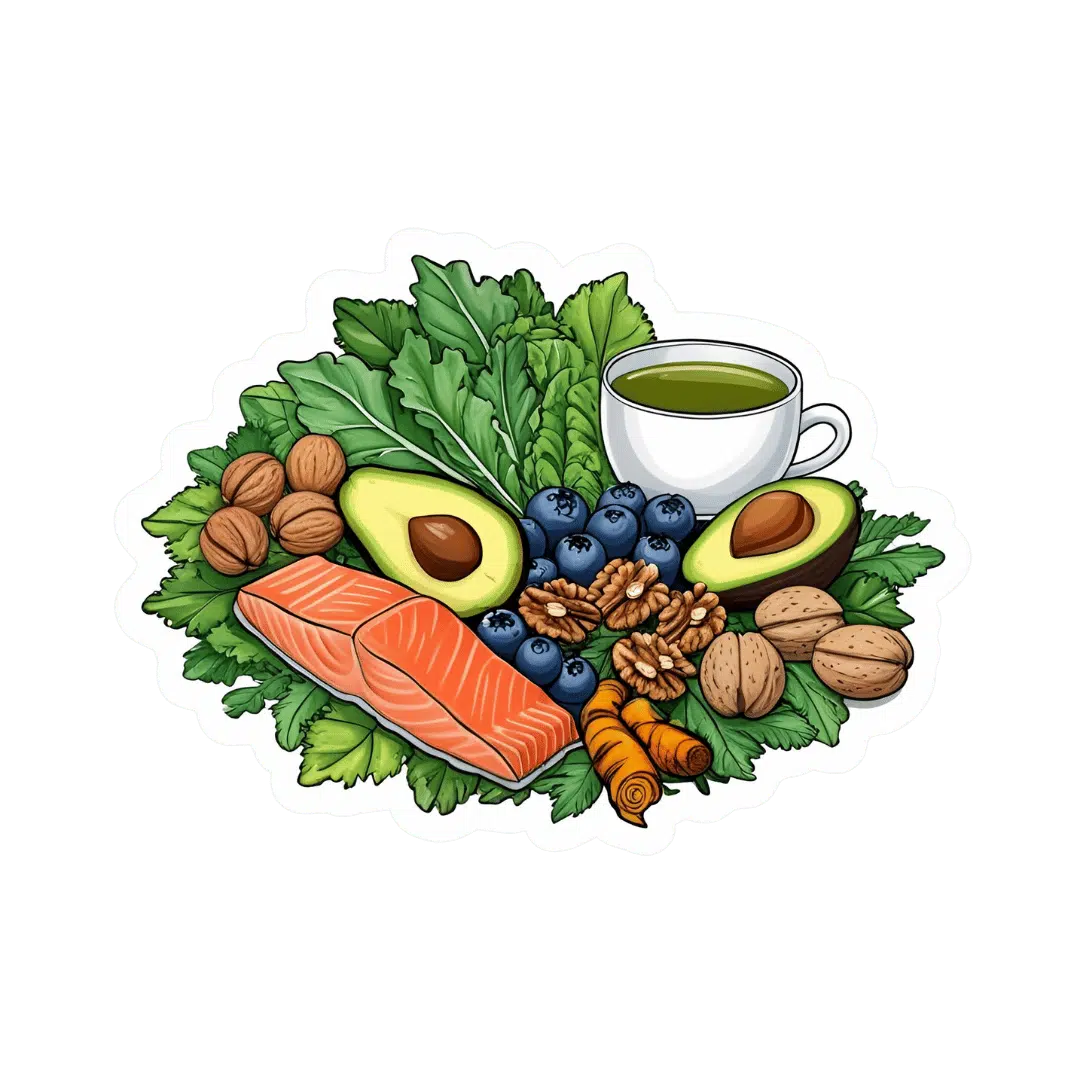
Eat These 8 Anti-Inflammatory Foods for Healthy, Glowing Skin!
10almonds is reader-supported. We may, at no cost to you, receive a portion of sales if you purchase a product through a link in this article.
Dr. Shereene Idriss, dermatologist, advises:
You are what you eat
Literally, what we eat is what is used to make the substance of our bodies. So, with that in mind, quality is important! Items that can be particularly good for skin health and more, include:
- Fatty fish: wild salmon, mackerel, sardines, and Arctic char are rich in omega-3 fatty acids (EPA and DHA), which reduce inflammation and support skin, heart, and brain health—wild fish are preferred due to higher omega-3 and lower omega-6 content (as well as, importantly for other aspects of health, a much lower antibiotics content).
- Berries: blueberries, blackberries, raspberries, and strawberries contain anthocyanins, polyphenols, and vitamin C that help repair UV damage, boost collagen, and protect skin.
- Leafy greens: kale, spinach, and Swiss chard are packed with chlorophyll and vitamins A, C, E, and K, supporting cell turnover, wound healing, and improved blood circulation for brighter, healthier skin.
- Turmeric: contains curcumin, a potent anti-inflammatory compound that is best paired with black pepper (piperine) for the best absorption into the body.
- Green tea: loaded with polyphenols including EGCG, it reduces free radicals, prevents collagen breakdown, regulates oil production, and supports UV protection—also effective when used topically.
- Avocados: rich in monounsaturated fats, vitamin E, and glutathione, they strengthen the skin barrier, reduce hyperpigmentation, and protect against oxidative stress.
- Walnuts: a top plant source of omega-3 ALA, plus zinc, selenium, and vitamin E, all of which help reduce inflammation and support skin healing and repair.
- Sweet potatoes: high in beta-carotene, which converts to vitamin A (retinol) to promote collagen production, cell turnover, and a natural glow—best consumed with the skin for max nutrients (cook it first, though!).
For more on all of this, enjoy:
Click Here If The Embedded Video Doesn’t Load Automatically!
Want to learn more?
You might also like:
The Best Foods For Collagen Production
Take care!
Don’t Forget…
Did you arrive here from our newsletter? Don’t forget to return to the email to continue learning!
Recommended
Learn to Age Gracefully
Join the 98k+ American women taking control of their health & aging with our 100% free (and fun!) daily emails:
-
The Real Way To Eat More Veg If You Don’t Like Veg
10almonds is reader-supported. We may, at no cost to you, receive a portion of sales if you purchase a product through a link in this article.
Let us start by assuming you’re aware you can blend them into a soup. Juicing is also an option.
Turning vegetables into a liquid will keep most of their nutrients, but be aware that soup-ifying will lose some fiber, and juicing will lose all (or nearly all) of the fiber.
See also: Can you drink your fruit and vegetables? How does juice compare to the whole food?
If you do opt for juicing, please have it alongside something that’s not juice, because otherwise it will wreak havoc on your gut:
3 Day Juice Fasting? Not So Fast!
…not to mention your blood sugar levels:
Fruit Is Healthy; Juice Isn’t (Here’s Why)
For a deeper dive into the physiology of why that happens, check out: Which Sugars Are Healthier, And Which Are Just The Same?
Ask yourself one question
No, this isn’t about whether you feel lucky. Rather, the question is:
Why don’t you like veg?
To be clear, this is not challenging you to justify your dislike. Your likes and dislikes require no justification; they simply are.
But! It is important, to be able to proceed with this, for you to understand what it is about veg that you don’t like.
- For some people it’s the flavors (in which case cooking vigorously will kill most flavors)
- For some it’s the lack of flavors (in which case, time to go light on the cooking, heavy on the seasoning)
- For some, it’s the textures (needing them to not be soft)
- For some, it’s the textures (needing them to not be varied)
- For some, it’s about needing to do too much prep (needing something easier)
With regard to “too much flavor”, as we say, that’s easy; just cook it more and the flavor will go. Yes, you’ll probably lose some nutrients too, but you’ll still get some.
With regard to “not enough flavor”, then by all means cook them less, where safely possible (for example, potatoes are poisonous raw, so please still cook those). See also:
Make Your Vegetables Work Better Nutritionally ← this is about which veg you should cook more or less or differently, for optimal nutrients
And to add the healthiest extra flavors of all: Our Top 5 Spices: How Much Is Enough For Benefits?
With regard to needing them to not be soft, most are good raw, e.g. carrots, celery, bell peppers, cucumber, as some top items.
Remember also that salad doesn’t have to have soft leaves! You can make it out of anything you want; nobody can stop you!
See for example: Supergreen Superfood Salad Slaw ← so very crunchy!
If you are cooking, though, remember that you can choose vegetables will stay crunchy if cooked lightly (for example just quickly stir-frying), such as sugarsnap peas, cabbage, water chestnuts, Brussels sprouts (slice them!), bamboo shoots, etc.
With regard to needing the textures to not be varied, that usually means making them soft, and simply means cooking them generously. It’s possible that you might not like the smell of some vegetables while cooking (cruciferous vegetables are a common one for this complaint), so you might want to just skip those ones.
There are also ways of getting in things that are soft and homogenous without cooking, so such hummus, guacamole, and other similar dips!
With regard to needing it to require less prep, buy things ready-prepped as much as you can! Get in that frozen veg, or canned, it’s all good. Or even just ready-prepared stir-fry veg that you just need to toss into a wok.
We’ll tell you an extra secret: you can even literally just order take-out of your favorite vegetable dishes. Yes, there’ll probably be a bit more salt and maybe even sugar than you might use at home, but you’re getting vegetables in, and a positive attitude to diet (i.e., focusing on what to include, rather than what to exclude) will almost always result in the heathiest balance.
Also, getting things ready mixed (e.g. mixed frozen veg over separate) also cuts down on prep time and things you need to do. similarly, some of the things we mentioned earlier are zero-prep if bought ready-made, e.g. the hummus, guacamole, etc.
Still not a fan of veg?
All is not lost. As it turns out, fruit and vegetable extracts are still beneficial even in supplement form!
See: Are Fruit & Vegetable Extract Supplements Worth It?
Take care!
Share This Post
-
Mythbusting The Mask Debate
10almonds is reader-supported. We may, at no cost to you, receive a portion of sales if you purchase a product through a link in this article.
Mythbusting The Mask Debate
We asked you for your mask policy this respiratory virus season, and got the above-depicted, below-described, set of responses:
- A little under half of you said you will be masking when practical in indoor public places
- A little over a fifth of you said you will mask only if you have respiratory virus symptoms
- A little under a fifth of you said that you will not mask, because you don’t think it helps
- A much smaller minority of you (7%) said you will go with whatever people around you are doing
- An equally small minority of you said that you will not mask, because you’re not concerned about infections
So, what does the science say?
Wearing a mask reduces the transmission of respiratory viruses: True or False?
True…with limitations. The limitations include:
- The type of mask
- A homemade polyester single-sheet is not the same as an N95 respirator, for instance
- How well it is fitted
- It needs to be a physical barrier, so a loose-fitting “going through the motions” fit won’t help
- The condition of the mask
- And if applicable, the replaceable filter in the mask
- What exactly it has to stop
- What kind of virus, what kind of viral load, what kind of environment, is someone coughing/sneezing, etc
More details on these things can be found in the link at the end of today’s main feature, as it’s more than we could fit here!
Note: We’re talking about respiratory viruses in general in this main feature, but most extant up-to-date research is on COVID, so that’s going to appear quite a lot. Remember though, even COVID is not one beast, but many different variants, each with their own properties.
Nevertheless, the scientific consensus is “it does help, but is not a magical amulet”:
- 2021: Effectiveness of Face Masks in Reducing the Spread of COVID-19: A Model-Based Analysis
- 2022: Why Masks are Important during COVID‐19 Pandemic
- 2023: The mitigating effect of masks on the spread of COVID-19
Wearing a mask is actually unhygienic: True or False?
False, assuming your mask is clean when you put it on.
This (the fear of breathing more of one’s own germs in a cyclic fashion) was a point raised by some of those who expressed mask-unfavorable views in response to our poll.
There have been studies testing this, and they mostly say the same thing, “if it’s clean when you put it on, great, if not, then well yes, that can be a problem”:
❝A longer mask usage significantly increased the fungal colony numbers but not the bacterial colony numbers.
Although most identified microbes were non-pathogenic in humans; Staphylococcus epidermidis, Staphylococcus aureus, and Cladosporium, we found several pathogenic microbes; Bacillus cereus, Staphylococcus saprophyticus, Aspergillus, and Microsporum.
We also found no associations of mask-attached microbes with the transportation methods or gargling.
We propose that immunocompromised people should avoid repeated use of masks to prevent microbial infection.❞
Source: Bacterial and fungal isolation from face masks under the COVID-19 pandemic
Wearing a mask can mean we don’t get enough oxygen: True or False?
False, for any masks made-for-purpose (i.e., are by default “breathable”), under normal conditions:
- COVID‐19 pandemic: do surgical masks impact respiratory nasal functions?
- Performance Comparison of Single and Double Masks: Filtration Efficiencies, Breathing Resistance and CO2 Content
However, wearing a mask while engaging in strenuous best-effort cardiovascular exercise, will reduce VO₂max. To be clear, you will still have more than enough oxygen to function; it’s not considered a health hazard. However, it will reduce peak athletic performance:
…so if you are worrying about whether the mask will impede you breathing, ask yourself: am I engaging in an activity that requires my peak athletic performance?
Also: don’t let it get soaked with water, because…
Writer’s anecdote as an additional caveat: in the earliest days of the COVID pandemic, I had a simple cloth mask on, the one-piece polyester kind that we later learned quite useless. The fit wasn’t perfect either, but one day I was caught in heavy rain (I had left it on while going from one store to another while shopping), and suddenly, it fitted perfectly, as being soaked through caused it to cling beautifully to my face.
However, I was now effectively being waterboarded. I will say, it was not pleasant, but also I did not die. I did buy a new mask in the next store, though.
tl;dr = an exception to “no it won’t impede your breathing” is that a mask may indeed impede your breathing if it is made of cloth and literally soaked with water; that is how waterboarding works!
Want up-to-date information?
Most of the studies we cited today were from 2022 or 2023, but you can get up-to-date information and guidance from the World Health Organization, who really do not have any agenda besides actual world health, here:
Coronavirus disease (COVID-19): Masks | Frequently Asked Questions
At the time of writing this newsletter, the above information was last updated yesterday.
Take care!
Share This Post
-
The 30g Plan – by Emma Bardwell
10almonds is reader-supported. We may, at no cost to you, receive a portion of sales if you purchase a product through a link in this article.
The author, a registered nutritionist, gives us a 30/30/30 plan:
- 30 plants per week
- 30g fiber per day
- 30g protein per meal
…all of which is very consistent with the best of current science, and each of which we at 10almonds have encouraged our readers to do previously (having written main features on getting 30 plants per week, getting 30g fiber per day, and getting 1–2g/kg protein per day, so how much that means per meal depends on your size and how many meals per day you have).
Upon following this plan, she tells us that readers can expect the following results within certain timescales:
- 24 hours: changes in mood and gut microbiome
- 1 week: changes in digestion
- 1–2 weeks: changes in taste buds
- 2–3 weeks: changes in metabolic markers
- 1 month: reduction in weight, or more specifically, body fat
- Long-term: reduction in chronic health risks
Of course, some changes may be more slight if you’re already close to this plan in how you eat, and some changes may be more dramatic if, for example, your current body fat percentage is currently high (in which case, you’ll see fat loss sooner than others).
She covers the science of why these figures (30/30/30) were chosen, and how the plan will deliver on them, and there’s a lot of talk about portion sizes and to what extent x portion of y food will deliver z nutrient.
The recipes themselves are plants-centric without being entirely plant-based, and in terms of the scale of simplicity to complexity, strike a nice middleground comparable to that of our own recipes section here at 10almonds. For the visually-inclined, we’ll mention that there are no images in the book, though.
Bottom line: if you’d like to enjoy more plants, fiber, and protein, and meet optimal levels of all those without having juggle competing recipe books (i.e. one for plant diversity, one for high fiber, one for high protein), then this book is great for that.
Click here to check out The 30g Plan, and upgrade your daily diet!
Share This Post
Related Posts
-
Cabbage vs Eggplant – Which is Healthier?
10almonds is reader-supported. We may, at no cost to you, receive a portion of sales if you purchase a product through a link in this article.
Our Verdict
When comparing cabbage to eggplant, we picked the cabbage.
Why?
In terms of macros, cabbage has slightly more protein while eggplant has slightly more fiber and carbs, but the numbers are so close in all cases that it’s fairest to call this first round a tie.
In the category of vitamins, cabbage has more of vitamins A, B1, B2, B6, B7, B9, C, and K, while eggplant has more of vitamins B3, B5, and E, yielding an 8:3 win to cabbage.
Looking at minerals, cabbage has more calcium, phosphorus, iron, and zinc, while eggplant has more copper, magnesium, manganese, and potassium, for a 4:4 tie here.
In other considerations, cabbage has more polyphenols (yes, eggplants are purple and that purple color does come from anthocyanins, but that’s literally skin-deep and doesn’t affect the per 100g total much at all) so that’s another point for cabbage.
Adding up the sections makes for an overall win for cabbage, but by all means do enjoy either or both, as diversity is best!
Want to learn more?
You might like:
21 Most Beneficial Polyphenols & What Foods Have Them
Enjoy!
Don’t Forget…
Did you arrive here from our newsletter? Don’t forget to return to the email to continue learning!
Learn to Age Gracefully
Join the 98k+ American women taking control of their health & aging with our 100% free (and fun!) daily emails:
-
Getting Things Done – by David Allen
10almonds is reader-supported. We may, at no cost to you, receive a portion of sales if you purchase a product through a link in this article.
Our “to-do” lists are usually hopelessly tangled:
“To do thing x needs thing y doing first but that can only be done with information that I must get by doing thing z”, and so on.
Suddenly that two-minute task is looking like half an hour, which is making our overall to-do list look gargantuan. Tackling tiny parts of tasks seems useless; tackling large tasks seems overwhelming. What a headache!
Getting Things Done (“GTD”, to its friends) shows us how to gather all our to-dos, and then use the quickest ways to break down a task (in reality, often a mini-project) into its constituent parts and which things can be done next, and what order to do them in (or defer, or delegate, or ditch).
In a nutshell: The GTD system aims to make all your tasks comprehensible and manageable, for stress-free productivity. No need to strategize everything every time; you have a system now, and always know where to begin.
And by popular accounts, it delivers—many put this book in the “life-changing” category.
Don’t Forget…
Did you arrive here from our newsletter? Don’t forget to return to the email to continue learning!
Learn to Age Gracefully
Join the 98k+ American women taking control of their health & aging with our 100% free (and fun!) daily emails:
-
The Lies That Depression Tells Us
10almonds is reader-supported. We may, at no cost to you, receive a portion of sales if you purchase a product through a link in this article.
In this short (6:42) video, psychiatrist Dr. Tracey Marks talks about 8 commonly-believed lies that depression often tells us. They are:
- “I don’t measure up”
- “No one cares about me”
- “I’m better off alone”
- “No one understands”
- “It’s all my fault”
- “I have no reason to be depressed”
- “Nothing matters”
- “I’ll never get better”
Some of these can be reinforced by people around us; it’s easy to believe that “no one understands” if for example the few people we interact with the most don’t understand, or that “I have no reason to be depressed” if people try to cheer you up by pointing out your many good fortunes.
The reality, of course, is that depression is a large, complex, and many-headed beast, with firm roots in neurobiology.
There are things we can do that may ameliorate it… But they also may not, and sometimes life is just going to suck for a while. That doesn’t mean we should give up (that, too, is depression lying to us, per “I’ll never get better”), but it does mean that we should not be so hard on ourselves for not having “walked it off” the way one might “just walk off” a broken leg.
Oh, you can’t “just walk off” a broken leg? Well then, perhaps it’s not surprising if we don’t “just think off” a broken brain, either. The brain can rebuild itself, but that’s a slow process, so buckle in:
Click Here If The Embedded Video Doesn’t Load Automatically!
Want to know more?
You might like these previous articles of ours about depression (managing it, and overcoming it):
- The Mental Health First-Aid That You’ll Hopefully Never Need
- Behavioral Activation Against Depression & Anxiety
- The Easiest Way To Take Up Journaling
- Antidepressants: Personalization Is Key!
Take care!
Don’t Forget…
Did you arrive here from our newsletter? Don’t forget to return to the email to continue learning!
Learn to Age Gracefully
Join the 98k+ American women taking control of their health & aging with our 100% free (and fun!) daily emails:


