
Dealing With Spider Veins & More

10almonds is reader-supported. We may, at no cost to you, receive a portion of sales if you purchase a product through a link in this article.

Aside from aesthetic considerations, this can lead to more serious problems, so it’s best to catch it early:

Chronic venous insufficiency

Chronic venous insufficiency (CVI) is a failure of the veins of the lower legs to push blood back towards the heart because the one-way valves weaken, leading to backward flow, pooling, increased pressure, swelling, and skin damage.

There are risk factors, some of which some are modifiable and some aren’t. Namely: older age, heavier weight, prolonged sitting or standing, limited mobility, family history (+50% risk if one parent affected, +80% if both), female hormonal changes, previous deep-vein thrombosis, and leg injuries that damage valves.

In terms of early warning signs, watch out for: heavy, aching, or tired legs (often worsening by day’s end and improving with elevation), ankle swelling that disappears overnight and returns daily, spider veins, varicose veins, and/or rust-brown ankle discoloration from iron deposition.

If it’s not caught early, then you can expect to also see: stasis eczema with itching, flaking, and dryness; tightening and fibrosis of the lower leg (lipodermatosclerosis); pale white patches (atrophie blanche); and there’s also a progressively increasing risk of leg ulcers, especially near the inner ankle.

Early diagnosis matters, because chronic inflammation, impaired wound healing, recurrent infections, skin breakdown, and long-lasting ulcers can take months or years to heal—if ever.

Upon diagnosis, there are lifestyle options and medical options:

  • Lifestyle options:
    • regular movement to activate your calf “muscle pump”
    • taking frequent breaks from prolonged sitting or standing
    • elevating your legs whenever possible
    • wearing compression stockings
    • maintaining a healthy weight
    • reducing sodium intake
  • Medical options:
    • consistent compression therapy as the cornerstone
    • medical-grade fitted stockings
    • minimally invasive vein-closure procedures such as:
      • sclerotherapy
      • endovenous laser therapy
      • radiofrequency ablation

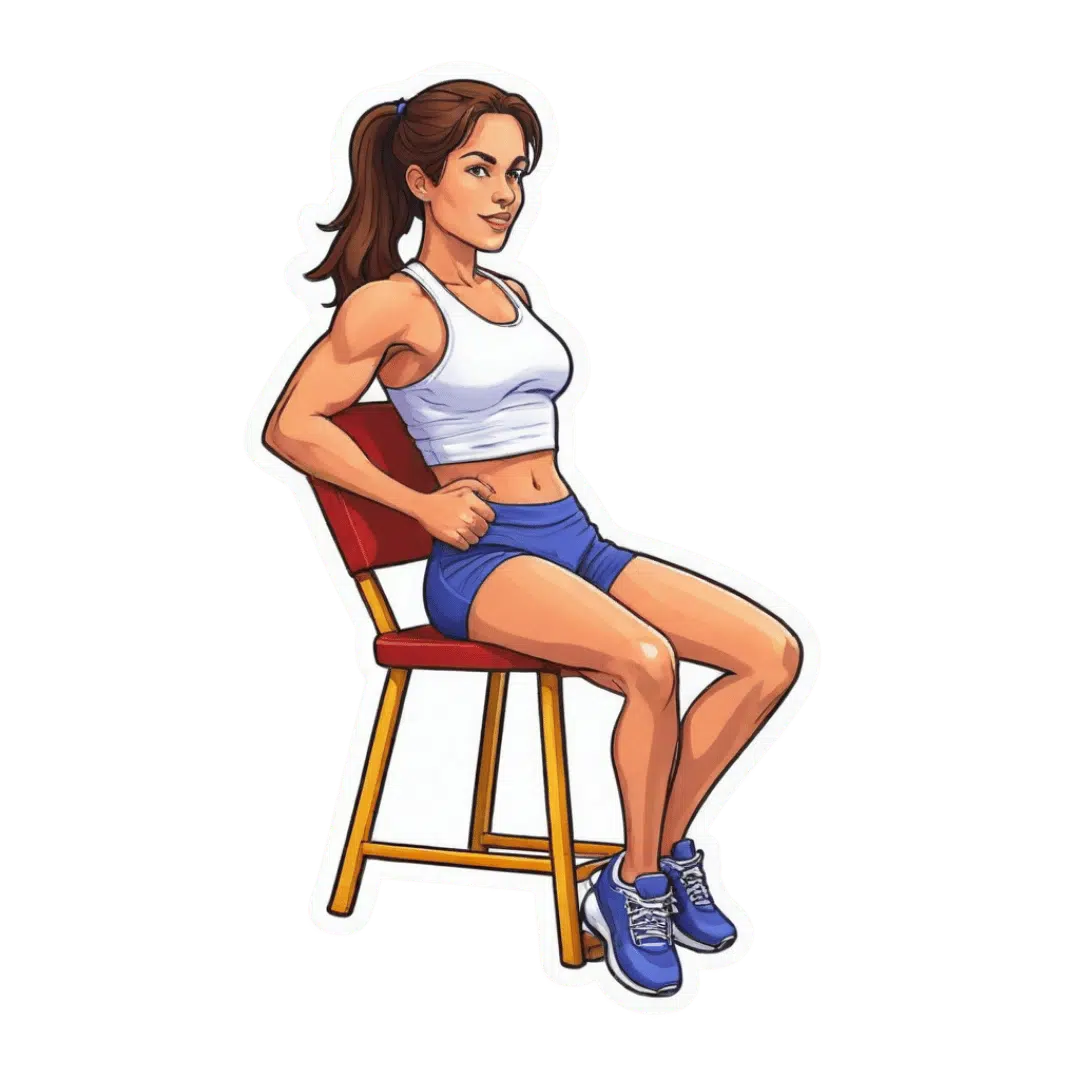
If you’re still at the happy stage of prevention rather than cure, then Dr. Suarez recommends hourly movement breaks at a desk job, weight-shifting and calf flexing if standing all day, routine leg elevation (especially evenings), wearing compression if at high risk, protecting the skin, and paying attention to early signs like swelling or visible veins.

For more on all of this, enjoy:

Click Here If The Embedded Video Doesn’t Load Automatically!

Want to learn more?

You might also like:

Remedies To Reduce Varicose Veins (Or Avoid Them Entirely)

Take care!

Don’t Forget…

Did you arrive here from our newsletter? Don’t forget to return to the email to continue learning!
  • Dial Down Your Pain
    Meet Dr. Christiane Wolf, dual MD and PhD, as she breaks down mindfulness in pain management and invites an examination of pain’s physical sensations, emotions, and narrative to aid healing.

Learn to Age Gracefully

Join the 98k+ American women taking control of their health & aging with our 100% free (and fun!) daily emails:

  • What Does Kaempferol Do, Anyway?

    10almonds is reader-supported. We may, at no cost to you, receive a portion of sales if you purchase a product through a link in this article.

    It’s Q&A Day at 10almonds!

    Have a question or a request? We love to hear from you!

    In cases where we’ve already covered something, we might link to what we wrote before, but will always be happy to revisit any of our topics again in the future too—there’s always more to say!

    As ever: if the question/request can be answered briefly, we’ll do it here in our Q&A Thursday edition. If not, we’ll make a main feature of it shortly afterwards!

    So, no question/request too big or small 😎

    ❝In the this or that article, you said kampeferol was a famously good flavonol on a par with quercetin, does it do the same thing or does it do something different, and is it worth supplementing?❞

    So, this will be in reference to a This-or-That from last week:

    Cantaloupe vs Cucumber – Which is Healthier?

    Let’s break down your question into parts:

    • Is it comparable to quercetin?
    • Does it have special properties of its own?
    • Is it worth supplementing?

    Is it comparable to quercetin?

    They are both flavonols, and potent ones at that. Similarities include that they’re found in many of the same plants, and that (like most if not all polyphenols) they have antioxidant and anti-inflammatory benefits, which in turn usually translate to anti-aging and anticancer benefits too.

    You can read more about quercetin here: Fight Inflammation & Protect Your Brain, With Quercetin

    You can read more about polyphenols in general here: 21 Most Beneficial Polyphenols & What Foods Have Them ← quercetin and kaempferol are #1 and #2 on this list, respectively

    Does it have special properties of its own?

    Yes it does!

    ❝Epidemiological studies have shown an inverse relationship between kaempferol intake and cancer.

    Kaempferol may help by augmenting the body’s antioxidant defense against free radicals, which promote the development of cancer.

    At the molecular level, kaempferol has been reported to modulate a number of key elements in cellular signal transduction pathways linked to apoptosis, angiogenesis, inflammation, and metastasis.

    Significantly, kaempferol inhibits cancer cell growth and angiognesis and induces cancer cell apoptosis, but on the other hand, kaempferol appears to preserve normal cell viability, in some cases exerting a protective effect.❞

    Read in full: A review of the dietary flavonoid, kaempferol on human health and cancer chemoprevention

    It is also particularly good for the gut:

    ❝Most recently, an increasing number of studies have demonstrated the significance of kaempferol in the regulation of intestinal function and the mitigation of intestinal inflammation❞

    Read in full: A Critical Review of Kaempferol in Intestinal Health and Diseases

    This also means it is particularly efficacious against food allergies:

    ❝we screened food ingredients with the expectation of finding dietary compounds that exert beneficial effects on intestinal immune tolerance and identified kaempferol, a flavonoid, as the compound that most effectively increased Aldh1a2 mRNA levels❞

    (that’s good)

    Read in full: Kaempferol Exerts Anti-Inflammatory Effects by Accelerating Treg Development via Aryl Hydrocarbon Receptor-Mediated and PU.1/IRF4-Dependent Transactivation of the Aldh1a2/Raldh2 Gene in Dendritic Cells

    That one’s a bit scientifically denser than we usually try to find when citing sources here, so here’s a pop-science article about the same thing, which explains in more words than we have room to here:

    Flavonoid kaempferol could offer natural relief for food allergies ← much lighter reading, but still very informative

    Kaempferol (like quercetin, granted) is also a potent neuroprotective agent, not least of all because its anti-inflammatory powers extend to reducing neuroinflammation (not everything does, because not everything we ingest can pass the blood-brain barrier to affect what goes on in the brain):

    Kaempferol, a potential neuroprotective agent in neurodegenerative diseases: From chemistry to medicine

    …and more:

    ❝it may be used to treat numerous acute and chronic inflammation-induced diseases, including intervertebral disc degeneration and colitis, as well as post-menopausal bone loss and acute lung injury. In addition, it has beneficial effects against cancer, liver injury, obesity and diabetes, inhibits vascular endothelial inflammation, protects the cranial nerve and heart function, and may be used for treating fibroproliferative disorders, including hypertrophic scar.❞

    Read in full: Recent progress regarding kaempferol for the treatment of various diseases

    Is it worth supplementing?

    If you eat a lot of leafy greens, cruciferous vegetables, and/or citrus fruits, and/or drink tea (true teas from tea plants, not miscellaneous herbal infusions), then you probably get a good dose of kaempferol already.

    However, if you want to supplement, hawthorn berry is not a bad one to go with, like this example product on Amazon 😎

    We wrote about this before, here: Hawthorn For The Heart (& More)

    As for teas, if you’re wondering about the merits of black, white, green or red, check out:

    Black, White, Green, Red: Which Kind Of Tea Is Best For The Health, According To Science? ← this covers many factors

    Enjoy!

    Share This Post

  • Waist Size Worries: Age-Appropriate Solutions

    10almonds is reader-supported. We may, at no cost to you, receive a portion of sales if you purchase a product through a link in this article.

    It’s Q&A Day at 10almonds!

    Have a question or a request? You can always hit “reply” to any of our emails, or use the feedback widget at the bottom!

    In cases where we’ve already covered something, we might link to what we wrote before, but will always be happy to revisit any of our topics again in the future too—there’s always more to say!

    As ever: if the question/request can be answered briefly, we’ll do it here in our Q&A Thursday edition. If not, we’ll make a main feature of it shortly afterwards!

    So, no question/request too big or small

    ❝My BMI is fine, but my waist is too big. What do I do about that? I am 5′ 5″ tall and 128 pounds and 72 years old.❞

    It’s hard to say without knowing about your lifestyle (and hormones, for that matter)! But, extra weight around the middle in particular is often correlated with high levels of cortisol, so you might find this of benefit:

    Lower Your Cortisol! (Here’s Why & How)

    Share This Post

  • You’ve Got Questions? We’ve Got Answers!

    10almonds is reader-supported. We may, at no cost to you, receive a portion of sales if you purchase a product through a link in this article.

    From Cucumbers To Kindles

    Q: Where do I get cucumber extract?

    A: You can buy it from BulkSupplements.com (who, despite their name, start at 100g packs)

    Alternatively: you want it as a topical ointment (for skin health) rather than as a dietary supplement (for bone and joint health), you can extract it yourself! No, it’s not “just juice cucumbers”, but it’s also not too tricky.

    Click Here For A Quick How-To Guide!

    Q: Tips for reading more and managing time for it?

    A: We talked about this a little bit in yesterday’s edition, so you may have seen that, but aside from that:

    • If you don’t already have one, consider getting a Kindle or similar e-reader. They’re very convenient, and also very light and ergonomicno more wrist strain as can occur with physical books. No more eye-strain, either!
    • Consider making reading a specific part of your daily routine. A chapter before bed can be a nice wind-down, for instance! What’s important is it’s a part of your day that’ll always, or at least almost always, allow you to do a little reading.
    • If you drive, walk, run, or similar each day, a lot of people find that’s a great time to listen to an audiobook. Please be safe, though!
    • If your lifestyle permits such, a “reading retreat” can be a wonderful vacation! Even if you only “retreat” to your bedroom, the point is that it’s a weekend (or more!) that you block off from all other commitments, and curl up with the book(s) of your choice.

    Q: Any study tips as we approach exam season? A lot of the productivity stuff is based on working life, but I can’t be the only student!

    A: We’ve got you covered:

    • Be passionate about your subject! We know of no greater study tip than that.
    • Find a willing person and lecture them on your subject. When one teaches, two learn!
    • Your mileage may vary depending on your subject, but, find a way of studying that’s fun to you!
    • If you can get past papers, get as many as you can, and use those as your “last minute” studying in the week before your exam(s). This will prime you for answering exam-style questions (and leverage state-dependent memory). As a bonus, it’ll also help ease any anxiety, because by the time of your exam it’ll be “same old, same old”!

    Q: Energy drinks for biohacking, yea or nay?

    A: This is definitely one of those “the dose makes the poison” things!

    But… The generally agreed safe dose of taurine is around 3g/day for most people; a standard Red Bull contains 1g.

    That math would be simple, but… if you eat meat (including poultry or fish), that can also contain 10–950mg per 100g. For example, tuna is at the high end of that scale, with a standard 12oz (340g) tin already containing up to 3.23g of taurine!

    And sweetened carbonated beverages in general have so many health issues that it’d take us a full article to cover them.

    Short version? Enjoy in moderation if you must, but there are definitely better ways of getting the benefits they may offer.

    Q: Best morning routine?

    A: The best morning routine is whatever makes you feel most ready to take on your day!

    This one’s going to vary a lot—one person’s morning run could be another person’s morning coffee and newspaper, for example.

    In a nutshell, though, ask yourself these questions:

    • How long does it take me to fully wake up in the morning, and what helps or hinders that?
    • When I get out of bed, what do I really need before I can take on my day?
    • If I could have the perfect morning, what would it look like?
    • What can evening me do, to look after morning me’s best interests? (Semi-prepare breakfast ready? Lay out clothes ready? Running shoes? To-Do list?)

    Q: I’m curious how much of these things you actually use yourselves, and are there any disagreements in the team? In a lot of places things can get pretty heated when it’s paleo vs vegan / health benefits of tea/coffee vs caffeine-abstainers / you need this much sleep vs rise and grinders, etc?

    A: We are indeed genuinely enthusiastic about health and productivity, and that definitely includes our own! We may or may not all do everything, but between us, we probably have it all covered. As for disagreements, we’ve not done a survey, but if you take an evidence-based approach, any conflict will tend to be minimized. Plus, sometimes you can have the best of both!

    • You could have a vegan paleo diet (you’d better love coconut if you do, though!
    • There is decaffeinated coffee and tea (your taste may vary)
    • You can get plenty of sleep and rise early (so long as an “early to bed, early to rise” schedule suits you!)

    Interesting note: humans are social creatures on an evolutionary level. Evolution has resulted in half of us being “night owls” and the other half “morning larks”, the better to keep each other safe while sleeping. Alas, modern life doesn’t always allow us to have the sleep schedule that’d suit each of us best individually!

    Have a question you’d like answered? Reply to this email, or use the feedback widget at the bottom! We always love to hear from you

    Share This Post

  • Make It Count: The Best Three Morning Stretches

    10almonds is reader-supported. We may, at no cost to you, receive a portion of sales if you purchase a product through a link in this article.

    When you’ve just woken up, do you open your eyes, do a flip out of bed, land in a superhero pose, and do an hour of physical training? No?

    The good news is, you don’t have to! Because even very short daily stretching sessions are more effective than occasional long ones:

    Just do literally a few minutes (in total) each day!

    Even just 20–30 seconds of each (each side) per day is enough for progress:

    1. Camel pose sweeps: dynamically stretch the hip flexors, abdominals, chest, and shoulders by sweeping one arm up while lifting your hips; this stimulates the nervous system by exposing vital organs, increasing adrenaline and energy*
    2. Lunge and hamstring sequence: start in a low lunge to open your hips and chest, then shift backwards into a hamstring stretch; alternate these movements to increase your flexibility and energy
    3. Twisting side body lift: seated with one leg bent, twist towards your bent leg, lift your hips and sweep your arm overhead, then lower into a side bend; this stretches the side of your body and boosts endorphin levels too, which is good at any time, but especially first thing in the morning

    *The reason this works this way is because it counteracts fetal-like sleeping posture; mild activation of the nervous system mimics the body’s natural survival response, promoting alertness without real danger—basically, it’s the gentle yoga asana equivalent of a cold shower!

    For more on all of these plus visual demonstrations, enjoy:

    Click Here If The Embedded Video Doesn’t Load Automatically!

    Want to learn more?

    You might also like:

    Stiff Joints? Do These 3 Stretches Every Morning To Avoid Pain ← an alternative set, if your goal for now is more restorative than progressive

    Take care!

    Don’t Forget…

    Did you arrive here from our newsletter? Don’t forget to return to the email to continue learning!

    Learn to Age Gracefully

    Join the 98k+ American women taking control of their health & aging with our 100% free (and fun!) daily emails:

  • Full Body Stretches (Without Getting On The Floor)

    10almonds is reader-supported. We may, at no cost to you, receive a portion of sales if you purchase a product through a link in this article.

    When it comes to exercise, do you love getting down on the floor? No?

    If you don’t, then mobility coach Alisa Szyman has just the thing for you:

    Stick to this

    This routine uses a dowel rod (or broomstick) to unlock your hips, spine, and shoulders. We’ll be doing warm-up, mobility, and active stretching. Here’s what it looks like, step-by-step:

    • Warm up:
      • Hold the dowel overhead and lower it to meet your lifted knee, alternating sides.
      • Put the dowel across your upper back, and rotate your torso from side to side with your hips facing forwards.
      • With the dowel behind you, make controlled torso circles forwards and backwards to loosen your mid-back.
      • If you take your time and prioritize good form, you should feel the difference (in a good way!) before proceeding to the exercises below.
    • Good morning: with the dowel behind your head, hinge forwards from your hips while keeping your spine long and chest open, then return upright.
    • Hamstring sweep: with a wide stance and soft knees, hinge at your hips and sweep your chest in a smooth arc from one side to the other, stretching your hamstrings and engaging your core.
    • Shoulder mobility: hold the dowel in one hand and rotate it behind your back to the other hand, passing it around your body slowly and with good, steady control.
    • Wrist stretch: hold the dowel in front with both hands; twist your wrists one way, then the other, feeling the stretch through your wrists, shoulders, and arms.
    • Lateral squat & twist: hold the dowel at hip level, shift into a side squat, twist your torso towards your bent leg, lean forwards slightly, and reach the dowel towards the floor.
    • Forward fold: with the dowel behind your back, hinge forwards from your hips, fold your torso towards the floor as your arms lift up and over your head, then return to standing.
    • Side bends: with one end of the dowel on the floor, and the other arm overhead reaching to the side, bend through your torso to stretch your the side of your body.
    • Spine rotation (lift and twist): hold the dowel in front with wide arms, lift one arm and rotate your torso towards that side, stretching your shoulder, chest, and upper back.
    • Spine rotation (parallel hold): with the dowel held straight at hip level, lift it to shoulder height as you rotate your torso to one side, keeping the dowel parallel to the floor, then return to center.
    • Hips, glutes & balance: using the dowel for support, lift your knee, hinge forwards from your hips, extend your back leg while lowering your chest, then return to the start to do the other side.
    • Hip abduction & curtsy lunge: using the dowel for balance again, lift your leg out to the side, then step it diagonally behind you into a curtsy lunge, returning to standing before repeating.
    • Sumo squat: with a wide stance with toes slightly out, hold the dowel and lift your arms parallel to the floor, lowering into a squat while keeping your chest tall, stretching and strengthening your inner thighs and groin as you do.
    • Full body stretch: with the dowel overhead and your arms straight, reach upwards as you inhale, then exhale as you fold forwards, relaxing your back; repeat with gentle side-to-side swaying.

    For more detail plus visual demonstrations that make it much easier than it might sound, enjoy:

    Click Here If The Embedded Video Doesn’t Load Automatically!

    Want to learn more?

    You might also like:

    3 Standing Abs Exercises You’ll Actually Feel Tomorrow

    Take care!

    Don’t Forget…

    Did you arrive here from our newsletter? Don’t forget to return to the email to continue learning!

    Learn to Age Gracefully

    Join the 98k+ American women taking control of their health & aging with our 100% free (and fun!) daily emails:

  • Carrot vs Sweet Potato – Which is Healthier?

    10almonds is reader-supported. We may, at no cost to you, receive a portion of sales if you purchase a product through a link in this article.

    Our Verdict

    When comparing carrot to sweet potato, we picked the sweet potato.

    Why?

    Both are great! But there’s a winner in the end:

    Looking at the macros first, sweet potato has more protein carbs, and fiber, and is thus the “more food per food” item. If they are both cooked the same, then the glycemic index is comparable, despite the carrot’s carbs having more sucrose and the sweet potato’s carbs having more starch. We’ll call this category a tie.

    In terms of vitamins, carrots have more of vitamins B9 and K, while sweet potatoes have more of vitamins B1, B2, B3, B5, B6. B7, C, and E. Both are equally high in vitamin A. Thus, the vitamins category is an overwhelming win for sweet potato.

    When it comes to minerals, carrots are not higher in any minerals (unless we count that they are slightly higher in sodium, but that is not generally considered a plus for most people in most places most of the time), while sweet potato is higher in calcium, copper, iron, magnesium, manganese, phosphorus, potassium, selenium, and zinc. Another easy win for sweet potato.

    Adding up the sections makes for a clear win for the sweet potato as the more nutritionally dense option, but as ever, enjoy either or both, as diversity is best!

    Want to learn more?

    You might like to read:

    What’s Your Plant Diversity Score?

    Take care!

    Don’t Forget…

    Did you arrive here from our newsletter? Don’t forget to return to the email to continue learning!

    Learn to Age Gracefully

    Join the 98k+ American women taking control of their health & aging with our 100% free (and fun!) daily emails: