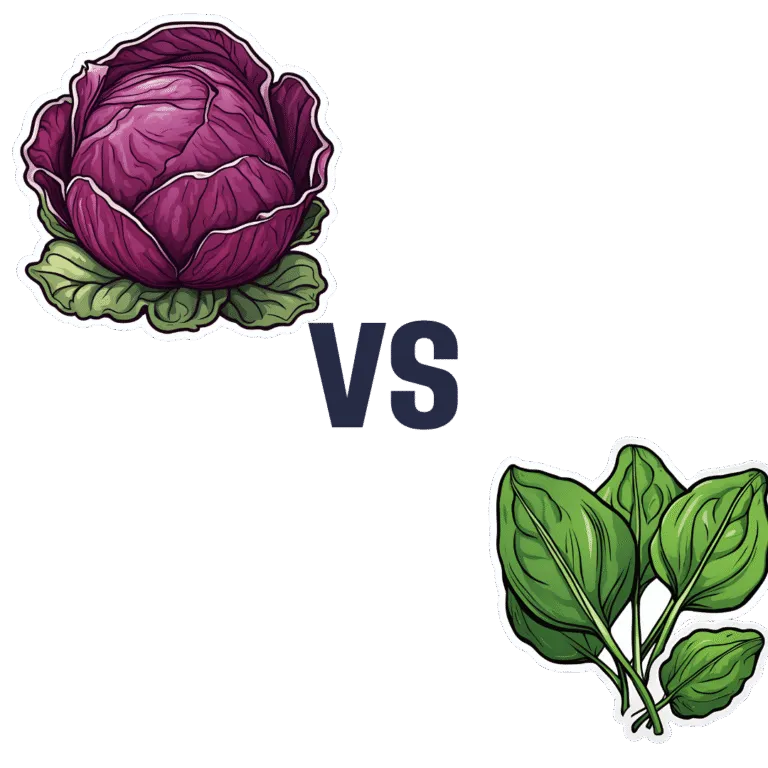
Cucumber vs Eggplant – Which is Healthier?

10almonds is reader-supported. We may, at no cost to you, receive a portion of sales if you purchase a product through a link in this article.

Our Verdict

When comparing cucumber to eggplant, we picked the eggplant.

Why?

In terms of macros, eggplant has 6x the fiber, as well as slightly more carbs and protein, making it the clear winner in this category.

In the category of vitamins, cucumber has more of vitamins A, C, and K, while eggplant has more of vitamins B1, B2, B3, B5, B6, B7, B9, E, and choline; an easy win for eggplant here.

When it comes to minerals, cucumber has more calcium, iron, and zinc, while eggplant has more copper, magnesium, manganese, and potassium; a marginal win for eggplant this time.

Looking at phytochemicals, the two vegetables are about equal here, with nothing especially noteworthy in their polyphenol profiles to set one ahead of the other. So, a tie.

Adding up the sections makes for a clear overall win for eggplant, but by all means enjoy either or both, as diversity is good!

Want to learn more?

You might like:

Some Surprising Truths About Hunger And Satiety ← our main feature in which we examine the science of volumetrics, including a study that shows how water incorporated into a food (but not served with a food) decreases caloric intake. So, cucumbers are great for this.

Enjoy!

Don’t Forget…

Did you arrive here from our newsletter? Don’t forget to return to the email to continue learning!

Learn to Age Gracefully

Join the 98k+ American women taking control of their health & aging with our 100% free (and fun!) daily emails:

  • What’s the difference between food poisoning and gastro? A gut expert explains

    10almonds is reader-supported. We may, at no cost to you, receive a portion of sales if you purchase a product through a link in this article.

    If you’ve got a dodgy tummy, diarrhoea and have been vomiting, it’s easy to blame a “tummy bug” or “off food”.

    But which is it? Gastro or food poisoning?

    What’s the difference anyway?

    Andrey_Popov/Shutterstock

    What’s gastroenteritis?

    Gastroenteritis, or gastro for short, is a gut infection caused by a virus, bacterium or other microbe.

    The gut is teeming with cells including healthy microbes and the cells lining the gut. But when viruses, bacteria and other microbes start to invade your gut, they colonise, build up in large numbers and eventually cause the cells lining the gut to inflame. The “-itis” at the end of gastroenteritis means inflammation.

    Gastroenteritis is extremely common. In Australia there are an estimated 17.2 million cases a year.

    So where do these gastro-causing microbes come from? Eating contaminated food is often the source.

    However you can acquire these microbes in other ways. For example, if you touch a surface where someone sick from viral gastroenteritis had vomited on, that virus could transfer to your hands. And if your hands touched your mouth, you in turn could contract viral gastroenteritis.

    What’s food poisoning?

    Food poisoning refers to getting sick from eating food contaminated with chemicals, microbes or toxins.

    For example if you ate food contaminated with insecticides or methyl alcohol (methanol) that would count as food poisoning. If you ate puffer fish or poisonous mushrooms that would count too. But food poisoning doesn’t include the effects of eating a food you’re allergic to.

    The vast majority of food poisonings are as a result of food contaminated by microbes and their toxins. When you eat or drink them it’s like a missile strike. The toxins in particular can rapidly cause inflammation and damage the lining of the gut.

    To add to the confusion, food poisoning is often referred to as foodborne gastroenteritis.

    Food poisoning (or foodborne gastroenteritis) is also common in Australia. It accounts for about one-third of all cases of gastroenteritis or an estimated 5.4 million cases every year.

    How can we tell the two apart?

    Both gastroenteritis and food poisoning have symptoms such as diarrhoea, vomiting, nausea, abdominal cramps, fever and headaches. But these symptoms can come on in different ways.

    Viral gastroenteritis, such as with norovirus, usually causes symptoms 24–48 hours after exposure, which can last for one to two days.

    But food poisoning after eating microbial toxins can come on very quickly. For example, toxins from the bacterium Staphylococcus aureus can cause symptoms within 30 minutes of eating contaminated food, such as undercooked meat. Fortunately, symptoms usually get better within 24 hours.

    Symptoms don’t always come on so quickly in all cases of bacterial food poisoning. For example, it can take as long as 70 days between exposure to Listeria and symptoms occurring, although, on average it’s about three weeks. This long incubation period can make it difficult to work out if a particular food is responsible for someone getting sick.

    As a general guide food poisoning occurs quite quickly (within hours of eating contaminated food) while gastroenteritis can take a day or more after eating to get sick. But there is no hard and fast rule.

    Woman cutting soft cheese on board, with croissants, juice and baguettes on table
    It can take weeks from eating soft cheese contaminated with Listeria before you have symptoms. In Green/Shutterstock

    How do I prevent them?

    The same precautions when handling food apply to preventing both gastroenteritis and food poisoning. These steps not only lower your risk of being affected in the first place, they lower your risk of you infecting others.

    Wash your hands thoroughly with soap and water before preparing food. Use separate cutting boards and utensils for raw and cooked foods to help avoid cross-contamination. Cook food thoroughly and store it at safe temperatures.

    Gastroenteritis can involve transmission of microbes through means other than food, for instance, via poo on your hands if you don’t wash your hands after using the toilet or after changing a child’s nappy. So wash your hands afterwards.

    To prevent others from becoming sick, make sure you quickly disinfect contaminated surfaces thoroughly after someone vomits or has diarrhoea. First, put on gloves and wash surfaces with hot water and a detergent. Then disinfect using household bleach containing 0.1% hypochlorite.

    How can I get better?

    Treating both gastroenteritis and food poisoning focuses on preventing dehydration and relieving symptoms.

    To avoid dehydration, drink plenty of fluids. For moderate or severe cases, you can buy commercial oral rehydration solution from a pharmacy.

    You can also make your own oral rehydration solution by adding 6 teaspoons of sugar, ½ teaspoon of salt and ½ teaspoon of sodium bicarbonate to a litre of water. You can splash in some cordial for taste.

    If symptoms are severe or persist you should see your GP or go to the emergency department.

    Vincent Ho, Associate Professor and Clinical Academic Gastroenterologist, Western Sydney University

    This article is republished from The Conversation under a Creative Commons license. Read the original article.

    Share This Post

  • Wouldn’t It Be Nice To Have Regenerative Superpowers?

    10almonds is reader-supported. We may, at no cost to you, receive a portion of sales if you purchase a product through a link in this article.

    The Best-Laid Schemes of Mice and Medical Researchers…

    This is Dr. Ellen Heber-Katz. She’s an internationally-renowned immunologist and regeneration biologist, but her perhaps greatest discovery was accidental.

    Unlike in Robert Burns’ famous poem, this one has a happy ending!

    But it did involve the best-laid schemes of mice and medical researchers, and how they did indeed “gang gagly“ (or in the English translation, “go awry”).

    How it started…

    Back in 1995, she was conducting autoimmune research, and doing a mouse study. Her post-doc assistant was assigned to punch holes in the ears of mice that had received an experimental treatment, to distinguish them from the control group.

    However, when the mice were later checked, none of them had holes (nor even any indication there ever had been holes punched)—the experiment was ruined, though the post-doc swore she did her job correctly.

    So, they had to start from scratch in the new year, but again, a second batch of mice repeated the trick. No holes, no wounds, no scarring, not disruption to their fur, no damage to the cartilage that had been punched through.

    In a turn of events worthy of a superhero origin story, they discovered that their laboratory-made autoimmune disease had accidentally given the mice super-healing powers of regeneration.

    In the animal kingdom, this is akin to a salamander growing a new tail, but it’s not something usually found in mammals.

    Read: A New Murine Model for Mammalian Wound Repair and Regeneration

    How it’s going…

    Dr. Heber-Katz and colleagues took another 20 years of work to isolate hypoxia-inducible factor-1a (HIF-1a) as a critical molecule that, if blocked, would eliminate the regenerative response.

    Further, a drug (which they went on to patent), 1,4-dihydrophenonthrolin-4-one-3-carboxylic acid (1,4-DPCA), chemically induced this regenerative power:

    See: Drug-induced regeneration in adult mice

    Another 5 years later, they found that this same drug can be used to stimulate the regrowth of bones, too:

    An injectable hydrogel-formulated inhibitor of prolyl-4-hydroxylase promotes T regulatory cell recruitment and enhances alveolar bone regeneration during resolution of experimental periodontitis

    And now…

    The research is continuing. Here’s the latest, a little over a month ago:

    Epithelial–mesenchymal transition: an organizing principle of mammalian regeneration

    Regrowing nerves has also been added into the list of things the drug can do.

    What about humans?

    Superpowered mice are all very well and good, but when can we expect this in humans?

    The next step is testing the drug in larger animals, which she hopes to do next year, followed eventually by studies in humans.

    Read the latest:

    Regrowing nerves and healing without scars? A scientist’s career-long quest comes closer to fruition

    Very promising!

    Share This Post

  • Creatine’s Brain Benefits Increase With Age

    10almonds is reader-supported. We may, at no cost to you, receive a portion of sales if you purchase a product through a link in this article.

    Creatine is generally thought of as a body-building supplement, and for most young people, that’s all it is. But with extra years come extra advantages, and creatine starts to confer cognitive benefits. Dr. Brad Stanfield shares the science:

    What the science says

    Although 95% of creatine is stored in muscles, 5% is found in the brain, where it helps produce energy needed for brain processes (and that’s a lot of energy—about 20% of our body’s metabolic base rate is accounted for by our brain).

    In this video, Dr. Stanfield shares studies showing creatine improving memory, especially in older adults—and also in vegetarians/vegans, since creatine is found in meat (just like in our own bodies, which are also made of meat) and not in plants. On the meta-analysis level, a systematic review concluded that creatine supplementation indeed improves memory, with stronger effects observed in older adults.

    Dr. Stanfield also addresses the safety concerns about creatine, which, on balance, are not actually supported by the science (of course, always consult your own doctor to be sure, as your case could vary).

    As for dosage, 5g/day is recommended. For more on all of this plus links to the studies cited, enjoy:

    Click Here If The Embedded Video Doesn’t Load Automatically!

    Want to learn more?

    You might also like to read:

    Creatine: Very Different For Young & Old People

    Take care!

    Share This Post

  • The Brain Health Book – by Dr. John Randolph

    10almonds is reader-supported. We may, at no cost to you, receive a portion of sales if you purchase a product through a link in this article.

    The author, a clinical neuropsychologist and brain health consultant, brings his professional knowledge and understanding to bear on the questions of what works, what doesn’t, and why?

    In practical terms, the focus is mostly on maintaining/improving attention, memory, and executive functions. To that end, he covers what kinds of exercises to do (physical and mental!), and examines what strategies make the most difference—including the usual lifestyle considerations of course, but also more specifically than that, what to prioritize over what when it comes to daily choices.

    The style is easy pop-science, with an emphasis on being directly useful to the reader, rather than giving an overabundance of citations for everything as we go along. He does, however, explain the necessary science as we go, making the book educational without being academic.

    Bottom line: if you’d like to maintain/improve your brain, this book can certainly help with that, and as a bonus (unless you are already an expert) you’ll learn plenty about the brain as you go.

    Click here to check out The Brain Health Book, and use the power of neuroscience to improve your life!

    Don’t Forget…

    Did you arrive here from our newsletter? Don’t forget to return to the email to continue learning!

    Learn to Age Gracefully

    Join the 98k+ American women taking control of their health & aging with our 100% free (and fun!) daily emails:

  • Sticky Jackfruit Burgers

    10almonds is reader-supported. We may, at no cost to you, receive a portion of sales if you purchase a product through a link in this article.

    All the taste and experience of pulled pork, without the increased risk of cancer and metabolic disease. On the contrary, jackfruit introduces lots of fiber, vitamins, carotenoids, and flavanones. We’ll have to do a main feature about jackfruit sometime; it’s an unusual fruit especially for its protein content, but for now, let’s get cooking!

    You will need

    • 1 can (14oz/400g) green jackfruit, drained (the flesh will not, in fact, be green—this is referring to the fruit being unripe and thus still firm in texture, which is what we want. The outside of the fruit, which will not be in the can, will have been green)
    • 1/4 red cabbage, thinly sliced
    • 1/2 carrot, grated
    • 6 mangetout, thinly sliced
    • 2 tbsp mayonnaise (your preference what kind, and yes, vegan is fine too)
    • 1 tbsp extra virgin olive oil
    • 1 tbsp gochujang paste (if you can’t find gochujang paste locally, you can either order it online (here it is on Amazon) or substitute with harissa paste, which is not the same—it uses different spices—but will do the same job here re texture, umami taste, and level of spiciness)
    • 1 tbsp soy sauce
    • 1 tbsp balsamic vinegar
    • 1 tsp apple cider vinegar
    • 1 tsp garlic paste
    • 1 tsp tomato paste
    • 1 tsp ginger paste
    • 1 tsp chili flakes
    • 3½ fl oz water
    • 2 burger buns (unless you make them yourself, burger buns will probably not be healthy; you can, however, also look for small round wholemeal breads—the name of which varies far too much by region for us to try to get a catch-all name here—and use them in place of burger buns)

    Method

    (we suggest you read everything at least once before doing anything)

    1) Combine the garlic paste, ginger paste, tomato paste, gochujang paste, soy sauce, balsamic vinegar, and chili flakes in a saucepan

    2) Boil the 3½ fl oz water we mentioned; add it to the saucepan, mixing well, turn on the heat and let it simmer for 5 minutes or until it is thick and sticky (it will thicken more as it cools, too, so don’t worry if it doesn’t seem thick enough yet). Set it aside.

    3) Dry the jackfruit (using strong kitchen paper should be fine), add the olive oil to a skillet and bring it to a high heat; add the jackfruit and fry on both sides for a few minutes, until it looks cooked (remember, while this may look like animal meat, it’s not, so there’s no danger of undercooking here).

    4) When the jackfruit looks a nice golden-brown, add two thirds of the sauce from the saucepan, and break apart the jackfruit a bit (this can be done with a wooden/bamboo spatula, so as to not damage your pan), When it all looks how you’d expect pulled jackfruit (or pulled pork) to look, take it off the heat.

    5) Combine the carrot, cabbage, and mangetout in a small bowl, adding the apple cider vinegar and mixing well; this will be the coleslaw element

    6) Mix the remaining sauce with the mayonnaise

    7) (optional) toast the burger buns

    8) Assemble the burgers; we recommend the following order: bottom bun, pulled jackfruit, coleslaw, gochujang mayo, top bun

    Enjoy!

    Want to learn more?

    For those interested in some of the science of what we have going on today:

    Take care!

    Don’t Forget…

    Did you arrive here from our newsletter? Don’t forget to return to the email to continue learning!

    Learn to Age Gracefully

    Join the 98k+ American women taking control of their health & aging with our 100% free (and fun!) daily emails:

  • Cucumber Canapés-Crudités

    10almonds is reader-supported. We may, at no cost to you, receive a portion of sales if you purchase a product through a link in this article.

    It’s time to party with these delicious snacks, which are great as an hors d’œuvre, amuse-bouche, or part of a buffet. And like all our offerings, they’re very healthy too—in this case, especially for the gut and heart!

    You will need

    • 1 cucumber, sliced
    • 1 cup pitted Kalamata olives (or other black olives)
    • 1 cup sun-dried tomatoes
    • 2 oz feta cheese (or vegan equivalent, or pine nuts)
    • 2 tbsp extra virgin olive oil
    • 1 tbsp fresh basil, chopped
    • 2 tsp black pepper, coarse ground

    Method

    (we suggest you read everything at least once before doing anything)

    1) Make the first topping by combining the olives, half the olive oil, and half the black pepper, into a food processor and blending until it is a coarse pâté.

    2) Make the second topping by doing the same with the tomatoes, basil, feta cheese (or substitution), and the other half of the olive oil and black pepper, again until it is a coarse pâté.

    3) Assemble the canapés-crudités by topping the cucumber slices alternately with the two toppings, and serve:

    Enjoy!

    Want to learn more?

    For those interested in some of the science of what we have going on today:

    Take care!

    Don’t Forget…

    Did you arrive here from our newsletter? Don’t forget to return to the email to continue learning!

    Learn to Age Gracefully

    Join the 98k+ American women taking control of their health & aging with our 100% free (and fun!) daily emails: