“Bulletproof” Your Knees With This Routine

10almonds is reader-supported. We may, at no cost to you, receive a portion of sales if you purchase a product through a link in this article.

Knees are the most injury-prone joint in sports (41% of injuries), due to their structural instability compared to the hip (surrounded by strong muscles) and ankle (supported by bones), while also bearing full body weight. For the same reasons, they can become quite a liability as we get older. But, we can improve our odds a lot:

For reliable knees…

While this routine won’t make your knees literally invulnerable (alas), it will increase the strength, resilience, and mobility around the knee joint to facilitate pain-free movement and avoid injuries:

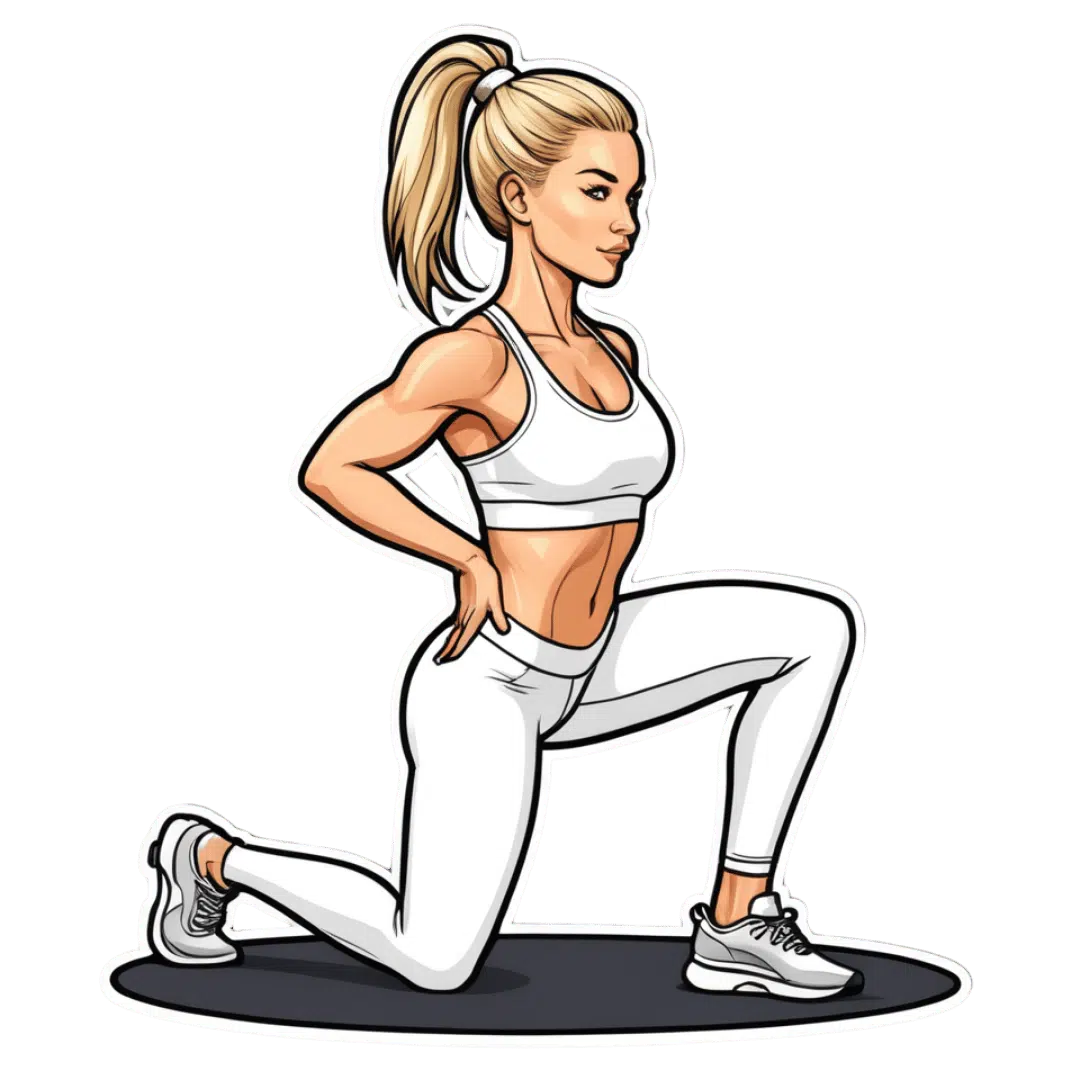
  1. Poliquin step-up: targets the vastus medialis oblique (VMO), a key quad muscle for knee stability; done on a 6-inch elevated surface with heel raised, focusing on alignment and pelvic control to correct inner-outer knee strength imbalance.
  2. Quad stretch: stretches tight quads that can misalign the kneecap and cause pain; done using a bench while tucking the pelvis to intensify the stretch—hold for 30 seconds, ideally repeating 3 times per leg.
  3. Hamstring curls with resistance band: strengthens hamstrings, which stabilize the knee during flexion; resistance band adds tension where the knee is most vulnerable—aim for 8–12 reps, 3 sets (machine alternative is fine too).
  4. Hip mobility drill: enhances hip mobility to prevent stress from transferring to the knee; involves seated leg rotations and contract-relax stretching of outer glutes—more mobile hips reduce injury risk overall.

Limitation: if you have a connective tissue disorder such as some kind of Ehlers-Danlos Syndrome (there are many kinds; it’s an umbrella term), there’s a good chance that no matter how much you strengthen it, your associated nerves aren’t going to believe it, so every now and again your legs will still fold like laundry no matter how strong they are. These exercises still have merit though, as they will help avoid exactly the kind of injury that the “oh no, collapse immediately!” response in EDS is also trying to help you avoid.

For more on these exercises, plus visual demonstrations, enjoy:

Click Here If The Embedded Video Doesn’t Load Automatically!

Want to learn more?

You might also like:

The Best Exercise to Stop Your Legs From Giving Out

Take care!

Don’t Forget…

Did you arrive here from our newsletter? Don’t forget to return to the email to continue learning!

Learn to Age Gracefully

Join the 98k+ American women taking control of their health & aging with our 100% free (and fun!) daily emails:

  • Ras El-Hanout

    10almonds is reader-supported. We may, at no cost to you, receive a portion of sales if you purchase a product through a link in this article.

    This is a spice blend, and its name (رأس الحانوت) means “head of the shop”. It’s popular throughout Morocco, Algeria, and Tunisia, but can often be found elsewhere. The exact blend will vary a little from place to place and even from maker to maker, but the general idea is the same. The one we provide here today is very representative (and for an example of its use, see our Marrakesh Sorghum Salad recipe!).

    Note: we’re giving all the quantities in whole tsp today, to make multiplying/dividing easier if you want to make more/less ras el-hanout.

    You will need

    • 6 tsp ground ginger
    • 6 tsp ground coriander seeds
    • 4 tsp ground turmeric
    • 4 tsp ground sweet cinnamon
    • 4 tsp ground cumin
    • 2 tsp ground allspice ← not a spice mix! This is the name of a spice!
    • 2 tsp ground cardamom
    • 2 tsp ground anise
    • 2 tsp ground black pepper
    • 1 tsp ground cayenne pepper
    • 1 tsp ground cloves

    Note: you may notice that garlic and salt are conspicuous by their absence. The reason for this is that they are usually added separately per dish, if desired.

    Method

    1) Mix them thoroughly

    That’s it! Enjoy!

    Want to learn more?

    For those interested in some of the science of what we have going on today:

    Take care!

    Share This Post

  • The Longevity Formula – by James Smart

    10almonds is reader-supported. We may, at no cost to you, receive a portion of sales if you purchase a product through a link in this article.

    This book is, notwithstanding the title, less a formula and more a long list of actionable things one can do to improve one’s healthy longevity, which list is then summarized at the end in a chapter entitled “101 science-backed methods for increasing your lifespan and achieving long-term wellness”.

    We see the usual items of understanding what causes/promotes aging, and thus how to fight that with diet, exercise, rest, and healthy habits in general (e.g. fasting, hot/cold therapy, vagus nerve stimulation, breathing exercises, etc), as well as medical practices (e.g. allergy testing, stem cell injection, blood glucose monitoring, etc), plus complementary therapies that have at least some scientific backing.

    The style is a little “salesy” despite not actually selling anything beyond ideas, but it’s all sound advice. There are short-form in-line citations, there’s a full bibliography at the back.

    Bottom line: if you’d like a lot of healthy longevity tips packed into a 200-page book, this is it.

    Click here to check out The Longevity Formula, and optimize your healthy lifespan!

    Share This Post

  • Will my boobs sag if I don’t wear a bra? And 5 other common questions about breasts and bras

    10almonds is reader-supported. We may, at no cost to you, receive a portion of sales if you purchase a product through a link in this article.

    We’re all born with mammary glands – better known as breasts. These are made of glandular tissue, fat and the ligaments that attach them to our chest wall.

    For roughly half of us – those born biologically female – our breasts will change dramatically in size and shape at puberty. Size is largely genetic: genes explain 56% of the differences in breast size between people. But breasts may also change during pregnancy and breastfeeding, and can be affected by age, diet and exercise.

    So, what about bras?

    There are a lot of popular beliefs about when, how and what kind of bra to wear to stop your boobs sagging or make them grow. But is there any evidence behind these?

    Before we myth bust, let’s get one thing straight: breasts are sisters, not twins. So, while your bra is symmetrical, it’s normal your breasts aren’t.

    Pixel-Shot/Shutterstock

    1. Do bras give you cancer?

    No, there is no evidence to show wearing a bra is linked to developing breast cancer.

    This myth seems to come from the idea bras can block lymphatic drainage, but there is no evidence to support this or any other cancer-causing mechanism.

    One study, involving more than 1,000 women aged 55 to 74, compared those diagnosed with breast cancer to those without. Researchers found no aspect of bra-wearing – including how many hours per day and whether it had an underwire – was linked to breast cancer risk in post-menopausal women.

    Risk factors for breast cancer are well established and include being female, over 50 years old, having a family history of breast cancer, and lifestyle factors such as inactivity and drinking a lot of alcohol.

    2. Does sleeping in a bra stop your boobs growing?

    No. Wearing a bra – day or night – won’t affect their size.

    Breasts grow thanks to hormones, which are regulated by your brain. Nutrition and overall health can also play a role; for example, if you lose body fat, your breasts may also shrink.

    There is no evidence to suggest sleeping with a bra has a negative effect on their growth.

    So, it comes down to comfort. Women with larger breasts may find a bra reduces how much their breasts move during sleep, while others may find it uncomfortable.

    Woman sitting in bed with green eiderdown wearing black crop top stretches arms above head.
    If sleeping in a bra is comfortable for you, don’t worry – it doesn’t affect boob size. Willie B. Thomas/Getty

    3. Will wearing a bra stop my breasts sagging?

    No.

    Gravity affects everyone, meaning breasts will sag as we age. But larger breasts are affected more by gravitational forces pulling them towards the ground. This may stretch the skin and ligaments over time, making them sag more.

    Being pregnant also usually makes your breasts grow bigger and this – along with milk production affecting their composition – can increase strain, potentially stretching skin and ligaments.

    Some other factors can also increase this effect, including being older, having a higher body mass index, having multiple pregnancies and smoking. Even surgically reduced breasts sag more with smoking.

    However, breastfeeding does not appear to make breasts saggy.

    So, while we don’t have evidence to show bras can prevent natural sagging, a well-fitted one may offer support and comfort.

    4. Should you only exercise in a sports bra?

    Yes. Breasts and bras move with your body. The pull of gravity on your breasts has the potential to cause damage by straining the skin and breaking collagen fibres which support the structure of the breast.

    Again, this is more likely to affect women with larger breasts. Researchers found when women with D-cups exercised without a sports bra, their breasts moved up and down about 4 centimetres when walking. When they ran, their breasts bounced about 15cm – the height of your smartphone.

    High-impact sports bras are the most effective at reducing breast movement and discomfort, compared to crop tops and everyday bras.

    So exercising in a bandeau or “boob tube” bra – like these Roman women in a 4th century mosaic – is not recommended.

    Roman mosaic of a woman with dumbbells and a woman lifting a ball exercising in bandeau bras.
    These strips of fabric pulled across the chest don’t offer support against gravity and bounce. izanbar/Getty

    5. Can underwire bras injure your boobs?

    Yes. It’s possible for underwires from bras to escape their casing and scratch or dig into your breast skin, but this has not been studied.

    However, one 2023 study found women who wear underwire bras after breast implants are 2.7 more times likely to have them rupture. This suggests underwire bras can put more pressure on breasts.

    One case study in 2014 suggested a tight underwire bra was responsible for blocking and inflaming breast veins, causing pain and breast tissue to harden.

    However we don’t have evidence this condition is common, and it can be avoided by wearing correctly fitted bras. If you have breast pain or notice unusual lumps or changes, speak to a doctor.

    6. Should I get fitted if I have small breasts?

    Yes. Wearing a poorly fitting bra can cause unnecessary discomfort, even if you have small breasts.

    One study of 309 Australian women, with bra cup sizes ranging from A to K, found only one in ten were wearing a bra that fitted correctly. This affected women with small, medium, large and extremely large breasts equally.

    Most had an incorrectly fitting backband (either too loose or too tight) and the wrong cup size. However women with smaller breasts were more likely to have badly fitting bra straps while women with medium or larger breasts were more likely to have ill-fitting front bands and underwire.

    A 2018 review of evidence about women with benign but unidentified breast pain (mastalgia) also found most experienced relief when offered bra-fitting advice and reassurance from their GP.

    Amanda Meyer, Senior Lecturer, Anatomy and Pathology in the College of Medicine and Dentistry, James Cook University and Monika Zimanyi, Associate Professor in Anatomy, James Cook University

    This article is republished from The Conversation under a Creative Commons license. Read the original article.

    Share This Post

  • Dr. Stacy Sims’ Guide to Fitness and Nutrition after 40

    10almonds is reader-supported. We may, at no cost to you, receive a portion of sales if you purchase a product through a link in this article.

    It’s worth noting that Dr. Sims has directed research programs at Stanford University focusing on female athlete health and performance, and she also has 94 peer-reviewed papers on the topic to her name.

    Here’s what she has to say for those of us in the “women over 40” bracket:

    What most people miss

    Some notes on daily rhythm: Dr. Sims recommends to eat within an hour of waking, because cortisol spikes about 30 minutes afterwards, so, we can counter it with breakfast. She also advises we bookend our workouts with food, especially 30–40g of protein afterwards. Eat regularly through the day, have an adequate dinner, and avoid eating after dinner, to work with normal hormonal fluctuations.

    You may be thinking “but I have long since menopaused; I do not have hormonal fluctuations”; in such a case, then do remember that “hormonal” doesn’t just mean sex hormones, it also means cortisol, serotonin, dopamine, leptin, ghrelin, insulin, and many others!

    About heavy lifting after 40: declining estrogen changes muscle signalling, so women must rely more on central-nervous-system stimulation. Heavy loads create this stimulus, improving strength, power, lean mass, and nerve firing when hormonal signalling is reduced. So, lift heavy! But, also safely, please.

    Some specific notes on high-intensity interval training (HIIT) of various kinds:

    • SIT (sprint interval training): very short maximal bursts of 30 seconds or less at perceived exertion 9–10, followed by long recovery. effective for metabolic control and for signalling between skeletal muscle, the liver, and visceral fat. two intervals are usually the maximum for beginners if the effort is truly maximal.
    • High-intensity training in general: true high intensity (e.g. 1–4 minute efforts at 80–90% of maximum heartrate with equal recovery) generates hormones that help lower cortisol afterwards. Moderate intensity does not create the same adaptive hormonal response.

    On bone density, she recommends:

    • Don’t bother with weighted vests for walking: wearing a weighted vest while walking can maintain existing bone but does not stimulate new growth. Basically, it doesn’t improve bone density because it lacks multi-directional stress, which is what’s needed per Wolff’s Law.
    • Do use multi-directional jumps: for example, flat-footed pogo stick jumps or jumping rope, for about 10 minutes, three times per week. The “bone jump” app (developed from a 5-year study in 35–45-year-old women with low-normal bone density) provides structured jump progressions.

    Two biggest things she wants us all to take into account, if we remember nothing else:

    • Address sleep before fine-tuning training. Better sleep improves cravings, gut health, training response, and stress regulation.
    • Ignore diet fads and instead focus on meal timing, consistent intake, and sufficient protein. Match your nutrition to your stress levels and training.

    For more on all of this, enjoy:

    Click Here If The Embedded Video Doesn’t Load Automatically!

    Want to learn more?

    You might also like:

    Next Level – by Dr. Stacy Sims ← this is her book specifically about going from strength to strength through menopause and beyond 😎

    Take care!

    Don’t Forget…

    Did you arrive here from our newsletter? Don’t forget to return to the email to continue learning!

    Learn to Age Gracefully

    Join the 98k+ American women taking control of their health & aging with our 100% free (and fun!) daily emails:

  • What’s Your Plant Diversity Score?

    10almonds is reader-supported. We may, at no cost to you, receive a portion of sales if you purchase a product through a link in this article.

    We speak often about the importance of dietary diversity, and of that, especially diversity of plants in one’s diet, but we’ve never really focused on it as a main feature, so that’s what we’re going to do today.

    Specifically, you may have heard the advice to “eat 30 different kinds of plants per week”. But where does that come from, and is it just a number out of a hat?

    The magic number?

    It is not, in fact, a number out of a hat. It’s from a big (n=11,336) study into what things affect the gut microbiome for better or for worse. It was an observational population study, championing “citizen science” in which volunteers tracked various things and collected and sent in various samples for analysis.

    The most significant finding of this study was that those who consumed more than 30 different kinds of plants per week, had a much better gut microbiome than those who consumed fewer than 10 different kinds of plants per week (there is a bell curve at play, and it gets steep around 10 and 30):

    American Gut: an Open Platform for Citizen Science Microbiome Research

    Why do I care about having a good gut microbiome?

    Gut health affects almost every other kind of health; it’s been called “the second brain” for the various neurotransmitters and other hormones it directly makes or indirectly regulates (which in turn affect every part of your body), and of course there is the vagus nerve connecting it directly to the brain, impacting everything from food cravings to mood swings to sleep habits.

    See also:

    Any other benefits?

    Yes there are! Let’s not forget: as we see often in our “This or That” section, different foods can be strong or weak in different areas of nutrition, so unless we want to whip out a calculator and database every time we make food choices, a good way to cover everything is to simply eat a diverse diet.

    And that goes not just for vitamins and minerals (which would be true of animal products also), but in the case of plants, a wide range of health-giving phytochemicals too:

    Measuring Dietary Botanical Diversity as a Proxy for Phytochemical Exposure

    Ok, I’m sold, but 30 is a lot!

    It is, but you don’t have to do all 30 in your first week of focusing on this, if you’re not already accustomed to such diversity. You can add in one or two new ones each time you go shopping, and build it up.

    As for “what counts”: we’re counting unprocessed or minimally-processed plants. So for example, an apple is an apple, as are dried apple slices, as is apple sauce. Any or all of those would count as 1 plant type.

    Note also that we’re counting types, not totals. If you’re having apple slices with apple sauce, for some reason? That still only counts as 1.

    However, while apple sauce still counts as apples (minimally processed), you cannot eat a cake and say “that’s 2 because there was wheat and sugar cane somewhere in its dim and distant history”.

    Nor is your morning espresso a fruit (by virtue of coffee beans being the fruit of the plant, botanically speaking). However, it would count as 1 plant type if you eat actual coffee beans—this writer has been known to snack on such; they’re only healthy in very small portions though, because their saturated fat content is a little high.

    You, however, count grains in general, as well as nuts and seeds, not just fruits and vegetables. As for herbs and spices, they count for ¼ each, except for salt, which might get lumped in with spices but is of course not a plant.

    How to do it

    There’s a reason we’re doing this in our Saturday Life Hacks edition. Here are some tips for getting in far more plants than you might think, a lot more easily than you might think:

    • Buy things ready-mixed. This means buying the frozen mixed veg, the frozen mixed chopped fruit, the mixed nuts, the mixed salad greens etc. This way, when you’re reaching for one pack of something, you’re getting 3–5 different plants instead of one.
    • Buy things individually, and mix them for storage. This is a more customized version of the above, but in the case of things that keep for at least a while, it can make lazy options a lot more plentiful. Suddenly, instead of rice with your salad you’re having sorghum, millet, buckwheat, and quinoa. This trick also works great for dried berries that can just be tipped into one’s morning oatmeal. Or, you know, millet, oats, rye, and barley. Suddenly, instead of 1 or 2 plants for breakfast you have maybe 7 or 8.
    • Keep a well-stocked pantry of shelf-stable items. This is good practice anyway, in case of another supply-lines shutdown like at the start of the COVID-19 pandemic. But for plant diversity, it means that if you’re making enchiladas, then instead using kidney beans because that’s what’s in the cupboard, you can raid your pantry for kidney beans, black beans, pinto beans, fava beans, etc etc. Yes, all of them; that’s a list, not a menu.
    • Shop in the discount section of the supermarket. You don’t have shop exclusively there, but swing by that area, see what plants are available for next to nothing, and buy at least one of each. Figure out what to do with it later, but the point here is that it’s a good way to get suggestions of plants that you weren’t actively looking for—and novelty is invariably a step into diversity.
    • Shop in a different store. You won’t be able to beeline the products you want on autopilot, so you’ll see other things on the way. Also, they may have things your usual store doesn’t.
    • Shop in person, not online—at least as often as is practical. This is because when shopping for groceries online, the store will tend to prioritize showing you items you’ve bought before, or similar items to those (i.e. actually the same item, just a different brand). Not good for trying new things!
    • Consider a meal kit delivery service. Because unlike online grocery shopping, this kind of delivery service will (usually) provide you with things you wouldn’t normally buy. Our sometimes-sponsor Purple Carrot is a fine option for this, but there are plenty of others too.
    • Try new recipes, especially if they have plants you don’t normally use. Make a note of the recipe, and go out of your way to get the ingredients; if it seems like a chore, reframe it as a little adventure instead. Honestly, it’s things like this that keep us young in more ways than just what polyphenols can do!
    • Hide the plants. Whether or not you like them; hide them just because it works in culinary terms. By this we mean; blend beans into that meaty sauce; thicken the soup with red lentils, blend cauliflower into the gravy. And so on.

    One more “magic 30”, while we’re at it…

    30g fiber per day makes a big (positive) difference to many aspects of health. Obviously, plants are where that comes from, so there’s a big degree of overlap here, but most of the tips we gave are different, so for double the effectiveness, check out:

    Level-Up Your Fiber Intake! (Without Difficulty Or Discomfort)

    Enjoy!

    Don’t Forget…

    Did you arrive here from our newsletter? Don’t forget to return to the email to continue learning!

    Learn to Age Gracefully

    Join the 98k+ American women taking control of their health & aging with our 100% free (and fun!) daily emails:

  • Pain In These 10 Areas? Here’s What Each Means

    10almonds is reader-supported. We may, at no cost to you, receive a portion of sales if you purchase a product through a link in this article.

    As we get older, it’s easy to think of pain as an inevitability, and especially if it’s chronic, get in the habit of doing our best to ignore it. However, pain is first and foremost a messenger. Now, sometimes that message can be faulty, but it’s worth checking first whether your body’s “check engine” light is on because something actually needs your attention:

    The ouch list

    Notably, sometimes the pain is “referred”, meaning that it’s not located where the actual source of the problem is. There can be for various reasons, including the layout of our nerves, the layout of our fascia (one thing pulling on another in an odd way), and/or overcompensation causing a secondary problem. Here’s a checklist that’s worth understanding:

    1. Side of the hip: often not arthritis but Greater Trochanteric Pain Syndrome (GTPS); linked to weak glutes. Treatable with glute strengthening.
    2. Deep groin pain: common sign of hip arthritis; especially if leg rotation and dressing are difficult. Often manageable with mobility and strength work.
    3. Inside of the knee: likely a medial meniscus issue if tender to touch or twisting causes pain; often confused with arthritis.
    4. Thumb, forefinger, middle, and inside of fourth finger: indicates carpal tunnel syndrome (median nerve compression). A “prayer test” can help identify it (see video).
    5. Side of calf/into the foot: often caused by L5 nerve compression in the lower spine—a form of sciatica.
    6. Top of upper arm, below shoulder: suggests frozen shoulder, especially with stiffness and limited outward arm movement.
    7. Back of the head: could be a cervicogenic (Latin: “originating from the neck”) headache from neck issues; pain often radiates over the skull or around the ears.
    8. Under the heel: most likely plantar fasciitis; common with tight calves or weak hip/ankle muscles.
    9. Inside of the ankle: usually tibialis posterior tendinopathy; common in walkers/runners, due to tendon irritation or breakdown.
    10. Elbow pain:
      • Outside: likely tennis elbow (wrist extensor tendon irritation) (does not require playing tennis).
      • Inside: likely golfer’s elbow (wrist flexor tendon irritation) (does not require playing golf).
      • Both: likely a result of wrist overuse; rehab should focus on the wrist.

    For more on each of these plus some visual illustrations, enjoy:

    Click Here If The Embedded Video Doesn’t Load Automatically!

    Want to learn more?

    You might also like:

    Fascia: Why (And How) You Should Take Care Of Yours

    Take care!

    Don’t Forget…

    Did you arrive here from our newsletter? Don’t forget to return to the email to continue learning!

    Learn to Age Gracefully

    Join the 98k+ American women taking control of their health & aging with our 100% free (and fun!) daily emails: