
3 bathroom items you shouldn’t really share, according to an expert

10almonds is reader-supported. We may, at no cost to you, receive a portion of sales if you purchase a product through a link in this article.

Imagine you’re away from home but forgot to pack your towel, razor or toothbrush.

Should you use other people’s?

Here’s why it’s probably best not to make a habit of it.
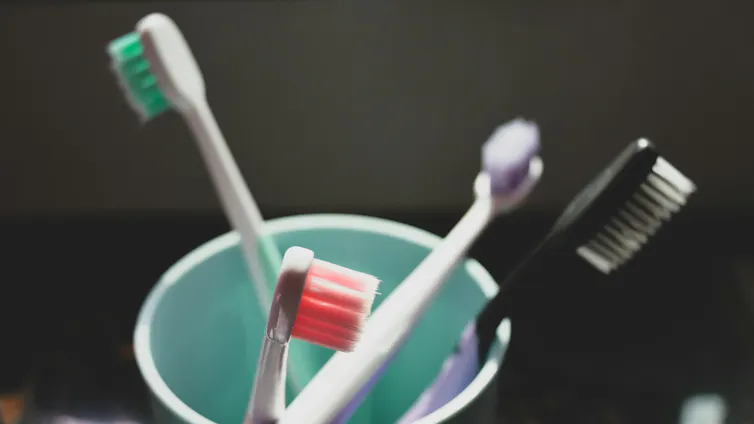
Peng Liu/Unsplash

Microbes can stay active for a while

Many disease-causing bacteria, viruses or fungi live on cloth, plastic and metal objects in your bathroom. These so-called pathogenic microbes can remain viable on these surfaces for extended periods. That is, they’re able to cause infection for days, months or years.

For example, the fungus Aspergillus can remain viable for more than a month on cloth and plastic. Some bacteria can survive on these surfaces for years. And many viruses can remain viable for hours to months on some materials such as ceramics, metals, cloth and plastics.

But what is the risk from particular items such as used towels, razors and toothbrushes?

Scientists haven’t run randomised controlled trials (the gold standard study design) to determine the risk. This would be when one group in a study is chosen at random to, say, shave their legs with someone’s used razor, and the infection rates of known pathogens compared with those randomised to a control group who didn’t.

But there are other studies that give us some clues.

Can I share towels? If you play footy, maybe not

Less robust studies suggest an increased risk of picking up a skin infection from used towels.

One report from the United States was of an outbreak of antibiotic resistant Staphylococcus aureas (or Staph, for short) in a group of high-school football players. Players who shared a towel were eight times more likely to pick up an infection.

Staph can cause the skin condition impetigo. But in rare cases it can lead to life-threatening septic shock and organs failing.

In this case, the risk of transmitting Staph was probably elevated due to potential cuts and grazes from playing a contact sport.

Another study, also from the US, followed 150 households for 12 months. Each household had a single child infected with Staph.

When household members shared towels, the risk of Staph transmission increased significantly.

You might think that microbes are washed off in the shower. While washing with soap and water reduces the number of microbes on the skin it does not completely eliminate them. And the warm, moist conditions of the average bathroom encourage microbial growth.

Even if you don’t develop an infection, becoming colonised by pathogens (when there is no damage) can be problematic.

That’s because you may be exposed to antibiotic resistant species, increasing the risk of developing antibiotic resistant infections later. These are more time consuming and expensive to treat.

How about a toothbrush? Think of the viruses

Microbes can remain viable on hard objects, such as toothbrushes. And toothbrushes can cause gums to bleed. So sharing them is discouraged as this can transmit blood-borne viruses such as hepatitis C.

Not everyone who is in a risk category for hepatitis C infection has been tested. And people can be infectious without having symptoms.

Anything that has come into contact with saliva (such as your toothbrush) may also transmit pathogens. These include herpes simplex virus type 1 (HSV-1), which causes cold sores, and Epstein-Barr virus, which causes glandular fever.

A person with no signs of HSV-1 infection can still shed viruses and cause infection.

One review found toothbrushes were contaminated with potentially pathogenic species of bacteria such as Staph, E. coli and Pseudomonas. HSV-1 was also found in sufficient numbers to cause infection. This virus can remain viable for two to six days on plastic objects.

Surely a razor’s OK? Not if you hate warts

Microbes can remain viable on hard objects such as razors too. And it’s hard to avoid nicks when using a razor. So there’s a risk of transmitting blood-borne viruses if you share.

Razors, towels and other personal hygiene items can also spread human papillomaviruses that cause warts. So it’s no wonder dermatologists recommend each person has their own items.

Who’s at risk?

If you have cuts or grazes, this provides a portal of entry for microbes, putting you at increased risk of infection. Remember those footy players who shared towels.

Reduced immune function also increases the risk of infection. We see this in:

  • babies, whose immune system is still developing
  • elderly people, whose immune function declines in later life
  • people taking immune suppressing medications, such as cancer drugs, oral corticosteroids and drugs taken after an organ transplant
  • people with type 2 diabetes, because increased blood glucose levels damage the function of immune cells and associated molecules.

However, the overall risk of contracting an infection is low on any one occasion. And if you’re sharing a towel, razor or toothbrush with a partner, you’ll be in regular close contact and sharing microbes anyway.

But it’s still a good idea to avoid making a habit of sharing other people’s used bathroom items.

Thea van de Mortel, Professor Emerita, Nursing, School of Nursing and Midwifery, Griffith University

This article is republished from The Conversation under a Creative Commons license. Read the original article.

Don’t Forget…

Did you arrive here from our newsletter? Don’t forget to return to the email to continue learning!

Learn to Age Gracefully

Join the 98k+ American women taking control of their health & aging with our 100% free (and fun!) daily emails:

  • Tilapia vs Cod – Which is Healthier?

    10almonds is reader-supported. We may, at no cost to you, receive a portion of sales if you purchase a product through a link in this article.

    Our Verdict

    When comparing tilapia to cod, we picked the tilapia.

    Why?

    Another case of “that which is more expensive is not necessarily the healthier”!

    In terms of macros, tilapia has more protein and fats, as well as more omega-3 (and omega-6). On the downside, tilapia does have relatively more saturated fat, but at 0.94g/100g, it’s not exactly butter.

    The vitamins category sees that tilapia has more of vitamins B1, B3, B5, B12, D, and K, while cod has more of vitamins B6, B9, and choline. A moderate win for tilapia.

    When it comes to minerals, things are most divided; tilapia has more copper, iron, phosphorus, potassium, manganese, and selenium, while cod has more magnesium and zinc. An easy win for tilapia.

    One other thing to note is that both of these fish contain mercury these days (and it’s worth noting: cod has nearly 10x more mercury). Mercury is, of course, not exactly a health food.

    So, excessive consumption of either is not recommended, but out of the two, tilapia is definitely the one to pick.

    Want to learn more?

    You might like to read:

    Farmed Fish vs Wild Caught: Know The Health Differences

    Take care!

    Share This Post

  • Early exposure to air pollution could affect brain development and mental health later in life

    10almonds is reader-supported. We may, at no cost to you, receive a portion of sales if you purchase a product through a link in this article.

    Exposure to air pollution in early life could have lasting effects on child development and mental health in adolescence, according to our recent study.

    We integrated air pollution data with existing longitudinal data from the Christchurch Health and Development Study (CHDS). The CHDS has followed more than 1,200 children born in the city in 1977, with a strong focus on developmental and mental health outcomes.

    Our aim was to examine how exposure to air pollution shapes development and mental health in later childhood and adolescence. We found an increased risk of attention problems, conduct issues, lower educational attainment and substance abuse in adolescence associated with higher exposure.

    Existing evidence often focuses on adulthood. However, by tracking air pollution exposure from the prenatal period to the age of ten, and linking this data to subsequent cognitive and mental health outcomes, we were able to highlight the long-term consequences of growing up in polluted environments.

    Air pollution is one of the leading environmental contributors to disease, especially respiratory and cardiovascular conditions. Children are especially vulnerable to air pollution because their brains and bodies are developing.

    A growing body of evidence suggests air pollution could affect brain development, educational attainment and mental health, contributing to depression, anxiety and conduct or attention problems. Despite this, few studies have tracked long-term exposure to air pollution from early childhood.

    Getty Images

    Patterns of exposure

    We chose to conduct this research in Christchurch because the city is a historical air-pollution hotspot, with a documented history of measurements, and because of its long-running birth cohort study.

    The CHDS collects detailed information on participants’ health, development, education and family backgrounds from prenatal into adulthood.

    An aerial view of Christchurch, photographed from the Port Hills.
    The city of Christchurch now enjoys much better air quality, but it was an air-pollution hotspot in the past. Flickr/Larry Koester, CC BY-SA

    For this study, we linked historical air-pollution data, measured as the concentration of black smoke from 1977 to 1987, to residential locations of birth cohort members. This allowed researchers to estimate each child’s annual exposure to air pollution during key developmental periods.

    We found four distinct patterns of air-pollution exposure across childhood (see graph below):

    • consistently low (these children had the lowest levels of air pollution throughout childhood)
    • consistently high (this groups had the highest levels of air pollution from birth to the age of ten)
    • elevated preschool (exposure peaked between ages three to six and then declined)
    • high prenatal and postnatal (high exposure before and immediately after birth, but declining later).

    We then examined whether children in the higher exposure groups were more likely to experience adverse impacts on cognition, educational achievement and mental health in later childhood and adolescence.

    We adjusted for a range potential confounders such as socioeconomic status, neighbourhood disadvantage and parental characteristics.

    We found children with elevated pre-school exposure had poorer educational attainment and a higher likelihood of conduct disorders and substance abuse problems. High prenatal and postnatal exposure was linked to a greater risk of attention problems as well as substance abuse in adolescence.

    Children with persistently high air-pollution exposure were more likely to develop attention problems and had higher odds of substance abuse issues in adolescence.

    A graph showing the four different trajectory patterns of exposure to air pollution from the prenatal period through to age ten identified in the Christchurch Health and Development Cohort study.
    Researchers identified four different trajectory patterns of exposure to air pollution from the prenatal period through to the age of ten. Author provided, CC BY-SA

    What these findings mean

    The effects of air pollution on several outcomes were small at an individual level, but they could be highly important at a population level.

    This is because even small shifts in cognitive and mental health outcomes, when applied to entire populations of children exposed to poor air quality, could have major consequences affecting future educational achievement, workforce productivity and public health burdens.

    These findings support previous research suggesting air pollution could affect brain function by causing inflammation, oxidative stress and affecting neurodevelopmental pathways. Importantly, they reinforce the idea that certain developmental periods, such as the prenatal period and early childhood, may be especially sensitive to pollution exposure.

    We need further research to confirm our findings but potential considerations include reducing children’s exposure to air pollution and improving urban air quality by cutting emissions from vehicles, industry and residential heating.

    We should also promote cleaner energy sources to decrease exposure to harmful pollutants such as nitrogen dioxide and fine particulate matter. Providing better access to green spaces may mitigate the impact of air pollution.

    To strengthen public health and policy measures, we need stricter air quality regulations, particularly around schools and childcare centres. We should also implement air-quality monitoring in urban areas to identify high-risk zones for children.

    Better public information is crucial to minimise indoor and outdoor pollution exposure. This could include the use of air purifiers for indoor activies or limiting outdoor exposure during peak pollution periods.

    Further research and action

    Our study highlights the need for more research on air pollution’s effects on children’s mental health and cognition, particularly in different environmental and socioeconomic contexts.

    Policymakers, educators and healthcare professionals must consider air pollution as a potential risk factor for developmental challenges, not just a physical health concern.

    Air pollution may not be visible in the same way as poor housing or inaccessible healthcare, but its impact on child development could be important at a population level.

    Given the rising prevalence of mental ill health in young people and adults, tackling air pollution could be an overlooked but essential public health strategy for protecting future generations.

    Matthew Hobbs, Associate Professor and Transforming Lives Fellow in Spatial Data Science and Planetary Health, Sheffield Hallam University; Joseph Boden, Professor of Psychology, Director of the Christchurch Health and Development Study, University of Otago; Lianne Jane Woodward, Professor of Child Developmental Psychology, University of Canterbury, and Susie (Bingyu) Deng, Postdoctoral Research Associate in Health Sciences, University of Liverpool

    This article is republished from The Conversation under a Creative Commons license. Read the original article.

    Share This Post

  • Does intermittent fasting have benefits for our brain?

    10almonds is reader-supported. We may, at no cost to you, receive a portion of sales if you purchase a product through a link in this article.

    Intermittent fasting has become a popular dietary approach to help people lose or manage their weight. It has also been promoted as a way to reset metabolism, control chronic disease, slow ageing and improve overall health.

    Meanwhile, some research suggests intermittent fasting may offer a different way for the brain to access energy and provide protection against neurodegenerative diseases like Alzheimer’s disease.

    This is not a new idea – the ancient Greeks believed fasting enhanced thinking. But what does the modern-day evidence say?

    First, what is intermittent fasting?

    Our diets – including calories consumed, macronutrient composition (the ratios of fats, protein and carbohydrates we eat) and when meals are consumed – are factors in our lifestyle we can change. People do this for cultural reasons, desired weight loss or potential health gains.

    Intermittent fasting consists of short periods of calorie (energy) restriction where food intake is limited for 12 to 48 hours (usually 12 to 16 hours per day), followed by periods of normal food intake. The intermittent component means a re-occurrence of the pattern rather than a “one off” fast.

    Food deprivation beyond 24 hours typically constitutes starvation. This is distinct from fasting due to its specific and potentially harmful biochemical alterations and nutrient deficiencies if continued for long periods.

    4 ways fasting works and how it might affect the brain

    The brain accounts for about 20% of the body’s energy consumption.

    Here are four ways intermittent fasting can act on the body which could help explain its potential effects on the brain.

    1. Ketosis

    The goal of many intermittent fasting routines is to flip a “metabolic switch” to go from burning predominately carbohydrates to burning fat. This is called ketosis and typically occurs after 12–16 hours of fasting, when liver and glycogen stores are depleted. Ketones – chemicals produced by this metabolic process – become the preferred energy source for the brain.

    Due to this being a slower metabolic process to produce energy and potential for lowering blood sugar levels, ketosis can cause symptoms of hunger, fatigue, nausea, low mood, irritability, constipation, headaches, and brain “fog”.

    At the same time, as glucose metabolism in the brain declines with ageing, studies have shown ketones could provide an alternative energy source to preserve brain function and prevent age-related neurodegeneration disorders and cognitive decline.

    Consistent with this, increasing ketones through supplementation or diet has been shown to improve cognition in adults with mild cognitive decline and those at risk of Alzheimer’s disease respectively.

    2. Circadian syncing

    Eating at times that don’t match our body’s natural daily rhythms can disrupt how our organs work. Studies in shift workers have suggested this might also make us more prone to chronic disease.

    Time-restricted eating is when you eat your meals within a six to ten-hour window during the day when you’re most active. Time-restricted eating causes changes in expression of genes in tissue and helps the body during rest and activity.

    A 2021 study of 883 adults in Italy indicated those who restricted their food intake to ten hours a day were less likely to have cognitive impairment compared to those eating without time restrictions.

    older man playing chess
    Matching your eating to the active parts of your day may have brain benefits.
    Shutterstock

    3. Mitochondria

    Intermittent fasting may provide brain protection through improving mitochondrial function, metabolism and reducing oxidants.

    Mitochondria’s main role is to produce energy and they are crucial to brain health. Many age-related diseases are closely related to an energy supply and demand imbalance, likely attributed to mitochondrial dysfunction during ageing.

    Rodent studies suggest alternate day fasting or reducing calories by up to 40% might protect or improve brain mitochondrial function. But not all studies support this theory.

    4. The gut-brain axis

    The gut and the brain communicate with each other via the body’s nervous systems. The brain can influence how the gut feels (think about how you get “butterflies” in your tummy when nervous) and the gut can affect mood, cognition and mental health.

    In mice, intermittent fasting has shown promise for improving brain health by increasing survival and formation of neurons (nerve cells) in the hippocampus brain region, which is involved in memory, learning and emotion.

    medical clinician shows woman a sheet of brain scans
    What we eat can affect our brain, and vice versa.
    Shutterstock

    There’s no clear evidence on the effects of intermittent fasting on cognition in healthy adults. However one 2022 study interviewed 411 older adults and found lower meal frequency (less than three meals a day) was associated with reduced evidence of Alzheimer’s disease on brain imaging.

    Some research has suggested calorie restriction may have a protective effect against Alzheimer’s disease by reducing oxidative stress and inflammation and promoting vascular health.

    When we look at the effects of overall energy restriction (rather than intermittent fasting specifically) the evidence is mixed. Among people with mild cognitive impairment, one study showed cognitive improvement when participants followed a calorie restricted diet for 12 months.

    Another study found a 25% calorie restriction was associated with slightly improved working memory in healthy adults. But a recent study, which looked at the impact of calorie restriction on spatial working memory, found no significant effect.

    Bottom line

    Studies in mice support a role for intermittent fasting in improving brain health and ageing, but few studies in humans exist, and the evidence we have is mixed.

    Rapid weight loss associated with calorie restriction and intermittent fasting can lead to nutrient deficiencies, muscle loss, and decreased immune function, particularly in older adults whose nutritional needs may be higher.

    Further, prolonged fasting or severe calorie restriction may pose risks such as fatigue, dizziness, and electrolyte imbalances, which could exacerbate existing health conditions.

    If you’re considering intermittent fasting, it’s best to seek advice from a health professional such as a dietitian who can provide guidance on structuring fasting periods, meal timing, and nutrient intake. This ensures intermittent fasting is approached in a safe, sustainable way, tailored to individual needs and goals.The Conversation

    Hayley O’Neill, Assistant Professor, Faculty of Health Sciences and Medicine, Bond University

    This article is republished from The Conversation under a Creative Commons license. Read the original article.

    Share This Post

  • The Mental Health First-Aid That You’ll Hopefully Never Need

    10almonds is reader-supported. We may, at no cost to you, receive a portion of sales if you purchase a product through a link in this article.

    Take Your Mental Health As Seriously As General Health!

    Sometimes, health and productivity means excelling—sometimes, it means avoiding illness and unproductivity. Both are essential, and today we’re going to tackle some foundational stuff. If you don’t need it right now, great; we suggest to read it for when and if you do. But how likely is it that you will?

    • One in four of us are affected by serious mental health issues in any given year.
    • One in five of us have suicidal thoughts at some point in our lifetime.
    • One in six of us are affected to at least some extent by the most commonly-reported mental health issues, anxiety and depression, in any given week.

    …and that’s just what’s reported, of course. These stats are from a UK-based source but can be considered indicative generally. Jokes aside, the UK is not a special case and is not measurably worse for people’s mental health than, say, the US or Canada.

    While this is not an inherently cheery topic, we think it’s an important one.

    Depression, which we’re going to focus on today, is very very much a killer to both health and productivity, after all.

    Speaking of being a killer, suicidality is a very important adjacent topic that we won’t be focusing on in this article; for that, see: How To Stay Alive (When You Really Don’t Want To)

    For now, we’ll speak on depression itself:

    One of the most commonly-used measures of depression is known by the snappy name of “PHQ9”. It stands for “Patient Health Questionnaire Nine”, and you can take it anonymously online for free (without signing up for anything; it’s right there on the page already):

    Take The PHQ9 Test Here! (under 2 minutes, immediate results)

    There’s a chance you took that test and your score was, well, depressing. There’s also a chance you’re doing just peachy, or maybe somewhere in between. PHQ9 scores can fluctuate over time (because they focus on the past two weeks, and also rely on self-reports in the moment), so you might want to bookmark it to test again periodically. It can be interesting to track over time.

    In the event that you’re struggling (or: in case one day you find yourself struggling, or want to be able to support a loved one who is struggling), some top tips that are useful:

    Accept that it’s a medical condition like any other

    Which means some important things:

    • You/they are not lazy or otherwise being a bad person by being depressed
    • You/they will probably get better at some point, especially if help is available
    • You/they cannot, however, “just snap out of it”; illness doesn’t work that way
    • Medication might help (it also might not)

    Do what you can, how you can, when you can

    Everyone knows the advice to exercise as a remedy for depression, and indeed, exercise helps many. Unfortunately, it’s not always that easy.

    Did you ever see the 80s kids’ movie “The Neverending Story”? There’s a scene in which the young hero Atreyu must traverse the “Swamp of Sadness”, and while he has a magical talisman that protects him, his beloved horse Artax is not so lucky; he slows down, and eventually stops still, sinking slowly into the swamp. Atreyu pulls at him and begs him to keep going, but—despite being many times bigger and stronger than Atreyu, the horse just sinks into the swamp, literally drowning in despair.

    See the scene: The Neverending Story movie clip – Artax and the Swamp of Sadness (1984)

    Wow, they really don’t make kids’ movies like they used to, do they?

    But, depression is very much like that, and advice “exercise to feel less depressed!” falls short of actually being helpful, when one is too depressed to do it.

    If you’re in the position of supporting someone who’s depressed, the best tool in your toolbox will be not “here’s why you should do this” (they don’t care; not because they’re an uncaring person by nature, but because they are physiologically impeded from caring about themself at this time), but rather:

    “please do this with me”

    The reason this has a better chance of working is because the depressed person will in all likelihood be unable to care enough to raise and/or maintain an objection, and while they can’t remember why they should care about themself, they’re more likely to remember that they should care about you, and so will go with your want/need more easily than with their own. It’s not a magic bullet, but it’s worth a shot.

    What if I’m the depressed person, though?

    Honestly, the same, if there’s someone around you that you do care about; do what you can to look after you, for them, if that means you can find some extra motivation.

    But I’m all alone… what now?

    Firstly, you don’t have to be alone. There are free services that you can access, for example:

    …which varyingly offer advice, free phone services, webchats, and the like.

    But also, there are ways you can look after yourself a little bit; do the things you’d advise someone else to do, even if you’re sure they won’t work:

    • Take a little walk around the block
    • Put the lights on when you’re not sleeping
    • For that matter, get out of bed when you’re not sleeping. Literally lie on the floor if necessary, but change your location.
    • Change your bedding, or at least your clothes
    • If changing the bedding is too much, change just the pillowcase
    • If changing your clothes is too much, change just one item of clothing
    • Drink some water; it won’t magically cure you, but you’ll be in slightly better order
    • On the topic of water, splash some on your face, if showering/bathing is too much right now
    • Do something creative (that’s not self-harm). You may scoff at the notion of “art therapy” helping, but this is a way to get at least some of the lights on in areas of your brain that are a little dark right now. Worst case scenario is it’ll be a distraction from your problems, so give it a try.
    • Find a connection to community—whatever that means to you—even if you don’t feel you can join it right now. Discover that there are people out there who would welcome you if you were able to go join them. Maybe one day you will!
    • Hiding from the world? That’s probably not healthy, but while you’re hiding, take the time to read those books (write those books, if you’re so inclined), learn that new language, take up chess, take up baking, whatever. If you can find something that means anything to you, go with that for now, ride that wave. Motivation’s hard to come by during depression and you might let many things slide; you might as well get something out of this period if you can.

    If you’re not depressed right now but you know you’re predisposed to such / can slip that way?

    Write yourself instructions now. Copy the above list if you like.

    Most of all: have a “things to do when I don’t feel like doing anything” list.

    If you only take one piece of advice from today’s newsletter, let that one be it!

    Don’t Forget…

    Did you arrive here from our newsletter? Don’t forget to return to the email to continue learning!

    Learn to Age Gracefully

    Join the 98k+ American women taking control of their health & aging with our 100% free (and fun!) daily emails:

  • The Biggest Cause Of Back Pain

    10almonds is reader-supported. We may, at no cost to you, receive a portion of sales if you purchase a product through a link in this article.

    Will Harlow, specialist over-50s physiotherapist, shares the most common cause (and its remedy) in this video:

    The seat of the problem

    The issue (for most people, anyway) is not in the back itself, nor the core in general, but rather, in the glutes. That is to say: the gluteus maximus, medius, and minimus. They assist in bending forwards (collaborating half-and-half with your back muscles), and help control pelvic alignment while walking.

    Sitting for long periods weakens the glutes, causing the back to overcompensate, leading to pain. So, obviously don’t do that, if you can help it. Weak glutes shift the work to your back muscles during bending and walking, increasing strain and—as a result—back pain.

    The solution (besides “sit less”) is to do specific exercises to strengthen the glutes. When you do, focus on good form and do not try to push through pain. If the exercises themselves all cause pain, then stop and consult a local physiotherapist to figure out your next step.

    With that in mind, the five exercises recommended in this video to strengthen glutes and reduce back pain are:

    1. Hip abduction (isometric): use a heavy resistance band or belt around legs above the knees, push outwards.
    2. The clam: lie on your side, bend your knees 90°, and lift your top knee while keeping your body forward. Focus on glute engagement.
    3. Clam with resistance band: use a light resistance band above your knees and perform the same clam exercise.
    4. Hip abduction (straight leg): lie on your side, keep legs straight, lift your top leg diagonally backward. Lead with your heel to target your glutes and avoid back strain.
    5. Hip abduction with resistance band: place a resistance band around your ankles, and lift leg as in the previous exercise.

    For more on all these, plus visual demonstrations, enjoy:

    Click Here If The Embedded Video Doesn’t Load Automatically!

    Want to learn more?

    You might also like to read:

    Take care!

    Don’t Forget…

    Did you arrive here from our newsletter? Don’t forget to return to the email to continue learning!

    Learn to Age Gracefully

    Join the 98k+ American women taking control of their health & aging with our 100% free (and fun!) daily emails:

  • Get On It! – by Jane Aronovitch, Miriane Taylor, & Colleen Craig

    10almonds is reader-supported. We may, at no cost to you, receive a portion of sales if you purchase a product through a link in this article.

    Balance is important; without it, we die early. That’s quite a strong selling point for improving one’s balance, but why this book in particular?

    This is—with one drawback—the best book of balance ball exercises we’ve seen. Notwithstanding the cover photo, many exercises do, by the way, involve standing on it with one or both feet, doing various kinds of squats, lunges, get-ups, and so forth. The ball (it’s not really a ball so much as an oblate hemisphere) can also be flipped and used the other way around, with a flat platform that will now wobble per your weight distribution, and train balance in different ways (dome-up trains large stabilizing muscles more; platform-up trains smaller stabilizing muscles more).

    Indeed, that’s where the brand name Bosu, often stylized “BOSU”, comes from: both sides up!

    So, what’s the drawback? Alas, the photos are black and white, which means in some cases they’re not as clear as they could be. Nothing that will prevent understanding the exercises, which are well-explained in any case, but it does mean that sometimes it’s necessary to look closely to see which leg is in front of the other for a given exercise, for example.

    Still, with 80 different exercises it really does cover the whole body, and even gives workout program varieties for those who want that, including targeted to particular areas, e.g. lower body, core, upper body, or complete.

    Bottom line: if you’d like to improve your balance (and have, or are willing to acquire, a balance ball like the Bosu), then this book will give you everything else you need in that regard.

    Click here to check out Get On It!, and get on it!

    Don’t Forget…

    Did you arrive here from our newsletter? Don’t forget to return to the email to continue learning!

    Learn to Age Gracefully

    Join the 98k+ American women taking control of their health & aging with our 100% free (and fun!) daily emails: