
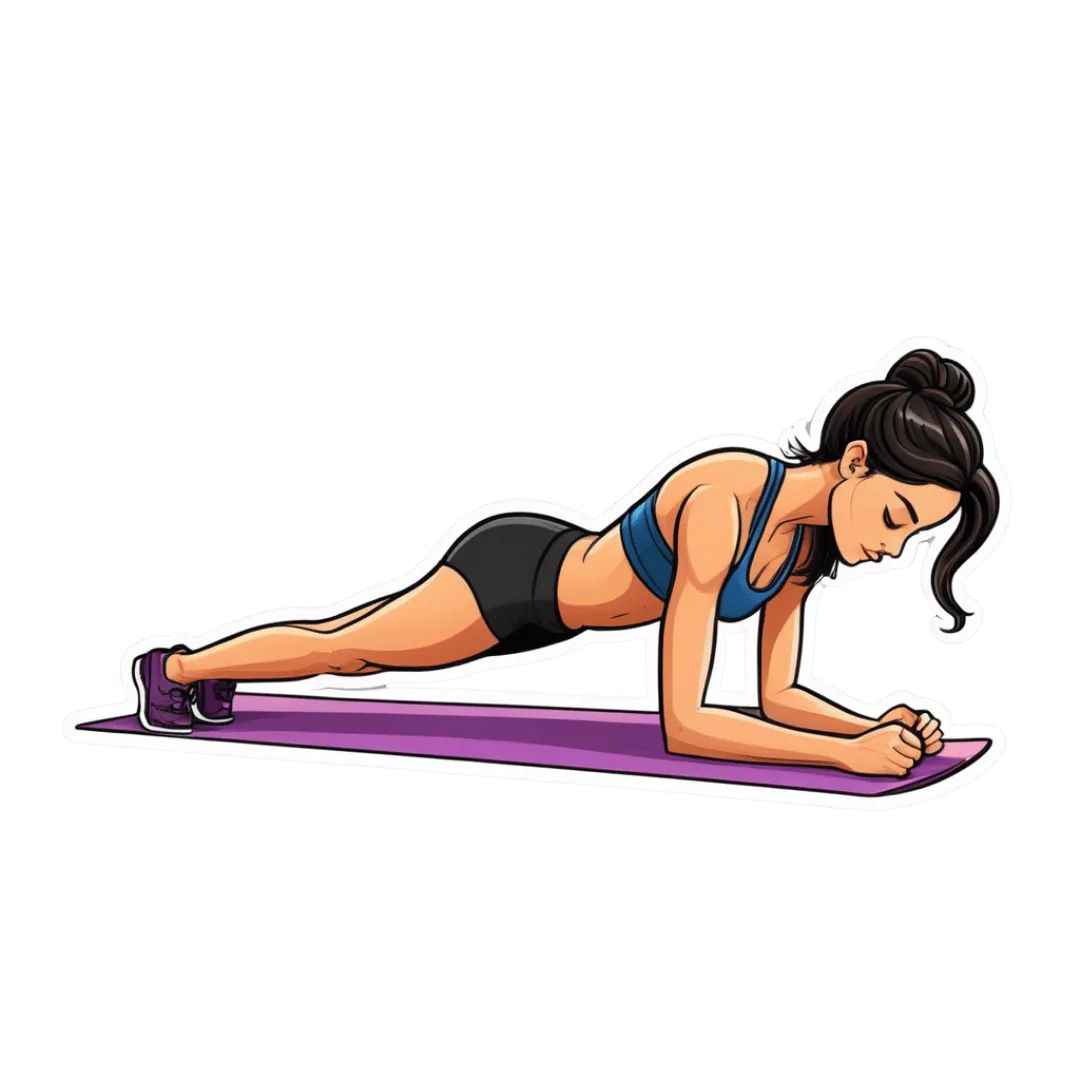
5 Exercises You Shouldn’t Do With Osteoporosis

10almonds is reader-supported. We may, at no cost to you, receive a portion of sales if you purchase a product through a link in this article.

Can you guess what they are?

Hold up a little…

Per Dr. Lisa Moore, anyone with osteoporosis or osteopenia should avoid movements that stress the spine in risky ways, for example:

  • Sit-ups: avoid because they round your spine into flexion, increasing pressure on your vertebrae
  • Crunches: avoid all variations (floor, ball, side) because repeated spinal rounding raises fracture risk
  • Forceful pelvic tilts: avoid aggressive ab squeezing that flattens your lower back, as it mimics spinal flexion under load
  • Russian twists: avoid because rapid, weighted rotation adds excessive torque to your spine
  • Forward folds: avoid repeated spinal rounding in yoga or Pilates, including seated forward bends and lateral bending
  • Jefferson curls: avoid because loaded spinal flexion (rolling down and up with weight) places high stress on weakened vertebrae

Instead, she recommends to focus on isometric exercises such as planks, using forearm, full, side, or hover planks to train your core without spinal movement.

The general idea is to brace your core with a neutral pelvis instead of moving your spine. And when it comes to hip-hinging, she recommends to bend forwards from your hips with a long spine, rather than rounding your back.

Indeed, in the video she cites a study that found the following correlations:

  • Flexion exercises: 89% fracture rate
  • Combined flexion/extension: 53% fracture rate
  • Extension exercises: 16% fracture rate
  • No exercise: 67% fracture rate

…which seems a fairly strong argument for extension exercises and not flexion exercises!

For more on all of this plus visual demonstrations, enjoy:

Click Here If The Embedded Video Doesn’t Load Automatically!

Want to learn more?

You might also like:

Osteoporosis & Exercises: Which To Do (And Which To Avoid) ← for our main feature on this topic

Take care!

Don’t Forget…

Did you arrive here from our newsletter? Don’t forget to return to the email to continue learning!
Learn to Age Gracefully

Join the 98k+ American women taking control of their health & aging with our 100% free (and fun!) daily emails:

  • A Second Act – by Dr. Matt Morgan

    10almonds is reader-supported. We may, at no cost to you, receive a portion of sales if you purchase a product through a link in this article.

    The main content of this book is stories (true ones, but it would do them a disservice to call them anecdotes, and it would be unduly clinical to call them case studies) of people who by a certain definition died—in the sense that their hearts stopped—but timely medical intervention allowed them to “come back to life” and continue living. Each gets a chapter devoted to them.

    Others weren’t so lucky; some of the chapters also remember those who didn’t come back. For example: two teenagers struck by the same bolt of lightning; a passerby rushed to give CPR to the one he saw first, only afterwards seeing the other. Fate can be like that.

    While the randomness of life and death can be utterly dispassionate, those of us who live on are often not nearly so unfeeling, and this book is about that. Making sense of the senseless, finding meaning, and truly appreciating life in all its heights and depths.

    The style is very personal, and most of it comes in the form of retrospective narrative prose, with present-day quotations (the author, an ICU doctor who encounters many such cases, interviewed the survivors for this book, whence the stories) that really drive home the lasting impacts of the experiences (many of the interviews are years, sometimes decades, after the event), and the remarkable diversity of emotional responses on a person-by-person basis.

    Bottom line: this book is very engaging from start to finish, and is very thought-provoking. If you’re anything like this reviewer, you might take little crying breaks from time to time, but it’s all very much worth it.

    Click here to check out A Second Act, and reflect on what the fragility of life means to you and yours!

    Share This Post

  • An RSV vaccine has been approved for people over 60. But what about young children?

    10almonds is reader-supported. We may, at no cost to you, receive a portion of sales if you purchase a product through a link in this article.

    The Therapeutic Goods Administration (TGA) has approved a vaccine against respiratory syncytial virus (RSV) in Australia for the first time. The shot, called Arexvy and manufactured by GSK, will be available by prescription to adults over 60.

    RSV is a contagious respiratory virus which causes an illness similar to influenza, most notably in babies and older adults.

    So while it will be good to have an RSV vaccine available for older people, where is protection up to for the youngest children?

    A bit about RSV

    RSV was discovered in chimpanzees with respiratory illness in 1956, and was soon found to be a common cause of illness in humans.

    There are two key groups of people we would like to protect from RSV: babies (up to about one year old) and people older than 60.

    Babies tend to fill up hospitals during the RSV season in late spring and winter in large numbers, but severe infection requiring admission to intensive care is less common.

    In babies and younger children, RSV generally causes a wheezing asthma-like illness (bronchiolitis), but can also cause pneumonia and croup.

    Although there are far fewer hospital admissions among older people, they can develop severe disease and die from an infection.

    A baby sitting on a bed.
    Babies account for the majority of hospitalisations with RSV.
    Prostock-studio/Shutterstock

    RSV vaccines for older people

    For older adults, there are actually several RSV vaccines in the pipeline. The recent Australian TGA approval of Arexvy is likely to be the first of several, with other vaccines from Pfizer and Moderna currently in development.

    The GSK and Pfizer RSV vaccines are similar. They both contain a small component of the virus, called the pre-fusion protein, that the immune system can recognise.

    Both vaccines have been shown to reduce illness from RSV by more than 80% in the first season after vaccination.

    In older adults, side effects following Arexvy appear to be similar to other vaccines, with a sore arm and generalised aches and fatigue frequently reported.

    Unlike influenza vaccines which are given each year, it is anticipated the RSV vaccine would be a one-off dose, at least at this stage.

    Protecting young children from RSV

    Younger babies don’t tend to respond well to some vaccines due to their immature immune system. To prevent other diseases, this can be overcome by giving multiple vaccine doses over time. But the highest risk group for RSV are those in the first few months of life.

    To protect this youngest age group from the virus, there are two potential strategies available instead of vaccinating the child directly.

    The first is to give a vaccine to the mother and rely on the protective antibodies passing to the infant through the placenta. This is similar to how we protect babies by vaccinating pregnant women against influenza and pertussis (whooping cough).

    The second is to give antibodies directly to the baby as an injection. With both these strategies, the protection provided is only temporary as antibodies wane over time, but this is sufficient to protect infants through their highest risk period.

    A pregnant woman receives a vaccination.
    Women could be vaccinated during pregnancy to protect their baby in its first months of life.
    Image Point Fr/Shutterstock

    Abrysvo, the Pfizer RSV vaccine, has been trialled in pregnant women. In clinical trials, this vaccine has been shown to reduce illness in infants for up to six months. It has been approved in pregnant women in the United States, but is not yet approved in Australia.

    An antibody product called palivizumab has been available for many years, but is only partially effective and extremely expensive, so has only been given to a small number of children at very high risk.

    A newer antibody product, nirsevimab, has been shown to be effective in reducing infections and hospitalisations in infants. It was approved by the TGA in November, but it isn’t yet clear how this would be accessed in Australia.

    What now?

    RSV, like influenza, is a major cause of respiratory illness, and the development of effective vaccines represents a major advance.

    While the approval of the first vaccine for older people is an important step, many details are yet to be made available, including the cost and the timing of availability. GSK has indicated its vaccine should be available soon. While the vaccine will initially only be available on private prescription (with the costs paid by the consumer), GSK has applied for it to be made free under the National Immunisation Program.

    In the near future, we expect to hear further news about the other vaccines and antibodies to protect those at higher risk from RSV disease, including young children.The Conversation

    Allen Cheng, Professor of Infectious Diseases, Monash University

    This article is republished from The Conversation under a Creative Commons license. Read the original article.

    Share This Post

  • 9 Easy Tips To Stop Hair Loss & Regrow Hair Naturally

    10almonds is reader-supported. We may, at no cost to you, receive a portion of sales if you purchase a product through a link in this article.

    Bad news: there are many things that can cause hair loss or contribute to such.

    Good news: that means there are many ways to fix it (many of them quick and easy)!

    Locking in the locks

    Nine things to use to your advantage:

    1. Establish your hair-shedding baseline: if your hairbrush or shower drain is suddenly accumulating alarming amounts of hair, you’ll know that “something wrong is not right” and be able to take action—but only if you’ve been paying attention to how much you usually shed.
    2. Find the cause: because there’s no one-size-fits-all hair loss treatment, it is worth investing (time and energy, if not money) in identifying the specific cause before trying solutions, and avoid wasting money on generic products that might help at all against your specific thing.
    3. Know when you just need time to recover: especially bearing in mind that surgeries and other physical trauma can shock the body, leading to temporary hair loss. In such cases, usually no additional action is required, but you do need to take it easy for a while.
    4. Manage anxiety and stress: because chronic stress or psychological trauma can also trigger hair loss. The solution in such cases is stress management, not topical treatments.
    5. Be aware of female pattern baldness: thinning on the top and temples usually indicates this. Minoxidil is the most effective treatment if started early.
    6. Nourish your hair from the inside: because poor nutrition, especially low iron or caloric restriction, can weaken hair. Thus, he recommends a balanced, nutrient-rich diet (which hopefully you aim for anyway, but it’s a thing to bear in mind).
    7. Keep an eye on medications: some meds can cause hair loss, which if people don’t know that, they can often blame unrelated things like their shampoo. So, be particularly attentive to this when starting/stopping any given medication, or changing a dosage.
    8. Treat your menopause: hormonal changes during menopause often lead to thinning hair. Hormone replacement therapy (HRT) can restore that balance and improve hair health, along with reducing other health risks associated with untreated menopause.
    9. Be mindful of undiagnosed medical conditions: this may seem like a hard one to put into practice, what with not knowing about undiagnosed medical conditions, but common issues like thyroid disorders can cause unexplained hair loss. If the other causes mentioned above don’t fit and/or you’re tending to those and still seeing hair loss, see a doctor and get bloodwork done.

    For more on each of these, enjoy:

    Click Here If The Embedded Video Doesn’t Load Automatically!

    Want to learn more?

    You might also like:

    What Different Kinds of Hair Loss/Thinning Say About Your Health ← Dr. Siobhan Deshauer discusses (and shows) 15 specific diagnosable things

    Take care!

    Share This Post

  • Total Recovery – by Dr. Gary Kaplan

    10almonds is reader-supported. We may, at no cost to you, receive a portion of sales if you purchase a product through a link in this article.

    First, know: Dr. Kaplan is an osteopath, and as such, will be mostly approaching things from that angle. That said, he is also board certified in other things too, including family medicine, so he’s by no means a “one-trick pony”, nor are there “when your only tool is a hammer, everything starts to look like a nail” problems to be found here. Instead, the scope of the book is quite broad.

    Dr. Kaplan talks us through the diagnostic process that a doctor goes through when presented with a patient, what questions need to be asked and answered—and by this we mean the deeper technical questions, e.g. “what do these symptoms have in common”, and “what mechanism was at work when the pain become chronic”, not the very basic questions asked in the initial debriefing with the patient.

    He also asks such questions (and questions like these get chapters devoted to them) as “what if physical traumas build up”, and “what if physical and emotional pain influence each other”, and then examines how to interrupt the vicious cycles that lead to deterioration of one’s condition.

    The style of the book is very pop-science and often narrative in its presentation, giving lots of anecdotes to illustrate the principles. It’s a “sit down and read it cover-to-cover” book—or a chapter a day, whatever your preferred pace; the point is, it’s not a “dip directly to the part that answers your immediate question” book; it’s not a textbook or manual.

    Bottom line: a lot of this work is about prompting the reader to ask the right questions to get to where we need to be, but there are many illustrative possible conclusions and practical advices to be found and given too, making this a useful read if you and/or a loved one suffers from chronic pain.

    Click here to check out Total Recovery, and solve your own mysteries!

    Don’t Forget…

    Did you arrive here from our newsletter? Don’t forget to return to the email to continue learning!

    Learn to Age Gracefully

    Join the 98k+ American women taking control of their health & aging with our 100% free (and fun!) daily emails:

  • How To Set Anxiety Aside

    10almonds is reader-supported. We may, at no cost to you, receive a portion of sales if you purchase a product through a link in this article.

    How To Set Anxiety Aside

    We’ve talked previously about how to use the “release” method to stop your racing mind.

    That’s a powerful technique, but sometimes we need to be calm enough to use it. So first…

    Breathe

    Obviously. But, don’t underestimate the immediate power of focusing on your breath, even just for a moment.

    There are many popular breathing exercises, but here’s one of the simplest and most effective, “4–4 breathing”:

    • Breathe in for a count of four
    • Hold for a count four
    • Breathe out for a count of four
    • Hold for a count of four
    • Repeat

    Depending on your lung capacity and what you’re used to, it may be that you need to count more quickly or slowly to make it feel right. Experiment with what feels comfortable for you, but the general goal should breathing deeply and slowly.

    Identify the thing that’s causing you anxiety

    We’ve also talked previously about how to use the RAIN technique to manage difficult emotions, and that’s good for handling anxiety too.

    Another powerful tool is journaling.

    Read: How To Use Journaling to Challenge Anxious Thoughts

    If you don’t want to use any of those (very effective!) methods, that’s fine too—journaling isn’t for everyone.

    You can leverage some of the same benefits by simply voicing your worries, even to yourself:

    There’s an old folk tradition of “worry dolls”; these are tiny little dolls so small they can be kept in a pocket-size drawstring purse. Last thing at night, the user whispers their worries to the dolls and puts them back in their bag, where they will work on the person’s problem overnight.

    We’re a health and productivity newsletter, not a dealer of magic and spells, but you can see how it works, right? It gets the worries out of one’s head, and brings about a helpful placebo effect too.

    Focus on what you can control

    • Most of what you worry about will not happen.
    • Some of what you worry about may happen.
    • Worrying about it will not help.

    In fact, in some cases it may bring about what you fear, by means of the nocebo effect (like the placebo effect, but bad). Additionally, worrying drains your body and makes you less able to deal with whatever life does throw at you.

    So while “don’t worry; be happy” may seem a flippant attitude, sometimes it can be best. However, don’t forget the other important part, which is actually focusing on what you can control.

    • You can’t control whether your car will need expensive maintenance…
      • …but you can control whether you budget for it.
    • You can’t control whether your social event will go well or ill…
      • …but you can control how you carry yourself.
    • You can’t control whether your loved one’s health will get better or worse…
      • …but you can control how you’re there for them, and you can help them take what sensible precautions they may.

    …and so forth.

    Look after your body as well!

    Your body and mind are deeply reliant on each other. In this case, just as anxiety can drain your body’s resources, keeping your body well-nourished, well-exercised, and well-rested and can help fortify you against anxiety. For example, when it comes to diet, exercise, and sleep:

    Don’t know where to start? How about the scientifically well-researched, evidence-based, 7-minute workout?

    Check Out the Seven Minute Workout App (Android and iOS

    Don’t Forget…

    Did you arrive here from our newsletter? Don’t forget to return to the email to continue learning!

    Learn to Age Gracefully

    Join the 98k+ American women taking control of their health & aging with our 100% free (and fun!) daily emails:

  • Blackberries vs Gooseberries – Which is Healthier?

    10almonds is reader-supported. We may, at no cost to you, receive a portion of sales if you purchase a product through a link in this article.

    Our Verdict

    When comparing blackberries to gooseberries, we picked the blackberries.

    Why?

    Both are great! But…

    In terms of macros, blackberries have more fiber and protein, while gooseberries have more carbs. An easy win for blackberries.

    In the category of vitamins, blackberries have more of vitamins B3, B9, E, K, and choline, while gooseberries have more of vitamins A, B1, B2, B6, and C, making a 5:5 tie in this round.

    Looking at minerals, blackberries have more calcium, copper, iron, magnesium, manganese, and zinc, while gooseberries have more phosphorus, potassium, and selenium, making a compelling 6:3 win for blackberries.

    When it comes to other considerations, blackberries are much higher in polyphenols, which is an extra point in their favor.

    Adding up the sections makes an overall win for blackberries, but by all means enjoy either or both (you might grow them in your garden—they are both very low-maintenance hardy perennials, if your climate is suitable); diversity is good!

    Want to learn more?

    You might like:

    21 Most Beneficial Polyphenols & What Foods Have Them

    Enjoy!

    Don’t Forget…

    Did you arrive here from our newsletter? Don’t forget to return to the email to continue learning!

    Learn to Age Gracefully

    Join the 98k+ American women taking control of their health & aging with our 100% free (and fun!) daily emails: