

Why do some of us vividly remember dreams, and others say they don’t dream?
10almonds is reader-supported. We may, at no cost to you, receive a portion of sales if you purchase a product through a link in this article.
Some mornings, you wake up and the dream is right there. Clear and vivid. You might still feel the emotion in your chest, and it can take a few minutes to remember where you are and what was real.
Other mornings, you open your eyes and there is nothing. Just a quiet sense of having slept.
You might know people who think they do not dream. However, the reality is we all do. Sometimes we have many in one night.
What varies is whether people remember their dreams and how often they remember them.
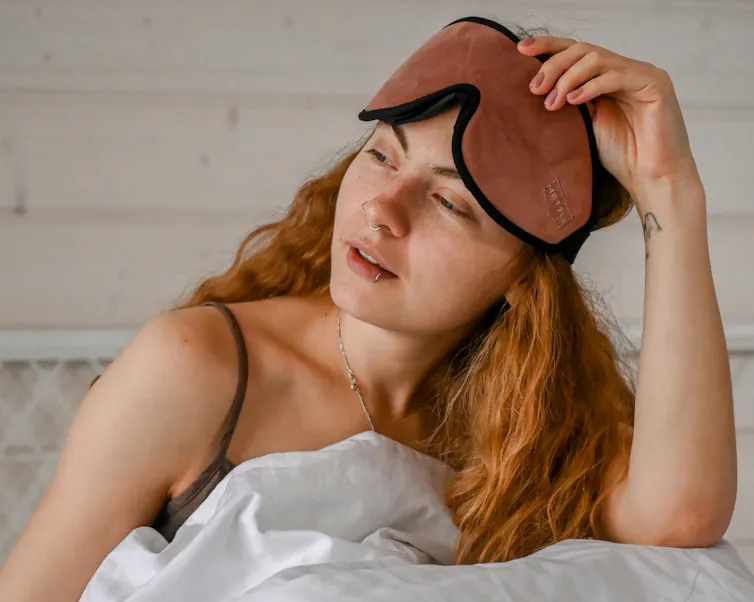
Dream recall myth vs reality
During the night, we cycle through periods of light sleep, deep sleep and rapid-eye-movement (REM) sleep. A full cycle takes about 90 minutes.
People generally spend more time in deep sleep in the first half of the night and more time in REM sleep in the second half.
The main function of deep sleep is restorative: to replenish energy, repair our bodies and help store memories.
REM sleep is important for memory consolidation and emotional processing. Later in the night, REM sleep becomes longer. This is the stage most closely linked to vivid, emotional dreaming.
If you wake up during or just after REM sleep, you are much more likely to remember a dream. If you wake from deep sleep, you probably will not, even though you were dreaming earlier. It isn’t a sign something is wrong; it’s simply how the sleeping brain works.
Another myth is dreams only happen in REM sleep. While REM dreams tend to be more intense and story-like, dreaming can happen in other stages, too; they are just often quieter and harder to recall.
So if you wake up some mornings with a clear recollection of your dream, and other mornings with nothing at all, that is completely normal. It doesn’t mean you didn’t dream. It just means you woke up at a different point in your sleep cycle.
Why do some people remember their dreams more often?
Several factors affect whether you recall dreams.
As you get older, your capacity to recall dreams decreases. Some studies suggest women are more likely to remember dreams than men. Some medications, such as antidepressants and sedatives, can affect your dream recall.
Timing plays a big role. We spend more time in REM sleep later in the night, so dreams that happen closer to morning are easier to remember. Waking up briefly during the night offers a chance to remember dreams before they fade. That’s why parents of young children and light sleepers, who are more likely to wake up from REM sleep, often report remembering more dreams.
How you wake up also matters. If someone jolts you awake, the dream can vanish in an instant. But if you are woken gently, someone softly calling your name, there is a better chance the dream lingers long enough for you to remember.
Some people are naturally “high recallers” and are just better at capturing their dreams before they fade. And therefore, they consistently remember dreams.
Why do some dreams feel intense?
Dreams can sometimes feel highly emotional, dramatic or unusually vivid. This is largely because REM sleep, the stage most associated with dreaming, involves increased activation of regions of the brain that control our emotions, such as the amygdala and limbic system.
This occurs alongside relatively reduced activity in parts of the prefrontal cortex that regulate logic and emotional control.
Stress, life changes or heightened emotions can make dreams feel more intense. Dreams often reflect elements of real-life experiences as the brain tries to process events from the day and consolidate them into long-term memory.
In most cases, having intense dreams is entirely normal and part of healthy emotional processing.
So is dreaming a reflection of good sleep?
Remembering your dreams does not automatically mean you had poor sleep, and forgetting them does not mean your sleep was perfect.
Rather than using dream recall as an indicator of sleep quality, it is more helpful to focus on how you feel during the day. Indicators such as feeling rested on waking and daytime energy provide a more meaningful indicator of your sleep health.
For most people, differences in dream recall and dream intensity are normal and shouldn’t cause concern. Dream frequency varies widely among people and across lifespans.
However, it may be helpful to seek advice from a health professional if:
- you experience persistent daytime exhaustion despite adequate time in bed
- nightmares are frequent, highly distressing or interfere with your mood and functioning
- sleep is regularly disrupted by awakenings, panic or prolonged difficulty returning to sleep.
If you feel rested, functional and emotionally stable during the day, occasional vivid dreams or changes in recall are completely fine and simply part of how healthy sleep unfolds.
Yaqoot Fatima, Professor of Sleep Health, University of the Sunshine Coast; Danielle Wilson, Research Fellow and Sleep Scientist at the Thompson Institute, University of the Sunshine Coast, and Nisreen Aouira, Research Program Manager, Let’s Yarn About Sleep, Thompson Institute, University of the Sunshine Coast
This article is republished from The Conversation under a Creative Commons license. Read the original article.
Don’t Forget…
Did you arrive here from our newsletter? Don’t forget to return to the email to continue learning!
Recommended

Learn to Age Gracefully
Join the 98k+ American women taking control of their health & aging with our 100% free (and fun!) daily emails:
-
The Worst Cookware Lurking In Your Kitchen (Toxicologist Explains)
10almonds is reader-supported. We may, at no cost to you, receive a portion of sales if you purchase a product through a link in this article.
Dr. Yvonne Burkart gives us a rundown of the worst offenders, and what to use instead:
Hot mess
The very worst offender is non-stick cookware, the kind with materials such as Teflon. These are the most toxic, due to PFAS chemicals.
Non-stick pans release toxic gases, leach chemicals into food, and release microplastic particles, which can accumulate in the body.
One that a lot of people don’t think about, in that category, is the humble air-fryer, which often as not has a non-stick cooking “basket”. These she describes as highly toxic, as they combine plastic, non-stick coatings, and high heat, which can release fumes and other potentially dangerous chemicals into the air and food.
You may be wondering: how bad is it? And the answer is, quite bad. PFAS chemicals are linked to infertility, hypertension in pregnancy, developmental issues in children, cancer, weakened immune systems, hormonal disruption, obesity, and intestinal inflammation.
Dr. Burkart’s top picks for doing better:
- Pure ceramic cookware: top choice for safety, particularly brands like Xtrema, which are tested for heavy metal leaching.
- Carbon steel & cast iron: durable and safe; can leach iron in acidic foods (for most people, this is a plus, but some may need to be aware of it)
- Stainless steel: lightweight and affordable but can leach nickel and chromium in acidic foods at high temperatures. Use only if nothing better is available.
And specifically as alternatives to air-fryers: glass convection ovens or stainless steel ovens are safer than conventional air fryers. The old “combination oven” can often be a good choice here.
For more on all of these, enjoy:
Click Here If The Embedded Video Doesn’t Load Automatically!
Want to learn more?
You might also like to read:
- PFAS Exposure & Cancer: The Numbers Are High
- It’s Not Fantastic To Be Plastic ← for the closely related topic of microplastics and nanoplastics
Take care!
Share This Post
-
Pumpkin Seeds vs Watermelon Seeds – Which is Healthier?
10almonds is reader-supported. We may, at no cost to you, receive a portion of sales if you purchase a product through a link in this article.
Our Verdict
When comparing pumpkin seeds to watermelon seeds, we picked the watermelon.
Why?
Starting with the macros: pumpkin seeds have a lot more carbs, while watermelon seeds have a lot more protein, despite pumpkin seeds being famous for such. They’re about equal on fiber. In terms of fats, watermelon seeds are higher in fats, and yes, these are healthy fats, mostly polyunsaturated.
When it comes to vitamins, pumpkin seeds are marginally higher in vitamins A and C, while watermelon seeds are a lot higher in vitamins B1, B2, B3, B5, B6, and B9. An easy win for watermelon seeds here.
In the category of minerals, despite being famous for zinc, pumpkin seeds are higher only in potassium, while watermelon seeds are higher in iron, magnesium, manganese, and phosphorus; the two seeds are equal on calcium, copper, and zinc. Another win for watermelon seeds.
In short, enjoy both, but watermelon has more to offer. Of course, if buying just the seeds and not the whole fruit, it’s generally easier to find pumpkin seeds than watermelon seeds, so do bear in mind that pumpkin seeds’ second place isn’t that bad here—it’s just a case of a very nutritious food looking bad by standing next to an even better one.
Want to learn more?
You might like to read:
Seed Saving Secrets – by Alice Mirren
Take care!
Share This Post
-
Black Coffee vs Orange Juice – Which is Healthier?
10almonds is reader-supported. We may, at no cost to you, receive a portion of sales if you purchase a product through a link in this article.
Our Verdict
When comparing black coffee to orange juice, we picked the coffee.
Why?
While this one isn’t a very like-for-like choice, it’s a choice often made, so it bears examining.
In favor of the orange juice, it has vitamins A and C and the mineral potassium, while the coffee contains no vitamins or minerals beyond trace amounts.
However, to offset that: drinking juice is one of the worst ways to consume sugar; the fruit has not only been stripped of its fiber, but also is in its most readily absorbable state (liquid), meaning that this is going to cause a blood sugar spike, which if done often can lead to insulin resistance, type 2 diabetes, non-alcoholic fatty liver disease, and more. Now, the occasional glass of orange juice (and resultant blood sugar spike) isn’t going to cause disease by itself, but everything we consume tips the scales of our health towards wellness or illness (or sometimes both, in different ways), and in this case, juice has a rather major downside that ought not be ignored.
In favor of the coffee, it has a lot of beneficial phytochemicals (mostly antioxidant polyphenols of various kinds), with no drawbacks worth mentioning unless you have a pre-existing condition of some kind.
Coffee can of course be caffeinated or decaffeinated, and we didn’t specify which here. Caffeine has some pros and cons that at worst, balance each other out, and whether or not it’s caffeinated, there’s nothing in coffee to offset the beneficial qualities of the antioxidants we mentioned before.
Obviously, in either case we are assuming consuming in moderation.
In short:
- orange juice has negatives that at least equal, if not outweigh, its positives
- coffee‘s benefits outweigh any drawbacks for most people
Want to learn more?
You might like to read:
- The Bitter Truth About Coffee (or is it?)
- Caffeine: Cognitive Enhancer Or Brain-Wrecker?
- Which Sugars Are Healthier, And Which Are Just The Same?
Take care!
Share This Post
Related Posts
-
Overcoming Poor Posture – by Steven Low & Jarlo Ilano
10almonds is reader-supported. We may, at no cost to you, receive a portion of sales if you purchase a product through a link in this article.
We’ve previously reviewed the first-named author’s excellent “Overcoming Gravity”, and this time the gymnast-physiotherapist is back with another physio, to deliver us a guide to overcoming poor posture.
They start (after the introductory material you’d expect of any such work) with an examination of the connection between posture and pain, because let’s face it, for most people this is what’s most important.
The authors also do not expect that we live in a world whereby we can devote a lot of time to dedicated postural practice, so they also cover posture in real life, and practical steps to improve posture in the 23.5 (or more) hours per day that you’re mostly not thinking about it.
Which prompts the question: how do we make the change to our regular posture, when indeed we are mostly not thinking about it, and are not likely to start devoting most of our waking thoughts to it? So, again being mindful residents of the real world, the authors also bring us chapters on changing our habits, and redoing our programming, to overcome poor posture in an actually sustainable and thus meaningful fashion.
There are of course specific exercises to do too, but even there, advice is given on how to select those that are most relevant to you, your life, and your body.
Bottom line: if you’d like to be free from the pain caused by the consequences of poor posture, this book can help a lot!
Click here to check out Overcoming Poor Posture, and overcome poor posture, for good!
Don’t Forget…
Did you arrive here from our newsletter? Don’t forget to return to the email to continue learning!
Learn to Age Gracefully
Join the 98k+ American women taking control of their health & aging with our 100% free (and fun!) daily emails:
-
The Couple’s Guide to Thriving with ADHD – by Melissa Orlov and Nancie Kohlenberger
10almonds is reader-supported. We may, at no cost to you, receive a portion of sales if you purchase a product through a link in this article.
ADHD (what a misleadingly-named condition) is most often undiagnosed in adults, especially older adults, and has far-reaching effects. This book explores those!
Oftentimes ADHD is not a deficit of attention, it’s just a lack of choice about where one’s attention goes. And the H? It’s mostly not what people think it is. The diagnostic criteria have moved far beyond the original name.
But in a marriage, ADHD symptoms such as wandering attention, forgetfulness, impulsiveness, and a focus on the “now” to the point of losing sight of the big picture (the forgotten past and the unplanned future), can cause conflict.
The authors write in a way that is intended for the ADHD and/or non-ADHD partner to read, and ideally, for both to read.
They shine light on why people with or without ADHD tend towards (or away from) certain behaviours, what miscommunications can arise, and how to smooth them over.
Best of all, an integrated plan for getting you both on the same page, so that you can tackle anything that arises, as the diverse team (with quite different individual strengths) that you are.
Bottom line: if you or a loved one has ADHD symptoms, this book can help you navigate and untangle what can otherwise sometimes get a little messy.
Click here to check out The Couple’s Guide to Thriving with ADHD, and learn how to do just that!
Don’t Forget…
Did you arrive here from our newsletter? Don’t forget to return to the email to continue learning!
Learn to Age Gracefully
Join the 98k+ American women taking control of their health & aging with our 100% free (and fun!) daily emails:
-
Products This Beauty Science Chemist Won’t Use
10almonds is reader-supported. We may, at no cost to you, receive a portion of sales if you purchase a product through a link in this article.
Dr. Michelle Wong—chemist, science educator, and cosmetician—explains the science:
Saving face?
There are some things that Dr. Wong won’t use for reasons of their chemical properties and potential dangers, including:
- Soap-based cleansers: these are typically harsh on skin barrier due to their high pH and narrow surfactant structure; better to use lower-pH, gentle cleansers.
- Dip nail kits: these have higher allergy and respiratory risk due to volatile cyanoacrylates; a better option is acrylics done professionally, or just normal (not gel) nail polish.
- Burst gel removers: often contain dichloromethane, a toxic paint-stripper solvent; if you must have gel nails, she advises to stick with acetone soaks, but better is to simply not have gel nails.
- Lash serums with prostaglandin analogues: work well but can cause fat loss around eyes, as well as irritation. Bothersomely, some brands may sneak them in unlisted. A safer alternative is peptide-based serums, though they are less effective.
There are others that she won’t use for lack of certainty; for example she advises to avoid online shopping from Temu/AliExpress/Shein, due to poor regulation and inaccurate labels. Such products often contain unsafe or hidden ingredients, so she recommends we avoid super cheap or “too good to be true” skincare and makeup from unverified sellers.
Other things she mentions in the video have nothing to do with her being a chemist, and/or are personal to her. For example, tinted sunscreen with the wrong skintone, and that she dislikes mascara for sensory reasons. Lastly, she criticizes the bad packaging of a lot of products, but this isn’t really within the realm of chemistry or health, just convenience and economy.
For more on all of this, enjoy:
Click Here If The Embedded Video Doesn’t Load Automatically!
Want to learn more?
You might also like:
The Evidence-Based Skincare That Beats Product-Specific Hype
Take care!
Don’t Forget…
Did you arrive here from our newsletter? Don’t forget to return to the email to continue learning!
Learn to Age Gracefully
Join the 98k+ American women taking control of their health & aging with our 100% free (and fun!) daily emails:


