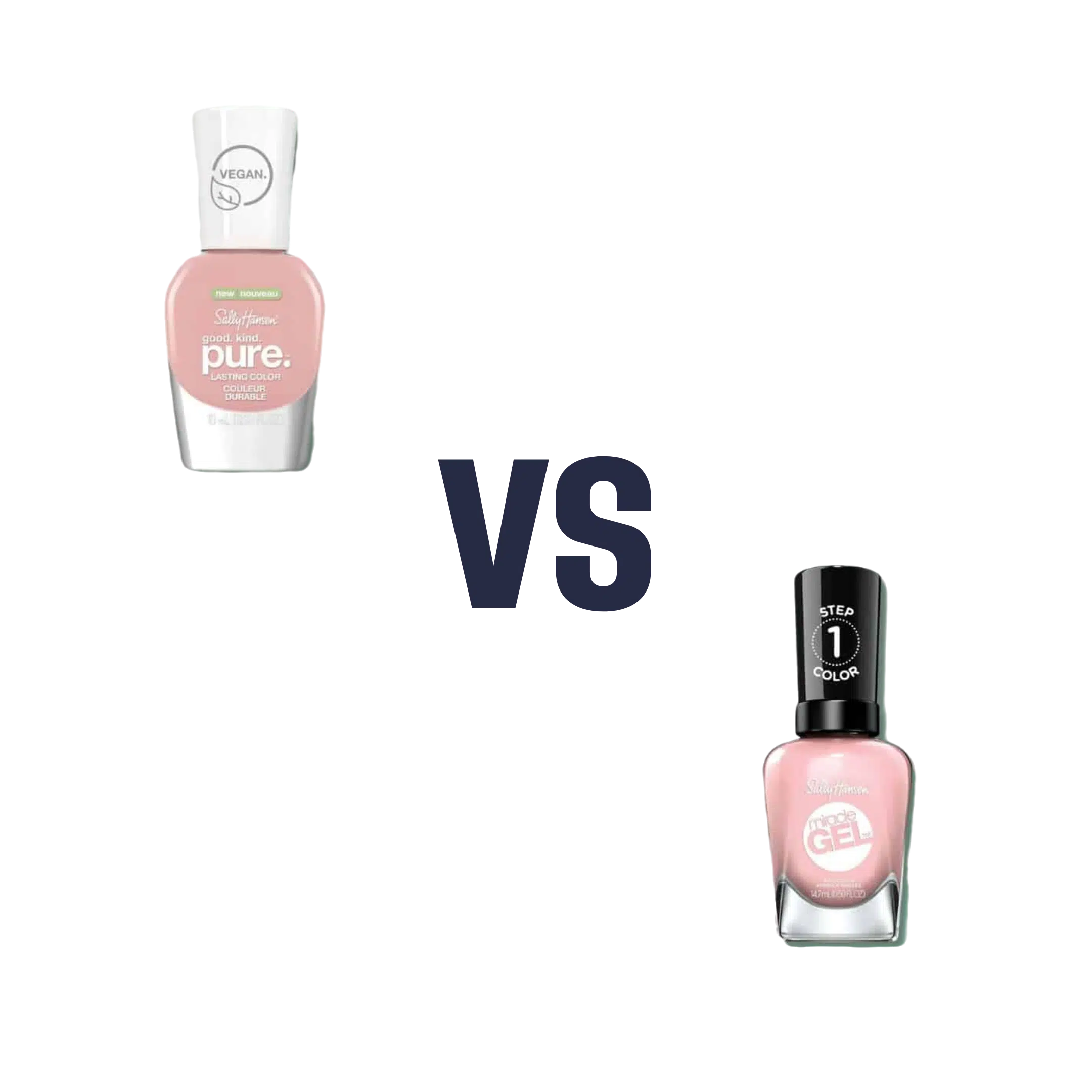
Regular Nail Polish vs Gel Nail Polish – Which is Healthier?

10almonds is reader-supported. We may, at no cost to you, receive a portion of sales if you purchase a product through a link in this article.

Our Verdict

When comparing regular nail polish to gel nail polish, we picked the regular.

Why?

This one’s less about what’s in the bottle, and more about what gets done to your hands:

  • Regular nail polish application involves carefully brushing it on.
  • Regular nail polish removal involves wiping with acetone.

…whereas:

  • Gel nail polish application involves deliberately damaging (roughing up) the nail to allow the color coat to adhere, then when the top coat is applied, holding the nails (and thus, the attached fingers) under a UV light to set it. That UV lamp exposure is very bad for the skin.
  • Gel nail polish removal involves soaking in acetone, which is definitely worse than wiping with acetone. Failure to adequately soak it will result in further damage to the nail while trying to get the base coat off the nail that you already deliberately damaged when first applying it.

All in all, regular nail polish isn’t amazing for nail health (healthiest is for nails to be free and naked), but for those of us who like a little bit of color there, regular is a lot better than gel.

Gel nail polish damages the nail itself by necessity, and presents a cumulative skin cancer risk and accelerated aging of the skin, by way of the UV lamp use.

For your interest, here are the specific products that we compared, but the above goes for any of this kind:

Regular nail polish | Gel nail polish

If you’d like to read more about nail health, you might enjoy reading:

The Counterintuitive Dos and Don’ts of Nail Health

Take care!

Don’t Forget…

Did you arrive here from our newsletter? Don’t forget to return to the email to continue learning!

Learn to Age Gracefully

Join the 98k+ American women taking control of their health & aging with our 100% free (and fun!) daily emails:

  • Leek vs Scallions – Which is Healthier?

    10almonds is reader-supported. We may, at no cost to you, receive a portion of sales if you purchase a product through a link in this article.

    Our Verdict

    When comparing leek to scallions, we picked the leek.

    Why?

    In terms of macros, leeks have more carbs while scallions have more fiber, giving scallions the lower glycemic index, but since they’re both already low-GI foods, this round’s a fairly modest win for scallions.

    In the category of vitamins, however, leek has more of vitamins B1, B2, B3, B5, B6, B9, and E, while scallions have more of vitamins A, C, and K. Noteworthily, a cup of chopped leek already provides the daily dose of vitamins A and K, and the difference in levels of vitamin C is minimal. All in all, an easy 7:3 win for leeks here, even without taking that into account.

    Looking at minerals, leek has more calcium, copper, iron, magnesium, manganese, phosphorus, potassium, and selenium, while scallions have a little more zinc. Another easy win for leeks.

    In other considerations, both of these allium-family plants (i.e., related to garlic) have an abundance of polyphenols, especially kaempferol. So, a tie in this round.

    Adding up the sections makes for a clear overall win for leeks, but of course, do enjoy either or both, as diversity is good!

    Want to learn more?

    You might like to read:

    The Many Health Benefits Of Garlic

    Take care!

    Share This Post

  • Put Your Feet Up! (Against A Wall, For 20 Minutes)

    10almonds is reader-supported. We may, at no cost to you, receive a portion of sales if you purchase a product through a link in this article.

    Feel free to browse our articles while you do

    Here are 10 good reasons to give it a try; there are another 10 in the short (3:18) video:

    • Improves blood circulation
    • Improves blood pressure
    • Relaxes the body as a whole
    • Alleviates lower back tension
    • Eases headaches and migraines
    • Reduces knee pain
    • Relieves swelling in feet and ankles
    • Improves lymphatic flow
    • Stretches the hamstrings (and hip flexors, if you do it wide)
    • Helps quiet the mind

    As for the rest…

    Click Here If The Embedded Video Doesn’t Load Automatically

    PS: about that circulation… As a general rule of thumb, anything that slightly confuses the heart (anatomically, not romantically) will tend to have a beneficial effect, in moderation. This goes for being upside-down (as is partly the case here), and also for high-intensity interval training (HIIT):

    How To Do HIIT (Without Wrecking Your Body)

    Take care!

    Share This Post

  • 10 Skin Warning Signs You Should Never Ignore

    10almonds is reader-supported. We may, at no cost to you, receive a portion of sales if you purchase a product through a link in this article.

    Do you have armpits? Don’t ignore them!

    Heed the signs:

    Without further ado, they are:

    1. Acanthosis nigricans: dark, velvety brown skin thickening on the neck, underarms, backs of the hands, or sides of the face can signal insulin resistance, prediabetes, or PMOS. The good news, however, is that despite common concerns of such, sudden widespread onset is rarely associated with cancer.
    2. Unexplained bruising: bruises appearing without remembered injury may be linked to platelet disorders, clotting disorders, vitamin deficiencies, liver disease, certain cancers, or medications such as blood thinners and corticosteroids; bruising accompanied by nosebleeds, bleeding gums, or large purple patches is especially concerning and merits medical attention.
    3. Yellowing of the skin or eyes: jaundice can indicate liver disease, bile duct obstruction, or increased breakdown of red blood cells; yellowing often appears under the tongue and inside the mouth before becoming obvious elsewhere. It’s worth knowing that unlike harmless carotene-related skin discoloration (i.e. you drank a lot of carrot juice and turned orange), jaundice also affects the eyes and mouth.
    4. Severe itching without a rash: persistent whole-body itching lasting more than six weeks with no visible rash can be associated with liver disease, kidney disease, thyroid disorders, iron deficiency, or cancers such as Hodgkin lymphoma. Itching triggered by showering is another warning sign.
    5. Thick, waxy, or tight skin: swollen, shiny, waxy skin on the shins may occur with Graves’ disease, while skin tightening on the fingers may suggest diabetes or Scleroderma, particularly when hand mobility becomes restricted.
    6. Butterfly rash on the face: a rash across the cheeks and nose that spares the folds beside the nose famously may indicate systemic lupus erythematosus, especially if it worsens with sun exposure and is accompanied by fatigue or joint pain.
    7. Dark streaks under the nails: a new dark band in a single nail, particularly one that widens, contains multiple colors, or extends onto the surrounding skin, can be a warning sign of melanoma and should be evaluated for such.
    8. Sudden hair shedding: rapid diffuse hair loss, known as telogen effluvium, often occurs about three months after a physical stressor and may be associated with thyroid disease, iron deficiency, infection, surgery, trauma, nutritional deficiencies, pregnancy, or rapid weight loss.
    9. Non-healing wounds or recurrent infections: cuts, scrapes, or ulcers that remain open for more than four weeks generally suggest poor circulation, vascular disease, diabetes, or impaired immune function.
    10. Yellow, thick, or crumbly nails: commonly caused by a fungal infection, but when accompanied by respiratory symptoms and leg swelling, they may indicate bigger problems and should be checked out.

    For more on all of this plus visual illustrations, enjoy:

    Click Here If The Embedded Video Doesn’t Load Automatically!

    Want to learn more?

    You might also like:

    What Your Skin Texture Says About Your Health

    Take care!

    Share This Post

  • Peanuts vs Pecans – Which is Healthier?

    10almonds is reader-supported. We may, at no cost to you, receive a portion of sales if you purchase a product through a link in this article.

    Our Verdict

    When comparing peanuts to pecans, we picked the peanuts.

    Why?

    Peanuts are an oft-underrated nut!

    In terms of macros, peanuts have more than 2.5x the protein and slightly more carbs, while pecans have very slightly more fiber and a lot more fat, of which, mostly healthy monounsaturated and polyunsaturated fats, though it’s worth noting that peanuts’ fats are equally healthy and have a similar general profile, just, less fat per 100g than pecans do. There’s a lot going for both of these very different nuts here, so we’ll call this category a tie.

    In the category of vitamins, peanuts have more of vitamins B2, B3, B5, B6, B7, B9, E, and choline, while pecans have more of vitamins C and K (of which they are still not a very good source, but peanuts have none so they can technically claim it for those two vitamins); thus, a clear win for peanuts here, especially as most of its vitamins had very large margins of difference over pecans, and peanuts are a good source of all the vitamins mentioned for them.

    When it comes to minerals, peanuts have more calcium, iron, magnesium, phosphorus, potassium, and selenium, while pecans have more manganese and zinc. Another win for peanuts!

    Adding up the sections makes for a clear win for peanuts, but by all means enjoy either or both (diversity is good), unless you are allergic, in which case, please don’t!

    Want to learn more?

    You might like:

    Why You Should Diversify Your Nuts

    Enjoy!

    Don’t Forget…

    Did you arrive here from our newsletter? Don’t forget to return to the email to continue learning!

    Learn to Age Gracefully

    Join the 98k+ American women taking control of their health & aging with our 100% free (and fun!) daily emails:

  • Polyphenol Paprika Pepper Penne

    10almonds is reader-supported. We may, at no cost to you, receive a portion of sales if you purchase a product through a link in this article.

    This one’s easier to promptly prepare than it is to pronounce unprepared! Ok, enough alliteration: this dish is as full of flavor as it is full of antioxidants, and it’s great for digestive health and heart health too.

    You will need

    • 4 large red bell peppers, diced
    • 2 red onions, roughly chopped
    • 1 bulb garlic, finely chopped
    • 2 cups cherry tomatoes, halved
    • 10oz wholemeal penne pasta
    • 1 tbsp nutritional yeast
    • 1 tbsp smoked paprika
    • 1 tbsp black pepper
    • Extra virgin olive oil for drizzling

    Method

    (we suggest you read everything at least once before doing anything)

    1) Preheat the oven to 200℃ / 400℉ / Gas mark 6

    2) Put the vegetables in a roasting tin; drizzle with oil, sprinkle with the seasonings (nooch, paprika, black pepper), stir well to mix and distribute the seasonings evenly, and roast for 20–25 minutes, stirring/turning occasionally. When the edges begin to caramelize, turn off the heat, but leave to keep warm.

    3) Cook the penne al dente (this should take 7–8 minutes in boiling salted water). Rinse in cold water, then pass a kettle of hot water over them to reheat. This process removed starch and lowered the glycemic index, before reheating the pasta so that it’s hot to serve.

    4) Place the roasted vegetables in a food processor and blitz for just a few seconds. You want to produce a very chunky sauce—but not just chunks or just sauce.

    5) Combine the sauce and pasta to serve immediately.

    Enjoy!

    Want to learn more?

    For those interested in some of the science of what we have going on today:

    Take care!

    Don’t Forget…

    Did you arrive here from our newsletter? Don’t forget to return to the email to continue learning!

    Learn to Age Gracefully

    Join the 98k+ American women taking control of their health & aging with our 100% free (and fun!) daily emails:

  • How To Reduce Knee Pain After Sitting

    10almonds is reader-supported. We may, at no cost to you, receive a portion of sales if you purchase a product through a link in this article.

    Sitting is bad for the health, and doubly so if you have arthritis, as a lack of regular movement can cause joints to “seize up”. So, what to do about it if you have to sit for an extended time?

    Dr. Alyssa Kuhn, arthritis specialist, explains:

    Movement remains key

    The trick is to continue periodically moving, notwithstanding that you may need to remain seated. So…

    1. Heel slides
      • Straighten and bend your leg by sliding or lifting your heel.
      • Promotes blood flow and reduces fluid buildup in the knee.
      • Helps lubricate the joint, making standing up easier.
    2. Heel lifts
      • Lift your heels up and down while keeping feet on the ground.
      • This one’s ideal for tight spaces, such as when riding in a car or airplane.
      • Improves blood circulation and can reduce ankle swelling and leg heaviness.

    Do 20–30 repetitions every now and again, to keep your joints moving.

    Note: if you are a wheelchair user whose legs lack the strength and/or motor function to do this, in this case it’s the movement of the leg that counts, not where that movement originated from. So, if you use one hand to lift your leg slightly and the other to push it like a swing, that will also be sufficient to give the joint the periodic movement it needs.

    For more on all of this plus visual demonstrations, enjoy:

    Click Here If The Embedded Video Doesn’t Load Automatically!

    Want to learn more?

    You might also like to read:

    Stand Up For Your Health (Or Don’t) ← our main feature on this also includes more things you can do if you must sit, to make sitting less bad!

    Take care!

    Don’t Forget…

    Did you arrive here from our newsletter? Don’t forget to return to the email to continue learning!

    Learn to Age Gracefully

    Join the 98k+ American women taking control of their health & aging with our 100% free (and fun!) daily emails: