

What is andrographis, the cold and flu ingredient the TGA says can be fatal?

10almonds is reader-supported. We may, at no cost to you, receive a portion of sales if you purchase a product through a link in this article.

A herb commonly sold in cold and flu supplements may no longer be classified as “low-risk”, after Australia’s therapeutic goods regulator found it can cause severe allergic reactions and even death.

The Therapeutic Goods Administration (TGA) is proposing to remove andographis – widely used in Indian and Chinese traditional medicine – from its list of permitted ingredients. A new safety review found the herb can cause “rapid and unpredictable” anaphylaxis, the most severe type of allergic reaction.

Anaphylaxis can happen even if you’ve previously taken andrographis without any problems. But little is known about why.

Currently, products containing this ingredient can be purchased at supermarkets and pharmacies without a prescription.

Here’s what we know about the risks, and what the TGA wants to change.
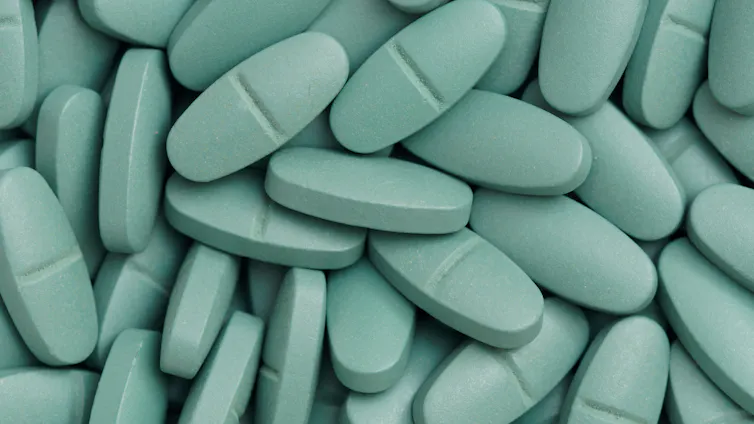
Karim Ghantous/Unsplash

What is andrographis?

Traditional medicines are becoming more popular in Western societies, particularly in response to the COVID pandemic.

Andrographis paniculata is one of these: a herb in the Asterids clade of flowering plants. Andrographis is often used to treat and prevent cold and flu symptoms, upper respiratory tract infections, inflammation and fever.

However, despite its popularity, there is a gap in empirical evidence to support these benefits.

In Australia, andrographis is ofen used in combination with another herbal ingredient, echinacea. In 2024, the TGA said more than 80% of the adverse event reports it received were for multi-ingredient preparations that included both andrographis and echinacea, which has also been linked to anaphylaxis.

Why did the TGA conduct this safety review?

All medicines are surveyed for adverse events, and andrographis is known to be associated with allergic responses.

The TGA first began receiving reports of anaphylaxis and hypersensitivity in 2005, from people who’d taken andrographis.

In 2015, the TGA published a public alert after a safety review found andrographis can cause serious allergic reactions, including anaphylaxis.

Anaphylaxis can be fatal if not treated immediately. Anaphylactic reaction to a trigger (such as food, medication or insect bites) can cause symptoms including swelling of the tongue and throat, and difficulty breathing.

So, while rare, allergic reactions to andrographis are concerning because they can be life-threatening.

Changes to labelling

In 2019 there was a sudden rise in adverse effects reported, with a large number of allergic and anaphylatic reactions. This led the TGA to change safety messaging on medicines containing andrographis. A warning was added to the label:

Andrographis may cause allergic reactions in some people. If you have a severe reaction (such as anaphylaxis) stop use and seek immediate medical attention.

The new, mandatory labelling was rolled out between December 2019 and May 2020.

Despite this labelling, the TGA recorded another spike in reported adverse events from May 2020. This increase coincided with the first months of the COVID pandemic, although there were few COVID cases in Australia at that time.

This particular rise in adverse events was associated with a loss of sense of taste and smell, symptoms associated with COVID, although these people did not have COVID. Allergic and anaphlyactic responses were also reported.

Industry groups responded with further voluntary labelling changes. Some also decided to put preparations containing andrographis behind the pharmacy counter, so people would need to consult with a pharmacist before using them.

Further spikes in allergic reactions

Even with these new labelling and availability approaches, there were significant adverse event spikes in 2022, 2023, 2024 and 2025, involving significant numbers of allergic reactions.

Tragically, in June 2024 the TGA received a report that someone had died from anaphylaxis after taking andrographis. Another case involved drug-induced liver injury.

While there are other serious reactions to andrographis, the anaphylactic reactions are considered the most serious as these are life-threatening, unpredictable and usually progress rapidly. Symptoms usually began within 30 minutes.

It is not clear why andrographis causes anaphylaxis. Most people affected had no history of allergies or asthma.

What does the TGA recommend now?

Previous changes – to labelling, and putting the products behind the pharmacist’s counter – have not substantially altered the incidence of serious adverse reactions.

So the TGA has proposed to remove andrographis from its list of permitted ingredients. These are low-risk ingredients that are permitted in listed medicines, including herbal preparations.

The TGA has opened a consultation about this proposal with stakeholders, such as consumer associations, health professionals, medicine sponsors and industry peak bodies.

In the meantime, consumers should read the TGA’s updated safety review and supplementary report website before taking any medicine that contains andrographis.

How else to stay safe

If you believe you or someone else is having an anaphylactic reaction, seek emergency medical help immediately by calling triple 0.

And if you experience any other symptoms of an allergic reaction, stop taking the product and seek medical advice.

You should always speak to a health professional before taking any medication, including herbal supplements, and read the label before using a product – even if you buy it without a prescription.

Ian Musgrave, Senior Lecturer in Pharmacology, Adelaide University

This article is republished from The Conversation under a Creative Commons license. Read the original article.

Don’t Forget…

Did you arrive here from our newsletter? Don’t forget to return to the email to continue learning!
Learn to Age Gracefully

Join the 98k+ American women taking control of their health & aging with our 100% free (and fun!) daily emails:

  • Huperzine A: A Natural Nootropic

    10almonds is reader-supported. We may, at no cost to you, receive a portion of sales if you purchase a product through a link in this article.

    Huperzine A: A Natural Nootropic

    Huperzine A is a compound, specifically a naturally occurring sesquiterpene alkaloid, that functions as an acetylcholinesterase inhibitor. If that seems like a bunch of big words, don’t worry, we’ll translate in a moment.

    First, a nod to its origins: it is found in certain kinds of firmoss, especially the “toothed clubmoss”, Huperzia serrata, which grows in many Asian countries.

    What’s an acetylcholinesterase inhibitor?

    Let’s do this step-by-step:

    • An acetylcholinesterase inhibitor is a compound that inhibits acetylcholinesterase.
    • Acetylcholinesterase is an enzyme that catalyzes (speeds up) the breakdown of acetylcholine.
    • Acetylcholine is a neurotransmitter; it’s an ester of acetic acid and choline.
      • This is the main neurotransmitter of the parasympathetic nervous system, and is also heavily involved in cognitive functions including memory and creative thinking.

    What this means: if you take an acetylcholinesterase inhibitor like huperzine A, it will inhibit acetylcholinesterase, meaning you will have more acetylcholine to work with. That’s good.

    What can I expect from it?

    Huperzine A has been well-studied for a while, mostly for the prevention and treatment of Alzheimer’s disease:

    However, research has suggested that huperzine A is much better as a prevention than a treatment:

    ❝A central event in the pathogenesis of Alzheimer’s disease (AD) is the accumulation of senile plaques composed of aggregated amyloid-β (Aβ) peptides.

    Ex vivo electrophysiological experiments showed that 10 μM of Aβ1-40 significantly decreased the effect of the AChE inhibitor huperzine A on the synaptic potential parameters. ❞

    ~ Dr. Irina Zueva

    Source: Can Activation of Acetylcholinesterase by β-Amyloid Peptide Decrease the Effectiveness of Cholinesterase Inhibitors?

    In other words: the answer to the titular question is “Yes, yes it can”

    And, to translate Dr. Zueva’s words into simple English:

    • People with Alzheimer’s have amyloid-β plaque in their brains
    • That plaque reduces the effectiveness of huperzine A

    So, what if we take it in advance? That works much better:

    ❝Pre-treatment with [huperzine A] at concentrations of 50, 100, and 150 µg/mL completely inhibited the secretion of PGE2, TNF-α, IL-6, and IL-1β compared to post-treatment with [huperzine A].

    This suggests that prophylactic treatment is better than post-inflammation treatment. ❞

    ~ Dr. Thu Kim Dang

    Source: Anti-neuroinflammatory effects of alkaloid-enriched extract from Huperzia serrata

    As you may know, neuroinflammation is a big part of Alzheimer’s pathology, so we want to keep that down. The above research suggests we should do that sooner rather than later.

    Aside from holding off dementia, can it improve memory now, too?

    There’s been a lot less research done into this (medicine is generally more concerned with preventing/treating disease, than improving the health of healthy people), but there is some:

    Huperzine-A capsules enhance memory and learning performance in 34 pairs of matched adolescent students

    ^This is a small (n=68) old (1999) study for which the full paper has mysteriously disappeared and we only get to see the abstract. It gave favorable results, though.

    The effects of huperzine A and IDRA 21 on visual recognition memory in young macaques

    ^This, like most non-dementia research into HupA, is an animal study. But we chose to spotlight this one because, unlike most of the studies, it did not chemically lobotomize the animals first; they were and remained healthy. That said, huperzine A improved the memory scores most for the monkeys that performed worst without it initially.

    Where can I get it?

    As ever, we don’t sell it, but here’s an example product on Amazon for your convenience

    Enjoy!

    Share This Post

  • Carbonated Water: For Weight Loss, Satiety, Or Just Gas?

    10almonds is reader-supported. We may, at no cost to you, receive a portion of sales if you purchase a product through a link in this article.

    There are two main mechanisms of action by which sparkling water is considered to help satiety and/or weight loss; they are:

    1. It “fills us up” such that we feel fuller sooner, and thus eat less, and thus (all other things being equal) perhaps lose weight
    2. The carbon dioxide is absorbed into the bloodstream, where (as a matter of chemistry) it improves glucose metabolism, thus lowering blood sugars and indirectly leading (potentially) to weight loss, but even if not, lowered blood sugars are good for most people most of the time, right?

    However, there are just a few problems:

    Full of gas?

    Many people self-report enjoying sparkling water as a way to feel fuller while fasting (or even while eating). However, the plural of “anecdote” is not “data”, so, here be data… Ish:

    ❝In order to determine whether such satiating effects occur through oral carbonic stimulation alone, we conducted modified sham-feeding (SF) tests (carbonated water ingestion (CW), water ingestion (W), carbonated water sham-feeding (CW-SF), and water sham-feeding (W-SF)), employing an equivalent volume and standardized temperature of carbonated and plain water, in a randomized crossover design.

    Thirteen young women began fasting at 10 p.m. on the previous night and were loaded with each sample (15ºC, 250 mL) at 9 a.m. on separate days. Electrogastrography (EGG) recordings were obtained from 20 min before to 45 min after the loading to determine the power and frequency of the gastric myoelectrical activity. Appetite was assessed using visual analog scales. After ingestion, significantly increased fullness and decreased hunger ratings were observed in the CW group. After the load, transiently but significantly increased fullness as well as decreased hunger ratings were observed in the CW-SF group. The powers of normogastria (2-4 cpm) and tachygastria (4-9 cpm) showed significant increases in the CW and W groups, but not in the CW-SF and W-SF groups. The peak frequency of normogastria tended to shift toward a higher band in the CW group, whereas it shifted toward a lower band in the CW-SF group, indicating a different EGG rhythm.

    Our results suggest that CO2-induced oral stimulation is solely responsible for the feeling of satiety.❞

    ~ Dr. Maki Suzuki et al.

    Now, that’s self-reported, and a sample size of 13, so it’s not the most airtight science ever, but it is at least science. Here’s the paper, by the way:

    Oral Carbonation Attenuates Feeling of Hunger and Gastric Myoelectrical Activity in Young Women

    Here’s another small study with 8 people, which found that still and sparkling water had the exact same effect:

    Effect of carbonated water on gastric emptying and intragastric meal distribution

    However, drinking water (still or sparkling) with a meal will not have anywhere near the same effect for satiety as consuming food that has a high water-content.

    See also: Some Surprising Truths About Hunger And Satiety ← our main feature in which we examine the science of volumetrics, including a study that shows how water incorporated into a food (but not served with a food) decreases caloric intake.

    As an aside, one difference that carbonation can make is to increase ghrelin levels—that’s the hunger hormone (the satiety hormone is leptin, by the way). This one’s a rat study, but it seems reasonable that the same will be true of humans:

    Carbon dioxide in carbonated beverages induces ghrelin release and increased food consumption in male rats: implications on the onset of obesity

    …which is worth bearing in mind even if you yourself are not, in fact, a male rat.

    The glucose guzzler?

    This one has simply been the case of a study being misrepresented, for example here:

    Fizzy water might aid weight loss by providing a small boost to glucose uptake and metabolism

    The idea is that higher levels of carbon dioxide in the blood mean faster glucose metabolism, which is technically true. Now, often “technically true” is the best kind of true, but not here, because it’s simply not useful.

    In short, we produce so much carbon dioxide as part of our normal respiratory processes, that any carbon dioxide we might consume in a carbonated water is barely a blip in the graph.

    Oh, and that article we just linked? Even within the article, despite running with that headline, the actual scientists quoted are saying such things as:

    ❝While there is a hypothetical link between carbonated water and glucose metabolism, this has yet to be tested in well-designed human intervention studies❞

    ~ Professor Sumantra Ray

    Note: the word “hypothetical” means “one level lower than theoretical”. This is very far from being a conclusion.

    And the study itself? Wasn’t even about carbonated water, it was about kidney dialysis and how the carbon dioxide content can result in hypoglycemia:

    The mechanism of hypoglycemia caused by hemodialysis

    …which got referenced in this paper (not a study):

    Can carbonated water support weight loss?

    …and even that concluded:

    ❝CO2 in carbonated water may promote weight loss by enhancing glucose uptake and metabolism in red blood cells.

    However, the amount is so small that it is difficult to expect weight loss effects solely from the CO2 in carbonated water.

    Drinking carbonated water may also affect blood glucose measurements.❞

    Note: the word “may”, when used by a scientist and in the absence of any stronger claims, means “we haven’t ruled out the possibility”.

    What breaking news that is.

    Stop the press! No, really, stop it!

    So… What does work?

    There are various ways of going about actually hacking hunger (and they stack; i.e. you can use multiple methods and get cumulative results), and we wrote about them here:

    Hack Your Hunger

    Enjoy!

    Share This Post

  • What’s The Difference Between Minoxidil For Men vs For Women?

    10almonds is reader-supported. We may, at no cost to you, receive a portion of sales if you purchase a product through a link in this article.

    It’s Q&A Day at 10almonds!

    Have a question or a request? We love to hear from you!

    In cases where we’ve already covered something, we might link to what we wrote before, but will always be happy to revisit any of our topics again in the future too—there’s always more to say!

    As ever: if the question/request can be answered briefly, we’ll do it here in our Q&A Thursday edition. If not, we’ll make a main feature of it shortly afterwards!

    So, no question/request too big or small 😎

    ❝I’m confused, does minoxidil work the same for women and for men? The label on the minoxidil I was looking at says it is only for men❞

    Great question!

    Simple answer: yes, it works (or not, as the case may be for some people, more on that later) exactly the same for men and women.

    You may be wondering: what, then, is the difference between minoxidil for men and minoxidil for women?

    And the answer is: the packaging/marketing. That’s literally it.

    It’s like with razors, there are razors marketed to men and razors marketed to women, and both come with advertising/marketing promising to be enhance your masculine/feminine appearance (as applicable), but at the end of the day, in both cases it’s just sharp steel blades that cut through hairs as closely as possible to the skin. The sharp steel neither knows nor cares about your gender.

    When it comes to minoxidil, in both cases the active ingredient is indeed minoxidil, usually at 2% or 5% strength (though other options exist, and all these get marketed to men and women), and in both cases it works in the same ways, by:

    • dilating the blood vessels that feed the hair follicles and thus allowing them to perform better
    • kicking the follicles into anagen (growth phase) and keeping them there for longer

    Note: this is why we mentioned that it won’t work for all people, and it’s because (regardless of sex/gender), it cannot do those things for your hair follicles if you do not have hair follicles to treat. In the case of someone who has had hair loss for a long time, sometimes there will not be enough living follicles remaining to do anything useful with. As a general rule of thumb, provided you have some hairs there (even if they are little downy baby hairs), they can usually be coaxed back to full life.

    In both cases, it’s for treating “pattern hair loss”, the pattern being “male pattern” or “female pattern”, respectively, but in both cases it’s androgenetic alopecia, and in both cases it’s caused by the corresponding genetic factors and hormone-mediated gene expression (the physical pattern therefore is usually a little different for men and women; that’s because of the “hormone-mediated gene expression”, or to put it into lay terms “the hormones tell the body which genes to turn on and off”.

    Fun fact: it’s the same resultant phenotype as for PCOS, though usually occurring at different stages in life; PCOS earlier and AGA later—sometimes people (including people with both ovaries and hair) can get one without the other, though, as there may be other considerations going on besides the genetic and hormonal.

    Limitation: if the hair loss is for reasons other than androgenetic alopecia, it’s unlikely to work. In fact, it is usually flat-out stated that it won’t work, but since one of the common listed side effects of minoxidil is “hair growth in other places”, it seems fair to say that the scalp is not really the only place it can cause hair to grow.

    Want to know more?

    You can read about the science of various pharmaceutical options (including minoxidil) here:

    Hair-Loss Remedies, By Science ← this also goes more into the pros and cons of minoxidil than we have today, so if you’re considering minoxidil, you might want to read this first, to make the most informed decision.

    And if you want to be a bit less pharmaceutical about it:

    Gentler Hair Health Options

    Take care!

    Share This Post

  • Total Fitness After 40 – by Nick Swettenham

    10almonds is reader-supported. We may, at no cost to you, receive a portion of sales if you purchase a product through a link in this article.

    Time may march relentlessly on, but can we retain our youthful good health?

    The answer is that we can… to a degree. And where we can’t, we can and should adapt what we do as we age.

    The key, as Swettenham illustrates, is that there are lifestyle factors that will help us to age more slowly, thus retaining our youthful good health for longer. At the same time, there are factors of which we must simply be mindful, and take care of ourselves a little differently now than perhaps we did when we were younger. Here, Swettenham acts guide and instructor.

    A limitation of the book is that it was written with the assumption that the reader is a man. This does mean that anything relating to hormones is assuming that we have less testosterone as we’re getting older and would like to have more, which is obviously not the case for everyone. However, happily, the actual advice remains applicable regardless.

    Swettenham covers the full spread of what he believes everyone should take into account as we age:

    • Mindset changes (accepting that physical changes are happening, without throwing our hands in the air and giving up)
    • Focus on important aspects such as:
      • strength
      • flexibility
      • mobility
      • agility
      • endurance
    • Some attention is also given to diet—nothing you won’t have read elsewhere, but it’s a worthy mention.

    All in all, this is a fine book if you’re thinking of taking up or maintaining an exercise routine that doesn’t stick its head in the sand about your aging body, but doesn’t just roll over and give up either. A worthy addition to anyone’s bookshelf!

    Check Out Fitness After 40 On Amazon Today!

    Looking for a more women-centric equivalent book? Vonda Wright M.D. has you covered (and her bio is very impressive)!

    Don’t Forget…

    Did you arrive here from our newsletter? Don’t forget to return to the email to continue learning!

    Learn to Age Gracefully

    Join the 98k+ American women taking control of their health & aging with our 100% free (and fun!) daily emails:

  • White Bread vs White Pasta – Which Is Healthier?

    10almonds is reader-supported. We may, at no cost to you, receive a portion of sales if you purchase a product through a link in this article.

    Our Verdict

    When comparing a white bread to a white pasta, we picked the pasta.

    Why?

    Neither are great for the health! But like for like, the glycemic index of the bread is usually around 150% of the glycemic index for pasta.

    All that said, we heartily recommend going for wholegrain in either case!

    Bonus tip: cooking pasta “al dente”, so it is still at least a little firm to the bite, results in a lower GI compared to being boiled to death.

    Bonus bonus tip: letting pasta cool increases resistant starches. You can then reheat the pasta without losing this benefit.

    Please don’t put it in the microwave though; you will make an Italian cry. Instead, simply put it in a colander and pour boiling water over it, and then serve in your usual manner (a good approach if serving it separately is: put it in the serving bowl/dish/pan, drizzle a little extra virgin olive oil and a little cracked black pepper, stir to mix those in, and serve)

    Enjoy!

    Don’t Forget…

    Did you arrive here from our newsletter? Don’t forget to return to the email to continue learning!

    Learn to Age Gracefully

    Join the 98k+ American women taking control of their health & aging with our 100% free (and fun!) daily emails:

  • How Are You, Really?

    10almonds is reader-supported. We may, at no cost to you, receive a portion of sales if you purchase a product through a link in this article.

    How Are You, Really? The Free NHS Health Test

    We took this surprisingly incisive 10-minute test from the UK’s famous National Health Service—the test is part of the “Better Health” programme, a free-to-all (yes, even those from/in other countries) initiative aimed at keeping people healthy enough to have less need of medical attention.

    As one person who took the test wrote:

    ❝I didn’t expect that a government initiative would have me talking about how I need to keep myself going to be there for the people I love, let alone that a rapid-pace multiple-choice test would elicit these responses and give personalized replies in turn, but here we are❞

    It goes beyond covering the usual bases, in that it also looks at what’s most important to you, and why, and what might keep you from doing the things you want/need to do for your health, AND how those obstacles can be overcome.

    Pretty impressive for a 10-minute test!

    Is Your Health Above Average Already? Take the Free 10-minute NHS test now!

    How old are you, in your heart?

    Poetic answers notwithstanding (this writer sometimes feels so old, and yet also much younger than she is), there’s a biological answer here, too.

    Again free for the use of all*, here’s a heart age calculator.

    *It is suitable for you if you are aged 30–95, and do not have a known complicating cardiovascular disease.

    It will ask you your (UK) postcode; just leave that field blank if you’re not in the UK; it’ll be fine.

    How Old Are You, In Your Heart? Take the Free 10-minute NHS test now!

    (Neither test requires logging into anything, and they do not ask for your email address. The tests are right there on the page, and they give the answers right there on the page, immediately)

    Don’t Forget…

    Did you arrive here from our newsletter? Don’t forget to return to the email to continue learning!

    Learn to Age Gracefully

    Join the 98k+ American women taking control of their health & aging with our 100% free (and fun!) daily emails: