
What is air hunger, and can it be treated?
10almonds is reader-supported. We may, at no cost to you, receive a portion of sales if you purchase a product through a link in this article.
Can you hold your breath until you’re almost bursting to take another breath in? This urgent feeling that you need to get more air is called “air hunger”.
You may feel this sensation when you exercise intensely and push to your limit. Your breath will usually return to normal quickly once you’ve stopped exerting yourself.
But some people – such as those living with lung conditions or severe anxiety – experience air hunger frequently in their day-to-day lives. Air hunger, which is sometimes described as “drowning” or “suffocating” from a lack of air, can be incredibly distressing.
And it can be hard not to panic.
So, what helps if you experience air hunger? And when should you get help?
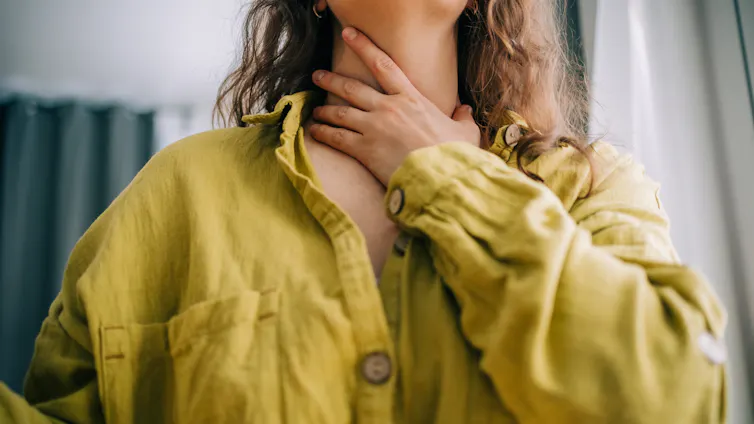
What is air hunger?
Many conditions can cause shortness of breath (also called dyspnoea). These commonly include heart diseases and lung conditions such as asthma, chronic obstructive pulmonary disease or long COVID.
Although the terms are sometimes used interchangeably, air hunger is not the same as shortness of breath.
Air hunger is an extreme and distinct feature of breathlessness: the feeling you can’t get enough air or take a full breath in.
This sensation can make people take bigger breaths or breathe faster, to try and get more oxygen. But this can actually make the feeling of breathlessness worse. Some people may also find they yawn or sigh a lot as they try to get more air.
For some people, an episode may be brief and resolve on its own. Others may pass out and need immediate medical attention to regain their breath.
In addition to difficulty breathing, symptoms can include chest tightness, sweating, dizziness and coughing. If you experience any of these symptoms, especially for the first time, you should seek immediate medical attention by calling triple 0.
Identifying the cause
The key to treating air hunger is understanding what’s behind it. So a doctor will first try to identify the underlying cause.
Air hunger may happen as part of an acute condition that causes breathlessness. For example, if you have a chest infection, you may struggle to breathe deeply and get enough oxygen. When you recover from the illness, you may no longer experience the feeling that you’re unable to fill your lungs.
But air hunger can also be a feature of a chronic condition. Those who live with severe heart or lung conditions – such as congestive cardiac failures or interstitial lung diseases – may never feel they can breathe deeply or fully fill their lungs. This can significantly limit their ability to exercise or participate in everyday activities.
Living with mental health conditions such as an anxiety or panic disorder can also mean frequent episodes of air hunger.
Even when air hunger resolves by itself, you should still see your doctor for further assessment, to identify the cause and work out how to manage it.
What a doctor will look at
Your doctor will typically observe your breathing rate and ask about your symptoms, how often you experience air hunger, and how much distress it causes.
They may also ask you to rate your shortness of breath using a Borg scale, which involves picking a number on the scale to best describe how short of breath you feel.
Your doctor will also measure vital signs such as your pulse rate and oxygen saturation levels. Oxygen saturation means how much oxygen is actually making it into your bloodstream, and can be measured with a device called a pulse oximeter.
If you’ve felt short of breath regularly over at least six weeks, you may need to do further testing. A lung function test or an exercise stress test can provide a comprehensive report on your lung capacity and how well your lungs and heart function under stress. Your doctor may also be refer you to a specialist.
What helps?
Depending on the cause, you may be prescribed medication, such as inhalers or oxygen for a lung condition. Opioids (morphine) or benzodiazepines (diazepam) may alleviate symptoms, but these would only be used in the short term, due to the risk of becoming dependent.
Apart from medications, breathing and relaxation techniques may help some people manage the unpleasant sensation. These include:
- pursed lip breathing: pucker your lips and focus on blowing the air out slowly, until you are able to take a big breath in
https://www.youtube.com/embed/7kpJ0QlRss4?wmode=transparent&start=0 Pursed lip breathing can help you stay calm and slow the pace of your breathing.
- mindful breathing: find a relaxed resting position where you can draw your attention to your breath and focus on regaining control of your rate of breathing
https://www.youtube.com/embed/-YHRb2S4uvg?wmode=transparent&start=0 Videos like this may also help you regain control of your breathing.
- timed breathing: while moving, time your breath with your body. For example, focus on breathing out when stepping with your right leg and breathing in when you step out with your left
- the cool fan technique: blow a fan (electric or hand-held) directly onto your face. The cool air stimulates the nerves in the face to reduce the sensation of breathlessness. A cool washer on your face may help create the same effect.
When to seek help
To manage air hunger episodes, you should follow your health professional’s advice about how and when to take medications.
Your doctor will also provide you with a management plan to guide you and your loved ones on what to do when you have an air hunger episode. Check in with your doctor regularly, as the plan may need updating if or when your condition changes.
In an emergency, or if you are experiencing air hunger for the first time, always call triple 0.
Clarice Tang, Senior Lecturer in Physiotherapy, Victoria University
This article is republished from The Conversation under a Creative Commons license. Read the original article.
Don’t Forget…
Did you arrive here from our newsletter? Don’t forget to return to the email to continue learning!

Recommended
Learn to Age Gracefully
Join the 98k+ American women taking control of their health & aging with our 100% free (and fun!) daily emails:
-
Exercised – by Dr. Daniel Lieberman
10almonds is reader-supported. We may, at no cost to you, receive a portion of sales if you purchase a product through a link in this article.
Surely the title is taking liberties? We must have evolved to exercise, right? Not exactly.
We evolved to conserve energy. Our strength-to-weight ratio is generally unimpressive, we cannot casually hang in trees, and we spend a third of our lives asleep.
Strengths that we do have, however, include a large brain and a versatile gut perfect for opportunism. Again, not the indicators of being evolved for exercise.
So, Dr. Lieberman tells us, if we’re not inclined to get up and go, that’s quite natural. So, why does it feel good when we do get up and go?
This book covers a lot of the “this not that” aspects of exercise. By this we mean: ways that we can work with or against our bodies, for both physical and psychological fulfilment.
There’s an emphasis on such things as:
- movement without excessive exertion
- persistence being more important than power
- strength-building but only so far as is helpful to us
…and many other factors that you won’t generally see on your gym’s motivational posters
Bottom line: this book is for all those who have felt “exercise is not for me” but would also like the benefits of exercise. It turns out that there’s a best-of-both-worlds sweet spot!
Click here to check out Exercised and get working with your body rather than against it!
Share This Post
-
Dopamine Nation – by Dr. Anna Lembke
10almonds is reader-supported. We may, at no cost to you, receive a portion of sales if you purchase a product through a link in this article.
We live in an age of abundance, though it often doesn’t feel like it. Some of that is due to artificial scarcity, but a lot of it is due to effectively whiting out our dopamine circuitry through chronic overuse.
Psychiatrist Dr. Anna Lembke explores the neurophysiology of pleasure and pain, and how each can (and does) lead to the other. Is the answer to lead a life of extreme neutrality? Not quite.
Rather, simply by being more mindful of how we seek each (yes, both pleasure and pain), we can leverage our neurophysiology to live a better, healthier life—and break/avoid compulsive habits, while we’re at it.
That said, the book itself is quite compelling reading, but as Dr. Lembke shows us, that certainly doesn’t have to be a bad thing.
Bottom line: if you sometimes find yourself restlessly cycling through the same few apps (or TV channels) looking for dopamine that you’re not going to find there, this is the book for you.
Click here to check out Dopamine Nation, and get a handle on yours!
Share This Post
-
Rosehip’s Benefits, Inside & Out
10almonds is reader-supported. We may, at no cost to you, receive a portion of sales if you purchase a product through a link in this article.
It’s In The Hips
Rosehip (often also written: “rose hip”, “rosehips”, or “rose hips”, but we’ll use the singular compound here to cover its use as a supplement) is often found as an extra ingredient in various supplements, and also various herbal teas. But what is it and what does it actually do?
What it is: it’s the fruiting body that appears on rose plants underneath where the petals appear. They are seasonal.
As for what it does, read on…
Anti-inflammatory
Rosehip is widely sought for (and has been well-studied for) its anti-inflammatory powers.
Because osteoarthritis is one of the most common inflammatory chronic diseases around, a lot of the studies are about OA, but the mechanism of action is well-established as being antioxidant and anti-inflammatory in general:
❝Potent antioxidant radical scavenging effects are well documented for numerous rose hip constituents besides Vitamin C.
Furthermore, anti-inflammatory activities include the reduction of pro-inflammatory cytokines and chemokines, reduction of NF-kB signaling, inhibition of pro-inflammatory enzymes, including COX1/2, 5-LOX and iNOS, reduction of C-reactive protein levels, reduction of chemotaxis and chemoluminescence of PMNs, and an inhibition of pro-inflammatory metalloproteases.❞
Note that while rosehip significantly reduces inflammation, it doesn’t affect the range of movement in OA—further making clear its mechanism of action:
Read: Rosa canina fruit (rosehip) for osteoarthritis: a cochrane review
Anti-aging
This is partly about its antioxidant effect, but when it comes to skin, also partly its high vitamin C content. In this 8-week study, for example, taking 3mg/day resulted in significant reductions of many measures of skin aging:
Heart healthy
The dose required to achieve this benefit is much higher, but nonetheless its effectiveness is clear, for example:
❝Daily consumption of 40 g of rose hip powder for 6 weeks can significantly reduce cardiovascular risk in obese people through lowering of systolic blood pressure and plasma cholesterol levels. ❞
~ Dr. Mona Landin-Olsson et al.
Want to try some?
We don’t sell it, but here for your convenience is an example product on Amazon
Enjoy!
Share This Post
Related Posts
-
Buckwheat vs Bulgur Wheat – Which is Healthier?
10almonds is reader-supported. We may, at no cost to you, receive a portion of sales if you purchase a product through a link in this article.
Our Verdict
When comparing buckwheat to bulgur, we picked the buckwheat.
Why?
First, some things to know up front:
- Bulgur wheat is a kind of cracked wheat product. As such, it contains wheat, and yes, gluten.
- Buckwheat is not a wheat, nor even a grass, but a flowering plant. Buckwheat is as related to wheat as a lionfish is to a lion. It does not contain gluten.
- Buckwheat can be purchased whole or hulled. We went with whole. If you go with hulled, the percentages of vitamins and minerals will be relatively higher, and/but this will be because you lost the fibrous husk, so they’ll be commensurately lower in fiber. If you were to go with hulled, we’d still pick it over bulgur wheat though, just for a different reason (as in that case, the vitamin and mineral contents would be more overwhelmingly in buckwheat’s favor, even though it’d have less fiber).
Ok, now that those things are covered…
Looking at the macronutrients, there’s not a lot between them, except that buckwheat has the much lower glycemic index (this is only the case if you got whole, not hulled—if you got hulled, the glycemic index would be about the same).
In terms of vitamins, buckwheat has more of vitamins B2, B5, B9, E, K, and choline, while bulgur wheat technically has more vitamin A, but the numbers are tiny; a cup of bulgur wheat will give you 0.12% of the RDA. So, an easy win (functionally: 5:0) for buckwheat.
When it comes to minerals, buckwheat has more copper, magnesium, potassium, and selenium, while bulgur wheat has more calcium and manganese. They’re equal on iron and phosphorus, making this a 4:2 win for buckwheat.
Adding up the categories makes this a clear win for buckwheat!
Want to learn more?
You might like to read:
Take care!
Don’t Forget…
Did you arrive here from our newsletter? Don’t forget to return to the email to continue learning!
Learn to Age Gracefully
Join the 98k+ American women taking control of their health & aging with our 100% free (and fun!) daily emails:
-
Age & Strength Loss: What Happens When, & How Much Is Unavoidable?
10almonds is reader-supported. We may, at no cost to you, receive a portion of sales if you purchase a product through a link in this article.
When it comes to aging and loss of strength, a lot of focus is placed on loss of muscle mass (sarcopenia).
We talked about this in our article: Protein vs Sarcopenia: How Much Do We Need, Really?
And that is important, but it’s not the whole story!
Strong at every age
You can be strong at every age, if and only if you’re very intentional about it.
Researchers (Dr. Maria Westerståhl et al.) followed 427 people for 47 years, repeatedly measuring fitness, strength, muscle endurance, and power from adolescence all the way through into older adulthood.
First, the bad news: physical performance overall peaks in early adulthood and begins declining at around 26 for women and 36 for men, with initially gradual losses that accelerate with advancing age.
About that acceleration: aerobic capacity and muscular endurance initially fall by about 0.3–0.6 percent per year, later speeding up to roughly 2.0–2.5 percent per year, and the deterioration in muscle power gets a similar age-related acceleration.
Next, the worse news: physical power specifically starts its decline even sooner than the other factors, with women having their peak around 19 and men having their peak around 27.
It does, however, get worse: total losses in physical capacity from peak to age 63 range from 30–48%, which latter end of the range is quite a dramatic loss of physical capacity indeed. Note that that’s the aggregate figure, so we’re not just talking about strength here.
Is there any good news? Yes: it’s never too late! People who became physically active in adulthood improved physical capacity by about 5–10%, showing that starting later still provides meaningful benefits. To be clear, that’s a net improvement of 5–10%, we’re not talking about shaving 5–10% off the 30–48% loss.
If you want to go through all these numbers (and more) in detail, here’s the paper: Rise and Fall of Physical Capacity in a General Population: A 47-Year Longitudinal Study
As for what this means in realistic terms: you’re probably not only not as strong as you used to be, but also not as fit, fast, mobile, and so forth. Your power (explosive power, like sprints or best-effort lifts) and endurance (like long-distance cardio, or isometric holds) are probably not what they used to be either.
- On the one hand, you can improve them.
- On the other hand, you do have to actually do it—merely knowing about it will not help if you don’t take action!
So, how to do that?
Read on…
Want to learn more?
Here are some very good starting points:
- Resistance Is Useful! (Especially As We Get Older)
- Overdone It? How To Speed Up Recovery After Exercise
- How To Do HIIT (Without Wrecking Your Body)
- HIIT, But Make It HIRT ← this is about high-intensity resistance training (HIRT); confusing the muscles like one confuses the heart in HIIT, which thus yields improved results
- Exercises To Do (And Ones To Avoid) If You Have Osteoporosis ← an important consideration for many
And if you’re really serious about it, then for a much deeper dive than we have room for here, we highly recommend this excellent book we reviewed a while back:
Unbreakable: A Woman’s Guide to Aging with Power – by Dr. Vonda Wright ← So, she wants us to avoid the train of sarcopenia → osteopenia → osteoporosis → fractures → infections → death, by reducing our risk factors early, and staying more robust and biologically younger.
Don’t Forget…
Did you arrive here from our newsletter? Don’t forget to return to the email to continue learning!
Learn to Age Gracefully
Join the 98k+ American women taking control of their health & aging with our 100% free (and fun!) daily emails:
-
Rapid Rise in Syphilis Hits Native Americans Hardest
10almonds is reader-supported. We may, at no cost to you, receive a portion of sales if you purchase a product through a link in this article.
From her base in Gallup, New Mexico, Melissa Wyaco supervises about two dozen public health nurses who crisscross the sprawling Navajo Nation searching for patients who have tested positive for or been exposed to a disease once nearly eradicated in the U.S.: syphilis.
Infection rates in this region of the Southwest — the 27,000-square-mile reservation encompasses parts of Arizona, New Mexico, and Utah — are among the nation’s highest. And they’re far worse than anything Wyaco, who is from Zuni Pueblo (about 40 miles south of Gallup) and is the nurse consultant for the Navajo Area Indian Health Service, has seen in her 30-year nursing career.
Syphilis infections nationwide have climbed rapidly in recent years, reaching a 70-year high in 2022, according to the most recent data from the Centers for Disease Control and Prevention. That rise comes amid a shortage of penicillin, the most effective treatment. Simultaneously, congenital syphilis — syphilis passed from a pregnant person to a baby — has similarly spun out of control. Untreated, congenital syphilis can cause bone deformities, severe anemia, jaundice, meningitis, and even death. In 2022, the CDC recorded 231 stillbirths and 51 infant deaths caused by syphilis, out of 3,761 congenital syphilis cases reported that year.
And while infections have risen across the U.S., no demographic has been hit harder than Native Americans. The CDC data released in January shows that the rate of congenital syphilis among American Indians and Alaska Natives was triple the rate for African Americans and nearly 12 times the rate for white babies in 2022.
“This is a disease we thought we were going to eradicate not that long ago, because we have a treatment that works really well,” said Meghan Curry O’Connell, a member of the Cherokee Nation and chief public health officer at the Great Plains Tribal Leaders’ Health Board, who is based in South Dakota.
Instead, the rate of congenital syphilis infections among Native Americans (644.7 cases per 100,000 people in 2022) is now comparable to the rate for the entire U.S. population in 1941 (651.1) — before doctors began using penicillin to cure syphilis. (The rate fell to 6.6 nationally in 1983.)
O’Connell said that’s why the Great Plains Tribal Leaders’ Health Board and tribal leaders from North Dakota, South Dakota, Nebraska, and Iowa have asked federal Health and Human Services Secretary Xavier Becerra to declare a public health emergency in their states. A declaration would expand staffing, funding, and access to contact tracing data across their region.
“Syphilis is deadly to babies. It’s highly infectious, and it causes very severe outcomes,” O’Connell said. “We need to have people doing boots-on-the-ground work” right now.
In 2022, New Mexico reported the highest rate of congenital syphilis among states. Primary and secondary syphilis infections, which are not passed to infants, were highest in South Dakota, which had the second-highest rate of congenital syphilis in 2022. In 2021, the most recent year for which demographic data is available, South Dakota had the second-worst rate nationwide (after the District of Columbia) — and numbers were highest among the state’s large Native population.
In an October news release, the New Mexico Department of Health noted that the state had “reported a 660% increase in cases of congenital syphilis over the past five years.” A year earlier, in 2017, New Mexico reported only one case — but by 2020, that number had risen to 43, then to 76 in 2022.
Starting in 2020, the covid-19 pandemic made things worse. “Public health across the country got almost 95% diverted to doing covid care,” said Jonathan Iralu, the Indian Health Service chief clinical consultant for infectious diseases, who is based at the Gallup Indian Medical Center. “This was a really hard-hit area.”
At one point early in the pandemic, the Navajo Nation reported the highest covid rate in the U.S. Iralu suspects patients with syphilis symptoms may have avoided seeing a doctor for fear of catching covid. That said, he doesn’t think it’s fair to blame the pandemic for the high rates of syphilis, or the high rates of women passing infections to their babies during pregnancy, that continue four years later.
Native Americans are more likely to live in rural areas, far from hospital obstetric units, than any other racial or ethnic group. As a result, many do not receive prenatal care until later in pregnancy, if at all. That often means providers cannot test and treat patients for syphilis before delivery.
In New Mexico, 23% of patients did not receive prenatal care until the fifth month of pregnancy or later, or received fewer than half the appropriate number of visits for the infant’s gestational age in 2023 (the national average is less than 16%).
Inadequate prenatal care is especially risky for Native Americans, who have a greater chance than other ethnic groups of passing on a syphilis infection if they become pregnant. That’s because, among Native communities, syphilis infections are just as common in women as in men. In every other ethnic group, men are at least twice as likely to contract syphilis, largely because men who have sex with men are more susceptible to infection. O’Connell said it’s not clear why women in Native communities are disproportionately affected by syphilis.
“The Navajo Nation is a maternal health desert,” said Amanda Singer, a Diné (Navajo) doula and lactation counselor in Arizona who is also executive director of the Navajo Breastfeeding Coalition/Diné Doula Collective. On some parts of the reservation, patients have to drive more than 100 miles to reach obstetric services. “There’s a really high number of pregnant women who don’t get prenatal care throughout the whole pregnancy.”
She said that’s due not only to a lack of services but also to a mistrust of health care providers who don’t understand Native culture. Some also worry that providers might report patients who use illicit substances during their pregnancies to the police or child welfare. But it’s also because of a shrinking network of facilities: Two of the Navajo area’s labor and delivery wards have closed in the past decade. According to a recent report, more than half of U.S. rural hospitals no longer offer labor and delivery services.
Singer and the other doulas in her network believe New Mexico and Arizona could combat the syphilis epidemic by expanding access to prenatal care in rural Indigenous communities. Singer imagines a system in which midwives, doulas, and lactation counselors are able to travel to families and offer prenatal care “in their own home.”
O’Connell added that data-sharing arrangements between tribes and state, federal, and IHS offices vary widely across the country, but have posed an additional challenge to tackling the epidemic in some Native communities, including her own. Her Tribal Epidemiology Center is fighting to access South Dakota’s state data.
In the Navajo Nation and surrounding area, Iralu said, IHS infectious disease doctors meet with tribal officials every month, and he recommends that all IHS service areas have regular meetings of state, tribal, and IHS providers and public health nurses to ensure every pregnant person in those areas has been tested and treated.
IHS now recommends all patients be tested for syphilis yearly, and tests pregnant patients three times. It also expanded rapid and express testing and started offering DoxyPEP, an antibiotic that transgender women and men who have sex with men can take up to 72 hours after sex and that has been shown to reduce syphilis transmission by 87%. But perhaps the most significant change IHS has made is offering testing and treatment in the field.
Today, the public health nurses Wyaco supervises can test and treat patients for syphilis at home — something she couldn’t do when she was one of them just three years ago.
“Why not bring the penicillin to the patient instead of trying to drag the patient in to the penicillin?” said Iralu.
It’s not a tactic IHS uses for every patient, but it’s been effective in treating those who might pass an infection on to a partner or baby.
Iralu expects to see an expansion in street medicine in urban areas and van outreach in rural areas, in coming years, bringing more testing to communities — as well as an effort to put tests in patients’ hands through vending machines and the mail.
“This is a radical departure from our past,” he said. “But I think that’s the wave of the future.”
KFF Health News is a national newsroom that produces in-depth journalism about health issues and is one of the core operating programs at KFF—an independent source of health policy research, polling, and journalism. Learn more about KFF.
Subscribe to KFF Health News’ free Morning Briefing.
Don’t Forget…
Did you arrive here from our newsletter? Don’t forget to return to the email to continue learning!
Learn to Age Gracefully
Join the 98k+ American women taking control of their health & aging with our 100% free (and fun!) daily emails:


