
What is a ‘digital detox’ and will it make me healthier?
10almonds is reader-supported. We may, at no cost to you, receive a portion of sales if you purchase a product through a link in this article.
Are you surrounded by screens?
Today, we rely on technology to do everything from sending emails to ordering food. But being constantly connected can leave us physically and mentally exhausted.
That’s why some people are doing “digital detoxes”, the practice of staying away from devices and social media for a set period of time.
The concept is gaining traction online, with supporters spruiking the health benefits of the “analogue lifestyle”. Some are even paying big bucks to go on “digital retreats”, with the aim of becoming healthier and happier.
But do digital detoxes actually work, or are they just another wellness trend?
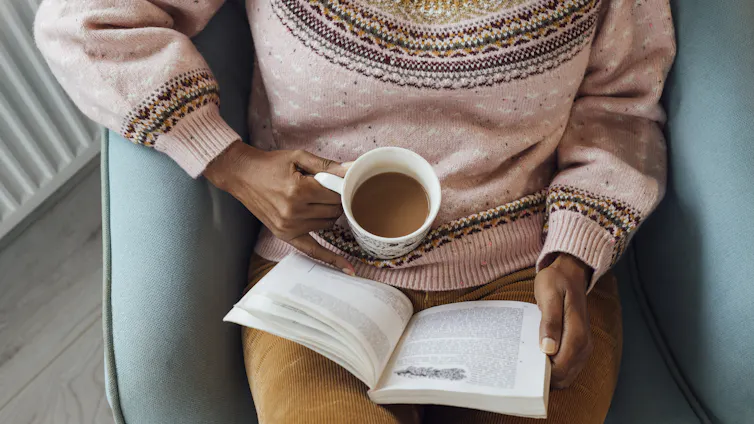
What is a ‘digital detox’?
The term “digital detox” stems from detoxification, the process of safely getting a person off an addictive substance such as alcohol or drugs. This is usually done with support from a health-care professional.
So the idea of a digital detox is to step away from technology, to instead experience life with fewer distractions and foster relationships offline.
The trouble with tech
On average, young people in Australia look at screens for nine hours a day. Research suggests adults aren’t much better, with Australians aged between 45 and 64 spending up to six hours each day on screens.
As a result, more people are experiencing information overload, the idea of being physically and emotionally overwhelmed by an immense amount of data. A related concept is social media fatigue, a consequence of being constantly connected through online platforms.
But there are signs people are resisting the pull of technology. Some younger people are swapping screens for hands-on hobbies such as knitting, and joining chess clubs and other offline social activities.
They are also driving trends such as “raw-dogging boredom”, the practice of sitting through long haul flights without headphones. And friction-maxxing, the idea you can become a better, more resilient person by doing tasks that involve some level of difficulty, is also gaining traction online.
So in a sense, digital detoxes are just the latest online trend.
Do ‘digital detoxes’ work?
Current research suggests digital detoxes may have some benefits. But the evidence is far from conclusive.
One 2025 meta-analysis examined 20 randomised controlled trials, all looking at the effects of social media detoxes. It found taking a short break from social media had a small but positive effect on people’s feelings of life satisfaction and self-esteem. Participants also reported feeling less anxious, depressed and lonely.
In another 2025 study, researchers blocked participants’ smartphones so they could only receive calls and texts, over a two-week period. The results were striking. The researchers found this intervention had a greater positive effect on participants’ mental health than antidepressants. Importantly, this was because participants spent less time on their phones, but also spent this time doing beneficial activities such as socialising in person, exercising and being in nature.
Not for everyone
Digital detoxes may impact people differently, due to various factors.
One is cultural context. Research suggests people using social media in collectivist cultures such as Turkey may experience more social pressure to respond quickly and maintain extensive networks, compared to those in more individualistic societies. So people in collectivist cultures may benefit more from taking a break from social media.
Another is gender. Research suggests women mainly use social media to maintain relationships, and that they compare their physical appearance to others. This means they may benefit more from a digital detox, compared to men. One 2020 study found women who took a one-week break from Instagram felt significantly more satisfied with their life than women who stayed on it. However, the researchers did not see the same effect in men.
All about the approach
Current research suggests doing a digital detox may improve your mental health. But the way you approach it matters.
You shouldn’t just go cold turkey on technology. That’s because you’re less likely to sustain that change. One 2023 study found people who reduced their daily smartphone use by one hour experienced stronger and more lasting mental health benefits, compared to those who quit entirely.
Here are some tips to make your digital detox last:
- identify any unhelpful habits, for example checking your phone too often or bringing it everywhere
- make a plan to change those habits, for instance setting app time limits or only checking messages at certain times
- set specific goals, such as taking a break from Instagram for one week
- share your goals with family and friends, both so they can support you and understand why you may not reply to their messages
- monitor your progress, for example by reflecting on whether you feel less anxious or are sleeping better.
It’s hard to stay present and connected in our increasingly digital world. But doing a digital detox could help. Importantly, the aim is not to eliminate technology from your life, but to use it in a more conscious, deliberate way.
Joanne Orlando, Researcher, Digital Wellbeing, Western Sydney University
This article is republished from The Conversation under a Creative Commons license. Read the original article.
Don’t Forget…
Did you arrive here from our newsletter? Don’t forget to return to the email to continue learning!
Recommended
Learn to Age Gracefully
Join the 98k+ American women taking control of their health & aging with our 100% free (and fun!) daily emails:
-
Jaw Clenching & Pelvic Floor Tension: The Surprising Connection You Need To Know
10almonds is reader-supported. We may, at no cost to you, receive a portion of sales if you purchase a product through a link in this article.
Dr. Amy Konvalin explains:
As above, so below
They may not seem very connected, but jaw tension and pelvic floor tension are linked through a pressure system involving the diaphragm muscle, upper throat region, and pelvic floor working together.
In other words, the body functions like a stacked system where the jaw (via the temporomandibular joint), diaphragm, and pelvic floor all coordinate to manage pressure and stability. The result is that if the diaphragm becomes tight or underused, it can contribute to increased tension in the pelvic floor and jaw.
- What makes it worse: breathing through your mouth reduces diaphragm activation, and can increase tension around the jaw and upper airway.
- What makes it better: breathing through your nose better activates the diaphragm, and supports more balanced pressure through the system.
- What makes it even better: diaphragmatic breathing stimulates the vagus nerve, which helps shift your body towards a calmer, “rest and digest” state
Note that the “better” and “even” better items are not in conflict with each other; you can (and ideally should) do both at once.
For more on all of this plus some breathing exercises to accomplish the above, enjoy:
Click Here If The Embedded Video Doesn’t Load Automatically!
Want to learn more?
You might like this book we reviewed a little while back:
The Oxygen Advantage – by Patrick McKeown
Take care!
Share This Post
-
How Strong Is Your Heart?
10almonds is reader-supported. We may, at no cost to you, receive a portion of sales if you purchase a product through a link in this article.
First, let’s take a moment to remember that the heart is a muscular organ, which is why exercise strengthens it, whereas for many organs, pushing them to their limits does not improve their performance (think of your liver, kidneys, pancreas, etc, all of which should be given as easy a time of it as reasonably possible, for best performance).
When it comes to our muscles in general, we can be genetically predisposed to stronger or weaker muscles, often manifesting as denser (or less dense) muscle fibers. Which way your genes predispose you can be found by genetic testing (personal genomics).
For reference, see: Genetic Testing: Health Benefits & Methods
Muscle = muscle
Ok, there are many different types of muscle, and within muscles there are different types of muscle fiber. But there are some things that are true of muscle in general, and for these purposes, “muscle = muscle”.
One of them, it seems, is that if we have a genetic predisposition for stronger muscles, then this also holds true for our heart.
Most recently, a Finnish team of researchers, Dr. Katja Waller et al., looked at many (n=8,815) people’s data, and most specifically, the association between the polygenic score for handgrip strength, on cardiovascular disease mortality and all-cause mortality.
What they found is that those with a genetic predisposition for higher muscle strength had a lower risk of cardiovascular death, regardless of their physical activity or lifestyle habits. This association remained even after accounting for factors like smoking, alcohol use, and BMI.
You may be thinking: but what if the predisposed-to-be-stronger people were simply more active as a result?
That’s a fair question, because indeed people with genetic predispositions to be good at something (in this case, physical activity) may indeed do more of it.
However, the data showed that genetically stronger individuals were not, on average, any more active than others.
You can read the paper in full, here:
Wait, what’s that about “in men”?
So, the study participants were 53% women, however, the association which was strong for men, was not so strong for women. The researchers hypothesized that this may have had to do with differing biological and environmental influences, especially the potentially confounding effects of the cardioprotective role of estrogen premenopause, and of course postmenopause in those taking menopausal hormone replacement therapy—something the researchers didn’t control for.
However, previous work by another (well, some team members were the same) Finnish team of researchers, Dr. Kaisa Koivunen et al., found it was indeed predictive for women as well as men, and that the impact was significant but modest.
In case you’re wondering how the impact can be described simultaneously as “significant” and “modest”…
Since “significantly” tends to get used colloquially to mean “a lot”, let’s recap that in science, “significant” means “the probability of getting these results randomly is less than 0.05”. It does not mean that the difference is necessarily large—merely that it is improbable by random chance, and therefore it suggests that one thing is associated with another (specifically, at least one input variable is affecting at least one output variable; in this case, genetic predisposition to greater muscular strength predicts lower cardiovascular disease mortality).
You can read this paper in full, here:
And another one, this time still with Dr. Elina Sillanpää who contributed in the other two studies also, to keep it company:
So, how do I make use of this kind of information?
Firstly, know that your genetic predispositions of many kinds (not just this one) can not only predict your health risks, but also highlight what areas of your health you might need to pay particular attention to, as well as in some cases, what treatments are more or less likely to work well for you—which in turn, is information that can making life-changing differences to your treatment plan when one day something comes up (and rest assured, unless you die early by some accident/incident, something will come up at some point).
Next, check out: Do You Have A Personalized Health Plan? (Here’s How)
…for how to proceed 😎
Take care!
Share This Post
-
The Many Health Benefits Of Garlic
10almonds is reader-supported. We may, at no cost to you, receive a portion of sales if you purchase a product through a link in this article.
The Many Health Benefits of Garlic
We’re quite confident you already know what garlic is, so we’re going to leap straight in there with some science today:
First, let’s talk about allicin
Allicin is a compound in garlic that gives most of its health benefits. A downside of allicin is that it’s not very stable, so what this means is:
- Garlic is best fresh—allicin breaks down soon after garlic is cut/crushed
- So while doing the paperwork isn’t fun, buying it as bulbs is better than buying it as granules or similar
- Allicin also breaks down somewhat in cooking, so raw garlic is best
- Our philosophy is: still use it in cooking as well; just use more!
- Supplements (capsule form etc) use typically use extracts and potency varies (from not great to actually very good)
Read more about that:
- Short-term heating reduces the anti-inflammatory effects of fresh raw garlic extracts
- Allicin Bioavailability and Bioequivalence from Garlic Supplements and Garlic Foods
Now, let’s talk benefits…
Benefits to heart health
Garlic has been found to be as effective as the drug Atenolol at reducing blood pressure:
It also lowers LDL (bad cholesterol):
Benefits to the gut
We weren’t even looking for this, but as it turns out, as an add-on to the heart benefits…
Benefits to the immune system
Whether against the common cold or bringing out the heavy guns, garlic is a booster:
- Preventing the common cold with a garlic supplement: a double-blind, placebo-controlled survey
- Supplementation with aged garlic extract improves both NK and γδ-T cell function and reduces the severity of cold and flu symptoms: a randomized, double-blind, placebo-controlled nutrition intervention
Benefits to the youthfulness of body and brain
Garlic is high in antioxidants that, by virtue of reducing oxidative stress, help slow aging. This effect, combined with the cholesterol and blood pressure benefits, means it may also reduce the risk of Alzheimer’s and other forms of dementia:
- Antioxidant health effects of aged garlic extract
- Effects of garlic consumption on plasma and erythrocyte antioxidant parameters in elderly subjects
- Garlic reduces heart disease and dementia risk
There are more benefits too…
That’s all we have time to dive into study-wise today, but for the visually-inclined, here are yet more benefits to garlic (at a rate of 3–4 cloves per day):
An incredible awesome recipe using lots of garlic:
- Take small potatoes (still in their skins), cut in half
- Add enough peeled cloves of garlic so that you have perhaps a 1:10 ratio of garlic to potato by mass
- Boil (pressure-cooking is ideal) until soft, and drain
- Keeping them in the pan, add a lashing of olive oil, and any additional seasonings per your preference (consider black pepper, rosemary, thyme, parsley)
- Put a lid on the pan, and holding it closed, shake the pan vigorously
- Note: if you didn’t leave the skins on, or you chopped much larger potatoes smaller instead of cutting in half, the potatoes will break up into a rough mash now. This is actually also fine and still tastes (and honestly, looks) great, but it is different, so just be aware, so that you get the outcome you want.
- The garlic, which—unlike the potatoes—didn’t have a skin to hold it together, will now have melted over the potatoes like butter
You can serve like this (it’s delicious already) or finish up in the oven or air-fryer or under the grill, if you prefer a roasted style dish (an amazing option too).
Share This Post
- Garlic is best fresh—allicin breaks down soon after garlic is cut/crushed
Related Posts
-
“Slugging” Skin Care Routine (Tips From A Dermatologist)
10almonds is reader-supported. We may, at no cost to you, receive a portion of sales if you purchase a product through a link in this article.
Dermatologist Dr. Jenny Liu weighs in with advice!
Sometimes simplest is best
Slugging is a skincare trend involving applying petrolatum (e.g. Vaseline) as the final step to lock in hydration and repair the skin barrier. It’s particularly useful for dry, sensitive, or eczema-prone skin, and/or damaged skin barriers from overuse of actives or harsh conditions.
How it works: the waterproof layer reduces water loss (up to 99%) and facilitates repair the skin barrier. Thus, it indirectly hydrates the skin, supports natural exfoliation, and reduces fine lines. Best of all, it’s non-irritating, non-comedogenic, and safe for all skin types.
How to do it:
- Cleanse thoroughly to remove makeup and impurities.
- Apply a moisturizer or serum with humectants (e.g. glycerin, hyaluronic acid).
- Seal with petrolatum (e.g. Vaseline or similar).
- Skip areas with stronger active ingredients (e.g. retinoids) and active acne areas.
- Apply 30–60 minutes before bed to reduce product transfer.
- Use a gentle cleanser in the morning to remove residue.
For more on all of this, enjoy:
Click Here If The Embedded Video Doesn’t Load Automatically!
Want to learn more?
You might also like to read:
Castor Oil: All-Purpose Life-Changer, Or Snake Oil? ← skincare is one of the things it definitely does work well for, and can be used for slugging also.
Take care!
Don’t Forget…
Did you arrive here from our newsletter? Don’t forget to return to the email to continue learning!
Learn to Age Gracefully
Join the 98k+ American women taking control of their health & aging with our 100% free (and fun!) daily emails:
-
Half Of Americans Over 50 Have Hemorrhoids, But They Can Be Prevented!
10almonds is reader-supported. We may, at no cost to you, receive a portion of sales if you purchase a product through a link in this article.
It’s Q&A Day at 10almonds!
Have a question or a request? We love to hear from you!
In cases where we’ve already covered something, we might link to what we wrote before, but will always be happy to revisit any of our topics again in the future too—there’s always more to say!
As ever: if the question/request can be answered briefly, we’ll do it here in our Q&A Thursday edition. If not, we’ll make a main feature of it shortly afterwards!
So, no question/request too big or small
❝Hello. I was hoping you could give some useful tips about how to avoid a painful ailment that has affected Ernest Hemingway, Karl Marx, David Livingstone, Napoleon, Marilyn Monroe, King Alfred, and Martin Luther, and, I confess, me from time to time … namely, hemorrhoids. Help!❞
Firstly: that list could be a lot longer! We don’t have global stats, but in the US for example, half of adults over 50 have hemorrhoids.
So, you’re certainly not alone. People just don’t talk about it.
But, there are preventative things you can do:
Fiber, fiber, fiber. See also:
Level-Up Your Fiber Intake! (Without Difficulty Or Discomfort)
Hydrate, hydrate, hydrate.
This one’s simple enough. If you are dehydrated, constipation is more likely, and with it, hemorrhoids.
Watch your meds…
Some medications can cause constipation—painkillers containing codeine are a common culprit, for example.
When you go, go!
Not only can prolonged straining promote hemorrhoids, but also (if you’ll pardon the phrasing—there’s only so delicately we can say this) simply sitting with things partway “open” down there is not good for its health; things can quickly become irritated, and that can lead to hemorrhoids.
So: when you go, go. Leave your phone in another room!
Wash—but carefully.
Beyond your normal showering/bathing routine, a bidet is a great option for keeping things happy down there, if you have that option available to you.
However, if you have hemorrhoids, don’t use soap, as this can cause irritation and make it worse.
Warm water is fine, as is a salt bath, and pat dry and/or use gentle wet-wipes rather than rougher paper.
You can follow up with a hemorrhoid cream of your choice (or hydrocortisone, unless that’s contraindicated by another condition you have)
Know when to seek help
Hemorrhoids will usually go away by themselves if not exacerbated. But if it’s getting unduly difficult, and/or you’re bleeding down there, it’s time to see a doctor.
Note on bleeding: even if you’re 100% sure you have hemorrhoids, there are still other reasons you could be bleeding, and so it needs checking out.
Hemorrhoid treatment, if needed, will vary depending on severity. Beyond creams and lotions, there are other options that are less fun but sometimes necessary, including injections, electrotherapy, banding, or surgery.
Take care!
Don’t Forget…
Did you arrive here from our newsletter? Don’t forget to return to the email to continue learning!
Learn to Age Gracefully
Join the 98k+ American women taking control of their health & aging with our 100% free (and fun!) daily emails:
-
Early Dementia Screening From Your Blood & More
10almonds is reader-supported. We may, at no cost to you, receive a portion of sales if you purchase a product through a link in this article.
Dementia is, statistically speaking, the most feared disease in the US. Notwithstanding…
- heart disease killing more
- COVID being more of a lottery
- cancer being the “yes you can modify risk factors but it can come for anyone” life-changing (and often life-ending) disease,
…it’s still dementia that Americans report fearing the most.
And yet… Early dementia screening is seriously underused
It may be a case of a head-in-sand approach to avoid unwanted news, or it could be a case of not knowing what’s available.
So, with that in mind…
How to watch out: first line warning signs
You walk into a room of your house, and suddenly stop: “what did I come in here for?”, you wonder.
A moment later, you’re worrying whether this is a sign of age-related cognitive decline.
The good news: it usually isn’t. In fact, you did that when you were younger, too, you just didn’t pay enough attention at the time to remember it now.
Dementia-related memory loss is less “where did I put my car keys?”, and more “what is this thing for?” (it’s your car keys). Or at a less advanced stage: “whose are these car keys?” (they are yours).
You can read about some of the nuances here:
Is It Dementia? Spot The Signs (Because None Of Us Are Immune) ← If you’d like an objective test of memory and other cognitive impairments, this article also has a link to the industry’s gold standard test (it’s free)
(The Self-Administered Gerocognitive Exam (SAGE) is designed to detect early signs of cognitive, memory or thinking impairments)
Tests you can’t do at home
We wrote a little while back about how one kind of blood testing for Alzheimer’s disease works:
The Brain Alarm Signs That Warn Of Dementia
Why “Brain Alarm Signs” if it’s a blood test? Because the blood gets (in very lay terms) bits of broken brain in it. Or more specifically, they tested the blood for density of cerebrovascular endothelial extracellular vesicles (CEEVs), which are bits of the cells from the lining of blood vessels in the brain. These cerebrovascular endothelial extracellular vesicles should not, ideally, be falling off and riding around your bloodstream, and the greater the density of them, the greater likelihood of mild cognitive impairment now, and by extension, dementia later.
It’s not the only blood test available though, see:
Highly accurate blood test for Alzheimer’s disease is similar or superior to clinical cerebrospinal fluid (CSF) tests ← this one checks the ratio of phosporylated-tau217 to non-phosphorylated tau (which is a protein antibody), which equalled or outperformed FDA-approved CSF tests in classifying amyloid-β positron emission topography (PET, as in a PET scan) status, with a confidence interval as high as, or better than, industry standards.
If you don’t like having your blood taken, trust us that you’d find having your cerebrospinal fluid taken even less enjoyable, so this is a very welcome improvement!
In case you’re curious about how the CSF test works, here you go: NPTX2 in Cerebrospinal Fluid Predicts the Progression From Normal Cognition to Mild Cognitive Impairment ← NPTX2 is a protein biomarker of Alzheimer’s risk
…but again, we really think the blood test is preferable.
Tests beyond the physiological
There are, of course, psychological tests that can be done, including a linguistic analysis of your conversation, compared with a vast database of other people’s conversations, with and without various degrees of cognitive impairment
As Dr. Ioannis Paschalidis explains:
❝We wanted to predict what would happen in the next six years—and we found we can reasonably make that prediction with relatively good confidence and accuracy.
Rather than using acoustic features of speech, like enunciation or speed, the model is just pulling from the content of the interview—the words spoken, how they’re structured.
You can think of the score as the likelihood, the probability, that someone will remain stable or transition to dementia. It had significant predictive ability.
Digital is the new blood. You can collect it, analyze it for what is known today, store it, and reanalyze it for whatever new emerges tomorrow.❞
You can read the full paper here: Prediction of Alzheimer’s disease progression within 6 years using speech: A novel approach leveraging language models
See also: AI: The Doctor That Never Tires?
What if the news isn’t good?
While bad news is never welcome per se, it is preferable to not knowing, insofar as we can then take steps to manage the situation.
You may be wondering: what can be done that I wouldn’t already be doing to minimize my dementia risk in the first place?
And the answer is: yes, do continue those things of course, but there is more to do:
See: Beyond Guarding Against Dementia: When Age’s Brain-Changes Come Knocking
Take care!
Don’t Forget…
Did you arrive here from our newsletter? Don’t forget to return to the email to continue learning!
Learn to Age Gracefully
Join the 98k+ American women taking control of their health & aging with our 100% free (and fun!) daily emails:


